
Bali, Framed by Intimate Locales, Nostalgia, and Newness


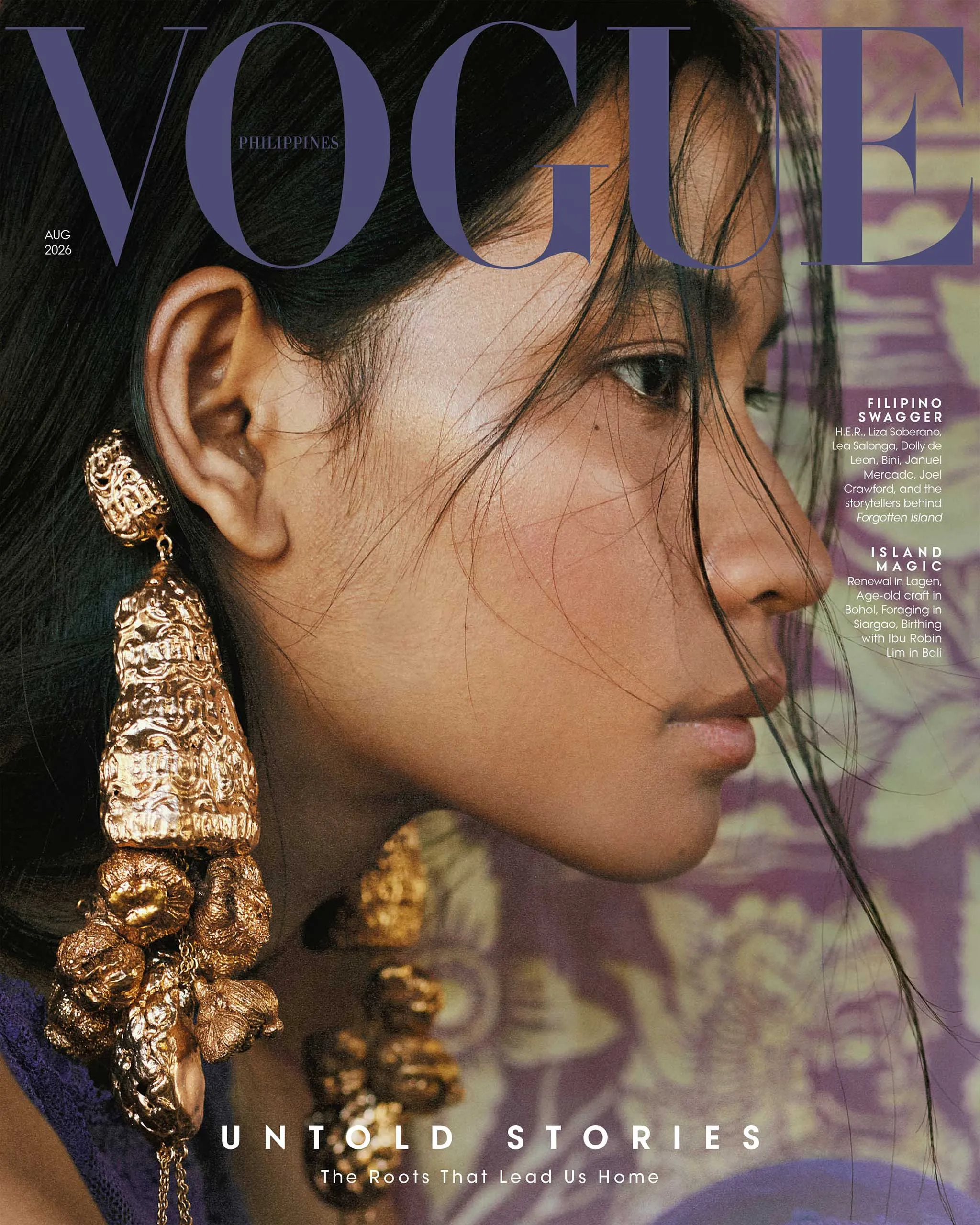
Mirelle wears a TANGOLI lace top and trousers, and JUANA MARTIN headpiece. Photographed by Kenza le Bas for the August 2026 Issue of Vogue Philippines
Around the locales of Bali, Indonesia, Kenza Le Bas and Mirelle Aurelia find glimmers of the culturally nostalgic and new.
Like the Philippines, Indonesia is an archipelagic nation. Though its exact number of islands remains subject to debate (counts have ranged from 13,466 to 18,307; in 2017, Condé Nast Traveler published a lighthearted story titled “Indonesia Doesn’t Know How Many Islands It Has”), what remains uncontested is the tropical archipelago’s rich culture.
Seventeen years ago, for instance, Indonesian Batik, the technique- and symbolism-heavy art of hand-dyed cotton and silk garments, was inscribed in UNESCO’s list of Intangible Cultural Heritage of Humanity. Indonesian high-craft designer Biyan has been prolific since the ’90s, with his works being carried in New York and London. Just last year, CN Traveler’s Readers’ Choice Awards listed Bali as one of the best islands in Asia, alongside Phu Quoc in Vietnam and Siargao in the Philippines.
Today, it seems as though ancestral heritage has never been more celebrated. While there remains a long road ahead for mainstream Southeast Asian representation, it’s worth celebrating how far it’s come. Patriotism manifests in different ways; for Angelita Nurhadi, the Indonesian fashion designer behind the brand Studio Jeje, her culture’s sacred traditions reveal themselves in a myriad of mundane ways. “Indonesian, especially Javanese, culture has always been part of my daily life, so it naturally informs the way I see, feel, and create,” she told Vogue in an earlier conversation. “Ordinary moments I encounter in everyday life often already contain tradition within them, even if they don’t appear ceremonial at first glance. This is why I believe tradition is not separate from modern life, but embedded in it.”
For others, pride is reinforced by instances of being seen in larger contexts. That includes world stages like the Olympics, where Indonesian speed climber Veddriq Leonardo made history in 2024 by winning gold in the inaugural men’s speed-climbing event. At 4.75 seconds, his finish set a world record. In film, the forthcoming animated adventure-fantasy Forgotten Island from DreamWorks Animation draws from Philippine mythology, with directors Joel Crawford and Januel Mercado at the helm alongside a predominantly Filipino cast and crew.
“Where did I come from, and how did it make me?”
It’s only natural that these achievements might instigate an itch to more deeply explore one’s roots, to finally ask the question, “Where did I come from, and how did it make me?”
This was certainly the case for French photographer Kenza Le Bas, who spent a significant part of her childhood in Indonesia, after her family moved when she was eight months old. Growing up in Bali, her earliest memories include picking up a camera at 14 years old, capturing “the incredible beauty of Balinese culture. The ceremonies, the offerings, the vibrant colors, the textiles, the flowers. Looking back, I realize that this environment naturally influenced my artistic eye. It taught me to appreciate beauty, symbolism, and emotion long before photography became my career.”
Now based in Paris, Kenza intimates that moving away only strengthened her appreciation for her childhood environment, which she felt compelled to revisit more intentionally. Her return to Bali earlier this year was marked by both nostalgia and newness, and a drive “to celebrate a culture that has given me so much creatively and personally.”
This desire was shared by Mirelle Aurellia, the Yogyakarta-born model who served as the museMuseA person who inspires a designer, photographer, or artist and often becomes the face or embodiment of their creative vision. Famous muses have shaped entire collections and eras of fashion,Go to Muse Glossary for Kenza’s homecoming project. Mirelle moved to Jakarta when she was 17, but returns to her hometown periodically to catch a break from the fast-paced life in the Indonesian capital. “Being home, spending time with my family, and enjoying my favorite local food always makes me feel recharged,” she shares fondly. Like Kenza, Mirelle’s fondest memories of youth involve the great outdoors, “spending time in the mountains with my family. I always enjoyed the beautiful views and the fresh air.”
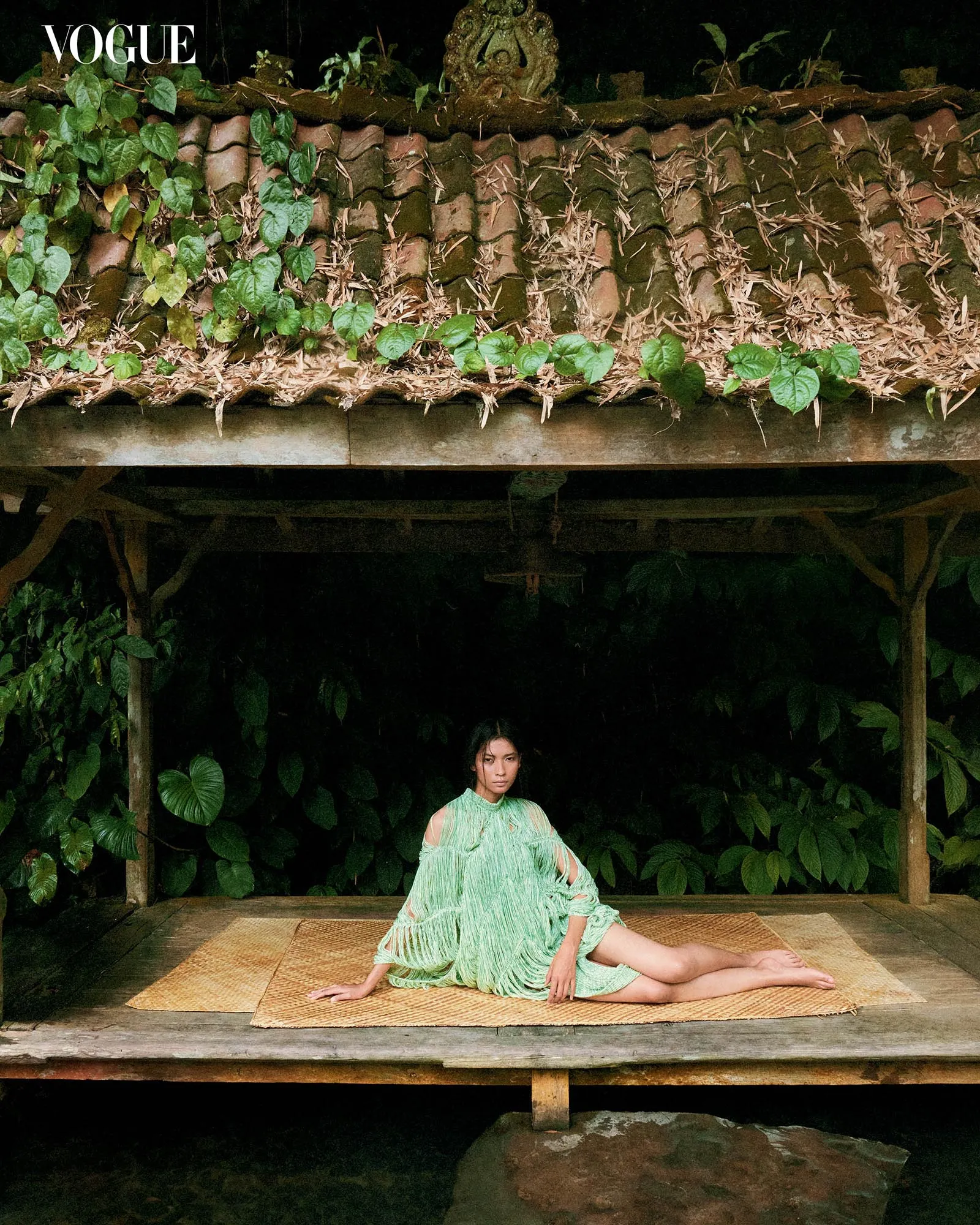
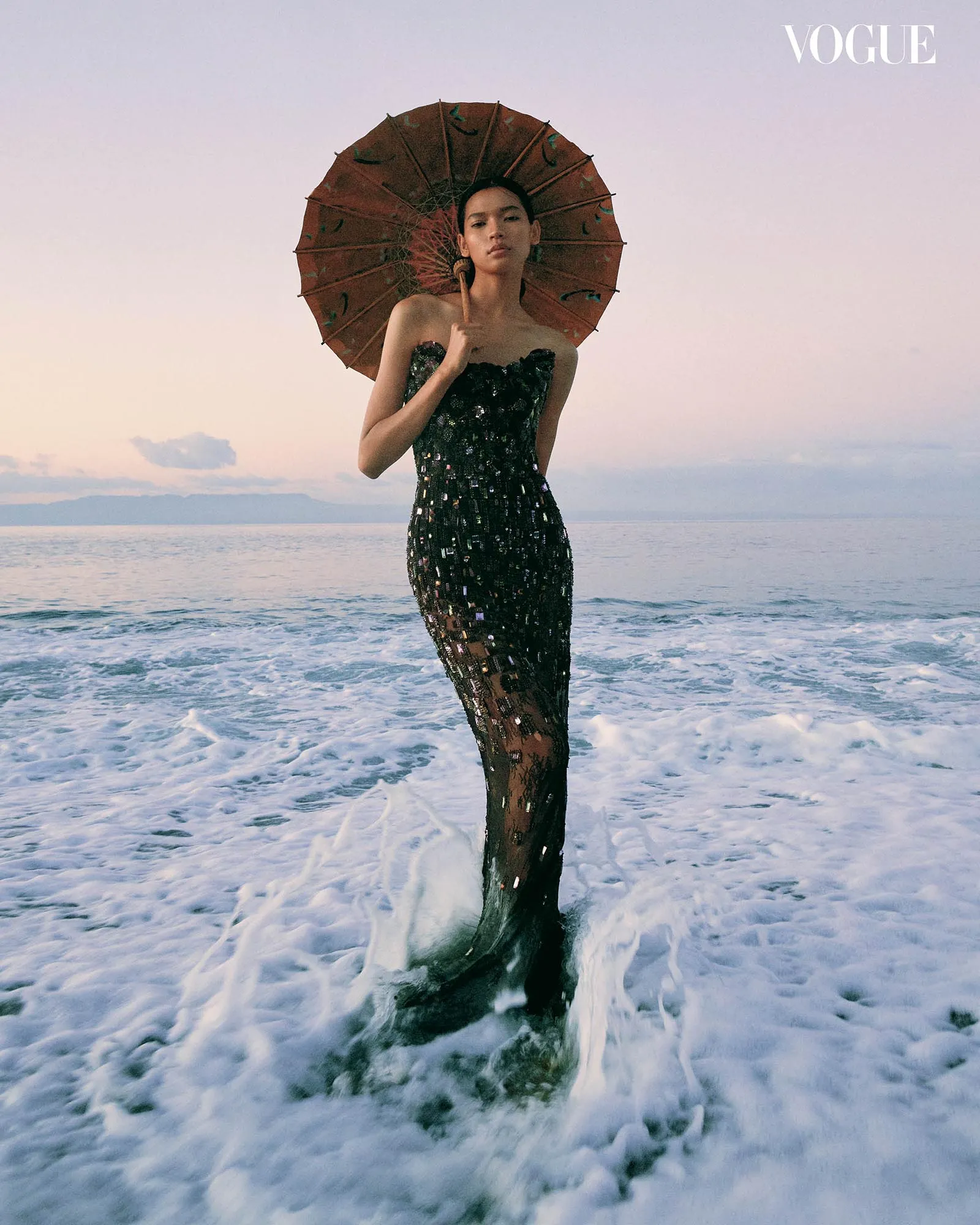
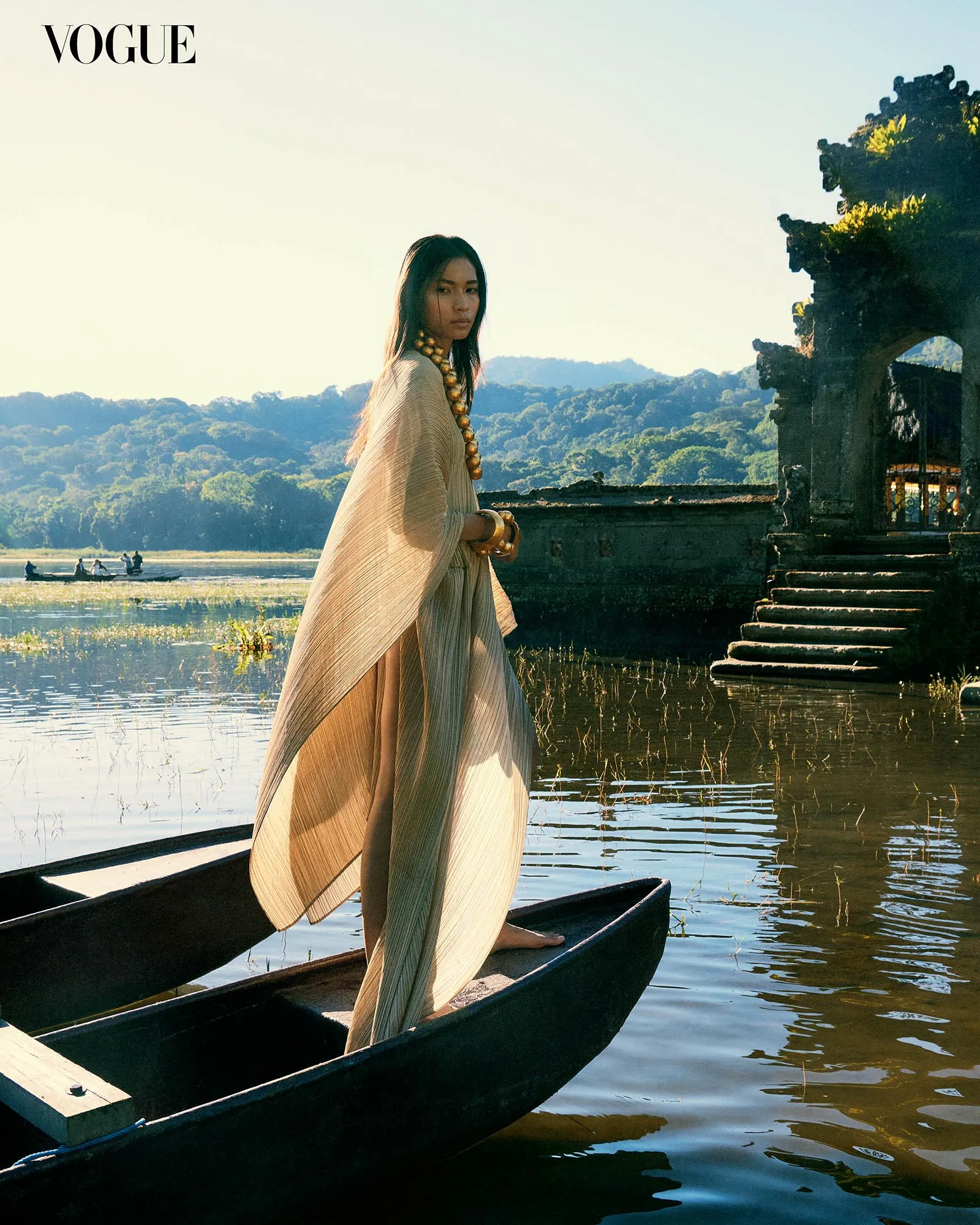
Together, the two, who met for the first time on set, invite us to experience their home not through tourist hotspots, but rather through intimate locales. Their story unfolds in Tenganan, one of Bali’s oldest and most preserved traditional villages, where a central temple stands as a symbol of spirituality, community, and ancestral heritage. They take us to a pasar bunga or flower market, where Kenza references the Balinese Hindu tradition of Canang Sari: the daily practice of weaving flowers into small palm leaf baskets as a gratitude offering to spiritual gods.
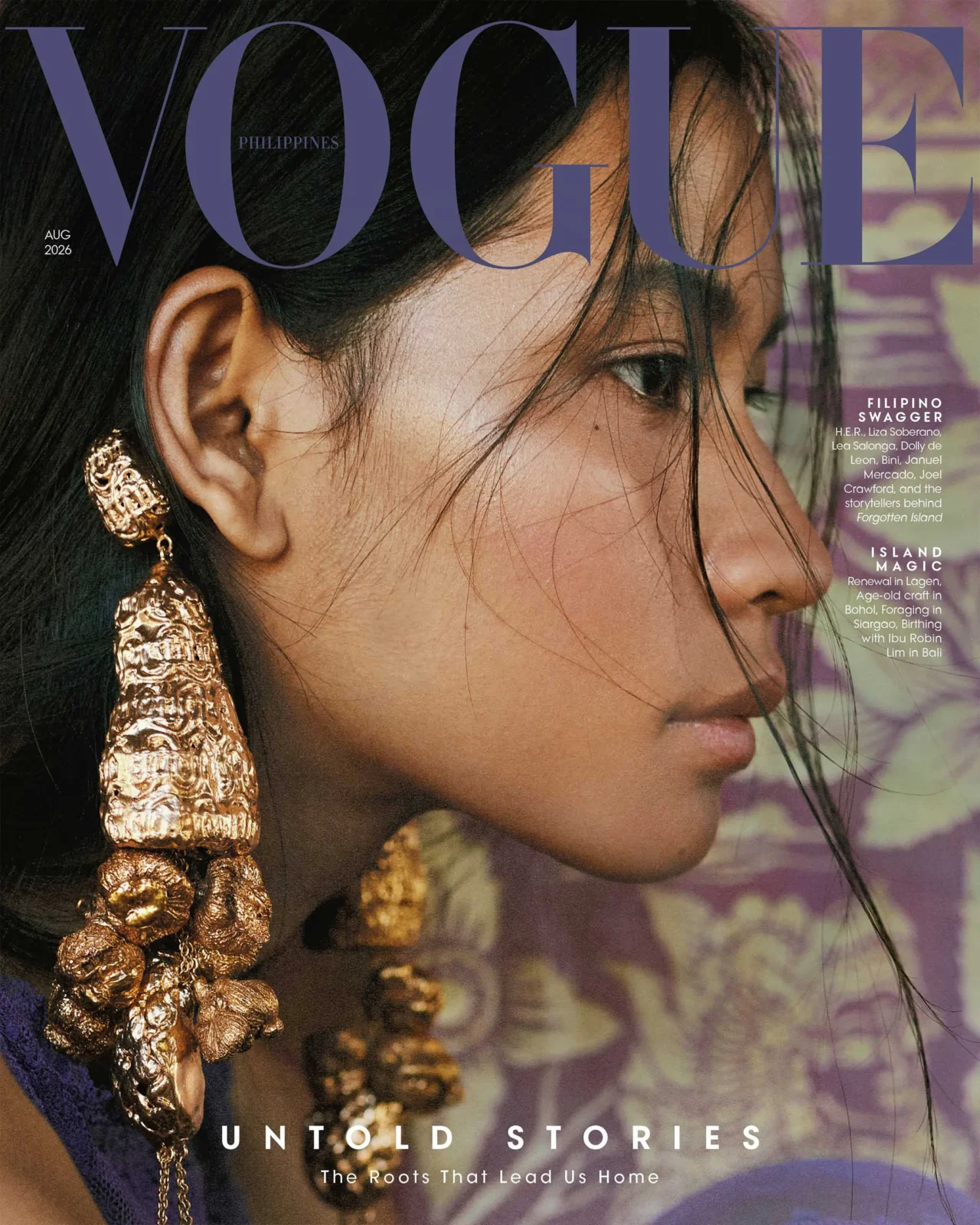
Present too is the quintessential warung or family-run streetside shop or eatery, similar to a Philippine tindahan or karinderya. They pay homage to traditional salt farming in the village of Kusamba, and even include a tribute to the kebaya, the UNESCO-recognized traditional upper garment worn across Southeast Asia. In a striking image, a violet lace top is worn with a pair of earrings that, while not intended by Spanish designer Juana Martin, might call to mind the Balinese ceremonial headpiece or crown called the gelungan. Behind Mirelle is a kain prada, or decorative textile, that was traditionally made with gold leaf but is now made with gold pigments via silkscreen printing.
Collectively, these elements capture a nuanced snapshot of Kenza and Mirelle’s homeland, which they took intentional steps to honor.
“I think what makes Indonesia so unique is its diversity,” Mirelle says. “Every region has its own culture, traditions, and identity, so every place has something different to offer. I think many people would be surprised by how beautiful it is.”
-
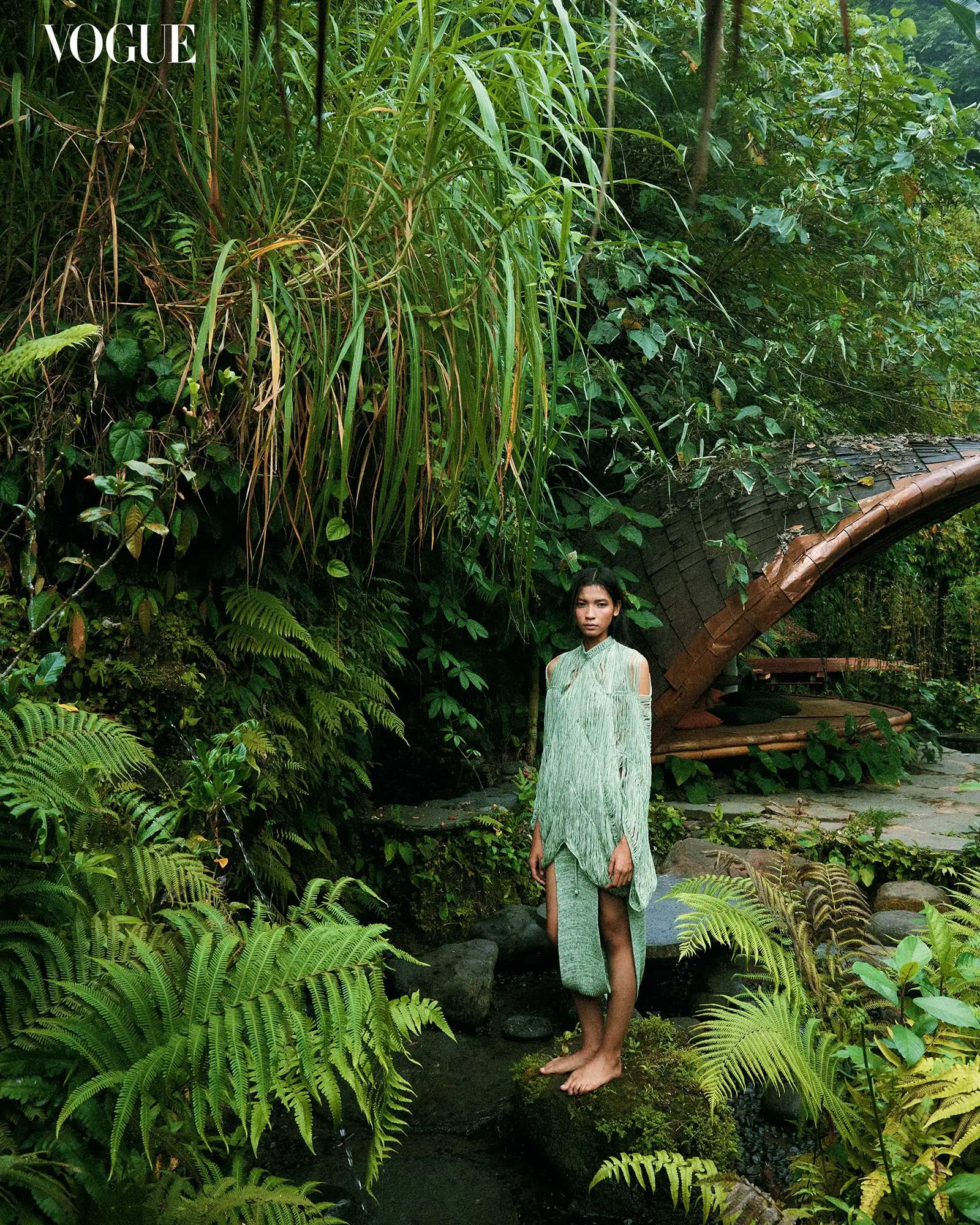 LORICO cotton-piña knit set. Photographed by Kenza le Bas for the August 2026 Issue of Vogue Philippines1/9
 -
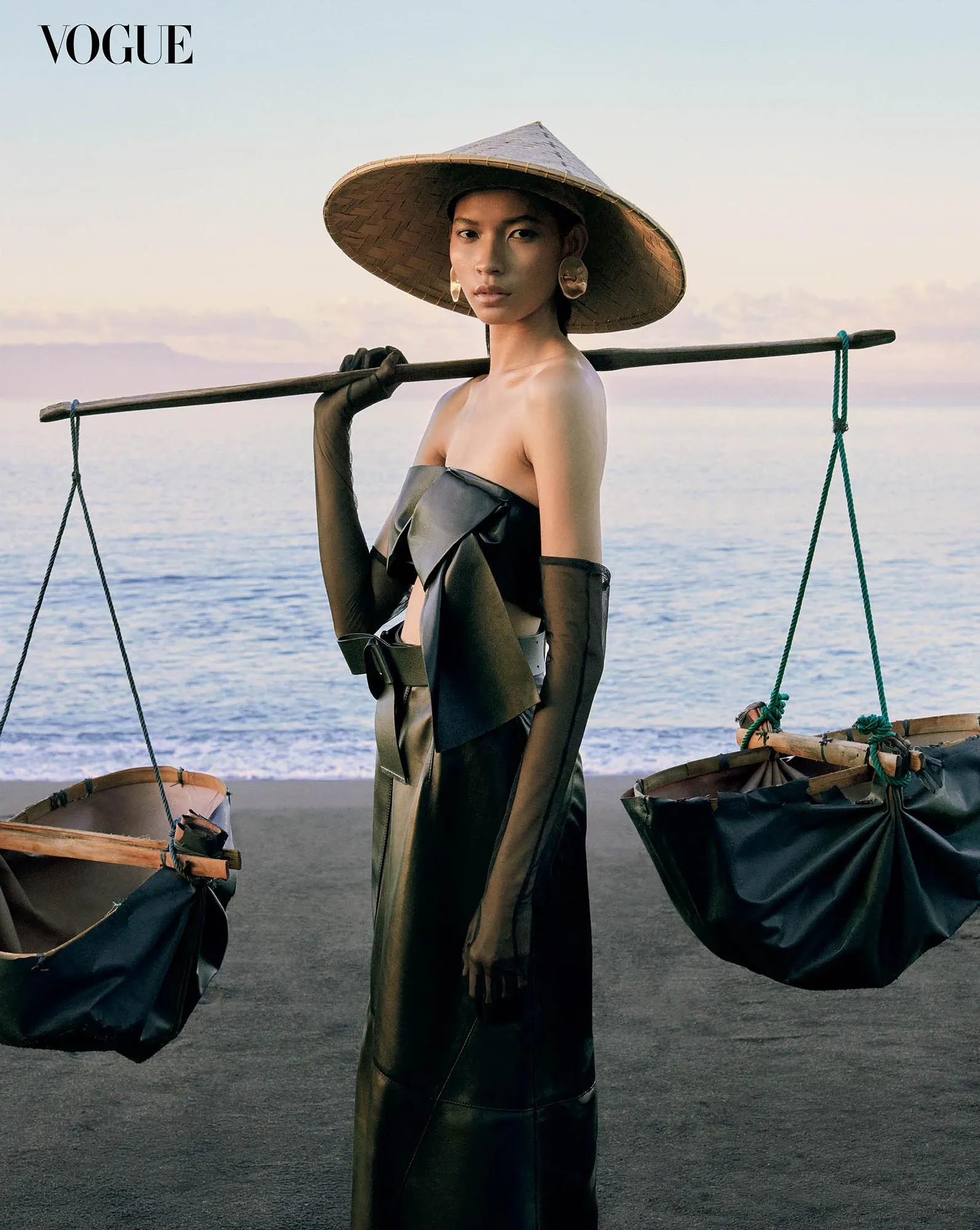 GIVENCHY top and skirt, CULT GAIA earrings, and SQUILLACE1923 gloves. Photographed by Kenza le Bas for the August 2026 Issue2/9
 -
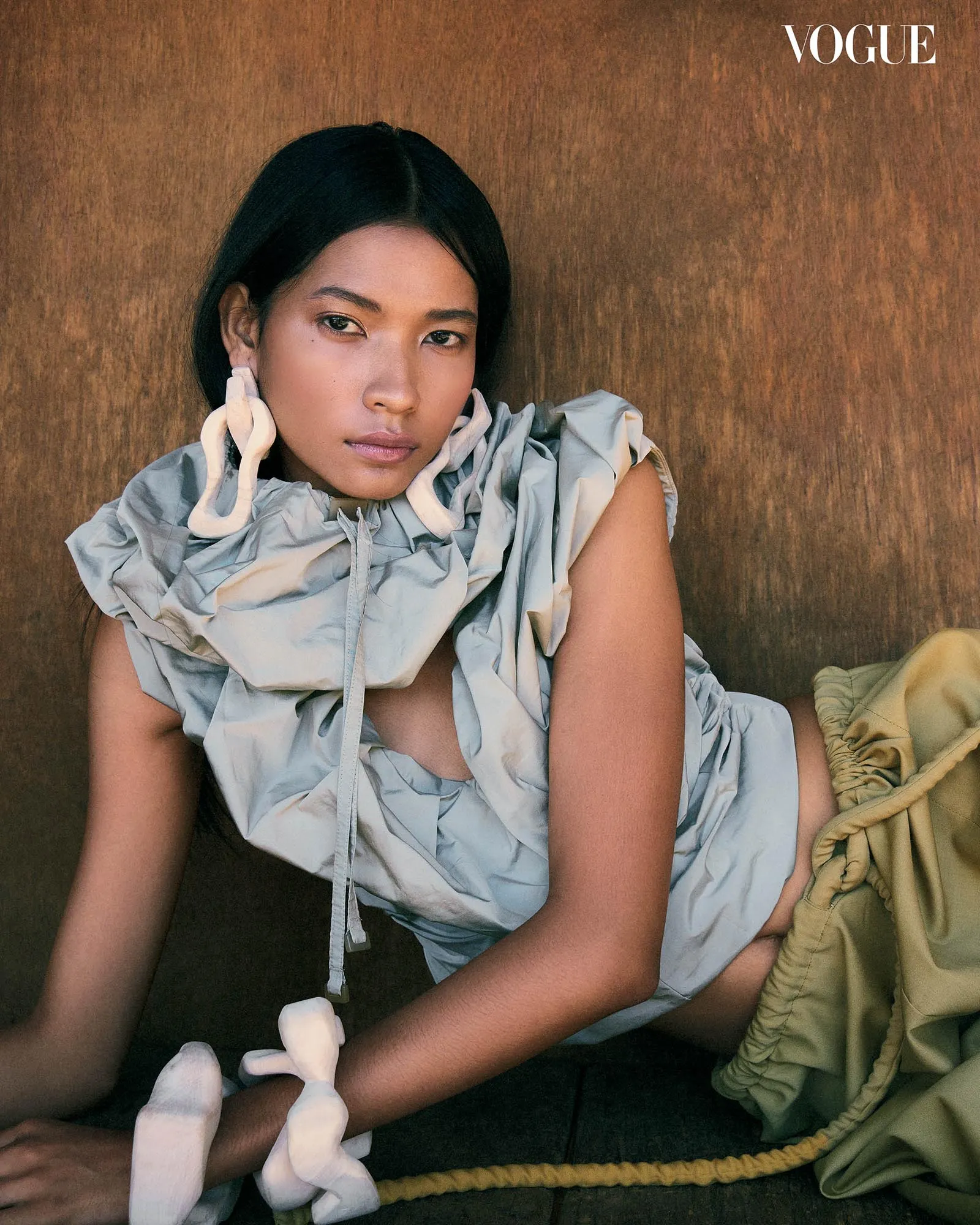 In a VÉRONIQUE LEROY top and trousers, Mirelle casts an ambiguous gaze. This image, like all others, is up to interpretation. “I hope people feel something before they even understand what they’re looking at. Emotion always comes first,” says Kenza. Photographed by Kenza le Bas for the August 2026 Issue of Vogue Philippines3/9
 -
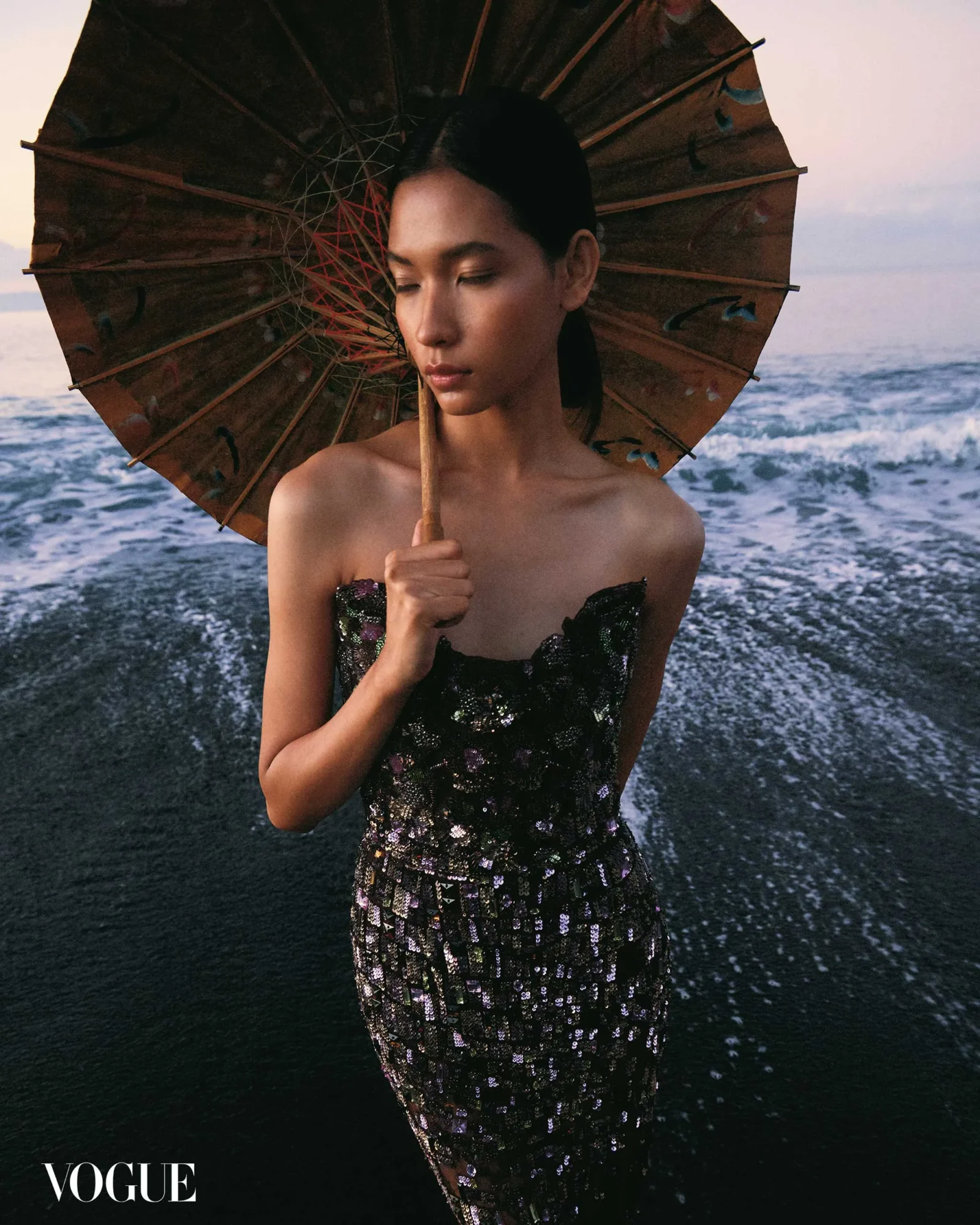 ELIE SAAB dress. Photographed by Kenza le Bas for the August 2026 Issue of Vogue Philippines4/9
 -
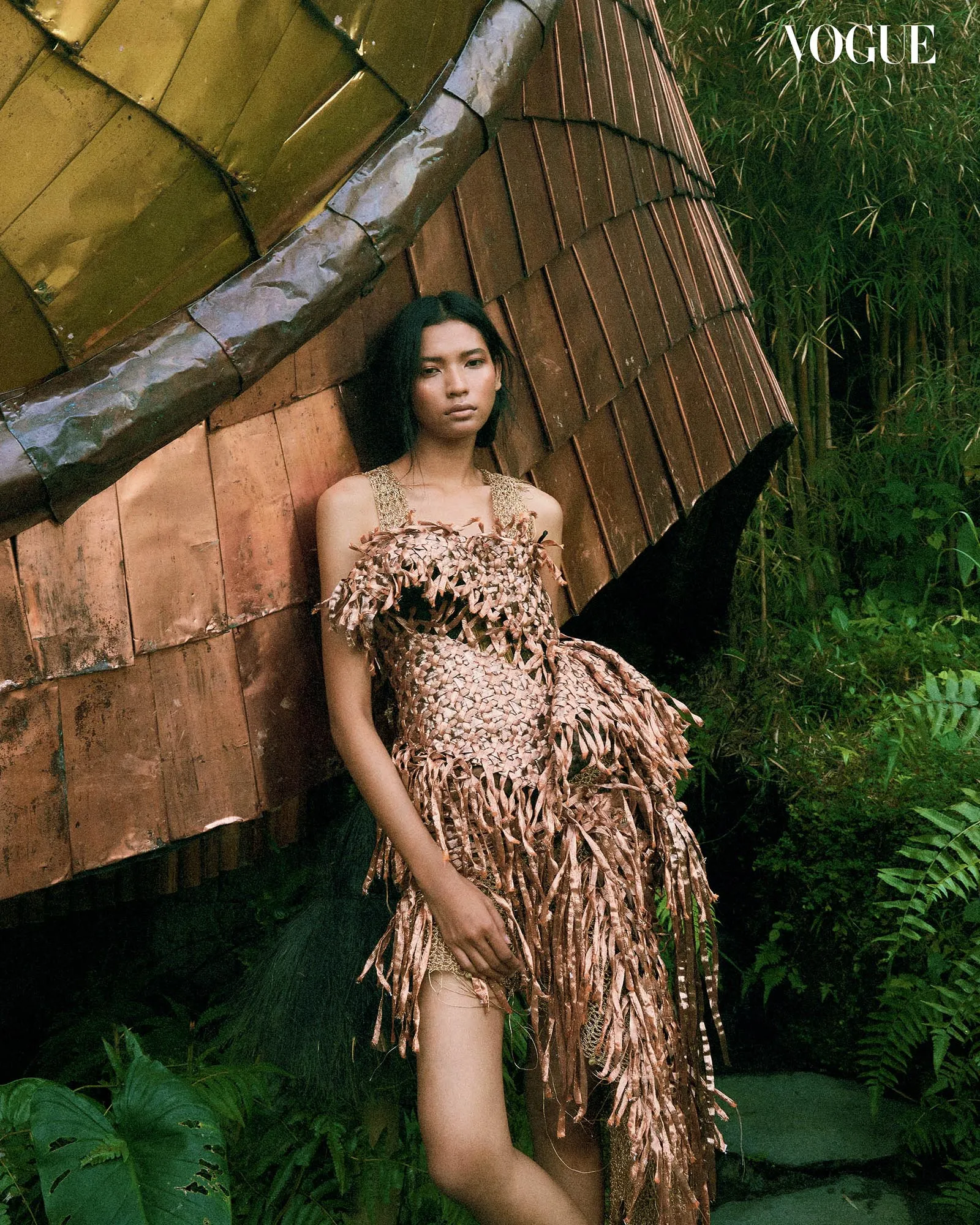 A handwoven lamé basketry dress by Filipino designer JAGGY GLARINO puts forth the Indonesian and Filipino proclivity for tangible age-old art forms. Photographed by Kenza le Bas5/9
 -
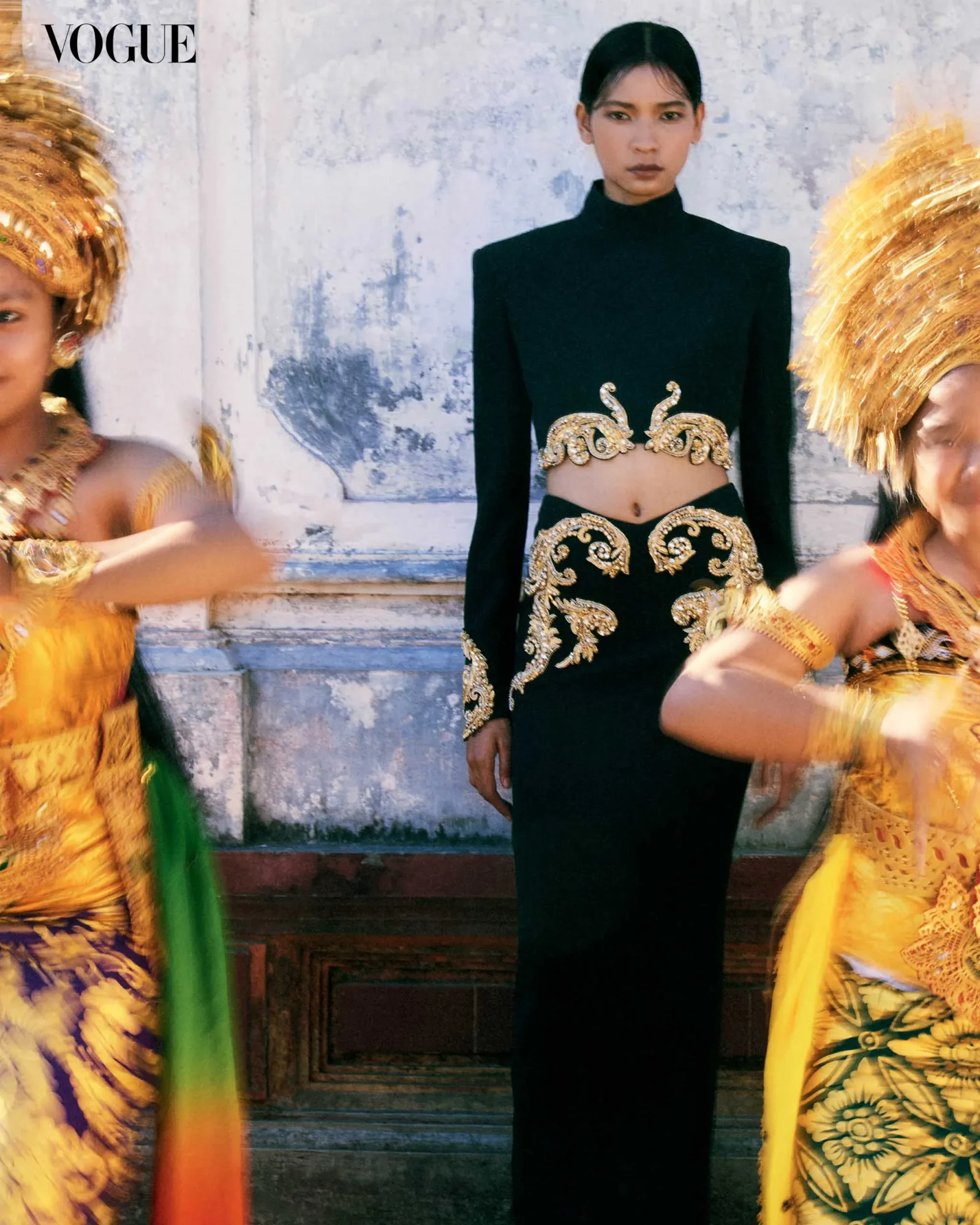 A sparsely adorned ZUHAIR MURAD evening set mirrors the elaborate golden attire of dancers performing the traditional Balinese legong dance. Photographed by Kenza le Bas6/9
 -
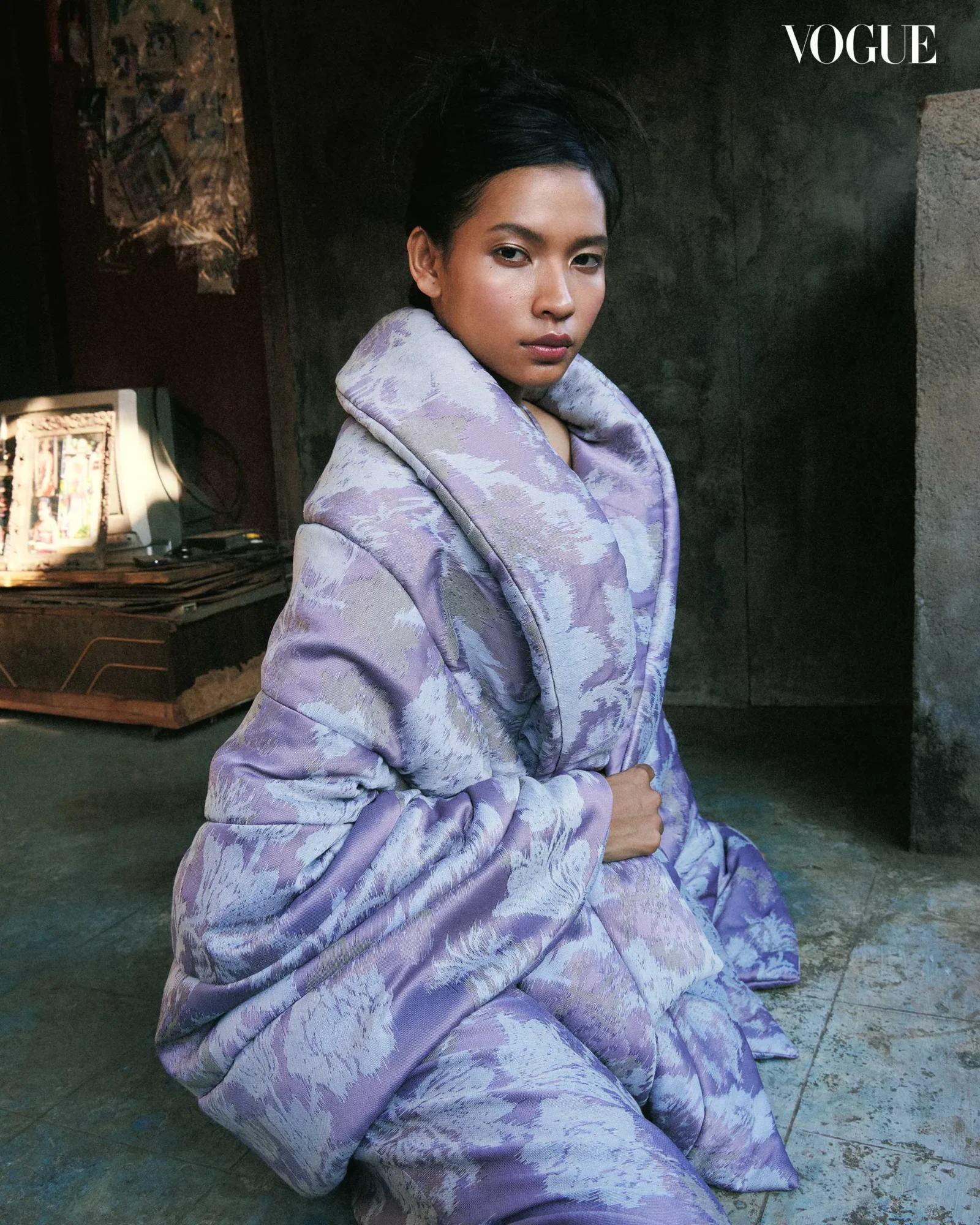 An avant-garde lavender jacquard duvet coat featuring a sculptural high collar and wrap silhouette, paired with a matching skirt by CULT GAIA. Photographed by Kenza le Bas7/9
 -
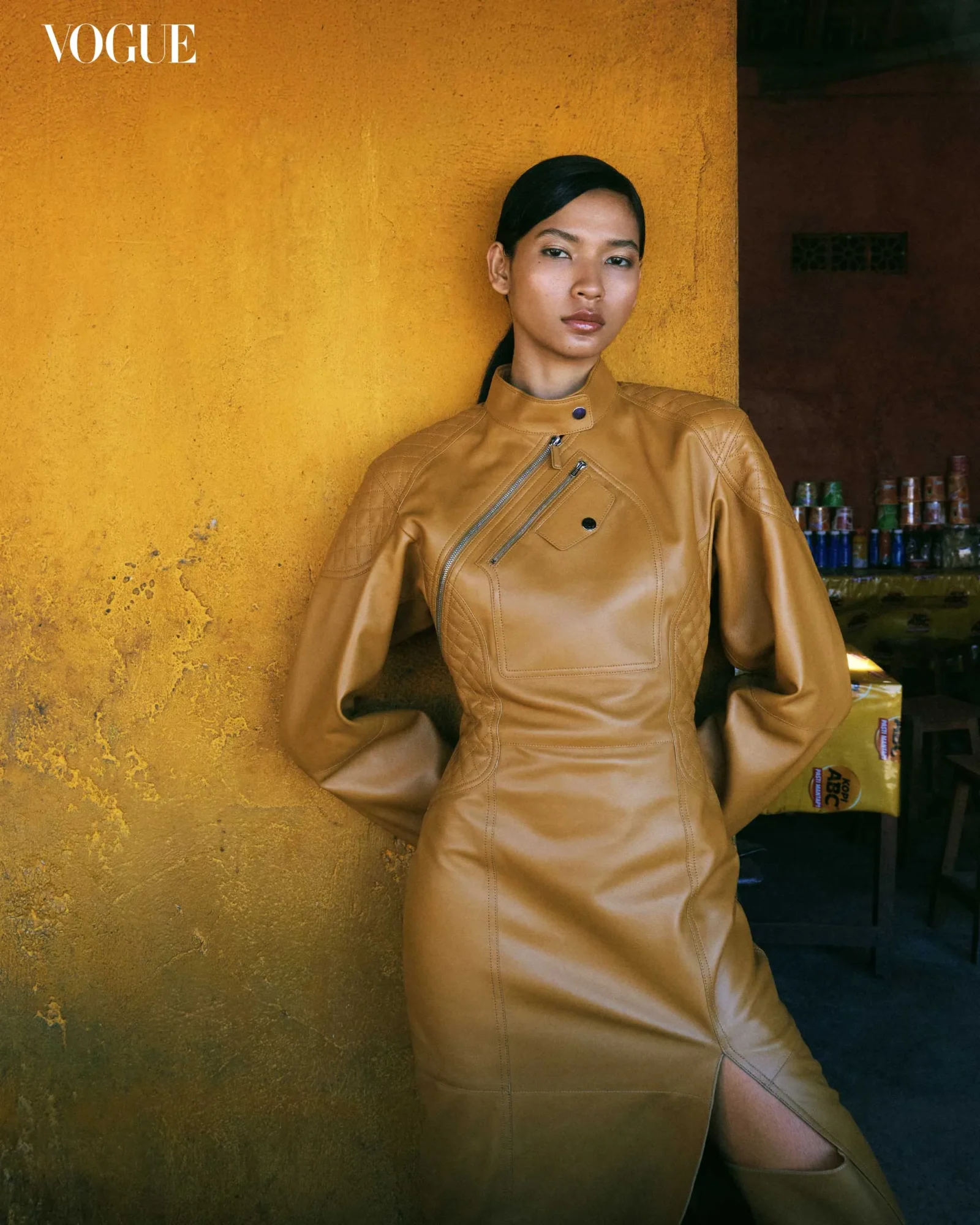 A sculptural butterscotch leather dress featuring moto-inspired details, complemented by matching leather boots by HERMÈS. Photographed by Kenza le Bas8/9
 -
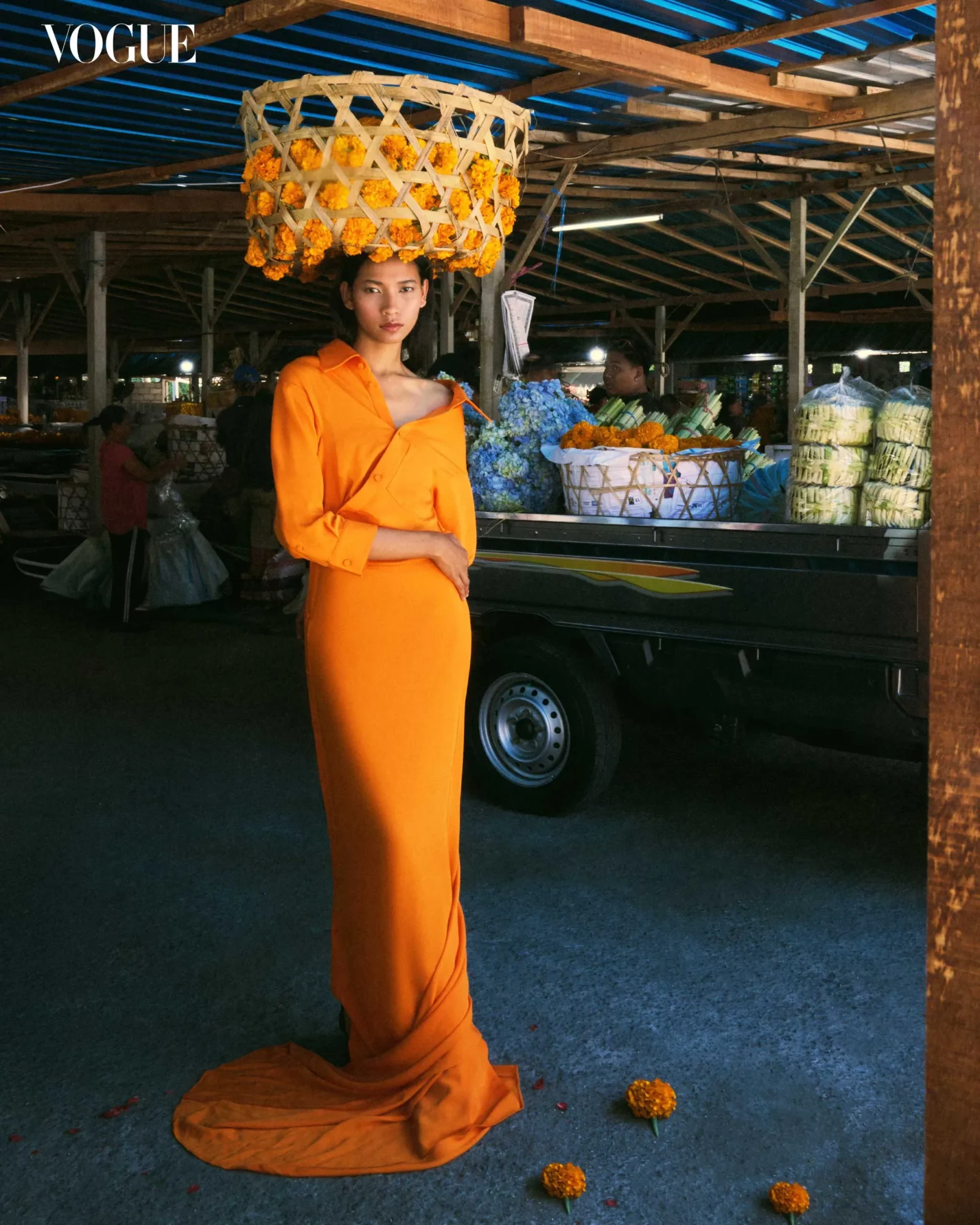 Balancing a basket of marigolds while wearing an asymmetrical BALENCIAGA shirt dress. Photographed by Kenza le Bas9/9
By TICIA ALMAZAN. Photographs by KENZA LE BAS. Styling by CHARLOTTE NEUWELS. Fashion Editor DAVID MILAN. Model: Mirelle Aurellia at Balitar Models. Hair and Makeup: Deborah Brider. Local Production: Thierry Robinet.
Frequently Asked Questions
Kenza Le Bas is a Paris-based fashion photographer and art director. She began her photography journey at 13 and later refined her craft at the École des Gobelins in Paris.
Mirelle Aurelia is a rising international fashion model represented globally by modeling agencies IMG Models Paris and TREND Model Management.
Indonesian batik is a traditional wax-resist dyeing technique and resulting cloth, characterized by intricate dots and lines, and recognized globally as a vital part of Indonesian cultural identity.
UNESCO’s list of intangible cultural heritage is a program that protects living traditions, expressions, and knowledge systems. It includes oral traditions, performing arts, and traditional craftsmanship.
Traditional Indonesian fashion practices center on textiles and garments like batik, the kebaya, and the sarong.