
Midwife and Mother Ibu Robin Lim Believes That Every Gentle Birth Is an Act of Peace


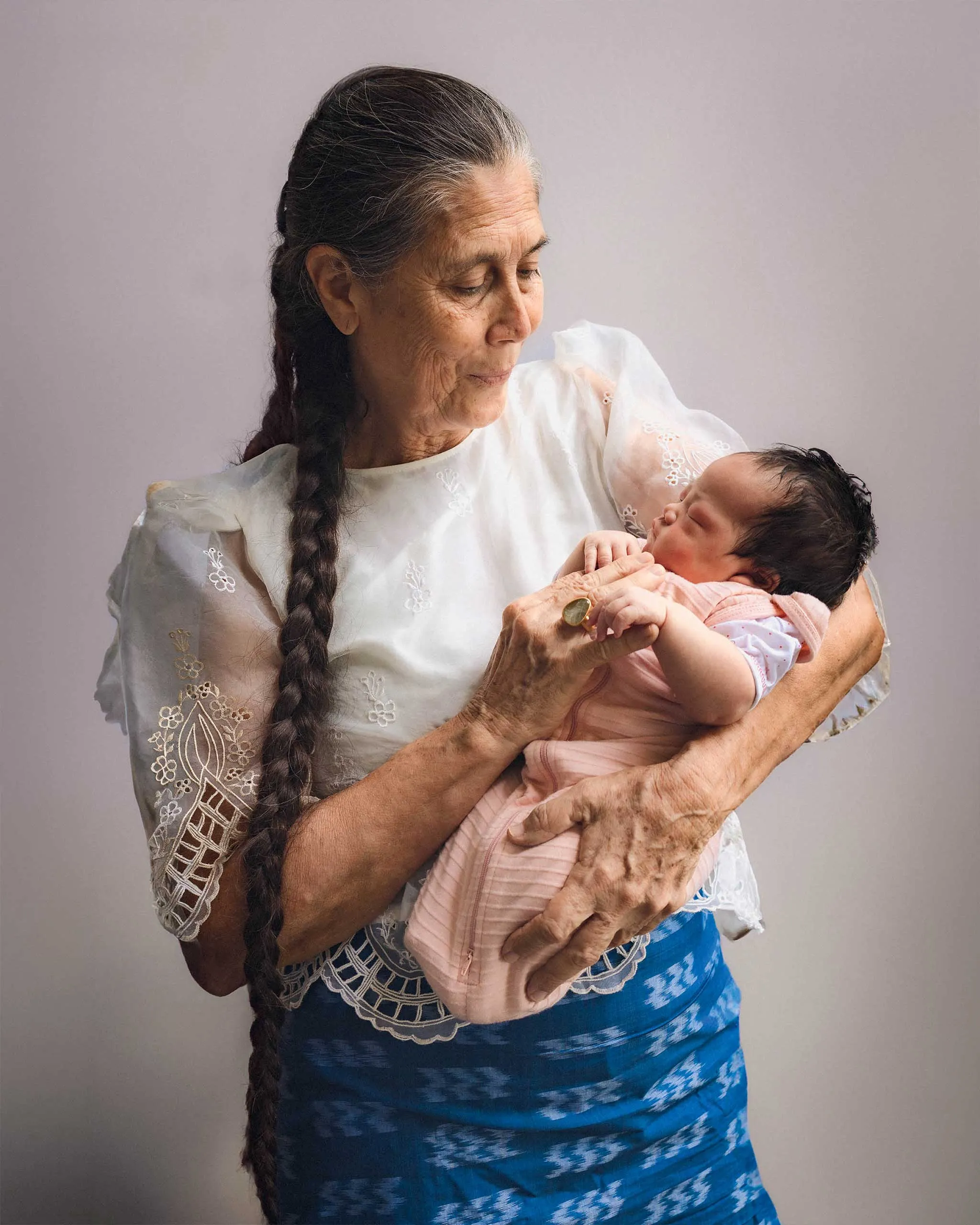
SETIA CAP CILI sarong. Photographed by Archie Geotina for the August 2026 Issue of Vogue Philippines
For more than three decades, midwife Ibu Robin Lim has delivered babies in mountain villages and disaster zones, believing that a return to gentle, culturally respectful birthing practices restores the sovereign power of mothers.
“Oh my gosh I just delivered a baby. Give me five minutes to run home,” Ibu Robin Lim messages. It is a completely valid reason for a renowned midwife to be delayed. Momentarily, she appears on screen, framed on either side by Balinese carvings of women (or goddesses): one holding several babies to her teat, and the other guiding her own baby down from her womb.
Lim has been up since three in the morning with the new mother, who had been in labor for the previous 58 hours. A doula helped the mother power through over the course of her prolonged labor, supporting her with massage, encouragement, and her constant presence while they waited for the baby’s arrival at the Bumi Sehat clinic, a short distance from Lim’s own home. After two and a half days, the baby spiraled out of the birth canal into Ibu Robin’s hands. Lim, who has personally attended at least 8,000 births in her three decades-long work as a midwife and childbirth advocate, still holds each one special, treating each birth story as one worth celebrating.
More than two days of laboring sounds exhausting, but Ibu Robin has many incredible stories of more arduous ones. “In most of the world, if she had been in a hospital, she would have had a cesarean and be separated from her baby, and that’s the thing that is so difficult,” she says. “It’s so traumatic, and the trauma from birth follows you for 30 years or more.”
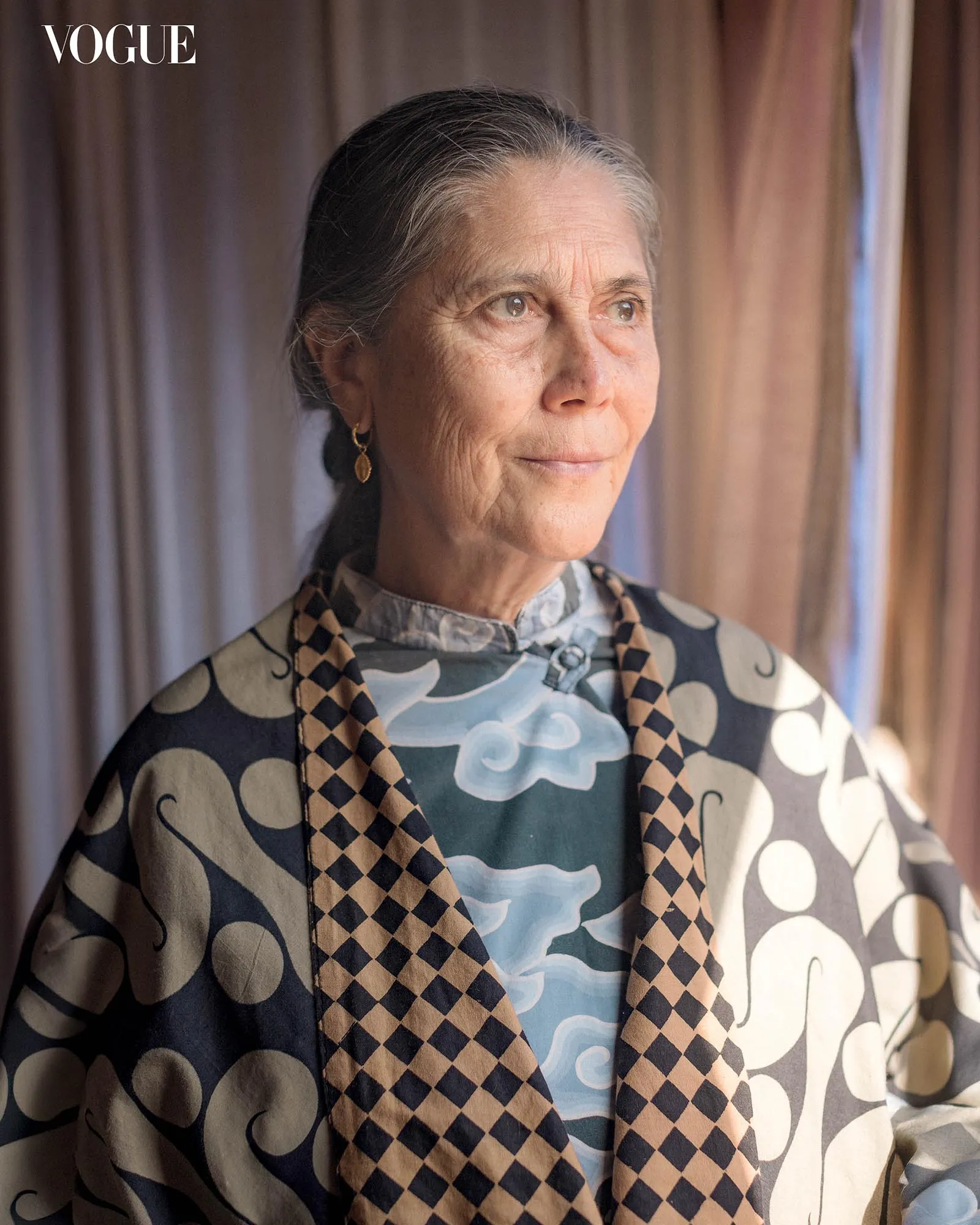
Bumi Sehat, a not-for-profit community health and childbirth center Lim founded in Bali in 2005, was built on the belief that the ability to give birth naturally is a human capacity that women have carried for millennia. Assisted by trained midwives and supported by doulas, women are able to give birth with little to no medical interventions. Bumi Sehat belongs to a global movement that sees birth not as a medical emergency but as a physiological and spiritual process. Its philosophy follows that of pioneering midwives from the 1970s like Ina May Gaskin, considered the “mother of modern midwifery” in the USA, and other natural birth activists who challenged the increasing medicalization of childbirth.
At Bumi Sehat, childbirth is believed to be sacred and instinctive, the opposite of what medicalized birth has become, where mothers are induced, epidurals are administered, and C-sections are scheduled. Instead of the newborn being immediately severed from the mother and taken away, Lim advocates for protocols like delayed cord clamping (at least three hours), immediate skin-to-skin-contact, and honoring the placenta (by burying or consuming it) rather than treating it as biohazardous waste.
Though some of these practices go against the established Western norm, they have been present in traditional societies in one form or another. Becoming a birth worker was something Lim had been spiritually prepared for through her Filipino lineage. Her Ilocano grandmother, a traditional birth attendant and hilot who lived most of her life in Baguio, had taught Lim the language of plant medicine and the rituals that belonged to a different time. After Lola Vicenta gave birth to Lim’s mother, the ninth child, she placed her placenta in a tree, “so that her spirit could fly free.”
“My first education was with my Lola. I think your first education is your most profound. It’s what you will trust and what you’ll always go back to.”
“My first education was with my Lola. I think your first education is your most profound. It’s what you will trust and what you’ll always go back to,” Lim says. “So, no matter how much medical training you have, I was blessed to have such a special Lola.”
The Lim family story, a multigenerational saga reaching back to the end of the Spanish era, was put down in words in Butterfly People, a semi-autobiographical novel Lim published in 2009. In order to get a sense of who the matriarch Lim was and the circumstances that shaped her grandchildren’s worlds, Ibu Robin suggested I read the book. I discovered that Lola Vicenta Munar Lim was quite the force of nature, feared and respected by the community. She escaped an abusive life, survived wartime occupation, and ran a business while raising a multitude of children and grandchildren. The author may have taken creative liberties in telling the family tale, but the story is, in essence, true.
Lim grew up in the US, the daughter of an American military man and a Filipino woman, during a time, at least until 1967, when interracial marriages were still illegal. The years she spent in the Benguet mountainside with her grandmother and numerous aunts, uncles, and cousins were the antithesis to her regimented life in the States, where outsiders needed to conform to survive.
When she got pregnant at 19, she had no money or insurance to go to the hospital; instead, she sought the help of midwives. Her baby was delivered peacefully at home, just like the generation of Lims before her. Years later, her sister Christine died from complications of her third pregnancy, under the watch of an OB-GYN.
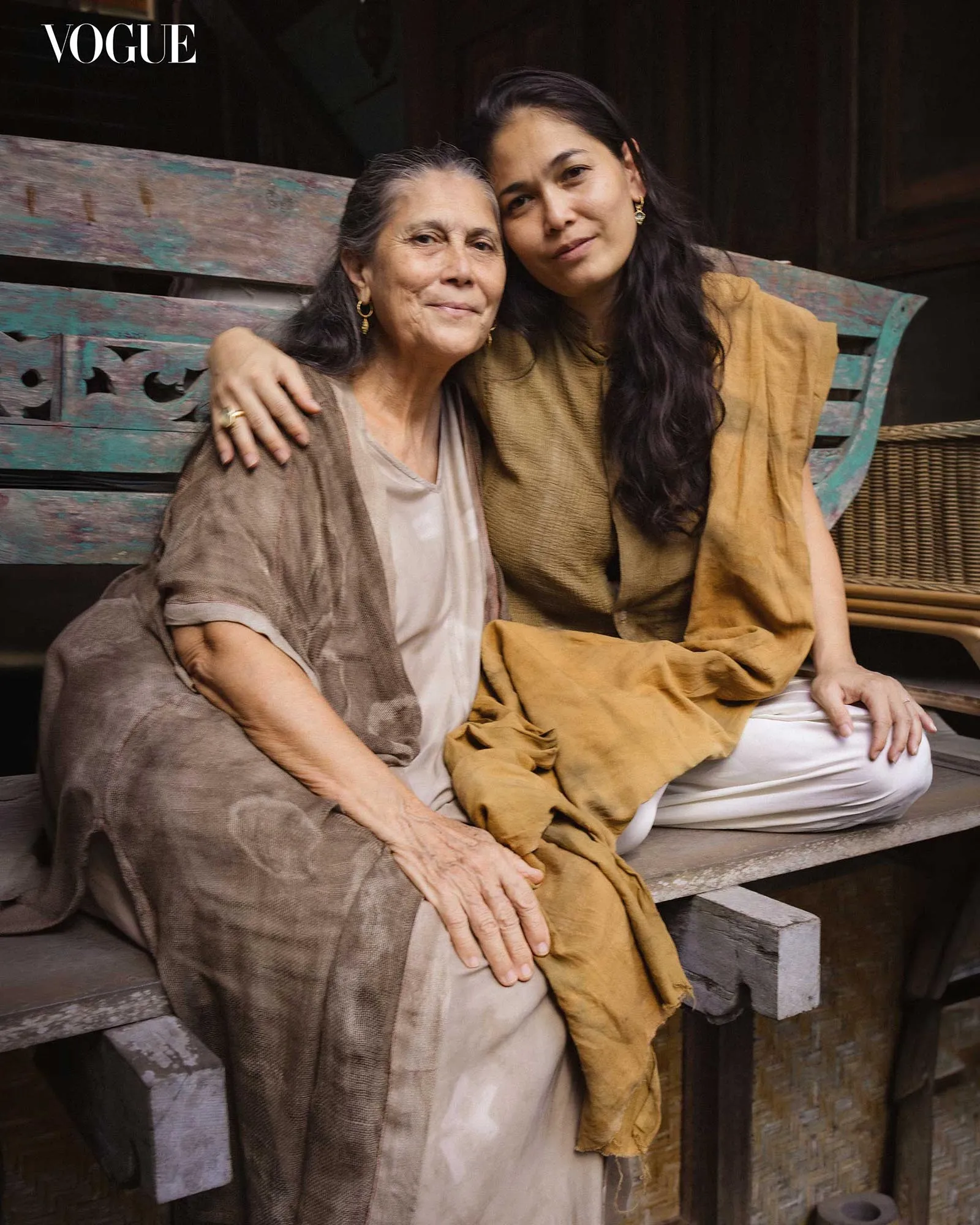
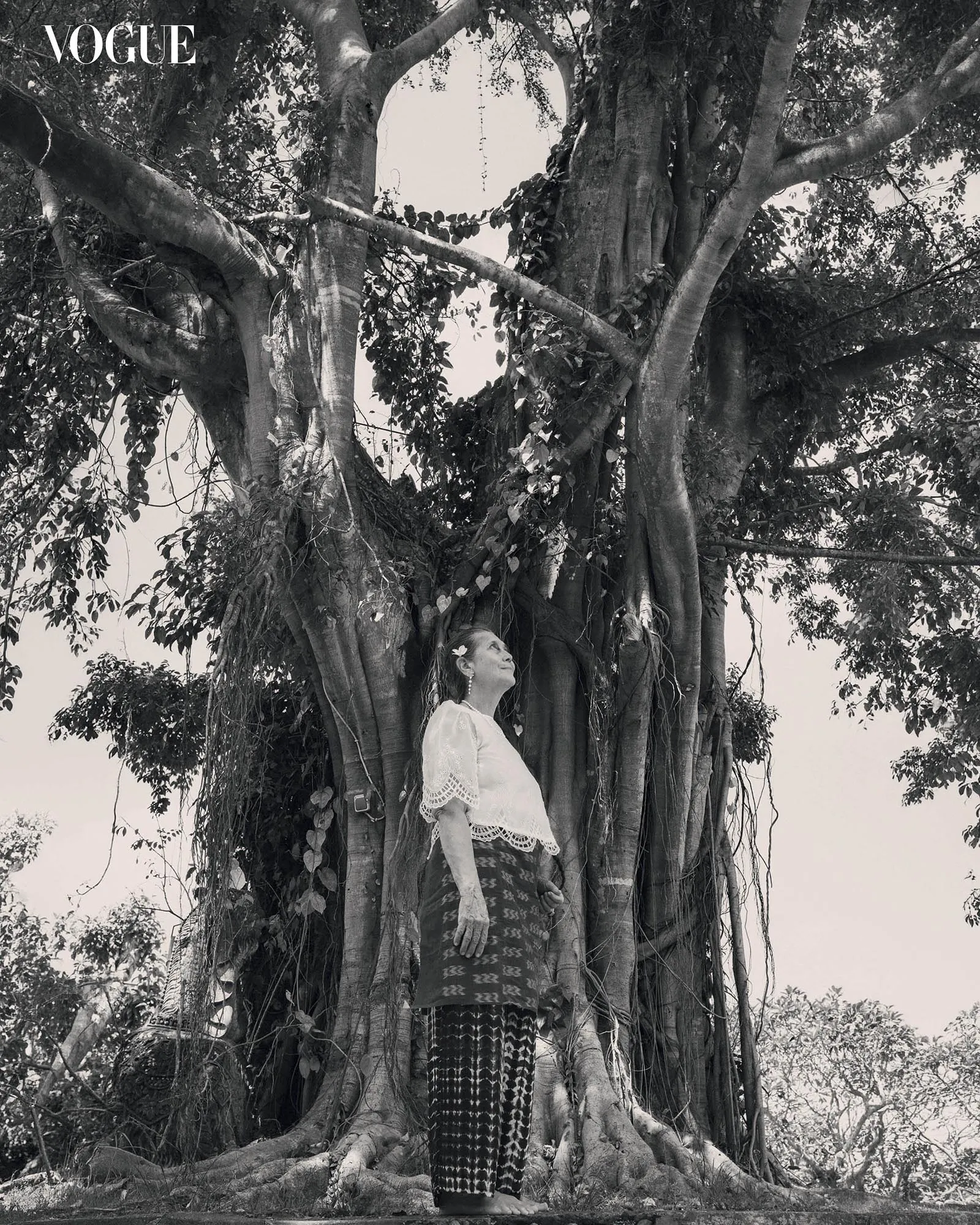
“More than 80 percent of maternal deaths in pregnancy and birth are avoidable,” Ibu Robin says. “My sister and niece’s deaths were preventable.” Losing them broke something in her, but the grief led her toward the work she would spend the rest of her life doing: to decolonize maternal healthcare and return to gentle, culturally respectful birthing practices that restore the sovereign power of mothers. Lim family lore has it that Lola Vicentia physically implanted an anting-anting under young Robin’s skin. The agimat sa loob was meant to be an irritation, causing spiritual discomfort impossible to ignore until the soul’s duty has been fulfilled.
Perhaps the amulet did what her grandmother intended: it transformed her pain into purpose. After having four gentle home births of her own with only the help of midwives, she herself felt called to be one. In 1992, Lim moved her blended family of six children from Hawaii, where she worked as a poetry teacher, to Bali, Indonesia. Bali was a place that was still deeply spiritual, where elders were revered, children were respected, and newborns were considered divine.
These values were especially felt in the rural village of Nyuh Kuning, just outside of Ubud. After giving birth to her seventh child at home, villagers began to come to Robin, trusting her to help deliver their babies safely. Lim obtained formal midwife certification in the USA and established Bumi Sehat in Bali in 1995, offering free services for “the least, the last, and the lost.” She always carried the feeling that her sister’s spirit was urging her to devote her life to mothers whose lives were at risk simply because they lack access to prenatal and postpartum care.
The criticality of Bumi Sehat’s mission comes into sharp focus during disasters, which inevitably impact women and children harder. In the aftermath of the catastrophic 2004 Indian Ocean earthquake and tsunami, a small team of Bumi Sehat midwives and nurses were one of the first responders to arrive in the devastated province of Aceh. Alongside volunteers and her own children, they dug latrines, pitched tents, delivered babies, and recovered the dead. They treated patients with malaria, dengue, and flood-born diseases, but most of all, they kept bringing babies into the light. While other aid agencies have since come and gone, Bumi Sehat remains in Aceh to this day.
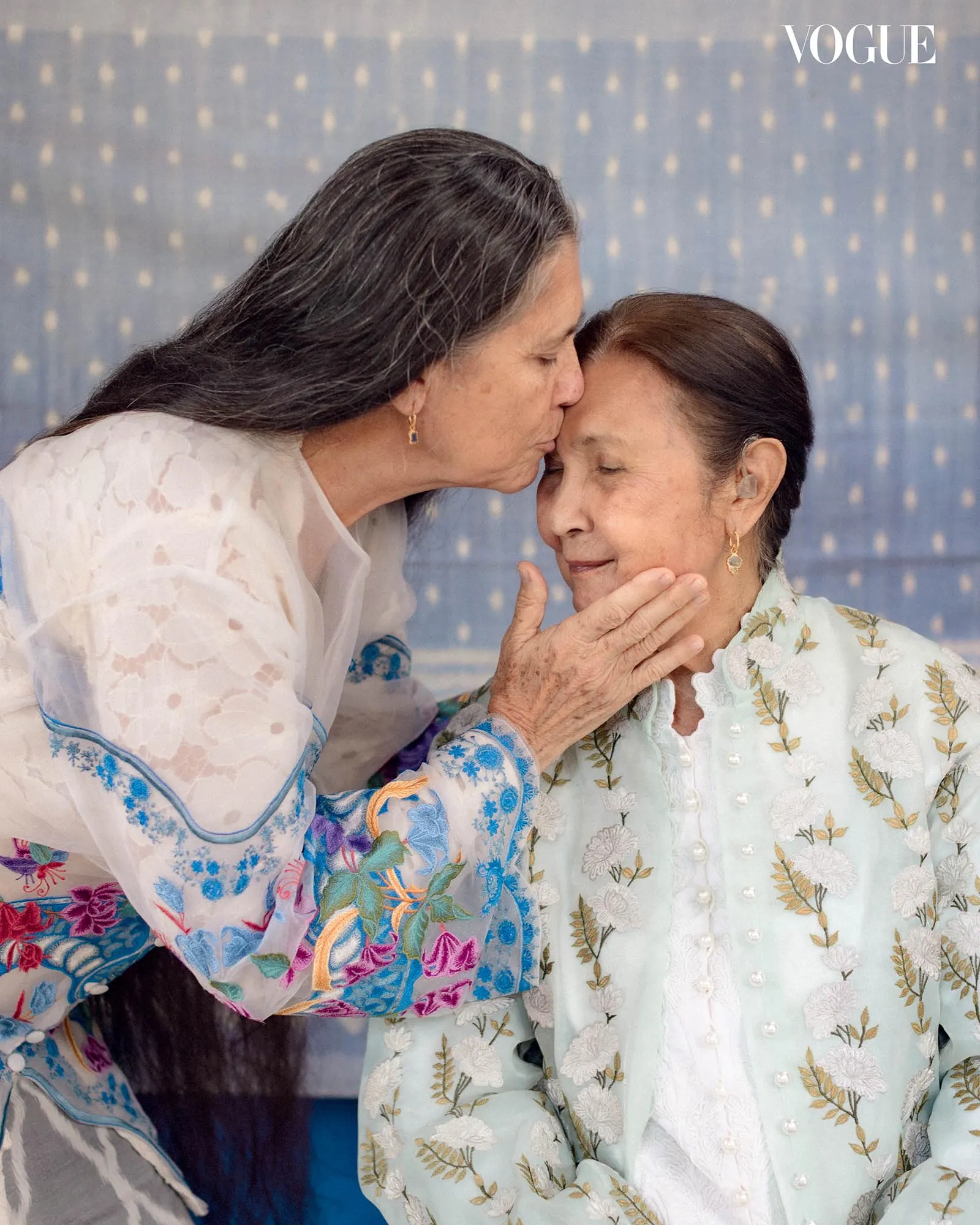
Where earthquakes and eruptions strike, Bumi Sehat follows: the 2010 earthquake in Haiti, the 2015 earthquake in Nepal, the 2017 Bali volcanic eruption. They were in Leyte after Haiyan, the super typhoon that whipped through the Visayas in November 2013, destroying lives and crucial infrastructure. In the year after Haiyan, 777 babies were delivered; Lim asserts that they achieved better outcomes in their birthing tent than the most equipped hospital in Manila due to their compassionate model of care. Each birth is attended with love, no matter how dire the circumstances, and each baby is given the optimum conditions for a healthy start. They leave the umbilical cord intact until all the blood is delivered to the baby, and mothers are supported throughout breastfeeding. Bumi Wadah, the Philippines branch, is now permanently set up in Dulag, Leyte, where they continue to provide birth services, general medicine, and emergency care.
Bumi Wadah Philippines’ executive director Teresa Maniego shares a birthing story from Palawan, where they run Bahai Arugaan ni Maria, a solar-powered birthing clinic in Aborlan, serving a province with one of the highest rates of teenage pregnancies and the fourth highest maternal mortality rate in the Philippines. Rose Ann, a woman in active labor, came in on a boat from Isla Sombrero, a tiny islet around eight kilometers from the mainland. Midwife Chindy, racing toward the pier in an ambulance, barely made it in time. Seeing that the hull of the boat was no place to deliver a baby, Chindy appealed to bystanders for help. Strangers stepped forward and carefully carried Rose Ann to the ambulance while the crowd cheered on.
“There was something deeply human about that moment, a whole community willing a new life into the world,” Maniego says. The ambulance sped back to the clinic, but baby Nina came in her own time, arriving into Chindy’s hands before they could even open the gates.
“Our mission has always been to provide the gentlest landing for every woman who entrusts us with her birth.”
“Our mission has always been to provide the gentlest landing for every woman who entrusts us with her birth, no matter where she comes from or how far she has to travel to reach us. That evening at the pier reminded us why we do this work: because when a mother needs you, you show up. Every time.”
For mothers who have lost everything after a disaster, Bumi Sehat shows up with Family Bucket, a survival kit containing the most basic necessities. Each bucket contains five kilos of rice and mung beans, a portable stove, a lighter, a water filter, sarongs that can be used as clothing, a big tarp that can be used as a tent, even children’s art supplies. In the wake of Haiyan, Lim sent scouts to the villages and asked the people what they needed. “They didn’t say, ‘I need a house.’ They’d say, ‘I need a bolo knife so I could chop up this rubbish and make a shelter’.”
If you ask her what women don’t need, Lim will point to the corporations that supply infant formula and gaslight mothers into believing that they cannot adequately breastfeed their babies in traumatic situations. “These women don’t have a kitchen, they have no running water, they have no way of sterilizing the milk in the bottles,” she says. She is fiercely critical of how the medical industrial complex continues to fail mothers. In Aceh, they identified 63 babies who died from waterborne illness from formula mixed with contaminated water. “Breastfeeding is a superpower. Breastfeeding not only saves lives, it’s absolutely essential in this time.”
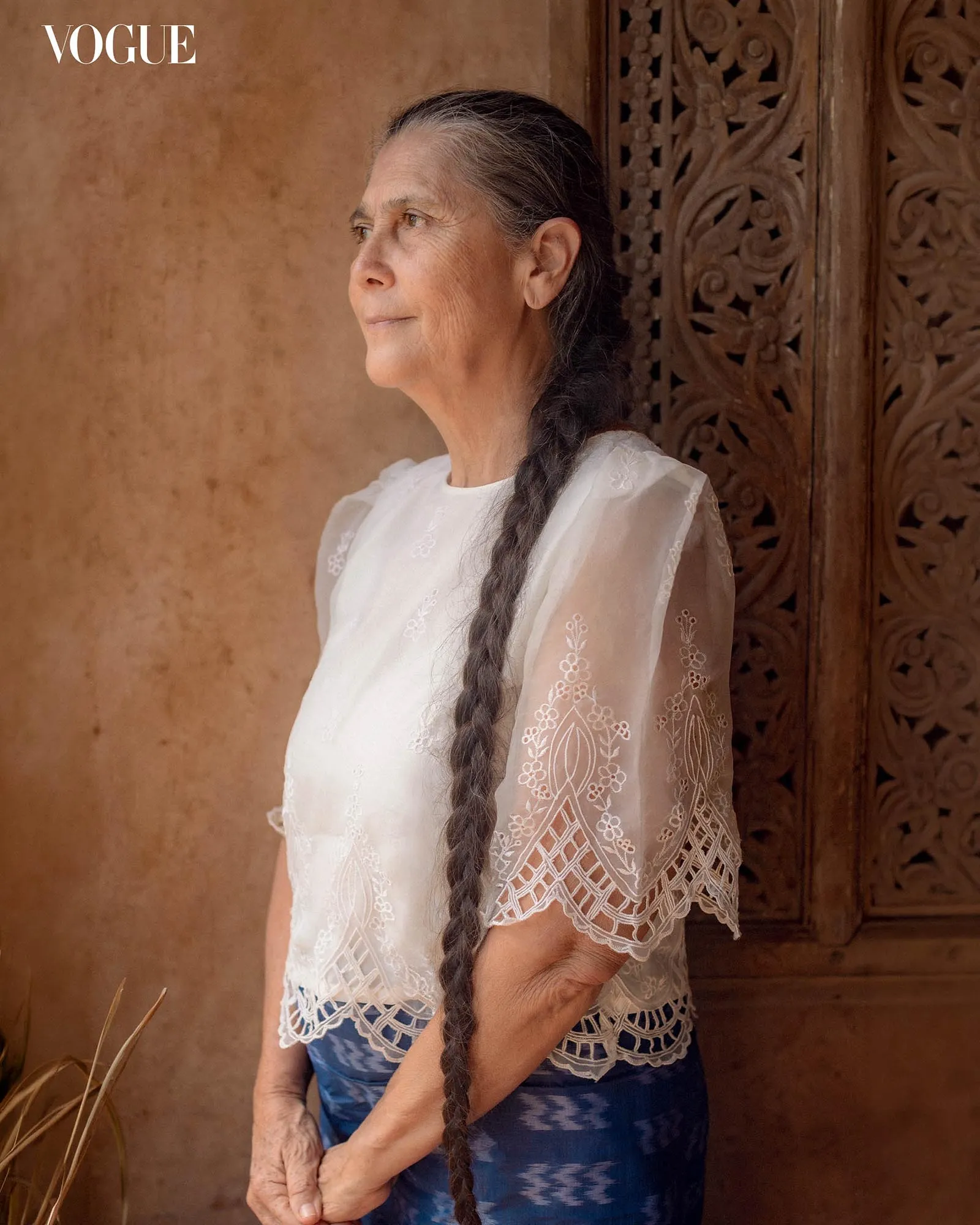
After Haiyan, Lim reached out to Dr. Laura Stachel, a 2013 CNN Hero. Stachel, an OB-GYN, was recognized for developing the Solar Suitcase, a rugged portable kit which includes solar panels, LED lights, a cellphone charging unit, and a fetal Doppler, after witnessing how the lack of stable electricity affected maternal mortality in Nigerian hospitals. Doctor Stachel and Midwife Robin, herself a CNN Hero from 2011, teamed up and met with dozens of midwives in Cebu and Tacloban, to listen to the incredible stories of how they took care of mothers and newborns in debris, deep floodwaters, and near-total darkness. “We distributed 80 Solar Suitcases so that those beautiful little laying-in clinics that the midwives are owning and running could be back up on their feet,” Lim says. “Because without light, how can you deliver babies? Babies love to come at night.”
Ibu Robin finds the time to nurture the writer in her, having published several books of fiction, nonfiction, and poetry. Even prior to embarking on her midwifing journey, Lim drew on research and her experiences as a mother to write her first guide, After The Baby’s Birth: A Woman’s Way to WellnessWellnessA holistic approach to wellbeing that includes physical health, mental balance, sleep, nutrition, movement, and self-care. In beauty and lifestyle, wellness has expanded from spa treatments to therapy, mindfulness, andGo to Wellness Glossary, published in 1991. I first heard about Ibu Robin from my best friend Karen Elizalde, who lived in Ubud nearly two decades ago. Robin, to her, was a writer first, someone who shepherded Karen’s husband through the process of launching his first book about Bali. When Karen found out she was pregnant with her first child, Robin was there for her, too, confirming her pregnancy and giving her acupuncture treatments.
“She introduced me to her pregnancy care book, as well as to the writings of Michel Odent, who spoke about the vital role of oxytocin in pregnancy, birth, breastfeeding, bonding, and beyond,” Karen tells me. “During a time of many transitions, Robin gave me warmth, support, and encouragement. She helped me trust my body, my baby, and the process of becoming a mother. She encouraged me through breastfeeding and surrounded me with the kind of care that made me feel safe.”
At the end of 2011, Lim was publicly voted CNN Hero of the Year, the second Filipino after Efren Peñaflorida in 2009 to be given the distinction. Her growing global recognition helped solicit more donations to continue funding the operations of Bumi Sehat, which provides services at no cost and is open 24 hours a day. By 2016, Bumi Sehat inaugurated their modern new clinic in Bali, three times larger than the previous one, expanding their capacity to 1,500 births annually. Today, women from all walks of life come to Bumi Sehat or seek guidance from Ibu Robin. Yet its doors remain open first and foremost to those who have nowhere and no one else to turn to.
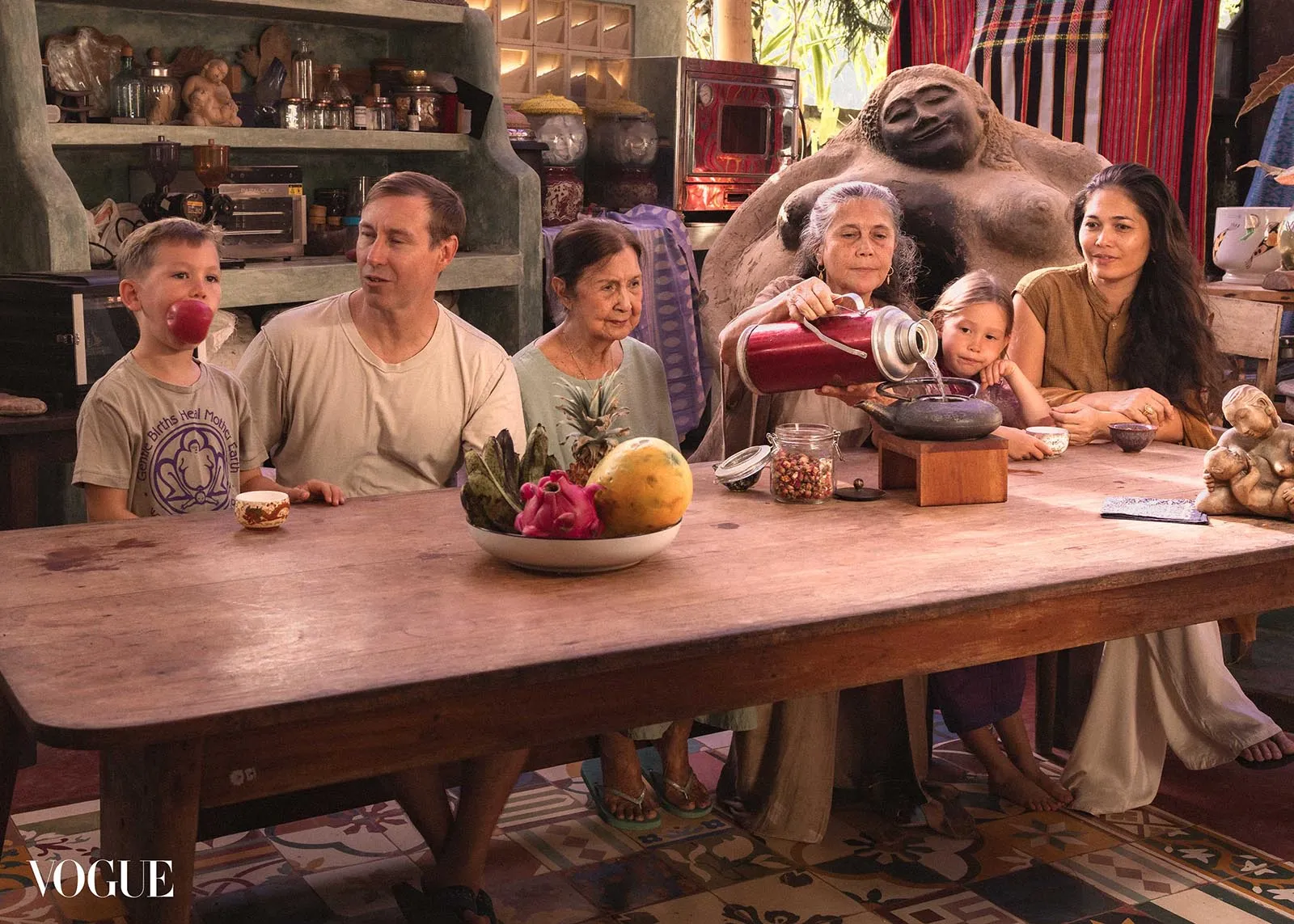
“Ibu Robin is beloved by birthkeepers, mothers, mothers-to-be and families across time and space. Her wisdom provided me guidance into the spiritual initiation of motherhood,” says yoga teacher Katrina Razon. “Wisdom that you don’t receive in a doctor’s appointment,” During the third trimester of her pregnancy, the cord was found to be coiled around her son’s neck. Ibu Robin recommended eating the whites of the peels of oranges to elongate the cord. “During my last scan, we saw that the cord had untangled. It’s this kind of ancestral knowledge that the industrialized medical model of birth completely lacks in. She opened my eyes to take the empowered choice to deliver both of my babies physiologically and naturally. Choices that continue to pay off in profound ways.”
I’ve watched enough of Ibu Robin’s talks to know that she does not shun medical science. At Bumi Sehat, they have medical labs and an ultrasound machine, though sparingly used. The midwives, doulas, and nurses work collaboratively with Dr. Pariartha, an OB-GYN, and women will be transported to the hospital in an ambulance in case of emergencies like placental abruptions or fetal distress. She is also not against cesareans, which she calls belly births, as a lifesaving intervention. While dismayed by the increasing rate of cesareans in hospitals, she always tells mothers that they shouldn’t feel guilty for having one. Every birth is a miracle.
Still, as someone whose feelings of regret and loss about having three CS births occasionally surface, I needed to hear it from her. I find myself disconnected, somehow disembodied from my own birth stories, having brought four children into the world yet never experiencing the pangs of birth, the contractions (Lim calls them expansions) that release oxytocin in a continuous feedback loop.
“I want to say thank you to cesarean moms. They feel like they failed, but that’s ridiculous, they went the whole distance, having major abdominal surgery to bring their babies safely Earthside,” she says. “I just want to thank you, and I hope that does help lift the trauma a little bit.” We had turned off our cameras because of unstable wifi, so she didn’t see me shed a tear.
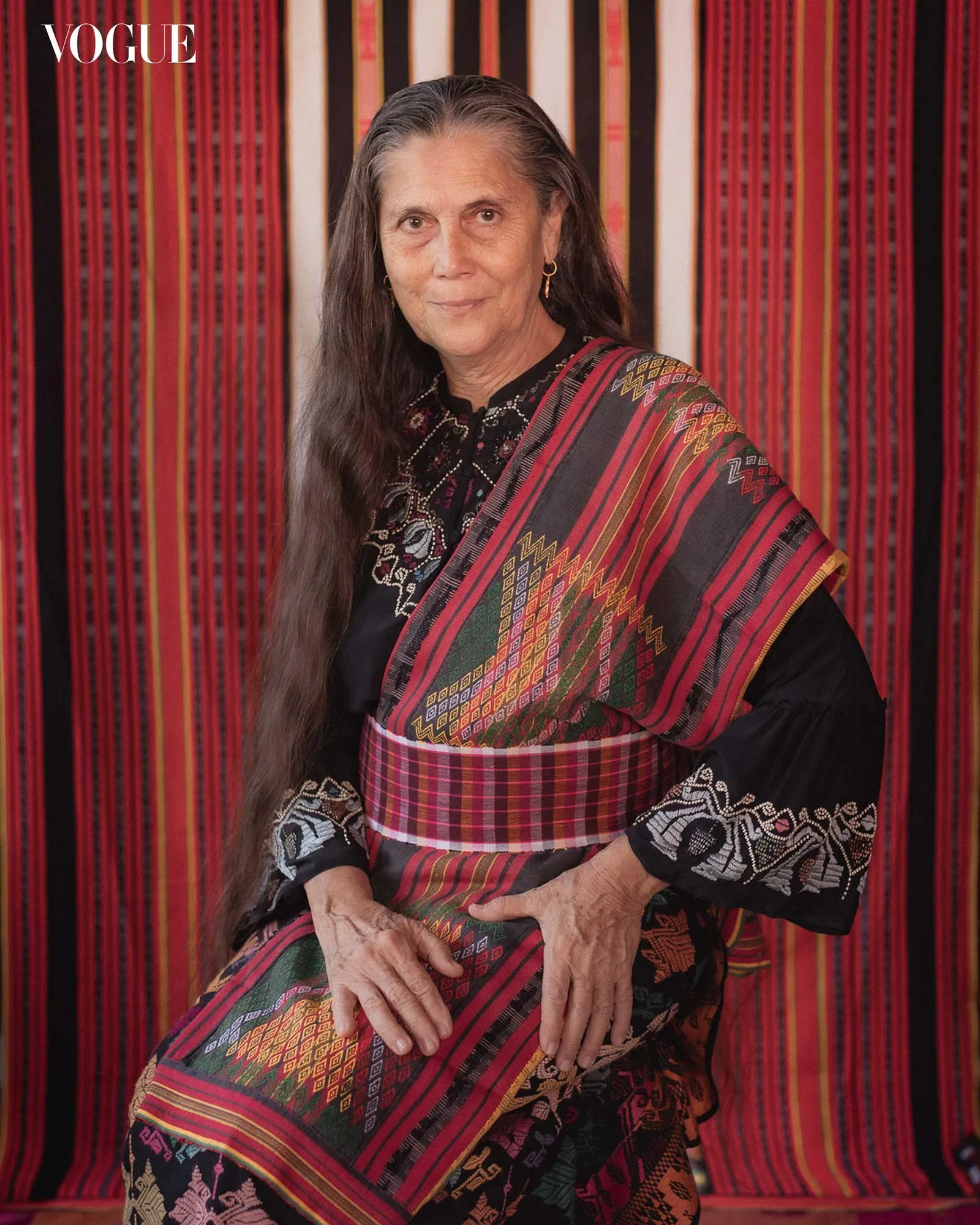
Ibu Robin is surrounded by babies, even those that cannot be seen. Her 94-year-old mother Cresencia, who lives with Robin in her multi-generational household, informs her about the spirits of babies she sees hanging around the house or following Robin to the clinic. Robin asks her mom why she can’t see them herself. “They don’t show themselves to you because they need your help,” her mother said. Robin asked, “How do they need my help?” Her mom replied, “They’re waiting to be born.”
One of Lim’s granddaughters works as a labor and delivery nurse in a hospital in Austin, Texas. Having grown up with Bumi Sehat and seeing birth in a very natural, supportive, and loving setting, she was deeply disturbed to see nearly every mother being induced, babies being separated from their mothers for days, and babies given bottles at night so that the mothers could sleep. Despite the frustrations, her grandmother reminds her to “remember the love that you bring, no matter how the birth goes.” Once, she called her Lola excitedly to report a rare instance of seeing a mother give birth without an epidural, which she described as a woman “getting her power.”
Some 30 years ago when Lim made the decision to become a midwife, it was a commitment to lead her life with love. The mantra “Gentle birth heals Mother Earth” is inscribed on the wall at Bumi Sehat, above the logo of a woman squatting and a baby emerging from under, arms stretched out ready to be received by the world. The goal is to build peace, one family at a time. Lim believes that souls who are brought gently into the world have an intact capacity to love and trust and act as peaceful stewards of the planet.
In refugee camps, in the rubble of what was a school or hospital, in a makeshift clinic up the Cordillera mountains, Ibu Robin has borne witness to how birth always triumphs over disaster. She is the Guerrilla Midwife, who, as her filmmaker daughter has said, has shown the world how care can be revolutionary. Each birth, no matter where, can be gentle. Attended to with song and prayer to guide the baby on their way, celebrating not a beginning or an end, but the flow of life moving ceaselessly from spirit to body, from one set of hands to the next.
By AUDREY CARPIO. Photographs by ARCHIE GEOTINA. Beauty Editor: JOYCE OREÑA. Styling by ANNALIZA TOLEDO. Art Director: Jann Pascua. Producer: Keshena Theanza. Beauty Writer and Associate: Bianca Custodio. EditorialEditorialA fashion or beauty story conceived, styled, and photographed for a magazine or website, built around a theme rather than a single product. Editorials let photographers, stylists, hair and makeupGo to Editorial Glossary Assistant: Mavi Sulangi. Transport and Assistant: Ateng Tersah. Photography Assistant: Lotta Pieper. Styling Assistant: Trevor Peters.
Frequently Asked Questions
Ibu Robin Lim is a Filipino-American midwife, author, and humanitarian best known for founding Bumi Sehat, a nonprofit community health clinic in Bali that provides free maternal and childbirth care.
Bumi Sehat is a nonprofit maternal health center established by Ibu Robin Lim. The clinic offers free prenatal, childbirth, and postpartum care, with an emphasis on gentle, respectful birth practices and support for underserved communities.
Gentle birth is an approach to childbirth that views birth as a natural physiological process whenever it is safe to do so. It encourages continuous support for mothers, minimal medical intervention when appropriate, immediate skin-to-skin contact, and respectful postpartum care.
Lim credits both her Filipino grandmother, a traditional birth attendant, and the loss of her sister during pregnancy as life-changing influences that shaped her commitment to maternal health.
Bumi Wadah Philippines is the Philippine branch of Bumi Sehat. It provides maternal health, emergency medical services, and community care, including permanent operations in Leyte and a birthing clinic in Palawan.