
The Women of Forgotten Island: H.E.R., Liza Soberano, Lea Salonga, and Dolly de Leon on the Stories that Lead Us Home


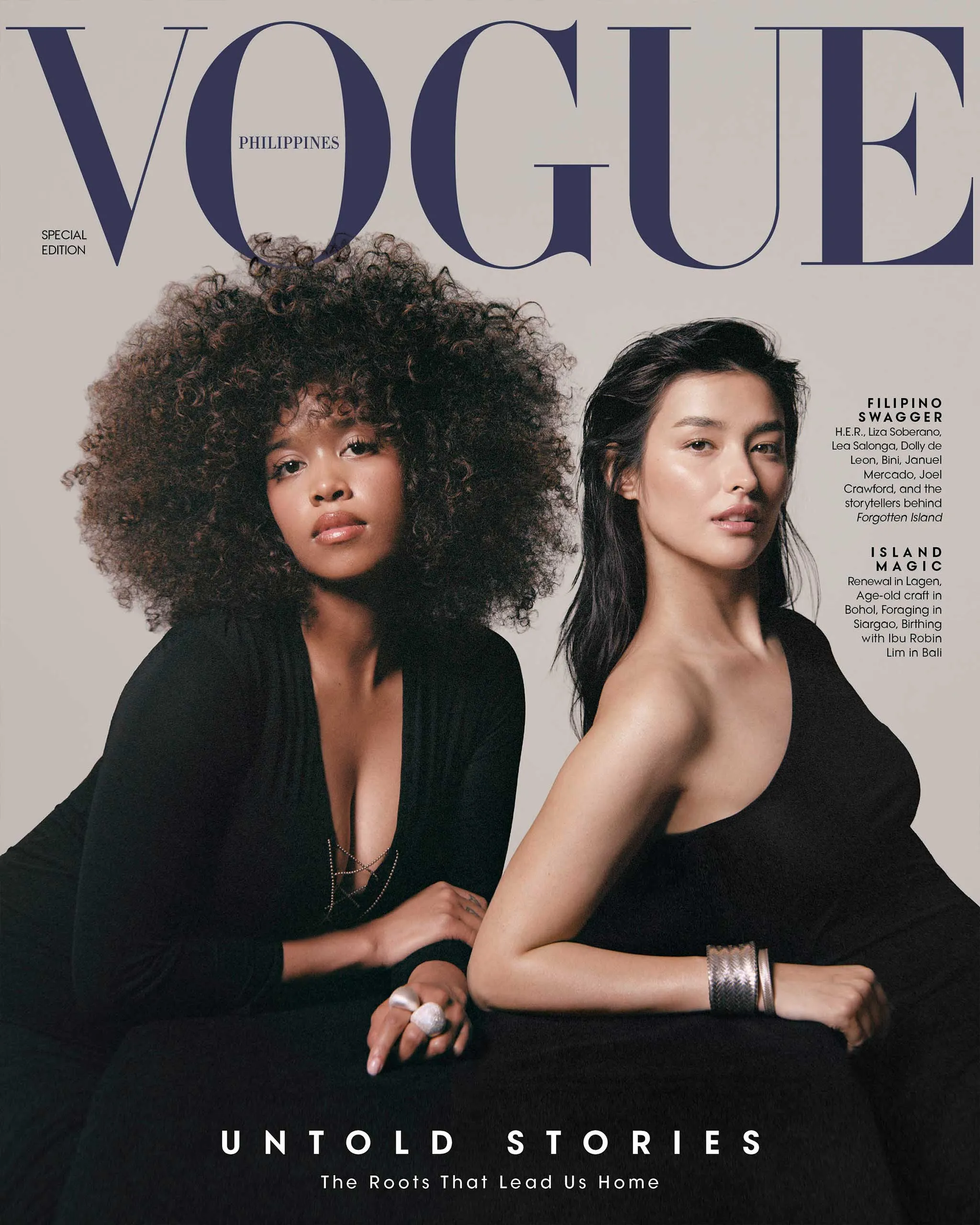
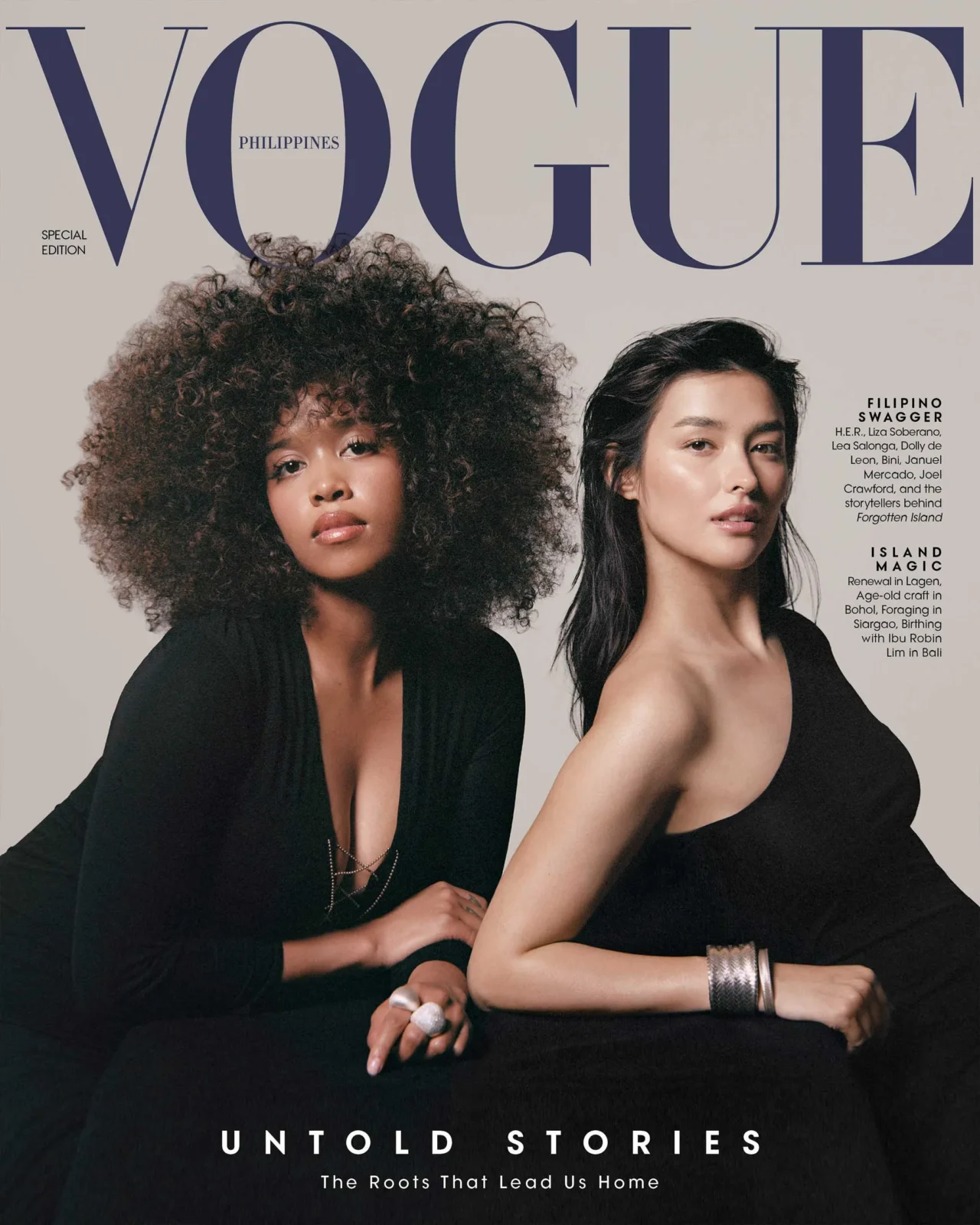
H.E.R. wears an archival JEAN PAUL GAULTIER dress from WHAT GOES AROUND COMES AROUND with LARA SONMEZ rings. Liza wears a GUCCI dress with CARO WILSON bracelets. Photographed by Sharif Hamza for the August 2026 Issue of Vogue Philippines
The first thing many Filipinos learn about an aswang is not what it looks like, but what not to do around it. We are told not to stay outside too late, not to answer voices calling our names in the dark, and not to linger by old balete trees.
Long before they appeared in books or on screen, these stories first belonged to the home. They lived in family stories shared after dinner, embellished during brownouts, and passed between generations. Details shifted with every retelling. A kapre in one province behaved differently from a kapre in another, while certain creatures seemed to exist only within a single barangay. Yet they always remained recognizable.
As a film, Forgotten Island honors that tradition.
The DreamWorks animated feature follows lifelong best friends Jo and Raissa as they are transported to Nakali, an island inhabited by kapre, manananggal, diwata, tiyanak, and duwende. But these creatures do not feel like folklore preserved behind glass. The world of the film treats them as our families always have, as beings with their own personalities, histories, tempers, and contradictions.
For decades, Filipino audiences grew up traveling through other people’s mythologies in animation while their own stories often remained local, largely confined to family stories and oral traditions. The idea that a new generation might now encounter an aswang in the way previous generations encountered dragons or trolls represents something much more than visibility.
That significance was not lost on Liza Soberano when she first encountered the project. She remembers receiving the audition while in Singapore and immediately recognizing how unprecedented the opportunity was. The details were still sparse then, but DreamWorks and Filipino mythology were enough. “I was like, oh my gosh, I really would love to be part of this.” She recorded an audition, originally going for the role of Jo. Months later, she would be invited back to read for the role of Raissa instead. By then, the project had begun intersecting with another transition unfolding in her own life. Soberano had recently moved from Manila to Los Angeles and was navigating the uncomfortable feeling of reinvention that often accompanies major change. New cities have a way of making people newly aware of themselves. Parts of identity that previously required no explanation suddenly become things you have to choose whether or not to carry into a room. “I was really yearning. I was yearning because I missed home. I missed being around family and the people that I love, and just being around the culture.”

Homesickness, she discovered, often announces itself through small absences accumulating over time. It was missing references that everybody back home would understand immediately, and missing conversations that move effortlessly between languages. The transition into Hollywood carried its own pressures as well. She found herself becoming increasingly conscious of the ways she spoke and presented herself, wondering whether difference would become an obstacle in an industry she was still learning how to navigate.
“I was very conscious of trying to put on a Western accent or whatever type of accent is needed for the roles that I auditioned for.” Looking back, she recognizes that many of those anxieties stemmed from a fear familiar to immigrants and diasporic communities everywhere, and that was the possibility that adaptation and erasure might slowly begin to resemble one another. “And so I really felt like I was scared that I was getting pulled away from my culture, and from the things that made me Filipino.”
Soberano’s character, Raissa, it turned out, was carrying her own version of that fear. The character stands on the threshold of enormous change as the film begins, preparing to pursue opportunities beyond the world she knows while worrying about what might be lost along the way. “She was also going through the experience of having to leave the Philippines to pursue an education.” It was very parallel, she emphasizes, to what she was going through. “I felt I was kind of capturing this moment in time in my own experience, and my personal life, and it was framed in a very beautiful way through the movie.”
“It felt like my inner child was alive and that’s something that I love doing.”
H.E.R.
Meanwhile, Gabi Wilson arrived at the project through a very different route. The Grammy-winning musician, known globally as H.E.R., happened to be at DreamWorks for another meeting entirely when conversations turned toward a new animated feature inspired by Filipino mythology. As an avid fan of animation, the coincidence still feels surreal to her in retrospect. “And then when [directors Januel Mercado and Joel Crawford] started to talk about the film, number one, it being Filipino, I was so excited. I was like, no way my favorite animation studio is doing a film about my culture.” Wilson grew up with DreamWorks films as a constant presence throughout childhood, and the idea that she would one day become part of that history through a film rooted in Filipino identity felt almost impossible to process. “It was a dream come true for me. It’s like one of those full circle moments where all the stars align.”
Voice acting introduced her to a different kind of creative process than the one she knew from music. Rather than feeling constrained by the absence of cameras or costumes, she found herself becoming more playful than she had expected. “In the booth, it was just straight play. Like I could be crazy. I could make the craziest, funniest faces and scream as loud as possible and say something really silly and over the top. It felt like my inner child was alive and that’s something that I love doing, keeping my inner child alive.”
That same energy naturally carries over towards her role as Jo, whom she describes as somebody who remains stubbornly herself regardless of circumstance, and whose optimism survives despite repeated experiences with loss and change. “She has maintained being who she is, and has been unapologetic about it. And she really fights for the people she loves.” Yet beneath that confidence sits a vulnerability that gives the character much of her emotional weight. For Jo, the possibility of losing Raissa carries the same emotional magnitude as the monsters and adventures surrounding them, and growing older means understanding that love and permanence are not necessarily the same thing.
And this friendship between Jo and Raissa became surprisingly easy for both actresses to inhabit because versions of that dynamic already existed between them. During one of their earliest sessions together, Soberano arrived dressed in a blazer and carefully put-together suit while Wilson appeared in a tie-dye hoodie splashed with bright colors. One of the directors, Joel, pointed out that they had unknowingly dressed exactly like their characters. “Raissa would definitely show up in a blazer, and Jo would show up in a tie-dye hoodie,” Soberano recalls.
The similarities continued once recording started, with Soberano organizing scripts into neat stacks and keeping pages in order while Wilson read scenes and tossed pages aside, only to frantically search for them later whenever an earlier line needed revisiting. “It was funny to just see how we were so much like our characters,” Wilson says, their creative strengths also complementing one another in a similarly unexpected way, with Wilson helping Soberano navigate rhythm and music during one recording session while Soberano guided emotional beats elsewhere in the script.
“I feel like when you meet another Filipino in the same industry as you, you’re always just clicking right away,” Soberano says, and working alongside Lea Salonga, Dolly de Leon, and Manny Jacinto created a version of representation she had rarely encountered in international projects before. “I never in my wildest dreams would have imagined I’d be with Lea Salonga in a project. I never would have imagined that I’d be doing a song with H.E.R.”
Veteran actress Dolly de Leon also experienced something similar while working on the film. “Normally when I do a project, I’m the only Filipino. But this time, almost the entirety of the cast is Filipino.” Like many of her castmates, she said yes before she had read the script cover to cover, trusting the people behind it and the story they were trying to tell. “Normally, when I’m offered a project, or if there’s an option for me to be a part of a project, the first thing I ask for is the script. But for this, I didn’t even need to ask for the script. Number one, it’s DreamWorks. Two, it’s about our culture, Filipino culture. I immediately said yes.”
Representation can sometimes feel like an abstract conversation, and De Leon grew up watching animated films travel confidently through cultures and countries around the world while the Philippines remained strangely absent from that map. “Most animated films represent places like Mexico, Sweden, India, China, but never the Philippines.”
This observation feels striking given the country’s relationship with animation itself. Filipino animators have spent generations contributing to international productions, with artists such as Ruben Aquino, Armand Serrano, and Gini Cruz Santos helping create worlds that audiences now recognize instantly, while many of their own stories remained largely outside the frame.
Forgotten Island does not erase that history, but it does offer something different: a Filipino world that exists not as a supporting detail but as the center of the story itself, and Lea Salonga recognized that confidence in the filmmakers immediately.
“Januel is Filipino American, and Joel is married to a Filipino American. I think they both felt that they had to lean into the Filipino-ness of everything as hard as they could. It wasn’t going to be a diluted version just to be palatable to the general market.”
For Salonga, who voices the film’s dreaded Manananggal, the opportunity represented something she had not encountered before despite decades of work in animation. “When they first approached me about the project, of course, I got really, really excited because I don’t think a specifically Filipino story has ever been told like this.”
Manang, she discovered, was less a traditional villain than a character shaped by longing and loss, a complexity that the directors built into every line and musical phrase, including whispered passages in Tagalog and a theme sung by Salonga herself. “It’s more than just a dialogue performance, it’s more than just a singing performance,” Crawford adds, “it’s using every element of Lea’s craft to be able to bring this character to life.”
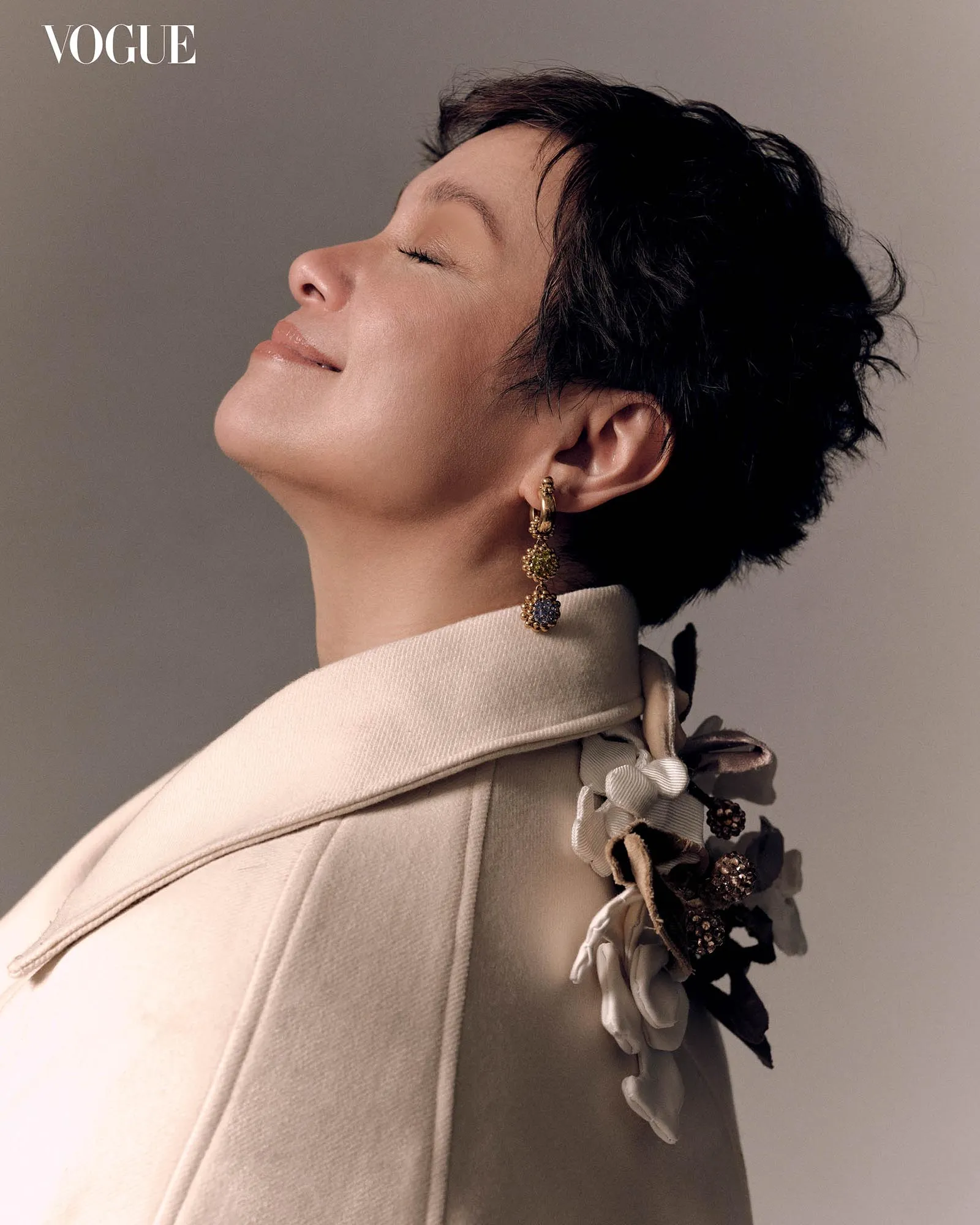
She points to recent global successes by BTS and Bad Bunny, rooted deeply in their local cultures, as evidence that audiences are far more willing to embrace specificity than studios once believed.
“Because if there’s anything I think that we’ve learned, it’s that the harder you lean in, and the more specific you make something, the more universal it turns out.” The result is a film that trusts Filipino stories to stand on their own terms and on a global stage.
For audiences who grew up living in these stories, there is something to be proud of watching the rest of the world learn names and lessons they have known for most of their lives, and realizing that familiarity can travel farther than they were ever taught to believe.
But long before our folklore belonged to animation, it belonged to one person sitting across from another person and saying, in one form or another, ‘Let me tell you a story before I forget it.’ The film does not attempt to replace our oral traditions, but it carries those memories from living rooms and classrooms onto the global stage, while leaving the core messages unchanged; the fact that somebody remembers, somebody listens, and eventually, somebody will tell stories like this again.
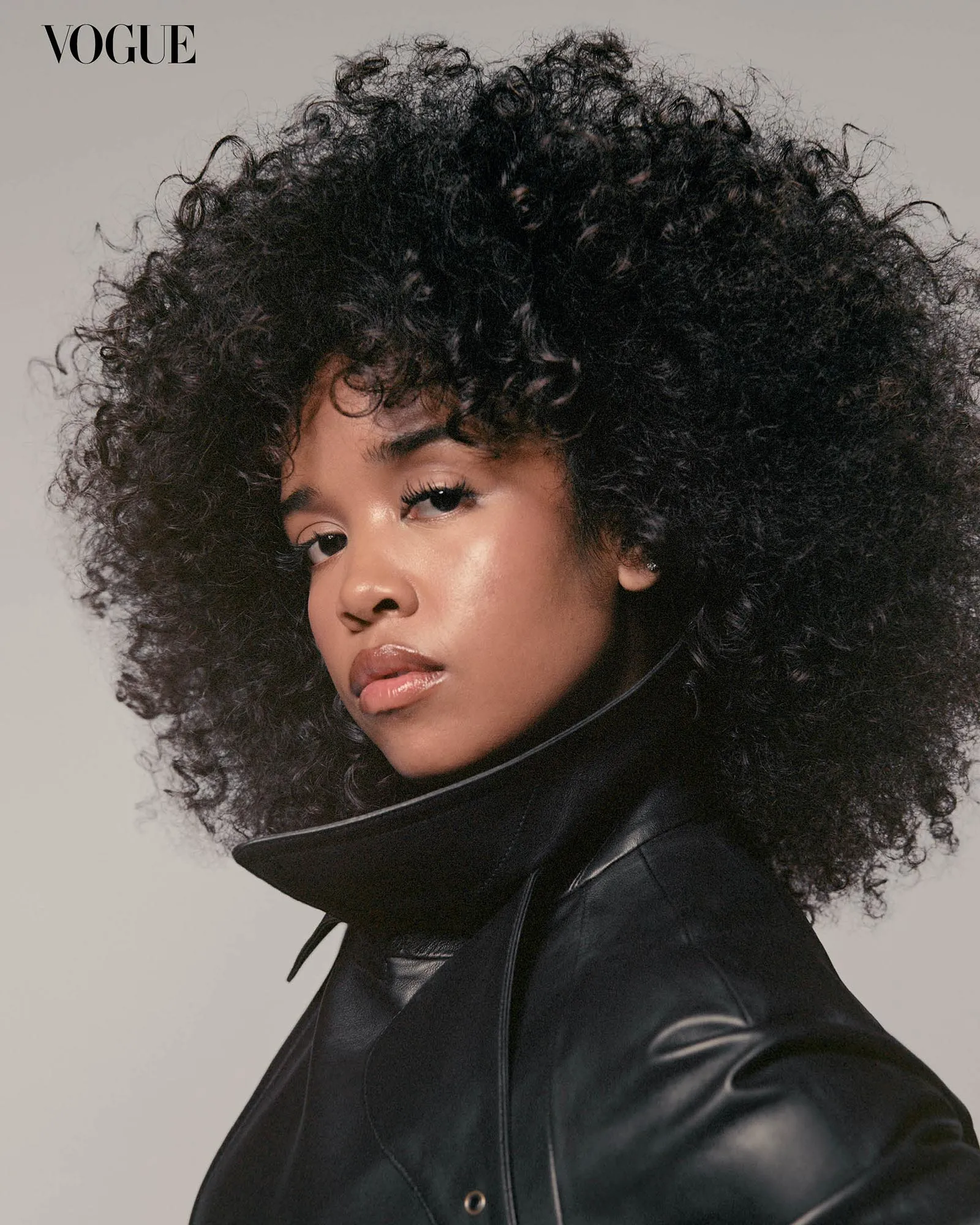
By GABRIEL YAP. (LA) Photographs by SHARIF HAMZA. Styling by BRITT MCCAMEY (H.E.R.) and KATIE QIAN (Liza). Deputy Editor: Pam Quiñones. Art Director: Jann Pascua. Vogue Philippines Producer: Bianca Zaragoza. Executive Producer: Alexey Galetskiy. Producer: Ivan Shentalinskiy. Makeup by Lina Mourey (H.E.R.) and Leah Darcy (Liza). Hair by Nina Mercado (H.E.R.) and Rena Calhoun (Liza). Photo team: Colin Jacob, Zack Hughes, Erick Mendoza-Ojeda. DP: Lukas Chmiel. Fashion Associate: Neil de Guzman. Nails: Chaun Peth (H.E.R.). Production Coordinator: Ashton Wilson. PA/Studio Manager: Justin Barahona. Associate Producer: Mavi Sulangi. Shot on location at AGPWEST.
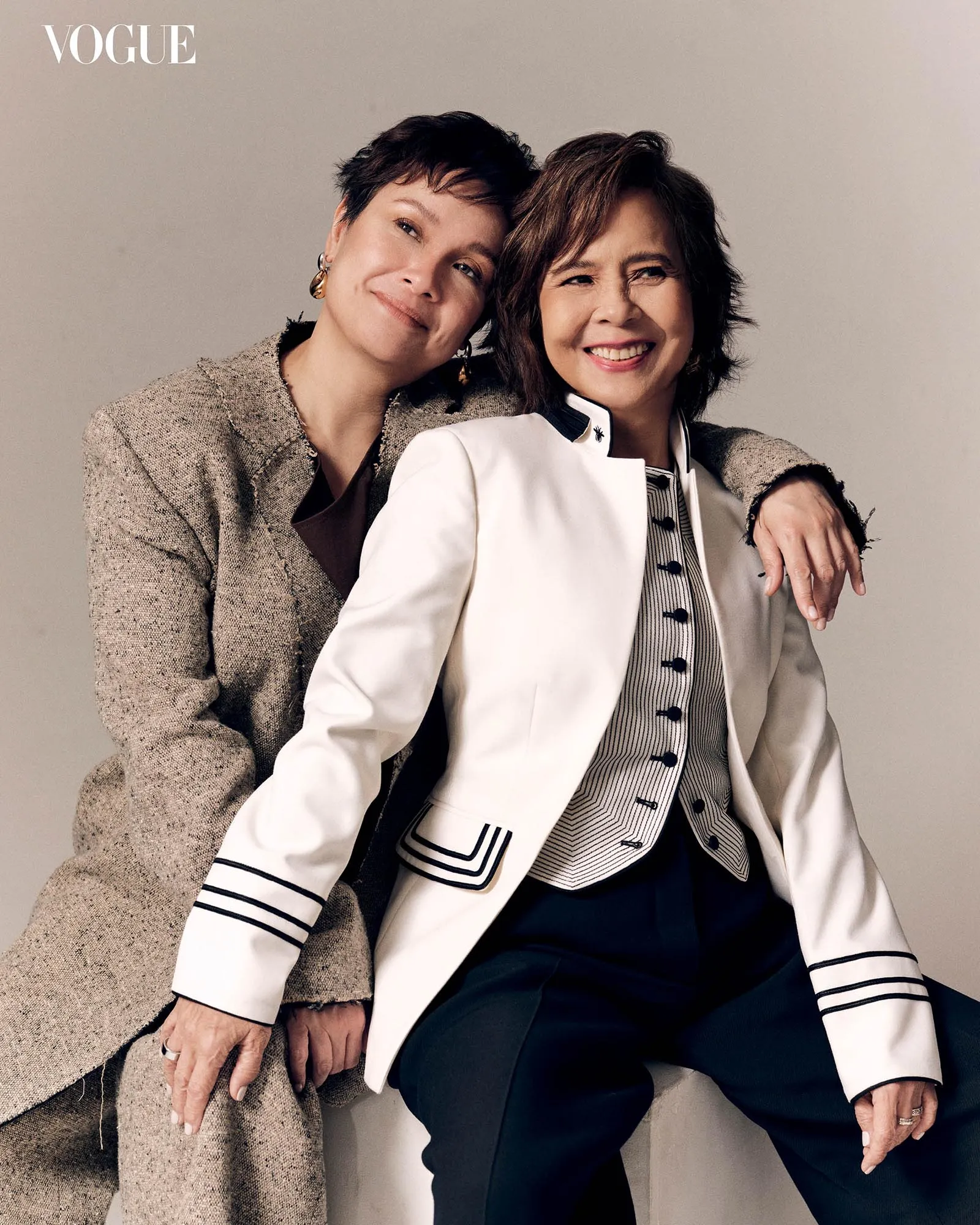
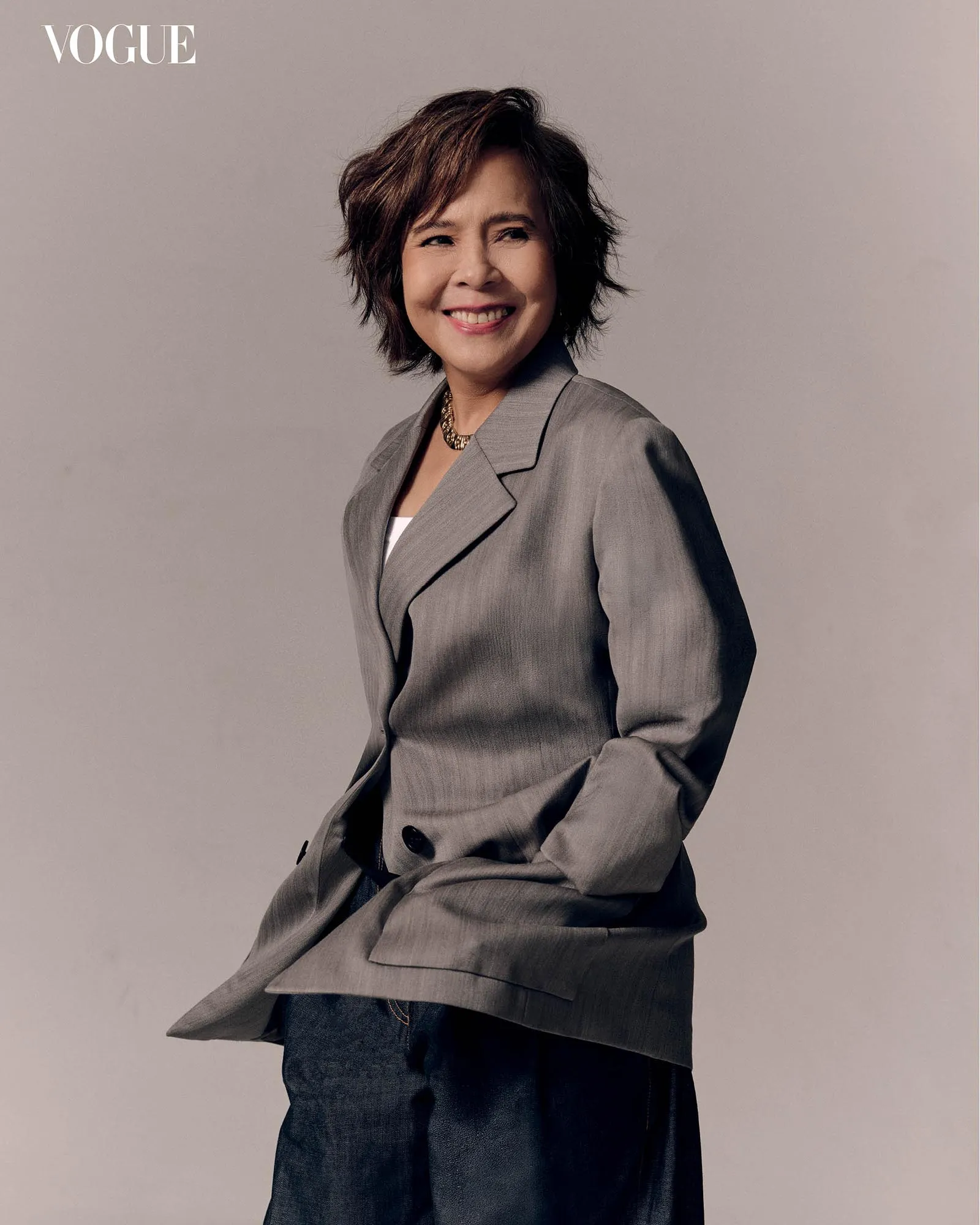
(Manila) Photographs by ARTU NEPOMUCENO. Styling by NEIL DE GUZMAN. Features Editor: Audrey Carpio. Fashion Editor: David Milan. Beauty Editor: Joyce Oreña. Producer: Bianca Zaragoza. Makeup by Kusie Ho (Lea) and Mayesa delos Santos (Dolly). Hair by Kusie Ho (Lea) and Matt Ledesma (Dolly). Photo team: Choi Narciso, Odan Juan. Beauty Associate and Writer: Bianca Custodio. Media Channels Editor: Anz Hizon. Digital Associate Editor: Chelsea Sarabia. Media Channels Team: Angelo Tantuico, Wainah Joson, Aylli Cortez. Multimedia Artists: Mcaine Carlos, Bea Lu. Styling Assistant: Ticia Almazan. Nails: Extraordinail. Associate Producers: Mavi Sulangi, Ada Manipon. Special thanks to Manam Comfort Filipino/The Moment Group.
Frequently Asked Questions
Forgotten Island is a DreamWorks Animation film inspired by Filipino folklore. It follows childhood friends Jo and Raissa, who find themselves on the mystical island of Nakali, where they come face-to-face with legendary creatures from Philippine mythology.
Grammy Award-winning artist H.E.R. lends her voice to Jo, a determined and compassionate teenager whose unwavering loyalty to her loved ones shapes much of the story.
Liza Soberano voices Raissa, Jo’s lifelong best friend. At the beginning of the film, Raissa is preparing for a new chapter in her life while reflecting on what it means to leave home behind.
Lea Salonga voices Manang, a manananggal portrayed with emotional complexity. She also contributes musically to the character, adding another dimension to the performance.
The film is one of DreamWorks Animation’s first features centered on Filipino mythology, bringing creatures and stories familiar to many Filipinos to a global audience
- An Exclusive Look at the Making of ‘Forgotten Island’
- An Island Remembered: The Artists and Creatives Behind DreamWorks’ ‘Forgotten Island’
- Exclusive: A First Look at BINI’s “A Parallel World” for Dreamworks’ ‘Forgotten Island’
- The Roots That Shape Us: Introducing Vogue Philippines’ August 2026 Cover Stories