
How Toton Januar Turns Fragments into Couture for the June/July 2026 Cover Story


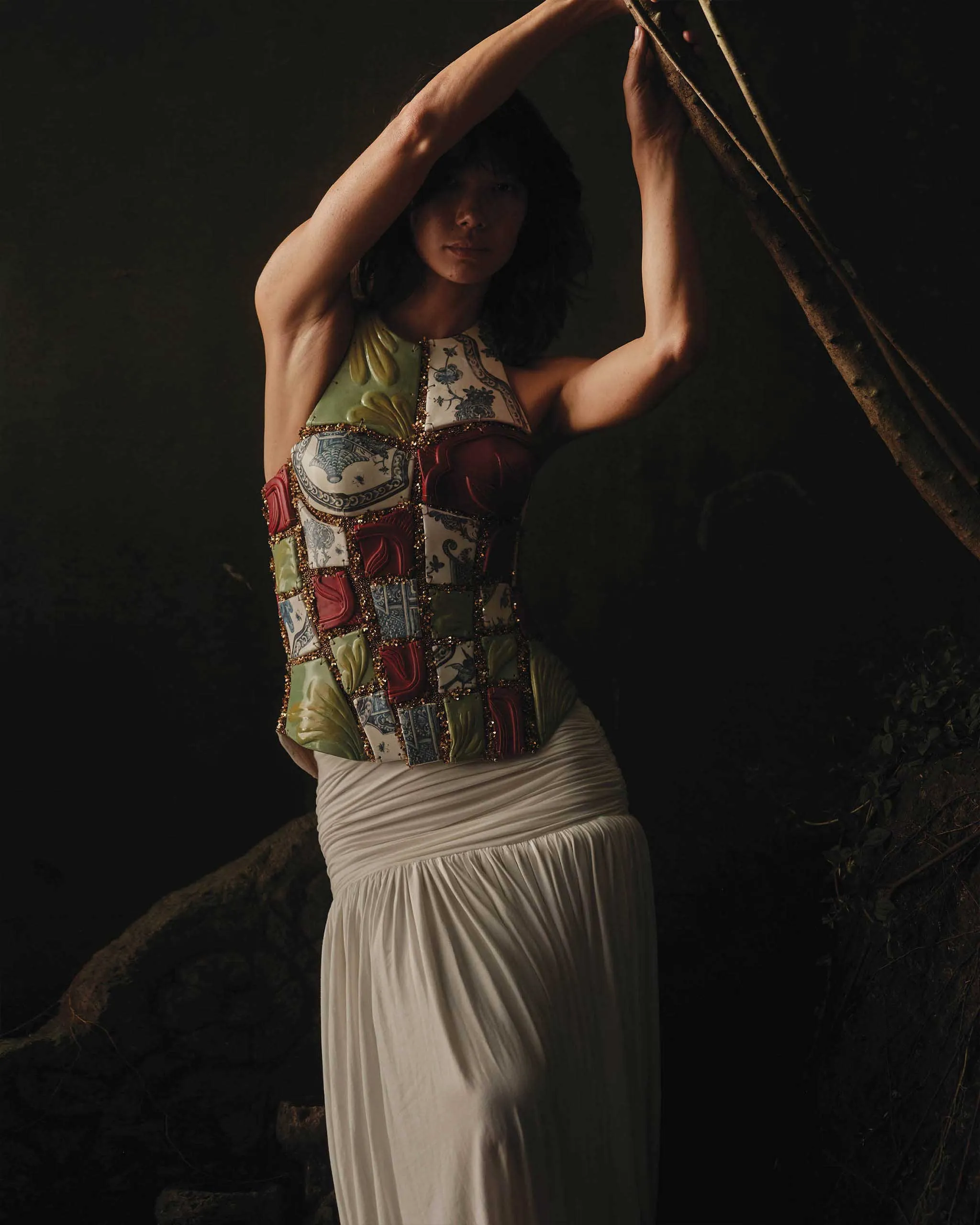
Chloe wears a TOTON corset. Photographed by Artu Nepomuceno for the June/July 2026 Issue of Vogue Philippines
From Dayak Iban-inspired bust plates to hand-drawn batik, Indonesian designer Toton Januar brings traditional craft into the present with statuary designs.
Set against the interiors of Tauhai Villa, the June/July 2026 cover story of Vogue Philippines stars Filipino-American model Chloe Magno in an eclectic mix of local and international designs, including four intricately crafted looks by Indonesian designer Toton Januar.
Born in Makassar and raised by a seamstress mother, the Parsons-trained designer has built a reputation for reinterpreting Indonesian heritage with modern reverence, using traditional crafts, upcycled fabrics, and bric-a-brac to create sculptural garments imbued with ancient history and ideology. “Working with reclaimed materials is a constant creative challenge,” Januar shares via email. “It forces me to rethink value, beauty, and possibility beyond the notion of something being new.”
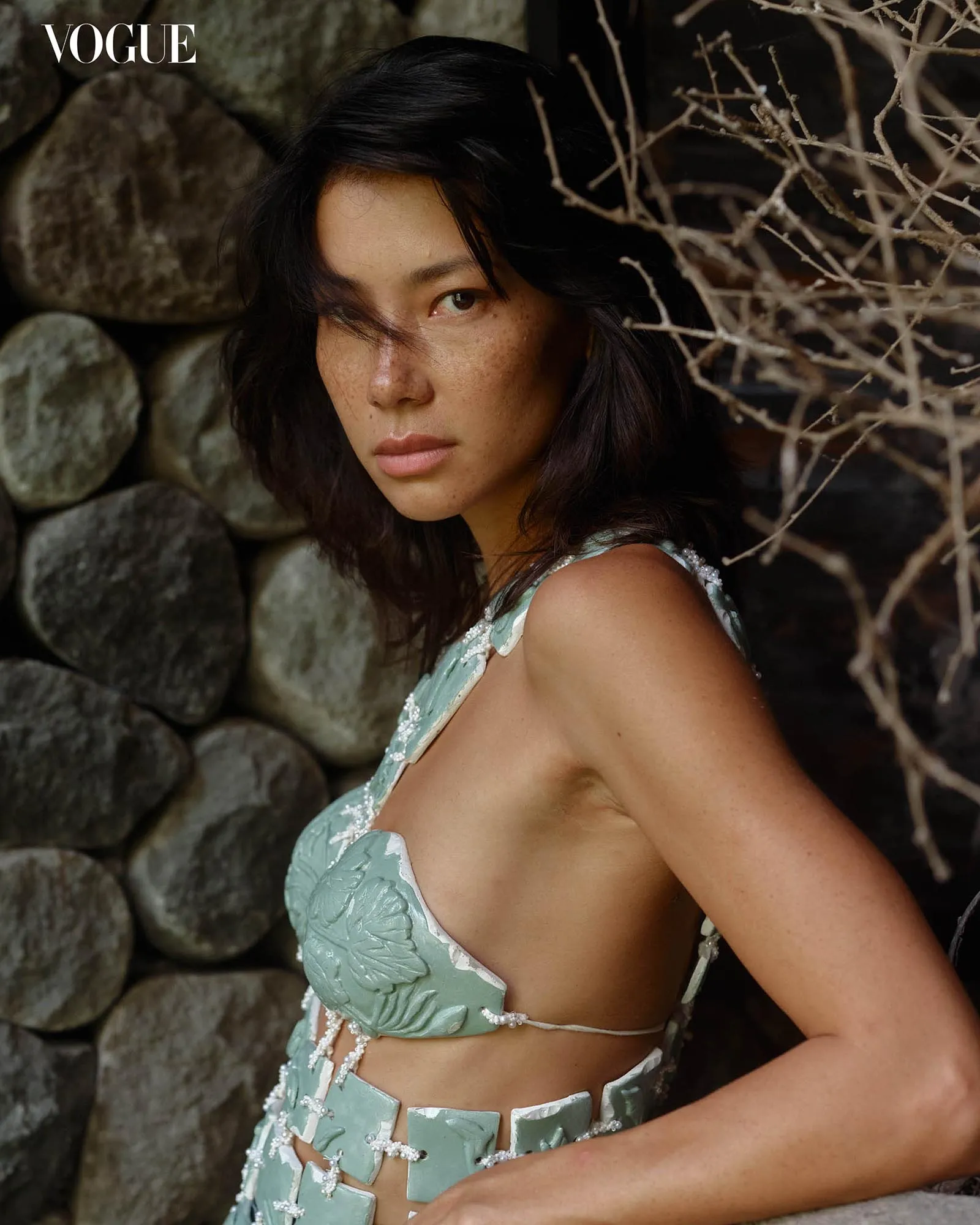
Januar’s artistic language pays homage to fragmentation and reconstruction, reflecting a philosophy rooted in the blemished nature of the human experience. “Because I believe we live in a world that is inherently imperfect and, in many ways, broken,” he explains. “Yet within that brokenness, there is also beauty, resilience, and the possibility of transformation.” For Januar, fashion responds tangibly to change and adversity, becoming a space where “sometimes repair is an act of healing; at other times, it becomes an act of reform.”
His exploration of material healing derives from his signature use of paper clay, a medium he adopted out of necessity during the COVID-19 pandemic. During the studio isolation for his Spring/Summer 2021 collection, Believe, Januar drew inspiration from Javanese Hindu statues, reimagining them as wearable armor. “I chose paper clay because it is lightweight yet durable,” he says. “Clay feels liberating to work with—it allows ideas to move quickly from imagination to form.”
This foundational experiment culminated in his 2025 collection, Puing (“Debris”), where a bust plate inspired by Dayak Iban bridal tops of Borneo is featured. Reinterpreted as fractured Celadon ceramic, the paper clay plate is carefully held with delicate pearl strands. Januar paired this rigid, sculptural piece with flowing denim pants made from factory off-cut remnants, adorned with white poppy embroideryEmbroideryThe decorative stitching of designs onto fabric by hand or machine, central to Philippine formalwear. Hand embroidery from places like Lumban in Laguna and Taal in Batangas adorns barongs, ternos,Go to Embroidery Glossary.
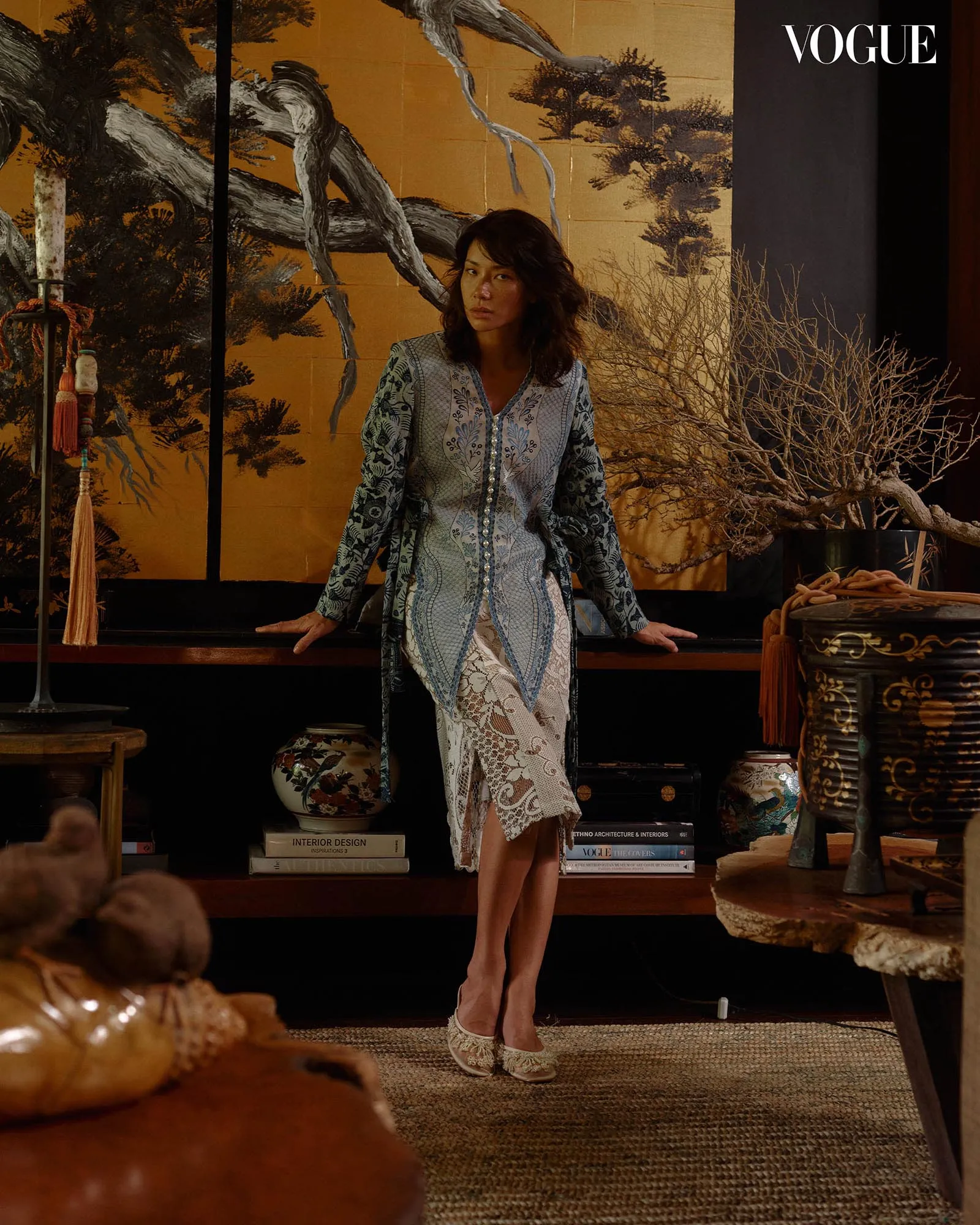
Another look from Puing exemplifies the theme of piecing together life’s disparate parts, combining a Peranakan Kebaya Encim silhouetteSilhouetteThe overall outline or shape of a garment or look, such as A-line, column, or hourglass. Silhouette defines the first visual impression of an outfit and is often the mostGo to Silhouette Glossary with a tailored jacket made from hand-drawn indigo Batik from Tuban, East Java, accented by an asymmetrical skirt composed of reclaimed tablecloth remnants.
His 2026 collection, Regang (“Tension”), deepens his tactile commentary on history even further, with a shattered bust plate that resembles Kintsugi, the Japanese technique of repairing broken ceramics, symbolizing the integration of foreign cultures into modern Indonesian identity. To make these sculptures wearable, Januar incorporates traditional garment construction techniques, such as corsetry, creating a balance between artistic expression and ergonomic wearability.
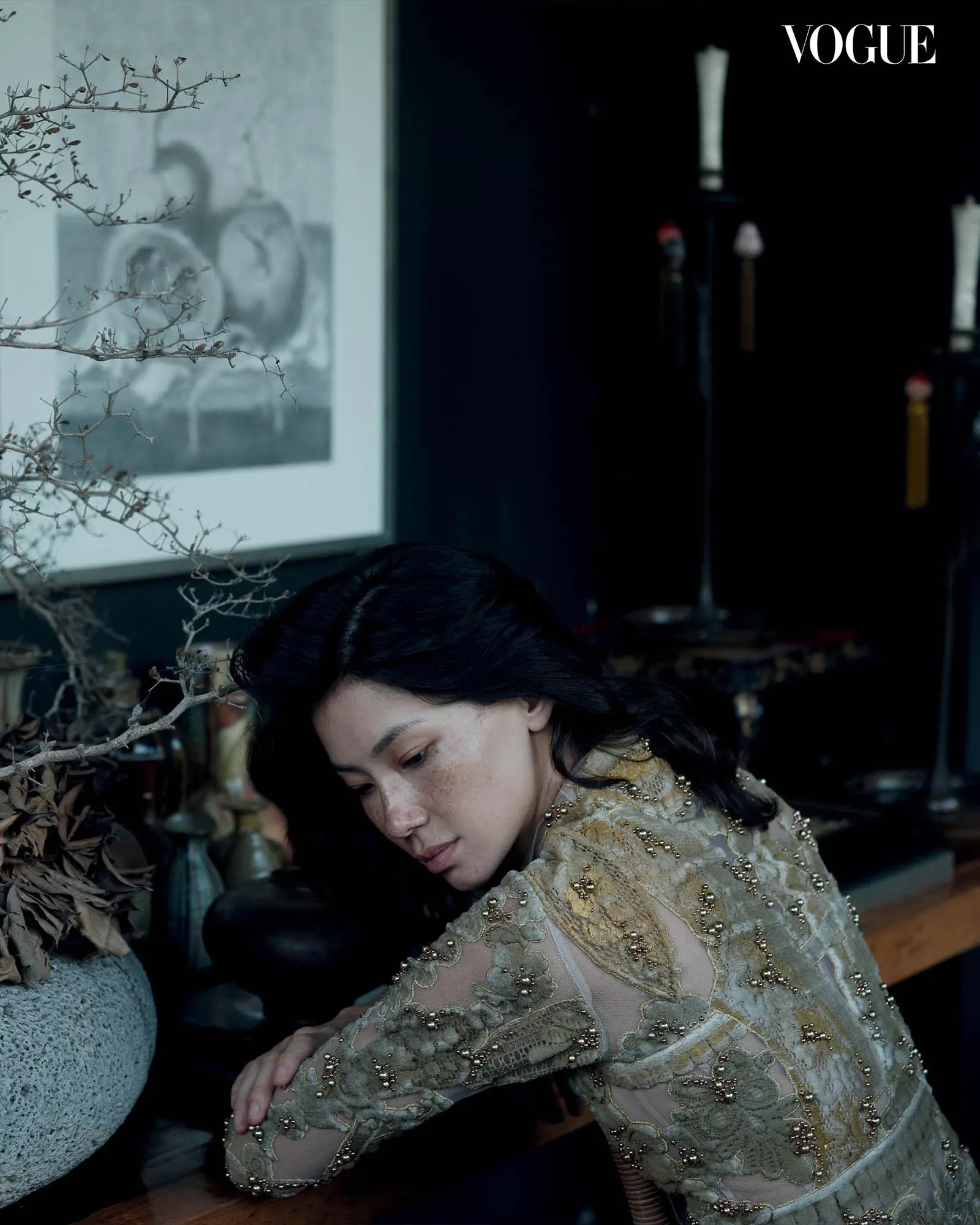
The tension between fragility and strength is present in a deconstructed tulle blouse from Regang, crafted from small pieces of used tablecloths embroidered with gold beads. Inspired by Swarnadwipa (“Golden Island”), the ancient Sanskrit name for Sumatra, it evokes both beauty and melancholy, depicting “how humans have made such damage to what was once a promising beautiful and bountiful island”.
Ultimately, Januar’s work emphasizes that objects carry histories and purposes, and through his unorthodox craftsmanship, discarded materials are transformed into extraordinary creations. “We have produced enough objects to last generations, yet we seek novelty,” Januar notes. “Reclaimed materials carry stories… They remind us that transformation is always possible, and that creativity can be a tool not only for making things but for reimagining how we live and consume.”
Photographs by ARTU NEPOMUCENO. Fashion Editor DAVID MILAN. Deputy Editor TRICKIE LOPA. Styling by GENO ESPIDOL of QURATOR STUDIO. Model: Chloe Magno. Art Director: Jann Pascua. Producer: Julian Rodriguez. Makeup: Zidjian Paul Floro. Hair: Gab Villegas. Videographer: Lynyrd Matias. Photography Assistants: Choi Narciso and Odan Juan.
Shot on location at Tauhai Villa.
Frequently Asked Questions
Toton Januar is an Indonesian fashion designer and co-founder of the womenswear label TOTON.
He was born in Makassar, South Sulawesi, and raised by his seamstress mother, an influence that played a defining role in his early exposure to clothing construction and craft.
He studied Media Broadcasting in Indonesia and later trained in fashion at Parsons School of Design in New York.
Toton is a Jakarta-based womenswear label founded in 2012 by Toton Januar and Haryo Balitar. The brand explores Indonesian heritage through modern ready-to-wear, often reinterpreting traditional textiles, silhouettes, and techniques.
He has gained international visibility through global stockists, presentations at Paris Fashion Week, and recognition such as winning the International Woolmark Prize Asia Regional Final in Womenswear in 2016/17.