
Wynn Wynn Ong Welcomes Us to Her Home and Her Way of Life


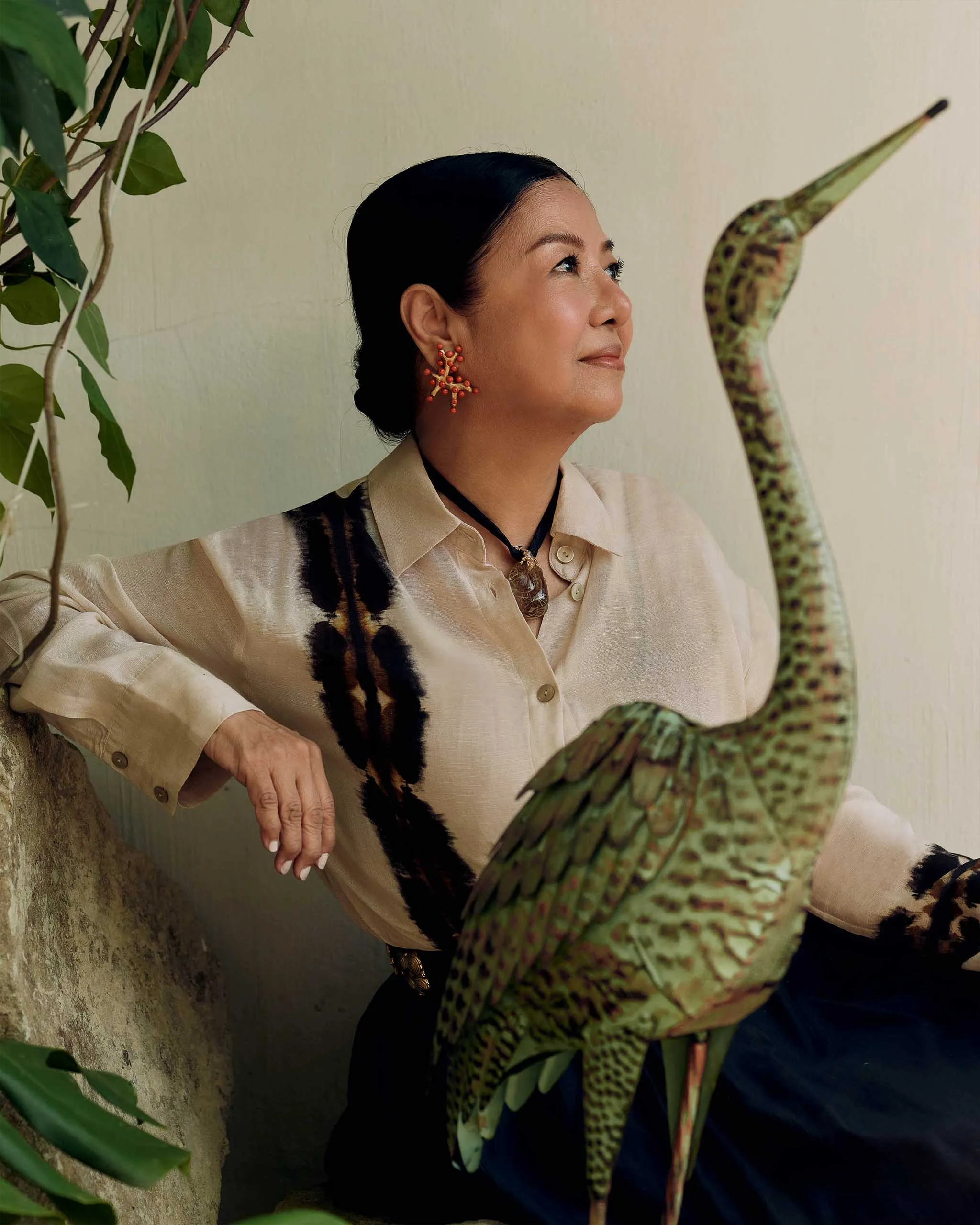
Photographed by Artu Nepomuceno for the June/July 2026 Issue of Vogue Philippines
Nearly a decade after stepping back from making jewelry, Wynn Wynn Ong takes us from her retrospective exhibit to the home she’s built around nature.
We meet Wynn Wynn Ong during what appears to be her only available window this week. Even then, she already has plans: a shoot at the Yuchengo Museum, where her retrospective exhibit titled Distilled is down to its last five days.
Just less than four hours earlier, the jewelryJewelryDecorative adornments worn on the body, from fine pieces in gold, diamonds, and pearls to fashion jewelry made of accessible materials. Jewelry completes an outfit and often holds sentimental orGo to Jewelry Glossary designer and artist was apologetic about her hectic schedule. Over the phone, she explained that today alone is packed with the photoshoot, followed by her third grandson’s birthday dinner, then preparations to host guests the next day in their Batangas home, where she will remain until the following week.
The time for a conversation, it seemed, was now or never.
One Tuesday afternoon at the RCBC Plaza, the exhibition is sparse for guests. The only individuals on the floor are art director Ric and photographer Jar, who are occupied with documenting her oeuvre. In an ankle-length denim tunic worn with the sleeves casually rolled up, leather thong sandals, and a stack of beaded necklaces, Wynn Wynn leads the way with the ease of a homeowner in her abode. Our impromptu private tour begins from the elevators that open up to a regal, digitized portrait of Wynn Wynn’s grandmother at 14 years old, before we move on to an anteroom completely festooned in her narrative-driven jewelry and art objects. Their components are culled from interests, ideologies, and places near and far. As the show notes put it, they result from “a fascination with the natural world, fused with a deep love for Southeast Asian mythology and cultural traditions.”
“When I was thinking of one exhibit that would best highlight the 20th anniversary of the Yuchengco Museum, Wynn Wynn’s 2015 exhibit stood out,” remarks museum director Jeannie E. Javelosa.
Wynn Wynn first showed at the Yuchengco a decade ago, and three years after, she put a pause on jewelry-making altogether. It was a decision that arrived after she concluded that her life needed balance. By that point, she was dedicating 10 to 12 hours, five days a week, to her studio, and beyond the workshop, she was busy helping raise funds for multiple non-profit causes, (every collection she designed was dedicated to a specific cause each year), attending events and functions, building their family’s beach house, and showing up for her husband, kids, and grandchildren. As much as she loved her work and was unfazed by 12-hour work days, she longed to give more time to other things equally as important to her: family and friends. Those around Wynn Wynn might claim that she bowed out when she was at the top, but she thinks it would be remiss to say so, “because it wasn’t my goal to be on top of anything. But I think it’s good to go when you’re still able to create beautiful things, rather than not having that excitement and eagerness.”
It wasn’t the first time she closed a career chapter. In fact, her foray into jewelryJewelryDecorative adornments worn on the body, from fine pieces in gold, diamonds, and pearls to fashion jewelry made of accessible materials. Jewelry completes an outfit and often holds sentimental orGo to Jewelry Glossary came after nine years of teaching humanities with a focus on Asian studies at International School Manila, which her children attended. She says of that time, “I love teaching. I never thought I would love it to the extent that I did. And when you’re so passionate about something, you do burn out. And for me, I mean, there’s never a halfway house between stages,” she asserts. “There is no point when you’ve made a decision to have regrets.”
As the adage goes however, nothing is ever set in stone. And that rings true for even the most resolute individuals like Wynn Wynn. A second retrospective was never in her plans, but “Jeannie twisted my arm,” she playfully teases. “She’s a good friend.”
Perhaps Distilled’s fruition had to do with how Wynn Wynn’s good friend made plans to speak with her about it in person. “I went to visit her in her beach home in Anilao, and told her she needed to do this with us again because of the 20th year anniversary,” Javelosa narrates. After a few months of discernment, the designer finally agreed.
The process of procuring the works was a challenge, as the pieces Wynn Wynn had crafted over the span of close to two decades had largely gone intercontinental. In the interest of time and logistics, she focused on calling good friends and private collectors from Asia and neighboring regions to borrow their pieces. “We had to add security 24/7,” Javelosa reveals.
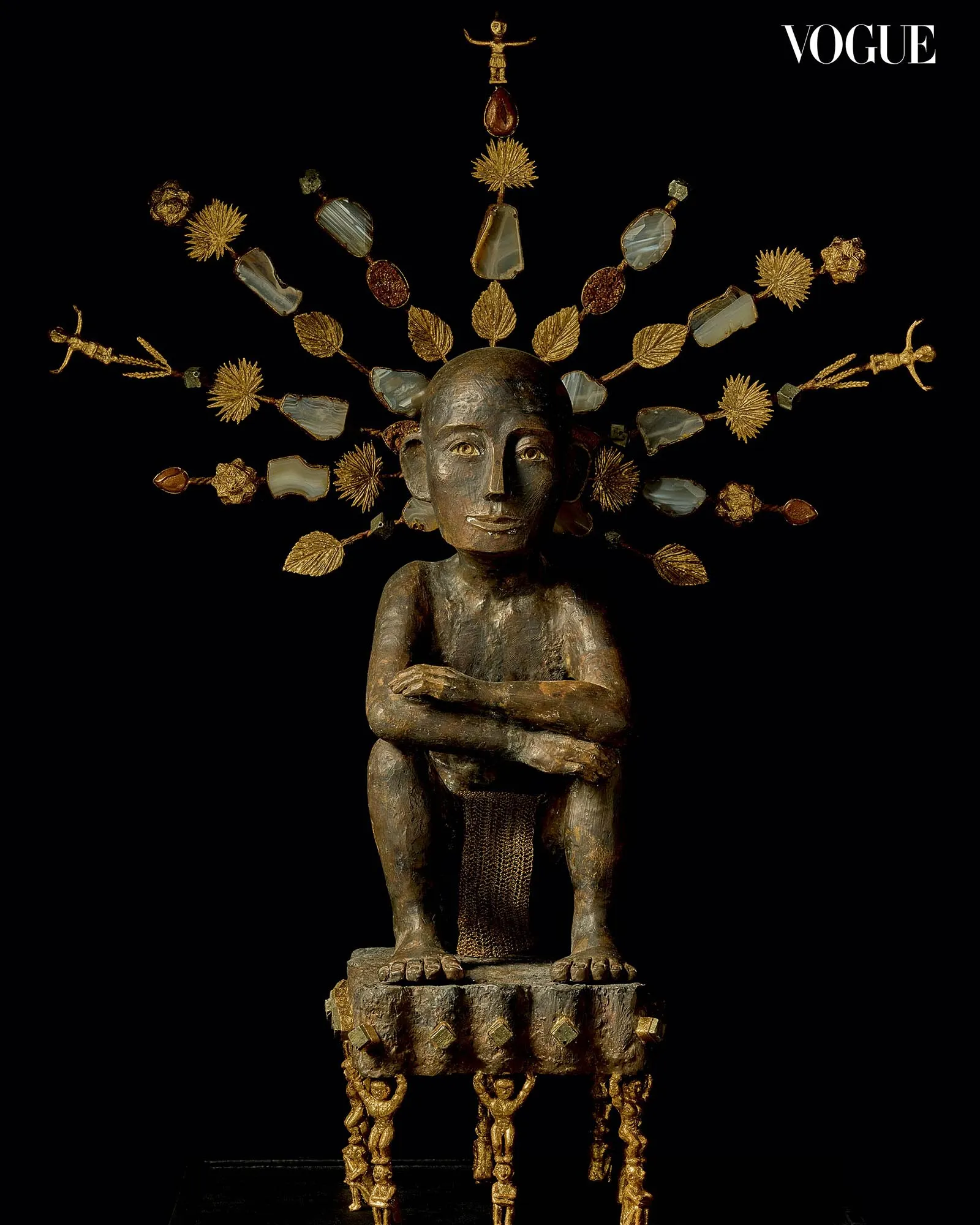
Loaned works were interspersed with keepsakes from the artist’s personal collection, like the piece situated by the exhibit entrance. Painted miniatures from the Boxer Codex accent a gilded cage in copper and wire, which sits atop a base sculpted in the shape of four water serpents, a significant figure in Buddhist mythology. “Old Chinese furniture, they normally have dragon’s feet,” Wynn Wynn explains, before chuckling, “This is pig’s feet. Because I like pigs.”
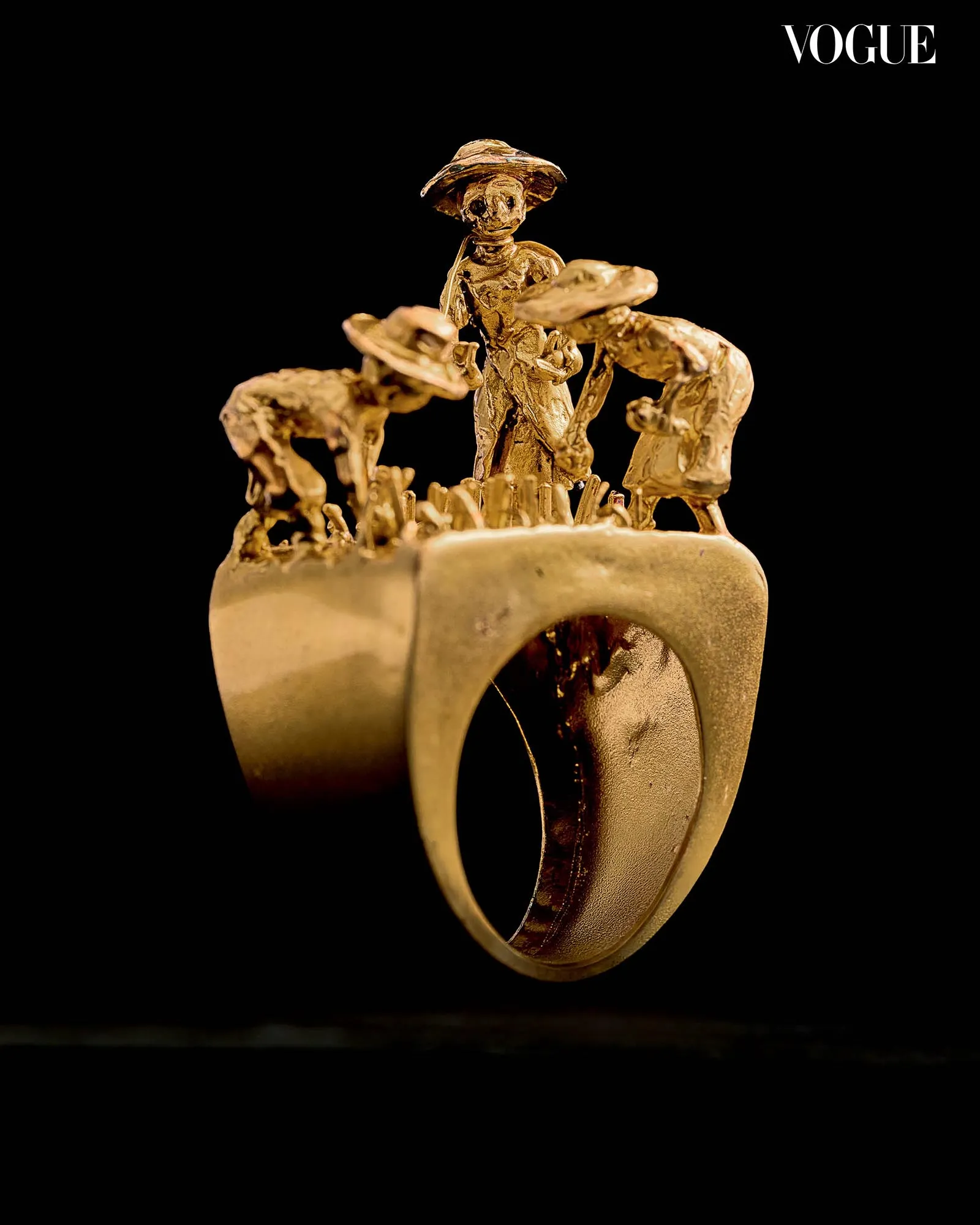
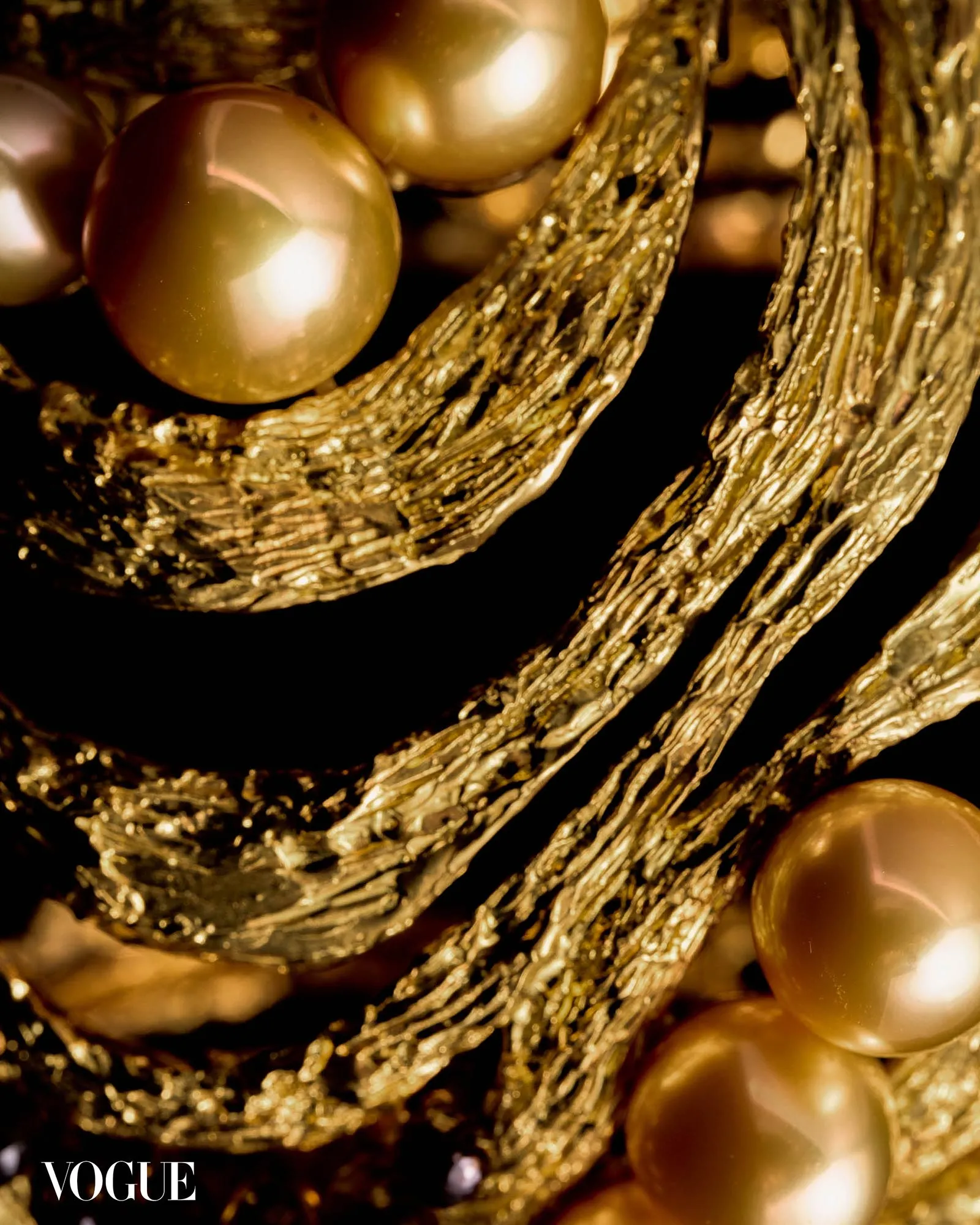
Throughout the space, unlikely materials are wrought into covetable objects. Green mussel shells become armor to a wooden chest, its iridescent surface effecting an impression of jade (which she employs for other works) at first glance. Slabs of kamagong wood from old houses in the northern province of Isabela are repurposed into art deco-inspired cabinets. For a series of crucifixes, pearls and gemstones are encrusted amongst flora and fauna motifs. Wynn Wynn remembers a nun asking why she chose to put animals on the holy cross. “And I said, ‘Well, isn’t God the God of all things?’”
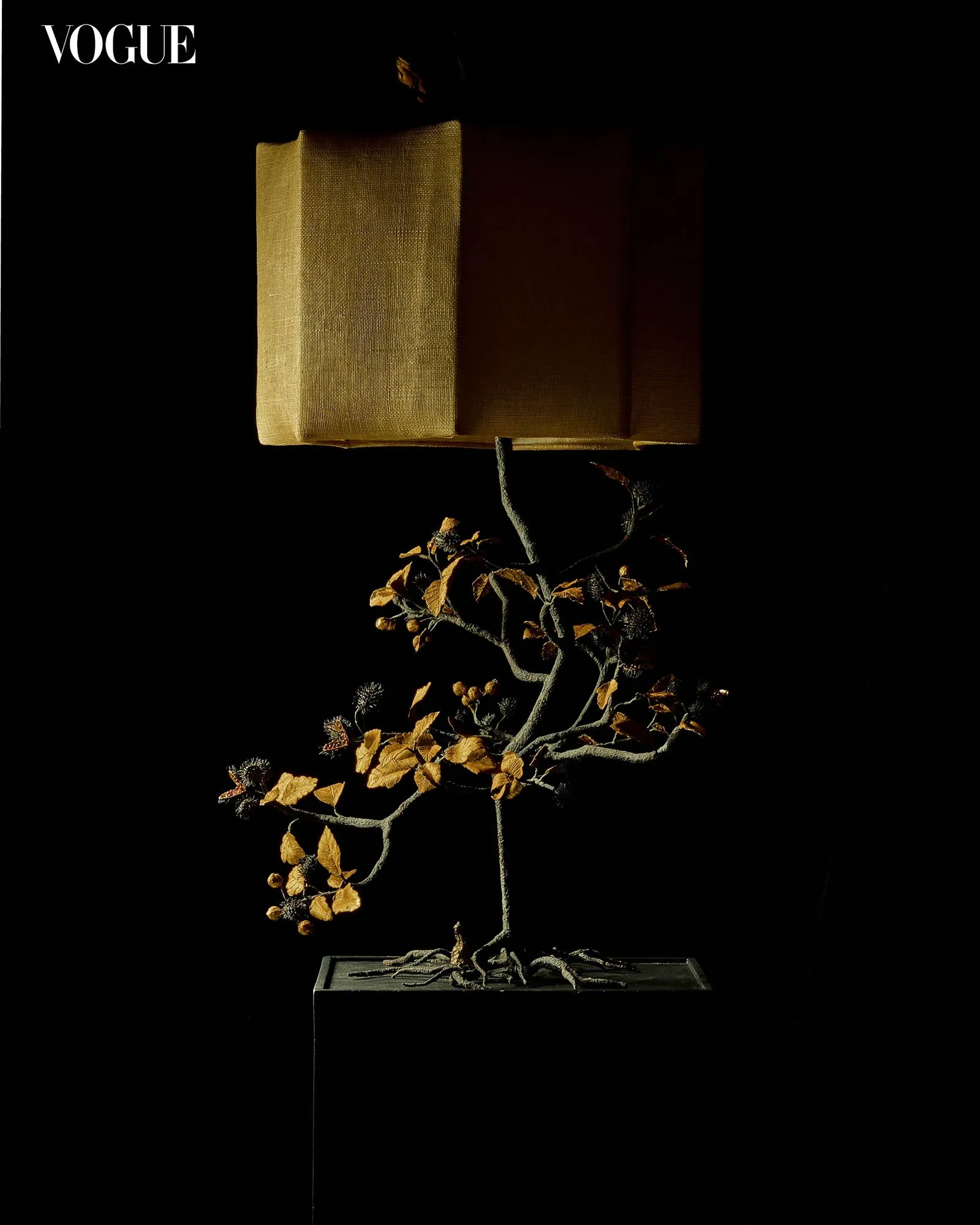
Of the seven crucifixes on the wall, only two belong to Wynn Wynn, while the rest were lent by three other individuals. When we reach a display of four table lamps later on in our walkthrough, she casually says, “I never keep a single mold of anything I make. I have no interest in replicating it.”
There lies Wynn Wynn’s paradox. Although she describes herself as a collector, she has also formed a sincere detachment from the objects she creates and acquires. “I’m Buddhist,” she explains with a smile. “In Buddhism, one of the first tenets is that all suffering is caused by desire, and the way to end suffering is to end desire. So you can love something, but you also have the ability to detach and say, ‘What would I be without that in my life?’”
En route to Wynn Wynn’s Batangas home, our producer Bianca receives a curious text from the hostess.
“Could I request for the lead car to send a message when you get to the Jollibee at the rotunda?”
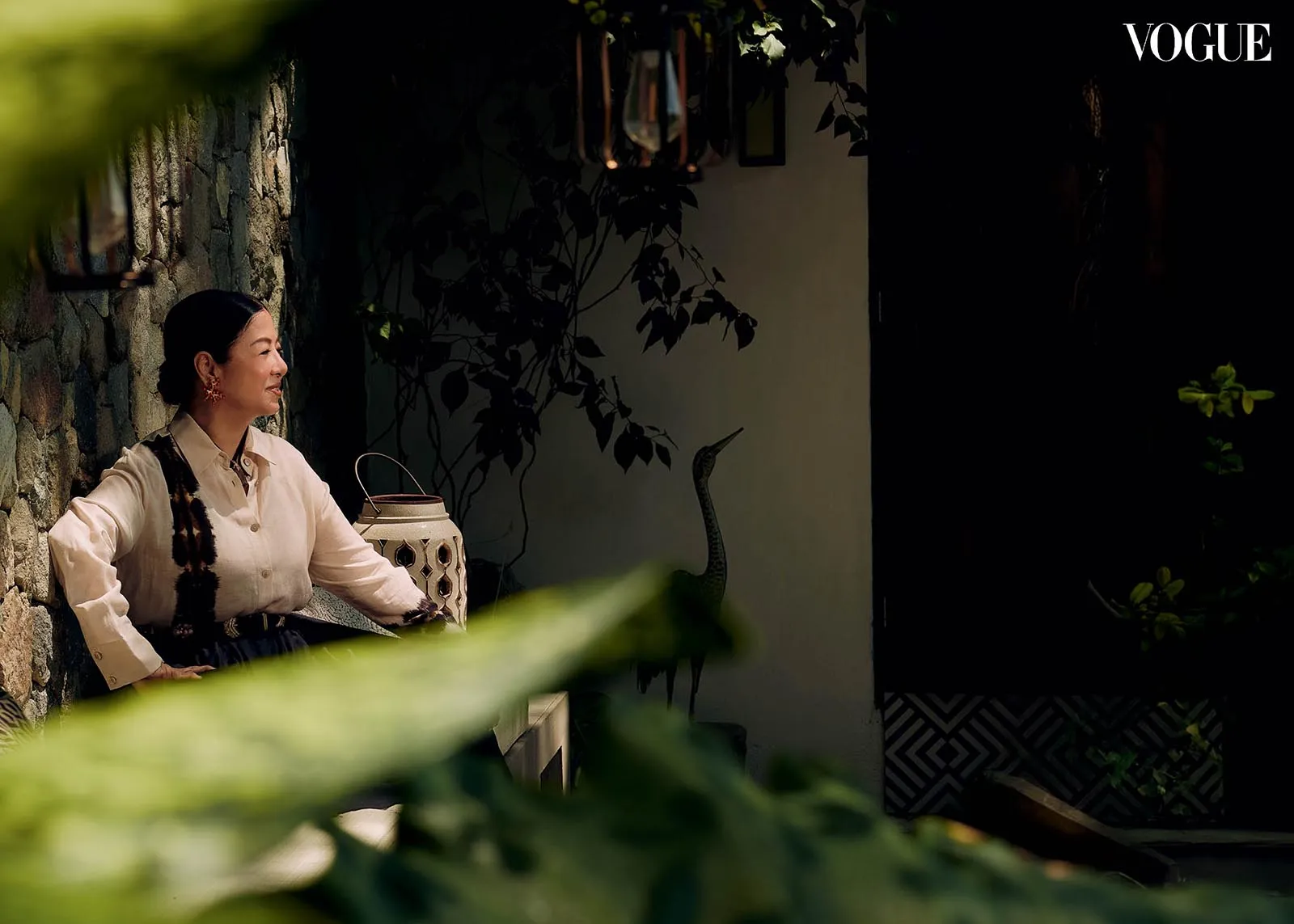
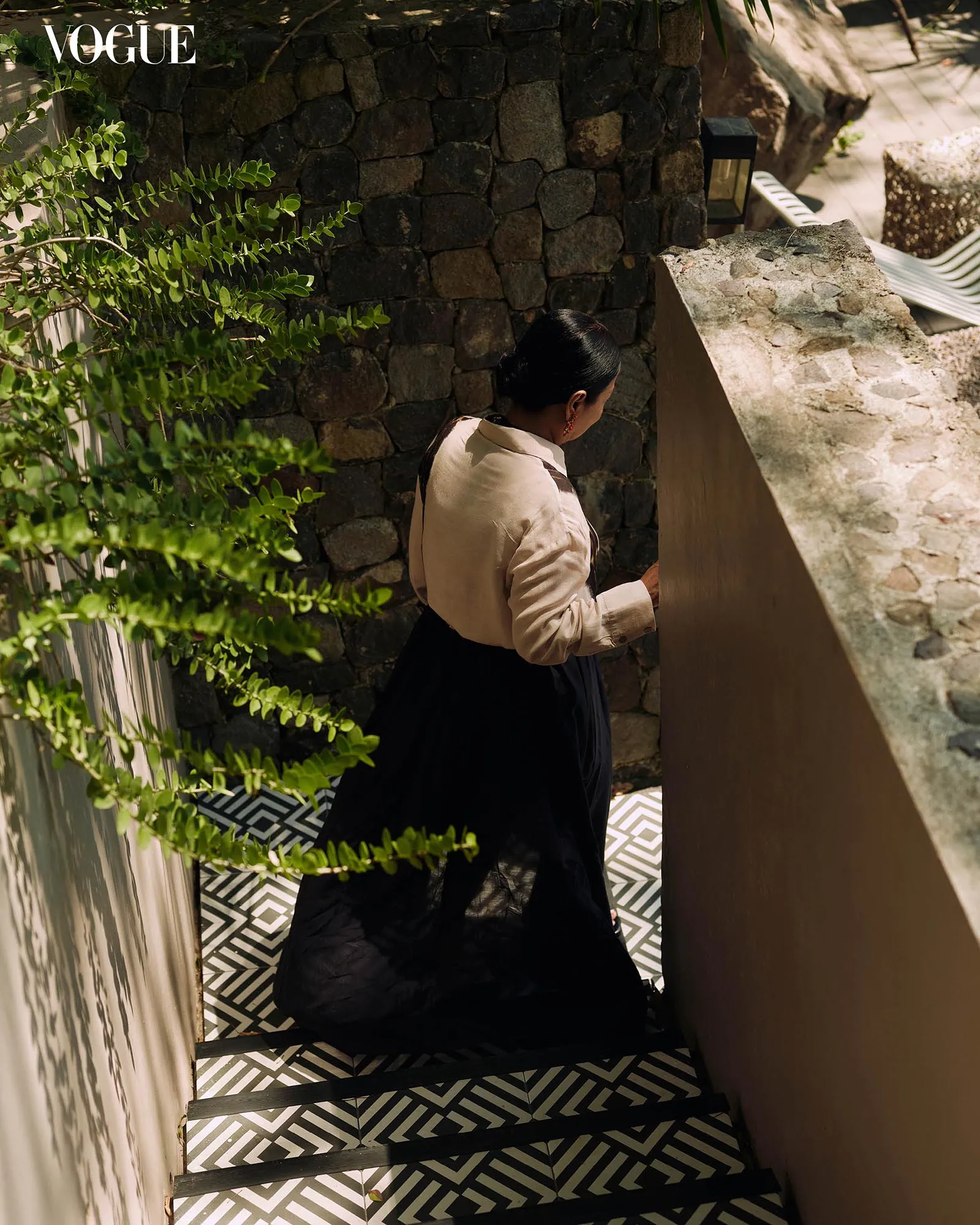
Bianca, of course, abides, but comprehends the message fully only upon our team’s arrival. The home is not a singular structure but a collective of separate units, oriented downward and built on practically the edge of a hill. A steep 10 to 15-minute trek is required to get from the seventh and highest level of the house to the lowest, and vice versa. Hence, the advance 20-minute notice.
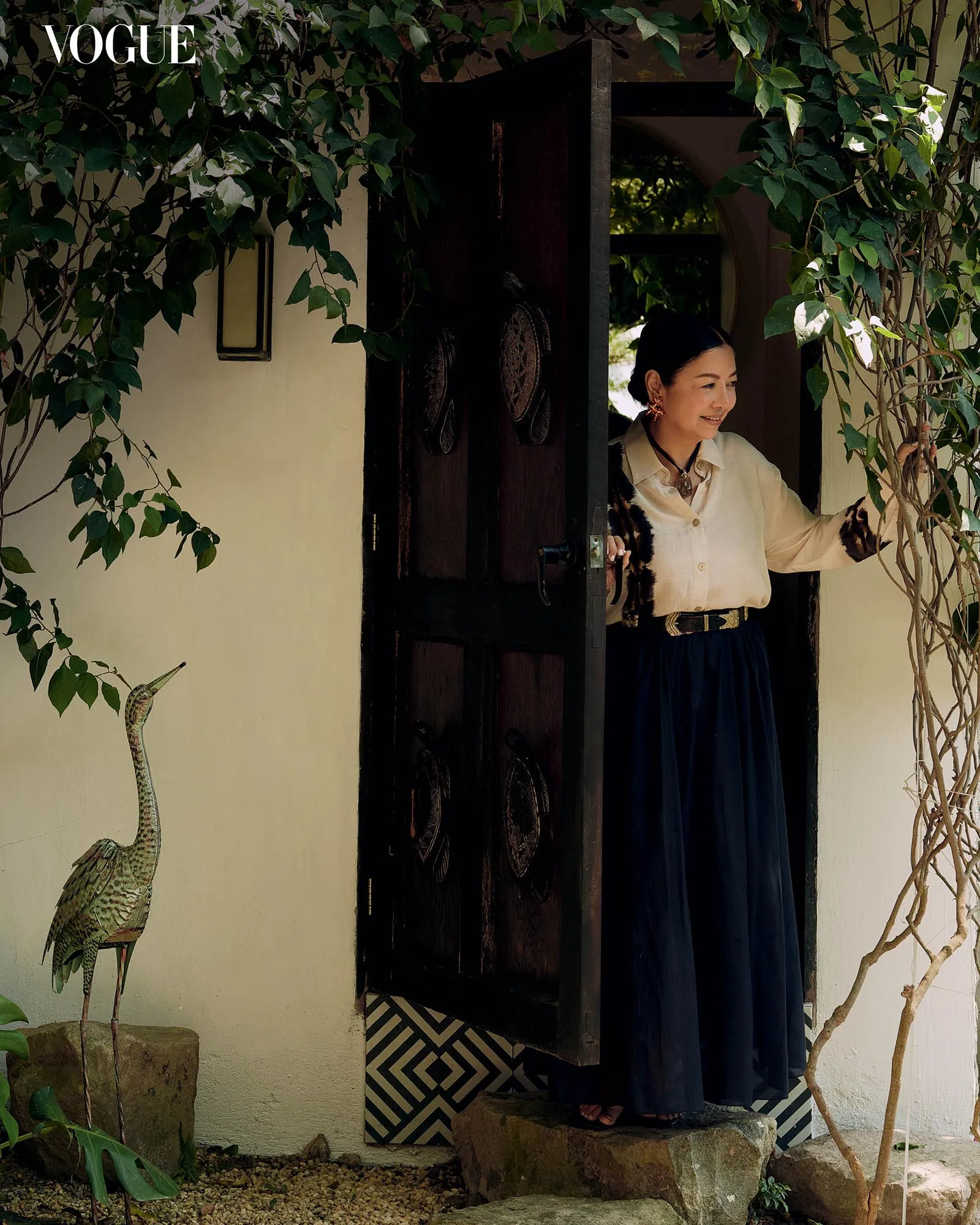
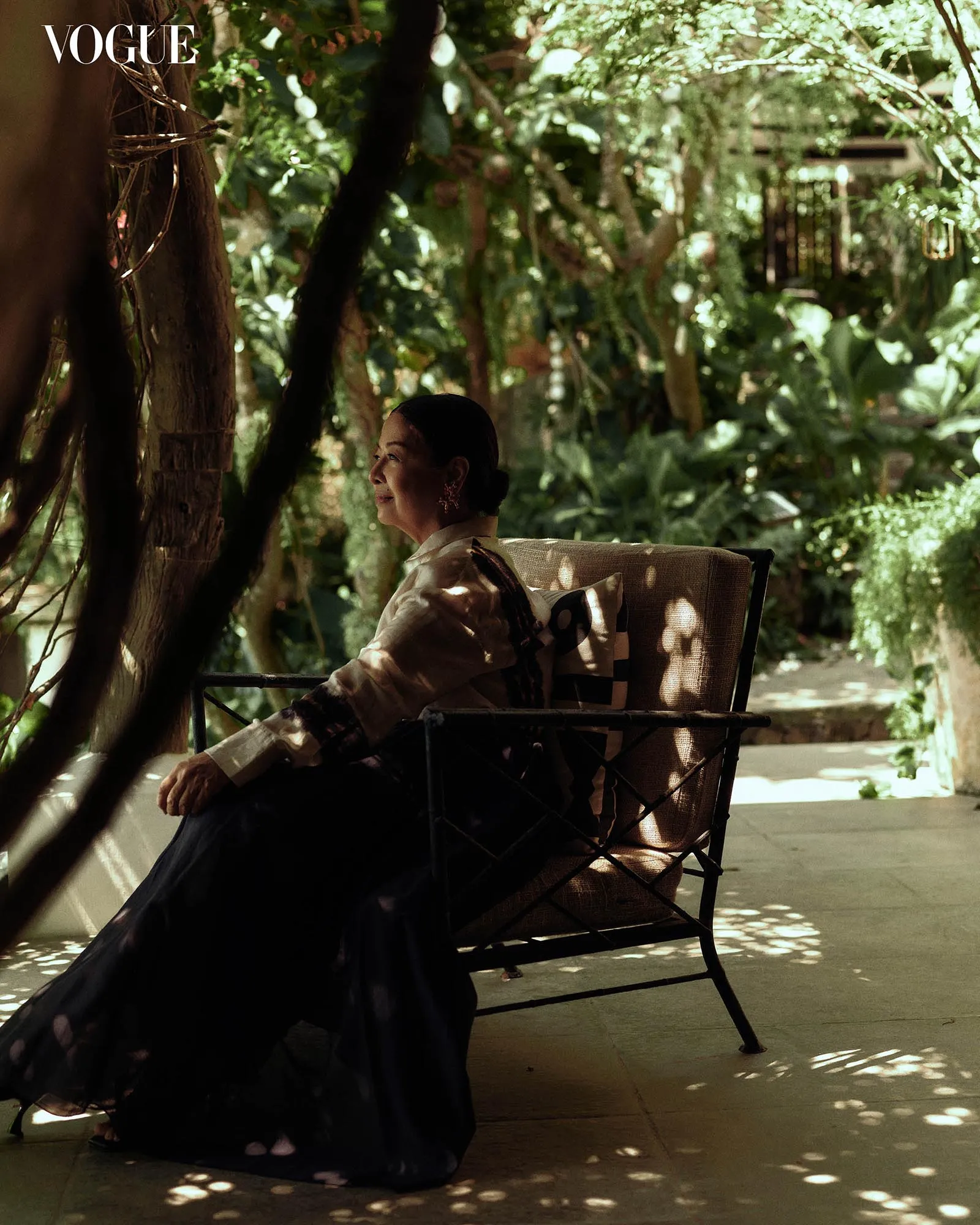
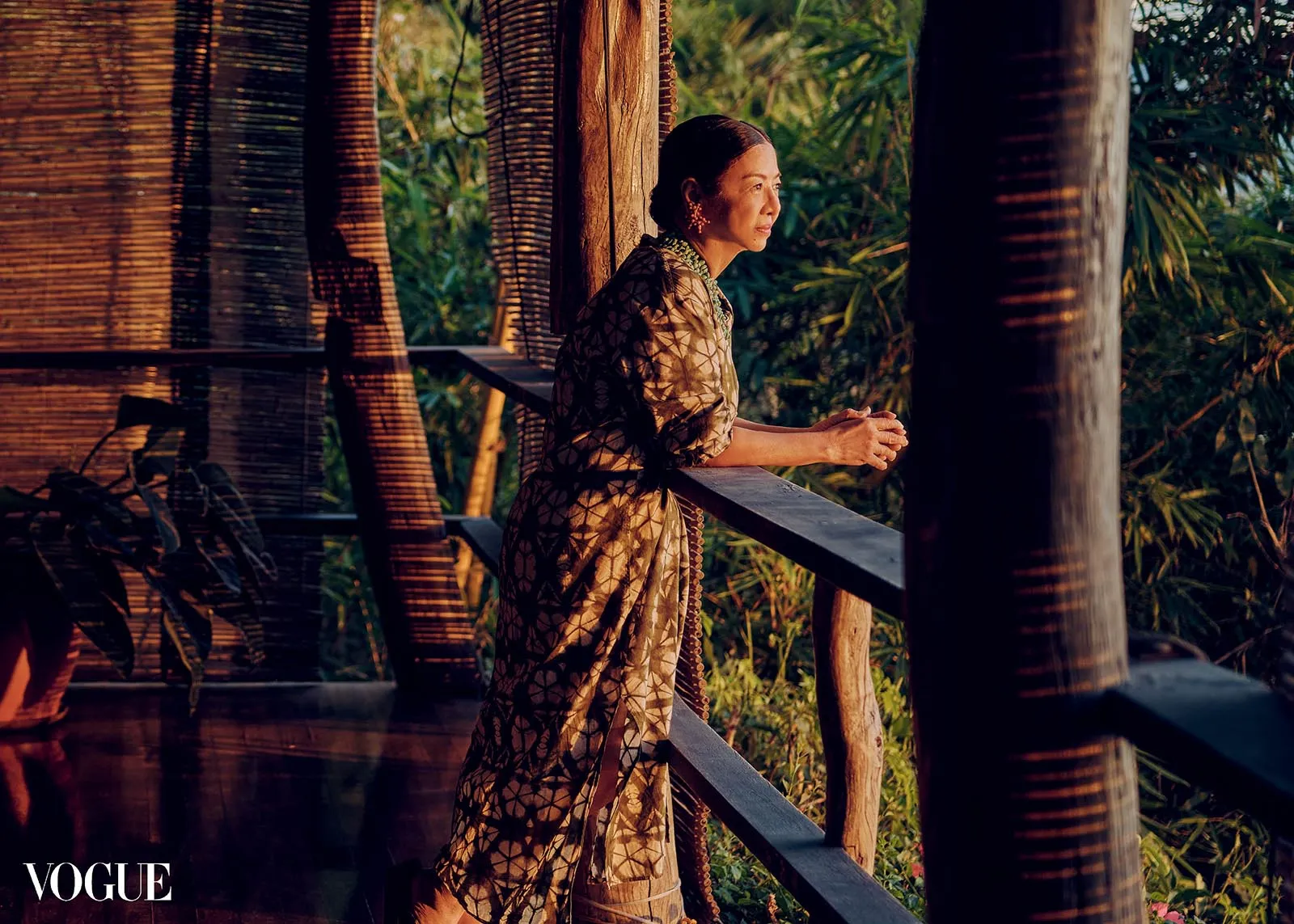
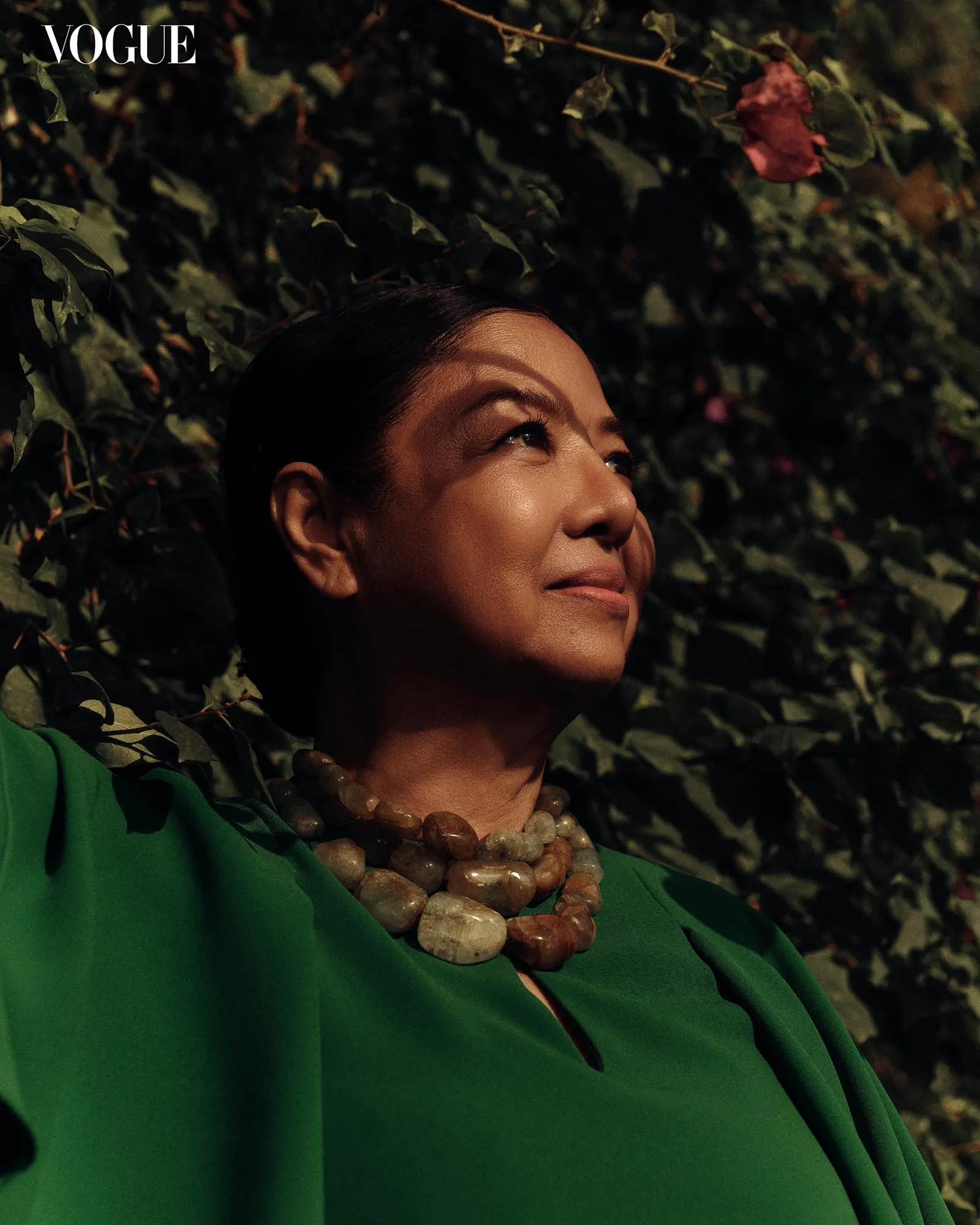
When we visited the artist in early March, it’s apparent that the compound was consciously built around the trees, so as not to disturb natural order. There are tiered gardens down the different levels of their hillside, where bougainvillea clusters abloom, and trees forming canopies overhead. There is a strong impression of coexistence: fountains of foliage mingle with stone steps, and overgrown vines dip ever so slightly into the pool.
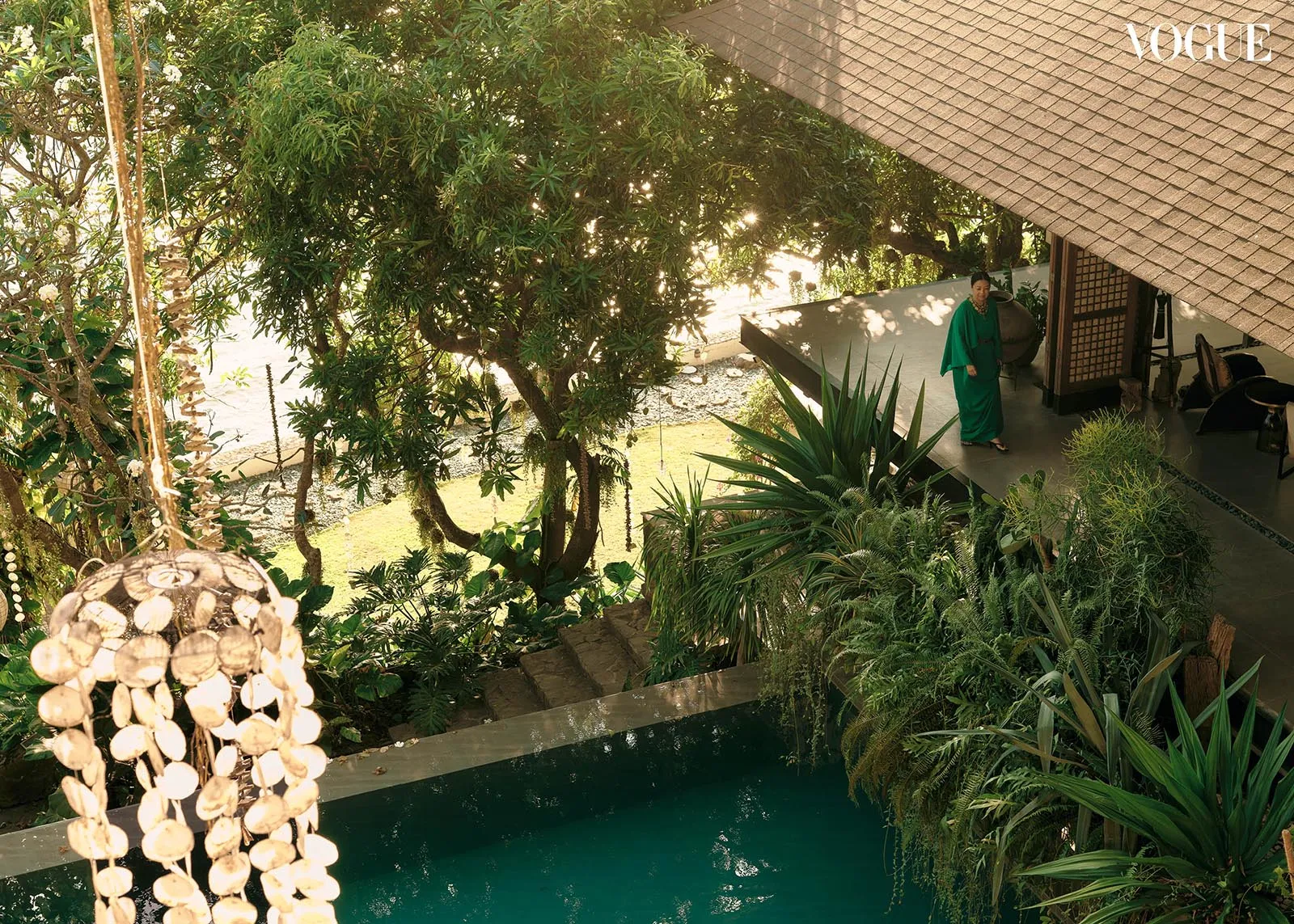
The Ongs built their first house there in the 1994, but as the family extended to in-laws and grandchildren, Wynn Wynn “wanted to have a little more space so they could all come down at Easter or Christmas, or, you know, the usual vacation.” The family was fortunate enough to have neighbors sell them their properties upon moving out, making their dream expansion literally within reach.
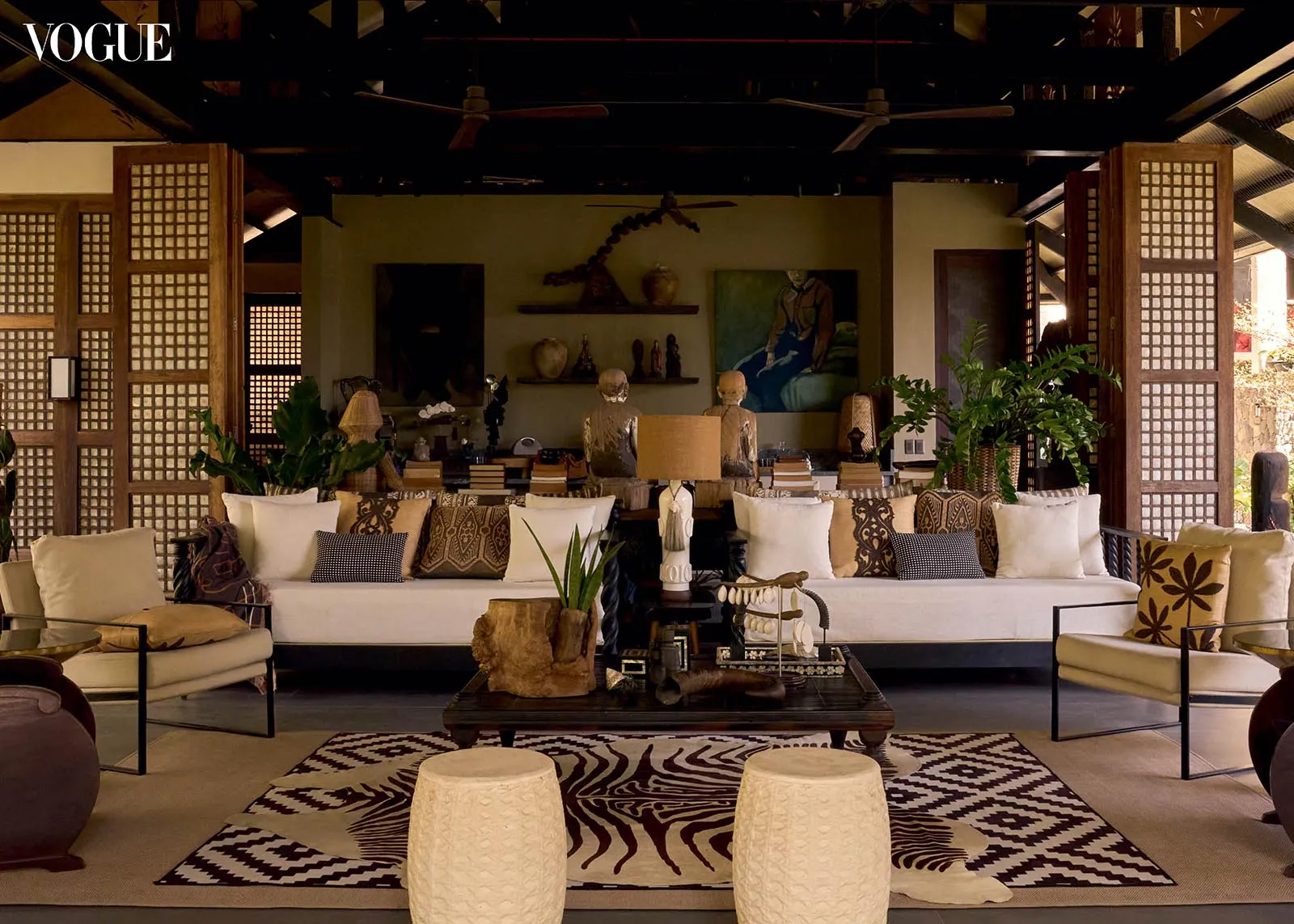
“It’s unfolding chapter by chapter. It’s not a hundred-meter dash, it’s a long, long, long distance run,” she points out of the renovation, which has been ongoing for about 10 years now. Reconstructions are approached on what she calls a “need basis. My grandsons like to play soccer, volleyball, badminton, archery. So we needed two lawns.” Over time, there have been five structural additions to the original house, including the arrival pavilion and Wynn Wynn’s “office”, which has a dedicated open-air bathroom.
While each building maintains its own character, they all share a cohesive language of openness, warmth, and as Vogue’s deputy editor Pam describes it, a rare unpreciousness. One need not worry, for example, about walking around with extreme caution so as not to accidentally knock a stack of books (and there are always multiple) off a table. The house might moonlight as a gallery of beautiful, functional objects, but it’s certainly not a showroom for glass wares that shatter with a single careless nudge.
That’s not to say she doesn’t have valuable items on display, because she does; maybe even to a fault. Wynn Wynn recounts a conversation with Art Fair Philippines co-founder Lisa Ongpin-Periquet, who asked her, “You’ve got some really serious paintings, and you have really serious antiques. Why is it at the beach?”
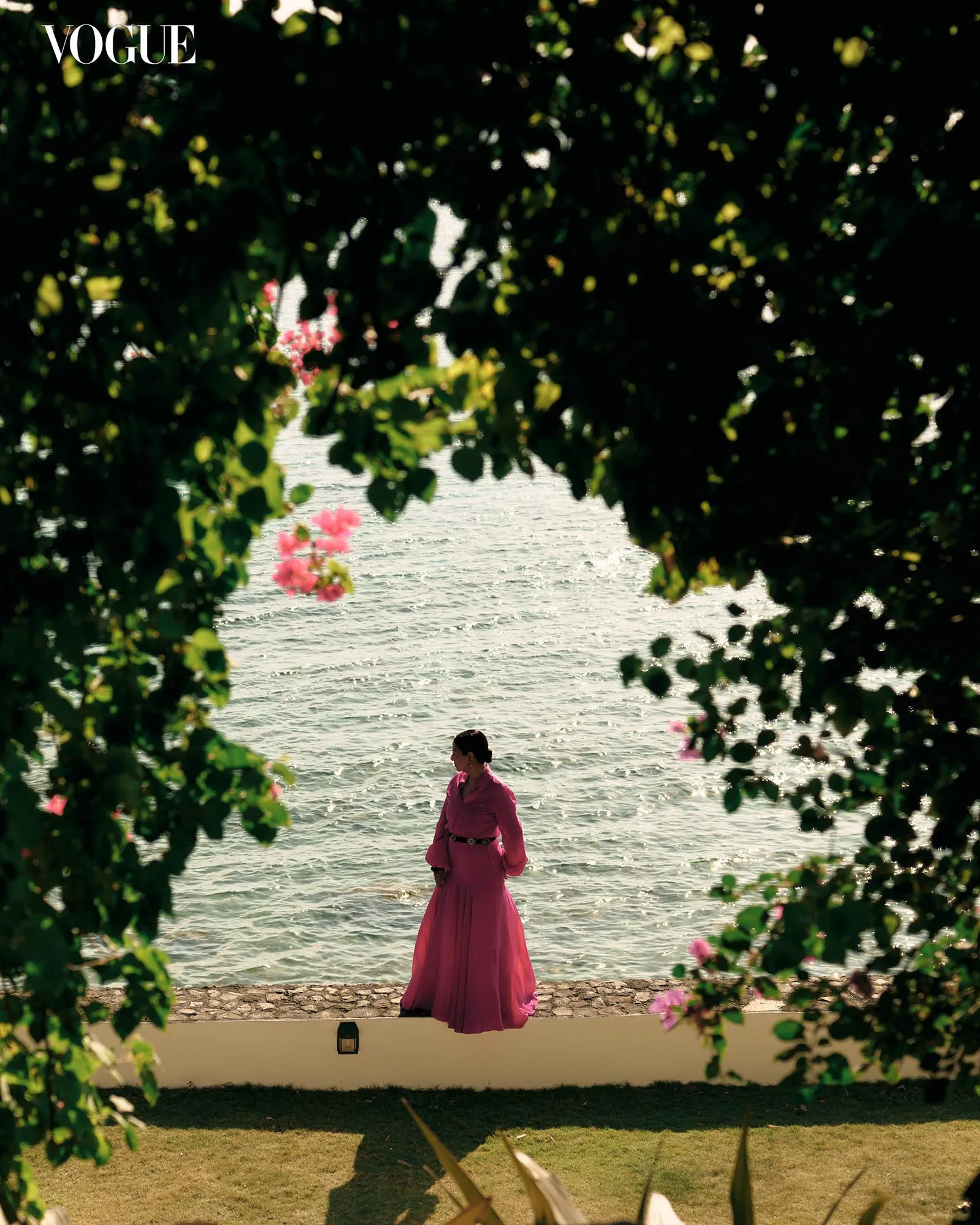
“And I said, ‘Lisa, most of my life is now at the beach,’” Wynn Wynn recalls replying. “If I buy things, I want to enjoy them. I don’t buy them thinking, oh, a hundred years from now, it’s gonna be worth this much. If I put them in storage, what’s the joy?”
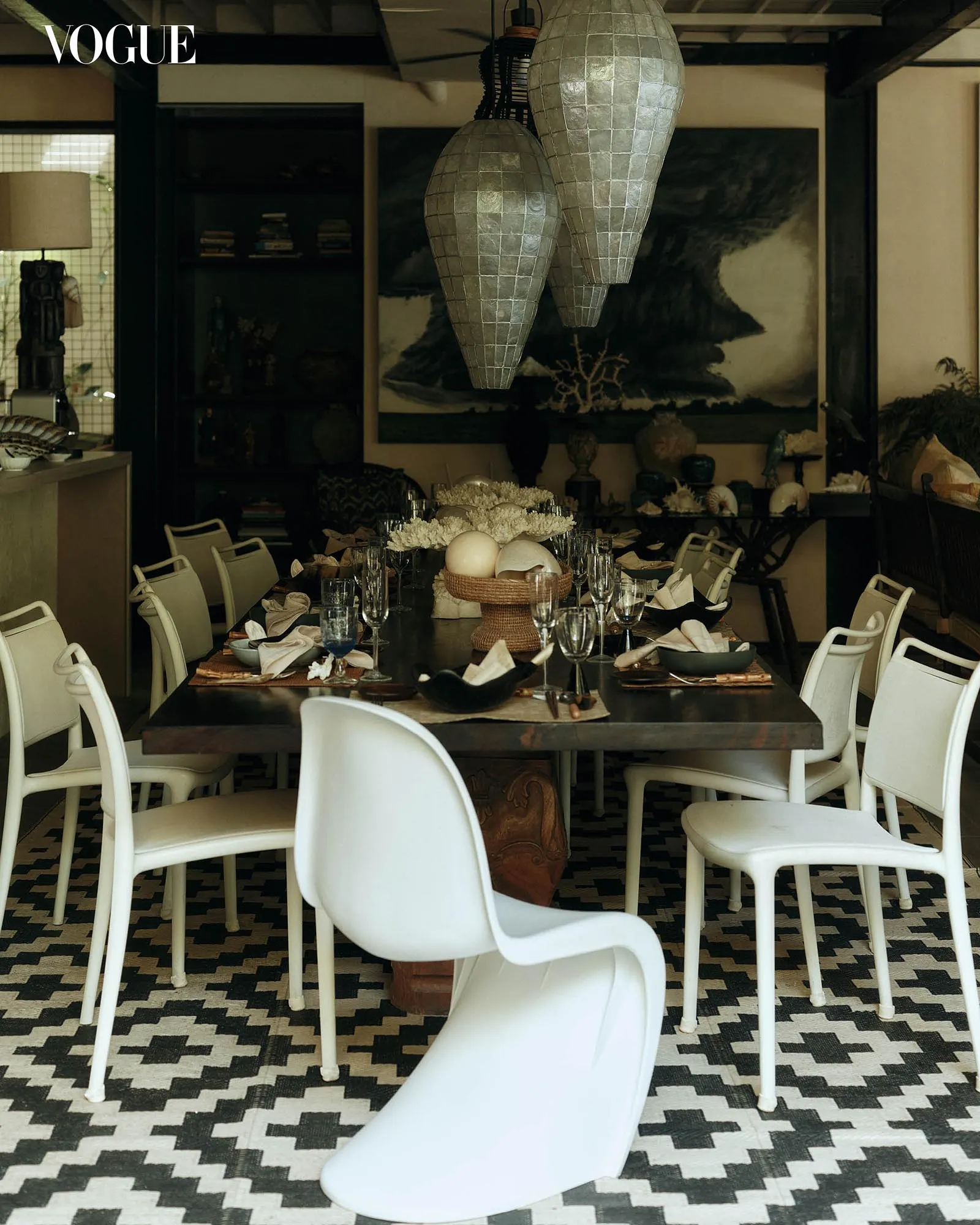
Her walls are decorated with strokes of Filipino artists like Rodel Tapaya, Allan Balisi, and her good friend Debbie Del Pan, interspersed with works by obscure Burmese artists and, perhaps most surprising to her guests, store-bought displays.
Pam admires a row of large natural corals on the dining table, only for Wynn Wynn to reveal, “They’re from Pottery Barn! I bought 18 coral pieces, ’cause I like having coral at the beach, but not real [ones].”
“It’s not a one-woman show. It’s a collective effort.”
Then there are the found objects. Once, she chanced upon a discarded kudkuran or small stool for husking coconut on the side of the road. “I fell in love with it.” She picked it up and asked her neighbor, “Tatay, can I buy it?” He laughed, happy to give her the rotting stool without cost, but she insisted on paying for it anyway. Back home, she dried it then affixed it on an old altar table. Later, a dinner guest commented, “I love that African stool!” To which Wynn Wynn, finding it hilarious, replied, “No, it’s pangkayod for copra!”
Naturally, her proclivity for what is lost and found was applied to her exhibit, too. Her original Ayuyang sculpture is based on her children’s book Ayuyang with Bantay, Bok, and the Balani Stone, which chronicles how castaway animals like disgraced guard dog Bantay and chicken Bok form a community under a tree named Ayuyang, the Ilocano word for “gathering place.” The creatures are made from sterling silver, and find home on a large piece of driftwood that Wynn Wynn scavenged on her beach after a typhoon.
She ruminates, “I guess it’s a matter of perspective. I always tell people, ‘Don’t be hung up on values,’ because that’s not what is evocative, for me at least.”
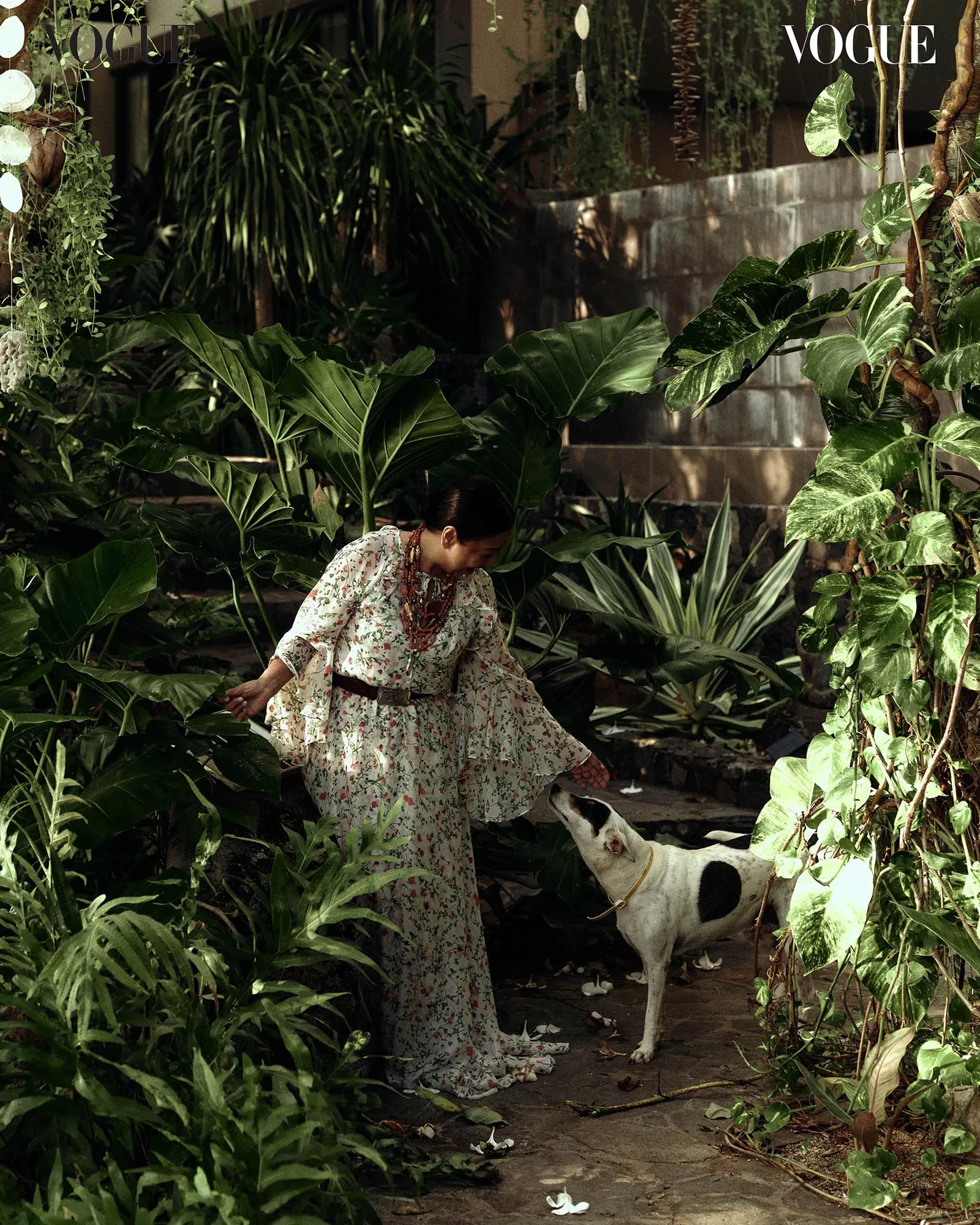
Taste is what pulls her eye to the most unexpected places, allowing her to glean beauty where it’s not as overt. It also happens to be what she has in common with her barkada from way back, composed of tastemakers across varied fields. “The name of our group was very apt. It was ‘Not enough circuses, too many clowns.’ That was our Yahoo group. Everybody had a niche in that strange community, and we all got along so well. It was a lot of fun.”
They would get together every two or three weeks and eat, eat, eat. They loved to eat as much as they loved to cook and host, and they took turns picking restaurants to try. There was Vogue editor and former model Joyce Oreña, the late chef and restaurateur Margarita Forés, architect Ed Calma and his wife Suzy, the late artist and tour guide Carlos Celdran and his wife Tesa, artist Melissa la O’, businessman Carlo Rufino, Reret Bonoan (who named the group), Tina Lebron, the late Carmen Araneta delos Reyes, and fashion stylist Michael Salientes.
The latter chronicles the genesis of their friendship: “I was in college in Boston, and Wynn’s younger sister was taking her masters.” The two often spent time together, and he met Wynn Wynn when she stayed with her younger sister for a few months.
Michael and Wynn Wynn would bring their friendship home to the Philippines, tasting their way around Manila with their creative circle. When Wynn Wynn sported a cuff she made for herself, Michael couldn’t believe she had made it. He urged her to make more pieces that she was creating for fun. “She did them by hand and I thought it was so interesting and fascinating. I told her to make at least a dozen, and I would take her to show my friends who owned Firma in Malate,” Michael shares.
It was the year 2000, and Wynn Wynn had been away from teaching for six years. She was an insomniac in her mid-life, so she’d sit up all night with boxes and boxes of gemstones and Swarovski crystal beads and all kinds of wire, making things.
For her first collection, she crafted an egg crate and spray painted it gold. “Back then, Tesoro’s had little mother-of-pearl eggs that you could twist open. So I opened all the eggs, and then I filled them with vegetable-dyed black cogon, and each of the eggs had a ring. Each ring was totally different. None of them were the same.”
“It wasn’t my goal to be on top of anything. But I think it’s good to go when you’re still able to create beautiful things, rather than not having that excitement and eagerness.”
In less than a month, she had made 30 of them to fill the crate. Michael pulls us back to the night they met Firma’s Ricky Toledo and Chito Vijandre: “It was an evening, I remember, early evening. We went all the way to Malate. When they opened the box, they didn’t even say anything. They said, ‘We’ll take all of it.’”
Wynn Wynn concludes the tale. “They sold out in a week. I was really surprised.”
Born in the predominantly Buddhist nation of Rangoon, in Myanmar (formerly Burma), raised in Vienna, Austria, and now settled between Makati and Batangas in the Philippines, Wynn Wynn is no stranger to the ever-expansive perspective invoked by a nomadic upbringing. Add to that her frequent sojourns to fictional, literary worlds, and you have a perpetually curious wandering mind.
Her father’s occupation as a nuclear physicist at the International Atomic Energy Agency brought the family to Vienna, and a few years after his passing, their mother’s new job at the Asian Development Bank brought them to the Philippines. By that time, Wynn Wynn was a teenager. She continued high school at Assumption, then later earned a business management degree from Assumption College. She went on to complete an MA in education and curriculum development.
After the years-long tenure at International School Manila, she remained highly involved in the PTA as its vice president for two years. She was then elected to the board of trustees, and chaired multiple committees before becoming the vice chairman of the board. “It taught me many valuable lessons, and I think it matured me,” she muses of that period. She decided not to run for the board again in the year 2000, which was the year her son graduated. When he started university in Boston, where their family happens to converge annually for summer vacation, Wynn Wynn thought she needed to hang around after her husband and daughter left in case he needed her. which of course, she says, her 19-year-old did not. She laughs heartily, saying, “As a mother, you think you’re indispensable! You are not, clearly. I got so bored waiting for his phone call, so I started making wire jewelry.”
The self-proclaimed “accidental jeweler” started doing it for fun, but after the success of those easter eggs at Firma, the business began to grow. Towards the end of her career, her workshop involved 13 people, including her.
“My people were handpicked,” the designer says. “None of them were trained in jewelry.” The first two members of her team were a carpenter and electrician from the contractor that Wynn Wynn and her husband hired to build their home. They approached her to ask if they could work for her, and although she didn’t own a construction company, she kept them in mind because of looming plans of putting up her own studio.
Simultaneously, she was very involved in Hands On Manila, which she co-founded and later chaired, and they worked with the Pangarap Foundation to support disenfranchised youth. “I promised Brother Francis, who was in charge, that I’d try to find jobs for his people. So when I set up my studio, all my people, except for the carpenter, the electrician, and the cook, were from him.”
Wynn Wynn saw their lack of formal jewelry training as an asset, because it mirrored her own own experience. Through research, she realized that the lost wax casting technique was only way to create the pieces that were in her head. “Not having been trained in a specific way or by a specific school of thought, it really freed my mind to do whatever it was I envisioned.” Eventually, she and her team learned how to carve, sculpt, and be goldsmiths. They all learned in the same class, when specialists were brought in to teach them. “I felt that it was important for them to feel that they are imbuing something also. It’s not a one-woman show. Yes, I direct it, yes I design it, but it’s a collective effort.”
“Wynn Wynn is a very generous spirit,” fashion designer Milka Quin tells Vogue. The two collaborated on a clothing collection for a magazine in the past, when Wynn Wynn enlisted Milka’s help to construct designs that she envisioned which positioned jewelryJewelryDecorative adornments worn on the body, from fine pieces in gold, diamonds, and pearls to fashion jewelry made of accessible materials. Jewelry completes an outfit and often holds sentimental orGo to Jewelry Glossary as an integral design element as opposed to mere accessory. Milka continues, “She allowed me to be part of this creative process. Every design starts off with a story, spoken with her diaphanous voice, on how this certain piece should feel like, the origin of the idea, or where this piece should take you when you look at it.”
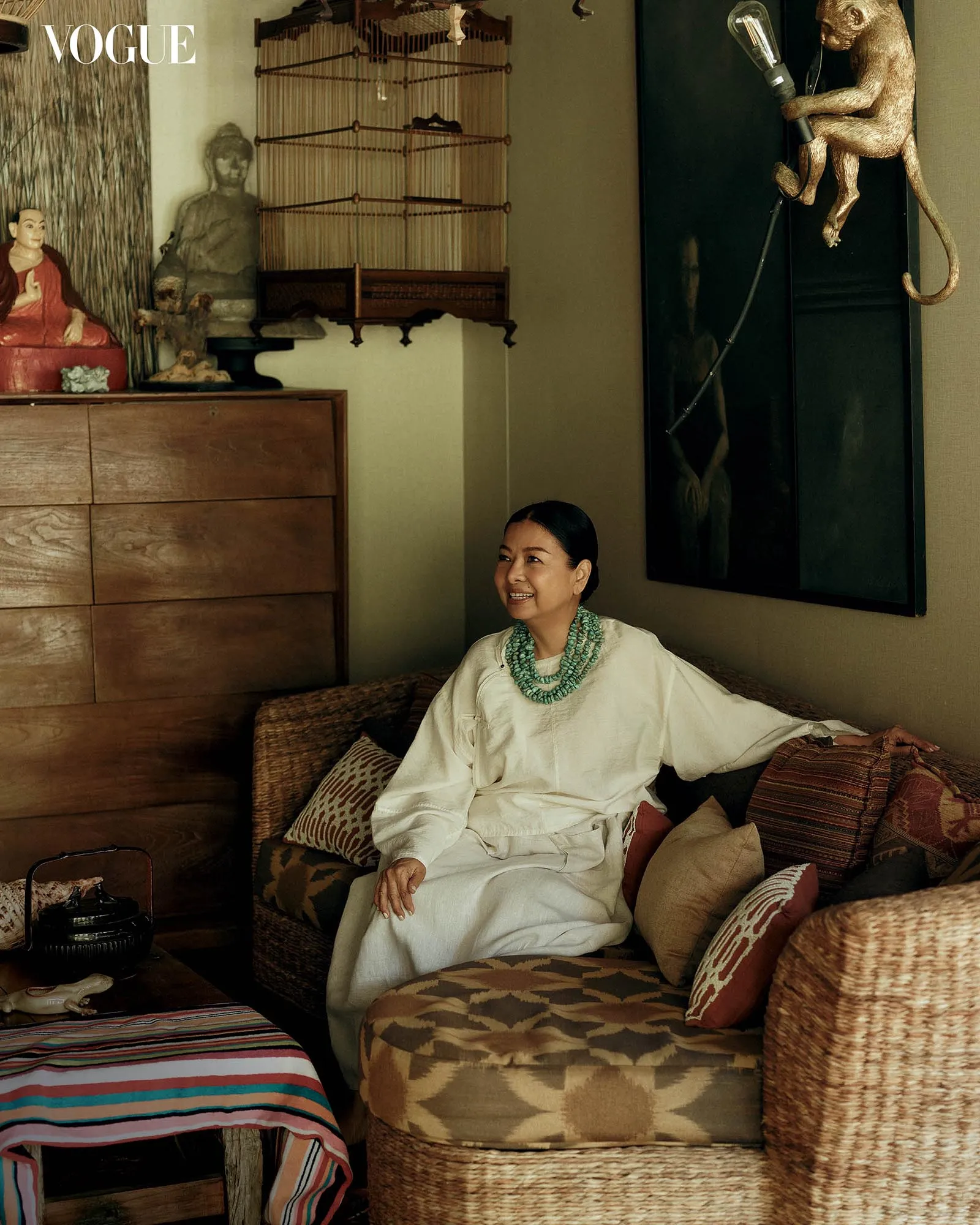
To this day, Wynn Wynn continues to feed her appetite for stories, so that her own tales can keep being written in both new and unfamiliar ways. She gets excited about magic realism, and the winning and nominated works from the annual Booker Prize. She has a mischievous glint in her eye that borders on concerning, when she waxes on about how much she loves to watch ghost and horror films, despite her son teasing her about traumatizing the grandchildren.
When asked if she feels happy with where she is now, she doesn’t skip a beat.
“Oh, very. I am. You know, no matter what is happening, and things will always happen around us, I think it’s important to just focus on what’s important to us, because people can be so weighed down by the burdens of the world, right?” she posits. “I think the cup is always half full for me.”
By TICIA ALMAZAN. Photographs by ARTU NEPOMUCENO. Beauty Editor PAM QUIÑONES. Fashion Editor DAVID MILAN. Art Director: Jann Pascua. Producer: Bianca Zaragoza. Multimedia Artist: France Ramos. Makeup: Kim Roy Opog. Hair: Jason Tangal. Photo and Video Team: Choi Narciso, Tara Reyes, Lynyrd Matias, Dome Plaza.
Frequently Asked Questions
Wynn Wynn Ong is a jewelry designer and former educator, born in Burma but raised in Manila, Philippines.
The Burmese-Filipino jewelry designer Wynn Wynn Ong is married to Filipino businessman and investment banker Norberto “Norby” Ong.
This year, Wynn Wynn Ong returned to the design scene with a retrospective exhibition titled “Distilled” at Yuchengco Museum in RCBC Plaza, Makati.
Wynn Wynn Ong is based in Manila, Philippines, where her brand’s atelier is located and operates by appointment. While she is based in the city, she also lives and maintains a nature-integrated architectural sanctuary called Mingala in Anilao, Batangas.
Wynn Wynn Ong creates her fine jewelry and objects d’art under her own name, operating her eponymous luxury brand, Wynn Wynn Ong.
- At Ponce Veridiano’s Home, Structure Is Shaped by the Earth
-
How Filipino Botanicals Are Finding Their Way Back Into Beauty
- The Bench Fashion Week Spring 2026 Show Celebrated a Cross-Cultural Tapestry Between Japan and the Philippines
- Jonathan Matti Maps Out Filipino Art, History, and Culture in Latina Manila