
At Ponce Veridiano’s Home, Structure Is Shaped by the Earth


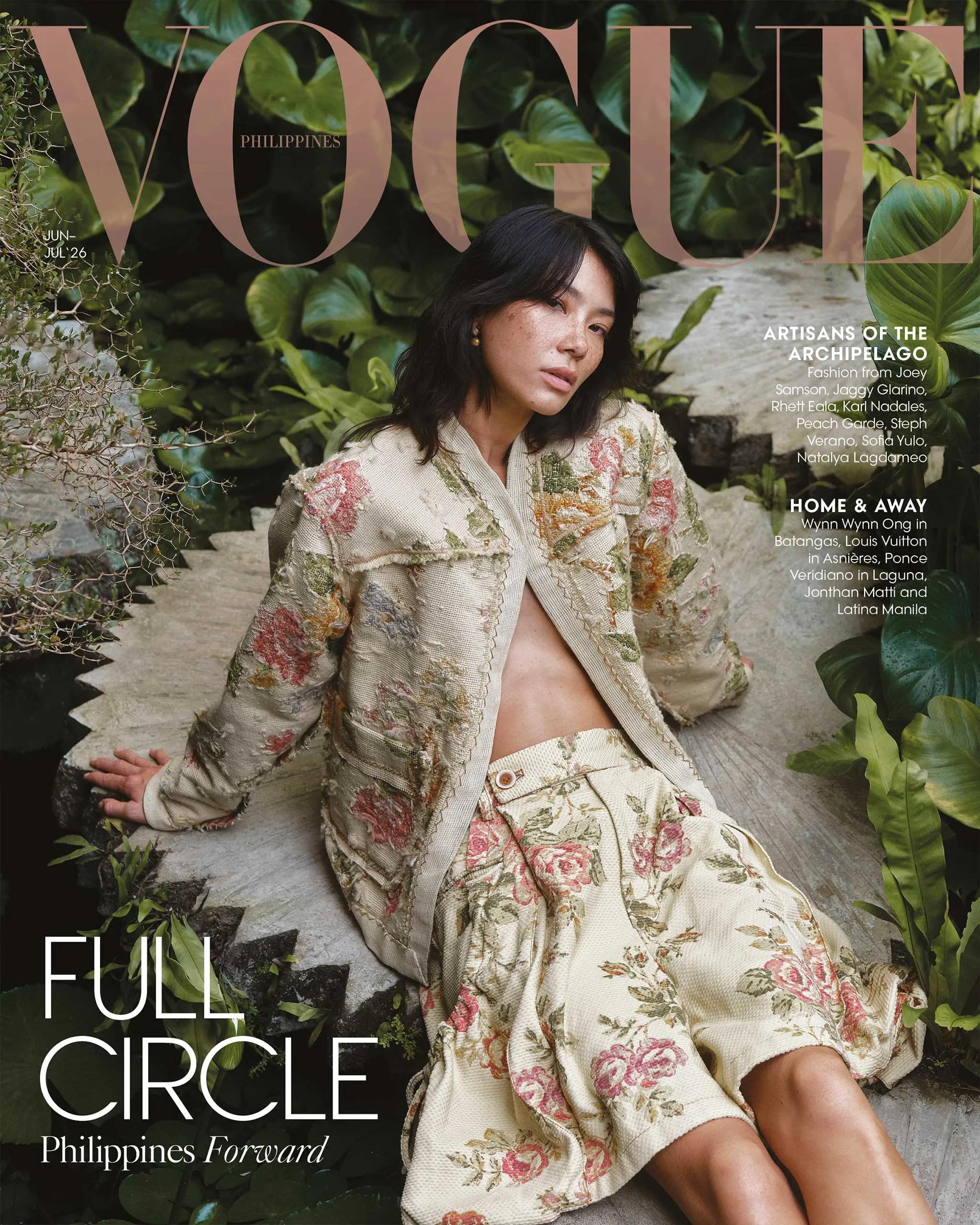
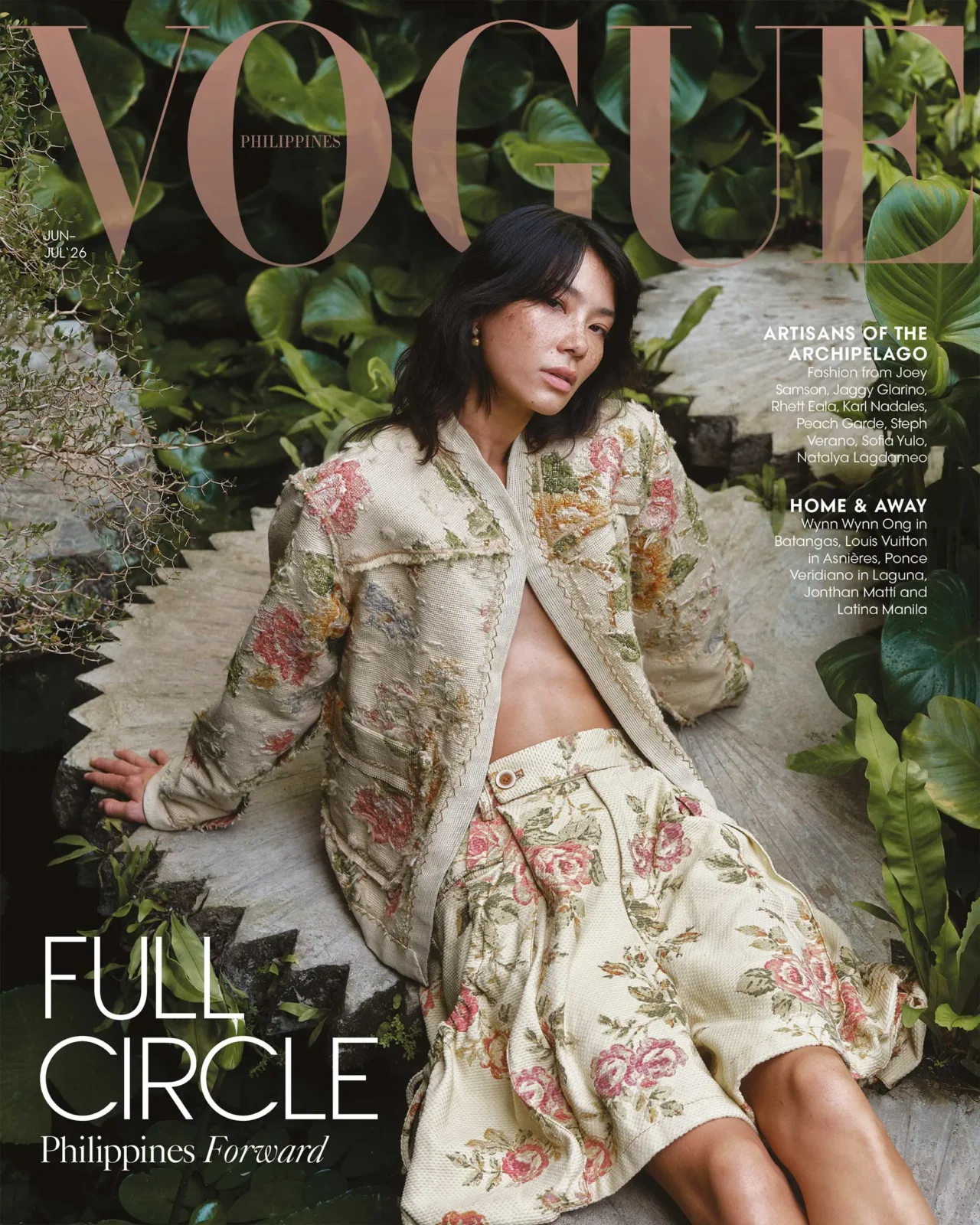
Chloe wears a JAGGY GLARINO jacket and shorts, and JEWELMER Voile d’Or earrings. Photographed by Artu Nepomuceno for the June/July 2026 Issue of Vogue Philippines
Nestled in his hometown of Laguna, Ponce Veridiano’s home reflects four decades of working with land rather than against it.
At the foot of Mount Banahaw, where mist drapes itself over dense forests, beauty reveals itself in glimpses. Known as a bundok dambana (holy mountain), it is considered a sacred site to locals, pilgrims, and those willing to wait, which is perhaps the most fitting way to understand the landscape that frames the home of Ponce Veridiano, an architect, landscape artist, and painter.
Veridiano has spent close to 40 years shaping gardens and outdoor spaces across the Philippines. Long before he began his practice seriously, he was already working with land, studying plant behavior, light, and how people move through space. “Even when I was young, I loved gardens, I loved plants, I loved landscapes,” he explains. “But most of all, I loved observing the environment.” He does this despite having had no formal education in landscaping, informing himself by traveling, and paying attention to his surroundings.
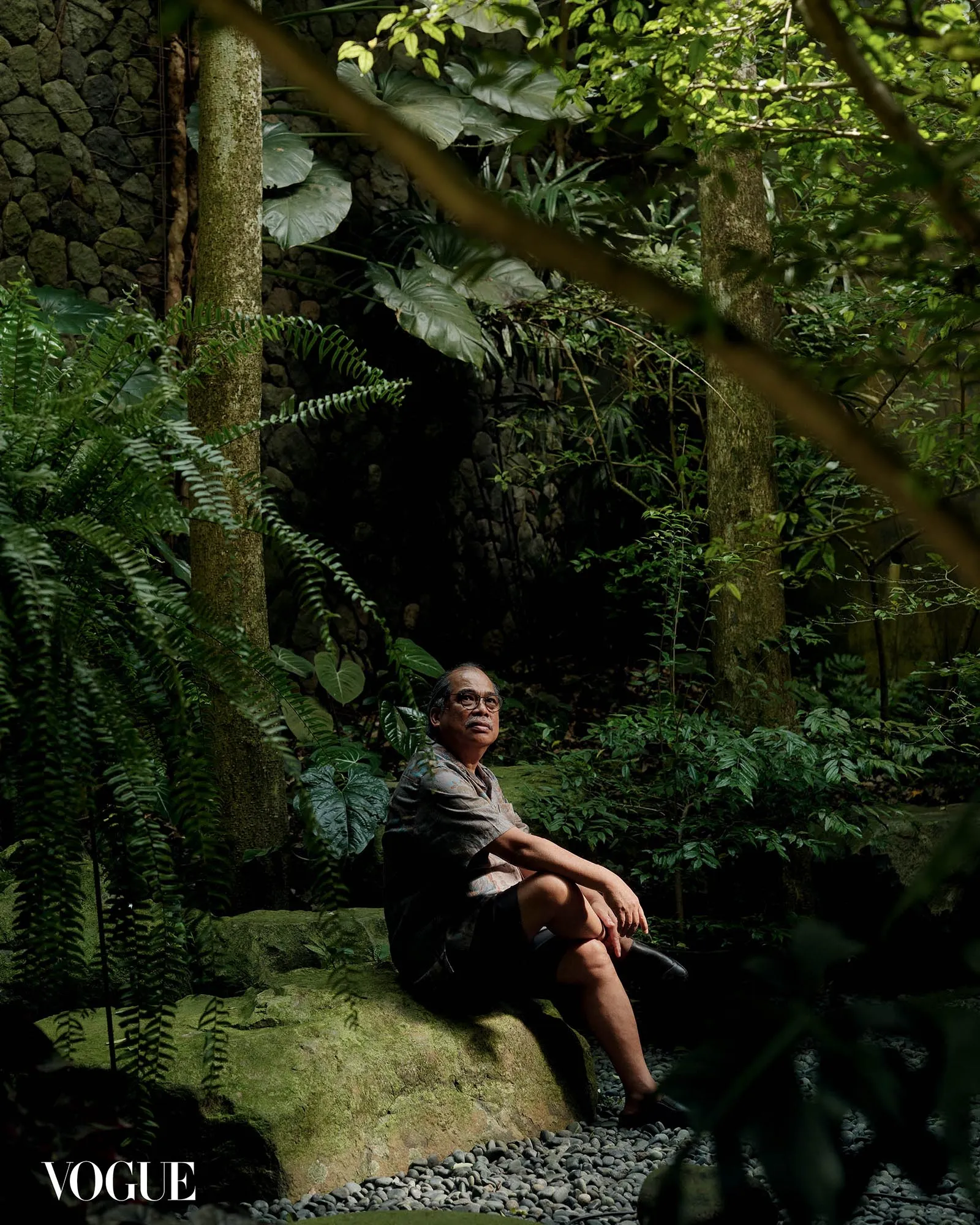
That instinct to observe extends to his home in Nagcarlan, Laguna, the Tauhai Villa. Built as his second house, it rests on sloping terrain by the base of the holy mountain, partially concealed by trees and lush greenery, and opens outward rather than upward. From a distance, its entrance is unassuming, but up close, the details accumulate.
Within his home, the materials are thoroughly local. The stone cladding comes from a river downstream, making up for nearly three-fourths of its frame. It is partnered with wood from Ipil trees that have been salvaged and repurposed from demolished houses in the area, serving as the foundation for beams, floorboards, and louvers, giving it a dense and aged texture. Igorot craftsmen from deep in the Mountain Province were also commissioned to cut and lay the river stones by hand, bringing another layer of regional knowledge into the design. None of the materials feel imported for effect. “Everything is sourced from here [in Laguna]” Veridiano says of the craftsmanship. It’s a statement that applies to much of the house.
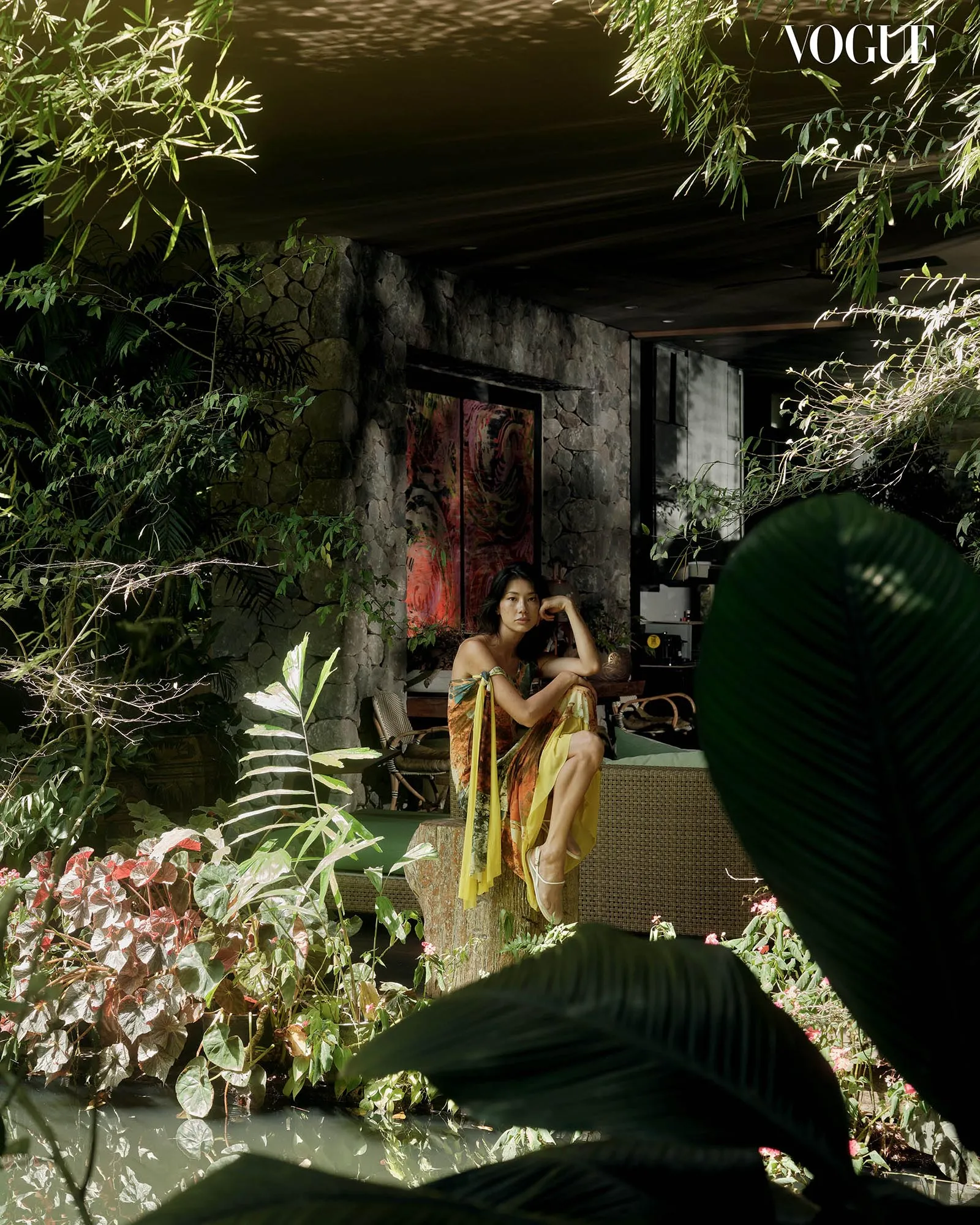
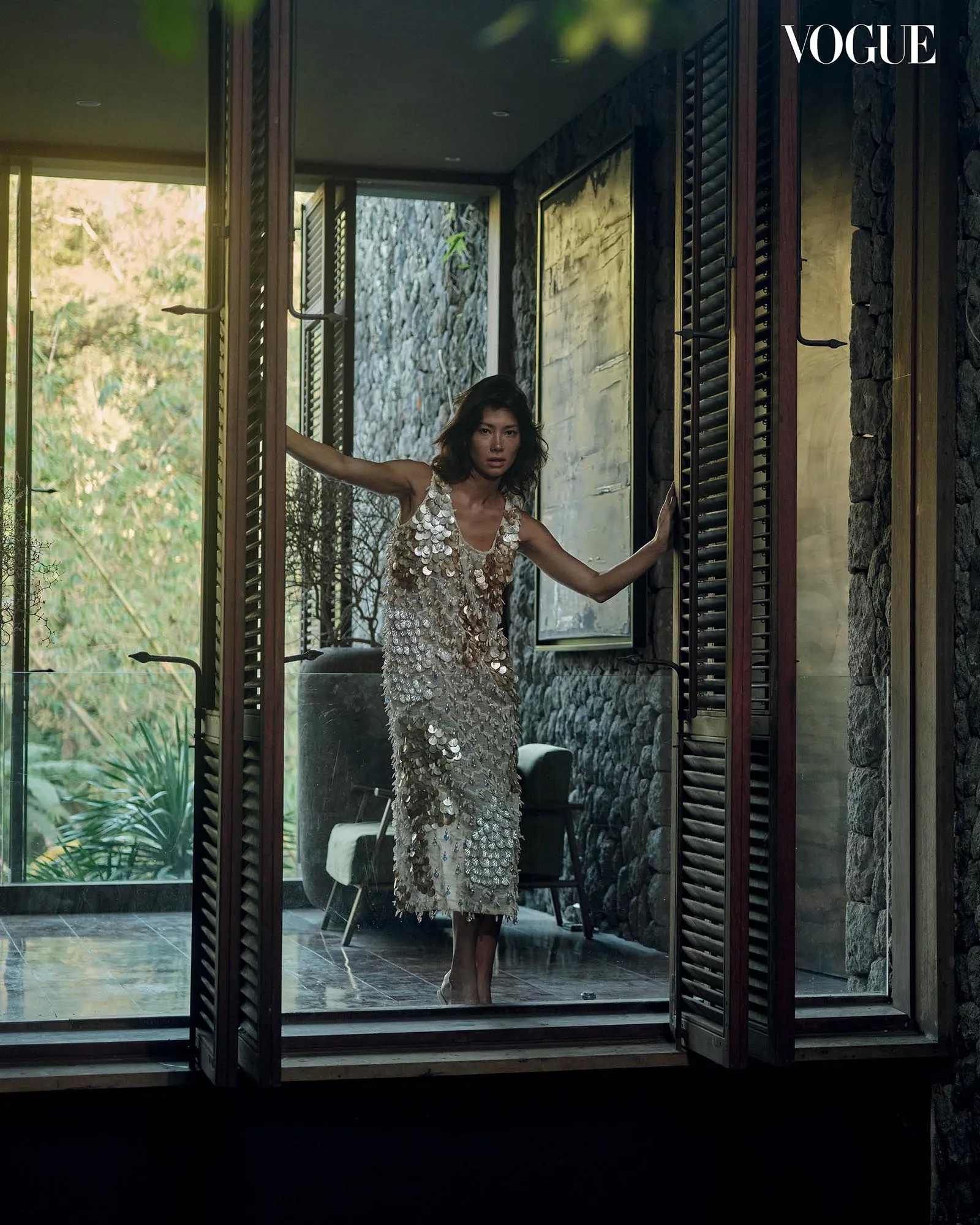
But the architecture itself also draws from modernist references: “My inspiration are the houses of Tadao Ando and Frank Lloyd Wright,” he explains, but the result is tailored by the Philippines’ tropical climate and habit. The most defining feature of the house is that it is almost entirely open air. By design, bedrooms, bathrooms, and living spaces are designed for cross-ventilation, with wide openings instead of sealed enclosures. “Even my old house is like this,” he points out, “and usually, I don’t even close the windows and doors at night to let the air circulate through the home.” Throughout the day, birds and insects also pass through freely.
“What I want is a combination of the natural and the manicured.”
This approach comes directly from his work as a landscape artist. Beginning his career by joining garden clubs and exhibits, Ponce had eventually developed a reputation for spaces that balance structure with the environment. Early influences included the gardens of Ramon and Chito Antonio, sons of the late National Artist for Architecture Pablo Antonio, whose clean lines and compositions appealed to him. “But right now, what I want is a combination of the natural and the manicured,” he says.
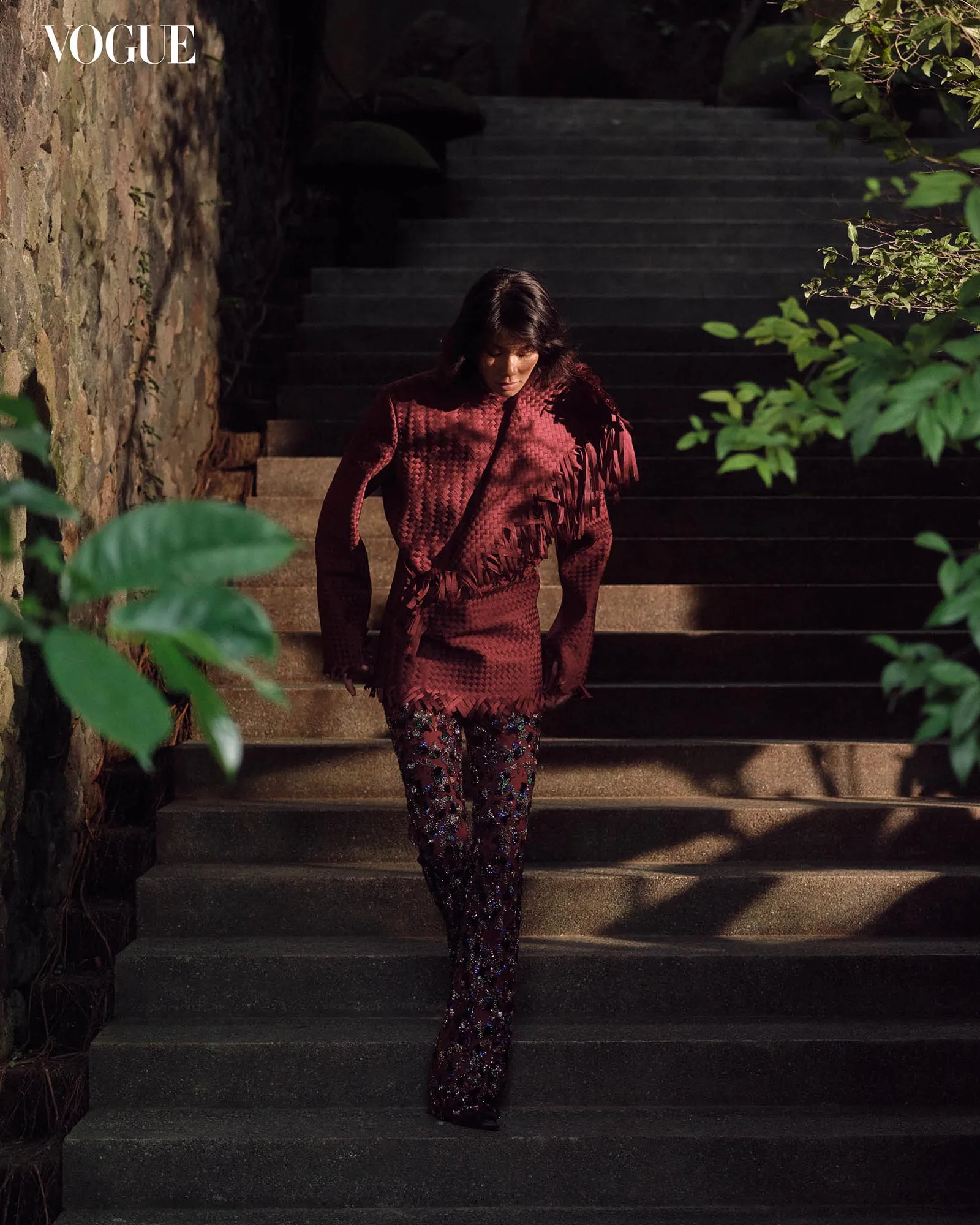
That balance is visible in many of his large-scale projects, including resort landscapes where the challenge lies in shaping an environment that feels intentional without overpowering its natural setting. One of his ongoing works is at Pearl Farm Beach Resort, a project he cites when discussing how he integrates native elements into developments. Even there, his focus remains on letting the landscape guide the design. Tauhai Villa feels like the distilled version of that philosophy. Its structure is composed, but not rigid, made possible by gardens where plantlife are allowed to grow into their space; with roots that fill the gaps in between stone walls, and a canopy of trees overlooking the horizon.
His travels to Bali, Indonesia, and repeatedly to Japan, have also left visible traces in his body of work, particularly in his sensitivity to how architecture and culture intersect. “Seeing how these places implemented their culture into their buildings, their architecture, was usually one of my favorite experiences traveling around Asia,” Ponce explains. East Asian elements appear abundantly throughout the residence, with objects such as shrines, statues, and stationery brought from Tokyo and Kyoto decorating each room.
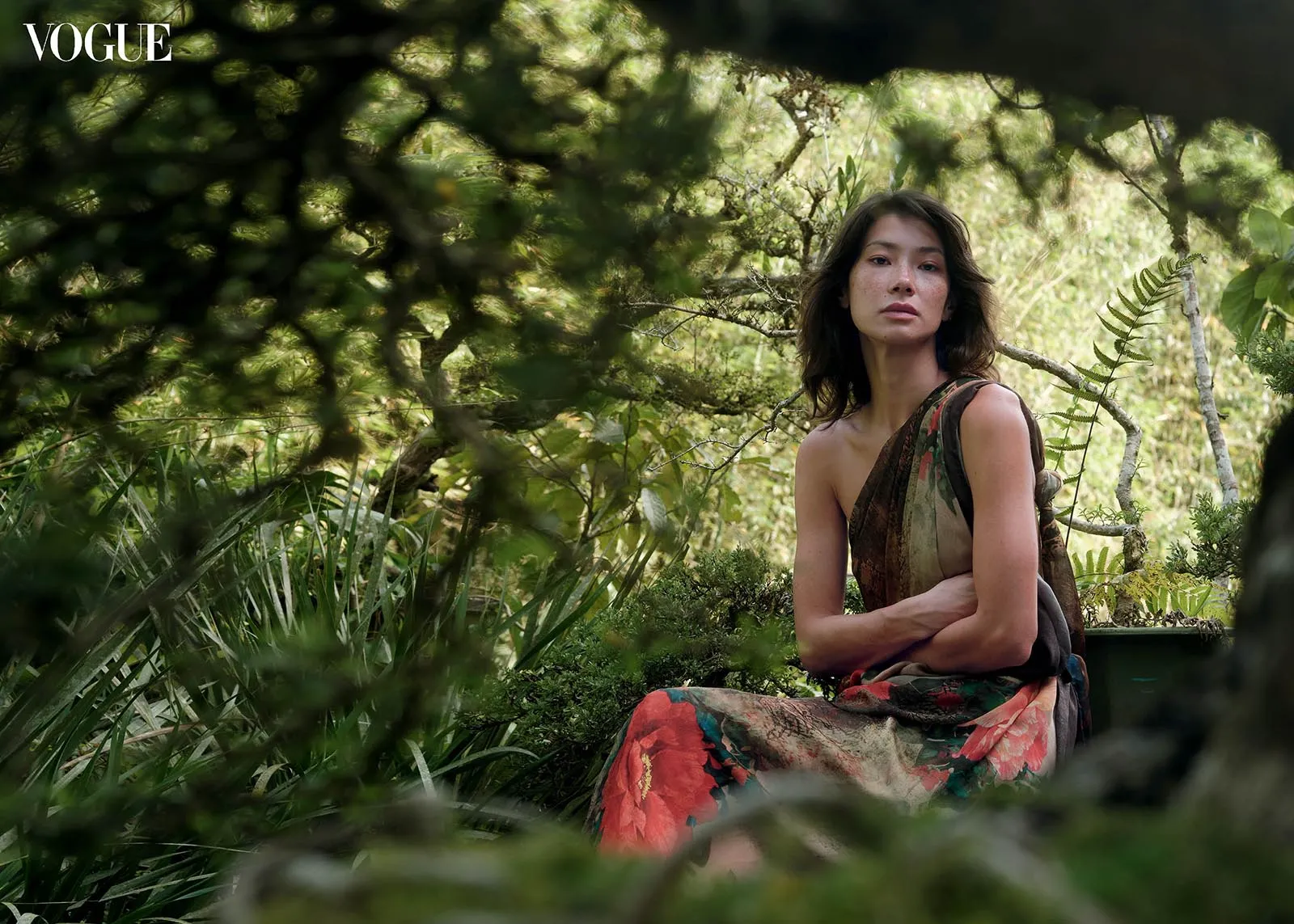
Apart from his contributions as a landscape artist, Veridiano has recently shifted his focus toward painting during the height of the pandemic. “If the world stopped, I will not stop,” he says of his first experience picking up the brush. And what began as figurative work like nudes and studies of the body eventually moved toward abstraction, and finally settled into subjects he knew best. Trees, waterfalls, and imagined terrain are now the focus of his canvases.
“All of the ones you see here are my paintings,” he says, gesturing around the house. Some hang in bedrooms, while others line the gallery space he later carved out of the home. When visitors began asking to see his work, he adjusted the layout, turning what was once a private residence into a hybrid of living space and gallery.
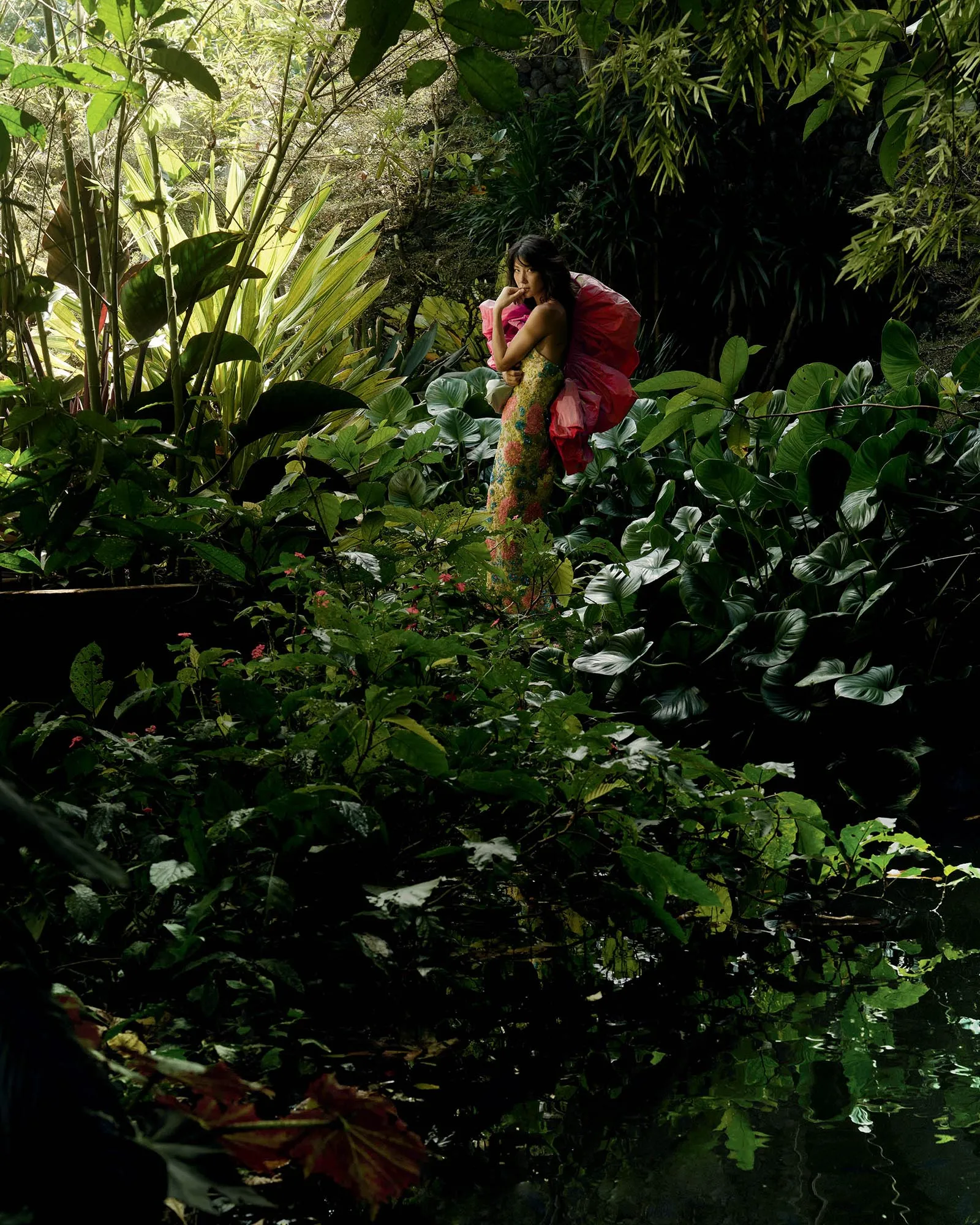
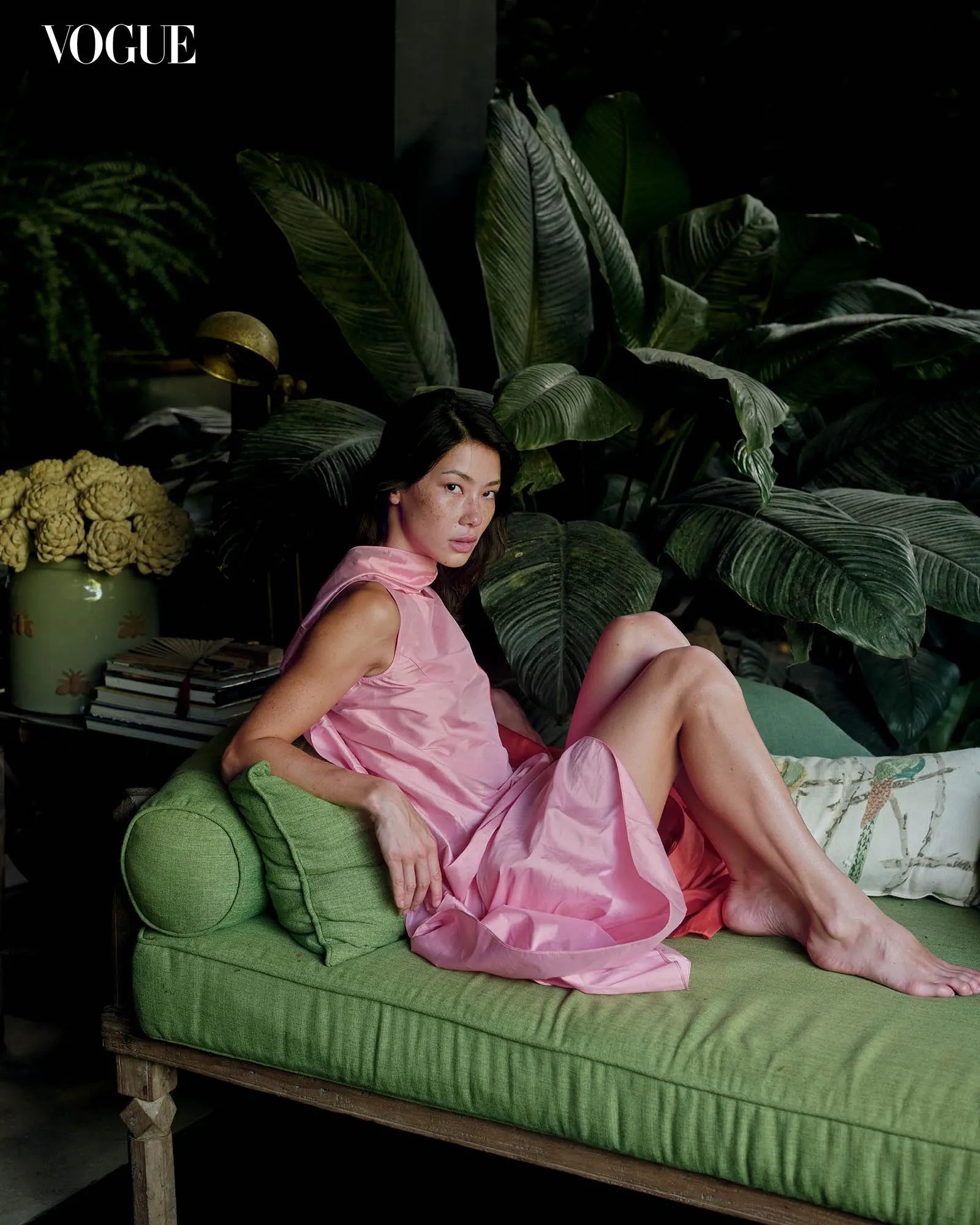
Despite the range of influences, Veridiano still remains anchored to his hometown of Nagcarlan. “I was born here.” Maybe it is this familiarity with the land that allows the artist to work without interruption.
Much like the mountain it rests beside, Tauhai Villa is not always open. Visits are limited, often by invitation, and experienced in small groups. Veridiano understands that neither the house nor his work are meant to be taken in all at once. Both ask for time. An attentiveness to how wood, stone, air, and light coexist without one overpowering the other. In returning to the land he grew up on, he has shaped a practice that mirrors his home: an intersection of art, architecture, and environment, held together by a deep appreciation for the earth that continues to guide him.
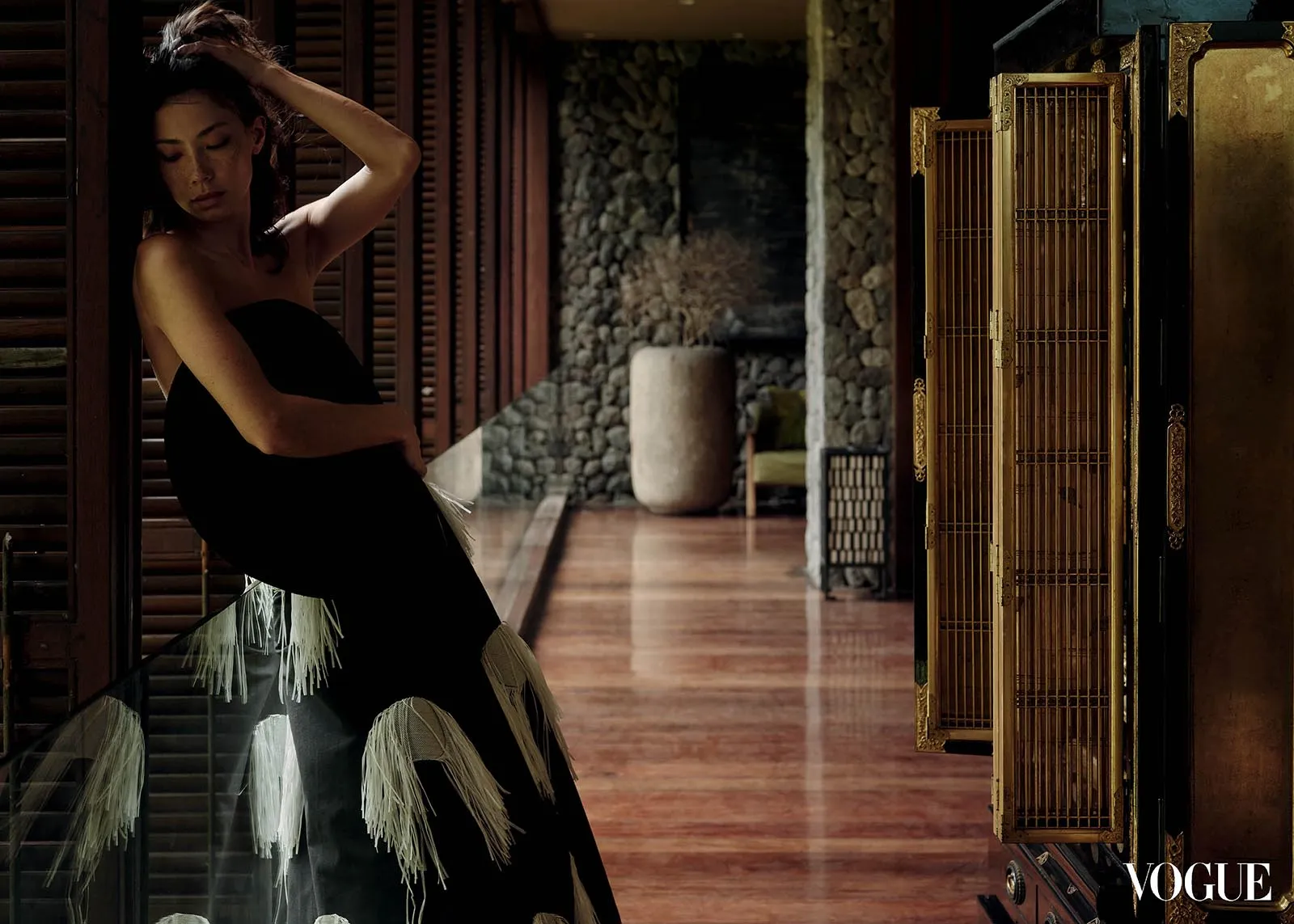
By GABRIEL YAP. Photographs by ARTU NEPOMUCENO. Fashion Editor DAVID MILAN. Deputy Editor TRICKIE LOPA. Styling by GENO ESPIDOL of QURATOR STUDIO. Model: Chloe Magno. Art Director: Jann Pascua. Producer: Julian Rodriguez. Makeup: Zidjian Paul Floro. Hair: Gab Villegas. Videographer: Lynyrd Matias. Photography Assistants: Choi Narciso and Odan Juan.
Shot on location at Tauhai Villa.
Frequently Asked Questions
Ponce Veridiano is a self-taught Filipino landscape artist and painter who has a home and gallery, Studio 88 (also known as Tauhai Villa), in Nagcarlan, Laguna.
Ponce Veridiano is known for Tauhai Villa in Nagcarlan, Laguna, and for the award-winning landscape design at Pearl Farm Resort on Samal Island, Davao.
Laguna is a province south of Manila, known for its waterfalls, natural hot springs, and rich historical heritage. It is also home to the Philippines’ national hero, Dr. José Rizal.
Chloe Magno is a Filipino American model who has been featured in campaigns for global brands such as Chanel, Gucci, Kenzo, Zara, NARS, Calvin Klein, and GAP. In 2022, she fronted the cover of Vogue Philippines’ Maiden Issue.
Landscape art is a visual genre where the focus is on natural scenery, such as mountains, forests, rivers, valleys, and coastlines.
- How Filipino Botanicals Are Finding Their Way Back Into Beauty
- The Bench Fashion Week Spring 2026 Show Celebrated a Cross-Cultural Tapestry Between Japan and the Philippines
- Wynn Wynn Ong Welcomes Us to Her Home and Her Way of Life
- Jonathan Matti Maps Out Filipino Art, History, and Culture in Latina Manila