
Vogue Profiles: Toton Januar Is Thinking Through Time and Impermanence


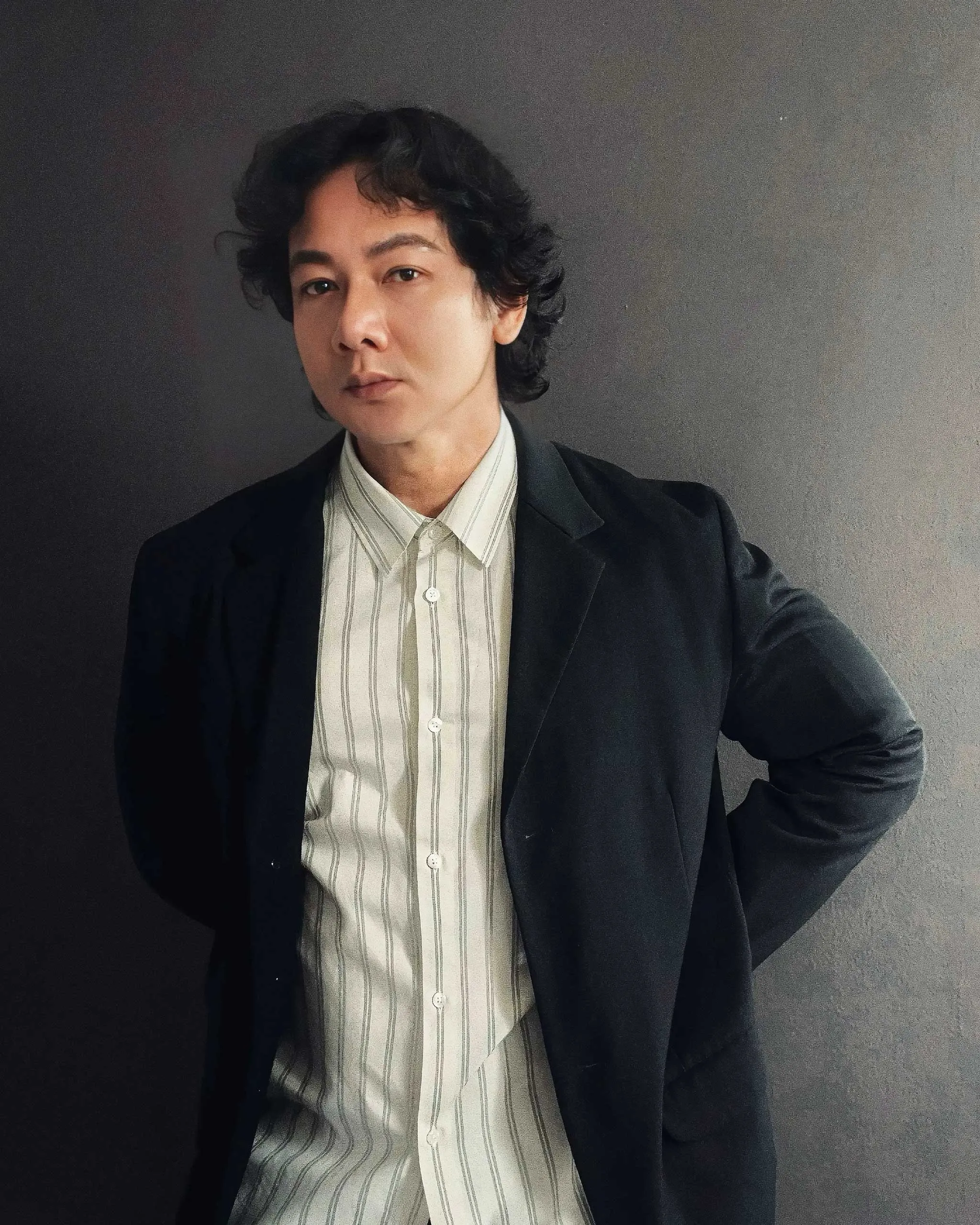
Courtesy of Fashion Week Asia
The Indonesian designer behind the womenswear label Toton uses fashion to reflect on time, tradition, and identity.
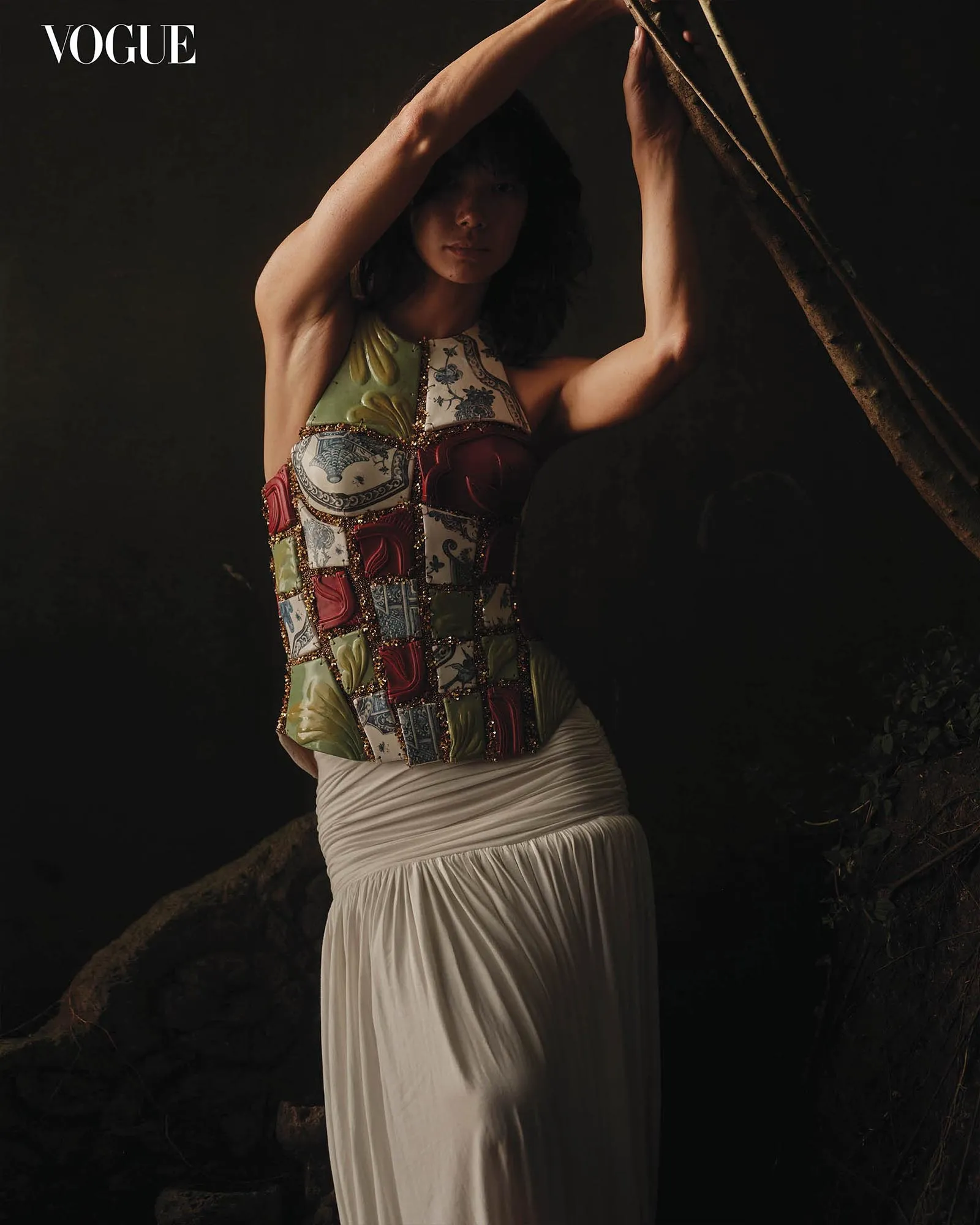
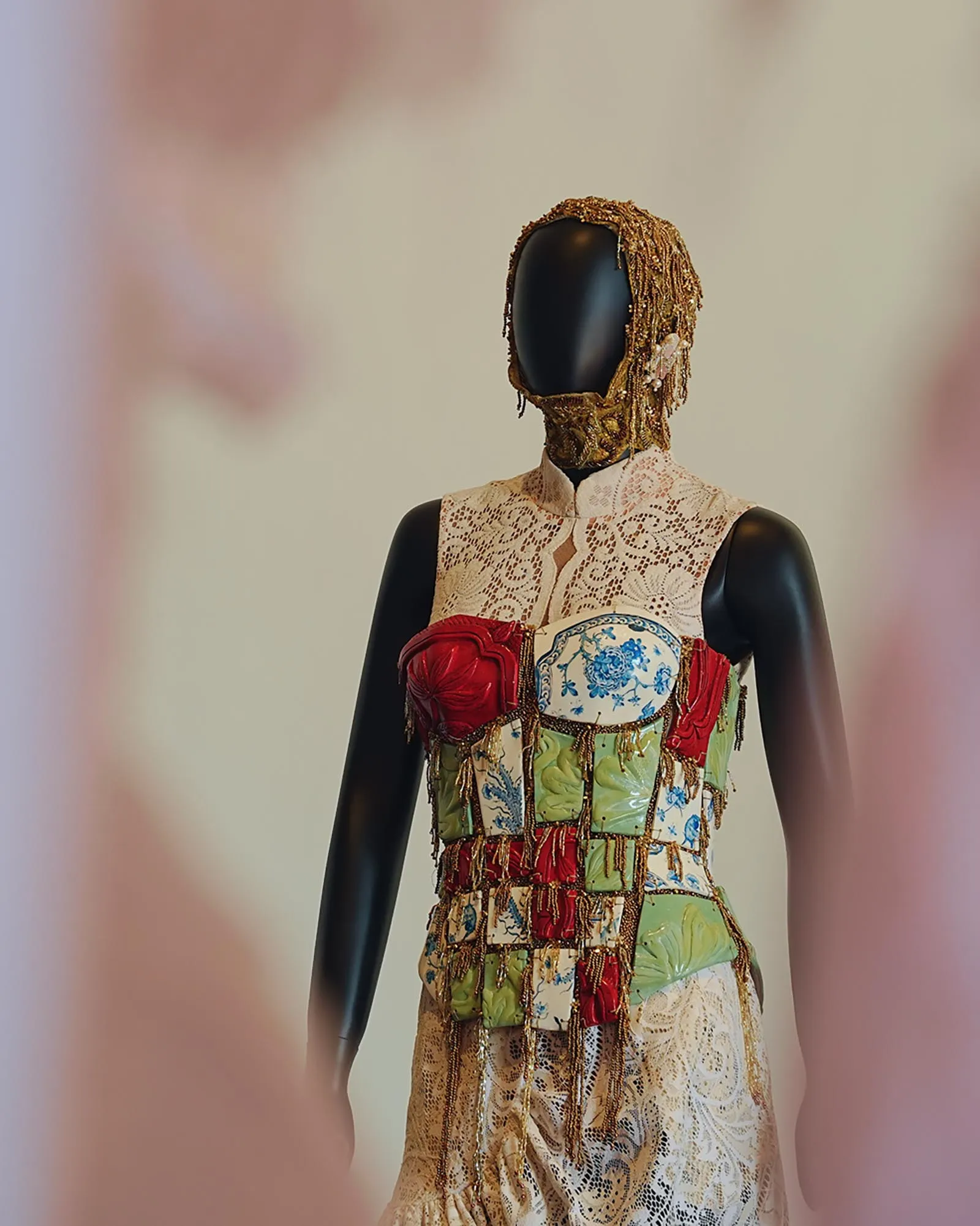
In the June/July 2026 cover story of Vogue Philippines, model Chloe Magno wears a breastplate made from what appear to be fractured pieces of a ceramic vase, held together with string and delicate white pearls. The piece, by Indonesian designer Toton Januar, uses paper clay shaped to resemble the fragments; in appearance, it is a metaphor for time: what was once beautiful can be beautiful again, albeit in a new form.
Time has been something on Januar’s mind lately. “We live in a time of tremendous uncertainty, when so much of what we once considered permanent seems increasingly fragile,” he tells Vogue ahead of presenting some of the newest pieces from his eponymous label at the inaugural Fashion Week Asia.
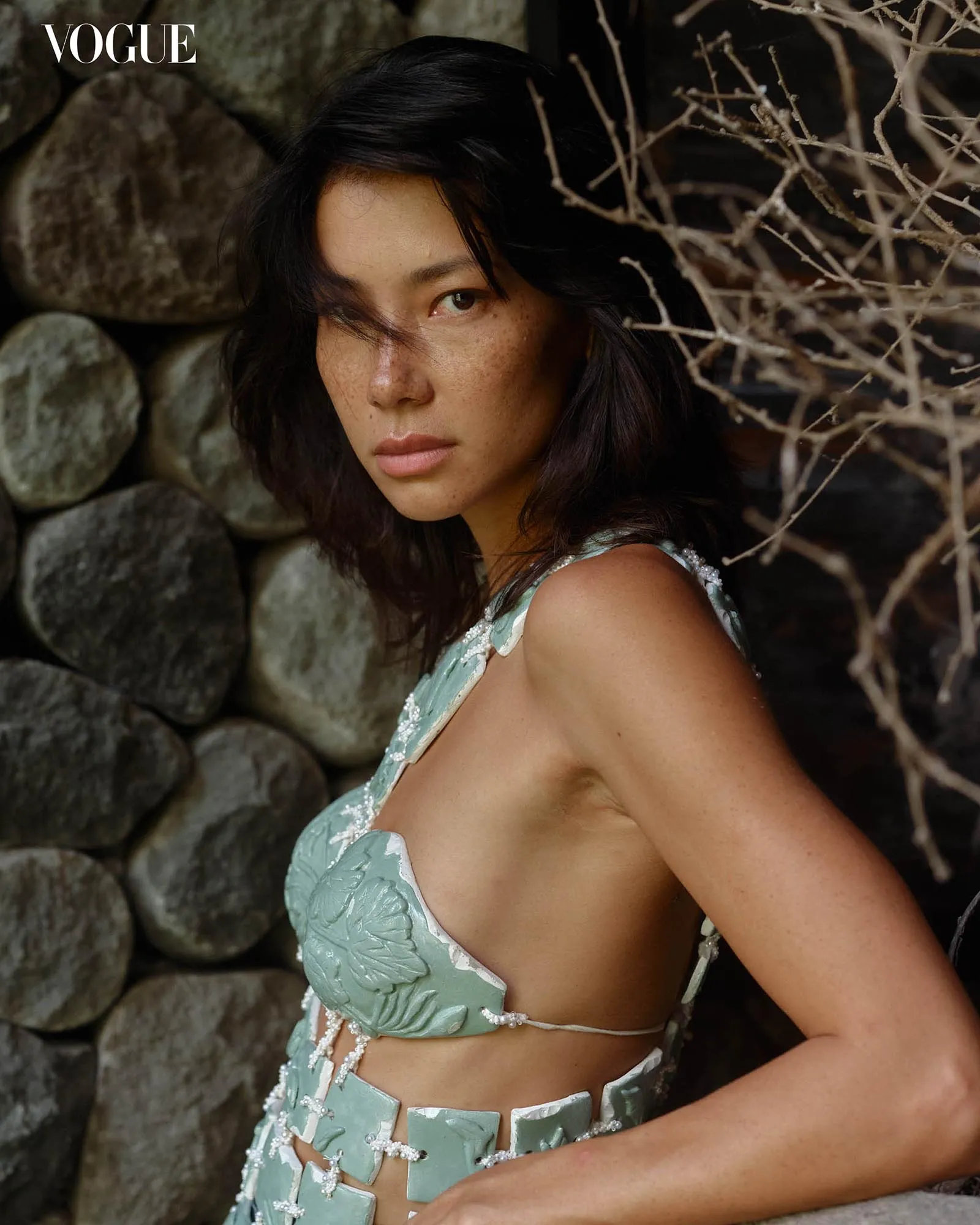
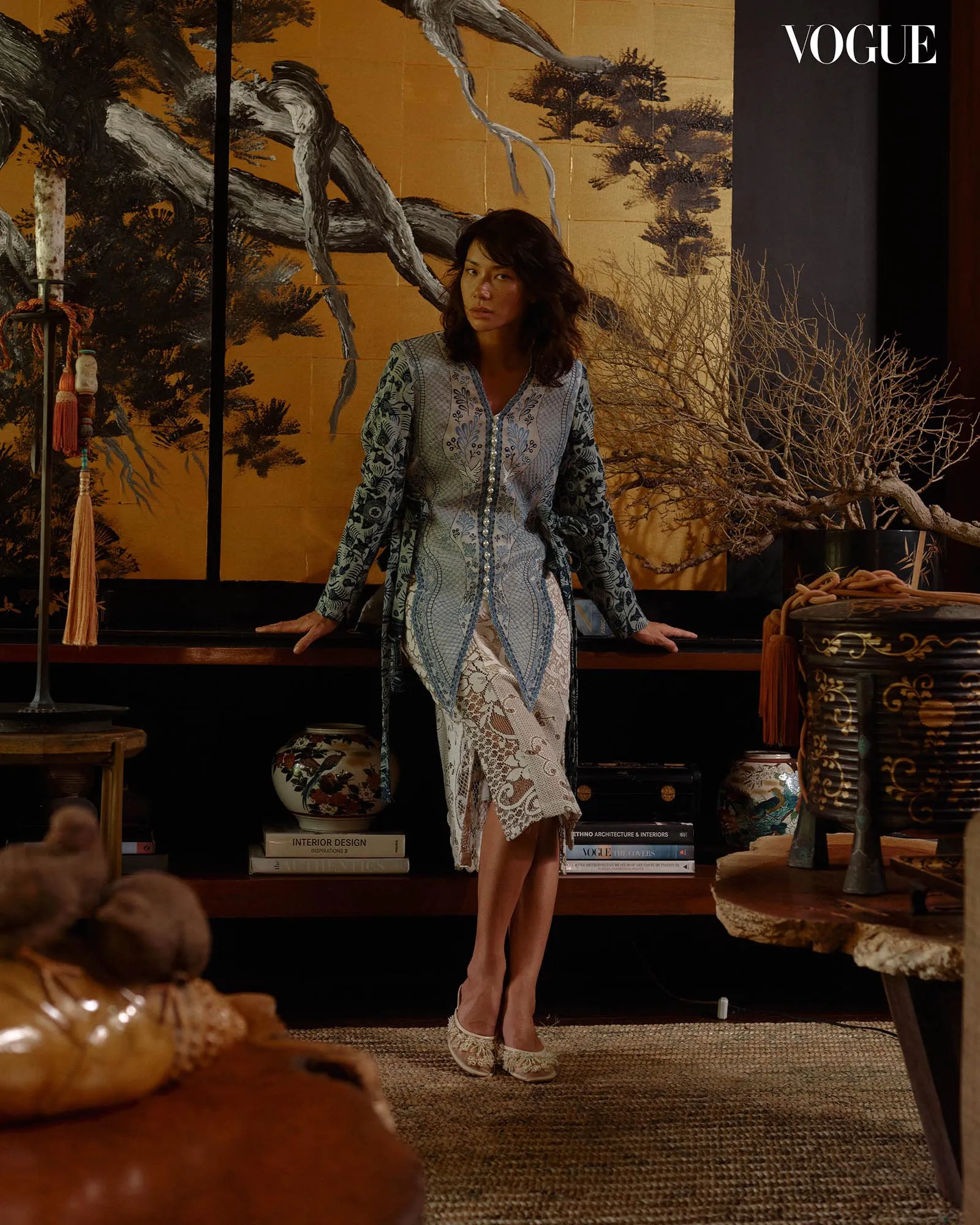
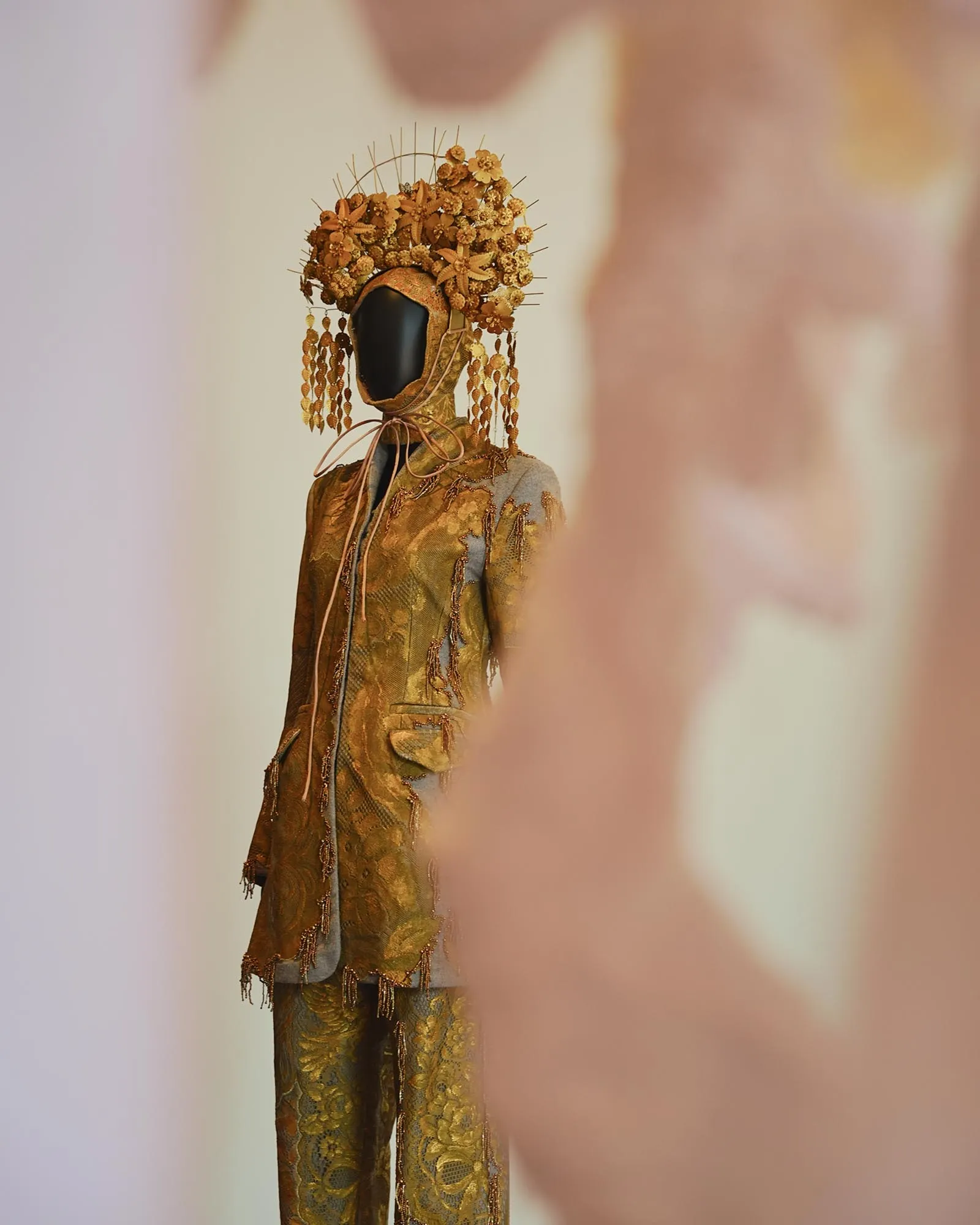
Titled “Kala,” the collection “began with a contemplation of time as something that not merely passes, but as a force that shapes, disrupts, and transforms us,” he says. “Inspired by Batara Kala, a figure associated with time and destruction in Javanese mythology, the collection explores the tension between chaos and order, vulnerability and strength, preservation and change.”
There are references to Indonesian dress, but not in its literal forms. Januar and his team explored using traditional textiles in more contemporary ways and applied learnings from traditional techniques, like embroideryEmbroideryThe decorative stitching of designs onto fabric by hand or machine, central to Philippine formalwear. Hand embroidery from places like Lumban in Laguna and Taal in Batangas adorns barongs, ternos,Go to Embroidery Glossary and intricate handwork, toward different materials and approaches. “Recycled materials also play an important role in the collection,” he adds. “There is something particularly meaningful about giving existing materials a new life. It reflects our belief that creativity doesn’t always have to begin with something new, and that transformation itself can be a form of preservation.”
The garments in his upcoming show are Januar’s way of responding to adversity with possibility as a counter. Not just styling-wise, he clarifies, “but that [they give you the feeling that] you can do anything, you can be anything.” He continues, “Ultimately, the collection isn’t about offering answers. It’s about embracing the possibility that even within uncertainty and disorder, something meaningful can emerge.”
In the Vogue Profiles interview series, we speak with Filipino creatives and cultural voices about their taste, worldview, and inner life, and explore what informs their creative choices. Below, designer Toton Januar explains how his ideas about time, history, and tradition shape his practice.
Vogue Philippines: Apart from the upcoming show, what’s capturing your attention these days?
Toton Januar: I’ve been thinking a lot about the passage of time, particularly how it changes our understanding of things we once thought we knew.
With everything going on in the world, I’ve found myself reflecting more deeply on how nothing is ever truly permanent—not our identities, our beliefs, or even the traditions we consider timeless.
I’m also interested in the quiet, often overlooked beauty of everyday life. The things that happen without demanding our attention, yet somehow leave the deepest impressions.
What has shaped your creative eye the most?
My upbringing, without a doubt. I grew up watching my mother, who was a seamstress, create things with her hands. I think that experience shaped my understanding of beauty long before I knew anything about fashion. It taught me to appreciate the intimacy of making something, the patience it requires, and the imperfections that give things character.
Later, traveling across Indonesia and meeting artisans who have dedicated their lives to their craft expanded that understanding. Equally influential have been my encounters and exchanges with creative minds from Indonesia and around the world, across different disciplines. These conversations have continually challenged my perspectives, reminding me that creativity doesn’t exist in isolation, and that some of the most interesting ideas emerge when different cultures, experiences, and ways of thinking intersect.
All these experiences have taught me that beauty isn’t always about what we see. Sometimes it’s about what we know, what we remember, and our willingness to see familiar things through unfamiliar eyes.
How would you describe your aesthetic—not just in your work, but in the way you live?
I think I’m drawn to contradictions. I love things that are beautiful but slightly strange, delicate yet imperfect, familiar but somehow unexpected.
I appreciate craftsmanship and objects that carry traces of human touch, but I don’t necessarily believe everything needs to be precious or perfectly arranged. There is something comforting about a little disorder, something that makes a space or an object feel genuinely lived in.
I suppose my aesthetic is a constant negotiation between restraint and excess, nostalgia and curiosity, and a certain affection for things that don’t quite fit into neat categories.
What do you think people misunderstand about creativity?
That creativity is simply about having good ideas, or that it comes naturally to certain people.
I think creativity is as much about discipline, observation, and persistence as it is about imagination. Sometimes the most important part of the process is being willing to question your own ideas, abandon something you’ve spent weeks working on, or accept that you don’t have the answer yet.
There’s also a misconception that creativity must always produce something entirely new. I find that some of the most interesting ideas come from looking at something familiar with a different perspective.
Originality, to me, is not necessarily about inventing something that has never existed. It’s about finding something meaningful that hasn’t been expressed in quite the same way.
When do you feel most like yourself?
I think I feel most like myself when I’m working and creating. There’s something deeply instinctive about the creative process that makes me feel completely connected to who I am.
But outside of work, I find that same sense of connection through physical activities, particularly sports. It’s a way for me to reconnect my mind, body, and soul, to be fully present in the moment without being distracted by everything else.
I also cherish quieter moments at home, spending time with my cats, drawing without any particular purpose, or simply enjoying the freedom of not having to think about what’s next.
Perhaps what all these moments have in common is a sense of being completely present. I think we are most ourselves when we stop thinking about what we’re supposed to do and allow ourselves to follow what we genuinely want and need instead.
Is there a ritual or habit you return to whenever you need clarity or inspiration?
I draw. Not necessarily to design something, but simply to let my thoughts wander. Drawing allows me to think without having to articulate everything immediately. Sometimes an idea emerges, sometimes nothing happens, and that’s perfectly fine.
I also love taking walks, observing people and what they wear, particularly in traditional markets. There’s something fascinating about the way people dress in everyday life, often without any conscious intention of making a fashion statement. The unexpected combinations, the practicality, the little personal touches. There’s an honesty and spontaneity to it that I find endlessly inspiring.
I’ve learned that inspiration rarely arrives when you demand it. More often, it reveals itself when you simply allow yourself to wander, observe, and remain curious.
What are you saying through your work that words alone can’t express?
Perhaps that identity is never singular or complete.
Growing up in Indonesia, I’ve always been fascinated by how our culture has been shaped by centuries of encounters, exchanges, and transformations. What we consider traditional today was often, at some point, something entirely new.
Through my work, I try to express that complexity with the coexistence of different histories, influences, contradictions, and possibilities within a single identity. Clothing has an extraordinary ability to communicate these ideas without explaining them. It becomes something intimate, something experienced through the body rather than simply understood intellectually.
Has success changed the way you create—or the way you define success itself?
I think experience has changed my definition of success more than recognition ever could.
When I was younger, success seemed easier to measure: recognition, opportunities, the ability to show our work to a wider audience. Those things still matter, of course, but they no longer feel like the whole picture.
Today, I’m more interested in whether the work has meaning beyond its immediate existence. Whether it contributes something to the people involved in making it, whether it helps sustain a craft, or perhaps inspires someone to look at their own cultural heritage differently.
Success also means having the freedom to remain curious, to take risks, and to continue evolving without becoming a prisoner of what people expect from you.
What are you learning to let go of?
The need to control everything.
As a designer, you become accustomed to imagining how things should look, how they should feel, and how they should eventually come together. But life, and creativity, rarely unfold exactly as planned.
I’m learning to become more comfortable with uncertainty, to accept imperfections, and to recognize that sometimes the most interesting things happen when you allow something to evolve beyond your original intentions.
I’m also learning that changing your mind doesn’t necessarily mean abandoning your principles. Sometimes it simply means you’ve grown.
What kind of legacy do you hope your work leaves behind?
I hope it leaves behind a sense of possibility.
That tradition doesn’t have to be confined to the past, that cultural identity can be both deeply rooted and endlessly evolving, and that respecting our heritage doesn’t mean being afraid to question or reinterpret it.
I also hope the work contributes, even in a small way, to keeping traditional craftsmanship alive not merely as something to admire in museums, but as a living practice that continues to provide livelihoods, inspire younger generations, and find relevance in contemporary life.
Ultimately, I don’t think legacy is about being remembered personally. It’s about whether something you’ve created continues to have meaning long after you’ve moved on.
Frequently Asked Questions
Toton Januar is an Indonesian fashion designer and co-founder of the womenswear label Toton.
Toton Januar was born in Makassar, South Sulawesi, and raised by his seamstress mother, whose influence shaped his early exposure to clothing construction and craft.
Toton Januar studied Media Broadcasting in Indonesia, and later trained in fashion at Parsons School of Design in New York.
Toton is a Jakarta-based womenswear label founded in 2012 by Toton Januar and Haryo Balitar. The brand explores Indonesian heritage through modern ready-to-wear, often reinterpreting traditional textiles, silhouettes, and techniques.
He has gained international visibility through global stockists, presentations at Paris Fashion Week, and recognition such as winning the International Woolmark Prize Asia Regional Final in Womenswear.