What Does Work-Life Balance Mean in the Age of the Hybrid Work Model?


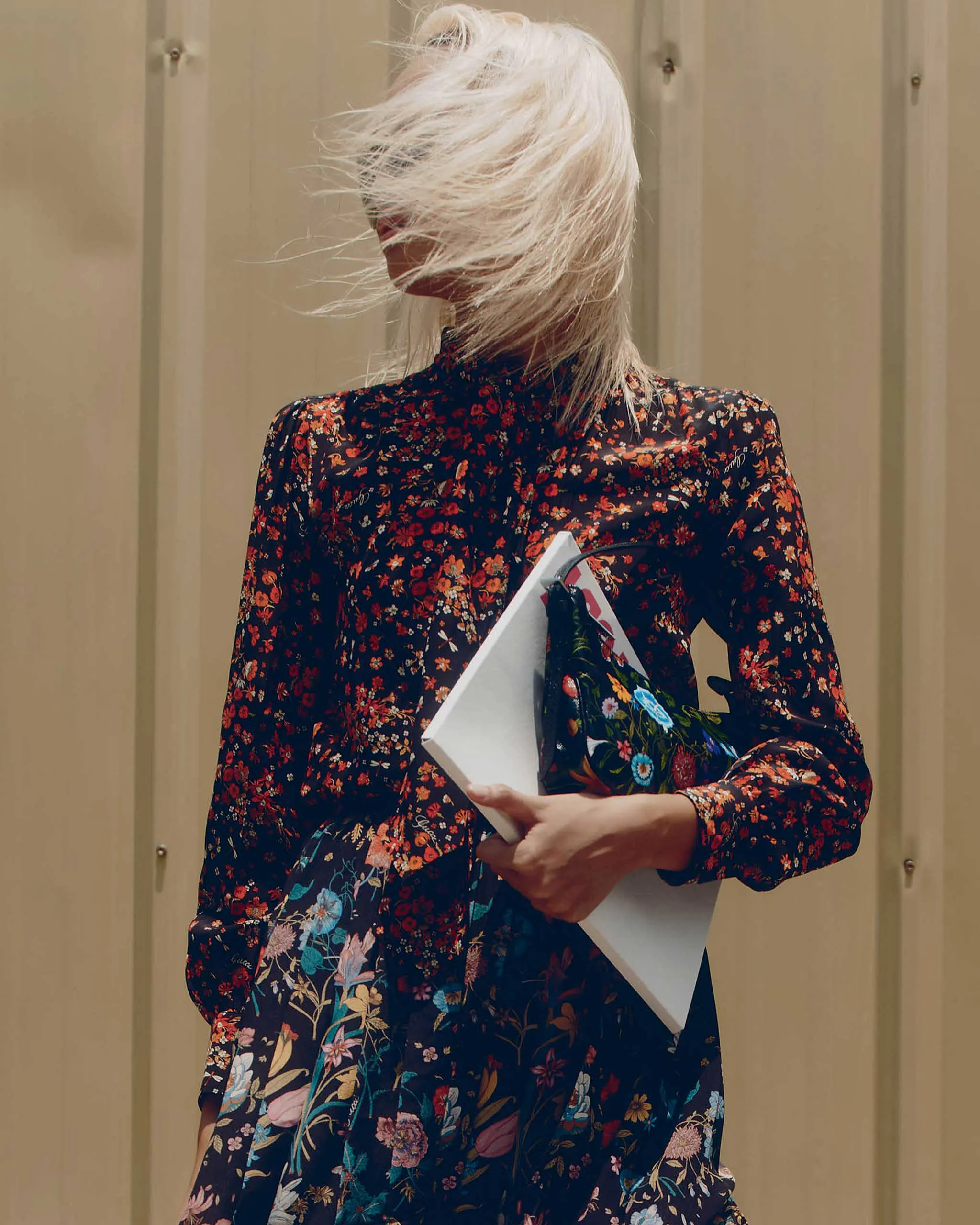
Photographed by JV Rabano for the August 2026 Issue of Vogue Philippines
Since the dawn of the hybrid work set-up, work-life balance has become more elusive than ever. For creatives, it turns out that setting boundaries is not as straightforward as it seems.
Four years ago, five months into Vogue, I was inadvertently assigned to lead a project that we internally called “Metacraft.” The goal was straightforward enough: to bring the ternoTernoA modern Filipiniana dress defined by its dramatic butterfly sleeves, often made from piña or other sheer fabrics. The terno evolved from the baro't saya in the twentieth century andGo to Terno Glossary or Philippine national garment to the digital sphere, not through AI but through the blockchain.
By 2022, Web3 had permeated the global mainstream, but serious investment had just begun to solidify in the Philippines. Introducing fashion to that realm was no small feat, and bringing Metacraft to life meant enlisting the help of those more fluent in Web3’s language than we were. We quickly built a team of collaborators across Negros Occidental to Singapore, Rotterdam to Los Angeles. Timezones warped any semblance of boundaries as we held meetings well into midnight and exchanged emails before our office’s 10 A.M. clock-in. On a particular non-working holiday spent in the province, my family bonded in our grandparents’ living room while I was holed up upstairs, frustrated tears spilling out between back-to-back meetings, my head spinning around digital passports, avatars, renders, 3D art, and augmented and virtual realities.
For anyone outside looking in, the recollection might come across as an elaborate retelling. But to simplify such a significant undertaking would be disingenuous. The effort it took to put our virtual paradise together was herculean, yet by the end, it was superseded by the exhilaration of seeing this seemingly impossible project to completion. Later, I would come to learn that the rigor Metacraft warranted was simply the standard for creating something meaningful.
I didn’t know it then, but the experience would hurl me into a gradual renegotiation of the personal versus professional. Going into your dream job, you think you’re prepared for what it demands of you until you actually arrive. It’s easy to fall into the myth of fashion publishing as perpetuated by romcoms of the aughts. While it may have been an accurate portrayal at the time, our industry, like all others, has undergone monumental shifts since. For one, while an office still serves as a company’s headquarters, reporting on-ground is no longer a daily requisite. Clocking in also means working from home, or an event, fashion fitting, or location ocular. For freelancers, work hours are arbitrary, defined by a client’s urgency and need. For all kinds of creatives, underscoring these factors is the implicit expectation that one is perennially available.
Hybrid work set-ups were born out of necessity, then re-angled to promote efficiency. But who exactly does this efficiency serve? Even the likes of Malaysian fashion photographer Zhong Lin admit to being jarred by the speed at which the industry now operates. “When I first stepped into this world, I envisioned time to think, space to explore, and the luxury to build a story from the ground up. But now everything moves so fast. We’re living in a scroll-driven culture, and that pace has reshaped the way we work.”
People are expected to do more in less time because alignments can be held virtually, presentations can be reconfigured on a cellphone, and documents can be signed from an iPad. However, it’s an expectation that presupposes social and financial privilege above all. According to Dr. Ma. Regina Hechanova Alampay, licensed psychologist, psychology professor, and Dean of the School of Social Sciences at Ateneo de Manila University, the hybrid work set-up does allow people to achieve work-life balance, but only to a certain extent.

“Given traffic conditions especially in Metro Manila, work-from-home can save people two to four hours in travel time. Time they could have spent with their family or for rest,” she explains. “However, this assumes that our homes are equipped to have home offices or at least have space for privacy to do one’s work. And as we saw in the pandemic, for many Filipinos in the lower economic spectrum, this was not their reality. There was no private space for them to do work.”
In the first place, hybrid work is only an option for white collar workers. Meanwhile, those in construction, healthcare, transportation, and hospitality have occupations that, by nature, require them to show up rain or shine, pandemic or not. The downsides of working in a fast-paced creative industry are real, yes, but they pose nowhere near the same risks as manual labor, when life is what’s at stake.
No matter the field of work, Dr. Hechanova Alampay emphasizes that mental health and physical health are related, and one will suffer at the neglect of the other. She expounds, “Getting enough time for sleep and exercise is important to avoid lifestyle diseases like heart disease, obesity, and hypertension. Lack of sleep leads to irritability, stress, and anxiety. Chronic sleep issues may increase the risk of mood disorders (depression and bipolar). So it really is important to take care of one’s body and mind.”
When it comes to work-life balance, it seems to lean more optional and less compulsory. The term is said to have originated in the 1970s, pertaining specifically to mothers who had to juggle professional and domestic responsibilities. It was an insistence on regimented time blocks for living: a third of one’s 24 hours must ideally be dedicated to work, a third to leisure, and a third to rest, with the assumption being that labor and leisure are two distinct categories.
For creatives, the categorical separation is more likely to be futile because work is viewed as a part of life. It’s the case for our beauty and wellness editor Joyce, who says: “I love my work so much that long hours mean nothing to me as long as an exceptional job is done! If you uphold high standards in anything you do, time is irrelevant, but the result is [what matters].”
Dr. Hechanova Alampay agrees. “I don’t subscribe to the dichotomy of whether we live to work or we work to live. It’s really about balance. I view rest as not a break from being productive but as an engine that drives creativity.”
“I don’t subscribe to the dichotomy of whether we live to work or we work to live.”
Perhaps this is why some of my peers, who are fellow Gen Z creatives, don’t mind working overtime and sometimes even prefer it. They’ve reframed it as an intentional act of self-preservation.
“I work overtime maybe three to four times a week because I honestly don’t think creativity and productivity are linear. They ebb and flow throughout the day depending on the headspace you’re in, too,” intimates Zoe, an art director and designer. “As much as I’d like to have a clear routine and finish work on time, life also happens in between.”
Lian, an associate creative director at an advertising agency, also works extended hours multiple nights a week. For both creatives, overtimes are a way to prevent deliverables and any attached stress from spilling over to the following day. Even so, Lian is adamant about her uninterrupted time off: “While my job still demands long hours, I am able to protect myself by not only setting firm boundaries, but also making sure that the people around me are aware of them.”
Lian and I work in different industries, but we’re both writers frequently involved with international clients and colleagues. In our virtually boundless world, the possibilities of collaboration have extended so vastly so as to accommodate partnerships beyond our archipelago. On the other side of the globe, they too stay up all night or wake at ungodly hours to meet us. We continue showing up because we are driven by the shared imperative to create.
There is a fine line between venerating the creative process and romanticizing the brutality it requires. But then there are moments of total clarity, when I am reminded that I can accept both truths for what they are.
Recently, we finally completed a shoot with a talent and photographer we had been trying to secure since the magazine launched four years ago. There were many midnight text exchanges, even one 2 A.M. Zoom call, and a daily routine of waking up to a barrage of emails that had been sent overnight from faraway continents. There was exhaustion, lots of it. But I can hardly recall it now. I’m more preoccupied with trying to contain my excitement over what we’ve just achieved.
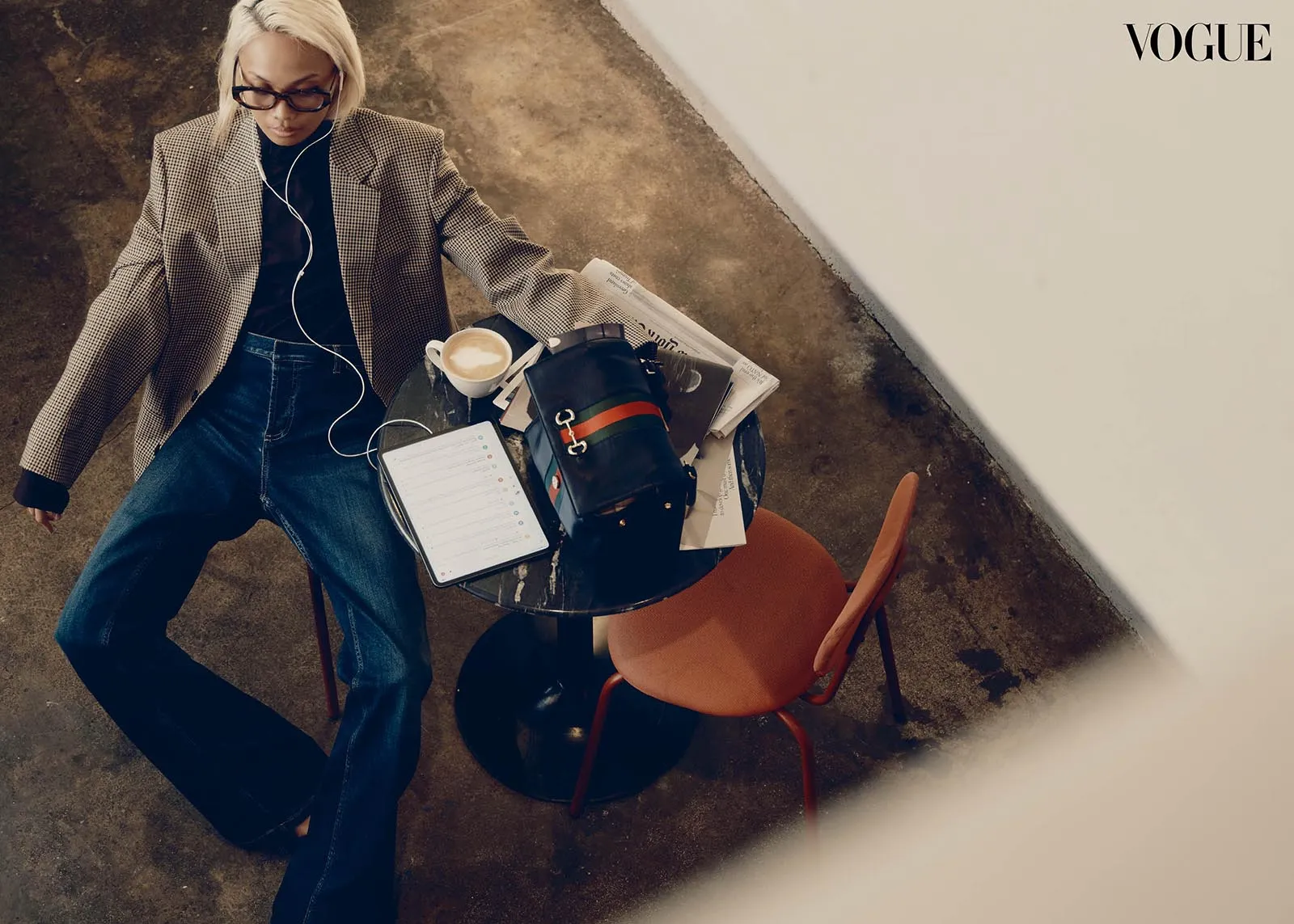
Photographs by JV Rabano. Deputy Editor Pam Quiñones. Talent Lou Eslao of Luminary Manila. Fashion by Gucci. Makeup by Booya Mocorro. Hair by JA Feliciano. Nails by Extraordinail. Styling assistant Claire Fernando. Photography assistants PJ Salazar and Erwin Arda. Produced by Mavi Sulangi. Multimedia Artist: Lara Castañeda. Account Manager: Andrea Ramos. Shot on location at the Vestido Studio, Wild Café & Bar, Treehouse.
Frequently Asked Questions
According to psychologist Dr. Ma. Regina Hechanova Alampay of Ateneo de Manila University, hybrid work can save Metro Manila commuters two to four hours daily, but this benefit assumes access to private home office space — a privilege not available to all Filipino workers.
Dr. Hechanova Alampay notes that mental and physical health are closely linked; insufficient sleep and exercise raise the risk of heart disease, obesity, hypertension, and mood disorders like depression and anxiety, making rest essential rather than optional for hybrid workers.
The term “work-life balance” originated in the 1970s, initially referring to mothers juggling professional and domestic responsibilities. It proposed dividing 24 hours into equal thirds for work, leisure, and rest, treating labor and leisure as distinct categories.
Some Gen Z creatives reframe overtime as intentional self-preservation, citing nonlinear creative energy that shifts throughout the day. Others use extended hours to prevent unfinished deliverables and related stress from carrying into the next day.
No. Hybrid work is largely an option for white-collar employees. Workers in construction, healthcare, transportation, and hospitality must show up in person regardless of conditions, meaning flexible boundaries remain a privilege tied to occupation and economic status.