
Ronald Ventura Bridges Venice and the Philippines in Luna at the 2026 Venice Biennale


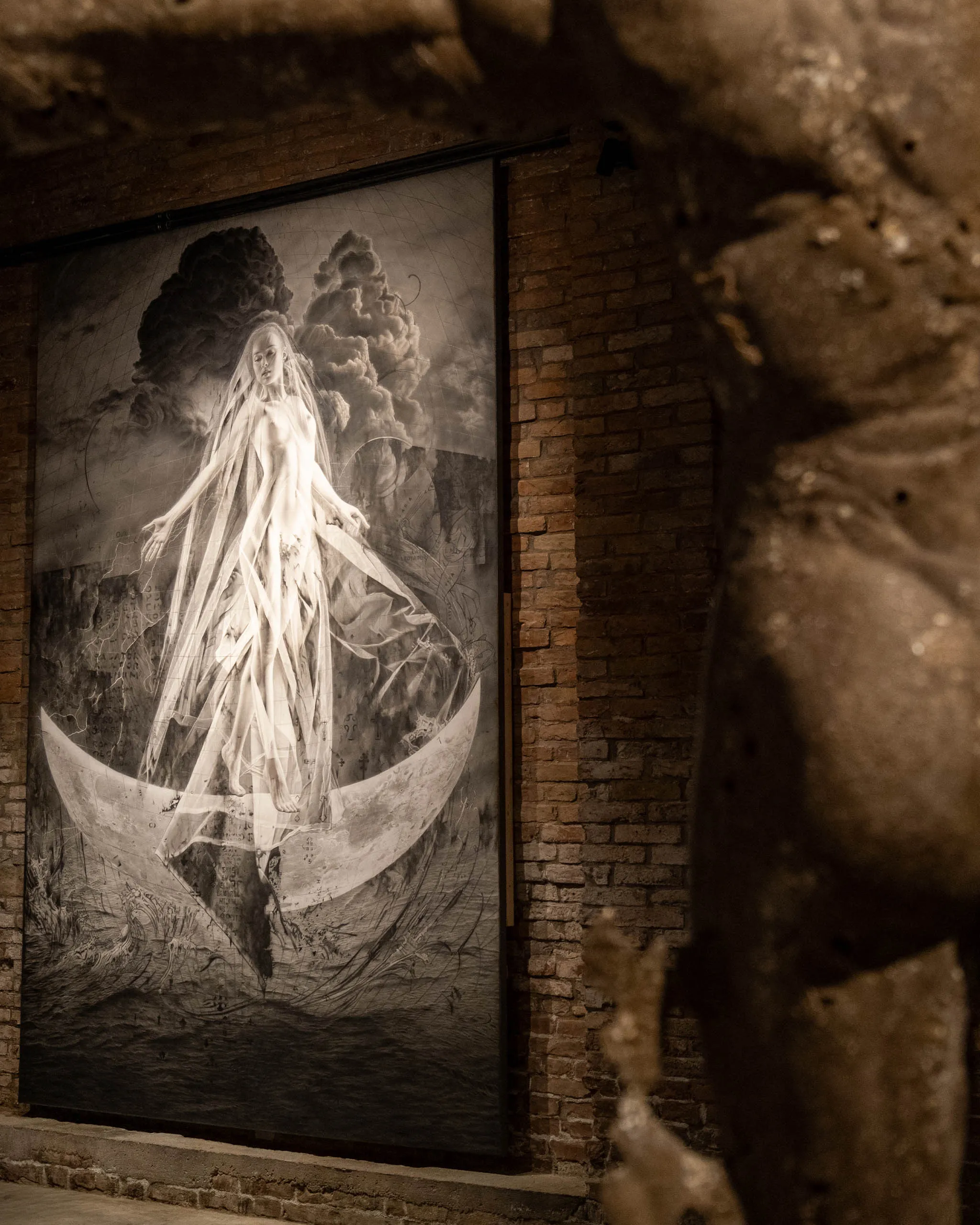
Photographed by Avee, courtesy of Ruel Caasi
As a collateral event at the 2026 Venice Biennale, Ronald Ventura connects Venice and the Philippines through their shared experiences of life shaped by water in the exhibition Luna.
There may be thousands of miles between Venice and Manila, but connecting them has never been an issue for Ronald Ventura. This idea sits at the core of his exhibition Luna, now an official collateral event of the 2026 Venice Biennale.
Presented by MUSEMuseA person who inspires a designer, photographer, or artist and often becomes the face or embodiment of their creative vision. Famous muses have shaped entire collections and eras of fashion,Go to Muse Glossary Science Museum Trento and Castel Belasi, and the Contemporary Art Center for Eco Thought, the exhibit is part of a public program called the “We Are the Flood” platform. Hosted at Docks Cucchini, a historic Venetian space linked to the shipbuilding tradition, Ventura presents 12 works, including paintings, video installations, and sculptures that center on the realities of waterways in Venice and the Philippines. The works will be on view until November 22, 2026.
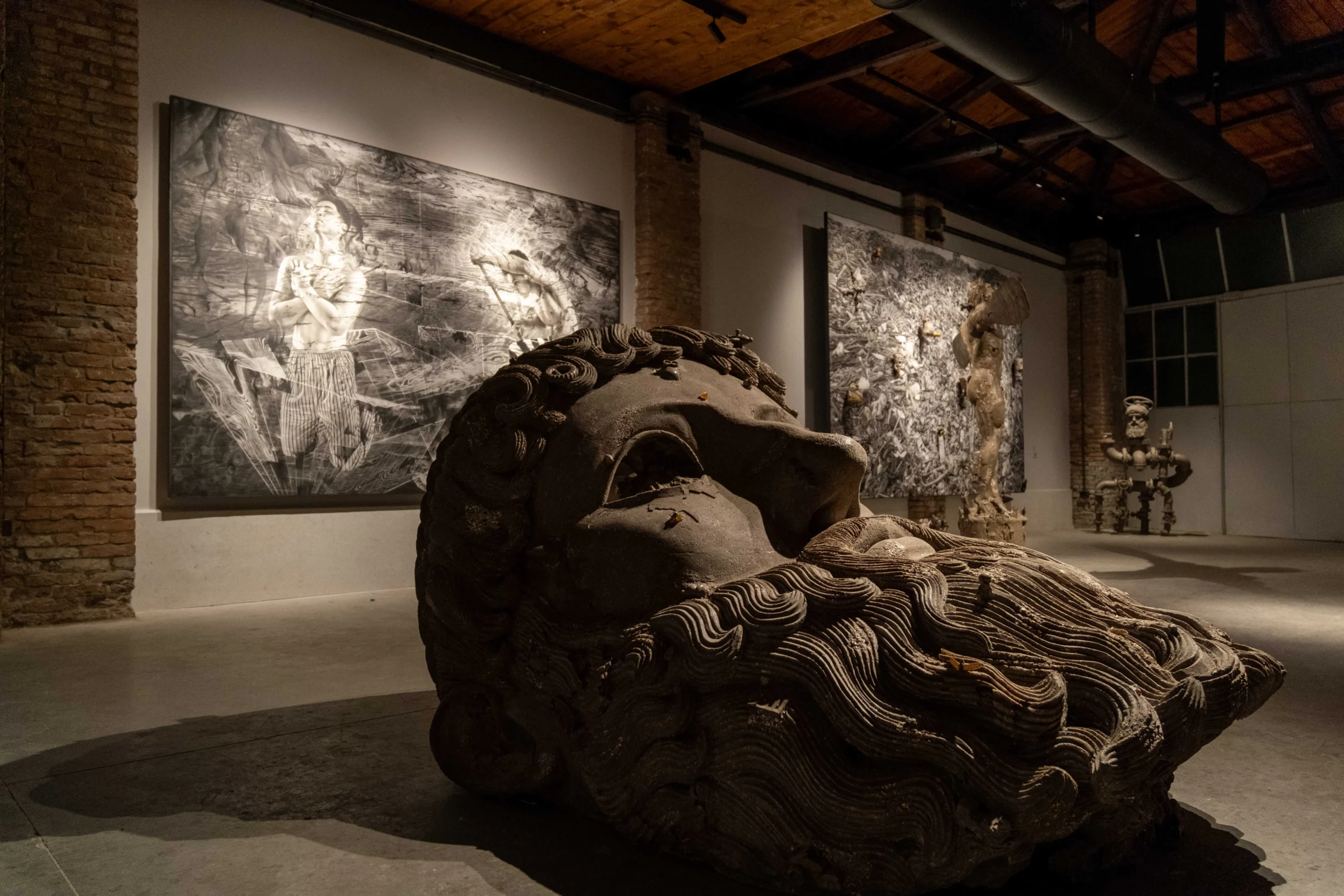
Recalling the beginning of Luna, Ruel Caasi, curator of the exhibition, shares that the first thought that came to their minds when they developed the concept was to make a connection between Venice and the Philippines, exploring links, similarities, or parallels between the two places. “When we think of Venice, there’s the popular imagery of historic canals and gondolas navigating waterways. It’s a city built on water. The Philippines, of course, also has an essential connection to water. As an archipelago, its culture, history, and contemporary life are greatly shaped by the rhythms of water,” he says. “Ronald Ventura’s hometown happens to be Malabon, a city that lies in close proximity to Manila Bay, where flooding is part of the lived reality of the residents. So we decided the exhibition to be a vivid conversation between the two cities that share a lot of common experiences, though geographically distant. And behind the rise and fall of water levels in the two places is the pull of the moon.”
The setting of Luna is a combination of works across genres, spanning oil paintings to charcoal drawings, sculptural compositions in resin to sculptures in Murano glass, alongside video installations. Caasi mentions that the use of these materials is not coincidental, as Murano glass connects to Venice’s heritage and represents a craft the locality takes pride in. Metaphorically, both Murano glass and resin undergo intense transformation before taking their final form, reflecting the same fluidity that characterizes the natural environments of the two cities.
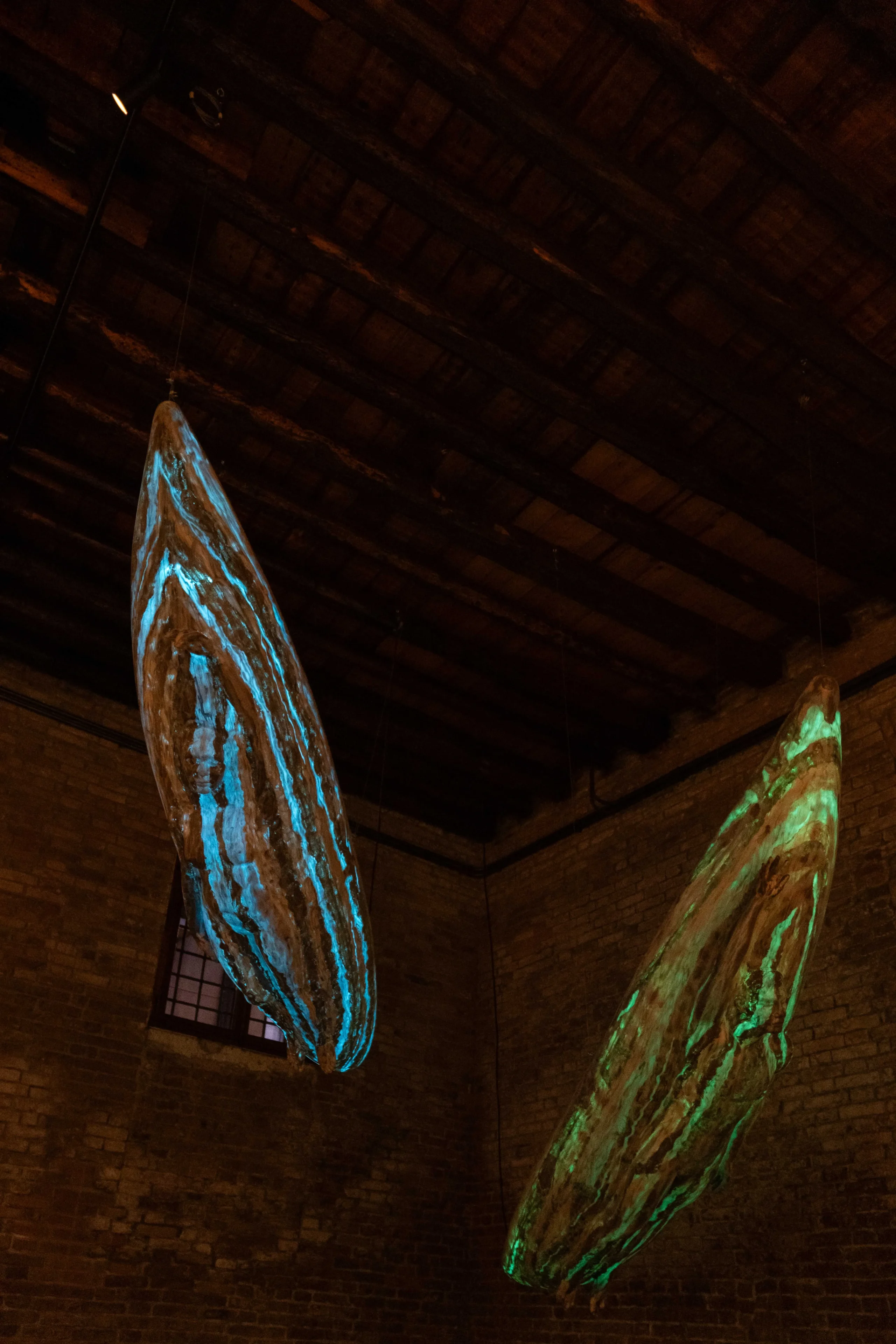
Beyond the materialities, as curator, Caasi realized that the eclectic mix of figural styles in Ventura’s art allows for a multitude of interpretations. “His complex layeringLayeringThe practice of combining multiple garments of different lengths, textures, and weights to add depth, warmth, and visual interest. In skincare, layering means applying products from thinnest to thickest consistency,Go to Layering Glossary and juxtapositions of images may represent Filipino identity on the one hand, but also capture the frenetic flow of information in the global community,” he adds. In this context, Caasi emphasizes that Ventura’s works (while known for blending hyperrealism, surrealism, and pop imagery) resonate with both historical themes and contemporary life. “For the exhibition Luna, Ventura’s style easily lends itself to the complexity and ambiguity of the relationship of the two cities to water. The works bring to life histories and memories through metaphors as well as direct references, in a highly immersive visual experience.”
As part of the collateral events of this year’s Venice Biennale, Caasi says the exhibition offers representation beyond the framework of the nation-state, highlighting the limitations of organizing a global art event strictly around national identities. “Through the exhibition, I also hope the viewers will be more attentive to the regular but subtle and quiet rhythms of life, just like the pull of the moon and the movement of water, things that almost go unnoticed in our daily lives yet transform us in profound ways.”
Frequently Asked Questions
The Venice Biennale, founded in 1895 and based in Venice, Italy, is regarded as one of the world’s most prestigious cultural exhibitions.
The Venice Biennale will be held from May 9 to November 22, 2026, in Venice, Italy.
The Venice Biennale collaterals are officially recognized exhibitions presented alongside the main Biennale program by different institutions and organizations across Venice, adding to the wider exhibition landscape.
Ronald Ventura is a Filipino contemporary artist known for his layered, hybrid visual style that blends realism, surrealism, and pop imagery in painting, sculpture, and mixed media.
Ronald Ventura’s Luna is an official 2026 Venice Biennale collateral event at Docks Cucchini exploring parallel watery landscapes between Venice and the flood-prone Philippines.
- Jon Cuyson Turns to Filipino Seafarers and Maritime Memory for the Venice Biennale 2026
- Bianca Carague Reimagines a Kamayan Feast Through Jewelry That Doubles as Cutlery
- Photographer Alexi Lubomirski Launches His Book Natura Sacra, A Mirror to Nature
- At the Venice Biennale, Jon Cuyson and Mara Gladstone Explore Filipino Migration Through the Sea