
Marigold Santos Reconstructs Identity Through Filipino Myths and Memories


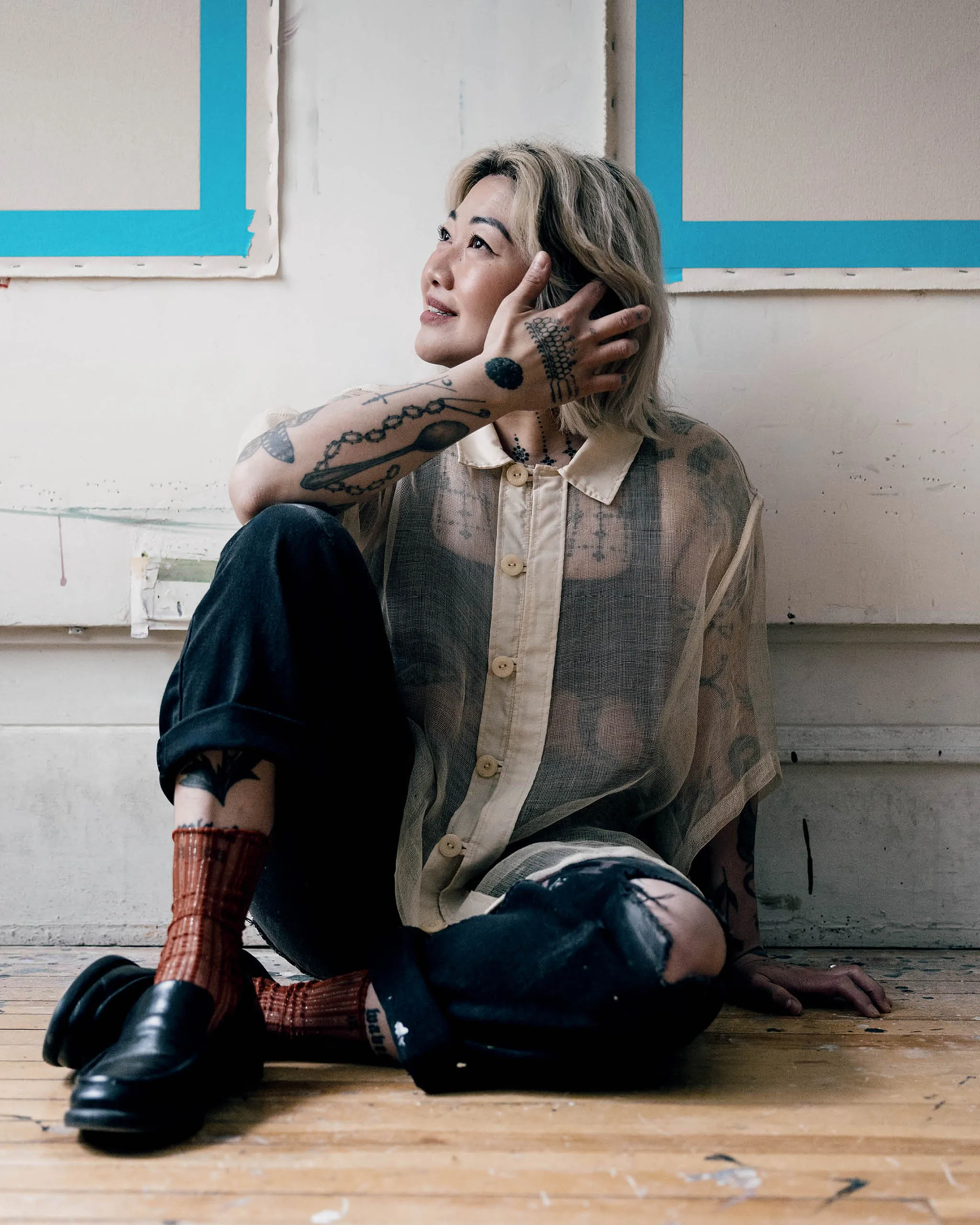
Marigold wears the mosquito net top from Glorious Dias. Photographed by Jared Sych
Filipino Canadian artist Marigold Santos speaks the Filipino language through her art.
Marigold Santos turned seven in Canada in 1988.
“I can still understand Tagalog,” she tells Vogue Philippines, “but it’s the language that actually has somehow disappeared in my head.” She is in Toronto, the very city where she first landed with her parents. News had broken about her inclusion in In Minor Keys, the curated section of this year’s Venice Biennale. Earlier, in January, she received the inaugural Art Futures Prize at ArtSG, an art fair in Singapore, affirming a practice that has steadily gained international recognition.
And yet, at the core of it all remains that early rupture, the loss of a mother tongue. “I think what happened was, when we moved to Canada, my parents and a lot of immigrants (this is not a story that’s unique to me), their family members encouraged them to speak English and to assimilate.”
This loss of language provides the impetus for her work. What happens to memory when it is formed in a language you no longer speak? What becomes of identity when it is carried across geographies and cultures and time? “Does that erase some of the memories that I have because they happened in a different language?” she asks.
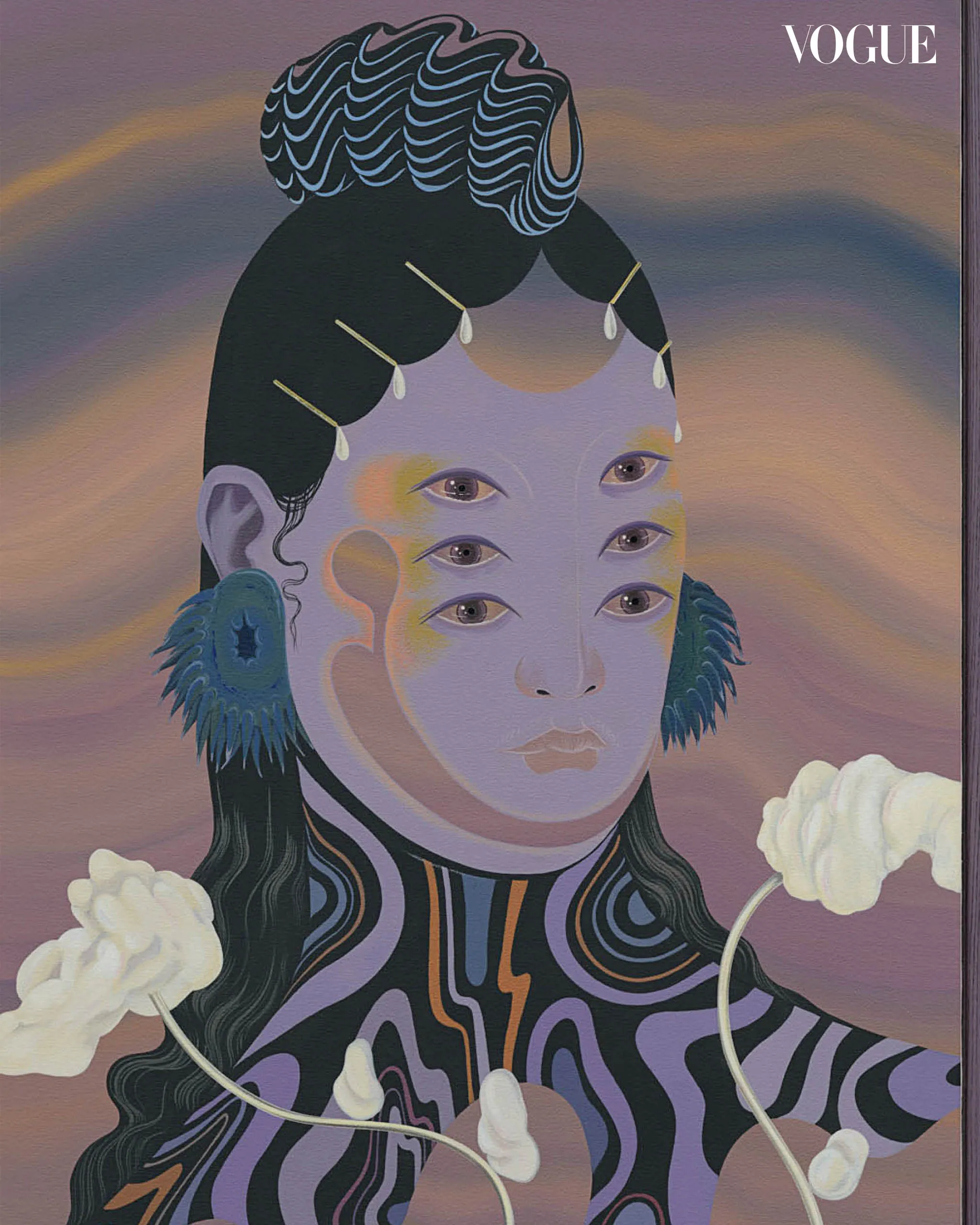
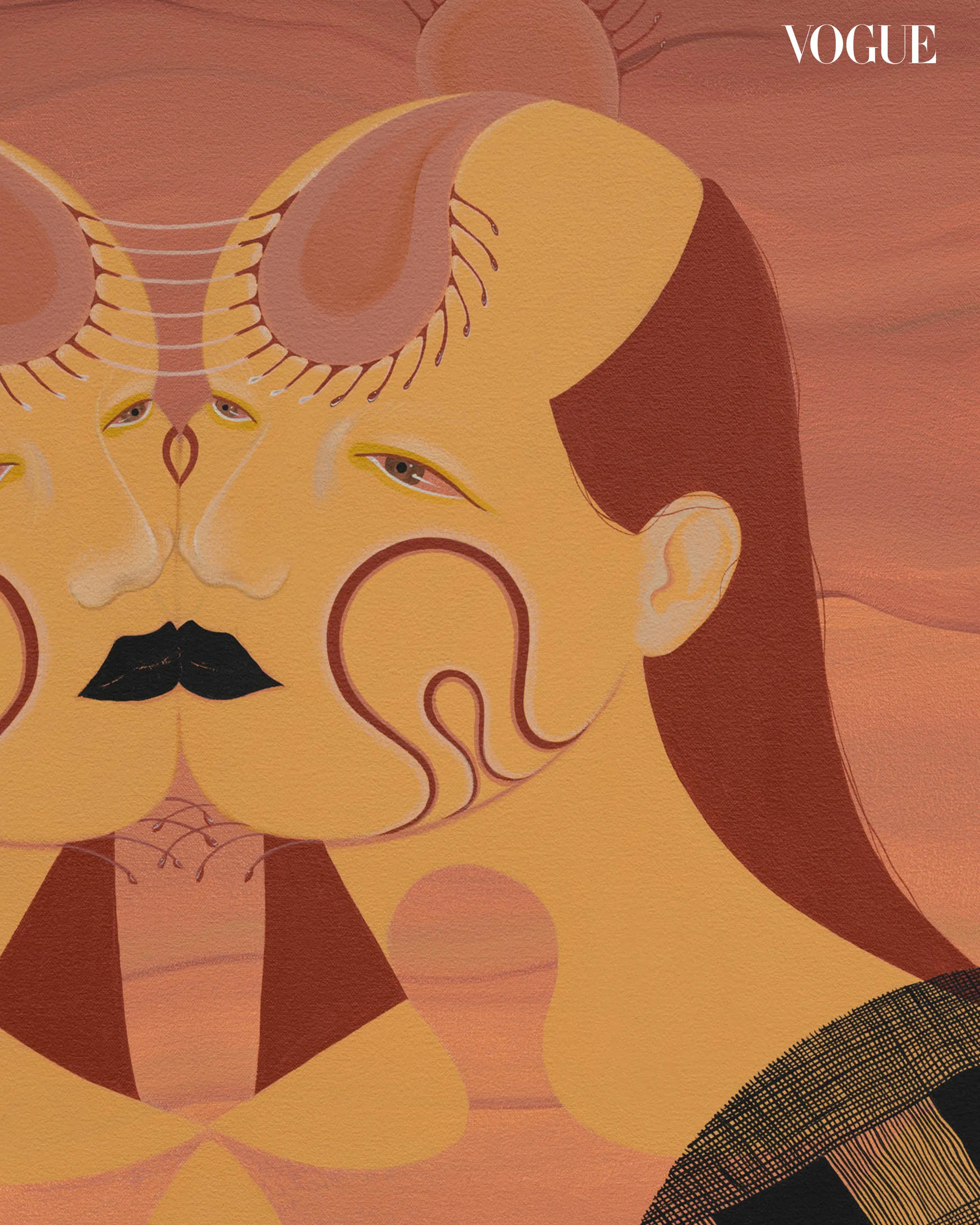
While Tagalog may have disappeared from her speech, her Filipino roots surface clearly in her work. Tinikling poles, distinct butterfly terno sleeves, the salakot, and the carabao, these have recurred as details in her paintings. They appear on indistinct, otherworldly figures, shrouded, layered, and in motion, marked with patterns drawn from Philippine indigenous tattoos.
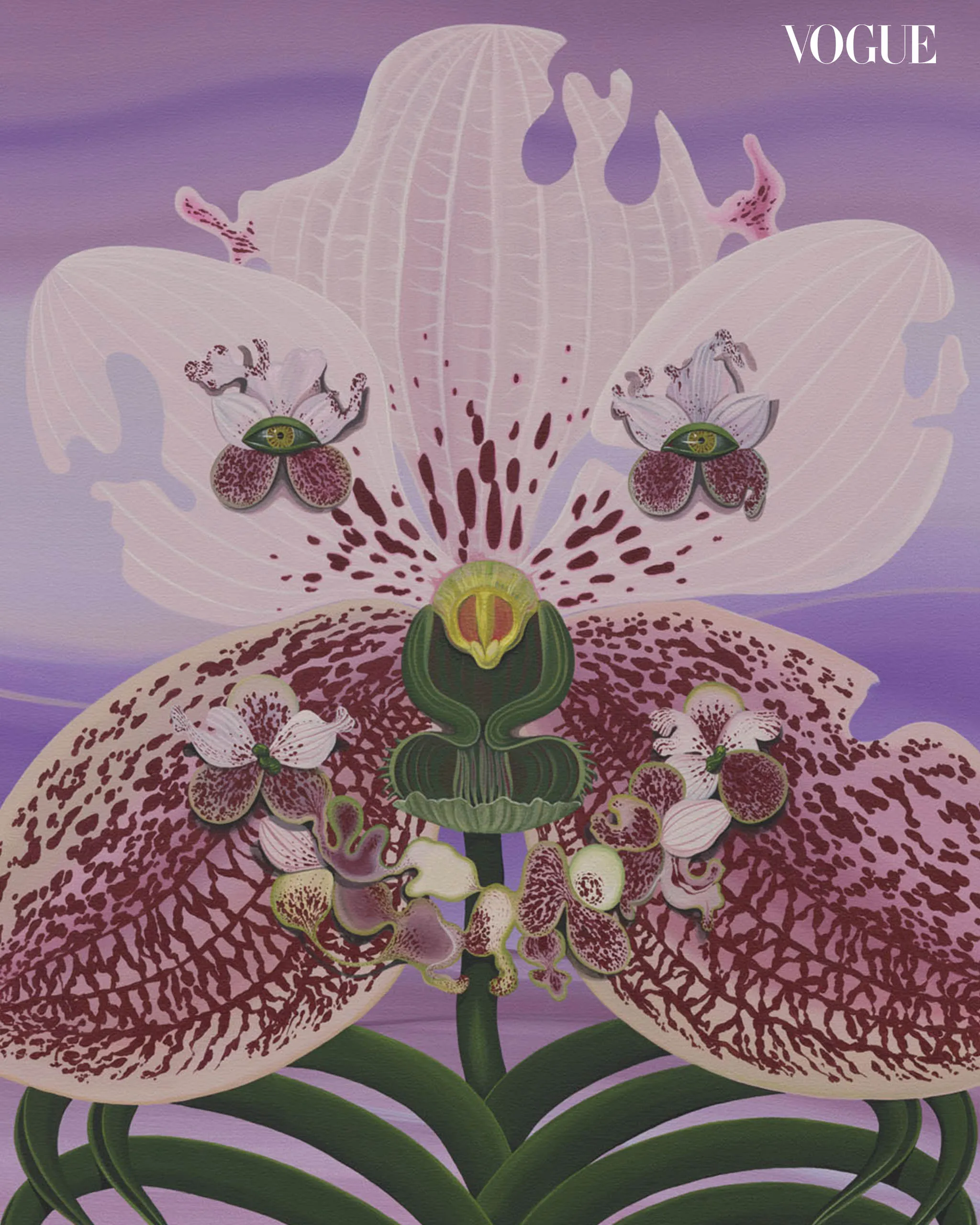
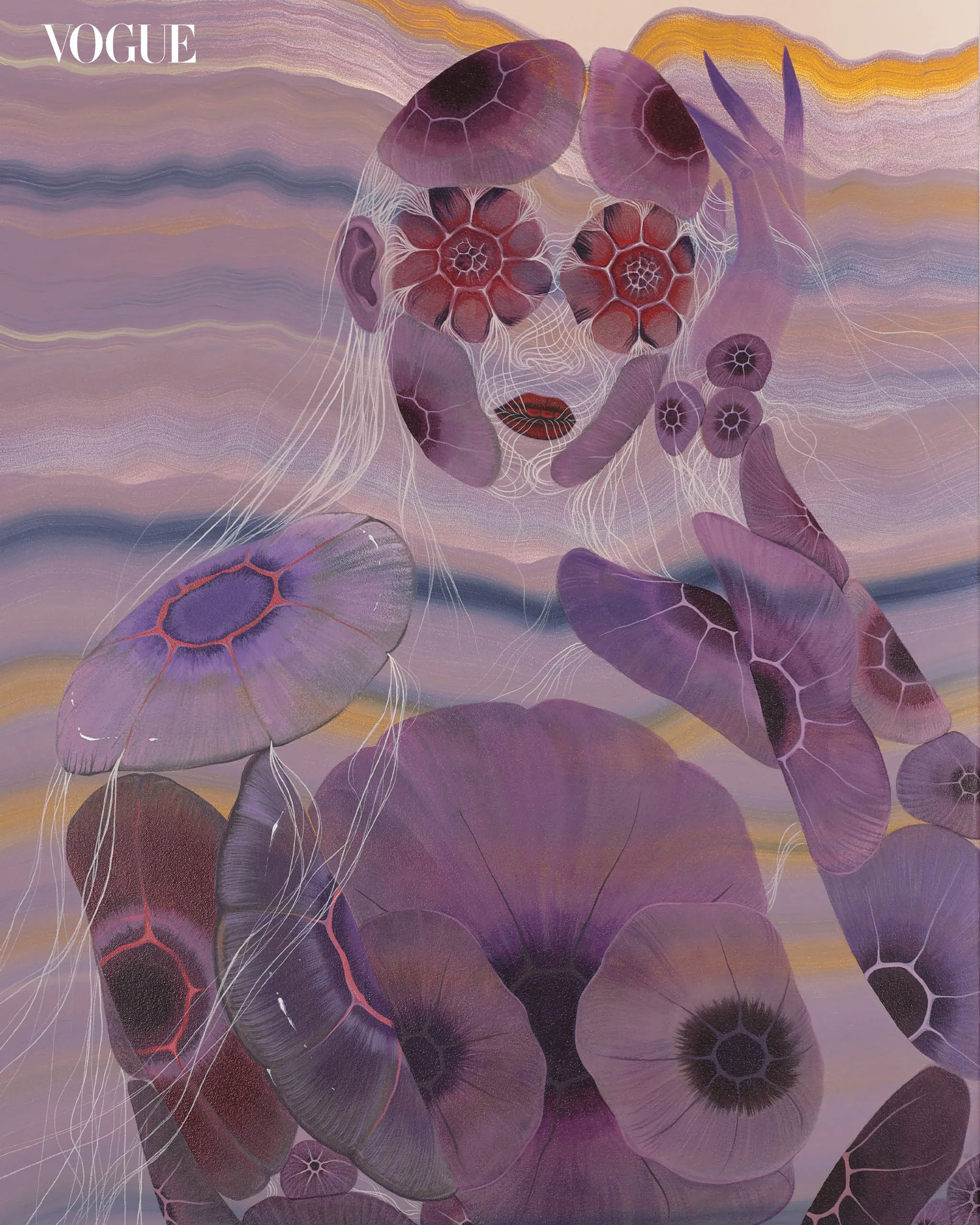
“What I found in my journey is that diasporic individuals feel a sense of fragmentation because they don’t have the luxury of being immersed in their culture 24/7,” she says. “So what ends up happening is the culture comes to you in pieces. You learn about your heritage. You learn about your ancestry in very small ways. Then you take those small ways and you gather them up and you hold them very close to you because that’s sort of what you have.”
She adds, “so you’re almost like making constellations. You’re weaving a project of identity as you are experiencing your life outside of your homeland.”
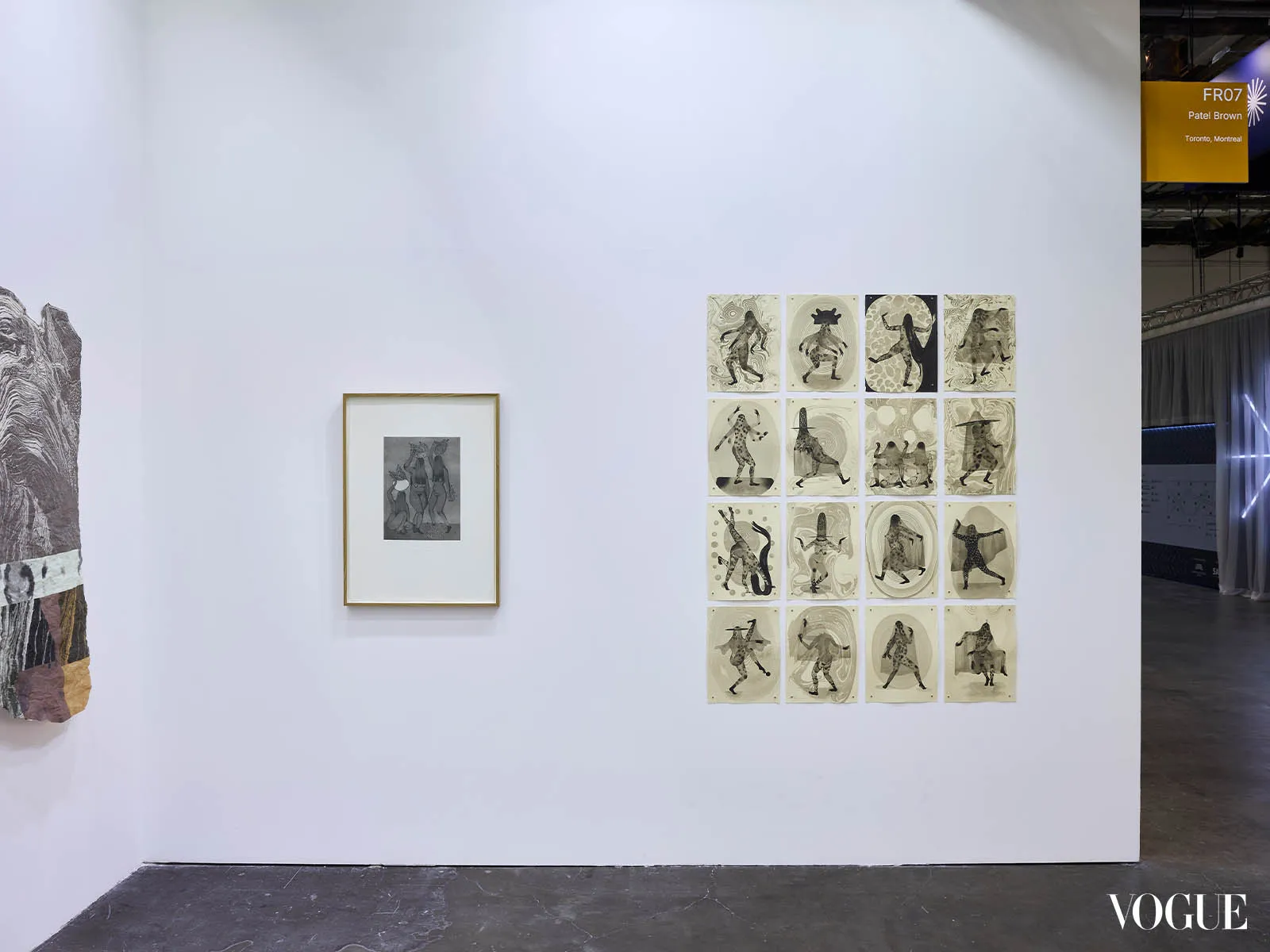
Marigold approaches these fragments with an awareness of the histories that shaped them. “I come to it with a very critical mind,” she says, pointing to the enduring impact of colonization in the Philippines and how it continues to inform identity and culture. The homeland, in her work, is not romanticized.
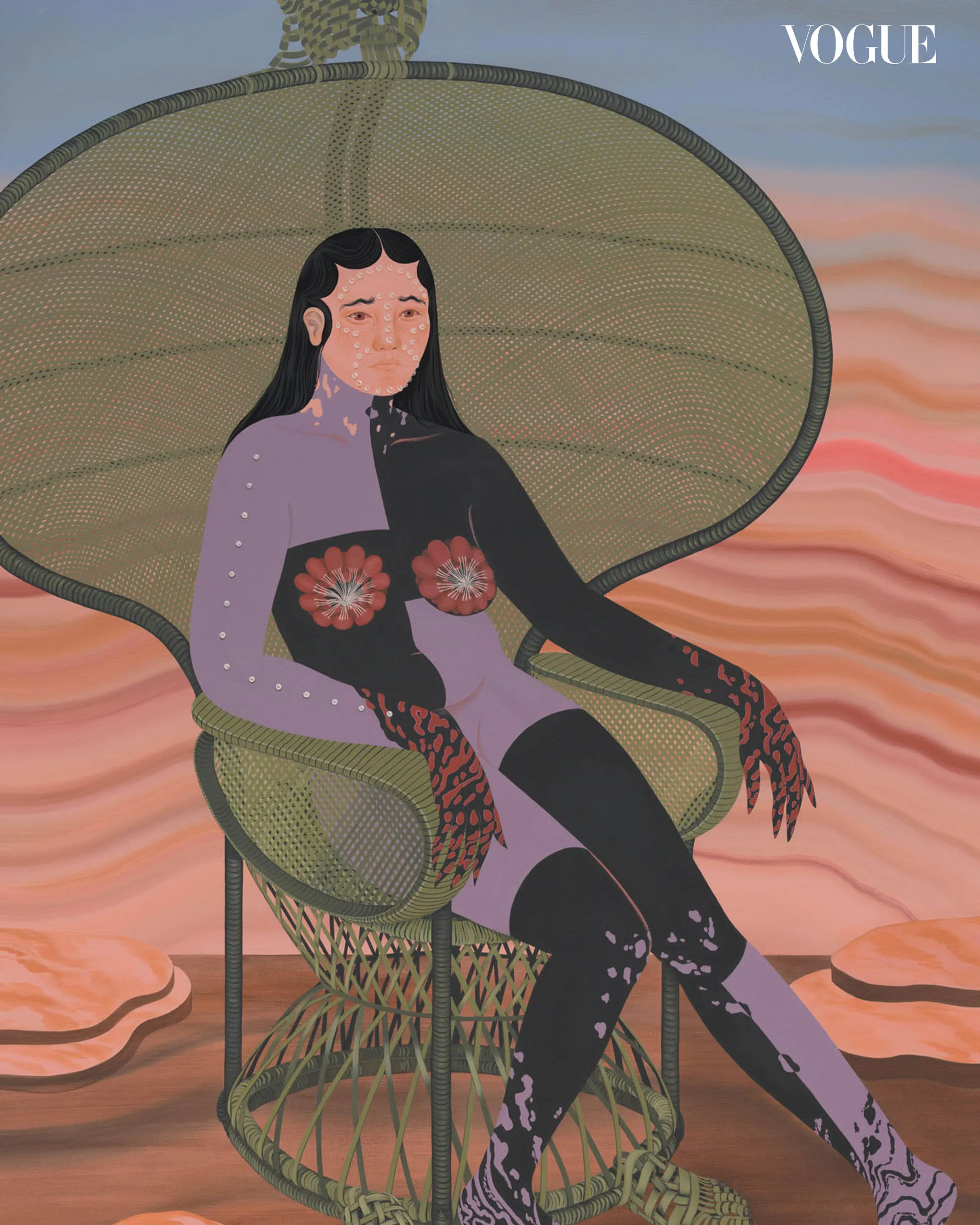
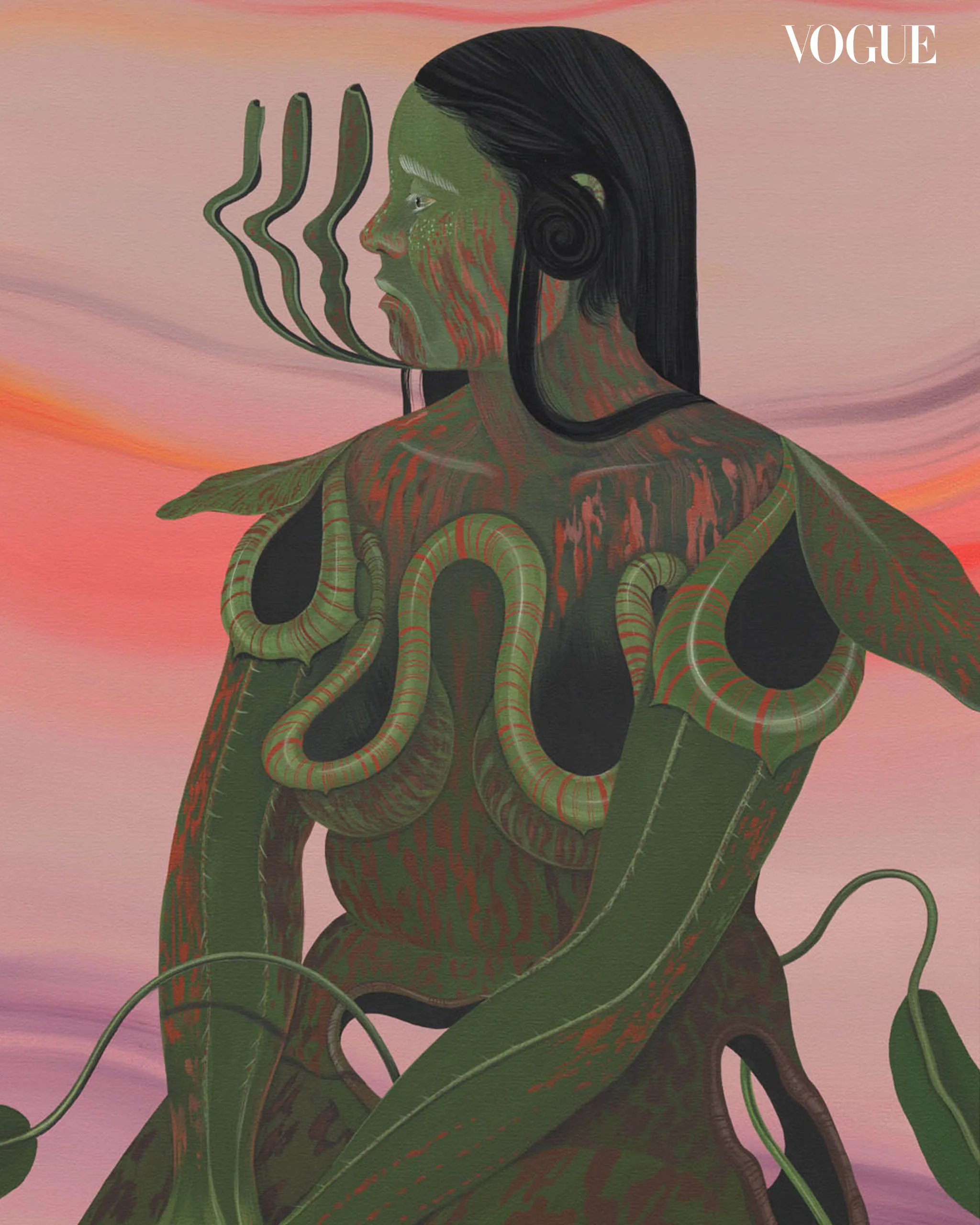
She began to articulate this sense of fragmentation through Philippine myths, particularly the figure of the manananggal, with its body split in two. The stories, she recalls, were first told to her by a tita who cared for her and her siblings while their parents were at work, stories she gravitated toward as a child. She felt drawn less to fairy tales than to the darker, more unsettling narratives of Philippine myths. “I used Philippine folklore, specifically the aswang, to describe the diasporic experience,” she explains. In her work, the figure is reconfigured: no longer simply a creature of fear. “I reimagined it to talk about resilience, fluidity, and transformation.”
Tattooing, which she learned to do more than seven years ago, extends her work beyond the canvas and directly onto skin. It was, in part, a way of making her practice more accessible. “I wanted to democratize my work,” she says, describing a desire to reach audiences beyond the traditional gallery system. But it also deepened her engagement with the body itself. “Every skin is different. Everybody is different. Every design is different.”
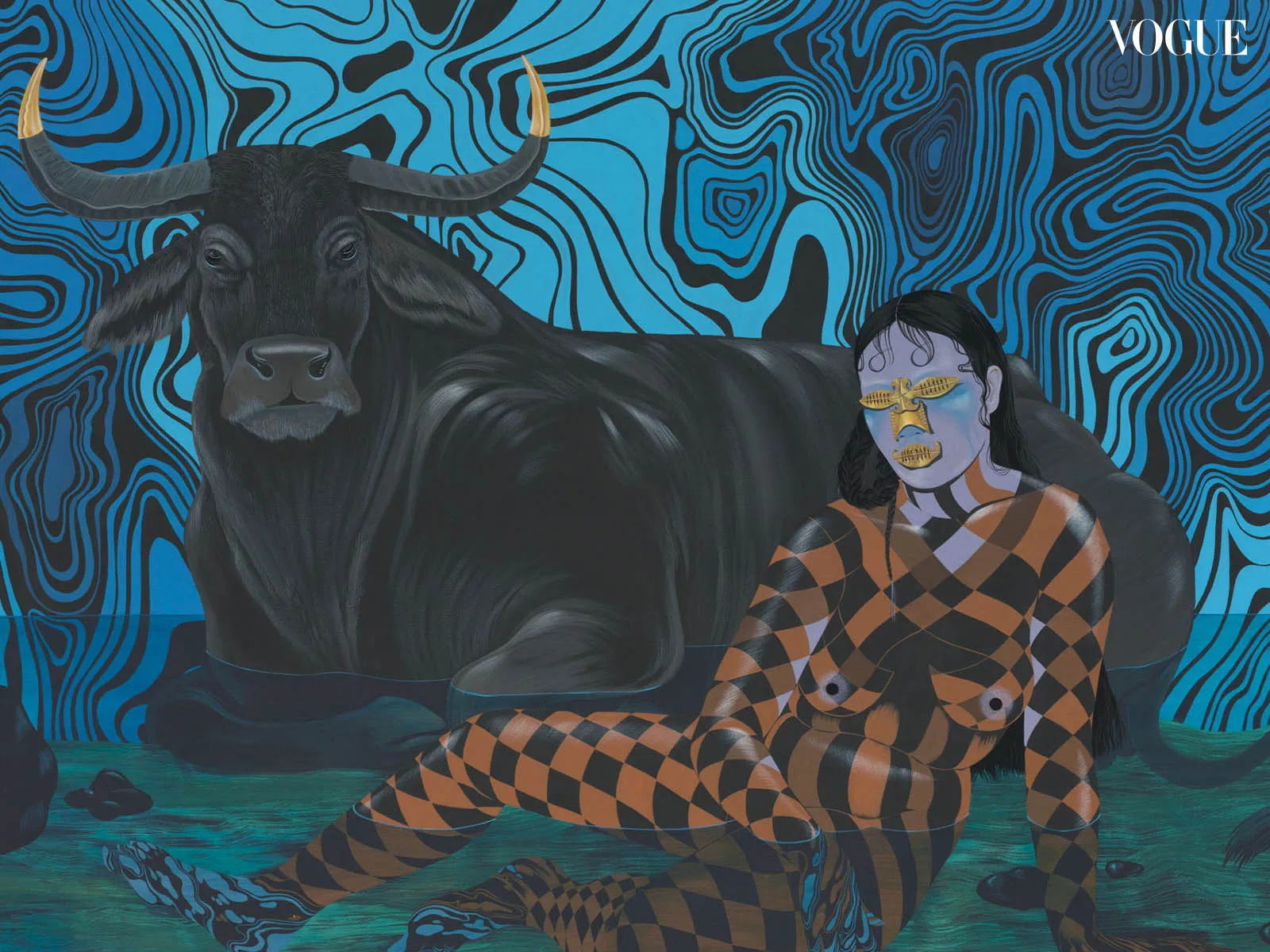
As a very young child in Manila, her mother enrolled her in art classes, recognizing an early inclination to drawing. Marigold still keeps her childhood ID from those lessons. In recent years, her art has found a growing international audience. Her gallery, Patel Brown, has steadily presented her work across global fairs, around the US, in Mexico, and in Asia, where the response has been immediate and sustained.
“There’s an overwhelming reaction to her work wherever we show it,” says gallerist Devan Patel. “It’s something people haven’t seen before, but it also allows them to see themselves in it.”
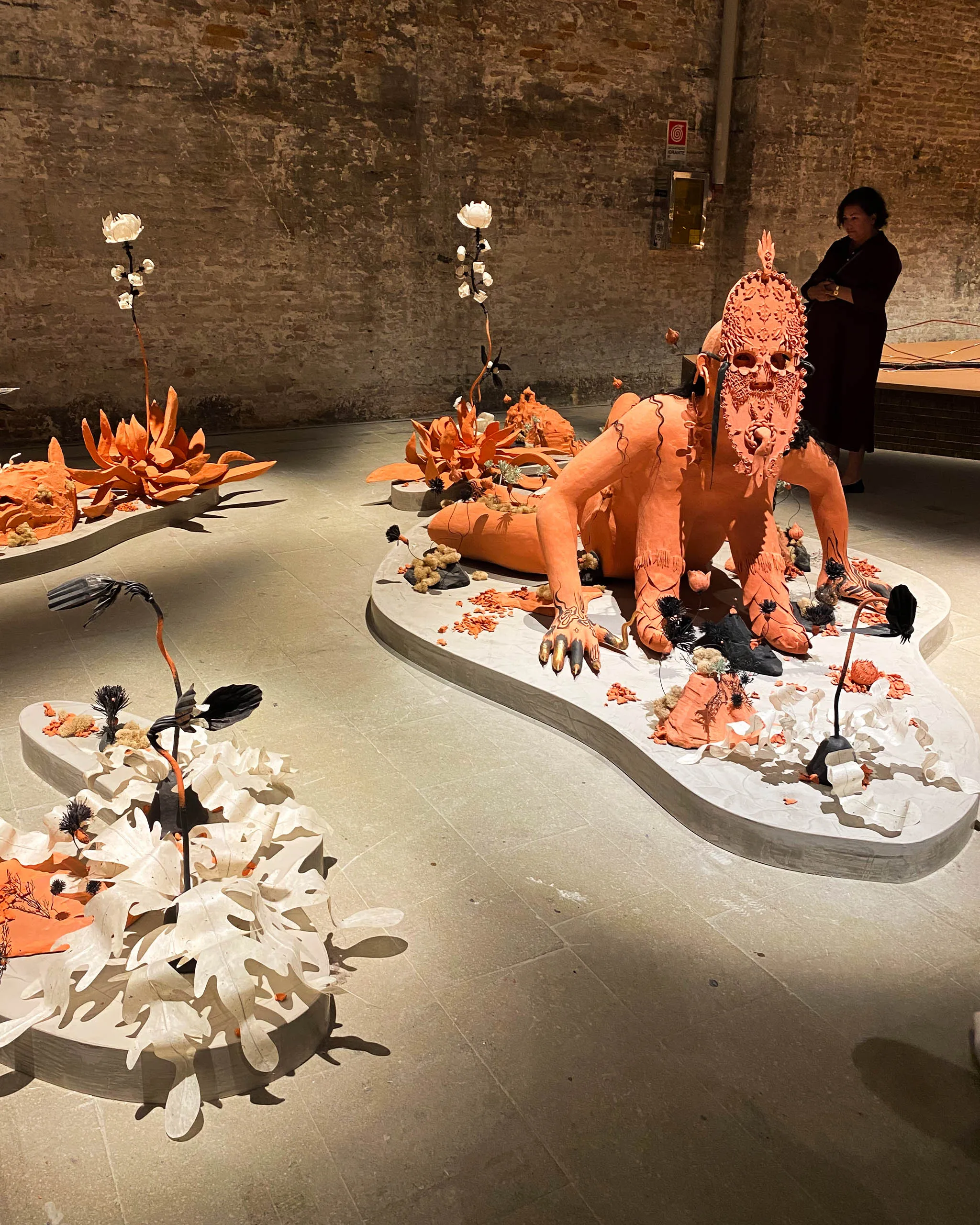
That trajectory now extends to Venice, where she will present a collaborative sculptural work with artist Rajni Perera at the Arsenale. Marigold is in Toronto to work on this, expanding on an earlier piece first shown in New York. This selection marks a significant moment for the artist. Her concerns now unfold in a truly global context. Recently, her work has taken on another dimension.
“I became a mother four years ago. So that added another layer to the work where I’m thinking about not just ancestry, but I’m thinking about descendants, really focusing on descendants. So I am a descendant, and thinking about my son as being a descendant, and what sort of value systems, what sort of questions will he be asking, and what can I impart on him in terms of his heritage, since he is half Filipino and half Ukrainian.”
If her work has long been about gathering fragments, it now turns to what is passed on. Fragments will assemble and reassemble; new constellations will take shape in her orbit.
Frequently Asked Questions
Santos uses Philippine folklore—most notably the figure of the manananggal—to describe the diasporic experience. By reconfiguring these traditional figures, she transforms them from entities of fear into symbols of resilience, fluidity, and personal transformation.
Living as an immigrant, Santos describes her relationship with her heritage as “fragmented.” She views her practice as a way of gathering small pieces of her culture and identity to “make constellations,” weaving together a project of identity outside her homeland.
Tattooing allowed Santos to extend her work beyond the gallery space and directly onto the human body. She viewed it as a way to “democratize” her art, making it accessible to a broader audience while deepening her engagement with the unique, physical nature of each person she tattoos.
Motherhood added a new dimension to her work, shifting her focus from only ancestry to also considering descendants. She now reflects on the value systems and heritage she wants to pass on to her son, who is of mixed Filipino and Ukrainian descent.
Santos received the inaugural Art Futures Prize at ArtSG in Singapore and is featured in the curated section of the 2026 Venice Biennale, where she is presenting a collaborative sculptural work with artist Rajni Perera at the Arsenale.
- At the Venice Biennale, Jon Cuyson and Mara Gladstone Explore Filipino Migration Through the Sea
- Demi Padua and Pongbayog Reunite for Venice Biennale 2026
- Photographer Alexi Lubomirski Launches His Book Natura Sacra, A Mirror to Nature
- Bianca Carague Reimagines a Kamayan Feast Through Jewelry That Doubles as Cutlery