
One of the 2024 Met Gala’s More Poetic Sartorial Themes? Decay and Disintegration


Photo: Getty Images. Art by Andrea Edelman Kay
Wisdom Kaye on the 2024 Met Gala red carpet. Photo: Getty Images
On the 2024 Met Gala’s green-and-cream carpet, an unexpected theme began to surface—or maybe the word is settle?—as the stars alighted: one of decay, deterioration, and physical attenuation.
These words may typically bear negative connotations, but such wasn’t the case at the Met on Monday. There was a beautiful, tonal romance to the sub-trend—and the looks (detailed below) struck a more resonant chord in my note-taking than the obvious, sometimes overwhelming flowery garb that otherwise dominated the night.
Deterioration—in some way, shape, or form—does make sense, considering the dress code of the night, “The Garden of Time,” and the nature-centered exhibition the party heralded. (The “sleeping beauties” in the show’s title refer to garments from the Metropolitan Museum of Art’s collection that have become too fragile even to mount on a mannequin; they are visible throughout the galleries in coffin-like vitrines.)
Time doesn’t just grow and enrich; it also erodes. It moves ahead but, universally, it reverses the course of immaculateness. It renders the initially pristine ultimately imperfect. And when it came to representing decay, designers let their imaginations run romantically wild.
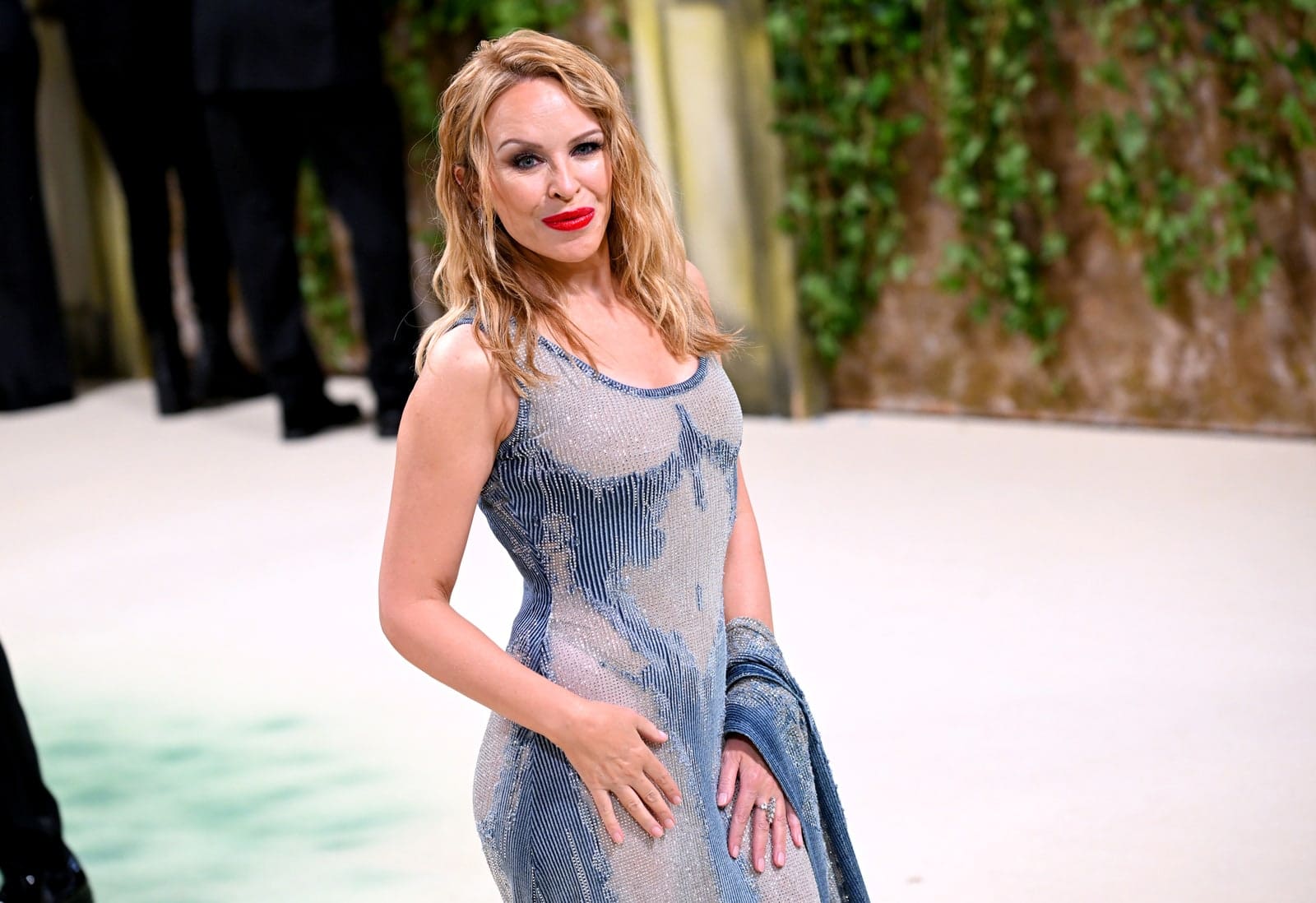
Kylie Minogue, for example, wore a form-fitting floor-length dress from Diesel by Glenn Martens. In its knit crystals, the almost crumbled form of her body emerged in strips of soft, flocked denim.
“It’s dissolved through time,” Martens told me on the carpet. “As if Kylie was sleeping for millions of years, and the garment has disintegrated around her body. And yet, even then she shines.” Minogue echoed Martens’s sentiment: “It’s kind of an anti-gown, in that sense.”
Mindy Kaling arrived in a sculpted, pale taupe Gaurav Gupta dress. She said: “I want you to know, this dress has a name. It’s called ‘the melting flower of time.’” She highlighted the voluminous structure on its back, meant to evoke a “wilting” bloom.
Charli XCX’s Marni dress referenced a different sort of natural disintegration: its rips, shreds, and holes recalled cobwebs gathered in the corner of a doorframe, or caught between hedges. (Well, that, or a T-shirt reduced to tatters by constant rewashing.) The dress also included discreet rhinestones and beads, suggesting drops of rain or dew: These required the effort of 15 Marni seamstresses.
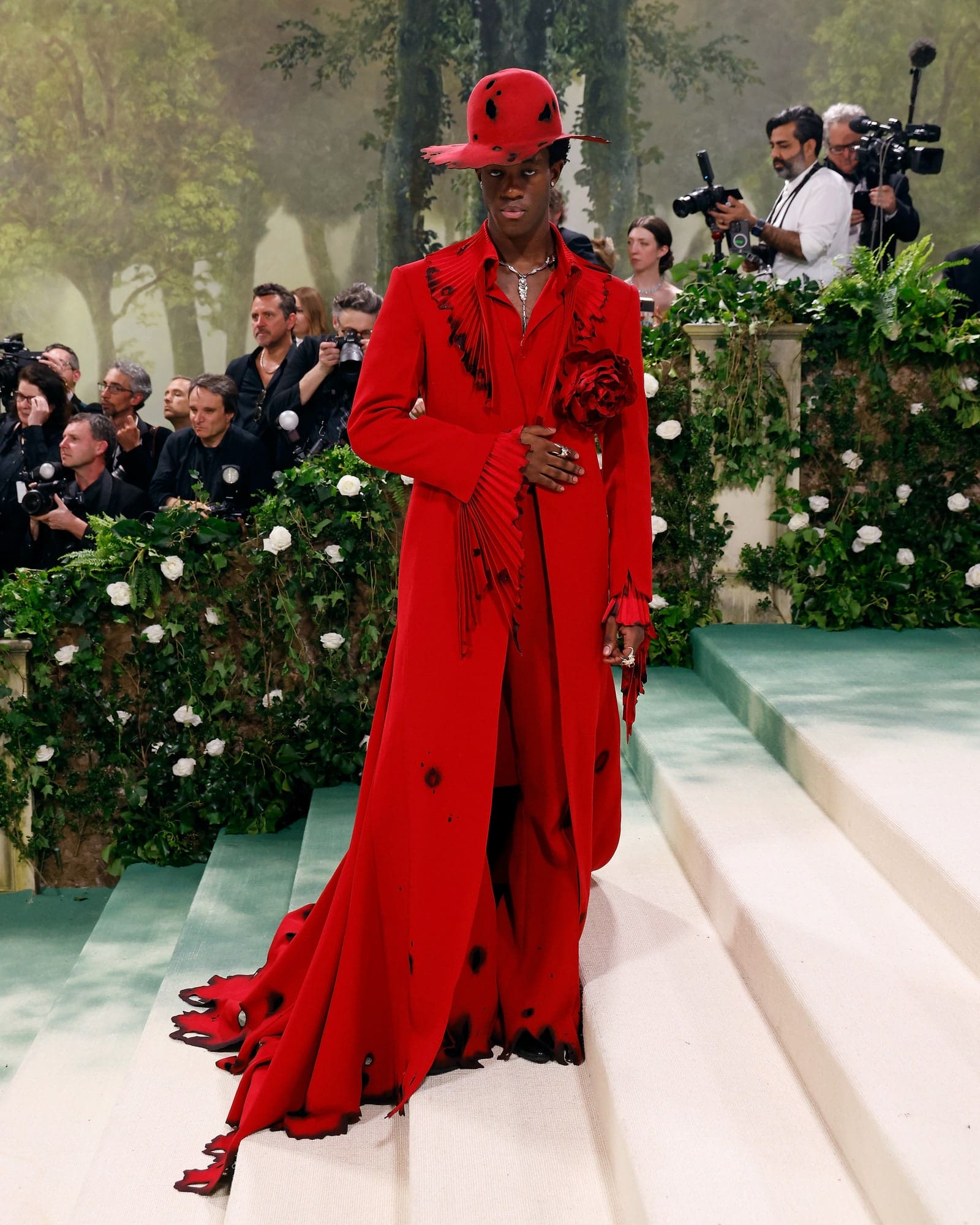
The fashion influencer Wisdom Kaye struck a higher-drama level of decomposition. He wore an extra-long vermillion red tailcoat from Robert Wun with a matching hat. The kicker? Either burnt out or rotted holes throughout the ensemble, clearly evincing that some force—be it flame or natural fragmentation—had taken hold.
And there was one final standout example, perhaps my favorite of the group: Lana Del Rey in Alexander McQueen by Seán McGirr.
The singer, returning to the Met GalaGalaA formal fundraising or celebratory event known for black-tie dress, high-fashion red-carpet looks, and elaborate dinners. Galas let designers dress public figures in statement gowns and tuxedos, and they oftenGo to Gala Glossary after a six-year hiatus, sported a twig-and-tulle creation that McGirr created in homage to the house’s fall 2006 collection, called the “Widows of Culloden.” While Lee McQueen’s original look featured theatrical antlers, Del Ray’s version boasted dead branches. There wasn’t just a soft beauty in McGirr’s version—it was less intense than McQueen’s—but also something subtly ghost-like about all that leafless wood. Del Rey acknowledged as much when she told reporters that it all felt “light as air.”
This article was originally published on Vogue.com.