
The Making of the Anniversary Issue at Vogue Threads Manila 2026


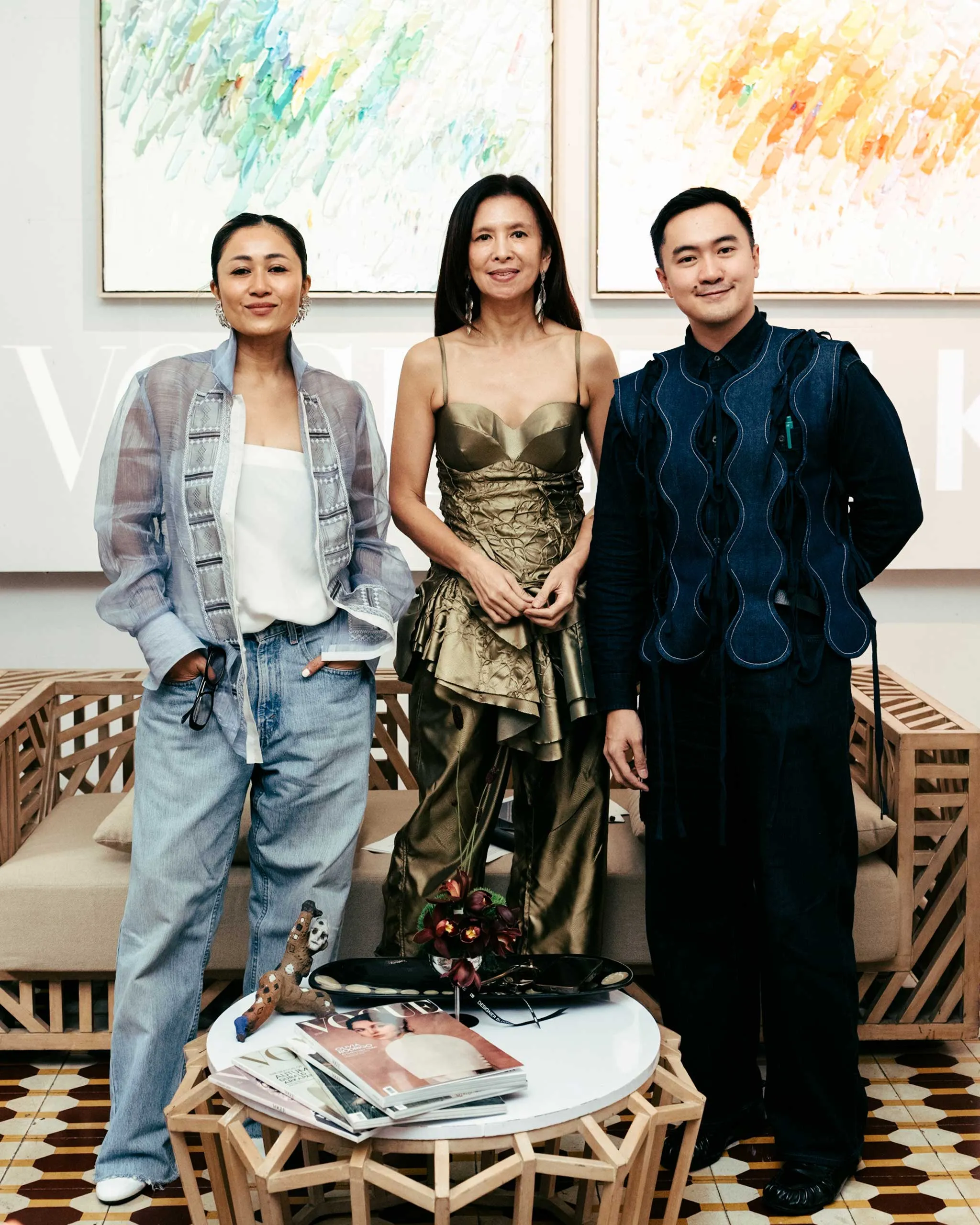
Photographed by Kim Santos
From Olivia Rodrigo’s cover to unpacking artistic and ancestral intelligence, the editors of Vogue Philippines shared the production process of the September issue.
As Vogue Threads Manila returns this year, so does Vogue Talks, Vogue Philippines‘ series of panel discussions and creative forums. This year, the discussions began with the talk, “The Making of the Anniversary Issue,” where attendees got an in-depth look at the September/October 2026 issue.
Vogue Philippines’ anniversary issue stars award-winning singer-songwriter Olivia Rodrigo, shot by sought-after photographer Szilveszter Makó. The issue also explores artistic and ancestral intelligence, contrasting modern artificial intelligence with human creativity, instinct, memory, and tradition.
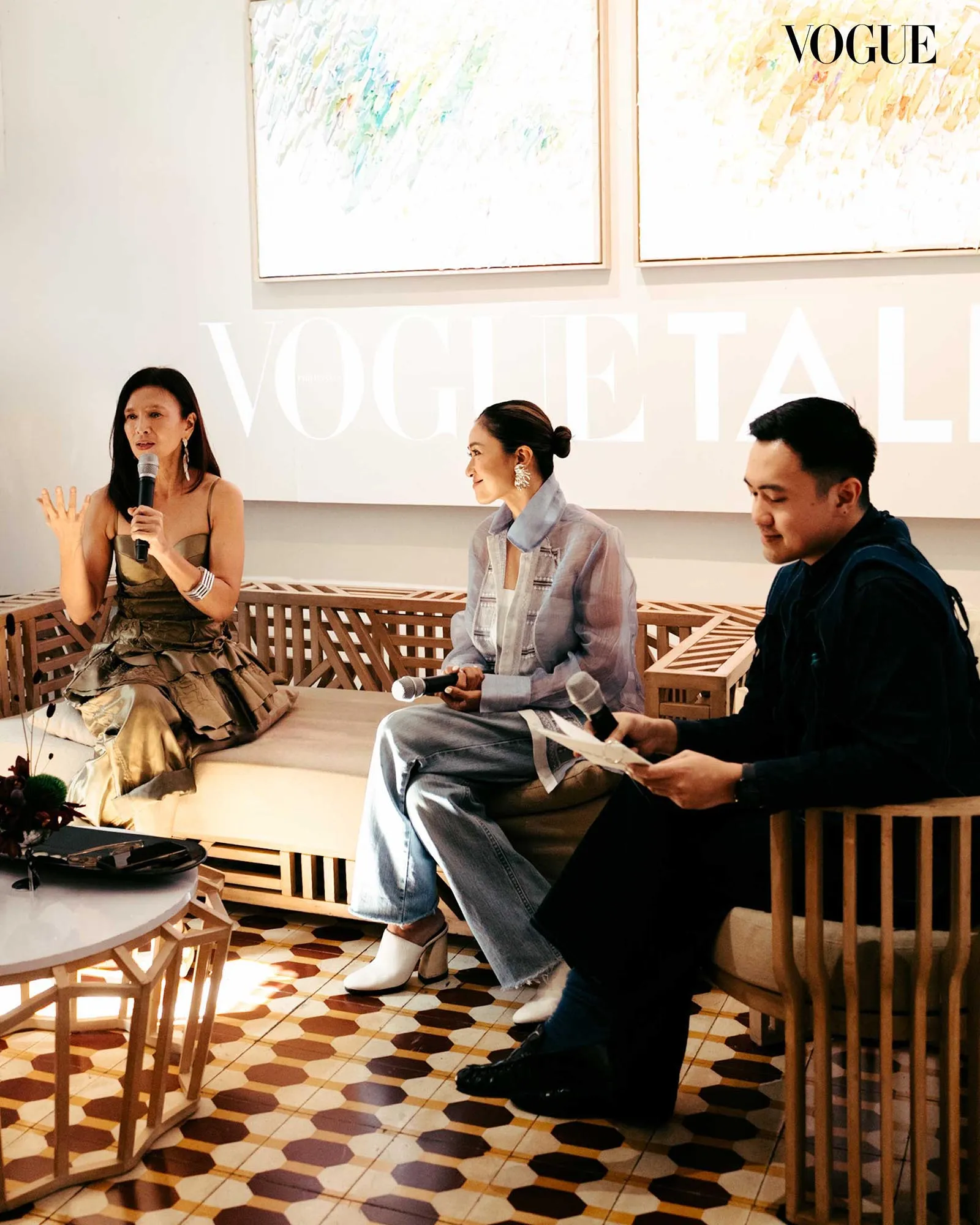
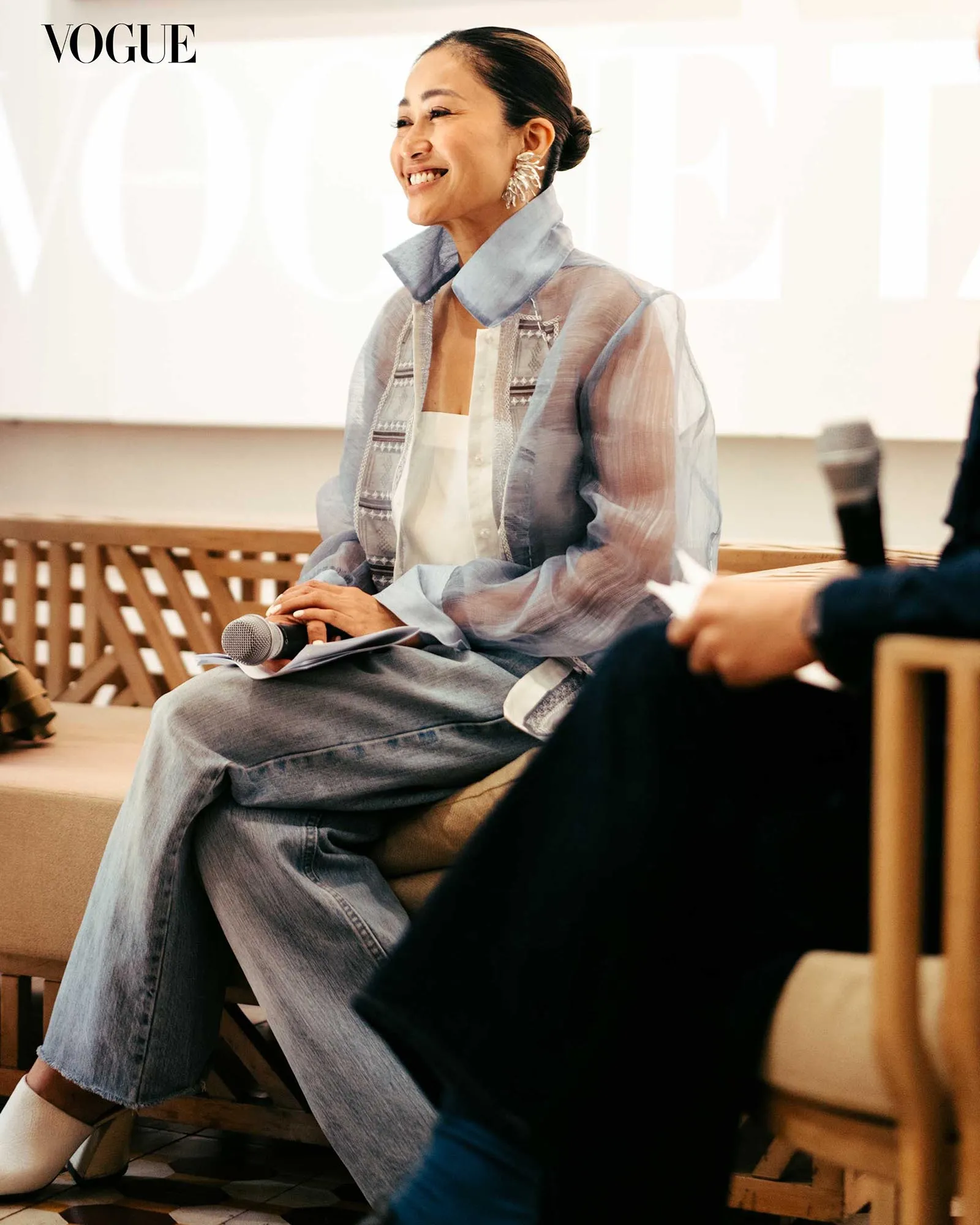
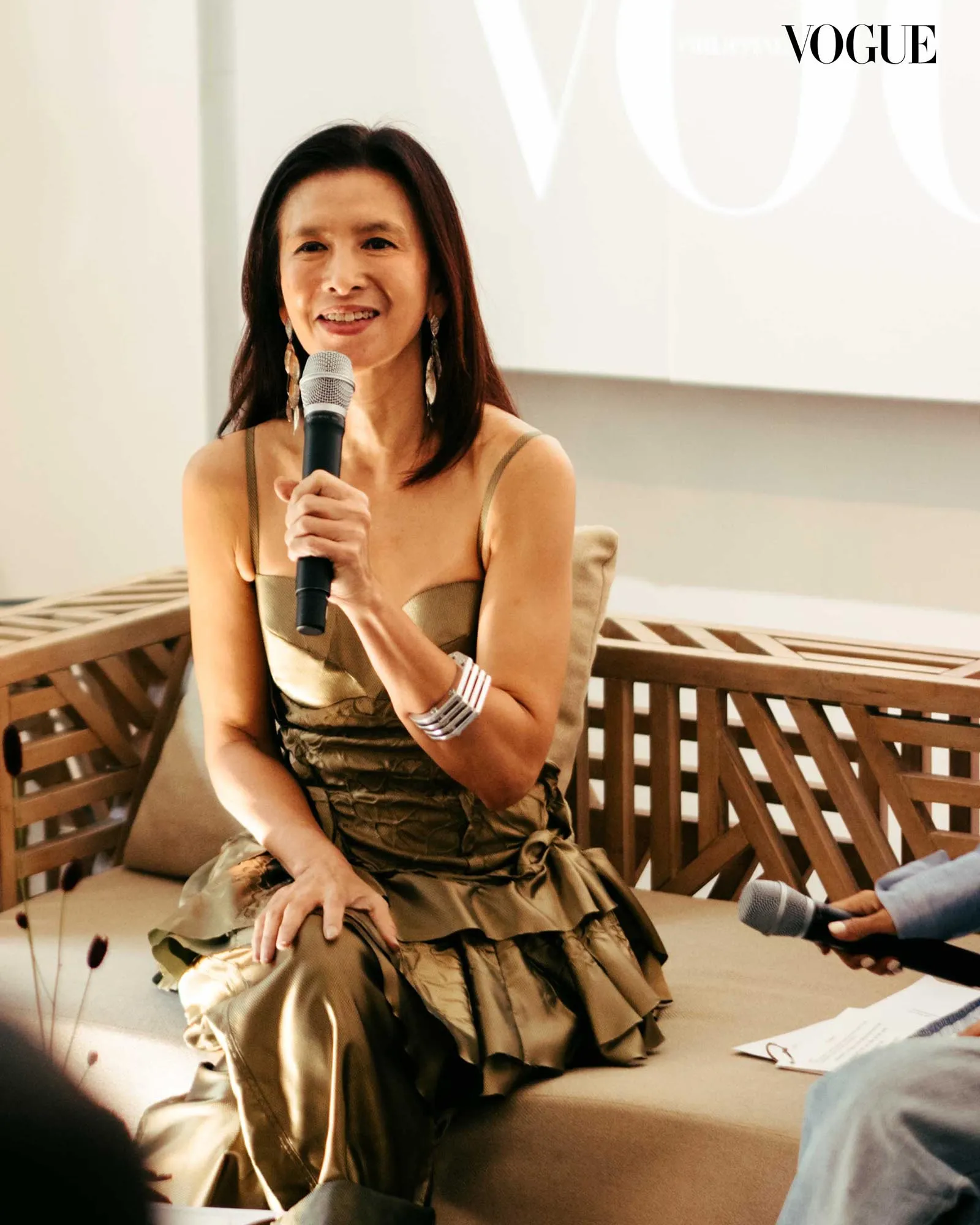
At Vogue Talks, editor-in-chief Trickie Lopa, deputy editor Pam Quiñones, and art director Jann Pascua delved into the inspiration, research, and production process of the anniversary issue.
From an archipelagic maiden issue to artistic and ancestral intelligence
When Vogue Philippines launched its maiden issue, the magazine took readers on a voyage through the country’s main islands: Luzon, Visayas, and Mindanao. “The first issue was the first time in history that Luzon, Visayas, and Mindanao were all captured, featured, and put on the pages of Vogue magazine,” Quiñones said of the issue.
“So for that first issue, the highlight was not a who but a what, which was the Philippines, and to be able to really showcase that we, the editors and the whole staff, actually traversed Mindanao, Visayas, and then Luzon to be able to present this archipelagic thinking,” she continued.
Since then, the September issue has explored and celebrated circularity and sustainability, decolonizing and reframing fashion through the Eastern lens, and uplifting the creative community. After diving into these topics throughout previous anniversary issues, one question needed an answer: How do we reframe fashion in our creative industry for the September issue?
For the team, there is one pressing issue that needs to be addressed: artificial intelligence. “What does AI mean for storytellers like us?” Quiñones pondered this question. Though artificial intelligence has many who are worried about its implications for the creative industry, for Quiñones, it only calls attention to what is “real.”
“Now is the renaissance of the real,” she said. “At the very forefront of it is the human spirit, the human hands that make the craft, the stories that are really embedded in generational wisdom coming from our ancestors.”
Women-led craft, arnis, Filipino cuisine, and more
With a focus on human-led craft and creativity, the issue featured stories of indigenous craftsmanship, Filipino martial arts, Filipino culinary traditions, and Filipino artists. Lopa, Quiñones, and Pascua took audiences through the making of each story.
They began with indigenous craftsmanship, highlighting the women-led crafts in Bohol and its challenges as younger generations move away from traditional practices. “It’s important for us to put these stories forward so people can understand and learn that we have these types of craftsmanship here in the Philippines,” Pascua said.
Arnis took the spotlight in the beauty section of the issue. Featuring the Philippines’ female national arnis team, the story explored the indigenous martial art. Quiñones talked about the fashion styling, which drew inspiration from historical Filipino warriors, including those from Mindanao and Bukidnon.
Chef Rhea Rizzo of Mrs. Saldo’s also filled the pages of the anniversary issue and is the official food and beverage partner of the first iteration of Vogue Café in the Philippines. Through her work, she takes Filipino culinary traditions, local ingredients, and inherited knowledge to elevate Filipino cuisine with global influences.
In the culture section, Michelline Syjuco and Iñigo Elizalde shared their art practice. For Lopa, the sculptor and jewelryJewelryDecorative adornments worn on the body, from fine pieces in gold, diamonds, and pearls to fashion jewelry made of accessible materials. Jewelry completes an outfit and often holds sentimental orGo to Jewelry Glossary artist represents artistic intelligence through a deeply personal, hands-on practice shaped by her influences, imagination, and years of experimentation.
“She actually said something when I quoted in my editor’s note because it really talked about how she felt about AI,” Lopa said, continuing, “She goes, ‘At a certain point, the art starts making itself.’ The challenge is to make something that AI has no access to because it hasn’t yet been made.”
On the other hand, Elizalde’s work with carpets and rugs brings together contemporary artistic concepts and traditional weaving techniques, collaborating with artisans across different countries.
Behind the scenes of Olivia Rodrigo’s Vogue Philippines cover
According to the team, Olivia Rodrigo had been on the magazine’s wish list since its launch. The opportunity came together with photographer Makó, whose background in fine arts informed the shoot’s visual direction.
The team supplied Makó with extensive research on Filipino art, pop culture, landscapes, and cultural symbols to ensure that the shoot reflected a contemporary Filipino identity. Inspired by Hugo Simberg’s The Wounded Angel and the paintings of Fernando Amorsolo, the concept connected Rodrigo with themes of vulnerability, hope, and Filipino visual culture.
The fashion team worked across international time zones with Makó’s preferred stylist, Lisa Jarvis, to select looks from global fashion houses and Filipino designers. The inclusion of the ternoTernoA modern Filipiniana dress defined by its dramatic butterfly sleeves, often made from piña or other sheer fabrics. The terno evolved from the baro't saya in the twentieth century andGo to Terno Glossary was a deliberate decision to foreground a recognizable Filipino silhouette and its significance to Filipinos at home and abroad.
“We’ve always had this kind of practice that whoever we work with, we have to collaborate with them,” Quiñones said of the collaboration. “We really want to know what your point of view is, and when it’s a really strong point of view, we go in that direction, and we kind of amplify it with you.”
The concept behind Vogue Village
For the third edition of Vogue Threads, the publication extends the anniversary issue’s themes into a physical, community-centered experience. Inspired by the Filipino concept of the barangay, it brings together the magazine’s fashion, beauty, and culture pillars within one immersive space.
“We want you to understand how deeply we talk among ourselves, or how we discuss any issue that we bring out, any magazine edition that we bring out,” Lopa said. “It’s just bringing you into our world, really immersing you guys, our Vogue community, into what we really strongly believe in. But also to say thank you, and hopefully to keep you guys with us as we bring you more issues in the coming months.”
Frequently Asked Questions
Vogue Threads Manila is an annual celebration of Filipino culture, creativity, and community, helmed by Vogue Philippines. The event bridges local heritage and contemporary art through exhibitions, experiential rooms, Vogue Talks, and portfolio reviews for emerging creatives.
Vogue Threads Manila 2026 is happening from October 26 to 28 (Monday to Wednesday) at the 2680 Compound on F.B. Harrison Street in Pasay. Day 1 is open from 2:00 PM to 7:00 PM, while Days 2 and 3 are open from 10:00 AM until 7:00 PM.
Purchase a Premium Access ticket at sarisari.shopping/collections/vogue-threads-manila. You will receive your access QR code via email within two to three days from the date of purchase. Upon arriving at the event, present your QR code at registration and you will be given a Premium Access wristband, which grants you access to Vogue Talks.
Vogue Talks will be held on the first floor of F.A.B. Creatives, which is the last house in the 2680 Compound on F.B. Harrison Street, Pasay.
The speakers at Vogue Talks span Vogue Philippines editors, industry veterans, and artists across fashion, wellness, business, the arts, and publishing. The lineup includes National Artist for Design Patis Tesoro, Filipino historian and author Ambeth Ocampo, art critic and curator Marian Pastor Roces, and more.