
Siargao Informs the Recipe of Each Kaos Table Meal


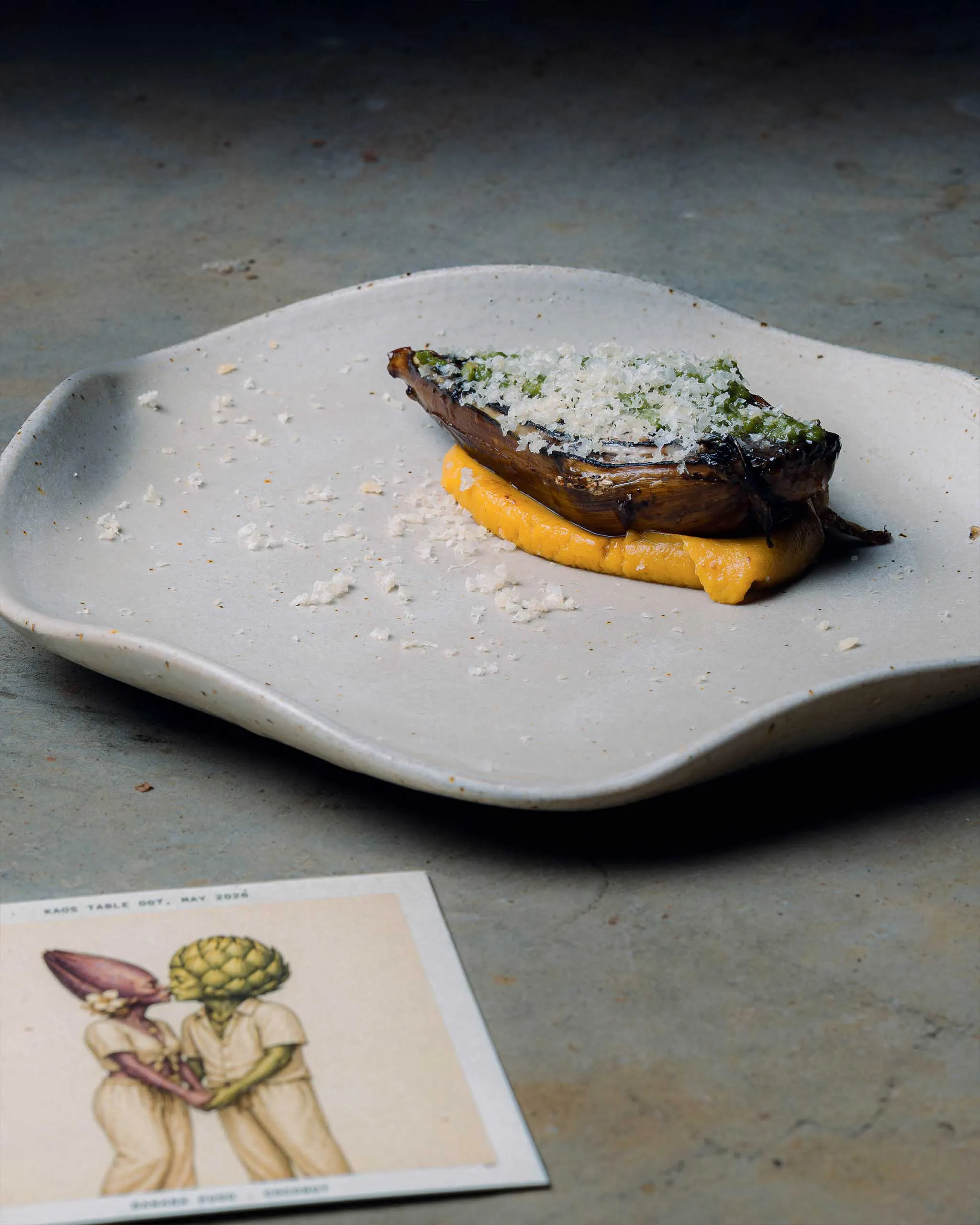
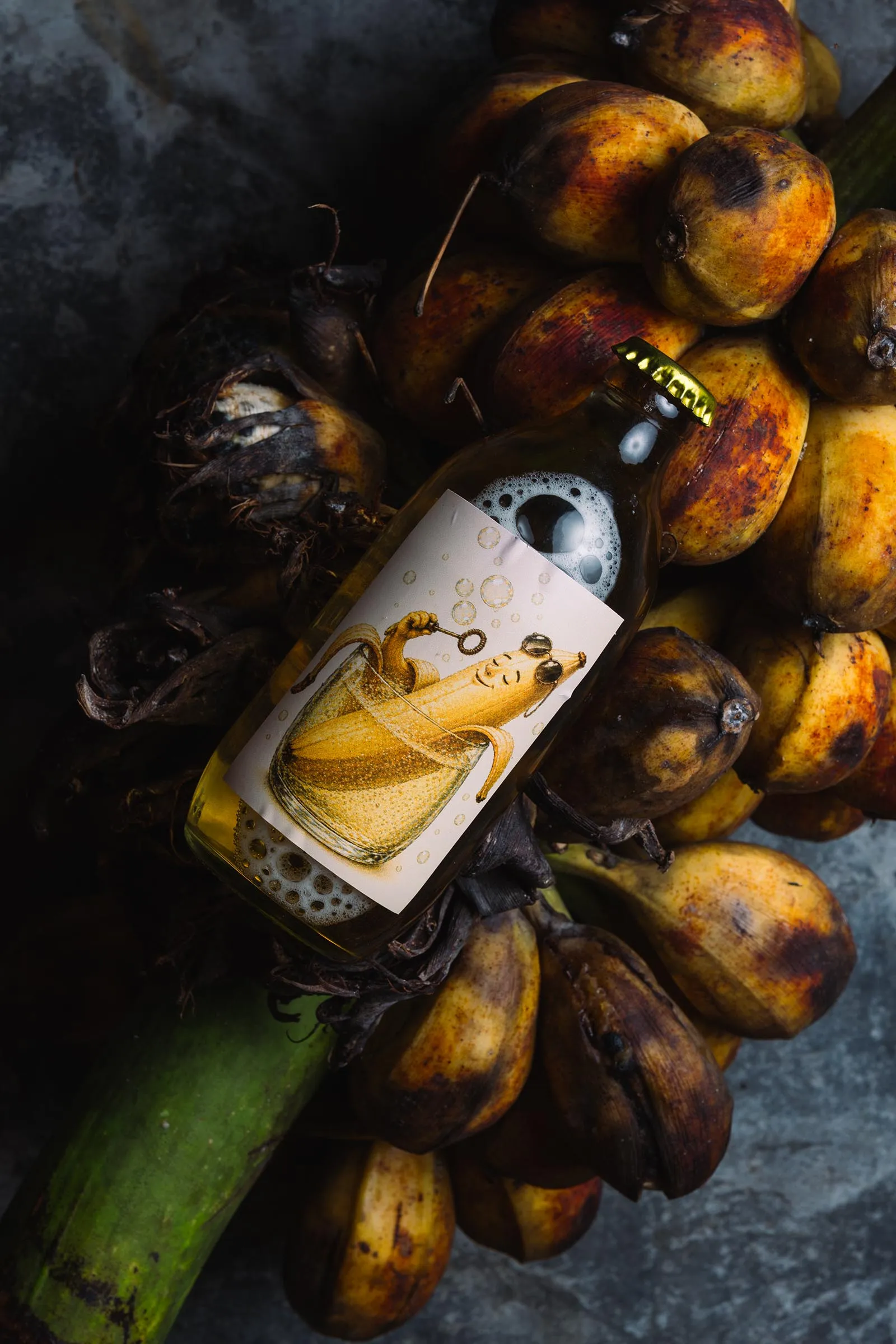
Banana “Heartichoke”: The dish reflects a local companion planting practice in Siargao: banana, sweet potato, and coconut are traditionally grown together. Photographed by Cris Braga
At the Kaos Table, every ingredient, material, and meal begins with learning the landscape before transforming it.
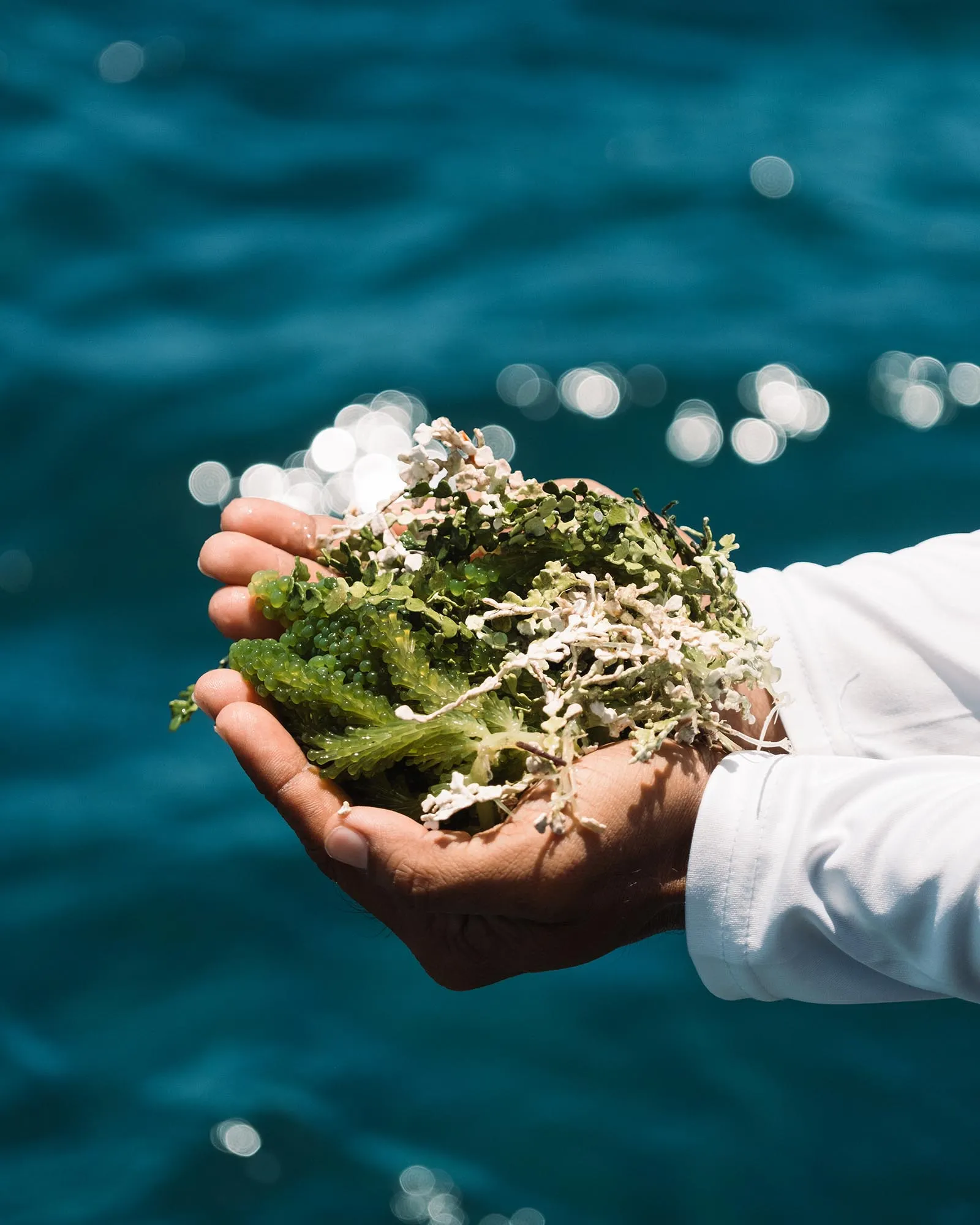
When the speedboat reached halfway to Kawhagan Island, we stopped, dropped anchor, and jumped off. The morning’s agenda was to harvest sea grapes, a type of bead-like seaweed that grows in clusters, also called green caviar, but known simply as lato in the Philippines, where it is typically consumed as a refreshing salad of tomatoes, onions, and vinegar. The group dove a few meters down to where lato was growing out of a coral bed, and grabbed a fistful of fronds. We sampled them straight from the sea, a delightful burst of little briny bubbles.
Bobbing in the water were the Kaos crew: Italian chef and culinary director Filippo Turrini, Spanish-born, Mexican Portuguese chef and creative directorCreative DirectorThe person who sets the overall visual vision of a fashion house, publication, or campaign and guides designers, photographers, and stylists toward it. A creative director's influence shapes collections, imagery,Go to Creative Director Glossary Ines Castañeda, her design and art director sister Marina, and director for growth and impact Ricardo de Sousa, who is Portuguese-Spanish. Joining them for the last three months is visiting resident Anna Katherina Preidl, an Austrian biochemical engineering PhD student from Stanford, whose research focused on three ingredients, lato being one of them.
So how did a group of Europeans end up in Siargao and open Roots, the first degustation restaurant in General Luna to use 90 percent local produce, many ingredients of which are deeply researched? It’s a story rooted in a shared vision of gastronomy that goes beyond the walls of a kitchen. Some of the original co-founders had worked together at Central in Peru, a restaurant that has been ranked number one on The World’s 50 Best Restaurants list. During their breaks they would dream of creating something of their own.
A combination of the pandemic and kitchen burnout led the friends to take the risk. Ricardo, who is married to a Filipina and surfs regularly, suggested they come to Siargao. “We found an extraordinarily biodiverse environment which, in many ways, was completely new to us and with which we fell in love almost immediately,” they recall. “The ingredients, the marine life, and the communities that make all of it possible deeply resonated with us.”
“The ingredients, the marine life, and the communities that make all of it possible deeply resonated with us.”
One of their first and most fundamental collaborators on the island was Analyn Dulpina of Lokal Lab, who introduced them to the different farms and showed them all that was edible on foraging trips. It was a playground for the team. Encountering new fruits, vegetables and seafood ignited their imagination: how can these ingredients be pushed and used in unexpected ways? They are not trying to recreate Filipino cuisine, far from it. Working with the memories of their own cuisines and the skills gained from cooking in restaurants around the world, they are applying their particular point of view to the ingredients found in the Philippines.
Mornings could be spent at the market waiting for the first catch, boating down the mangroves to hack nipa flowers off the ubiquitous tree, or by the shore, collecting fresh sea urchin alongside fishermen. Their excitement, wonder, and nerdiness over local foodstuff and foodways are a joy to watch. What looks like play, however, is grounded in an interdisciplinary approach that expresses a much larger purpose: by understanding a landscape, they gain the “ultimate freedom to create.”
The Kaos philosophy is grounded on a systems-thinking framework developed by chef Ferran Adria and the elBulli Foundation, of which Ines is an alumnus. The Sapiens Methodology, as it is called, seeks to connect diverse fields of knowledge by first breaking down complex subjects into fundamental parts. The process is structured around three phases: Landscape Research, Landscape Interpretation, and Landscape in Dialogue.
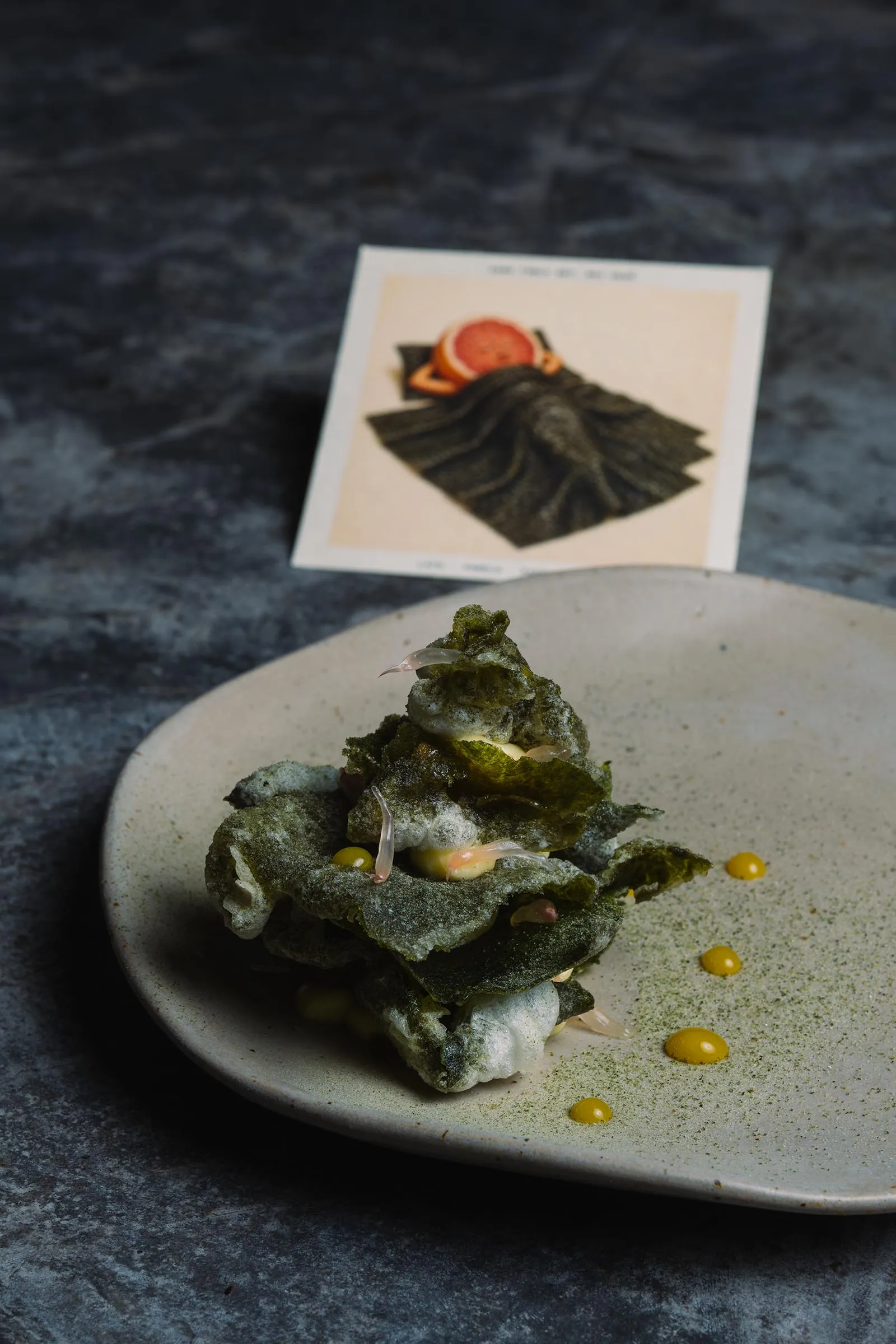
The goal of phase one is to “understand local ingredients, materials, and cultural dynamics through direct interaction with the landscape and its people.” Here, they fish, forage, and farm, working and learning from Filipino producers about how something grows, exploring not just its culinary uses but uncovering the cultural narratives connected to them. Their first resident was the chef Alejandra Anton who looked at alimango, langka, and calamansi; next was Kat Cortez, a food scientist and fermenter who researched inyam, adlai, and budbod. For Kaos, materials also include things discarded in the environment, like plastic trash.
Then they break it down, scientifically. Taxonomic analysis allows them to understand the composition and properties of the ingredient. Lato, for instance, looks much like a plant and can grow quite large, yet it is a single-celled organism.
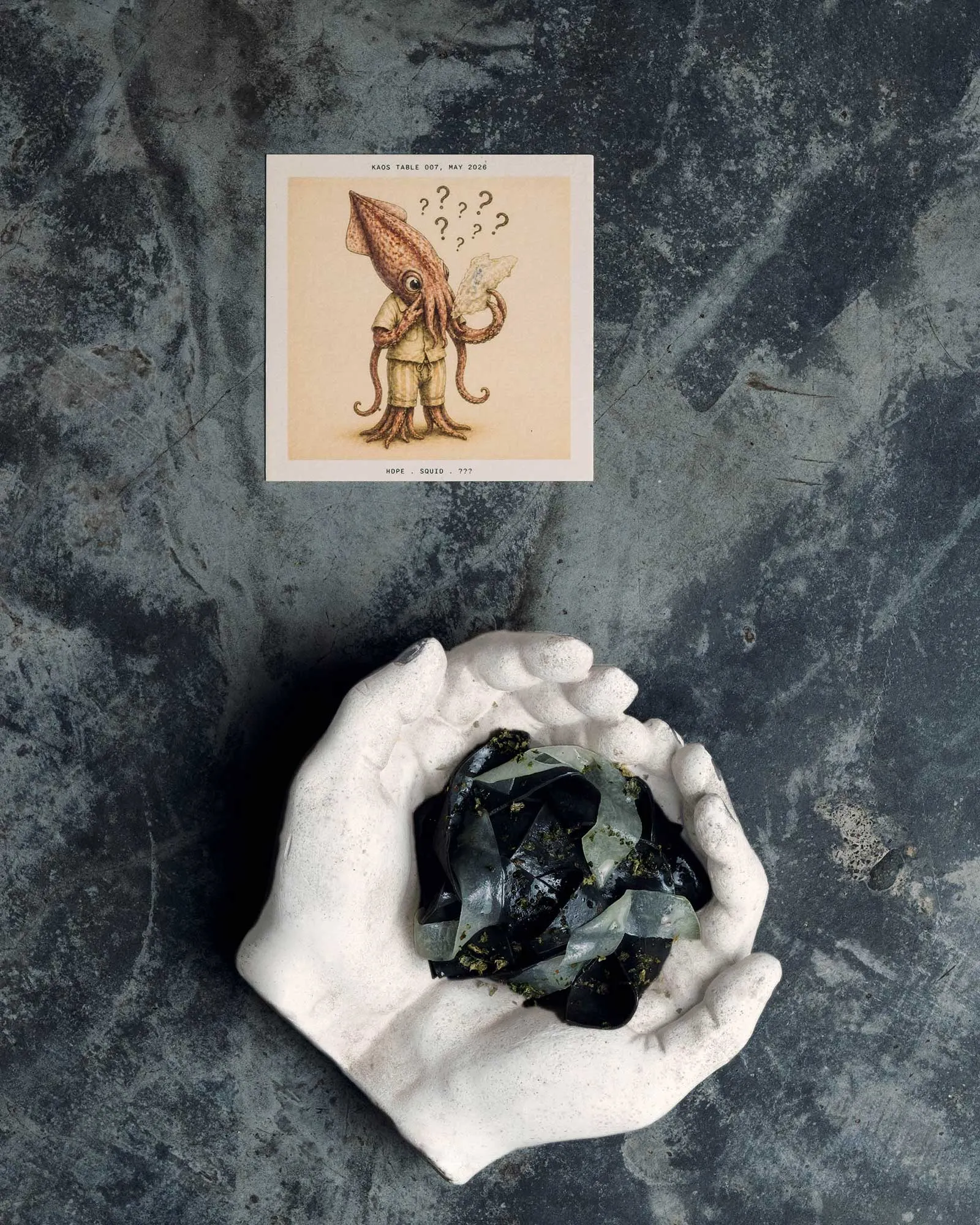
Moving on to the experimentation phase, Preidl subjected lato to different kitchen techniques: blanching, fermenting, frying, pickling, rehydrating, turning it into pasta. Each test brought them closer to understanding how lato could move beyond its familiar uses. She applied the same methodology to her other subject of inquiry, banana heart (puso ng saging), which she caramelized, flambéed, macerated, charred, cured, and turned into chutney. All in all there were 35 trials for each ingredient, many of which were “not necessarily tasty, but interesting.”
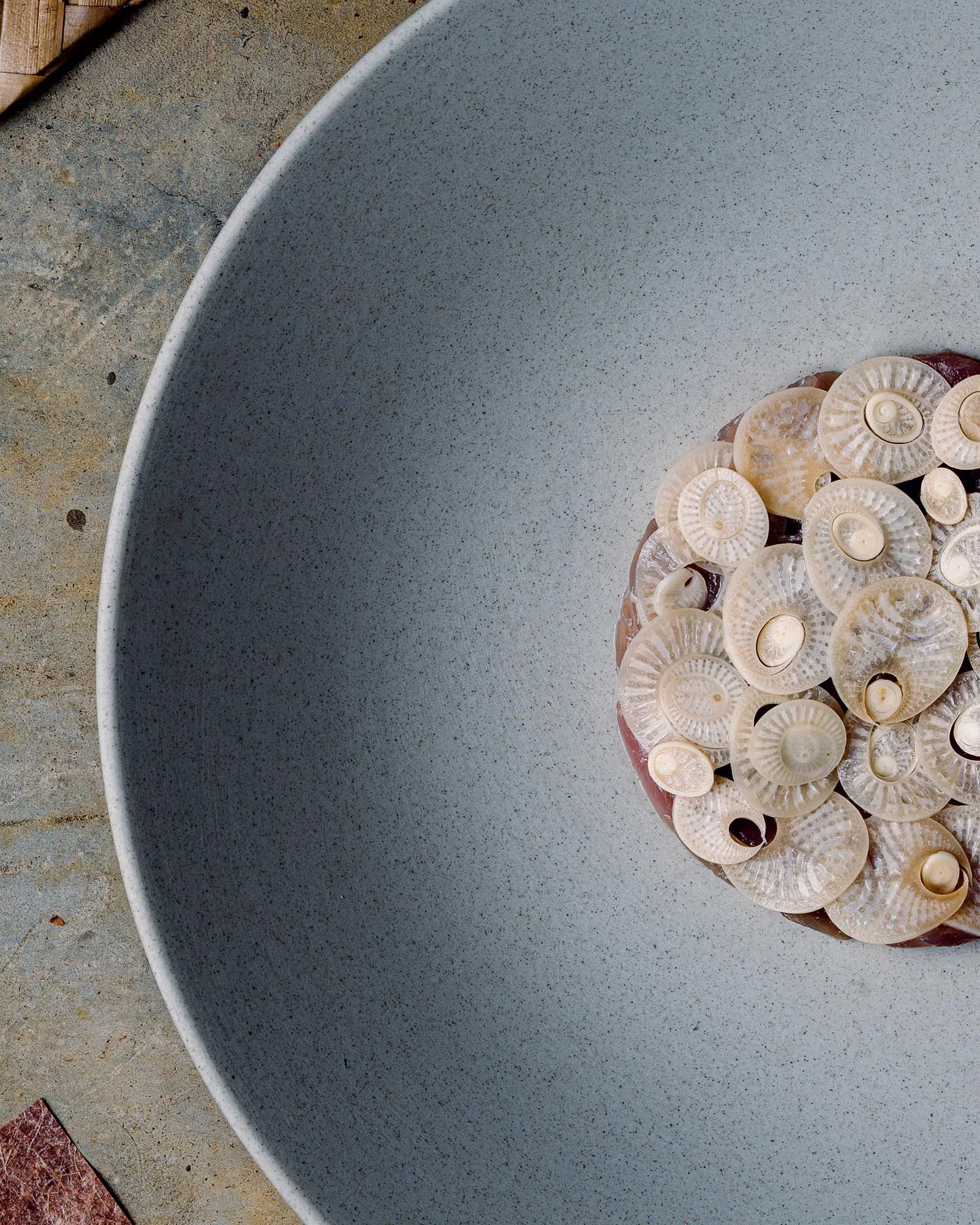
The second and third stages involve developing their findings into concepts, dishes, or artistic expressions, then finally sharing what was learned. For the three residents Kaos has so far hosted, this has taken the form of the Kaos Table, collaborative dinners held in unique spaces across Siargao. Landscape in Dialogue is “the moment research and creativity meet the guest,” as they describe. “It is the most tangible expression of our work, and, we believe, the most meaningful one.”
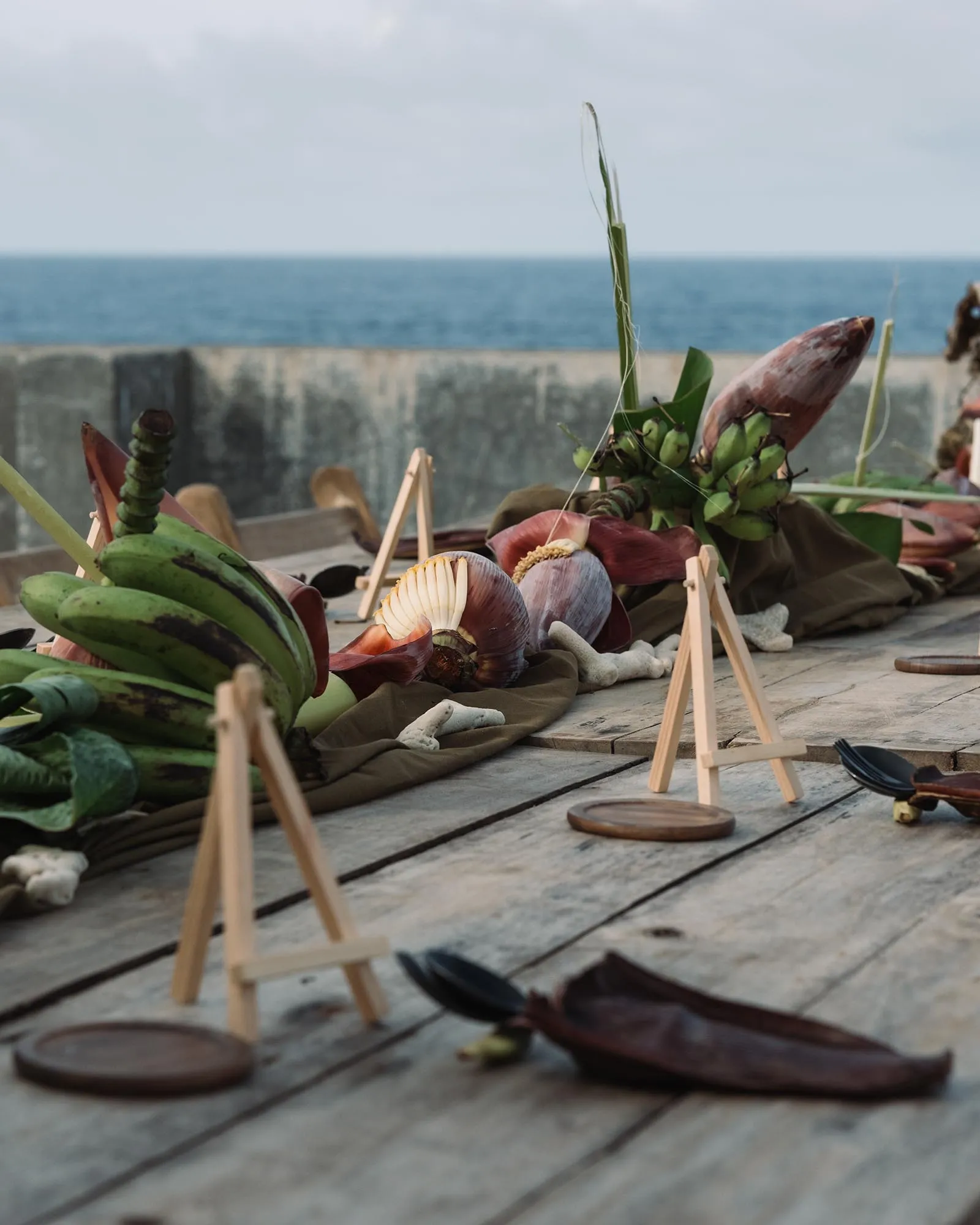
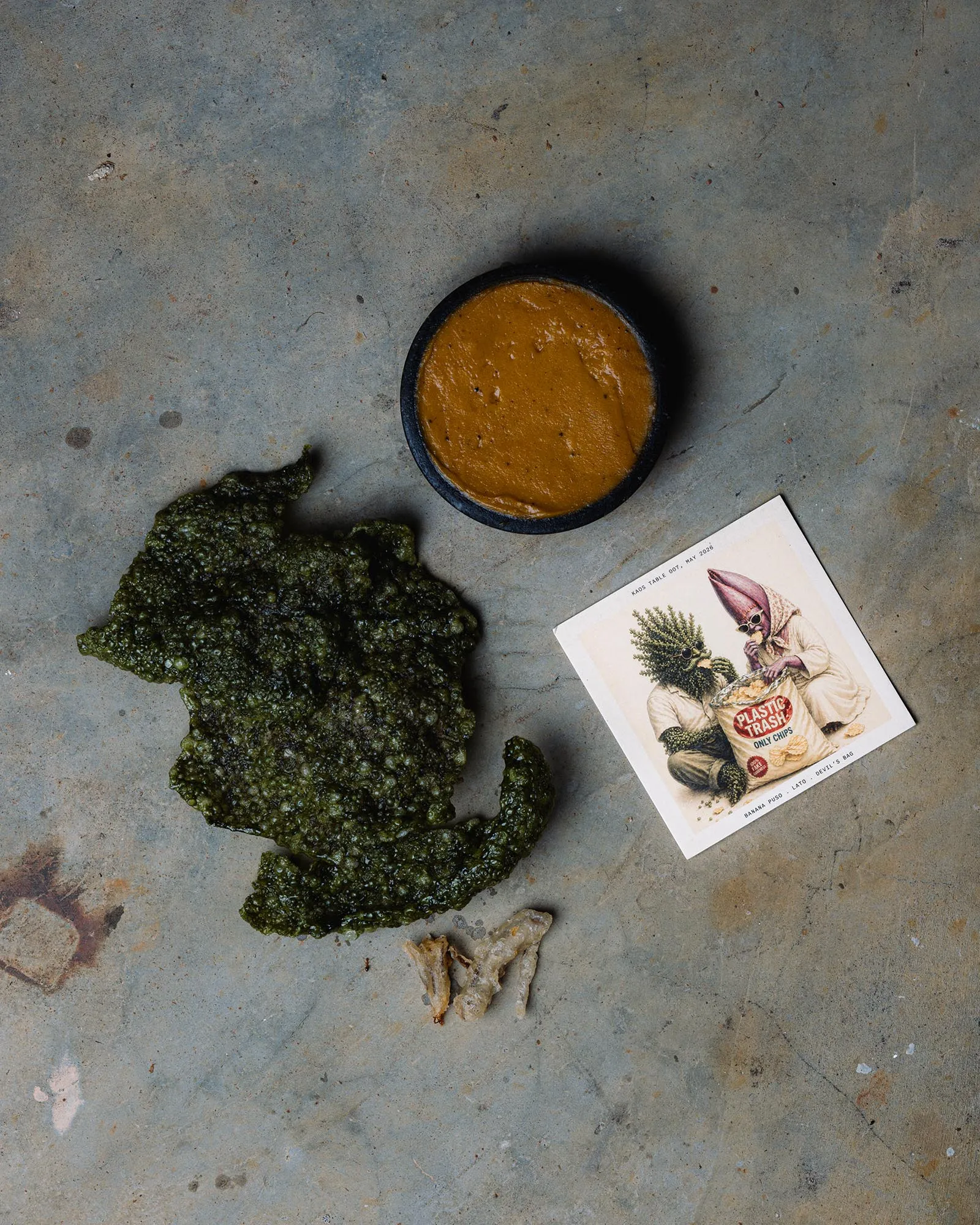
I was a guest at the seventh edition of the Kaos Table, which was held at Izustarri, a concrete brutalist-chic resort in the northern, and less populated, part of the island. Built on a cliffside facing the Pacific Ocean, the views were magnificent and the waves wild, crashing high and hard against the rocks in an explosive spray. On the rooftop, we enjoyed lato-garnished martinis and munched on lato nori chips as the light slowly faded. There was a whole lato love, you could say. The long table, decorated with entire banana stalks and their deep purple blossoms, had been set up by the team members themselves after spending much of the day hauling furniture, cooking equipment, and freshly chopped banana plants across the island. It was there that I learned banana plants are actually giant herbs, not trees, and that bananas are technically berries.
The dinner unfolded across seven courses of tastes and textures, translating everything that has come before into an experience: the landscape on a plate, shared among 16 people, mostly strangers. There were Polish, German, Spanish, and Filipino guests, a healthy mix of international tourists, local visitors, and those who have made Siargao their home. Each dish came with a humorous little illustration, designed by Marina, depicting the spirit of the dish. Some used the ingredient in a straightforward way, like a grilled banana heart, or used lesser-known parts, like thinly sliced pseudostem as carpaccio. Others incorporated them in a more complex manner, such as lato pasta, while their “white chocolate” dessert was pure kitchen-science wizardry.
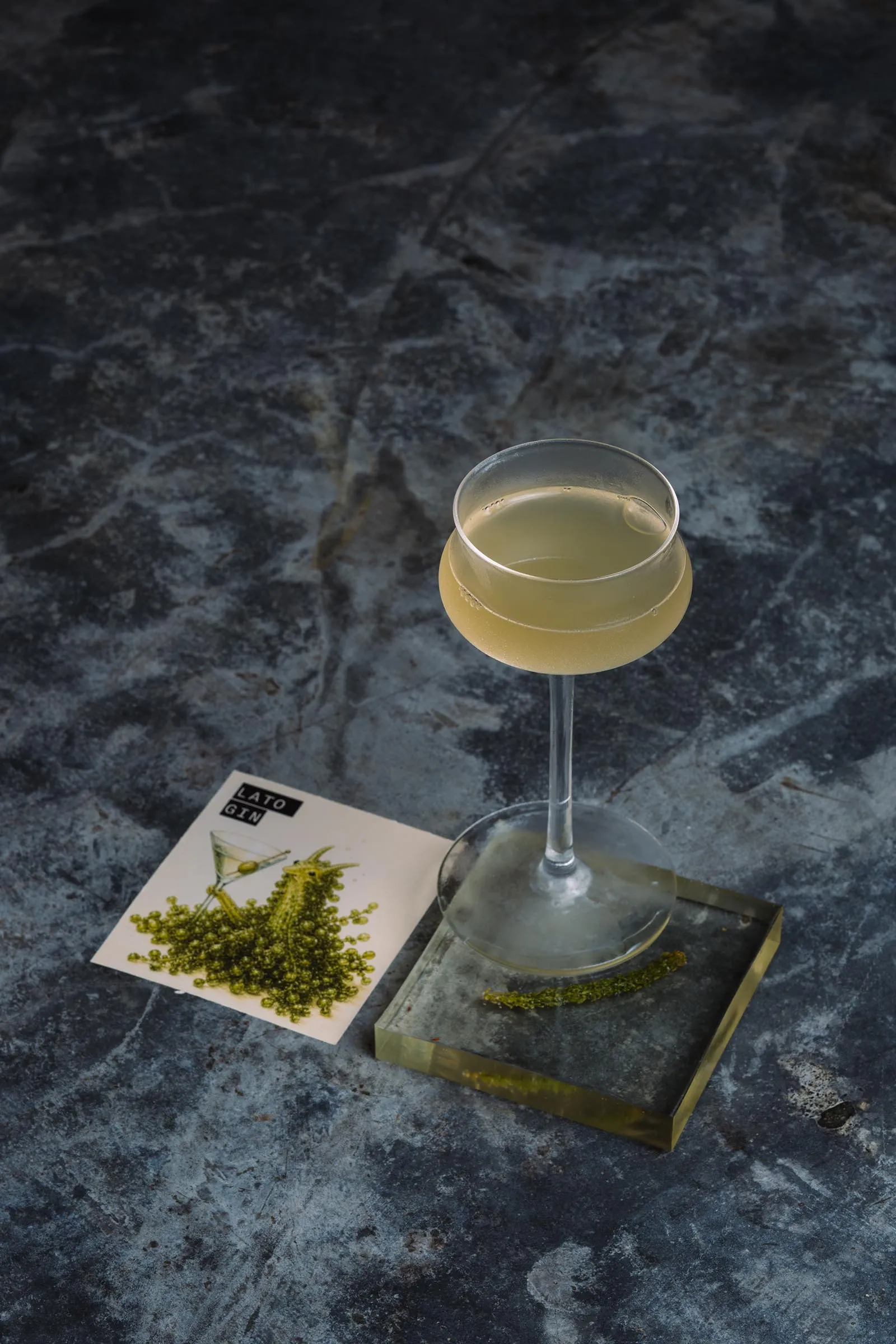
“Lato shares certain molecules with white chocolate. Through maceration, these compounds can be transferred into a syrup or an alcohol-based beverage, resulting in a flavor profile with a remarkable white chocolate resemblance,” they explain. At the Kaos Table, dinner was capped with a white chocolate ganache, without using a single gram of chocolate or cacao paste.
The third ingredient that showed up in Kaos Table 007 was not in the dish, it was the dish. HDPE, or high-density polyethylene, a type of plastic used to make bottle caps and water jugs, was recycled into a brightly colored plate that came with the question, “What does plastic mean to you?”
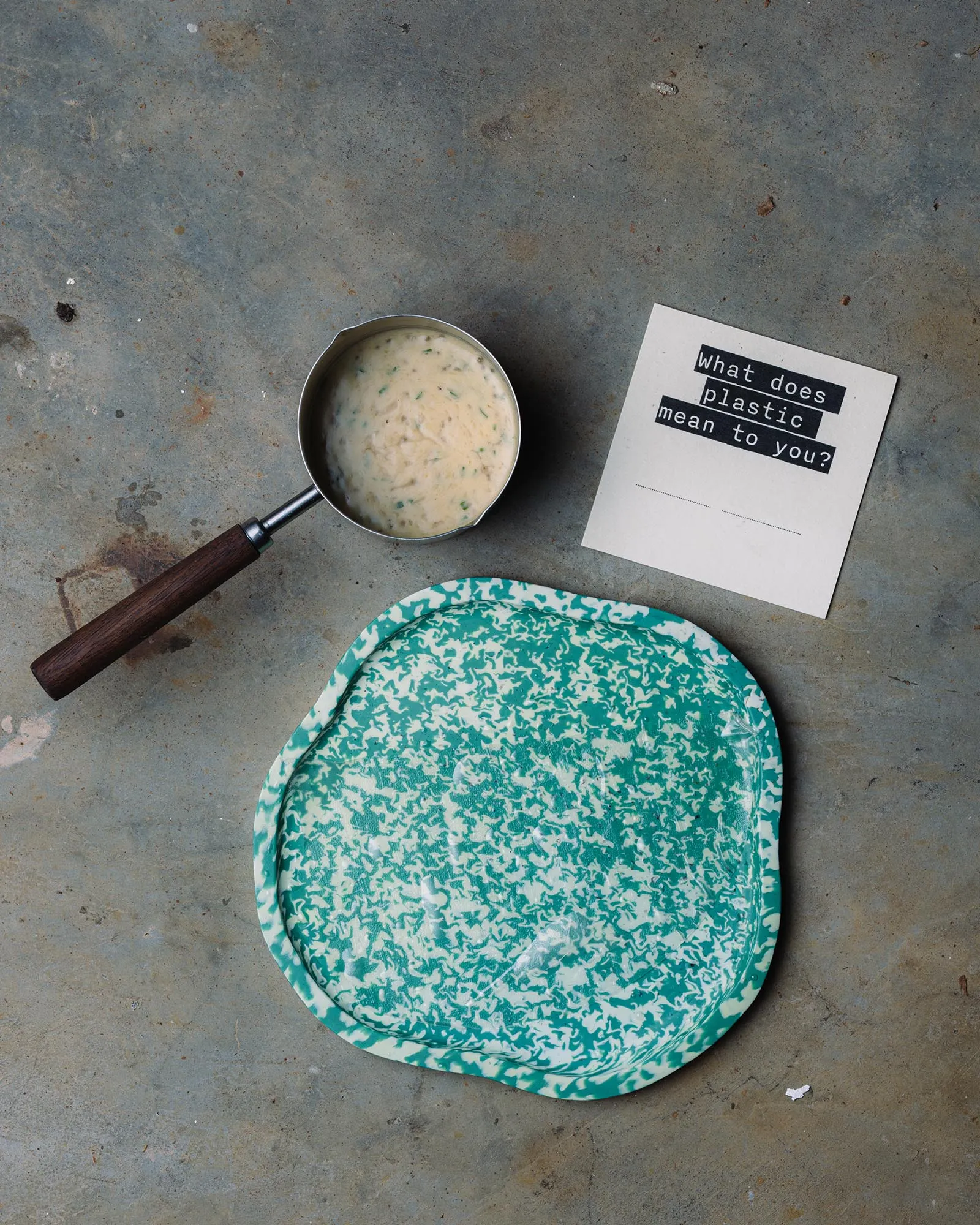
Marina has been experimenting with recycled HDPE for over a year. Crafted in collaboration with Siargao Green Artisans, the wooden dining tables at Roots have insets of recycled plastic planks, recognizable by their speckled and swirled patterns. A few of the platters used in service are also shaped using the material. The project is called Plastic Kitchen, and it begins with the collection of shredded plastic, which she then melts and presses with a machine to make large sheets that each use up 7.5 kilograms of plastic waste. “Instead of cooking food, I’m cooking plastic,” Marina says.
Plastic Kitchen is as integral to Kaos as its culinary outputs, forming part of its overall vision of regenerative hospitality, using gastronomy “not simply as an end in itself, but as a tool to connect people, disciplines, and landscapes in more thoughtful and sustainable ways.”
Siargao is not the backdrop of their cooking, as Kaos has said, but the subject of it. Dining under an Izustarri sky, we too became part of the landscape.

Frequently Asked Questions
The Kaos Table is a series of collaborative dinners hosted by the team behind Roots, a Siargao restaurant using 90 percent local produce. Each dinner translates months of ingredient research — fishing, foraging, and lab-style experimentation — into a multi-course meal for guests.
Kaos was founded by chef Filippo Turrini, creative director Ines Castañeda, design and art director Marina Castañeda, and Ricardo de Sousa, several of whom previously worked at Central in Peru. They relocated to Siargao during the pandemic to build a landscape-first culinary practice.
The Sapiens Methodology is a systems-thinking framework developed by chef Ferran Adrià and the elBulli Foundation. Kaos applies it through three phases — Landscape Research, Landscape Interpretation, and Landscape in Dialogue — to study local ingredients before turning them into dishes.
Lato, or sea grapes, is a bead-like seaweed traditionally eaten as a Filipino salad. Kaos researcher Anna Katherina Preidl tested it through 35 techniques, including transforming its natural compounds into a dessert resembling white chocolate, without using any cacao.
Plastic Kitchen is Marina Castañeda’s project recycling HDPE plastic, such as bottle caps, into dining tables and platters used at Roots and the Kaos Table. Made with Siargao Green Artisans, it reframes plastic waste as a material subject for culinary research.