
Renaissance Beauty Dominated the Duomo at Vogue World 2026: Milano


Daniele Venturelli/Getty Images
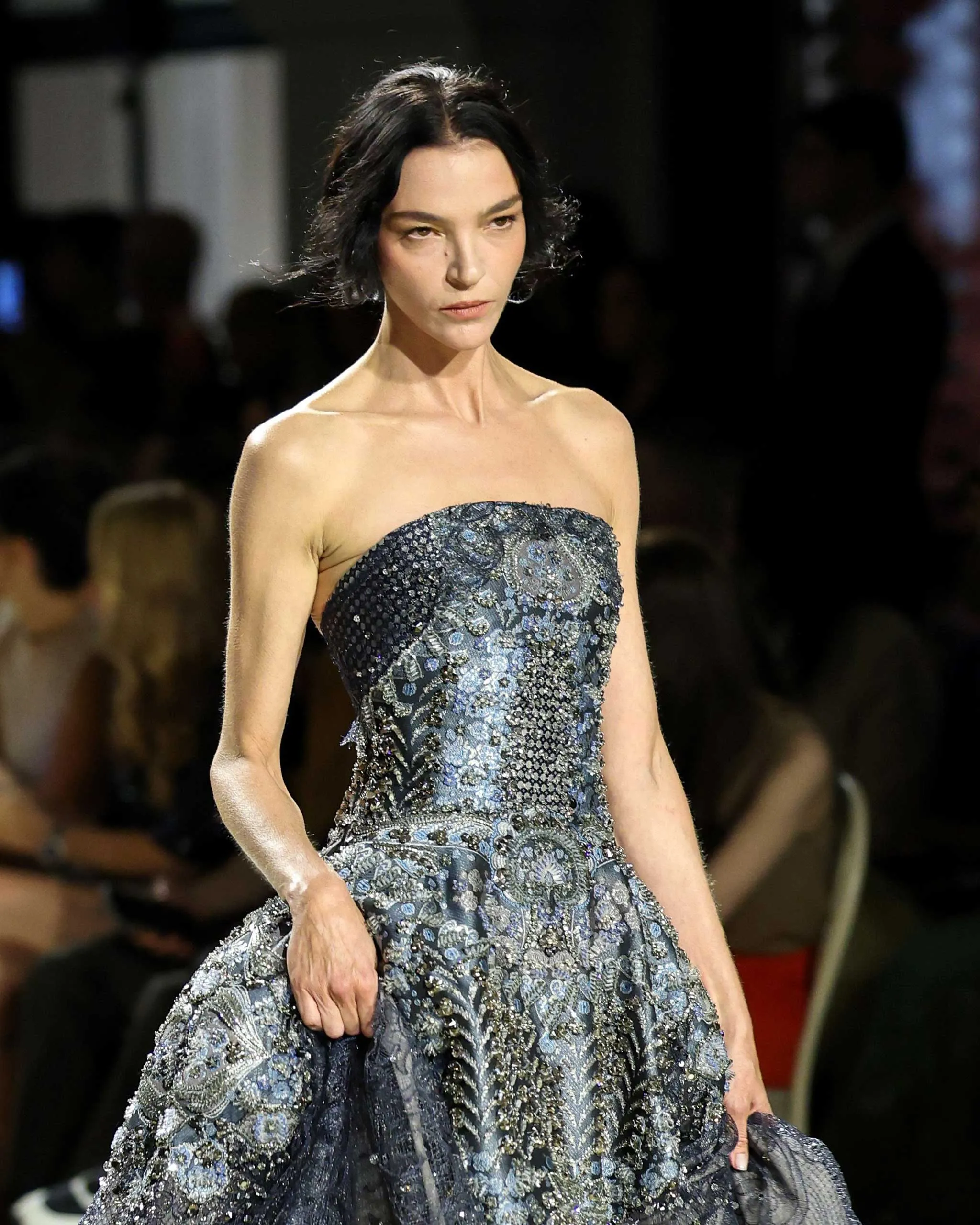
Vogue World 2026: Milano is a celebration of all things Italian and artisanal: and the dominating beauty look on the runwayRunwayThe platform or catwalk on which models present a designer's collection to an audience of editors, buyers, and guests. Runway shows establish the creative statement of a season, and Vogue'sGo to Runway Glossary did just that, combining contemporary trends with the brushstrokes of Raphael, Botticelli, and Ghirlandaio.
Taking place in the iconic Galleria within Milan’s beating historic and cultural heart, the first act focused on the legacy of Italy’s great artisans and inventors. The Renaissance era was resplendently represented. To create all of the looks for the show, Dame Pat McGrath lead the makeup design and execution, Cyndia Harvey lead hair styling, and Eri Narita leading nail styling.
Let’s take a closer look at the glam-gone-by that dominated the Duomo for Vogue World 2026: Milano.
Artful blush stacking
As models like Gigi Hadid and Mariacarla Boscono began to make their way down the runwayRunwayThe platform or catwalk on which models present a designer's collection to an audience of editors, buyers, and guests. Runway shows establish the creative statement of a season, and Vogue'sGo to Runway Glossary, it became clear that blush took its cues from the works of great painters like Raphael, whose faces are defined by harmonious proportions, gentle and serene expressions, and soft contouring. (In art, it’s called sfumato—a painting technique that gently blends tones together.) A reddish hue flushed the cheeks of the models strutting down the runway care of McGrath and her team.
At the time, the rosy visage often seen in Renaissance paintings came with a dual meaning. It spoke to once contemporary aesthetic standards for purity and youth, while also expressing emotions like shyness, modesty, vitality, or love—the so-called “moves of the soul” (moti dell’animo or moti mentali), an artistic and scientific theory from Leonardo Da Vinci that proposed external physical gestures or facial expressions are the visible reflection of a person’s inner mental and emotional state.
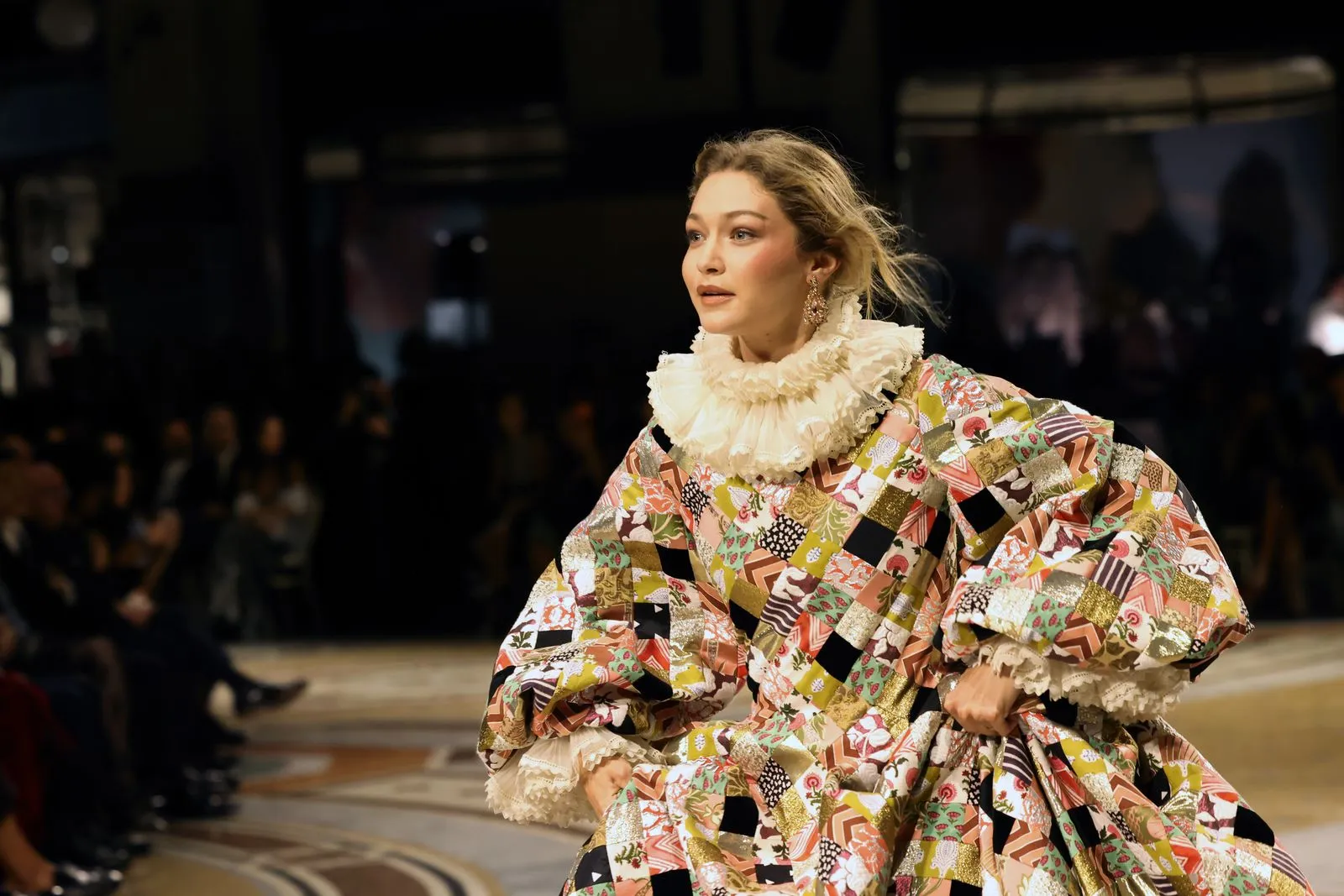
Titian red is one of the most recognizable colors of the many red pigments used by the masters of Renaissance art, a shade that came from natural sources such as vermilion.
At the same time, the blush felt distinctly modern. It appears on the face like an aura—a cloud of pink pigment that envelops the temples and the area around the brow bone. To make the blush glow even more brightly, white eyeshadow was applied to the upper eyelid. At the inner corner of the eye and along the lower lash line, a generous sweep of pearlescent white highlighter was set to make the eyes appear wide.
Braids, bobs, and Botticelli hair
The Italian Renaissance is known for its striking portrayal of what was once a feminine ideal; in part, at least, thanks to hair. This was the historical period in which women’s hair finally appeared in paintings, after a long period stoically covered under medieval veils. Hair was once considered an instrument of seduction; in the Renaissance, it was unleashed, transitioning to become a status symbol.
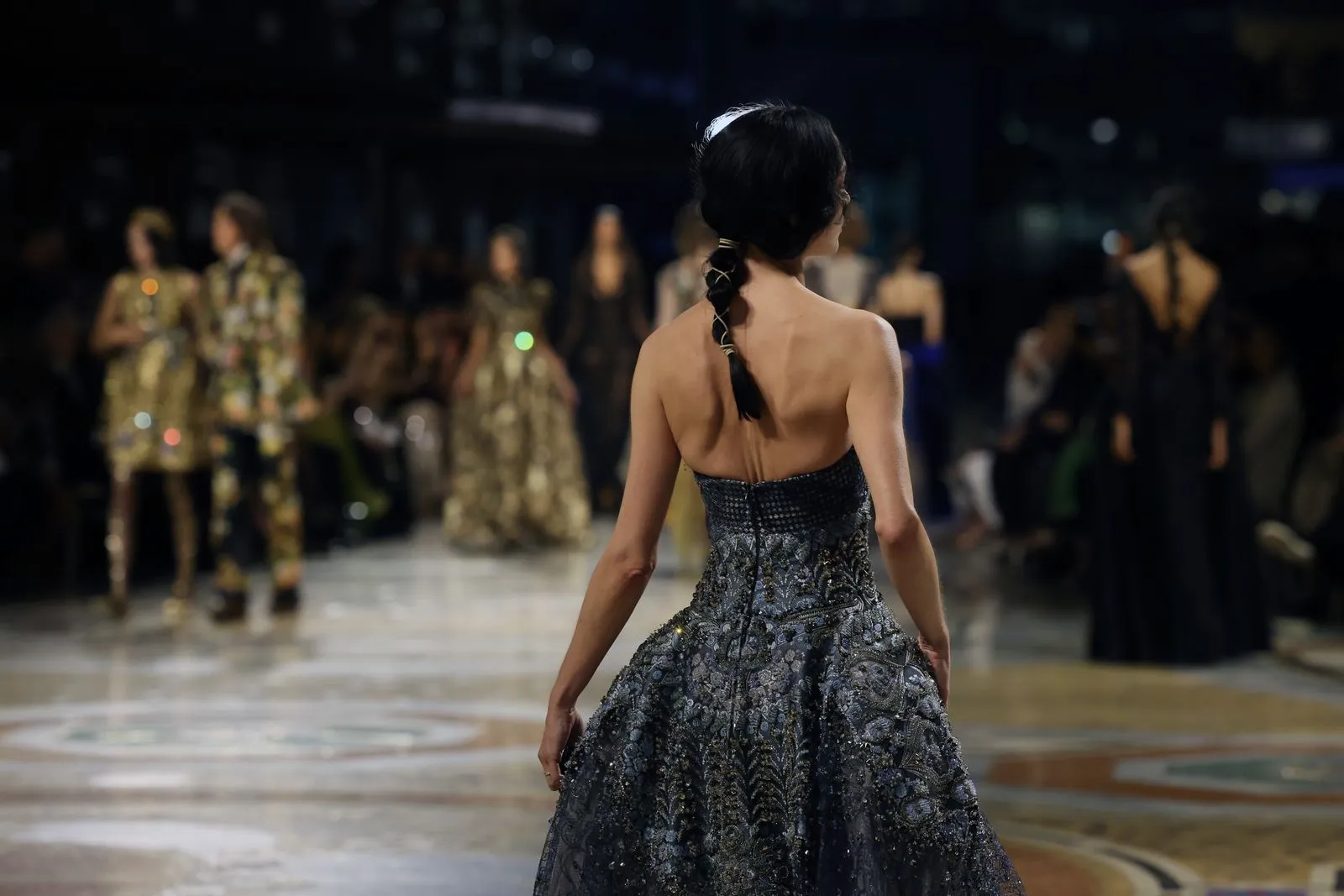
Leonardo da Vinci’s “Lady with an Ermine” and Botticelli’s “Venus” acted as the muses for hairstylist Cyndia Harvey and her team. The hair looks embraced the era’s harmonious tensions: naturally curly and almost frizzy locks alternated with intricate, gelled down braids that also spoke to the era’s rich craftsmanship.
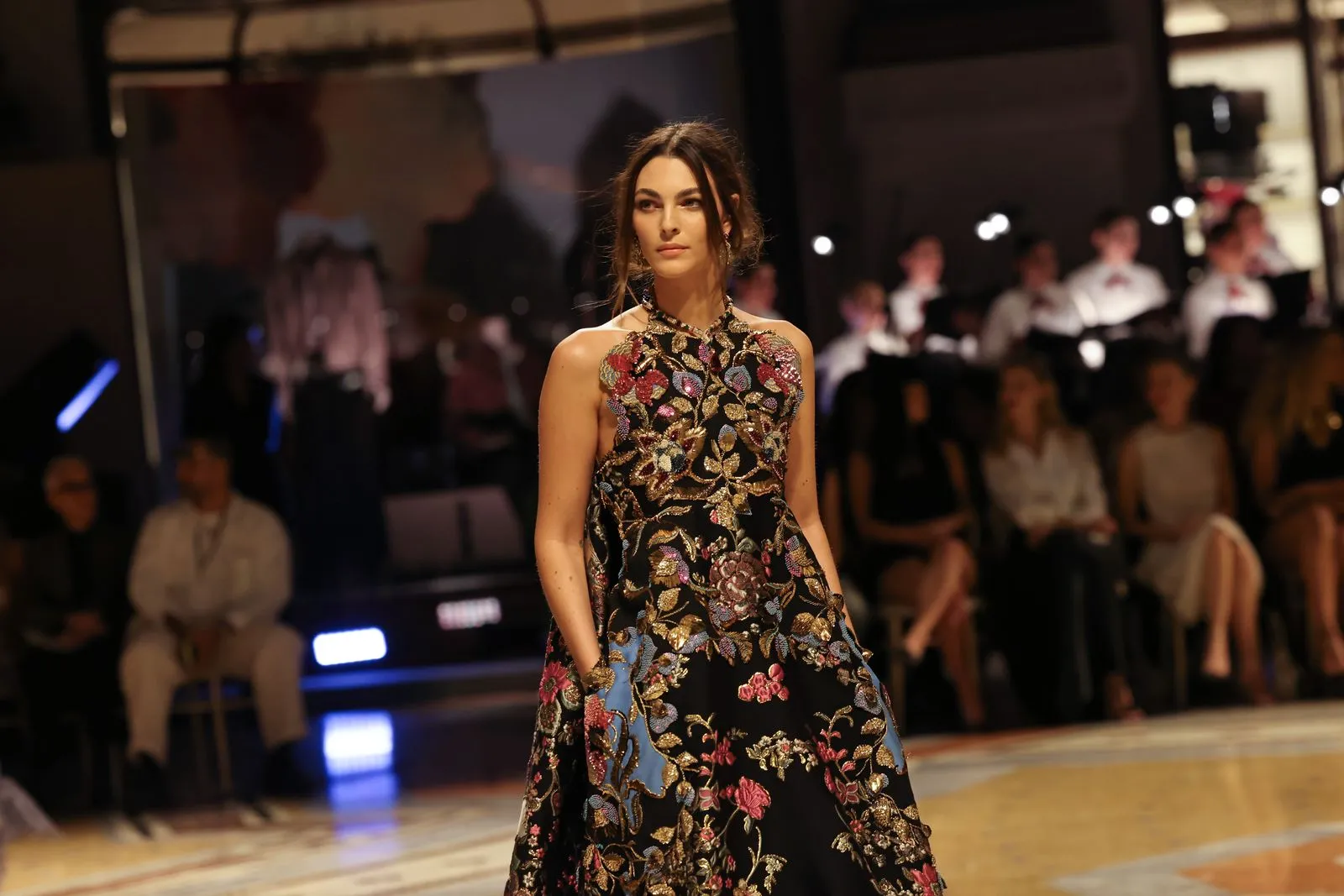
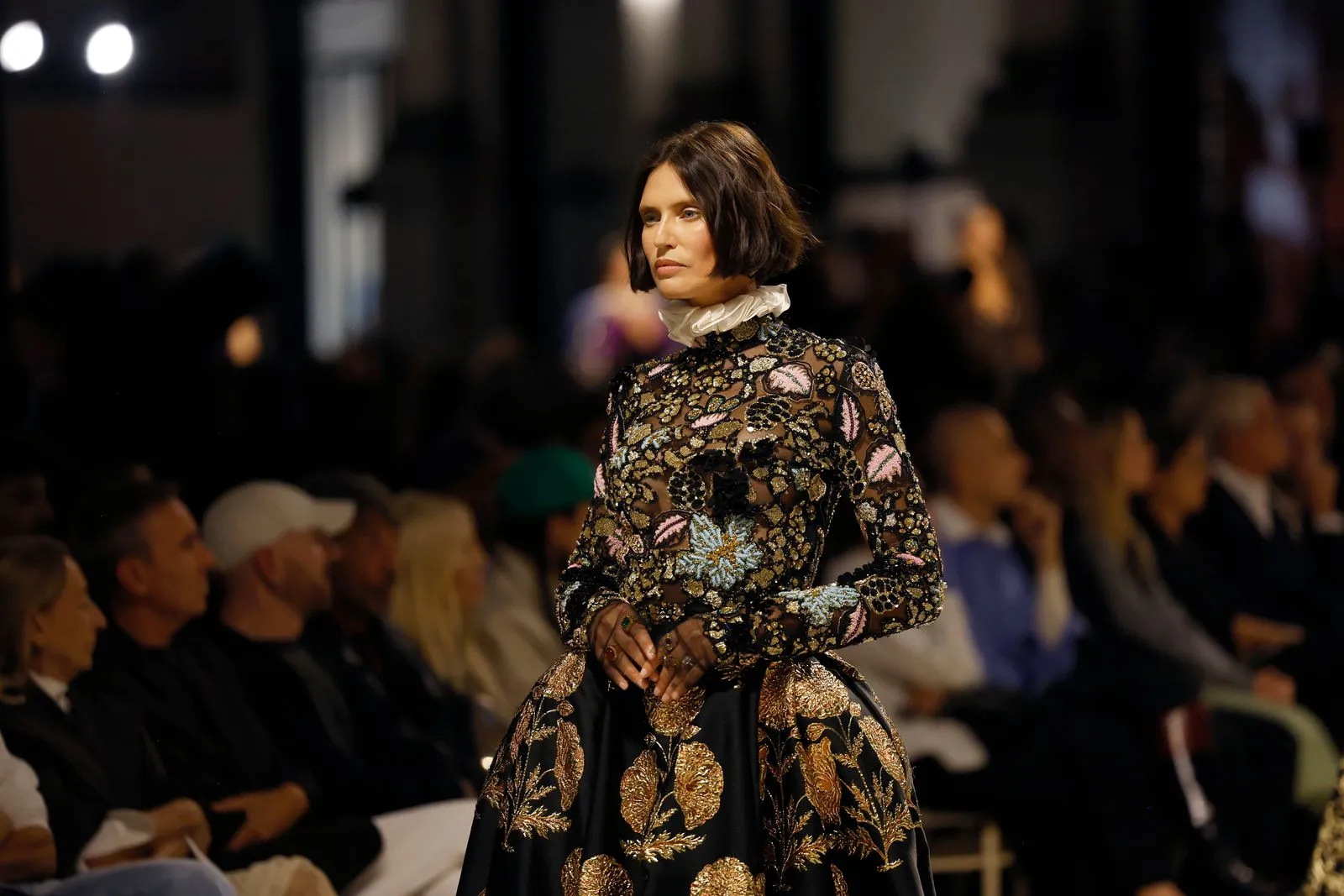
Hair looks spanned the spectrum, with naturally curly and frizzy locks alternating with sections of hair artfully styled and braided using gels and pastes to evoke the rich craftsmanship of the period.
While Renaissance women typically kept their hair long, bobs were also in the mix—as seen on Bianca Balti—leaning into the more artful masculine look of the time. For the shorter styles, hair was formed into bell-shapes with soft, fluffy curls.
A perfect fusion of history and contemporary style came in the form of a long, rigid “horseshoe” braid that started at the nape of the neck, tracing an arrow-like shape decorated with black ribbons down the shoulders. It created an almost embossed detail along the lengths.
This article was originally published on Vogue.com.
- Sam Claflin Walks the Vogue World 2026: Milano Runway in a Piece of Fashion (and Hollywood) History
- In a Crop Top and Beaded Skirt, Hunter Schafer Brought ’90s Cool Girl Vibes to Vogue World 2026: Milano
- Alicia Keys Closes Out Vogue World 2026: Milano in a Hand-Painted Dress by Francesco Risso
- Gigi Hadid Is a Renaissance Princess in Valentino Haute Couture at Vogue World 2026