
“Creativity Is an Economic Asset”: Unlocking the Creator Economy


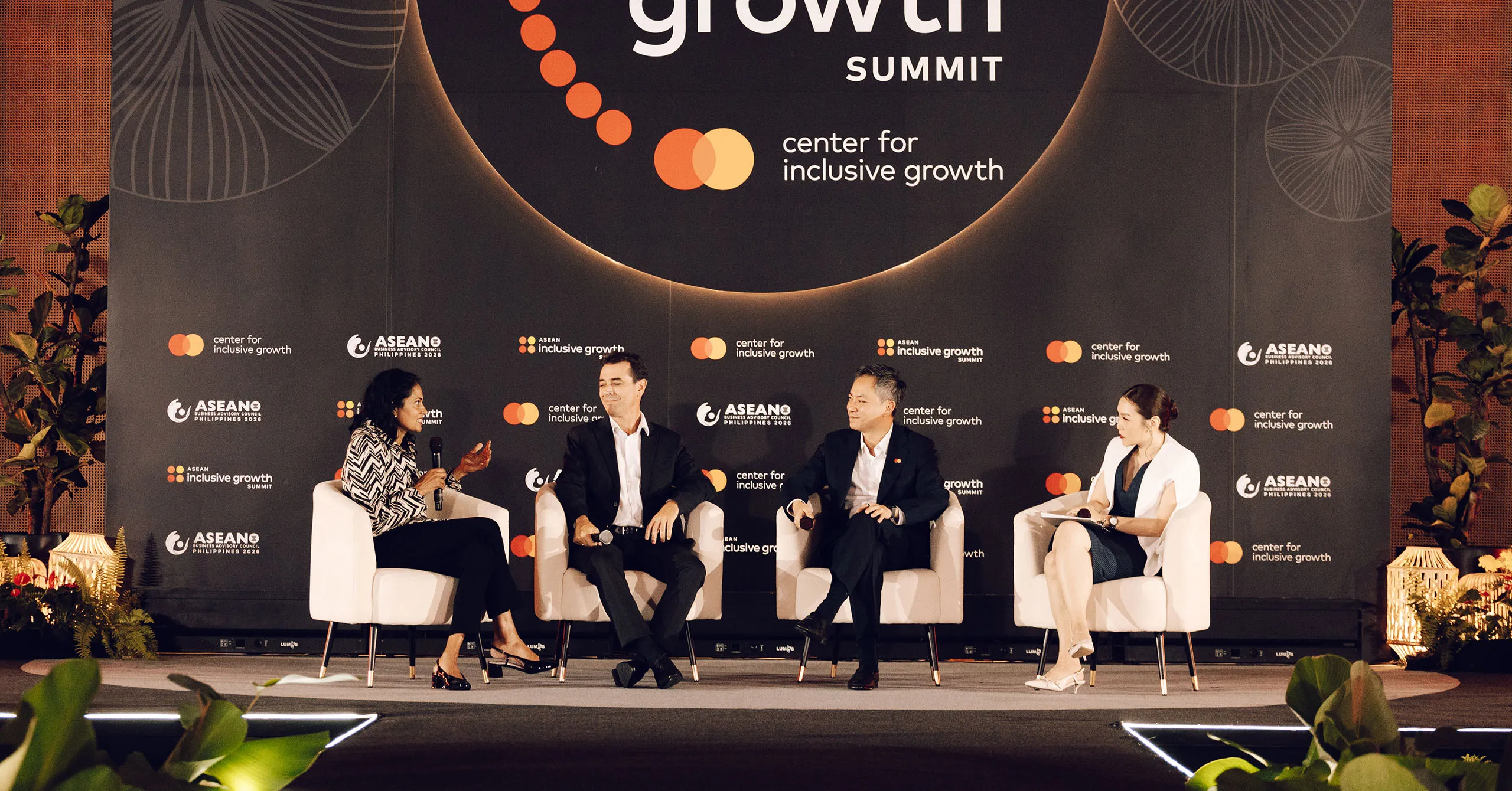
Gargee Ghosh, Wolfgang Fengler, Donald Ong, and Chanida Klyphun. Photographed by Excel Panlaque
Gargee Ghosh, Wolfgang Fengler, Donald Ong, and Chanida Klyphun. Photographed by Excel Panlaque
A Mastercard and TikTok study presented at the ASEAN Inclusive Growth Summit examines how digital platforms are creating livelihood opportunities.
Southeast Asia’s creator economy is shifting from influencers and individual content creation to becoming a real driver of economic mobility in the region. This was the message shared at a panel at the recent 2026 ASEAN Inclusive Growth Summit, joined by TikTok’s director of public policy in Southeast Asia Chanida Klyphun, Mastercard division president Donald Ong, and World Data Lab CEO Wolfgang Fengler, and moderated by Gargee Ghosh, a senior advisor for the Mastercard Center for Inclusive Growth.
Engler highlighted findings from research with Mastercard and TikTok showing how platforms can be inclusive and empowering for creators. With over 300 million people representing the lower-income half of ASEAN’s population, digital and financial inclusion provides new entry points into the economy, increasingly on platforms like TikTok.
Klyphun shared that TikTok connects over 460 million users and supports more than 20 million businesses across Southeast Asia with integrated e-commerce features like TikTok Shop. “The creator economy is a pathway to entrepreneurship, especially for young people,” she notes. “TikTok has become a place where one single idea can turn into a business. Creators can turn their content into a full-time career.” In Malaysia alone, the ecosystem of creators, sellers, and businesses has generated more than 147,000 jobs.
While smartphones allow creators from Chiang Mai to Sapa to build global audiences without the traditional barriers, Ong emphasized that “virality does not translate into economic or business viability.” He observed that many creators don’t realize they are small business owners and face operational challenges like unpredictable cash flow, lack of credit, and vulnerability to fraud. Ong believes that the solution is basic small-business infrastructure: a business bank account, cross-border payments, data-driven credit, insights, and security. Beyond that, agentic AI could take on admin work like handling inventory and cash flow, which is the idea behind Mastercard’s Virtual CFO for Small and Medium Businesses.
TikTok is also focusing on developing skills for long-term business resilience, partnering with a university in Indonesia to launch a live-commerce course teaching creators narrative storytelling, audience engagement, and media and financial literacy. “Ultimately, we want them to not only be successful creators, but sustainable entrepreneurs,” Klyphun said.
On the role of policy and the government, Klyphun called for investment in digital skills, plus establishing supportive regulations that protect users while leaving room for innovation, given that each market is at a different stage. As a final thought, Ong proposed a new yardstick for success: “We shouldn’t measure success based on how many individual creators go viral. We should measure success based on how many millions of creators can participate with confidence,” meaning they can secure reliable payments, protect their businesses, and build sustainable livelihood over the long term. “In Southeast Asia, the creator economy already exists,” Ong said. “The opportunity now is to unleash its potential.”
Frequently Asked Questions
The creator economy is a digital ecosystem where independent creators, such as social media influencers, bloggers, content creators, and streamers, build a career by sharing content, products, or services across online platforms.
Recent research from Mastercard and TikTok show how platforms can be inclusive and empowering for creators. Chanida Klyphun, TikTok’s director of public policy in Southeast Asia, shared that TikTok connects over 460 million users and supports more than 20 million businesses across Southeast Asia with integrated e-commerce features like TikTok Shop.
The ASEAN Inclusive Growth Summit is a regional gathering of leaders from business, government, civil society, and philanthropy focused on expanding shared economic opportunity across Southeast Asia.
The 2026 ASEAN Inclusive Growth Summit was held on November 11, 2026, at Shangri-La The Fort in Metro Manila. Key speakers included actress and humanitarian Angelina Jolie, actress and singer Lea Salonga, actress and entrepreneur Kylie Verzosa, and SM Investments Corporation’s Teresita “Tessie” Sy-Coson.
The discussion “The creator economy in Asia: Realizing the opportunity” held at the 2026 ASEAN Inclusive Growth Summit was joined by TikTok’s director of public policy in Southeast Asia Chanida Klyphun, Mastercard division president Donald Ong, and World Data Lab CEO Wolfgang Fengler, and moderated by Gargee Ghosh, a senior advisor for the Mastercard Center for Inclusive Growth.
- Angelina Jolie in Manila: “It’s Not a Sacrifice to Live a Life for Others”
- Tessie Sy-Coson: Small Businesses Are the Way to Go in Tough Economy
- How Filipino Designers Can Turn Global Recognition into Greater Economic Value
- Renewal and Reinvention In Saudi Arabia: Exploring the 2024 Diriyah Contemporary Art Biennale