
How Filipino Designers Can Turn Global Recognition into Greater Economic Value


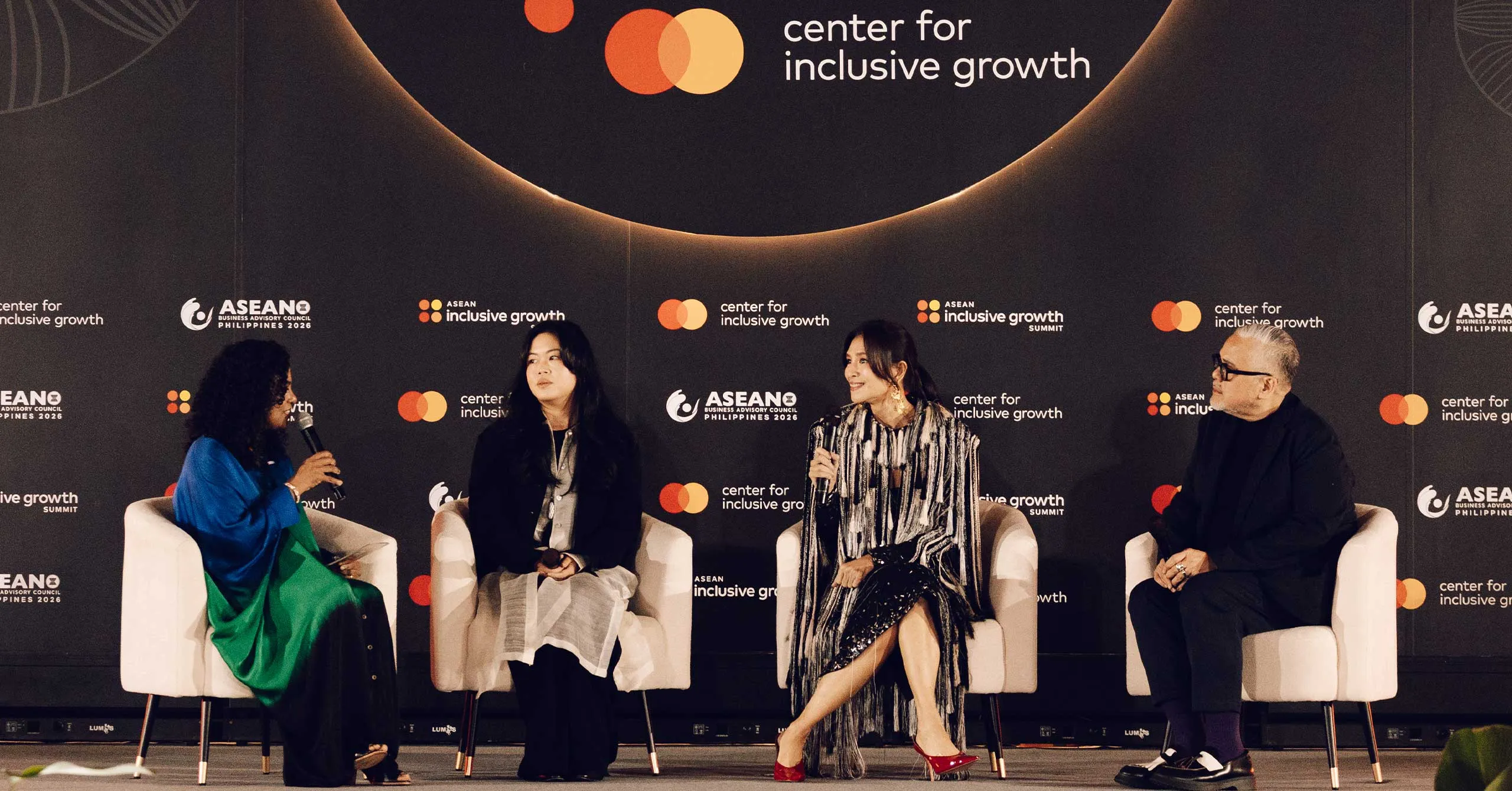
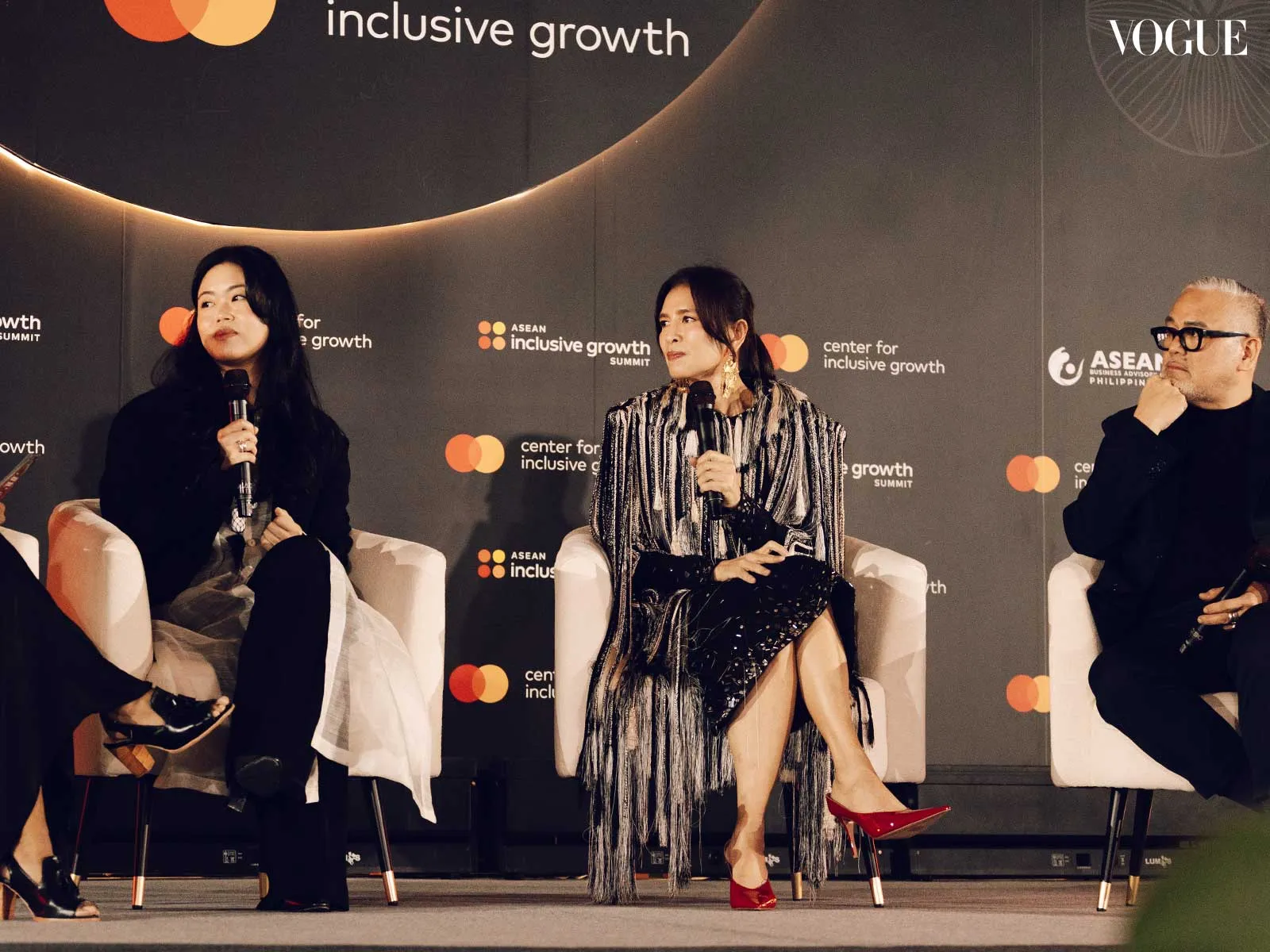
Mastercard’s Subhashini Chandran, Idyllic Summers founder and creative director Steffi Cua, Vogue Philippines editor-in-chief Trickie Lopa, and designer Rajo Laurel. Photographed by Excel Panlaque
Vogue Philippines editor-in-chief Trickie Lopa. Photographed by Excel Panlaque
At the 2026 ASEAN Inclusive Growth Summit, Rajo Laurel, Trickie Lopa, and Steffi Cua discuss the role of craftsmanship, collaboration, and business in supporting local artisans and creative communities.
Filipino design is gaining global visibility, but recognition does not guarantee that its creators benefit. The challenge is getting more value back to the people behind the work.
This was the central question of “The RunwayRunwayThe platform or catwalk on which models present a designer's collection to an audience of editors, buyers, and guests. Runway shows establish the creative statement of a season, and Vogue'sGo to Runway Glossary to Inclusive Growth,” a panel featuring fashion designers Rajo Laurel and Steffi Cua, and Vogue Philippines editor-in-chief Trickie Lopa. Moderated by Subhashini Chandran of the Mastercard Center for Inclusive Growth, the discussion explored how Filipino design can build a more equitable creative economy.
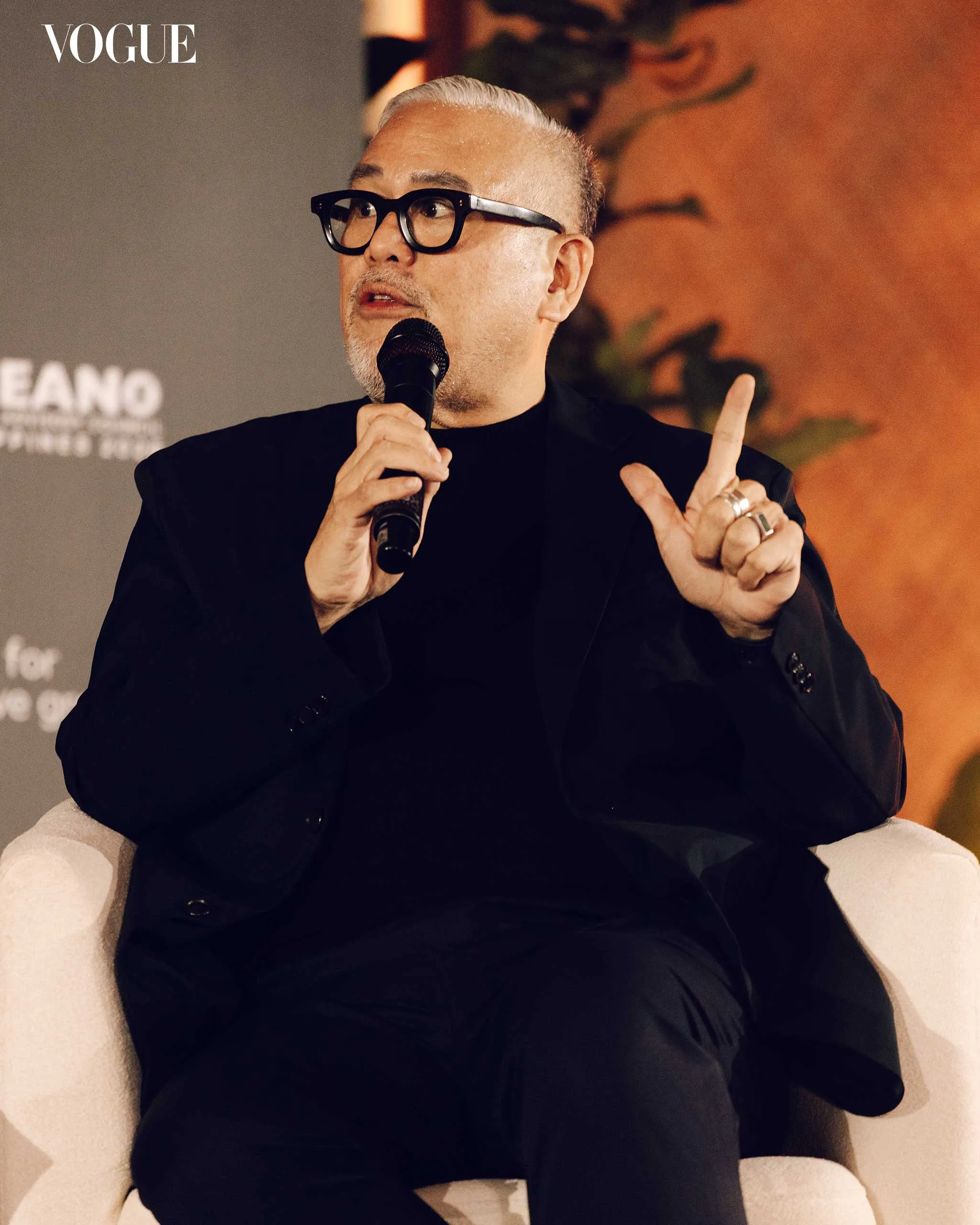
For Laurel, who has spent 33 years in fashion, one of the biggest changes has been access. Social media and new platforms have made it easier for designers to connect with artisans.
“Unlike before, when I was starting, I would have to take a bus, take a boat, talk to these weavers, talk to these makers,” he recalled. Today, designers can connect with craftspeople more easily, exchange ideas, and bring traditional techniques into contemporary design. The goal is to modernize traditional crafts without losing their identity.
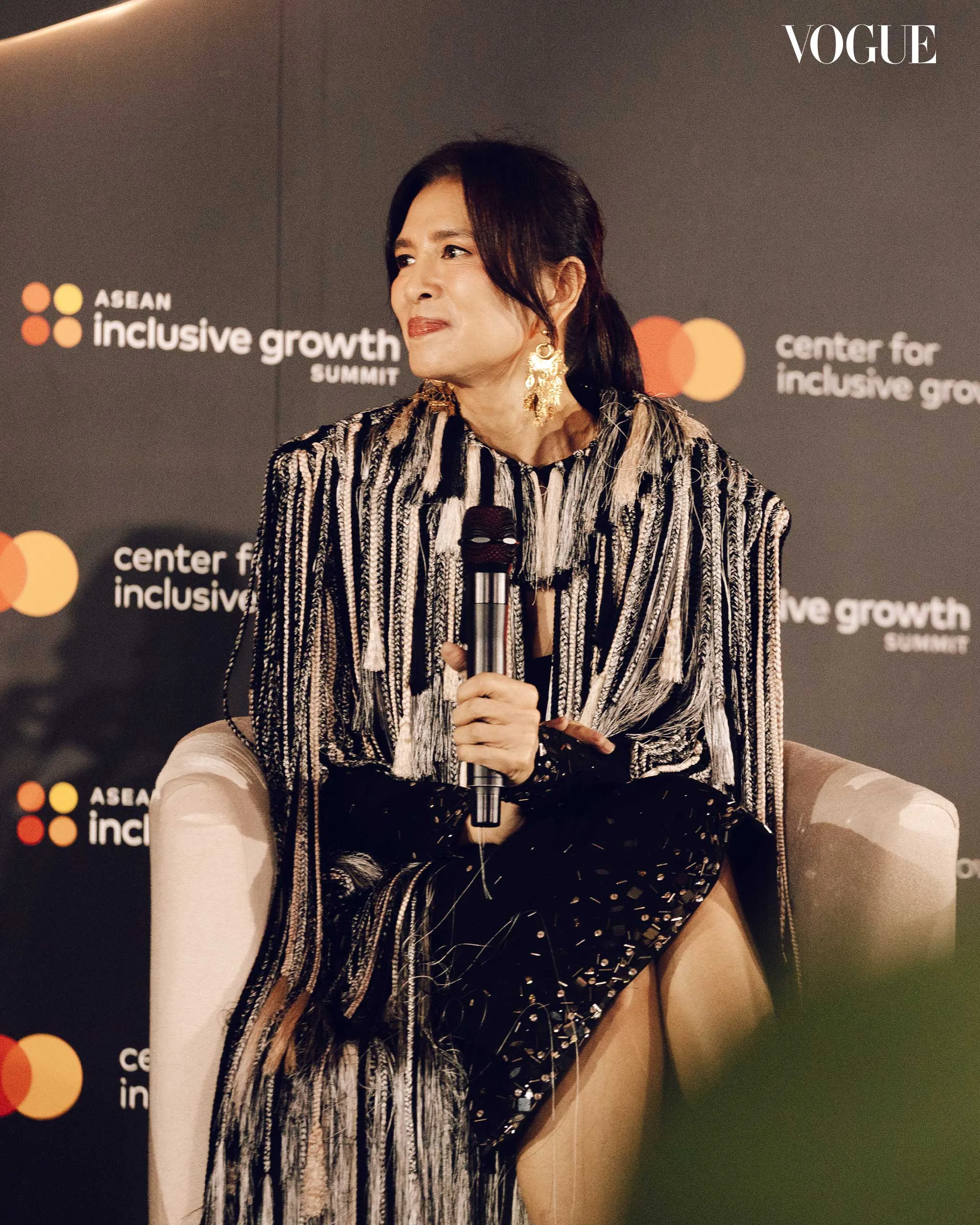
Lopa sees a shift in how Filipino designers are developing their identities. Rather than seeking validation from abroad or following international trends, emerging creatives are drawing inspiration from their own culture, history, and everyday experiences.
“Filipino creativity is going upward and onward, but with authenticity,” she said. “It’s very heartening to see emerging Filipino designers find their own voice, tell their own stories, look back at our culture, our own history, in putting together their collections.” Audiences abroad are responding to distinctly Filipino work and references to everyday local life. Filipino fashion, she said, is moving forward on its own terms.
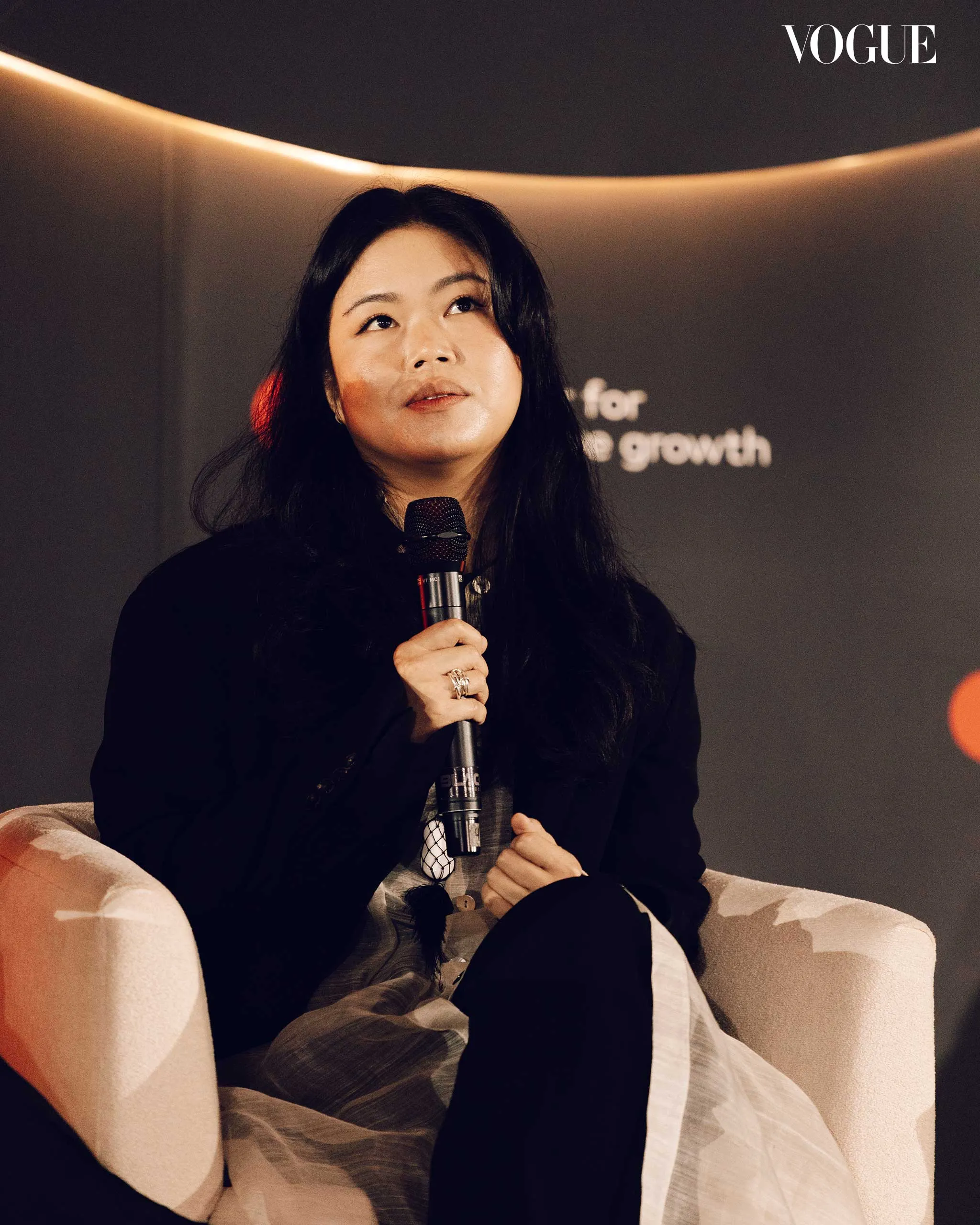
But visibility must translate into tangible benefits for the people producing the work. Cua’s approach at her label Idyllic Summers offers one model. The brand works with artists, artisans, and clothing manufacturers, giving artists access to a wider market beyond the traditional art world. Artisans are credited on the brand’s social media platforms and garment tags. Crediting artisans gives them pride in their work, while continued partnerships provide manufacturers another source of income.
Working with artisans also requires a different understanding of time and production. Having experienced the luxury buying system in London, Cua sees a contrast between its established fashion calendar and the more personal way she works with Filipino makers. She works closely with manufacturers and artisans in Cavite, rather than simply sending orders with fixed quantities and deadlines.
“It’s a more empathic way of working rather than a business-to-business approach,” she said. Working outside the conventional fashion calendar is not a disadvantage; it recognizes artisans as people with their own rhythms.
Lopa acknowledged that caring about craftsmanship and preserving cultural traditions can be a privilege in a country where affordability remains a major consideration. Fast fashion exists partly because it offers accessible price points. Still, those who can afford more considered purchases have a responsibility to understand where their clothes come from and how they are made.
Stories about garments and their makers can help consumers appreciate craftsmanship. The larger goal is a society where people do not have to choose between affordability and responsible consumption.
The panel also examined the business realities of creative entrepreneurship. As his company grew, Laurel had to relinquish some of the personal involvement he once enjoyed, including direct client relationships. A stickler for details, he found it difficult to delegate, but learned to trust his team.
Financial stability is equally important. It allows designers to pay employees and focus on creating.
Laurel believes Filipino designers have an advantage in their resourcefulness. While international fashion houses have extensive supply chains, specialized machinery, and fabric suppliers, Filipino creatives have learned to work with limited resources.
“We are the best designers on the planet because we can create with nothing,” he declared. The Filipino advantage, he said, lies in craftsmanship, ingenuity, and work made by hand. Rather than compete with fast fashionFast FashionFast fashion refers to inexpensive, rapidly produced clothing designed to quickly replicate runway trends, prioritizing speed and volume over durability or ethical production standards. Its rise has prompted growing FilipinoGo to Fast Fashion Glossary’s volume-driven model, designers should embrace what makes their work distinctive.
But creativity must be matched by commercial competence. Designers must understand pricing, finances, payroll, and the demands of running a business, Laurel said. “If it doesn’t sell, then you’re back to zero.”
Lopa drew from her experience with Art Fair Philippines to illustrate how creative industries can grow. The platform created opportunities for artists to earn and stimulated an ecosystem of galleries, auction houses, museums, storage facilities, and logistics providers. No single organization can solve every problem; the key is to identify where one can make a difference and do it well.
Asked what business leaders, policymakers, investors, and philanthropists could do in the next 12 months, Cua encouraged them to spend time with artists and artisans, visit their communities, and understand their work. Lopa called for mentorships, exchanges, residencies, and workshops that expose Filipino creatives to global expertise.
Laurel had a direct appeal to consumers and business leaders: “If ever you’re going to either think about buying imported or buying Filipino, please buy Filipino.”
Global luxury conglomerates do not need Filipino consumers in the way local creative communities do, Laurel said. Spending on Filipino designers and artists supports livelihoods, strengthens the local economy, and boosts the morale of the creative sector.
The discussion ultimately returned to a central question: How can the growing global interest in Filipino design translate into more opportunities for the people who create it? For the panelists, the answers lie in stronger markets, sustained collaboration, business support, and a greater willingness among Filipinos to invest in homegrown talent.
Frequently Asked Questions
Rajo Laurel is one of the Philippines’ leading fashion designers. He heads Rajo Laurel Enterprises and House of Laurel, and is known for combining contemporary design with Filipino craftsmanship and artisanal techniques.
Trickie Lopa is the editor-in-chief of Vogue Philippines and a cultural entrepreneur with more than two decades of experience in the creative industries. She cofounded Art Fair Philippines, Art in the Park, and PHx Fashion Group, an initiative that helps emerging Filipino designers develop their businesses and compete in international markets.
Steffi Cua is the founder and creative director of Idyllic Summers, a Manila-based womenswear label established in 2021. The brand works with Filipino artisans and indigenous communities, incorporating handloom textiles, traditional embroidery, botanical eco-printing, and other craft techniques into contemporary fashion.
The 2026 ASEAN Inclusive Growth Summit was a regional gathering organized by the Mastercard Center for Inclusive Growth in partnership with the ASEAN Business Advisory Council Philippines. Held in Manila on November 11, 2026, it brought together leaders from business, government, civil society, and philanthropy to discuss ways to advance inclusive and sustainable economic growth across Southeast Asia.
The Mastercard Center for Inclusive Growth is Mastercard’s social impact organization, focused on advancing equitable and sustainable economic growth and financial inclusion. It supports research, partnerships, and programs that help individuals, small businesses, and communities participate in the economy.