
We Are Here: Filipino Artists at Asia Now Paris Explore Shared Histories and New Horizons


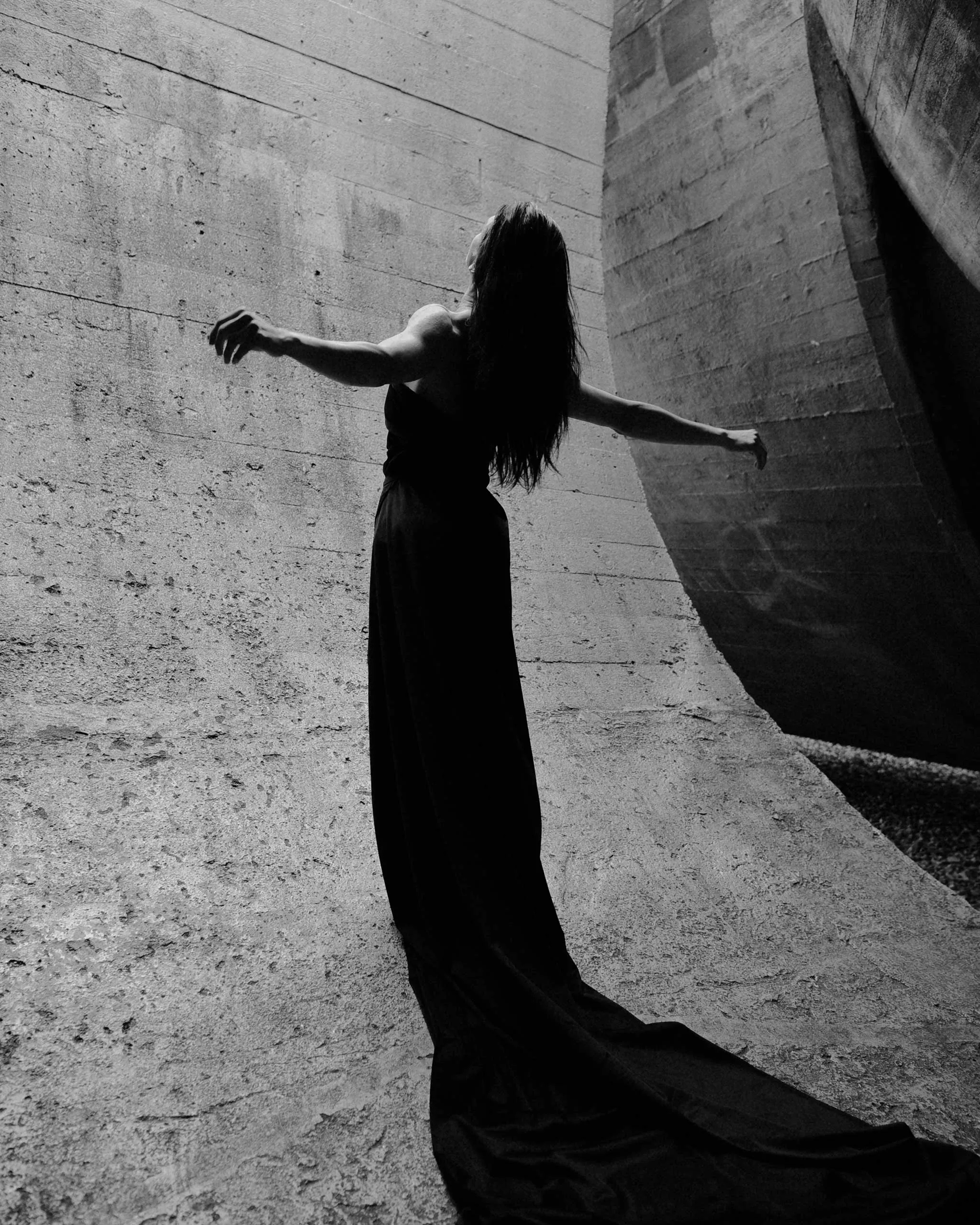
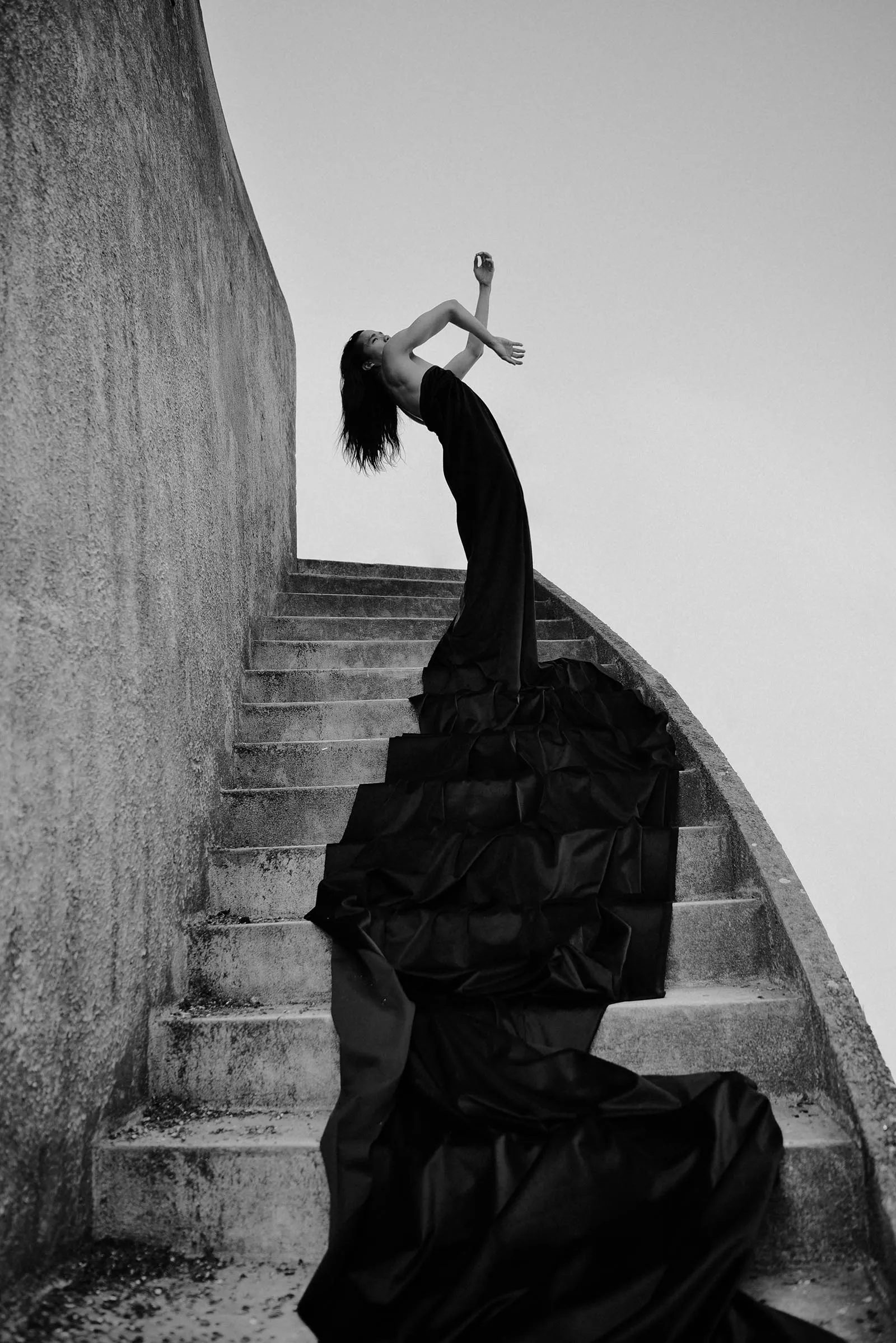
Photo by Nadja Fedorova, courtesy of Alvin Collantes
Jon Cuyson, Pam Yan Santos, Alvin Collantes, and Bianca Carague redefine what it means to carry home across borders.
Filipino artists had their strongest presence yet at this year’s Asia Now Paris, with Jon Cuyson, Pam Yan Santos, Alvin Collantes, and Bianca Carague presenting their work at the 12th edition of the fair. Held at the Monnaie de Paris in October, the fair brought together more than 70 galleries and presentations exploring contemporary art from Asia and its global diasporas.
Founded by Alexandara Fain in 2015, Asia Now selected the Filipino artists and galleries for the ways their practices engage with memory, belonging, and labor, questions that are at the heart of the fair’s theme, Sentimental Value. “The Filipino artists bring very different perspectives to these questions. Together, they open up a conversation about what it means to be Filipino today, how the past continues to shape the present, and how we imagine the future,” she says.
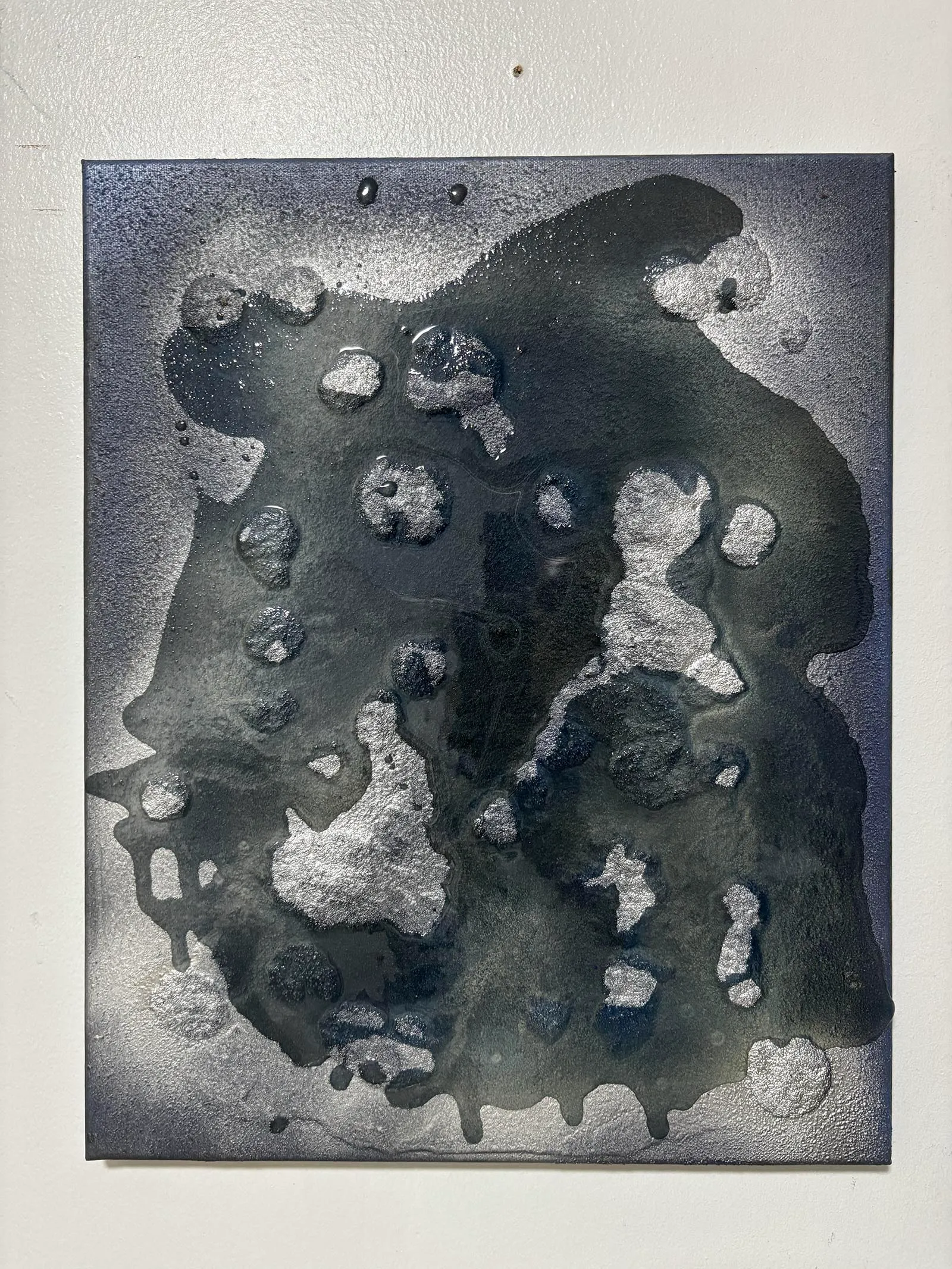
Cuyson, with curator Mara Gladstone, represented the Philippines at this year’s Venice Biennale. The pavilion Sea of Love honored the labor of Filipino seafarers through an environment of large-scale paintings, moving images, and sculptural elements. In Paris, Cuyson showed with Tala Chicago, a young gallery founded and directed by Francine Almeda.
Almeda sees the Paris presentation as an extension of the Philippine Pavilion, which is nearing the end of its run, translating the ideas of Sea of Love into a more intimate register. Smaller paintings and objects evoke windows and fragments of vessels, while the mussel, a familiar character-collaborator in his film Sea of Echoes about mussel farms in Cavite, makes a return.
“The works at Asia Now abstract the materialities of Jon’s relationship with mussels as a metaphor and the sea as a queer landscape with capacity for both longing and compassion,” says Almeda.
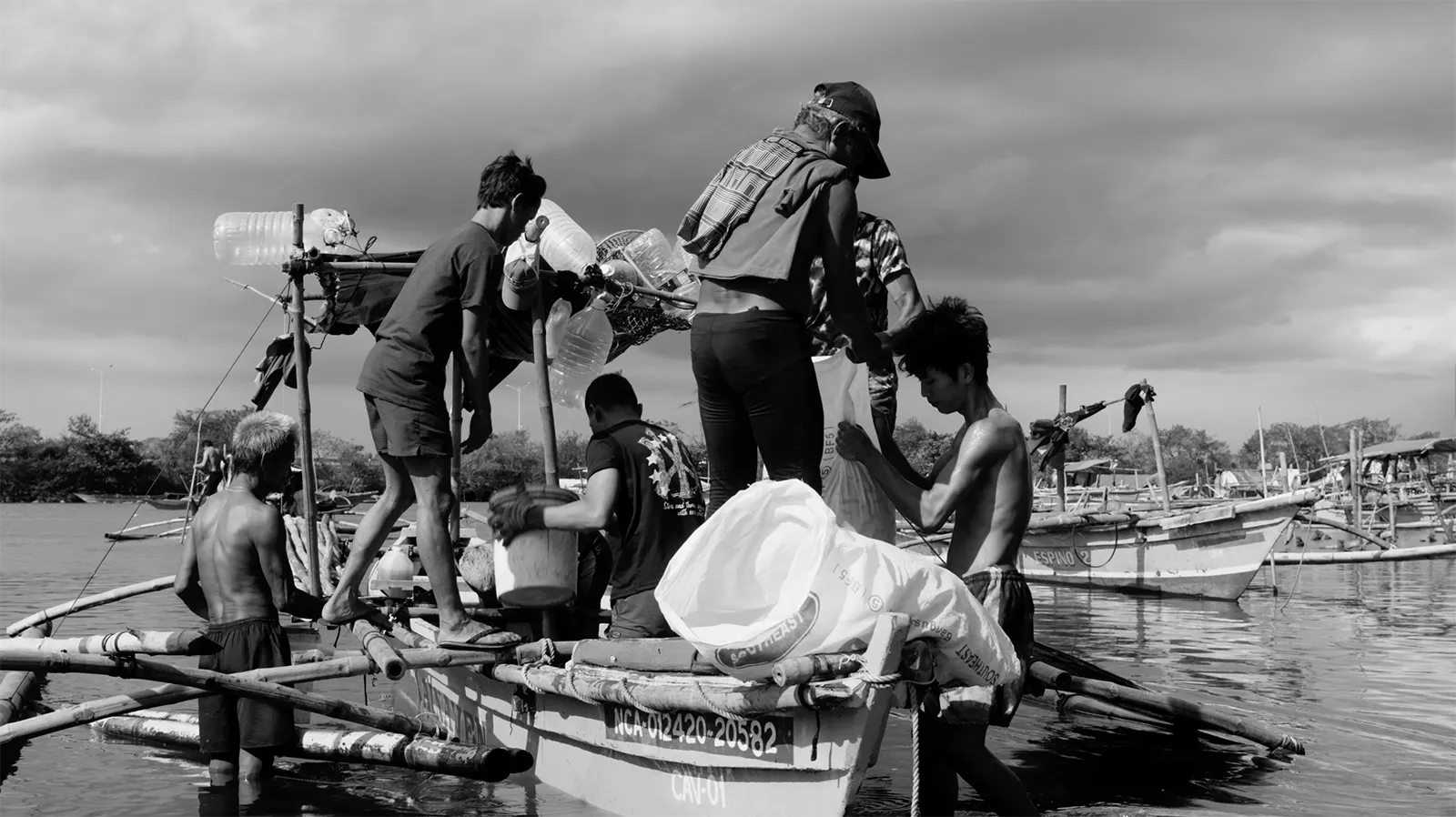
Gladstone, reflecting on the European journey of Cuyson’s work, says she has been humbled and buoyed by the kapwa in the European diaspora. “This is a major part of the story that Sea of Love shares, tracing the sprawling networks of kinship across oceans. To see this reflected in the creative community of dealers, artists, scholars, collectors and audiences is not only affirming—it is performing a distinctly Filipino culture of care as a site of power.” Almeda finds the same spirit in the work of her gallery, calling the project “a collective act of care.”
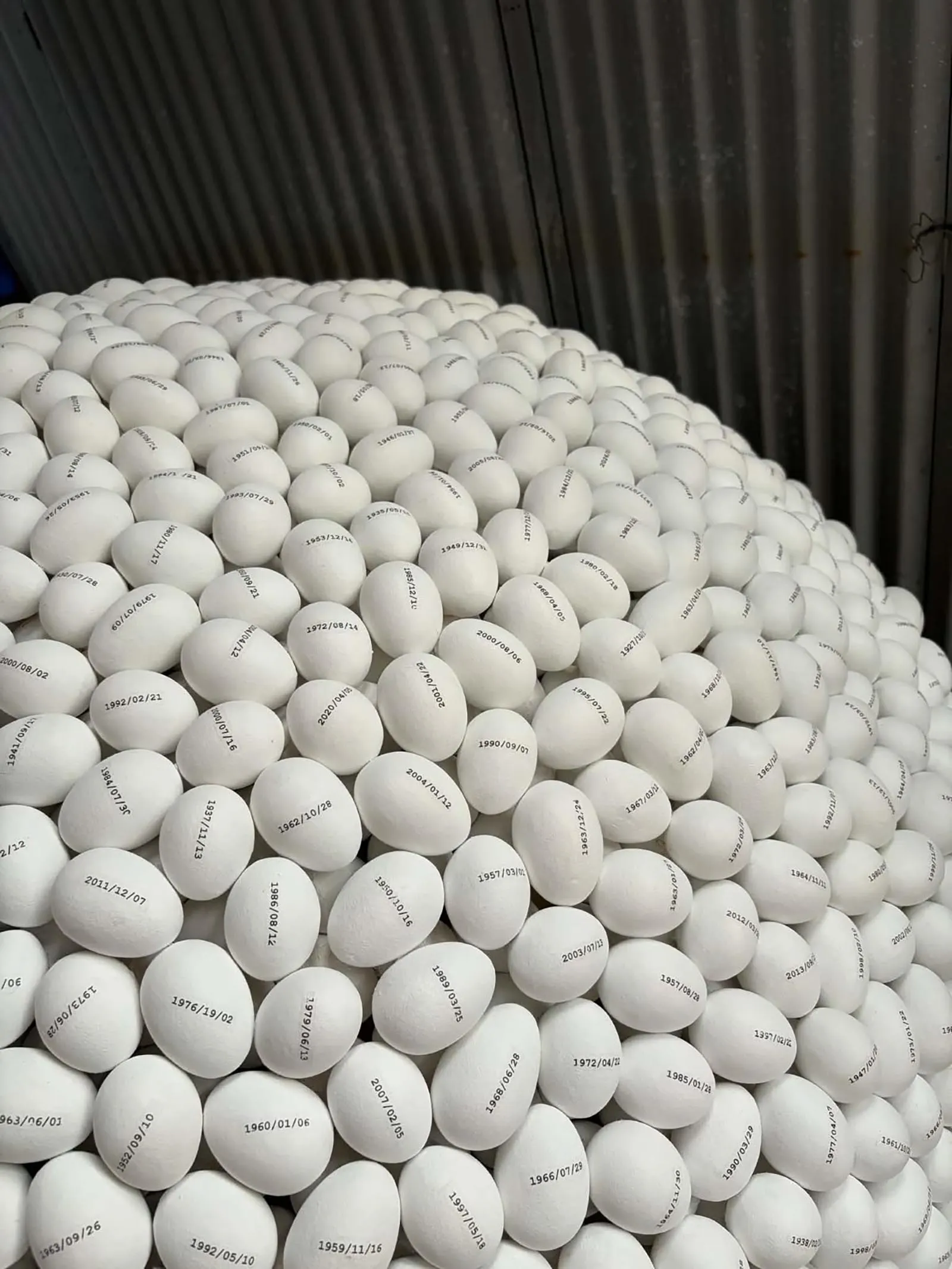
The other artists at the fair interrogated issues of identity through distinct disciplines and perspectives. Santos’s exhibition You Are Here, presented by The Drawing Room, centers on a five-foot globe covered in resin eggs, each bearing a different birth date. Together, the eggs form a delicate barrier that mirrors the fragility of human existence.
In the realm of performance, Collantes turns drag into an artistic practice. His piece Bibingka, which shifts between OPM love songs, drag ritual, and contemporary dance, delves into the parallels between Filipino migrant care workers and drag performers. In Bibingka, drag emerges as an act of resilience, joy transforms into labor, with the artist embodying both spectacle and memory.
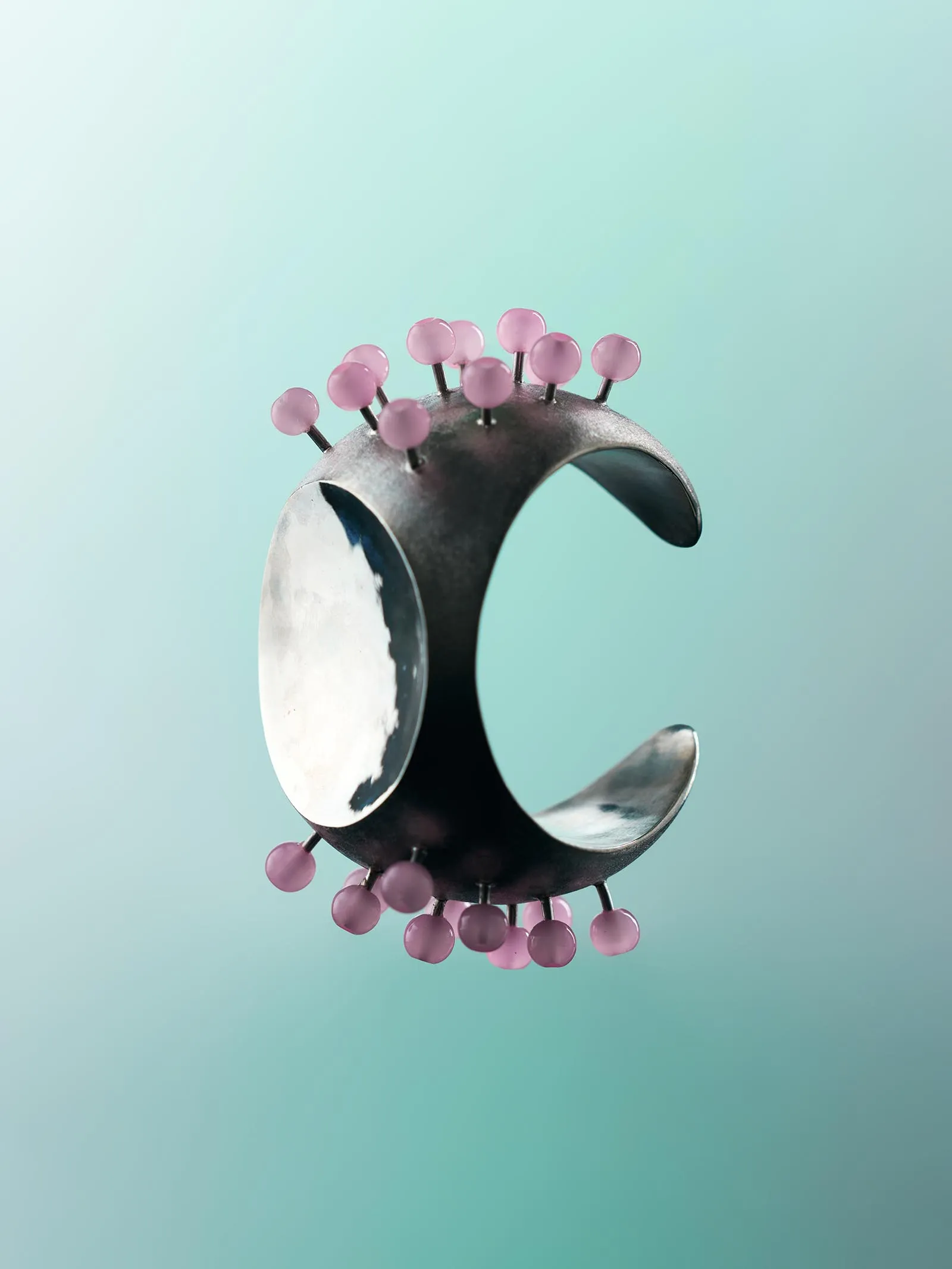
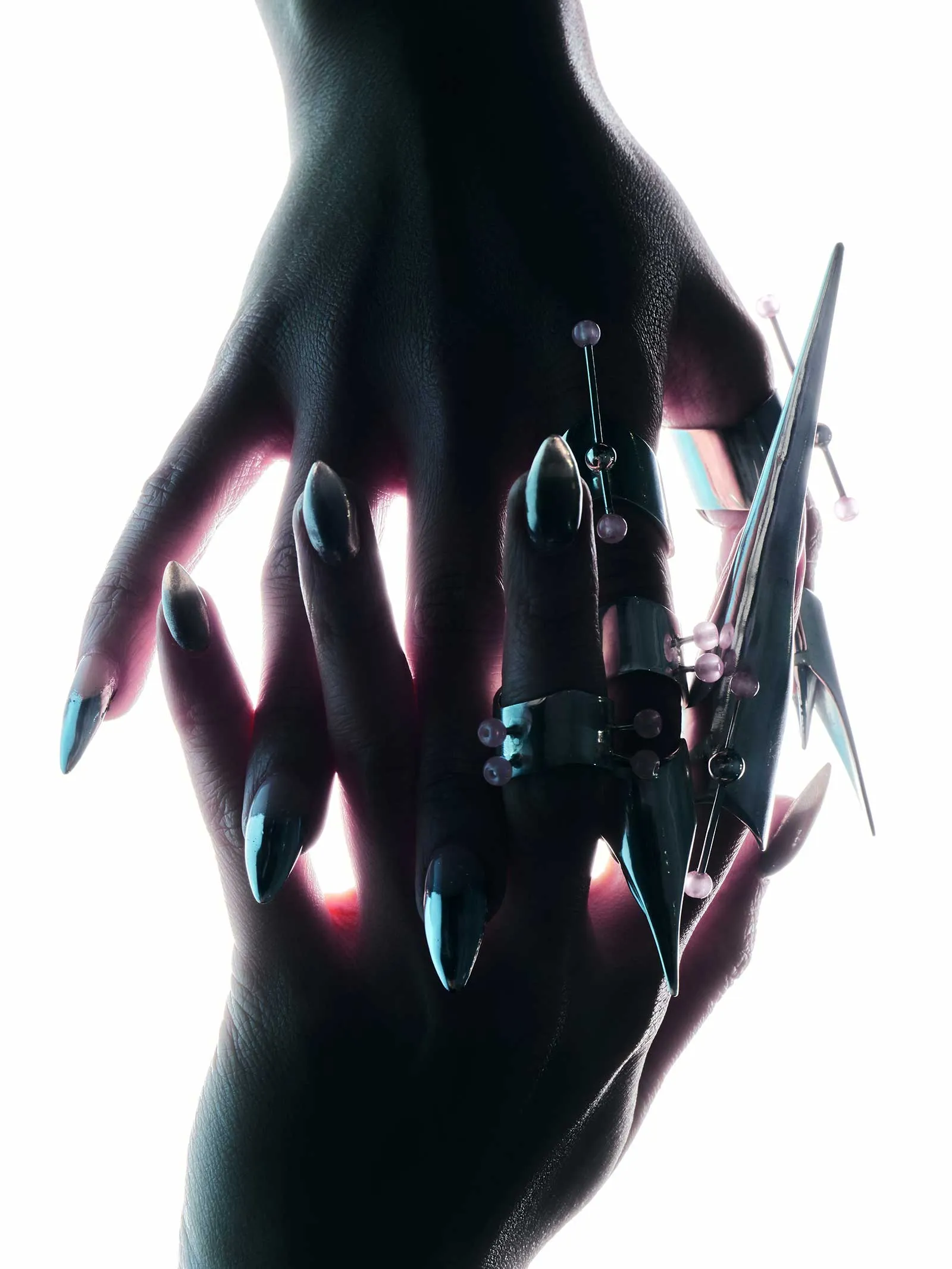
Moving into speculative territory, artist Carague looks to the traditional practice of kamayan to imagine future forms of togetherness. A video installation from her series Technospoonism, presented by 125 Projects, conceives of a jewelryJewelryDecorative adornments worn on the body, from fine pieces in gold, diamonds, and pearls to fashion jewelry made of accessible materials. Jewelry completes an outfit and often holds sentimental orGo to Jewelry Glossary collection that also functions as cutlery, worn as an extension of the body.
Rather than containing the Filipino identity within a single narrative, Carague emphasizes the importance of plurality. “Our experiences are so varied, shaped by our histories across geographies, and different environments. I think there’s something powerful about bringing these perspectives onto an international stage without feeling the need to make them immediately familiar or understandable to everyone else.” Rather than only looking back at what defines us, Carague uses where we come from as a starting point.
When Fain first established Asia Now, the aim was to bring greater visibility to artists who were underrepresented in Europe. Over the years, the mission has evolved into what she calls “Global Asias,” not a fixed geography, but a multiplicity of voices, histories, and connections that extend across borders and diasporas. The Philippines, with its layered colonial histories and far-reaching diasporas, offers particularly fertile ground for this conversation.
“For me, presenting art from Asia in Europe is no longer simply about bringing one cultural context into another. It is about creating encounters that challenge our existing frames of reference and allow different narratives to coexist,” Fain says. “Asia is not peripheral to the global contemporary art conversation. It is actively shaping it.”
In their varied approaches to Filipino identity, from maritime memory, migration, performance, and communal life, the artists at Asia Now offer these kinds of encounters, drawing from particular histories and experiences while opening broader questions of what we inherit, what we choose to carry forward, and what we reinvent.
Frequently Asked Questions
Asia Now is an annual contemporary art fair in Paris, France, dedicated to showcasing contemporary art, installations, and performances from Asia and its diasporas.
The Asia Now Paris Asian Art Fair is held at the Monnaie de Paris (Paris Mint), located at 11 Quai de Conti, 75006 Paris, France.
Filipino exhibiting artists this year include Alvin Collantes, Pam Yan Santos, Jon Cuyson, David Medalla, and Bianca Carague.
Asia Now was founded in 2015 by Alexandra Fain.
The theme of the 12th edition of Asia Now Paris is Sentimental Value, inviting reflection on how artworks and objects acquire meaning, emotional weight, and identity through memory, personal relationships, and human connections.