
Review: Toton Januar Brings Indonesian Craft to Fashion Week Asia


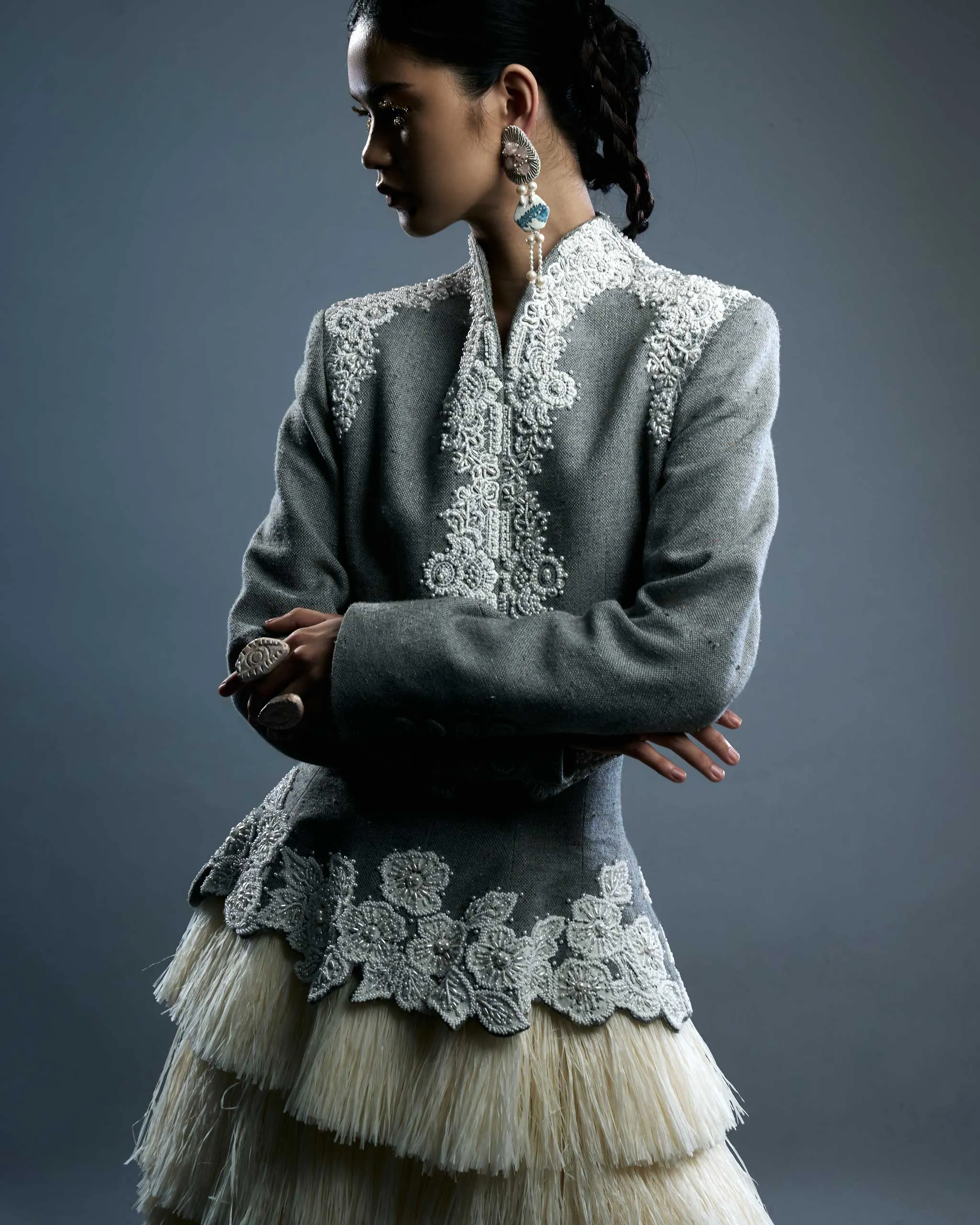
Photographed by Gab Villareal
At the inaugural event in Manila, the Indonesian designer reimagines batik, raffia, and upcycled textiles as contemporary fashion rooted in heritage.
Closing the opening day of the inaugural Fashion WeekFashion WeekA series of seasonal events where designers debut their latest collections, setting the tone for upcoming fashion trends and showcasing creativity, craftsmanship, and innovation across the global fashion industry.Go to Fashion Week Glossary Asia, Indonesian designer Toton Januar brought a 25-look edit of his annual collection to Manila’s historic Palacio de Memoria. It marked his second time in the country, the first being a whirlwind trip to hand-deliver garments for a Vogue Philippines cover shoot. Backstage, he reflected on the regional camaraderie, “We have a very warm culture in Indonesia, but here you can feel that people are embracing each other. I love that.”
Januar’s route to fashion was far from predictable. He modeled, sang in a boy band called WEBE, and briefly studied engineering to satisfy family expectations before enrolling at Parsons School of Design in New York.
While his early references leaned on Western masters like Alexander McQueen, Dries Van Noten, and Miuccia Prada, conversations with peers sparked an awakening. “We as Indonesians took things for granted. We said, ‘That’s our everyday life, that’s not fashion, that’s not something to be proud of,’” he recalls. That realization prompted him to turn inward, reclaiming Indonesian textiles, batik motifs, and regional craft to construct a contemporary vocabulary. He sought to build a brand that could “turn all of this richness and tapestry of culture into contemporary fashion.”
Although his creative thesis took shape in the early 2000s, Januar delayed launching his eponymous label until 2012 after taking time to care for his late mother. Knowing local buyers weren’t yet primed for his directional upcyclingUpcyclingThe practice of transforming discarded materials or old garments into new items of higher value and quality. Upcycling reduces waste by reusing fabric and parts, and designers use it toGo to Upcycling Glossary and heavy tailoring, he launched strategically via Singapore’s Blueprint trade platform. Stockists in Japan and the United States signed on early, building his global presence before his home market fully caught on. He later proved his commercial range through a widely sought-after capsule with Love, Bonito, translating elevated lace and tailored kebaya silhouettes for a broader audience across Southeast Asia.
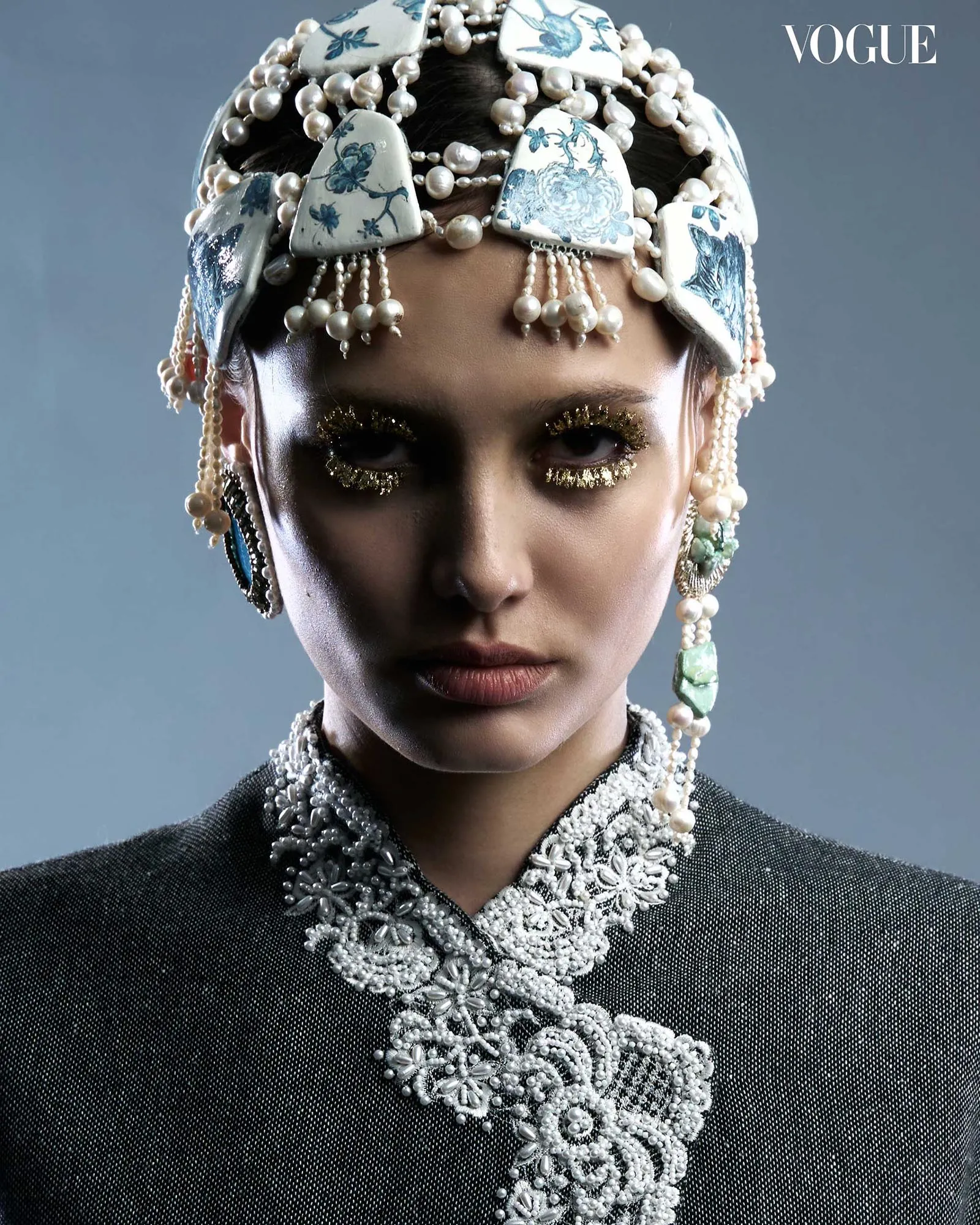
For his debut show in Manila, an edited presentation of his 2027 collection shown in Jakarta three months earlier, Januar established a deliberate tension from the opening look. Models walked with a sharp, uncompromising cadence, their faces detailed with cat-like makeup. For Januar, cats are not pets, but ancient guardians. “They’ve lived many, many lives… I want to bring that strength with me to go through all these bad things happening,” he shared backstage.
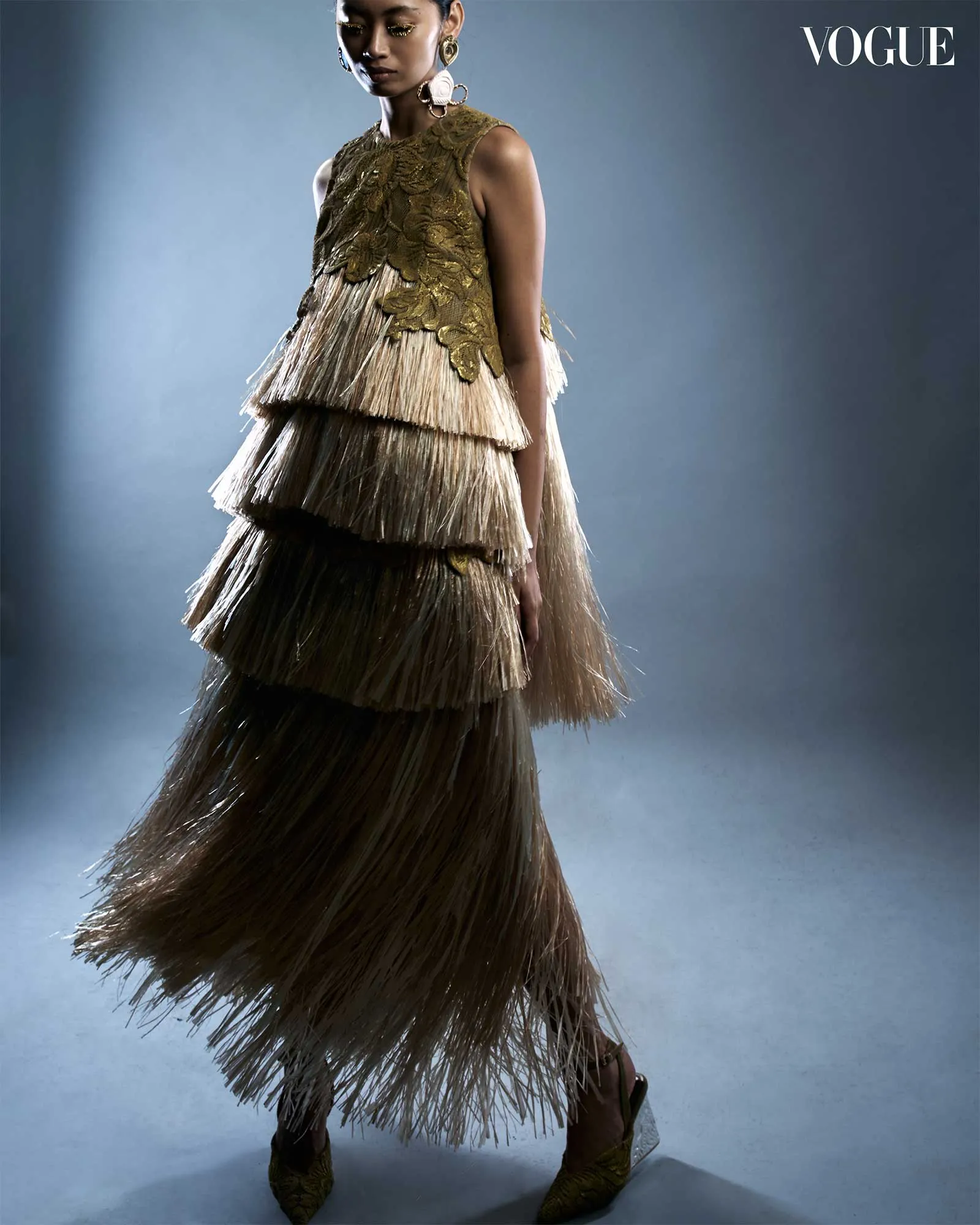
That sense of friction extended to the room itself. The dry, ASMR-like rustle of white and natural raffia—cut into tiered trousers, swinging skirts, and cocoon-like tent dresses—sliced directly through the soundtrack.
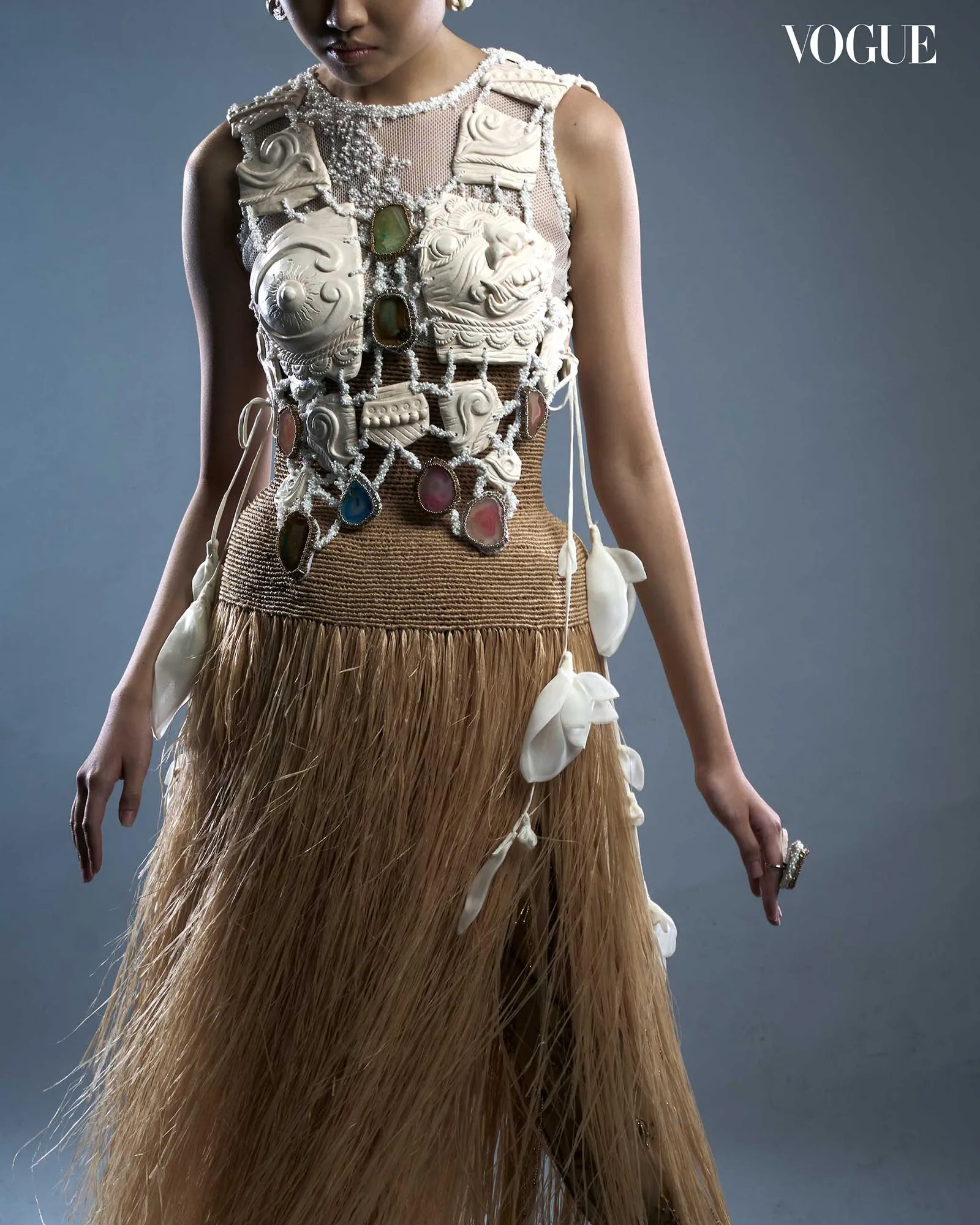
Sheer tops and tailored jackets carried delicate embroideries of the bunga telang (butterfly pea flower), a resilient botanical chosen for its ability to thrive anywhere. VintageVintageClothing and accessories from an earlier era, generally at least twenty years old, that reflect the style and craftsmanship of their time. Vintage pieces offer unique character and often superiorGo to Vintage Glossary lace tablecloths were upcycled into fitted long-sleeved shirts layered beneath visually dense corsets, a clever styling move that, when decoupled and paired simply with boyfriend jeans, turned the shirts into sharp, standalone pieces. Elsewhere, discarded window drapes and hand-sculpted ceramic brooches were deconstructed and rebuilt into raw, original embellishments.
The collection was at its strongest when playing with heavy structural contrast: an intricately embellished, armored blazer set against the light, swaying motion of a raffia skirt or fluid trousers. The tension between rigid tailoringTailoringThe craft of cutting, shaping, and sewing structured garments such as suits, blazers, and trousers to fit the body precisely. Good tailoring relies on skilled pattern work and fine finishing,Go to Tailoring Glossary and organic, rustling hemlines showcased Januar’s technical dexterity at full volume. While inherently maximalist, rich with heritage craft, layered references, and a dense mix of raw and delicate textures, the lineup avoided chaotic noise through an earthy palette, punctuated only by the vibrant blue and purple of the bunga telang.
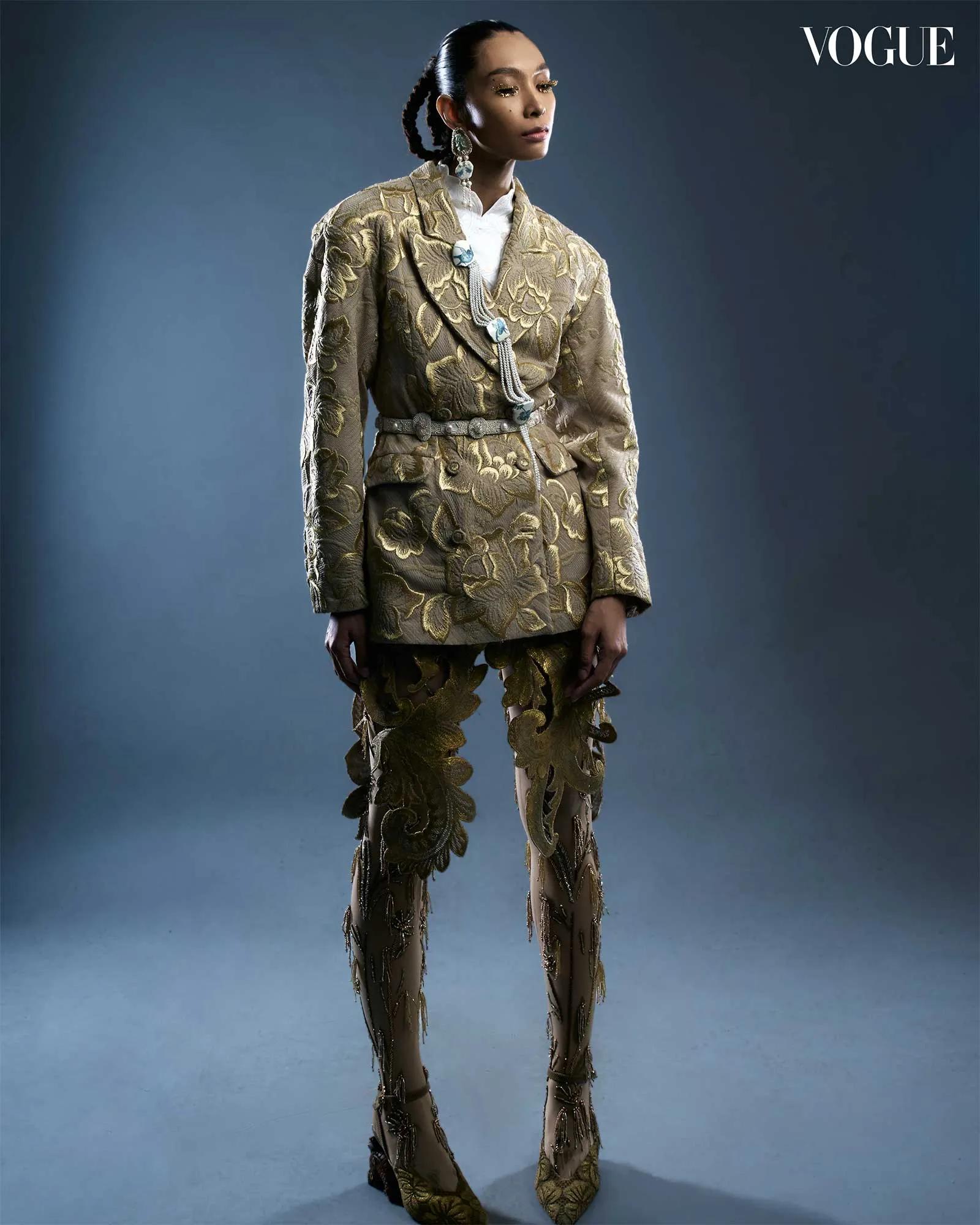
Underpinning the narrative was Batara Kala, the deity of time and destruction in Javanese and Balinese mythology. “Batara Kala represents time, chaos, and all the distractions time causes if you don’t treat it right,” Januar explained. “I’m tired of people having to accept bad things happening… If I can say something through my work, I would love to use the opportunity.”
At a time where regional identity is too often reduced to souvenir aesthetics, Januar stands out as a designer with an uncompromising point of view. His woman is proud, and wears her heritage not as a nostalgic costume, but as modern, protective armor.
Frequently Asked Questions
Toton Januar is an Indonesian fashion designer known for reinterpreting traditional Indonesian textiles, craftsmanship, and cultural heritage through contemporary fashion.
He presented an edited 25-look collection from his 2027 show in Jakarta, featuring upcycled textiles, raffia, intricate embroidery, and sculptural tailoring.
His Manila presentation was held at the historic Palacio de Memoria.
The collection drew inspiration from Batara Kala, the deity of time and destruction in Javanese and Balinese mythology, exploring themes of time, chaos, and protection.
Fashion Week Asia is an inaugural fashion event held in Manila, Philippines, from October 20 to 24, 2026, bringing together designers and creative voices from across Asia.