
Vogue Profiles: Darni Park on Creativity, His Korean Heritage, and the Art of Reinvention


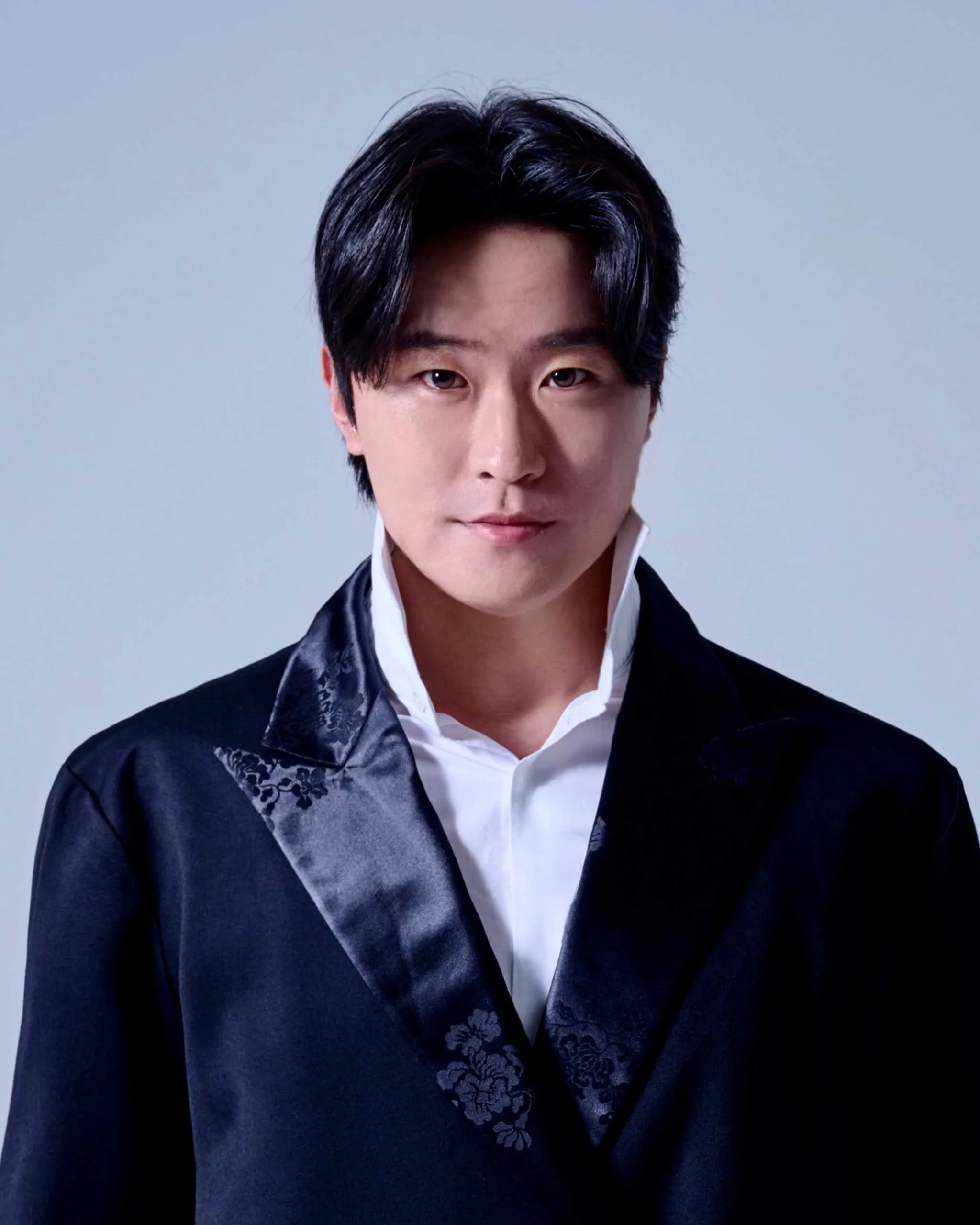
Courtesy of Fashion Week Asia
Through Bajuyo, the founder and creative director reinterprets traditional Korean garments’ silhouettes, symbols, and details for a contemporary audience.
It’s been almost a year since Darni Park showed Bajuyo’s debut collection at Busan Fashion WeekFashion WeekA series of seasonal events where designers debut their latest collections, setting the tone for upcoming fashion trends and showcasing creativity, craftsmanship, and innovation across the global fashion industry.Go to Fashion Week Glossary. Titled “EP.01 Hanbok Experiment,” the founder and creative director reinterpreted traditional contemporary tailoring, sculptural proportions, and a refined material palette. The distinctive features of hanbok, including its silhouettes, traditional embroidery, and symbolic details like the goreum, the traditional Korean garment tie, serve as inspiration for the brand.
“Rather than simply modernizing traditional clothing, we explore how Korean heritage and aesthetics can find new meaning and relevance in contemporary life and global fashion,” he says.
At the inaugural Fashion Week Asia, Bajuyo continues to connect Korea’s past and present with the collection “Tie Time: Korea.” In this collection, the goreum takes center stage. “To us, the goreum is more than a functional detail. It represents connection—the act of bringing separate elements together to create something meaningful,” he says.
For Park, Korean aesthetics possess a unique sense of restrained beauty. “They are not necessarily extravagant, yet never ordinary; quiet in expression, yet rich in intricate details,” he says. “For us, materials are more than the physical components of a garment. They are an essential design language through which we communicate culture, emotion, and heritage.”
In the interview series Vogue Profiles, we speak with Filipino creatives and cultural voices about their taste, worldview, and inner life, and learn about what informs their creative choices.
Vogue Philippines: Apart from the upcoming show, what’s capturing your attention these days?
Darni Park: Recently, I’ve been particularly interested in exploring new ways of experiencing fashion through exhibitions, spaces, and interdisciplinary collaborations. At Bajuyo, we’ve been experimenting with new exhibition formats in Korea, exploring how traditional Korean aesthetics can extend beyond garments into spatial design and artistic experiences.
I’m constantly curious about how far Korean cultural heritage can be reinterpreted and how it can communicate with audiences in unexpected ways. I’ve also been deeply involved in creating garments for K-pop artists. Working at the intersection of music, performance, and fashion has opened up exciting new possibilities for my creative practice.
What has shaped your creative eye the most?
My background in engineering has had a significant influence on the way I approach creativity. I didn’t originally study fashion. Instead, I came from a field focused on understanding structures, systems, and how different elements work together. I believe this perspective has shaped the way I design.
I’m constantly interested in connecting seemingly unrelated disciplines, combining different categories, and approaching familiar things from unfamiliar perspectives. To me, creativity isn’t always about inventing something entirely new. It’s about discovering new possibilities by connecting worlds that previously seemed separate.
How would you describe your aesthetic—not just in your work, but in the way you live?
If I had to describe my aesthetic in one word, it would be “challenge.” I’ve always lived by the philosophy of trying things rather than being afraid of the unknown. I value the process of exploring new possibilities, even when it involves uncertainty or failure.
This mindset naturally influences my design approach. Reinterpreting traditional Korean aesthetics in contemporary fashion is, in itself, an ongoing challenge to conventional boundaries and expectations.
For me, beauty doesn’t exist only in a finished creation. There is also beauty in the courage to question what is familiar, explore what is unfamiliar, and continuously move toward new possibilities.
What do you think people misunderstand about creativity?
I think people often imagine creativity as a sudden moment of inspiration, when a brilliant idea simply appears. But I don’t believe creativity works that way.
There is no such thing as a perfect idea from the beginning, and very few designs emerge fully formed. Creativity develops through countless attempts, failures, prototypes, revisions, and unexpected discoveries.
For me, creativity is less about having an extraordinary gift and more about having the persistence to keep experimenting. The most meaningful ideas often emerge not from perfection, but from the process of trying, failing, and trying again.
When do you feel most like yourself?
I feel most like myself when I’m sharing my ideas, stories, and visions with other people. There is something incredibly exciting about expressing an idea that exists only in my imagination and inviting someone else to see its possibilities.
Those moments give me confidence and genuine happiness, especially when someone connects with my vision and begins imagining something new alongside me. Perhaps that’s what design means to me. It’s not simply about making clothes. It’s a way of communicating the stories, ideas, and possibilities I believe in.
Is there a ritual or habit you return to whenever you need clarity or inspiration?
I enjoy walking through the city without a particular destination. Observing what people wear, exploring different stores, and looking at shop windows have become part of my creative routine.
I believe fashion doesn’t exist only on runways or in exhibitions. It exists most naturally in the everyday lives of people. Sometimes, a small detail on the street or an unexpected combination of garments becomes the starting point for an entirely new idea.
For me, inspiration is less about searching for something extraordinary and more about discovering something meaningful in ordinary life.
What are you saying through your work that words alone can’t express?
Through my designs, I want to give people a sense of confidence and happiness.
Traditional Korean garments carry meanings that go far beyond decoration. EmbroideryEmbroideryThe decorative stitching of designs onto fabric by hand or machine, central to Philippine formalwear. Hand embroidery from places like Lumban in Laguna and Taal in Batangas adorns barongs, ternos,Go to Embroidery Glossary and patterns once used in royal garments often symbolized happiness, prosperity, longevity, and good fortune. At Bajuyo, we reinterpret these traditional symbols and incorporate their meanings into contemporary clothing.
I want the garments we create to be more than something people simply wear. I hope the stories, values, and positive wishes embedded in each piece can become part of the wearer’s own experience.
If someone feels more confident, more expressive, or simply happier when wearing Bajuyo, then I believe my design has communicated something that words alone cannot.
Has success changed the way you create—or the way you define success itself?
I don’t think I’ve reached a point where I would call myself successful yet. I still see myself as someone who is constantly learning, experimenting, and challenging new possibilities.
In many ways, my approach to creativity hasn’t changed since I first started designing. What has changed is the scale of the opportunities and challenges in front of me.
In the beginning, turning a single idea into a physical garment felt like a major achievement. Today, I have opportunities to present those ideas on international stages and introduce them to people from different cultures.
But my motivation remains the same: to keep exploring what I am capable of creating.
To me, success isn’t necessarily about reaching a particular destination. It’s about continuously expanding the possibilities of what I can do and the challenges I’m willing to take on.
What are you learning to let go of?
I’m learning to let go of the excessive perfectionism that has often accompanied my creative process. In the past, I believed that every detail had to be absolutely perfect to achieve a meaningful result. I could become overly sensitive to even the smallest imperfections, sometimes placing unnecessary pressure on myself.
Of course, I still believe that attention to detail is essential for a designer. But over time, I’ve realized that an obsession with perfection doesn’t always lead to better creativity. Sometimes, unexpected outcomes and imperfections reveal possibilities that I would never have discovered otherwise.
I’m now trying to approach the creative process with greater freedom, flexibility, and positivity. I’m not learning to abandon perfection, but to understand that there can be more than one path toward creating something beautiful.
What kind of legacy do you hope your work leaves behind?
First, I hope my journey can inspire others to challenge the boundaries of their own backgrounds and expectations.
As someone who came from engineering rather than a traditional fashion education, I want to demonstrate that creativity doesn’t have to follow a predetermined path. With curiosity, persistence, and the courage to experiment, I believe anyone can create something meaningful.
At the same time, through Bajuyo, I hope to contribute to bringing traditional Korean and broader East Asian aesthetics into the global fashion conversation.
In an industry where trends change rapidly, I believe cultural heritage has the potential to remain relevant through continuous reinterpretation. I don’t want tradition to exist only as something preserved in the past. I want it to become a living culture—something people can wear, experience, reinterpret, and pass on to future generations.
If Bajuyo can become a bridge between Korean heritage and global contemporary fashion, inspiring new generations to embrace tradition while creating something entirely their own, that would be the most meaningful legacy I could leave behind.
Frequently Asked Questions
Bajuyo is a contemporary Korean fashion brand and “Korean Future Vintage” label led by designer Darni Park.
Its aesthetics include reworked jeogori jackets, layered skirts, and sculptural proportions that emphasize structure and craftsmanship.
The brand is known for reinterpreting Korean hanbok and menswear into modern, everyday wear.
Darni Park is the founder and creative director of Bajuyo, a Korean fashion brand.
You can buy Bajuyo directly through its official channels and special international events.