
Nathan Matthew David’s Forgotten Island Score Carries Notes of the Philippines


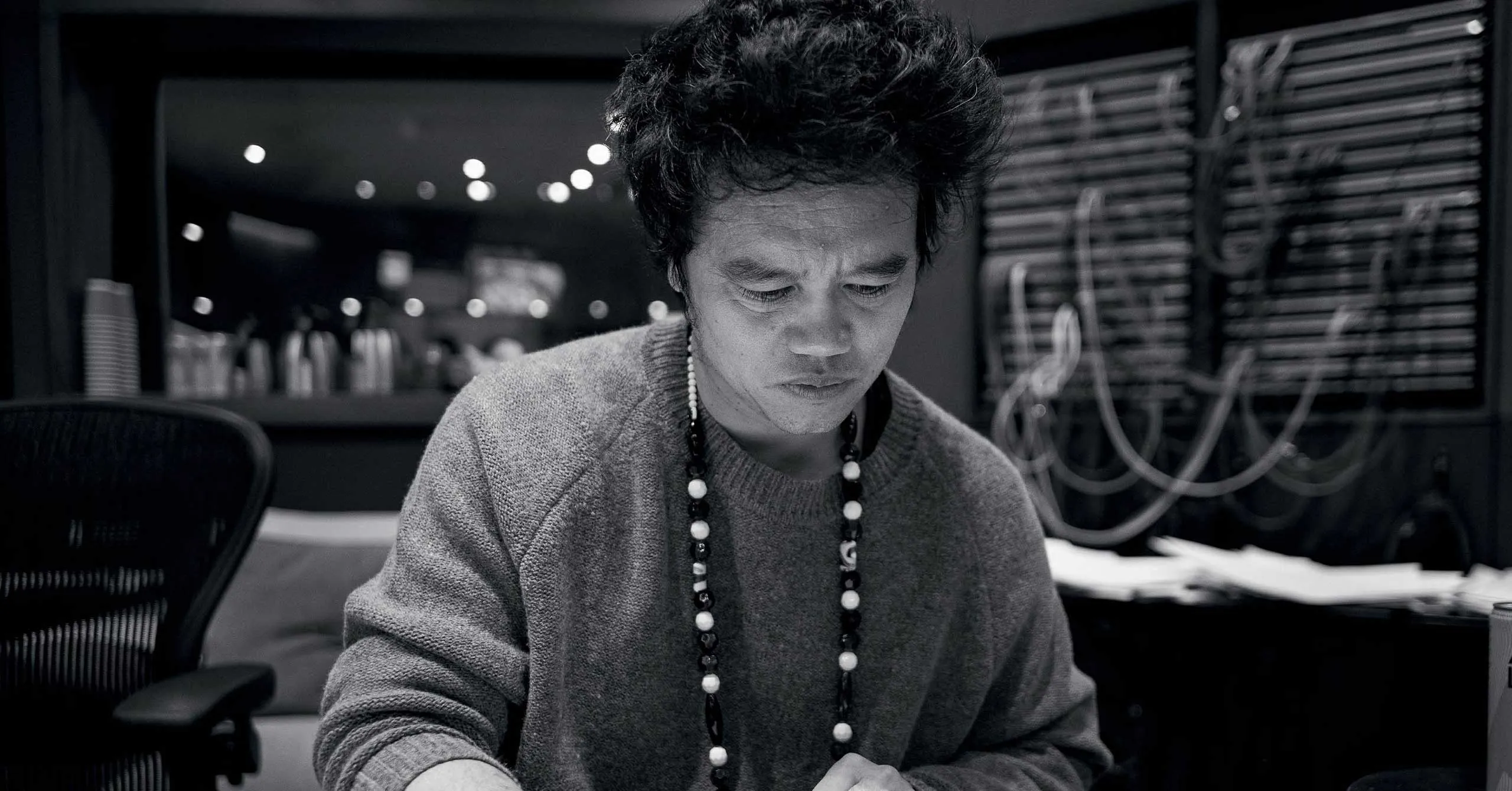
“I think to play this music proudly and showcase it to the world has so much meaning,” composer Nathan Matthew David tells Vogue, “and I hope it gives Filipinos as much pride as it’s given me to write it.” Photographed by Mike Knobloch
Photographed by Mike Knobloch
Music holds memory. For DreamWorks’ Forgotten Island, Filipino American composer Nathan Matthew David follows the ethos of indigenous voices and sound to create a score true to its origins, a love letter to Filipino sound.
With a field recorder and a camera in hand, Nathan Matthew David traveled to South Cotabato with a composer’s ear and years of a deepening love for Filipino sound. Around him were artists, teachers, instruments, and stories, all of which he had built an intimate friendship with over the course of a few days. It was the first destination of his two-week excursion across the Philippines to immerse in local culture and community, and to soak in their music in preparation for the film score for DreamWorks Animation’s inaugural Filipino-first film, Forgotten Island.
To build the musical world of the film first meant anchoring it in lived Filipino experience, tapping into the histories and rich intricacies of the people native to the land. And in his time across the country, what he encountered was memory held in sound, in instruments, and in people who had carried traditions even when access to them had become fragile. “Beyond this movie, I was just grateful to have that experience, to be friends with Myrna [Pula] and all of those artists, and I think I will be forever tied to them.”
This was the spirit behind the score. Forgotten Island is a film about memory, family, folklore, and return. For David, music was the language that could hold all of it. The score became a way to bring indigenous Filipino voices and instruments into the world of the film from an authentic place, for years it had also been a way for him, as a Filipino-American in the diaspora, to better understand where he comes from.
“When I first heard about this film, I had started maybe 10 years ago connecting to kulintang music and learning about indigenous Filipino music,” he shares, “I think just as a way for me as a Filipino American to connect to my culture, to figure out my identity and how I fit into the world.”
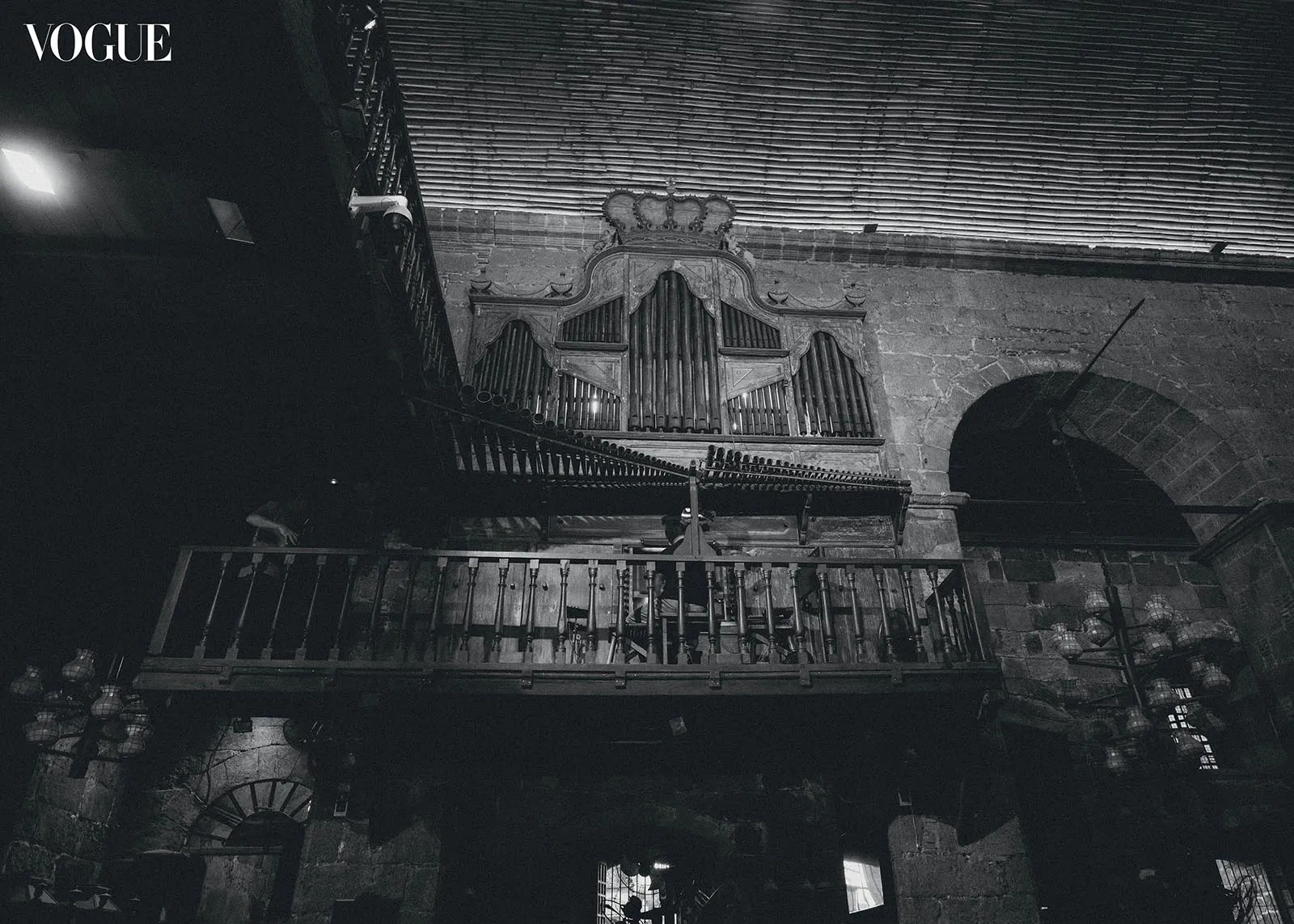
His father grew up in Pampanga, his mother in Quezon City. Like many Filipino families, David’s was a big one that wholly enjoyed music. Even then, the traditional Filipino music he had grown up to know in the U.S. came through Spanish-influenced traditions. Indigenous music of the Philippines sat beyond what had been directly passed down to him, and that absence became part of the pull.
At the University of Southern California, David studied film scoring and later worked with critically acclaimed mentors Ludwig Göransson, whose credits include the Academy Award-winning scores of Black Panther and Oppenheimer, as well as Christopher Nolan’s The Odyssey, and Theodore Shapiro, a two-time Emmy winner for Severance. David went on to score projects including The Brothers Sun, Deadly Class, Angie Tribeca, and the Peabody Award-winning docuseries Surviving R. Kelly, which earned him an ASCAP Screen Music Award.
The two paths, his professional work in film music and his personal search for Filipino sound, grew side by side for years. Then came Forgotten Island. Through Angela Leus, Filipina-American senior vice president of Film Music at Universal Pictures, and a mutual friend, David was introduced to directors Joel Crawford and Januel Mercado.
“They’re such trailblazers,” David says. “They want to push the limit of what is possible in cinema. They want authenticity. They want heart. And I couldn’t believe they were open to the idea of incorporating indigenous Filipino instruments into this score. I don’t think this has been tried before in Hollywood and especially at this size.”
He took this historic responsibility seriously. Under Göransson, whom he assisted for seven years, he saw the making of major cinematic scores up close. He notes Black Panther in particular, where he observed as the Swedish composer traveled across Africa to work with local artists and study traditional percussion, vocals, and indigenous instruments as foundation for the film score. That experience, David says, helped him understand the difference between knowing a musical tradition and incorporating it responsibly into a large-scale story.
Across the film, each sound carries character, place, and memory. It opens with the voice of Waway Linsahay Saway, an indigenous chanter David had met years earlier, whose song becomes the audience’s first passage into Nakali, the forgotten island. David knew from the beginning that the voice would be essential to the island and to the musical theme of Lola, voiced by Dolly De Leon. Drawn from the slope of mountains, the movement of waves, and air itself, the melody gives Nakali a sense of both grandeur and emotional depth, shaping it not only as a mythological place but as an intimate space for the film’s main characters, Jo and Raissa.
This attention to detail, to grounding each character in local textures, is consistent through the rest of the score. For example, as one of the film’s central mythological figures, Manang the manananggal, voiced by Lea Salonga, needed a sound that could feel both terrifying and emotionally complex. David turned to a set of large brass gongs that are said to be used to communicate messages through specific patterns and voicings. Working with an indigenous member that is an expert in the music, he composed several phrases for the character so that the gongs would not simply announce her presence, but speak for her, expressing warnings, questions, and fragments of dialogue, while Salonga’s vocalizations add a haunting, melancholic presence.
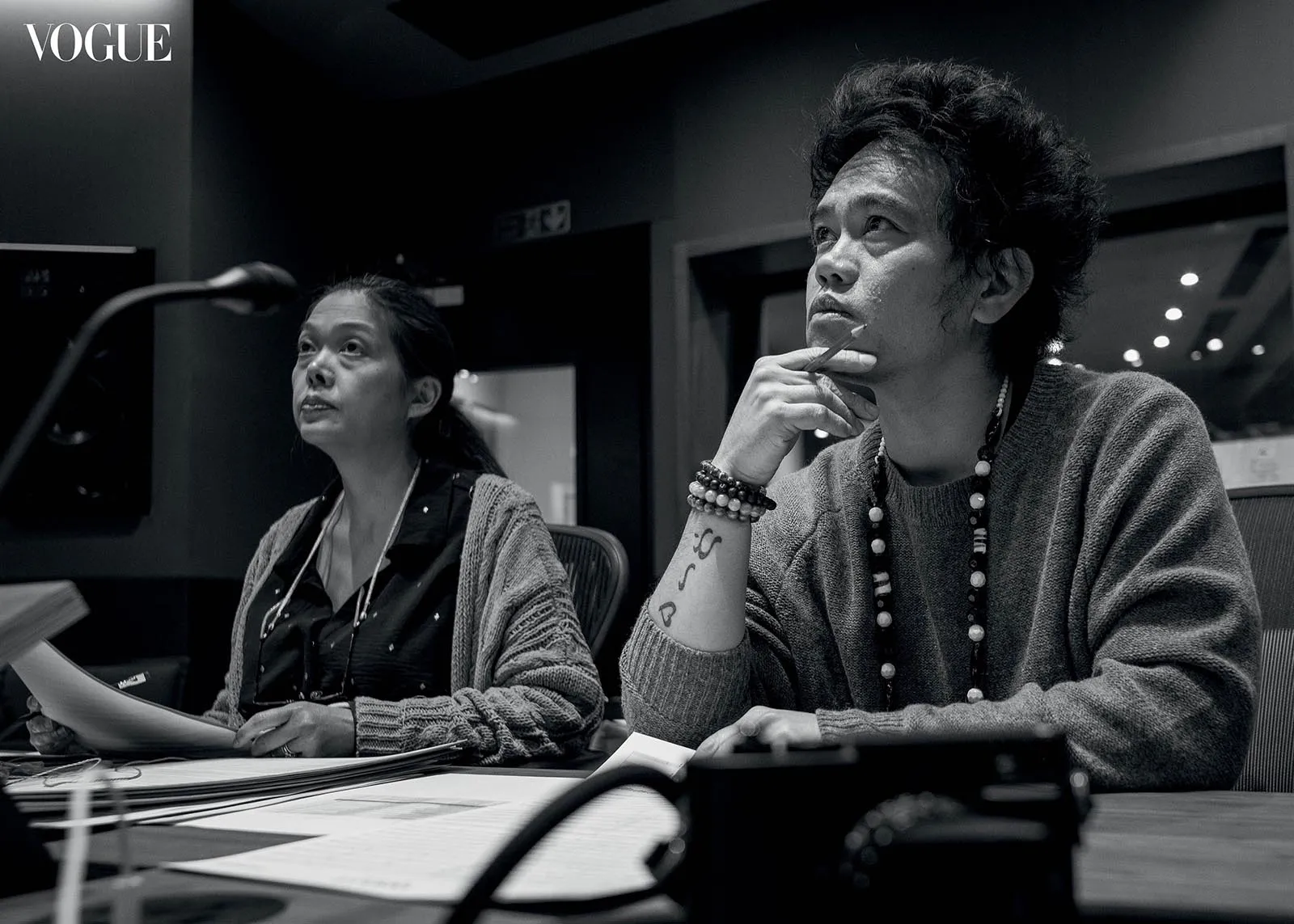
For Batiba, a memory aswang who collects and keeps memories in her cave, David wanted a sound that could feel layered, ancient, and emotionally immediate. Her theme draws from an indigenous plucked bamboo instrument and chanting based on memory. David also sought out the Bamboo Pipe Organ in Manila, played by Prof. Armando V. Salarza, for the character. The composer recorded it after finishing the orchestra sessions in London, flying immediately to Manila to close the journey in a place that felt spiritually right. “To see Manang Myrna again and to record the Bamboo Pipe Organ and to see my family and I think kiss the ground and say thank you. It just made sense for me to end this journey there,” he says.
Built 200 years ago, the bamboo pipe organ, housed in the St Joseph Parish Church in Las Piñas, offered a sound that was far from the force of a European church organ. The 1824 Philippine National Cultural Treasure is famous for its 902 unique bamboo pipes; it remains the only known functioning bamboo instrument of its size in the world. “It has a very fragile and beautiful and vulnerable sound which I thought was really perfect for Batiba,” David says, adding that it created “this interesting glue between the indigenous instruments and then also the modern instruments.”
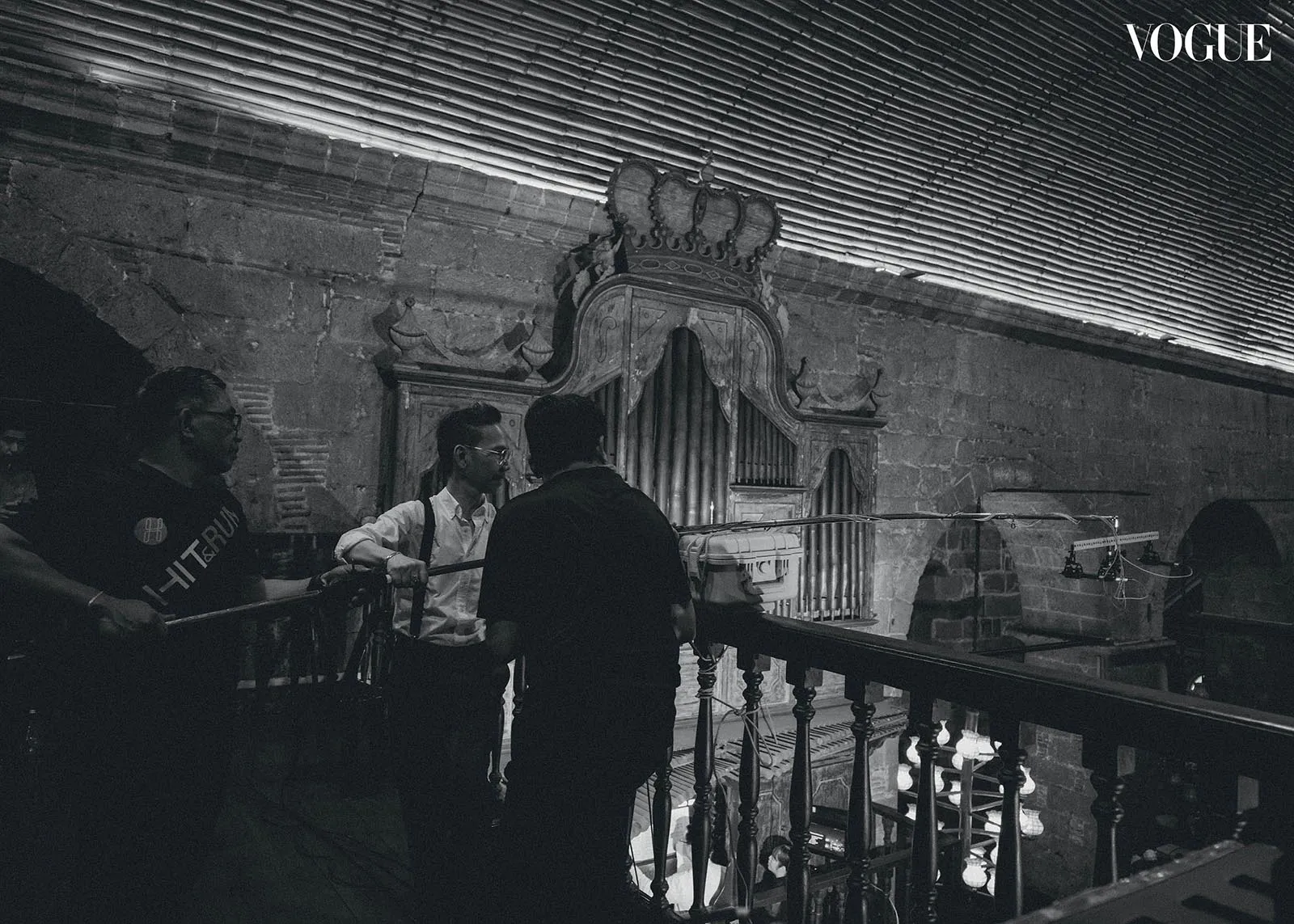
Recording it became its own community effort: Because the church had to be completely quiet, five barangays around it were closed, and with the help of local audio post-production company Hit Productions, they had built a makeshift apparatus to record its song. Salarza came well-rehearsed, the church team was eager and precise, and curious residents approached the closed road asking what was being recorded. For David, it was this inherent spirit of community that carried not just Batiba’s music but the entire film score to its completion.
While Forgotten Island centers on complex feminine personalities, the film’s masculine characters allowed David to play with scale, humor, and texture while still keeping their sounds rooted in intention. For the duwende, he leaned fully into indigenous percussion and battle rhythms, which David felt suited the duwende’s direct and combatant energy. For Raww, a Philippine aspin-werewolf voiced by Dave Franco, whose animation leans into ’80s video games, David borrowed from Street Fighter and ’80s metal to give him an over-the-top sound. Meanwhile, Prince Mermahn, a Visayan siren, was given a “fun and ridiculous” orchestral sound, leaning into choir and a grand, Beethoven-like quality.
Forgotten Island’s music moved across continents. Some sounds were recorded in villages in Mindanao. Some were captured in Manila. Kulintang player Datu Farid Guinomla was flown from Mindanao to Los Angeles for studio sessions. Featured chanter Waway Linsahay Saway recorded in his village. Orchestra was recorded at Abbey Road in London, in the same room that has held award-winning film scores including Star Wars, The Lord of the Rings, and more. Choir was recorded in London and Los Angeles, with Tagalog woven into the choral arrangements.
The challenge was to make these elements work for a global animated film without softening their specificity. David did not want the voices and instruments from the Philippines to be buried, nor did he want them treated as merely exotic accents. The Filipino sounds had to exist on their own terms.
“Being in this industry, there are a lot of stories told from a lot of different places in the world, and we are usually in the business of finding unique sounds and just grabbing them and using them. I think this being such a personal project, I wanted to have intentionality,” he shares. “To play these instruments unapologetically in the score is like, we’re not going to colonize them. They’re going to exist as they are. We got to let them be what they are.”
“It wasn’t just about having the unique sounds of the gongs or having the chants or the drums,” he continues. For David, what mattered most was learning about the original intentions behind these instruments and letting that shine through in the score.
“How can I use them purposefully? Do I have permission to use them? Tell me a little bit more about how you use them.”
The orchestra helped hold the world together, but the distinctiveness of the Filipino instruments remained central. David speaks of the Abbey Road musicians as historic storytellers, bringing their own cinematic language to a score led by indigenous sound.
“I think having those historic storytellers as players, but then also that instrumentation I think really helps to introduce these indigenous instruments to the world in a way that feels familiar, but then also we also push it out there,” he says. “We’re not apologetic about these instruments.”
That unapologetic quality gives Forgotten Island its force. The music does not translate Filipino culture into something more comfortable or generic. It allows indigenous sound, chants, bamboo instruments, brass gongs, Tagalog choir, OPM, pop, and orchestral scoring to occupy the same cinematic space. It reflects a Filipino musical history that is layered, regional, ancestral, contemporary, diasporic, and alive.
For David, the process changed his own understanding of belonging. What began as a personal search for identity became part of a film that would introduce Filipino sound to audiences around the world.
“For a long time I didn’t feel Filipino enough, and I think, there is a level of maybe feeling lesser for some of us in the diaspora about our Filipinoness,” he says. “And I think what I’ve discovered through this process is that our experience is just different and that’s okay, and that we have a different approach to our Filipinoness.”
“The music is such a love letter for me to my culture, to just say thank you for giving me so much meaning.”
In Forgotten Island, music becomes a way of holding what distance might have scattered. It holds the memory of instruments, the lives of the artists who play them, the stories of communities, and the emotional thread between those who stayed, those who left, and those still trying to find their way back. Here, music is a way to remember.
“The music is such a love letter for me to my culture,” David emphasizes, “to just say thank you for giving me so much meaning and for giving me an understanding of who I am and where I’m at musically. Growing up here in the US and especially in today’s climate, shying away from your culture and [trying to blend] in is very much a thing. So I think to play this music proudly and showcase it to the world has so much meaning, and I hope it gives Filipinos as much pride as it’s given me to write it.”
What he hopes Filipino audiences hear is not only representation, but abundance.
“I hope Filipino audiences in particular can bring themselves into this story into this film,” he says. “I hope what I’ve shared within it, that all the artists have shared within it, gives them a lot of pride. I hope it opens some ears and eyes into the incredible wealth [of] our musical history. It is so vast and there are so many colors, and there’s so many incredible artists. There’s so much to explore, and I hope this is just an introduction.”
From Mindanao to Manila, from Los Angeles to Abbey Road, the score of Forgotten Island carries sound across distance without letting it lose its origin. For David, that journey is the heart of it. Music holds memory. In this film, it also becomes a call to home.

Frequently Asked Questions
Filipino American composer Nathan Matthew David scored ‘Forgotten Island,’ DreamWorks Animation’s first Filipino-centered film. He traveled across the Philippines, including South Cotabato and Manila, to work with indigenous artists and incorporate traditional Filipino instruments and voices into the score.
The score features kulintang, played by Datu Farid Guinomla, brass gongs used for the character Manang, an indigenous plucked bamboo instrument, and the 1824 Bamboo Pipe Organ at St. Joseph Parish Church in Las Piñas, played by Prof. Armando V. Salarza.
The Bamboo Pipe Organ is a Philippine National Cultural Treasure built roughly 200 years ago, housed at St. Joseph Parish Church in Las Piñas. It contains 902 unique bamboo pipes and remains the only known functioning bamboo instrument of its size in the world.
Recording spanned Mindanao villages, Manila, Los Angeles, and Abbey Road Studios in London, where the orchestra and choir were recorded in the same room used for scores including Star Wars and The Lord of the Rings, with Tagalog woven into the choral arrangements.
The score’s musical themes are tied to characters voiced by Dolly De Leon as Lola and Lea Salonga as Manang the manananggal, whose vocalizations pair with brass gongs. Indigenous chanter Waway Linsahay Saway opens the film with a song introducing the island of Nakali.
- An Exclusive Look at the Making of ‘Forgotten Island’
- An Island Remembered: The Artists and Creatives Behind DreamWorks’ ‘Forgotten Island’
- Exclusive: A First Look at BINI’s “A Parallel World” for Dreamworks’ ‘Forgotten Island’
- The Women of ‘Forgotten Island’: H.E.R., Liza Soberano, Lea Salonga, and Dolly de Leon on the Stories that Lead Us Home