
The Roots That Shape Us: Introducing Vogue Philippines’ August 2026 Cover Stories


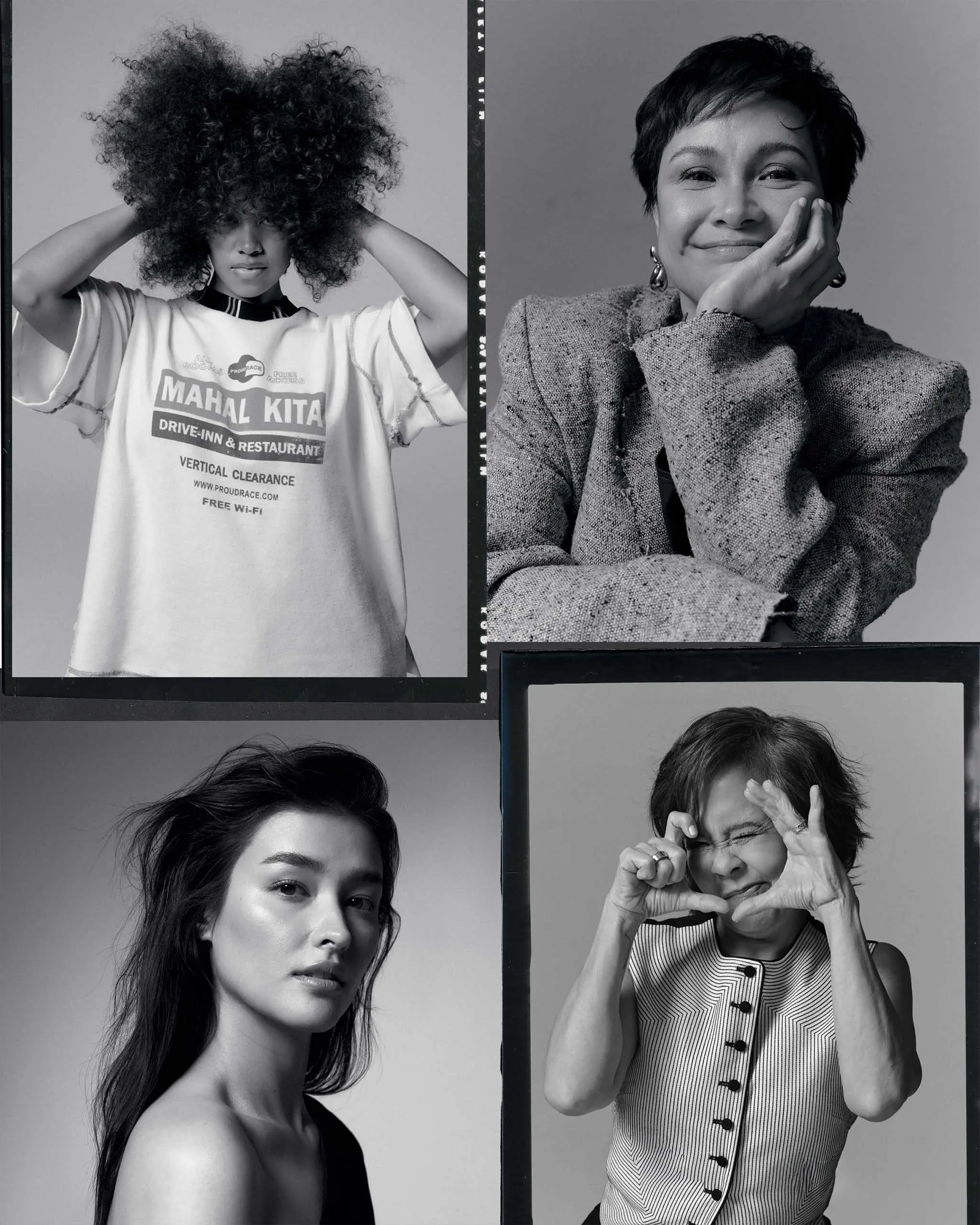
H.E.R. wears a PROUDRACE top. Lea wears a NADALĒ coat with WHISENHUNT COLLECTION earrings. Liza wears a GUCCI dress. Dolly wears a DIOR vest. Photographed by Sharif Hamza and Artu Nepomuceno for the August 2026 Issue of Vogue Philippines
Tayo na.
We don’t hear these words every day. They sound a little contrived, a little unfamiliar, like an old-fashioned phrase that belongs in schoolbooks. We say “Tara na.” Or simply, “Tara.” Let’s go.
In Forgotten Island, however, these words become something more than an invitation. They echo a pact between two friends, Jo and Raissa, spoken each time they embark on an adventure and step into the unknown together.
After a private screening of the upcoming DreamWorks film, those words stayed with me throughout that day. Like LSS (Last Song Syndrome), they kept replaying in my mind.
As I sit to write my first Editor’s Note for Vogue Philippines, I realized they offered the perfect beginning.
Tayo na.
Come with me.
Come with us.
Let’s begin this adventure together. Let’s begin with two islands.
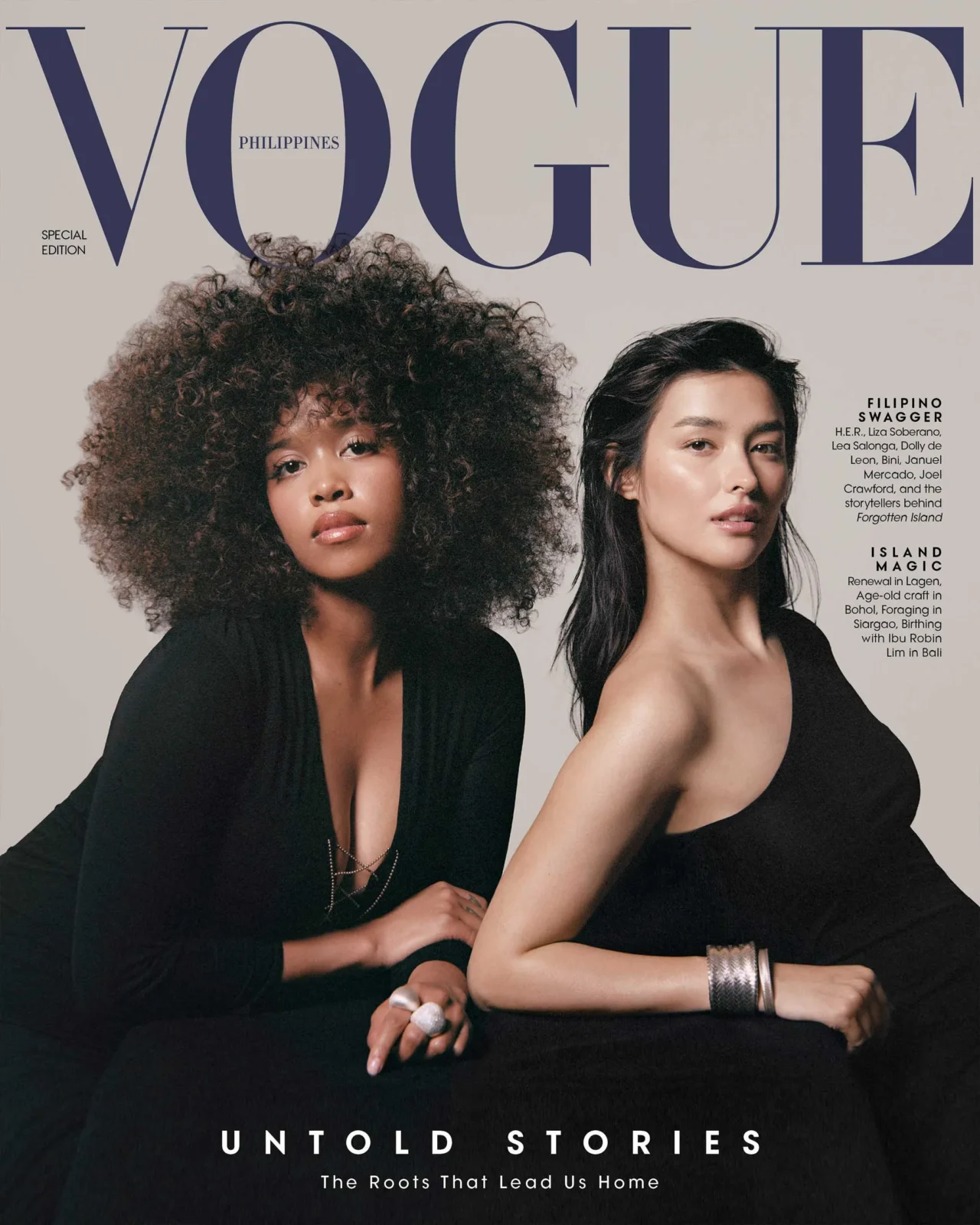
First, to the mythical Nakali. Our special edition highlights the cast, directors, animators, and storytellers who take us to Forgotten Island. What makes their work remarkable is that it brings Filipino mythology to a global audience without apology. The film trusts our stories to stand on their own. It embraces our language, our folklore, our music, our humor, and our memories without feeling the need to translate them into something more familiar.
Some of my earliest memories of Philippine folklore did not come from books. They came from one particular summer, during long afternoons when my brother and I would sit with my cousin’s aunt. Only a few years older than we were, she carried the stories her own grandmother had told her. She introduced us to the manananggal, the aswang, and the duwende. They paired perfectly with the even scarier stories our childhood yaya would recount, keeping us awake when we should have been taking our siesta. Those stories became my hidden delights, whispered excitedly as we lay down, carrying just enough mystery to leave us wary of sleeping alone.
Like many children of my generation, I grew up enchanted by animated fairy tales. Their castles and forests became as familiar to me as my own neighborhood. Never did I imagine that one day those whispered stories from long-ago summer afternoons, the creatures that lived only through spoken tales, would become the inspiration for a DreamWorks film.
The tales were always here. We simply had not yet imagined that the rest of the world might want to hear them too.
As Gabriel Yap writes, “The idea that a generation of children might now encounter an aswang in the same way previous generations encountered dragons or trolls represents something much more than visibility.” Reading that sentence, I found myself thinking back to those afternoons of storytelling and realizing how extraordinary this film truly is.
From there, we experience the enchantment of Bali. Photographer Kenza Le Bas returns to the island where she spent her childhood. She photographs Mireille Aurelia, also on her own road to rediscovering the Indonesian island through memories of home. Together, they remind us that homecoming is about seeing familiar places with renewed appreciation. We recognize the roots that continue to shape who we become.
Lea Salonga, who voices Manang the Manananggal in Forgotten Island, puts it beautifully: “The harder you lean in, and the more specific you make something, the more universal it turns out.”
Nathan Matthew David journeyed across the Philippines to learn from indigenous musicians, creating a score that allows Filipino instruments to exist on their own terms. Bini carries the language of friendship and home onto the soundtrack of a major animated film. In Bohol, we encounter the makers of asin tibuok, preserving a tradition that has found resurgence in a new generation. Also in Bali, we meet Ibu Robin Lim, whose life’s work is rooted in lessons first learned from her Ilocano Lola, reminding us that our first education is often our deepest and most enduring.
Different stories. Different islands. Yet they all speak about what we inherit and what we choose to carry with us.
As I begin my own journey at Vogue Philippines, I think about what I’ve been entrusted with. I have inherited a magazine that has beautifully trumpeted the best of the Philippines to the world. Like Forgotten Island, the team has achieved groundbreaking success by believing that stories need not become less Filipino to resonate more widely.
What will I carry forward? The same openness and curiosity and confidence that have shaped Vogue Philippines from the beginning, an abiding belief that our readers are thinkers, and eager for stories that challenge them.
So I return to the words that opened this issue for me.
Tayo na.
Frequently Asked Questions
The animated film Forgotten Island is directed by Joel Crawford and Januel Mercado.
The cast of Forgotten Island includes Liza Soberano, H.E.R., Dave Franco, Lea Salonga, Manny Jacinto, Dolly de Leon, Jenny Slate, Jo Koy, and Ronny Chieng.
Forgotten Island opens in Philippine cinemas on September 23, 2026, ahead of its release in the United States on September 25, 2026.
DreamWorks is a major American entertainment and film studio. It was founded on October 12, 1994, by Steven Spielberg, Jeffrey Katzenberg, and David Geffen.
Forgotten Island follows high school graduates Jo and Raissa in the 1990s Philippines as they stumble through a portal into the mythical island of Nakali, where staying longer means losing their memories. To return home, they must race against time and face the feared Manananggal before they forget each other completely.