
This Philippine Independence Day, Ambeth Ocampo Shares Historical Facts You Might Not Know


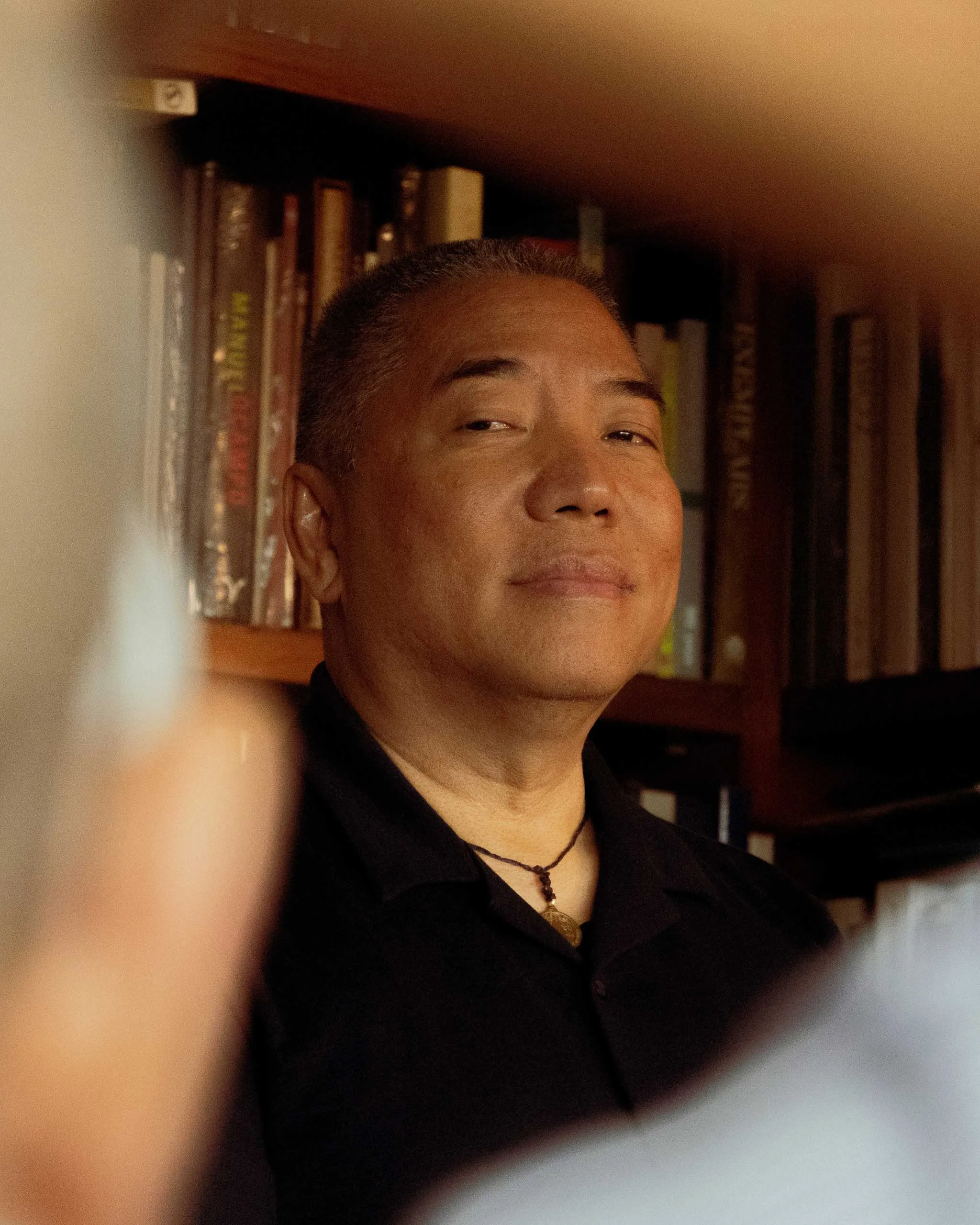
Photographed by Mcaine Carlos
In celebration of Independence Day, historian and author Ambeth Ocampo shares four historical facts on José Rizal and the holiday’s origin.
This June 12, the Philippines is celebrating its 128th year of independence. The occasion marks Emilio Aguinaldo’s declaration of independence, after 333 years of Spanish colonization. The declaration, Acta de la Proclamacion de la Independencia del Pueblo Filipino, was read by its author, Ambrosio Rianzares Bautista. The Philippine flag was unfurled for the first time, and the “Marcha Nacional Filipina” was played.
To celebrate Independence Day, historian and author Ambeth Ocampo looks back on history and shares a few facts you might not have heard of before.
José Rizal is buried at the Rizal Monument, but two pieces of him are not in the tomb
At Luneta Park, the Rizal Monument stands tall, and beneath it is a tomb containing the national hero’s remains. However, not all parts of him are inside the tomb. Ocampo shares that two pieces of his body were not buried at the monument: his backbone and a piece of his “brain.”
“If you go to Fort Santiago, there’s a small piece of his backbone that is displayed, which the family says, if you look at it, it’s chipped on the side because they believe this is where the bullet hit him and killed him,” he shares.
In the Ateneo archives, a small bottle was donated by Rizal’s sister, labeled “Rizal’s brain.” “I shook it. It makes a sound, so I don’t think it’s a brain, which would have melted already,” he says. “I think they’re pieces of the cranium, parts of his skull that were found when they exhumed him.”
Rizal once skipped a bath for four months
While Rizal was wealthy, his allowance did not always arrive on time while he was studying overseas, which meant he had to scrimp. “We have a letter from Rizal that is written on December 30, where he tells his sister, ‘I haven’t taken a bath since the middle of August,” Ocampo shares.
The Independence Balcony didn’t exist when Emilio Aguinaldo read the Declaration of Independence
One hundred and twenty-eight years ago, Emilio Aguinaldo read the Declaration of Independence at his family home in Cavite, but it might look a little different than what most people imagined. “If you look at old photos, you will see that the balcony was not built on June 12, 1898, and that the Declaration of Independence was actually read from a window, not from the balcony,” he says.
Additionally, during the declaration’s reading, Apolinario Mabini had just arrived on a hammock from Batangas. “And when he came up, his first comment on the festivities was… he said the Declaration of Independence was actually premature and that if he was asked what they would do, he would not have said, or he would have disagreed to have the declaration at that date and time.”
Josephine Bracken and Rizal never had a child together
Supposedly, Josephine Bracken and Rizal had a son together. And when you look at the family trees in Fort Santiago, you would see José Rizal, Josephine Bracken, and then José B. Rizal, but some family members claim the child was named Peter. “But based on my research, I think the child was not actually Rizal’s child,” Ocampo says. “And this is probably the reason why Rizal wanted to protect Josephine Bracken from judgmental people. But the child was not his. Rizal actually died childless.”
Frequently Asked Questions
The Philippines’ Independence Day is celebrated every June 12, with the Declaration of Independence read on June 12, 1989.
General Emilio Aguinaldo declared the Philippines’ independence.
As of 2026, 128 years have passed since the Philippine declaration of independence.
The Philippine Declaration of Independence happened in Kawit, Cavite.
Ambeth Ocampo is a Filipino public historian, academic, and author, known for popularizing Philippine history. He has served as Chairman of the National Historical Commission of the Philippines (NHCP) and the National Commission for Culture and Arts (NCCA).