
Johanne Siy’s Árō: A New Chapter for the Filipino Chef in Singapore


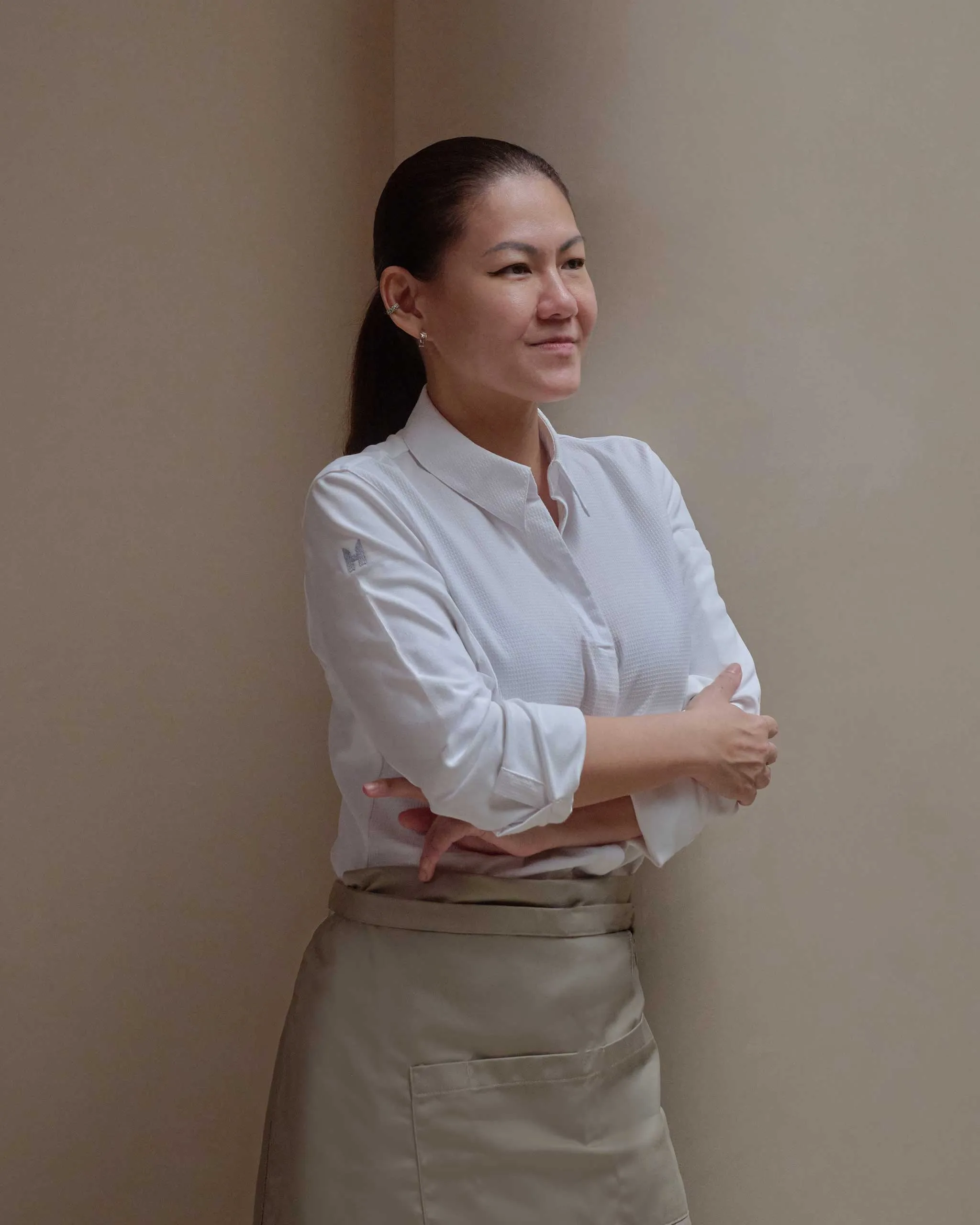
Johanne Siy. Courtesy of Árō
In her first restaurant as chef-owner, the Asia’s Best Female Chef 2023 turns the spotlight away from herself and toward ingredients, makers, and the stories we have yet to hear.
Even for a chef who has reached the top of her profession, opening a restaurant of her own takes a different kind of courage.
For Johanne Siy, 45, that courage has less to do with proving herself than with relinquishing control. “The biggest discovery has been around trust,” she tells Vogue, now that Árō, her first restaurant as chef-owner, is open in Singapore. “Having worked in kitchens around the world, you learn to rely on yourself and not really depend on anyone. That’s almost a survival skill in professional kitchens. But running your own restaurant requires the opposite.”
It is an unexpected lesson for a chef whose career has been built on precision.
Born in Dagupan, Pangasinan, Siy spent eight years in the corporate world, including as a regional brand manager for Procter & Gamble, before deciding at 29 that she wanted something more meaningful from her life. She enrolled at the Culinary Institute of America in New York, then worked at Daniel Boulud’s Café Boulud and Eric Ripert’s three-Michelin-starred Le Bernardin. She moved to Singapore and spent four years at Restaurant André under André Chiang before traveling to Europe, working at Copenhagen’s Noma and Sweden’s Fäviken, among others.
She returned to Singapore in 2020 and eventually took over the kitchen at Lolla. Under her, the restaurant rose to No. 75 on Asia’s 50 Best Restaurants’ extended list in 2022. The following year, Siy became the first Singapore-based chef to be named Asia’s Best Female Chef, and only the second Filipina to receive the distinction after Margarita Forés. She had already been named Female Chef of the Year at the World Gourmet Awards in 2021.
But accolades, she says, are no longer the measure.
“Success now looks a lot less about me than it used to,” she says. “I’m genuinely happy watching the people in my kitchen shine. I don’t need to be the one performing in front of guests anymore.”
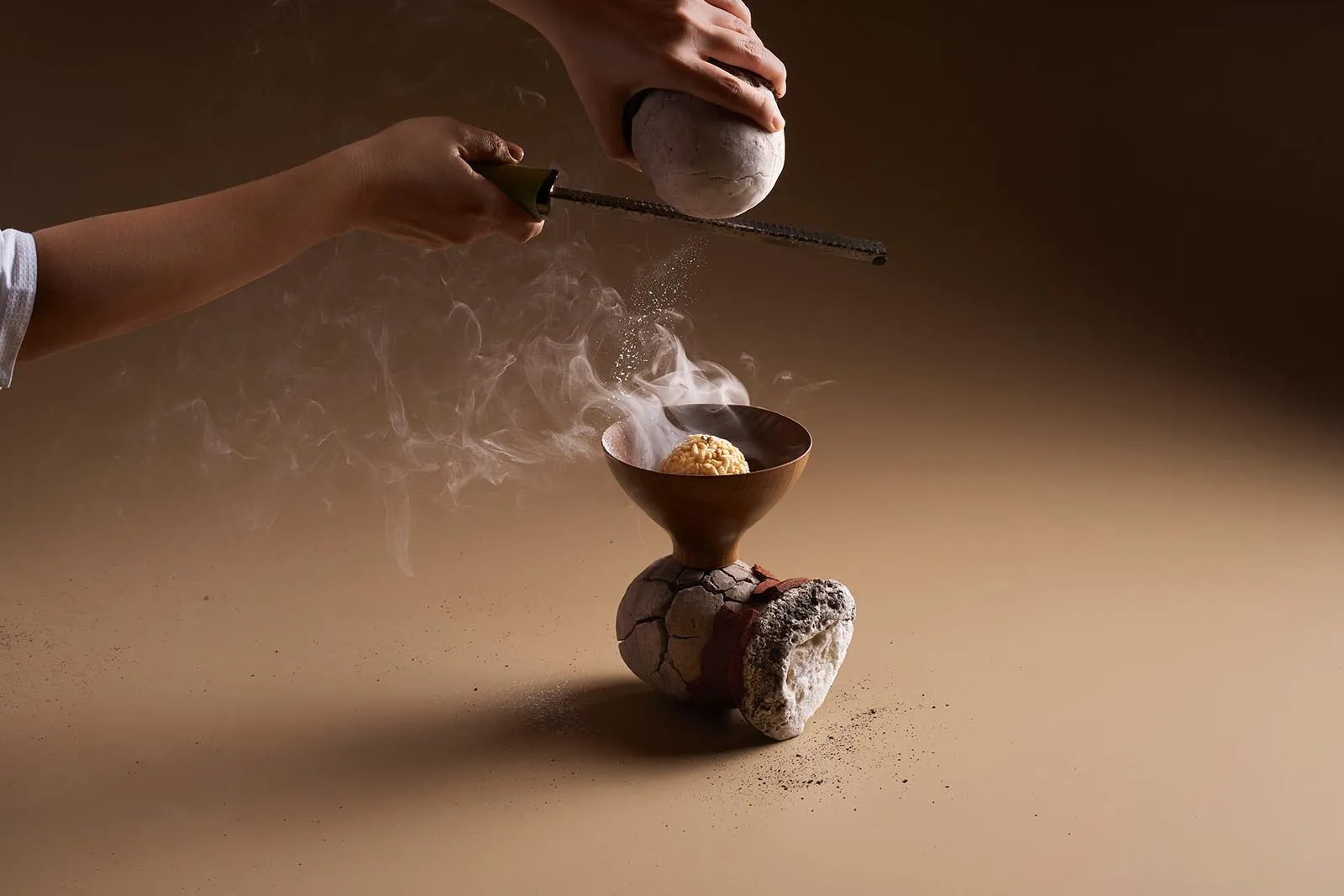
That may be one of the most revealing things about Árō. Despite being the chef-owner’s most personal project yet, the restaurant is deliberately not a monument to the chef.
Instead, it is a place where the spotlight keeps moving.
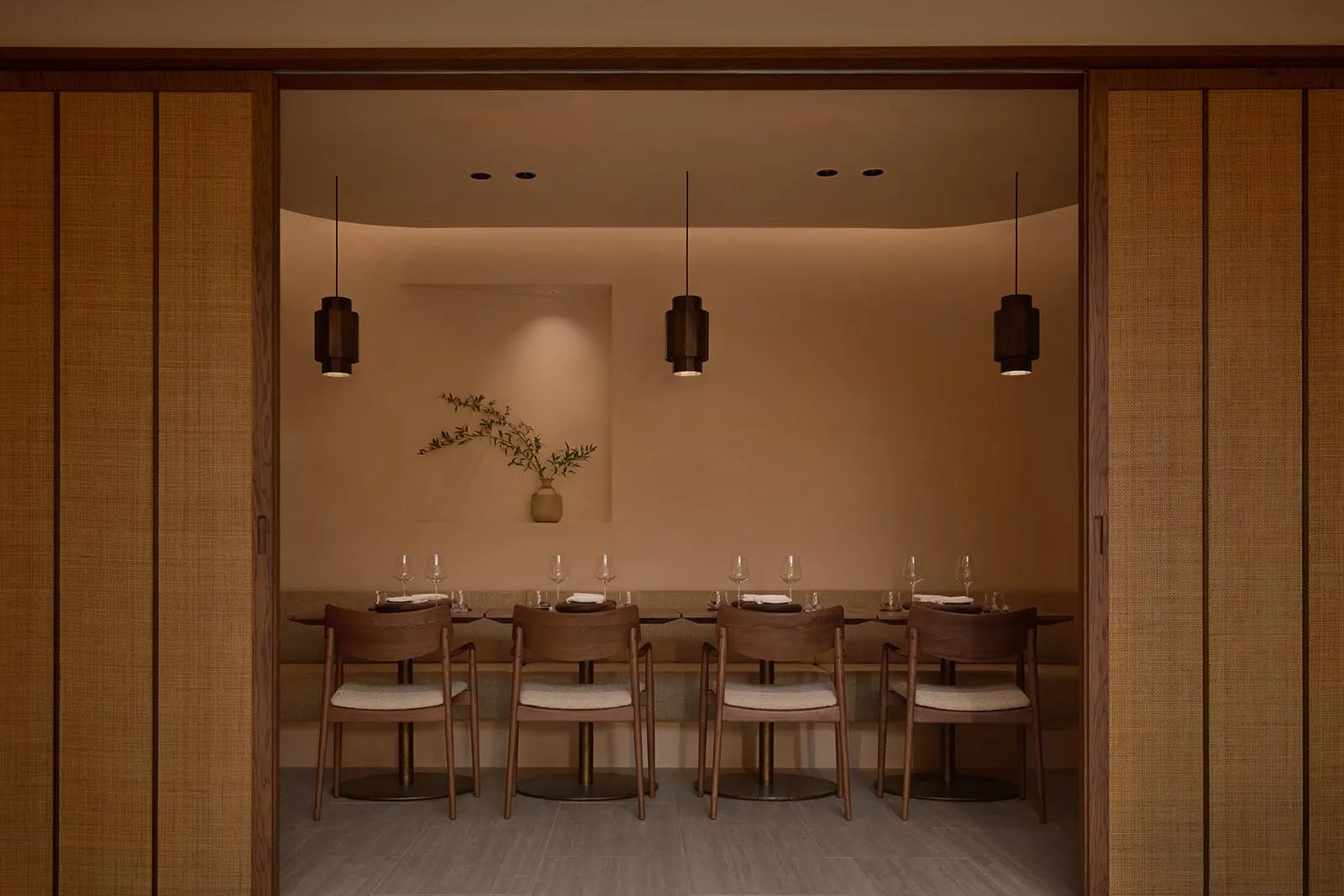
Árō, which opened on Mohamed Sultan Road, is a 26-seat restaurant built around what Siy calls “Creator’s Cuisine,” a way of cooking that is not tethered to a particular nationality, geography, or culinary tradition. Its name has a double resonance: arō in Latin means “to plow, to till, to cultivate,” while áro means “love” in the Pangasinense language of her hometown. The name, she says, is a reminder of both cultivation and affection: the work of nurturing something and the love that makes the work worthwhile.
The idea began to take shape during the many months Siy spent traveling, meeting farmers, producers, and artisans before opening Árō.
One encounter in particular stayed with her.
On a farm in the southern Philippines, she saw a plant she did not recognize. She asked the farmer what it was.
“Ma’am, that’s sesame,” he told her.
She had never seen sesame growing in its pod.
“As a chef, I genuinely felt a little ashamed that I didn’t know,” she recalls. Then came another thought: Most people, particularly in a city like Singapore, probably had never seen it either. We know sesame from a packet or a bottle. We rarely see where it begins.
“That moment gave the whole concept a sense of purpose,” she says. “It wasn’t just about finding interesting ingredients anymore. It became about using the restaurant to rebuild that lost connection between people and where their food actually comes from.”
It is an idea that runs through Árō, where ingredients are treated not simply as components of a dish but as evidence of labor, landscape, and time.
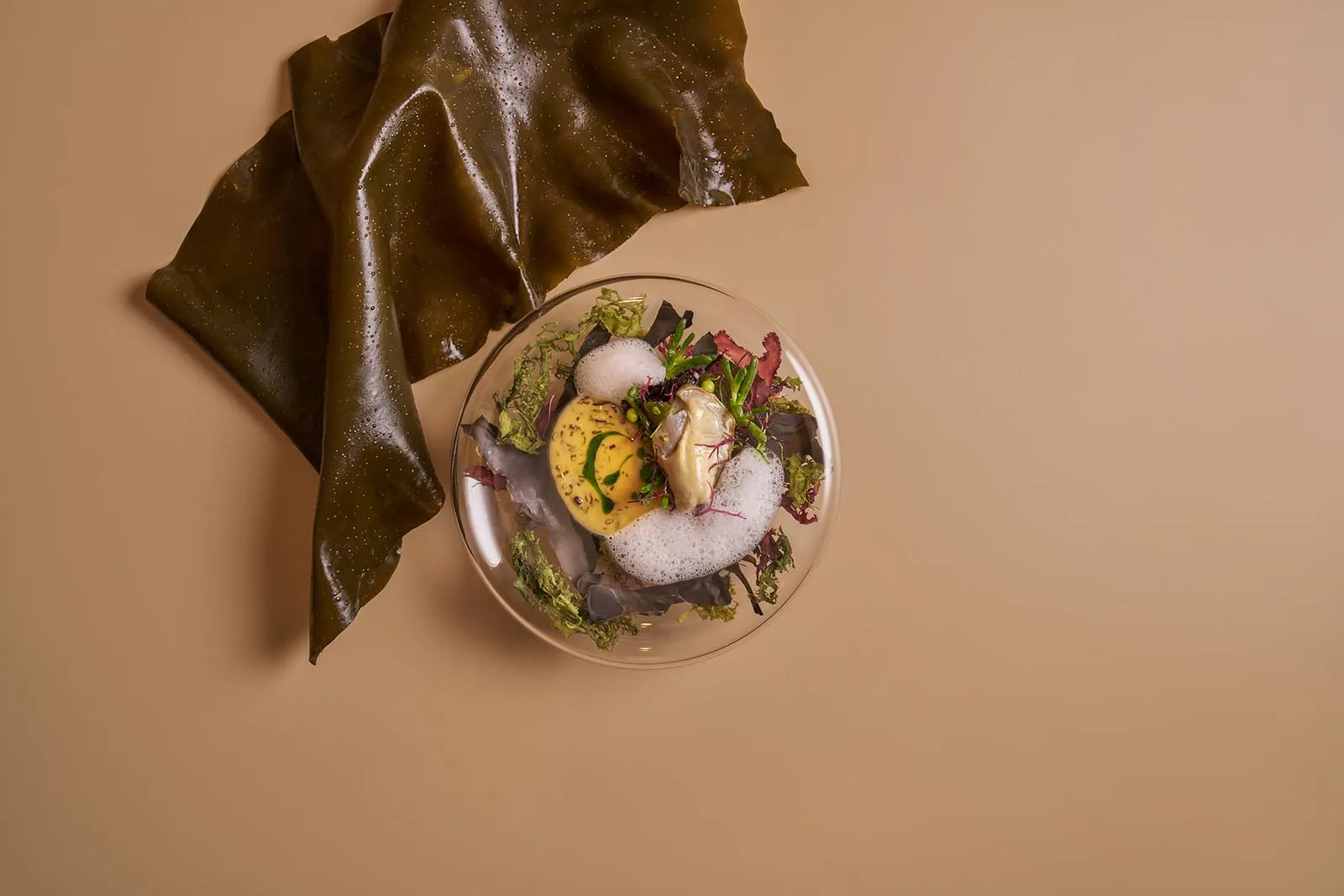
Take gamet, the little-known seaweed harvested from rocky shores in the northern Philippines. It grows where waves batter the rocks, making gathering it dangerous. Fishermen can make the trip and return empty-handed. Or asín tibuok, the distinctive Boholano salt whose traditional production can take close to a year, involving coconut husks, seawater, drying, burning, and repeated filtration through ash.
Why, Siy asks, do we call some things luxury while overlooking others that demand equal, if not greater, amounts of time, skill, and human effort?
“What you start to notice is that a lot of what we call ‘luxury’ in fine dining is a rarity that’s been successfully marketed,” she says, “while a lot of genuinely rare, difficult, dangerous work goes completely unpriced and unrecognized.”
At Árō, a Gillardeau oyster might sit beside gamet. Pili nut might appear alongside caviar.
“The intention is for guests to taste both and realize the gap between them was never really about quality,” she says. “It was about whose story got told.”
That may be the most provocative idea on the menu.
Because what is luxury, really, except a story we have collectively agreed to value?
Siy wants to complicate that shorthand. Two-year-aged stingless-bee honey, for instance, does not come with the immediate prestige of a 25-year-old balsamic. But once you taste the honey beside its younger counterpart, its transformation becomes its own kind of luxury. It darkens, changes in flavor, and develops an unexpected acidity.
This is also why ingredients recur throughout the menu.
“A single appearance only shows you what an ingredient looks like at one moment,” she says. “Revisiting it shows you what time does to it.”
Pili nut may appear raw, as a milk, or as a custard. Fish sauce can be tasted fresh and aged side by side. Rather than racing through a parade of ingredients, Árō sometimes lingers on one.
It is a philosophy that gives the menu room to evolve. “We could serve the same dish names for 10 years and still be presenting a different dish each time,” she says, “because the ingredient itself, and our understanding of it, keeps evolving.”
For all the Filipino ingredients that appear at Árō, Siy is careful about calling the restaurant Filipino.
“I’d actually push back gently on the idea that this is ‘Filipino food’ in the way people usually mean it,” she says. The ingredients happen to come disproportionately from the Philippines because that is where she has spent much of her sourcing time, not because she set out to represent a national cuisine.
The distinction matters to her.
“The moment you label something Filipino, people box it into a certain context,” she says. “The ingredient deserves more possibilities than that.”
And yet, being Filipino is inseparable from the restaurant.
Gamet comes from near her mother’s hometown in the north. Pili connects her to Bicol. Asín tibuok brings an artisanal tradition from Bohol to a Singapore dining room. Stingless-bee honey from the Philippines becomes something to contemplate rather than simply consume.
The point is not to plant a Philippine flag on every plate. It is to make diners curious.
“I do hope people walk away with a sense that the Philippines has been sitting on extraordinary, labor-intensive craft that the rest of the world simply hasn’t heard about,” she says.
There is also something deeply Southeast Asian about the way she approaches these ingredients. Her travels have shown her how porous culinary borders really are. Pili has relatives across the region, with Malaysia, Indonesia, and even Chinese foodways offering their own versions or uses.
“It made me feel like we’re more interconnected than we think, rather than something that exists in isolation,” she says.
That sense of connection extends beyond the plate and into the kitchen.
Siy knows the demands of professional kitchens firsthand. She wants the young cooks at Aro to understand that a long career need not come at the expense of their well-being.
Both her right and left hand at Árō are women, something she says genuinely moved her when she stopped to reflect on it. More importantly, she is trying to build flexibility into the kitchen rather than treating it as an indulgence.
Her pastry chef, Elaine, stepped away from the industry for years to raise her daughter. At Árō, she comes in for lunch service and research and development, sometimes with her daughter beside her.

For Siy, that is not lowering the bar. It is widening the doorway.
“I want young cooks to see that there’s a sustainable way to stay in this industry long-term, one that doesn’t require burning out,” she says. “Taking time to travel, to visit producers and craftspeople, to refresh, isn’t indulgent; it’s necessary.”
She wants her younger cooks to leave Árō with something more valuable than a repertoire of recipes: a sense of where food comes from, an appreciation for craftsmanship, the confidence to speak to guests, and the understanding that the person who made the pot can matter as much as what goes inside it.
The honey at Árō is served in a vessel made by ceramic artist Mia Casal, who sources clay from around her home in Zambales.
“When a young cook understands that the vessel carries its own story of patience and place, just as much as the ingredient inside it does, it changes how they think about every part of what they’re putting in front of a guest,” Siy says.
It is perhaps the most generous thing about Árō: its insistence that a restaurant can be bigger than its chef.
Siy is already thinking about bringing her team on sourcing trips during the restaurant’s closed periods, so that discovery does not remain her private domain. She wants more restaurants to serve the same underrecognized ingredients, too, because demand can help producers earn better livelihoods.
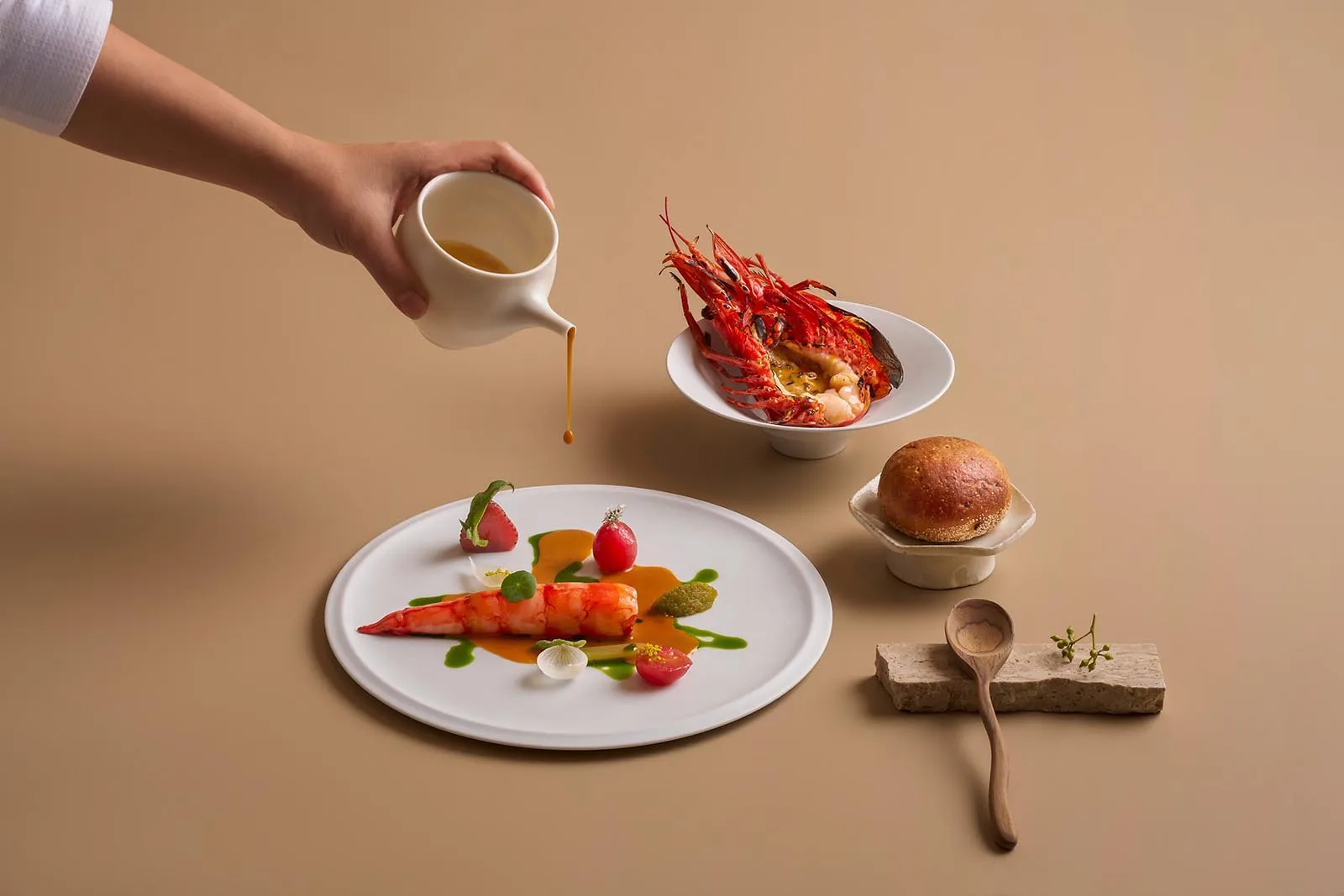
“If more of us serve something like stingless-bee honey, more people learn about it, demand increases, and the farmers behind it can actually make a better living from it,” she says. “I’d like Árō to be part of that cycle rather than treating sourcing as something competitive between restaurants.”
There is a lovely humility in that.
After everything she has achieved, Siy seems less interested in being the sole author of the story than in creating a place where more people can have one.
Perhaps that is why the thing that frightens her now is not whether the food is good. It is whether the stories will make it from the kitchen to the table.
“So much thought and travel and relationship-building sits behind each dish,” she says. “My worry now is whether that comes alive enough in the actual experience, or whether it gets lost between the kitchen and the table.”
It is a very different kind of anxiety from the one that accompanies a young chef trying to prove she belongs.
Siy has already done that.
She has been recognized by the industry, led a celebrated restaurant, and earned the kind of accolade that can define a career. But she says what has sustained her most has not been the awards. It has been the relationships: former diners who became friends, people who continued to ask when she would cook again, guests who told her they missed her food.
That, more than a trophy, gave her the courage to build Árō.
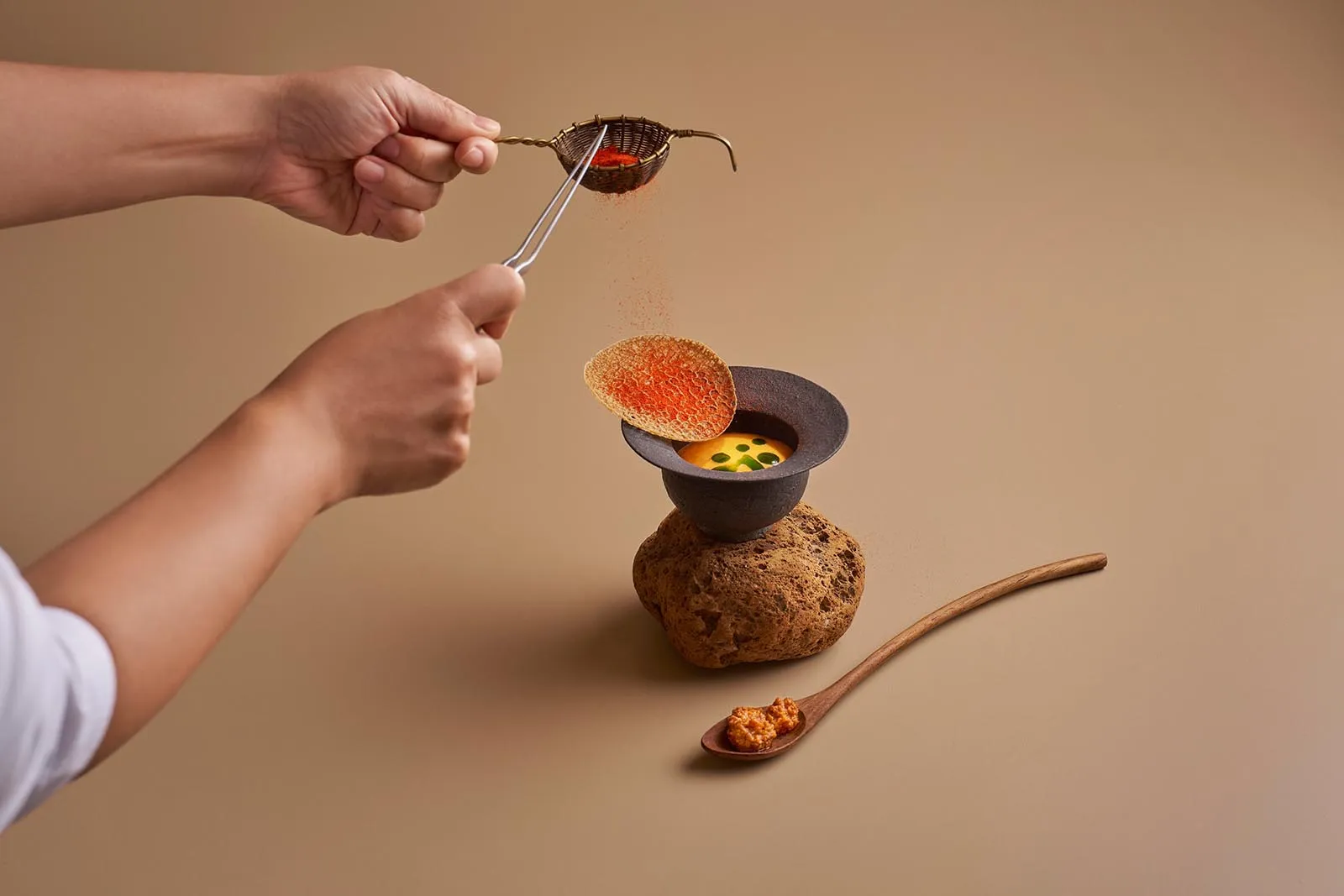
She has signed a five-year lease, deliberately giving the restaurant time to grow rather than chasing the instant gratification of an opening-week headline.
“I’m not doing this to prove I belong anymore,” she says. “I’m doing it because I can genuinely see myself doing this until I’m old, simply because I love it.”
And perhaps that is the real meaning of Árō.
Not simply love as a sentiment, but love as labor: the patient, sometimes invisible work of cultivating something, allowing it to grow, and understanding that what eventually appears on the table is never the work of one person alone.
In a city as cosmopolitan and sophisticated as Singapore, Siy has created a restaurant that asks a deceptively simple question: What else have we failed to notice?
A seaweed clinging to a dangerous rock. A salt-maker preserving an old method. A farmer growing sesame. A potter shaping clay from home. An ingredient whose value was always there, waiting for somebody to tell its story.
At Árō, Johanne Siy is not merely cooking them. She is asking us to look again.
Frequently Asked Questions
Árō is the debut restaurant of Filipino chef-owner Johanne Siy in Singapore. The 26-seat restaurant presents what Siy calls “Creator’s Cuisine,” an ingredient-led approach shaped by the people, places, producers, and experiences that have influenced her.
Árō is located on Mohamed Sultan Road in Singapore. You can find more info on its website and Instagram @aro.singapore.
The name has two meanings. In Latin, arō means “to plow, to till, to cultivate,” while áro means “love” in the Pangasinense language of Siy’s hometown.
Árō offers an ingredient-led tasting menu that draws from Johanne Siy’s experiences across Asia, North America, and Europe, with a particular focus on underrecognized ingredients and traditional craftsmanship. Filipino ingredients such as gamet, pili nut, asín tibuok, and stingless-bee honey feature prominently, although Siy does not define the restaurant as Filipino cuisine.
Siy is a Singapore-based Filipino chef from Pangasinan who has worked at acclaimed restaurants including Le Bernardin, Restaurant André, Noma, and Fäviken. Before opening Árō, she was previously the head chef of Singapore’s Lolla and was named Asia’s Best Female Chef in 2023.
Árō has 26 seats, creating an intimate dining experience centered on the ingredients, their producers, and the stories behind them.