
What It Means to “Bring Home the Bacon,” As Told at this Vogue Dinner


Photographed by Kim Santos.
At this Vogue Dinner, meat snack Baken serves nostalgia, a sense of community, and kamayan.
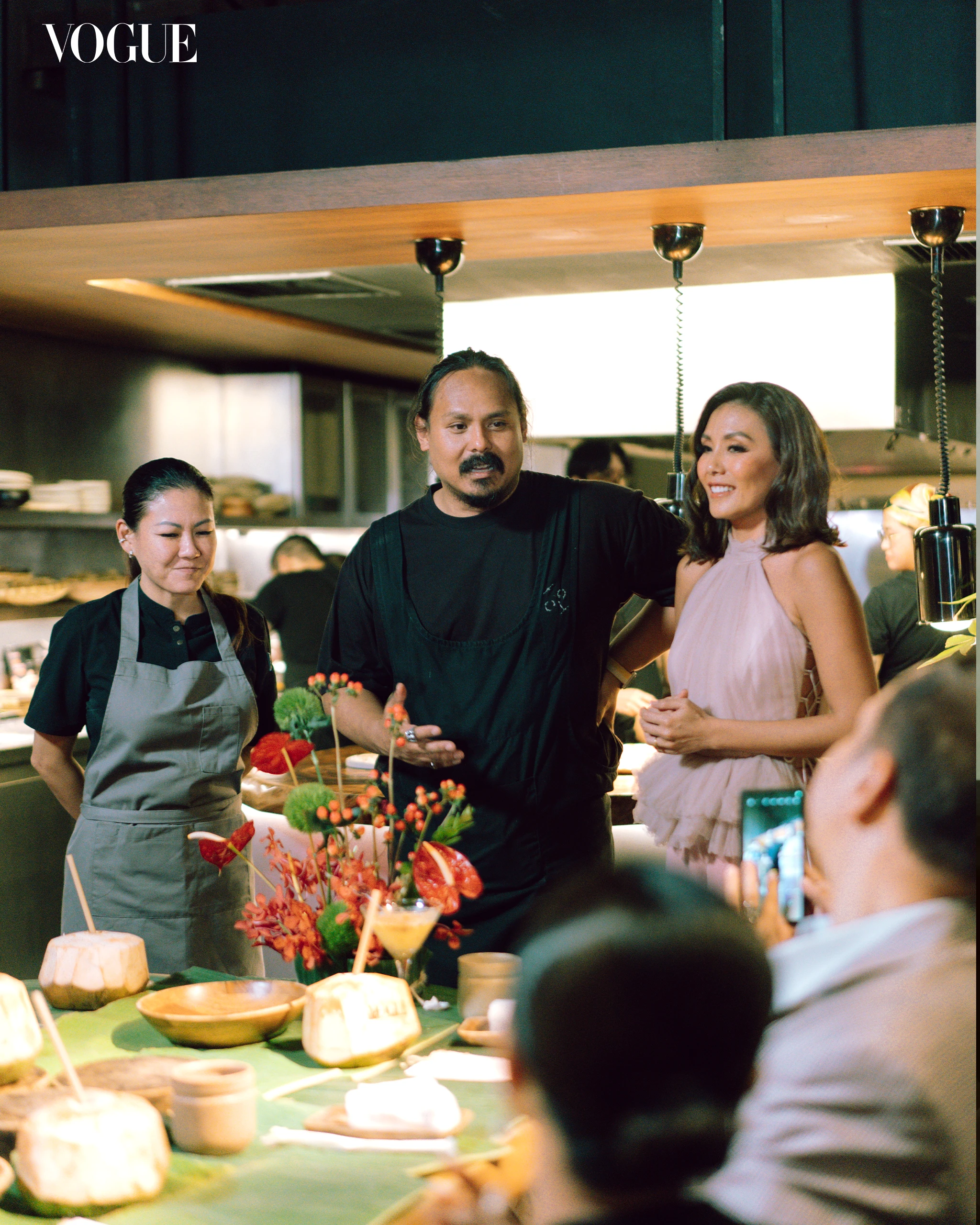
“Empty stomach naman?” asks Toyo Eatery chef and owner Jordy Navarra, calling out with a grin, as he goes around table to table, sharing what’s in store for Baken 1104, an ode to the postal code of the brand’s first research and development home in Manila.
Held in partnership with Vogue Philippines, the event brought together Baken founder and CEO Rachel Carrasco, chef-owner Johanne Siy of Lolla Singapore, and Navarra himself to explore the different possibilities of making bacon as the base of the four-course menu (or maybe five, if you count the hefty serving of lechon).
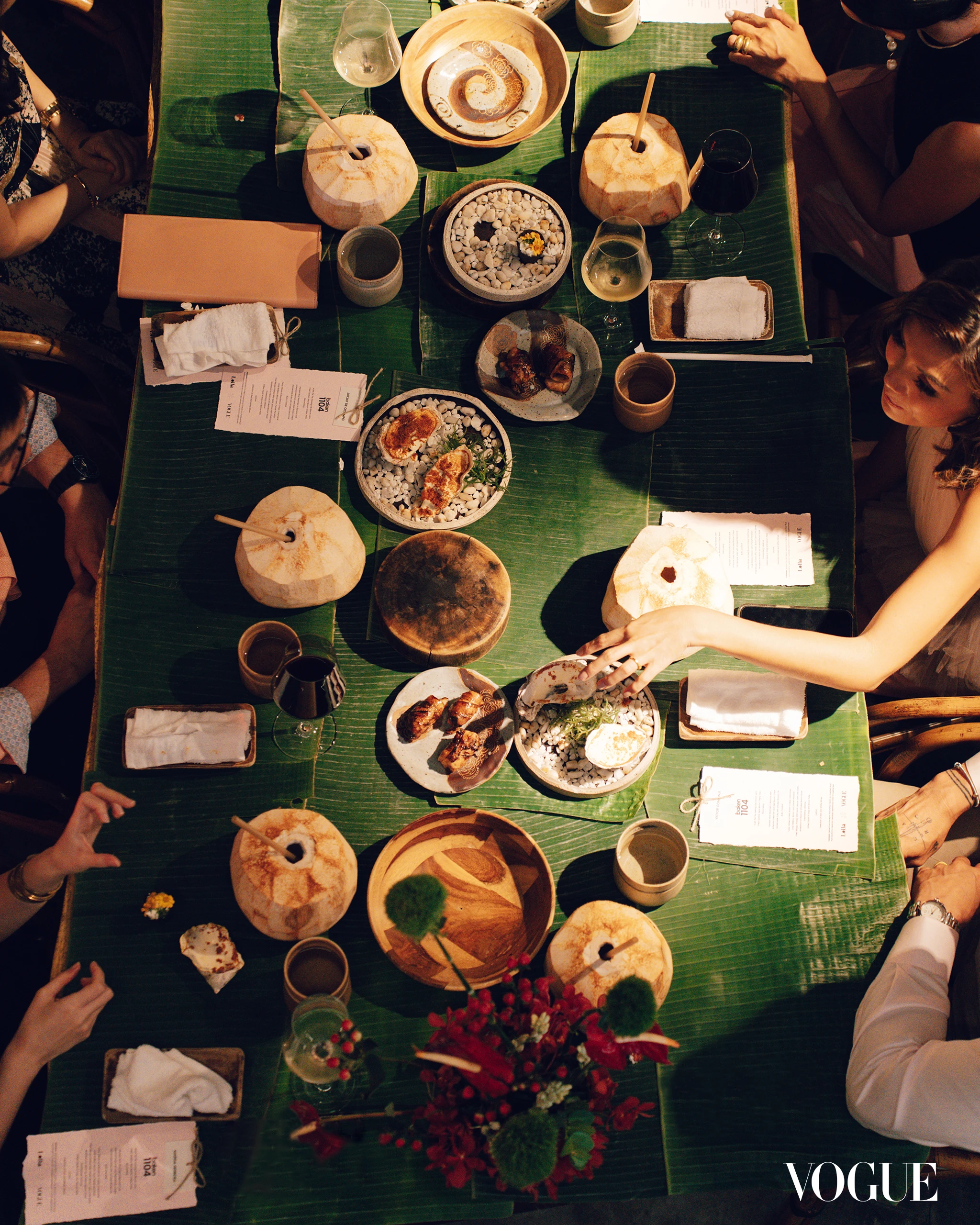
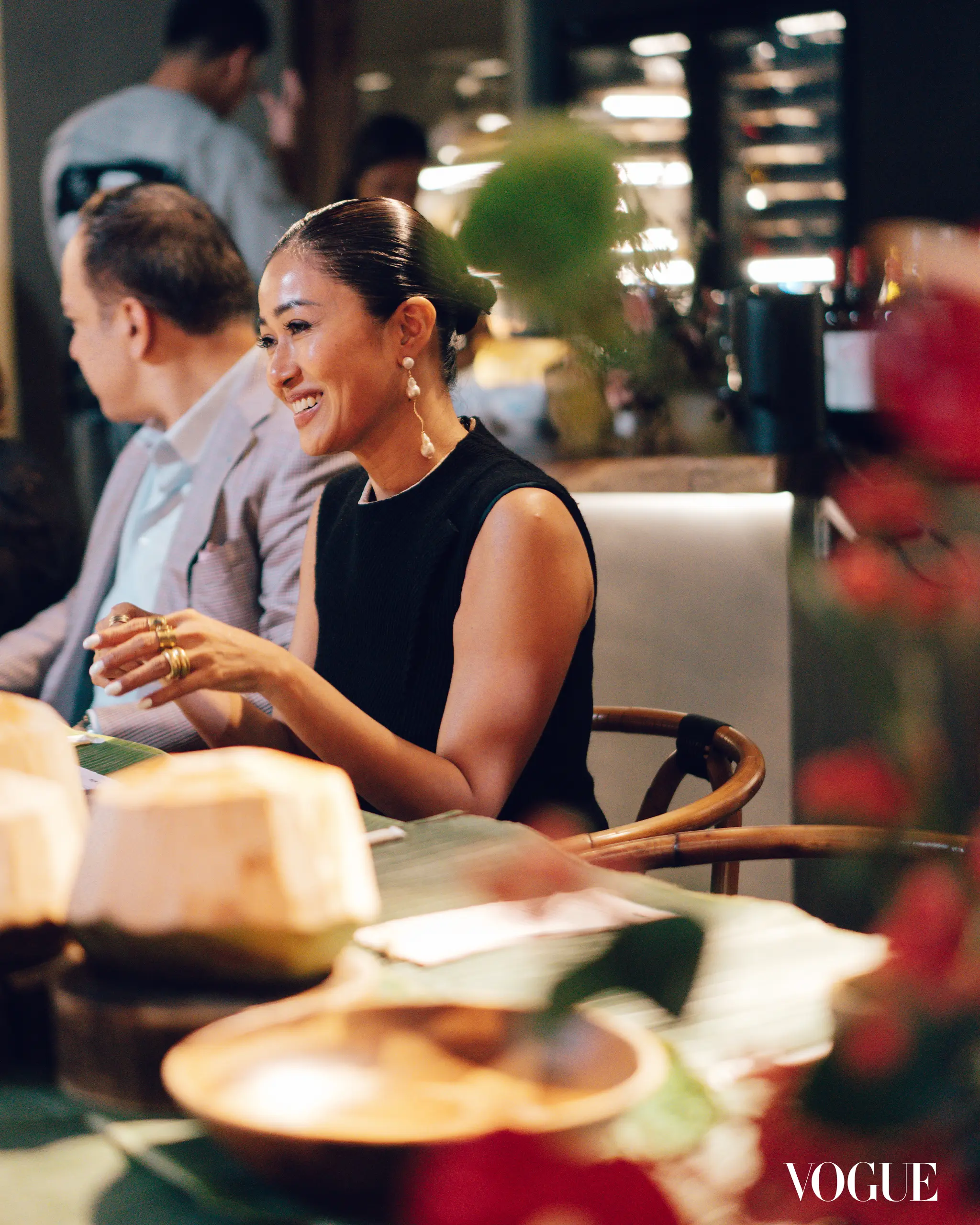
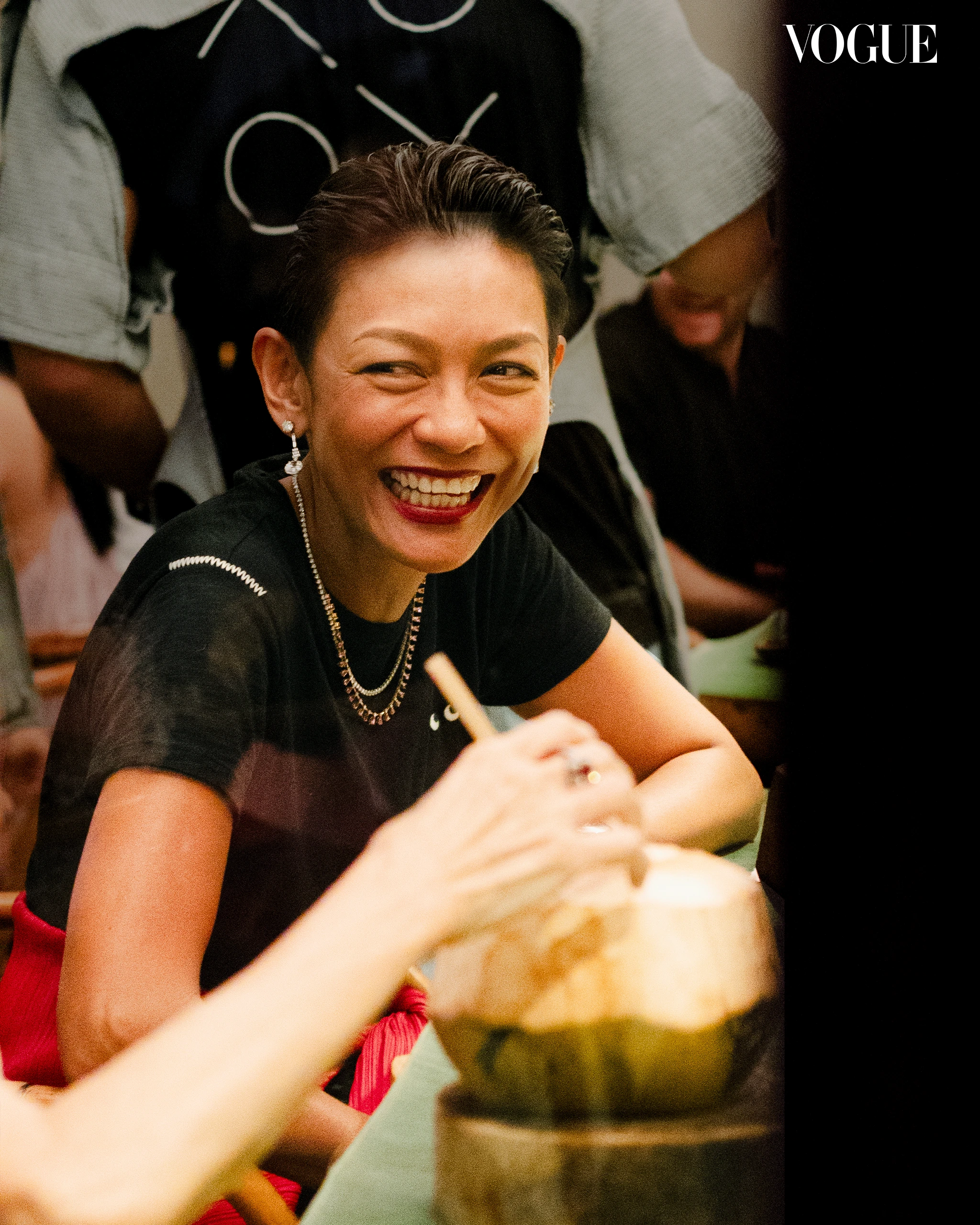
Vogue Philippines deputy editors Trickie Lopa and Pam Quiñones and beauty editor Joyce Oreña sat shoulder to shoulder with Anna and Jayjay de Ocampo, Bianca Macasaet, Jo Sebastian, Laureen Uy, Miggy Cruz, Alexis Offe, and Jam Melchor at tables lined with banana leaves, binakol cocktail in buko shells, wooden boards, and anthurium foliage.
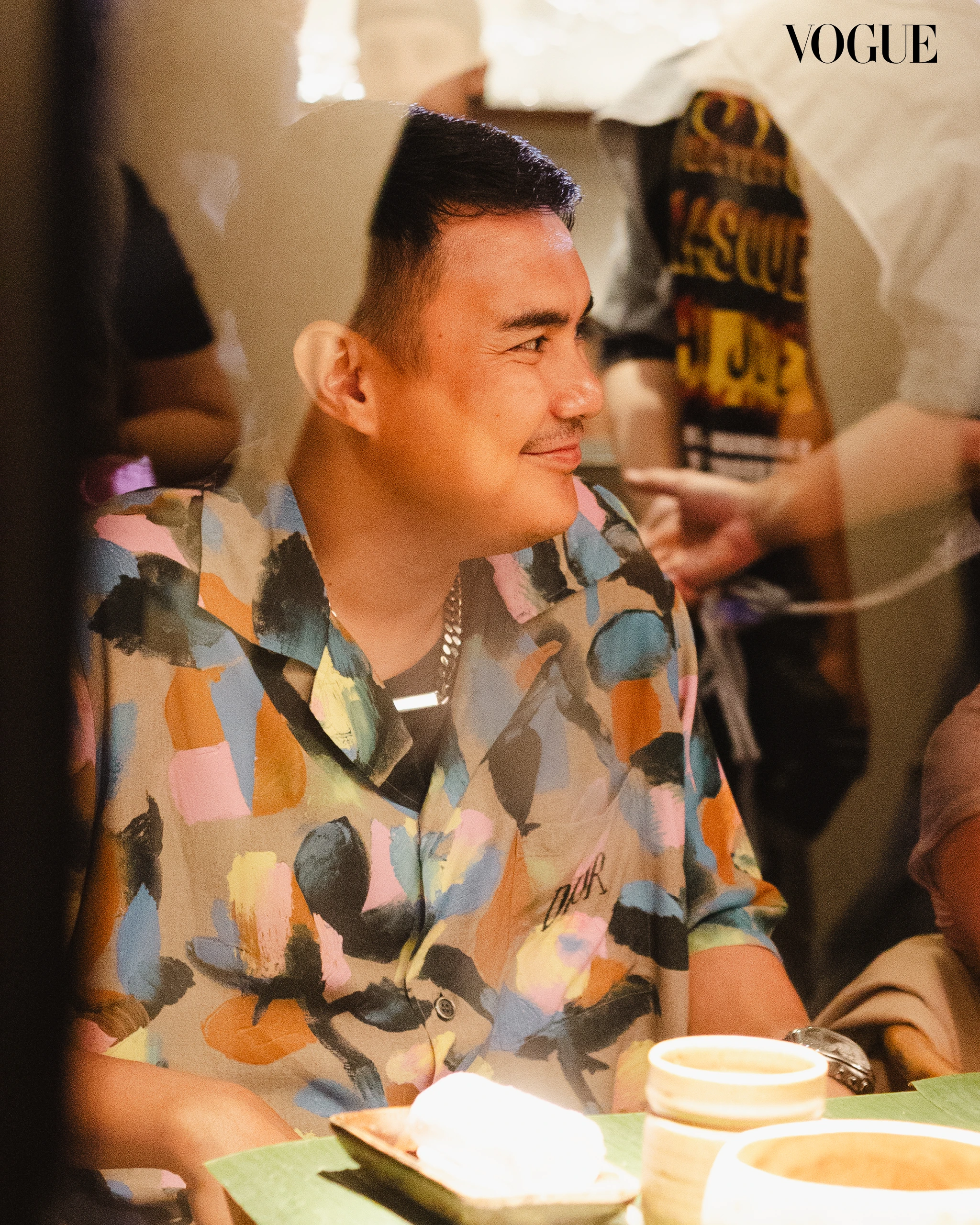
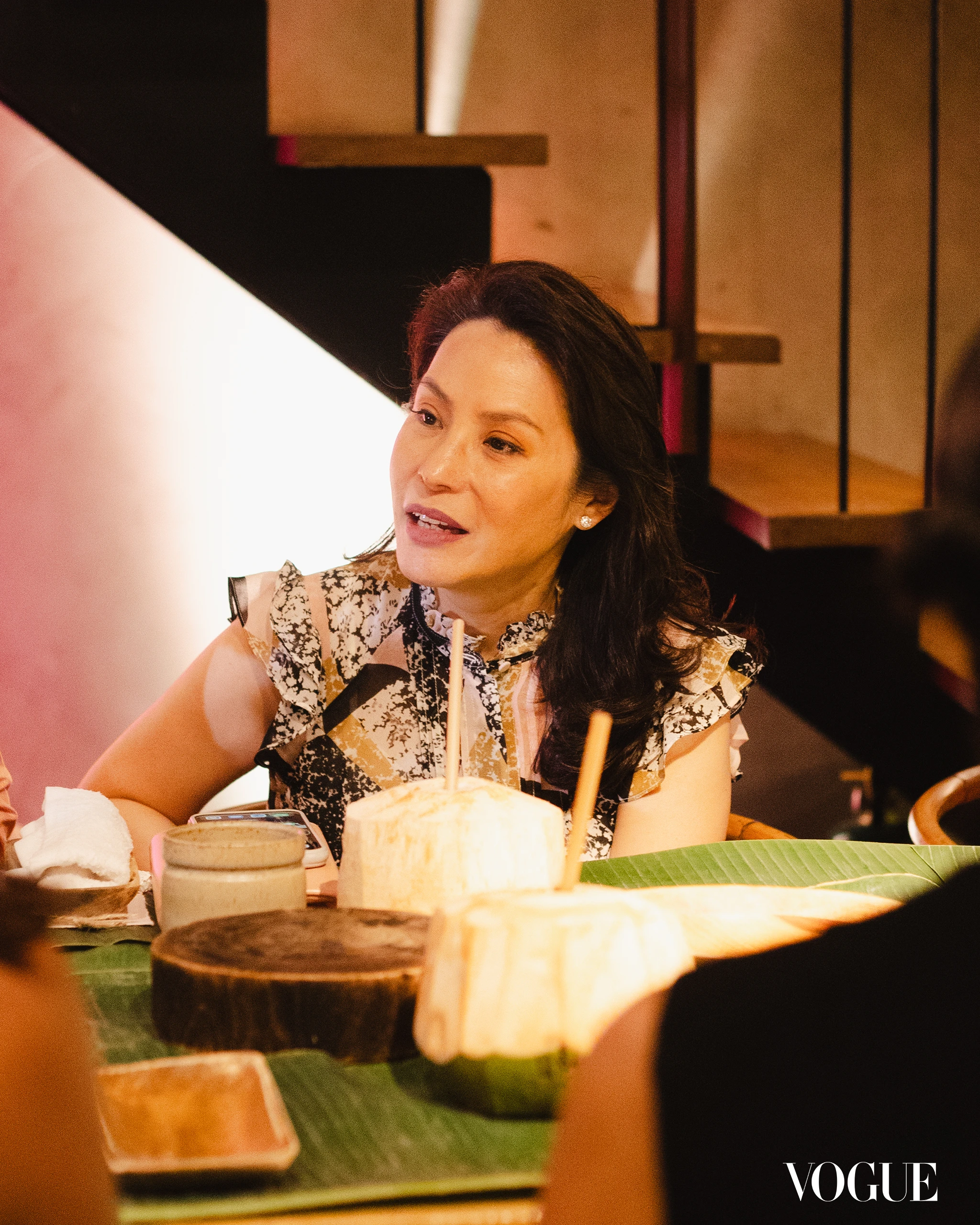
At the center of it all was the act of kamayan (eating with hands), bringing together people from the food and fashion industries through dishes meant to be picked up, shared, and in Carrasco’s vision: “It’s about creating a nostalgic spark in every bite, while unlocking memories with flavor.”
The first course: Kueh Pie Tie garnished with fresh edible flowers, fried oysters topped with Real Bacon Crisps and cheese, and a serving of baconsilog, came laid on white pebble stones. The latter was a personal childhood favorite of Carrasco.
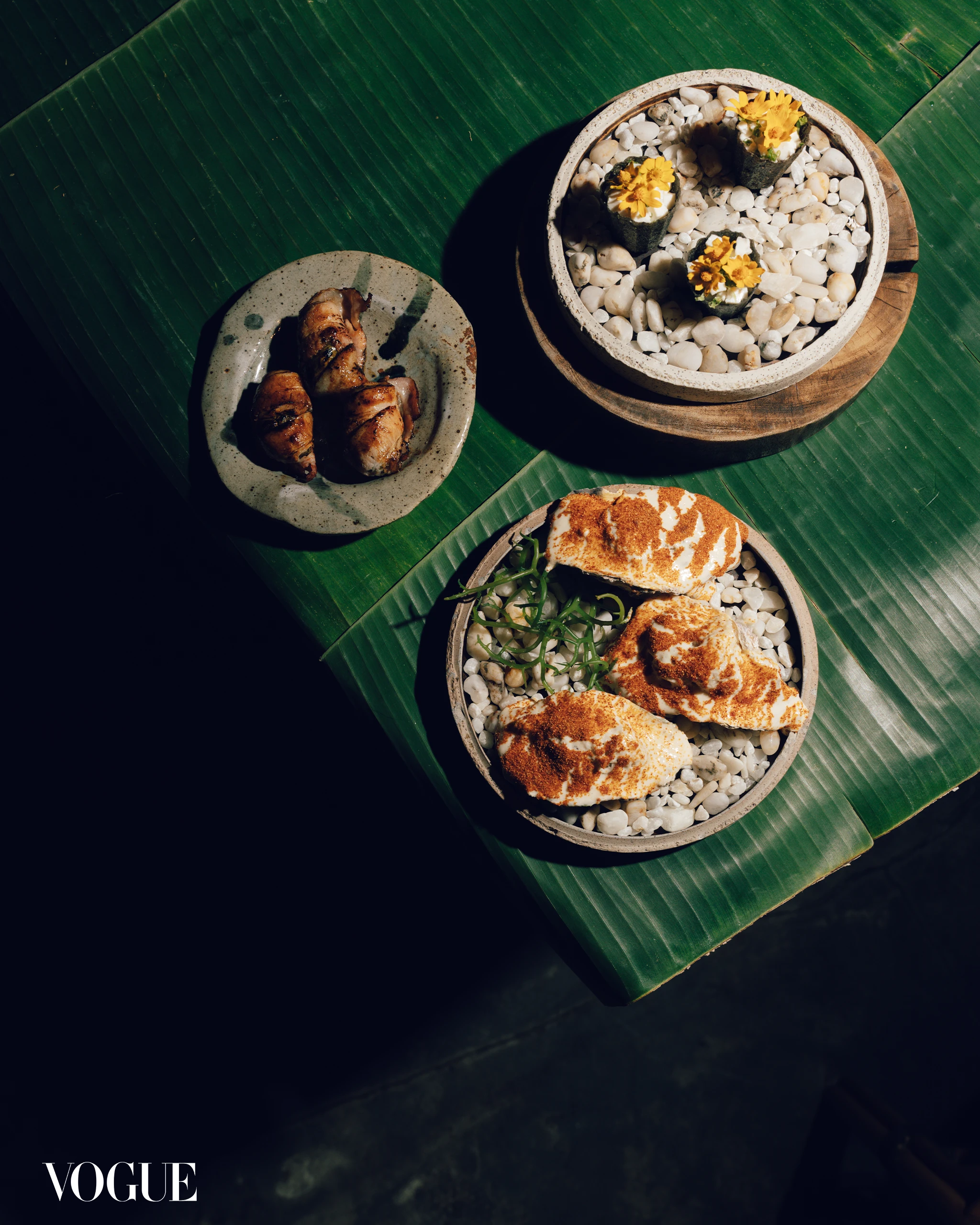
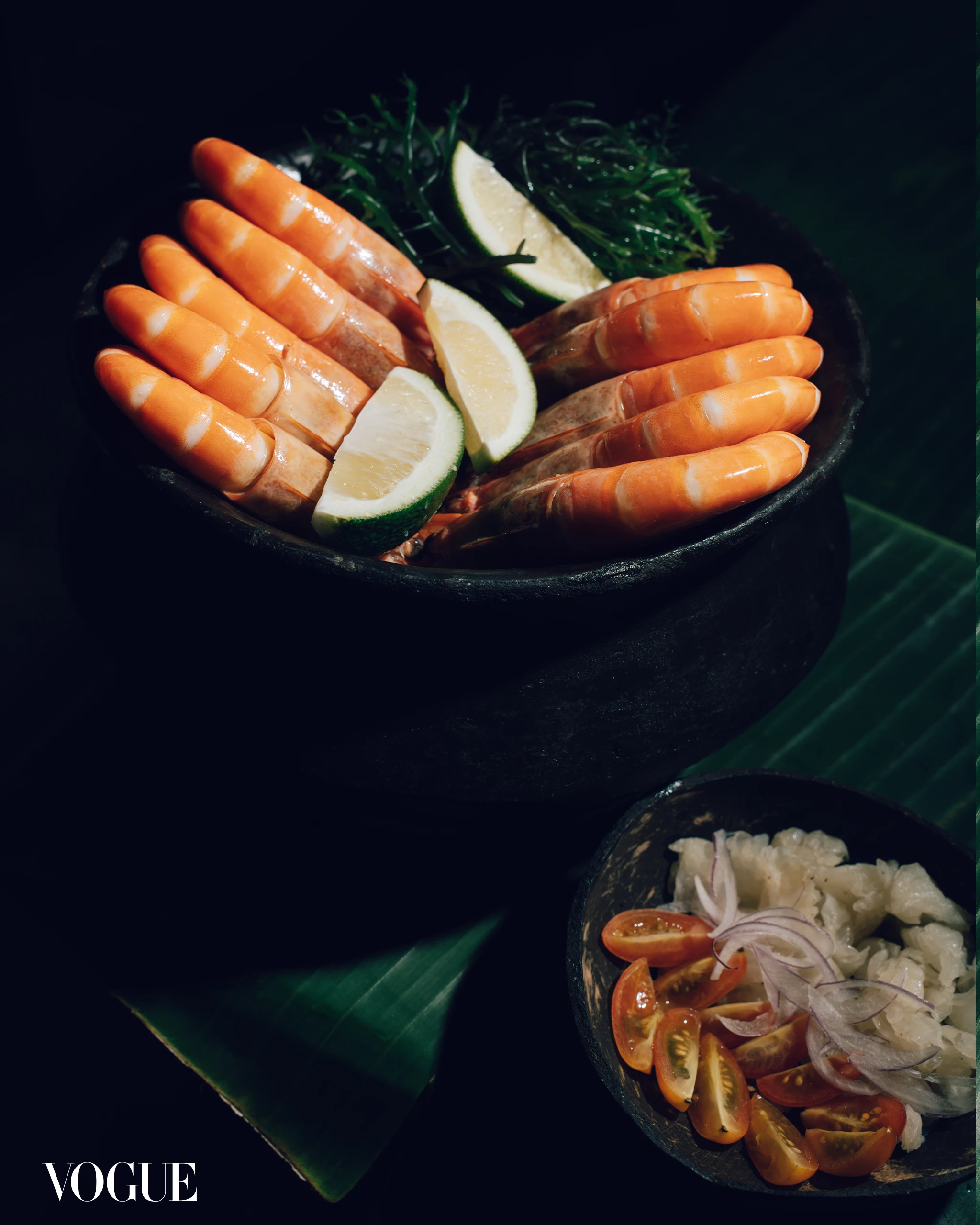
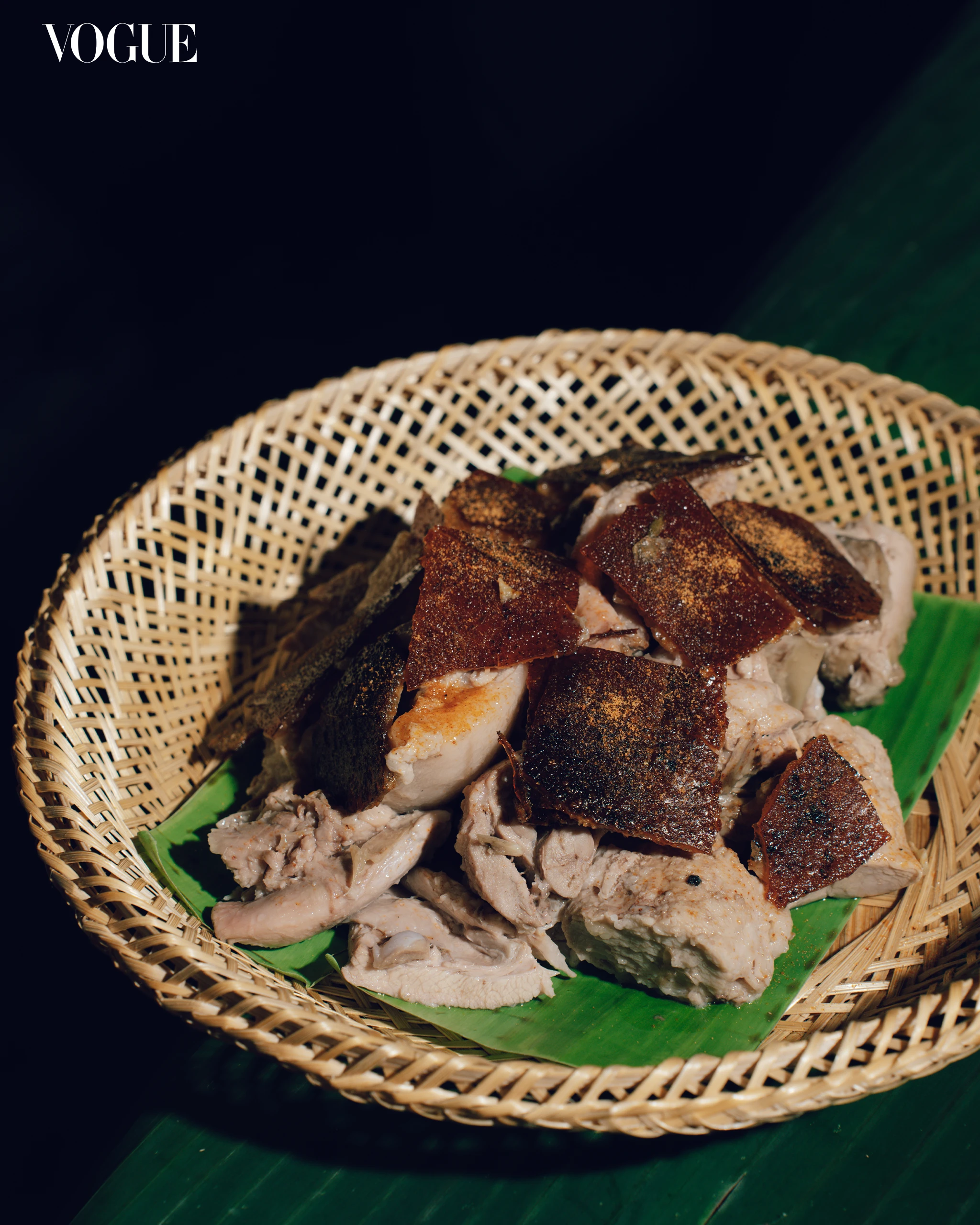
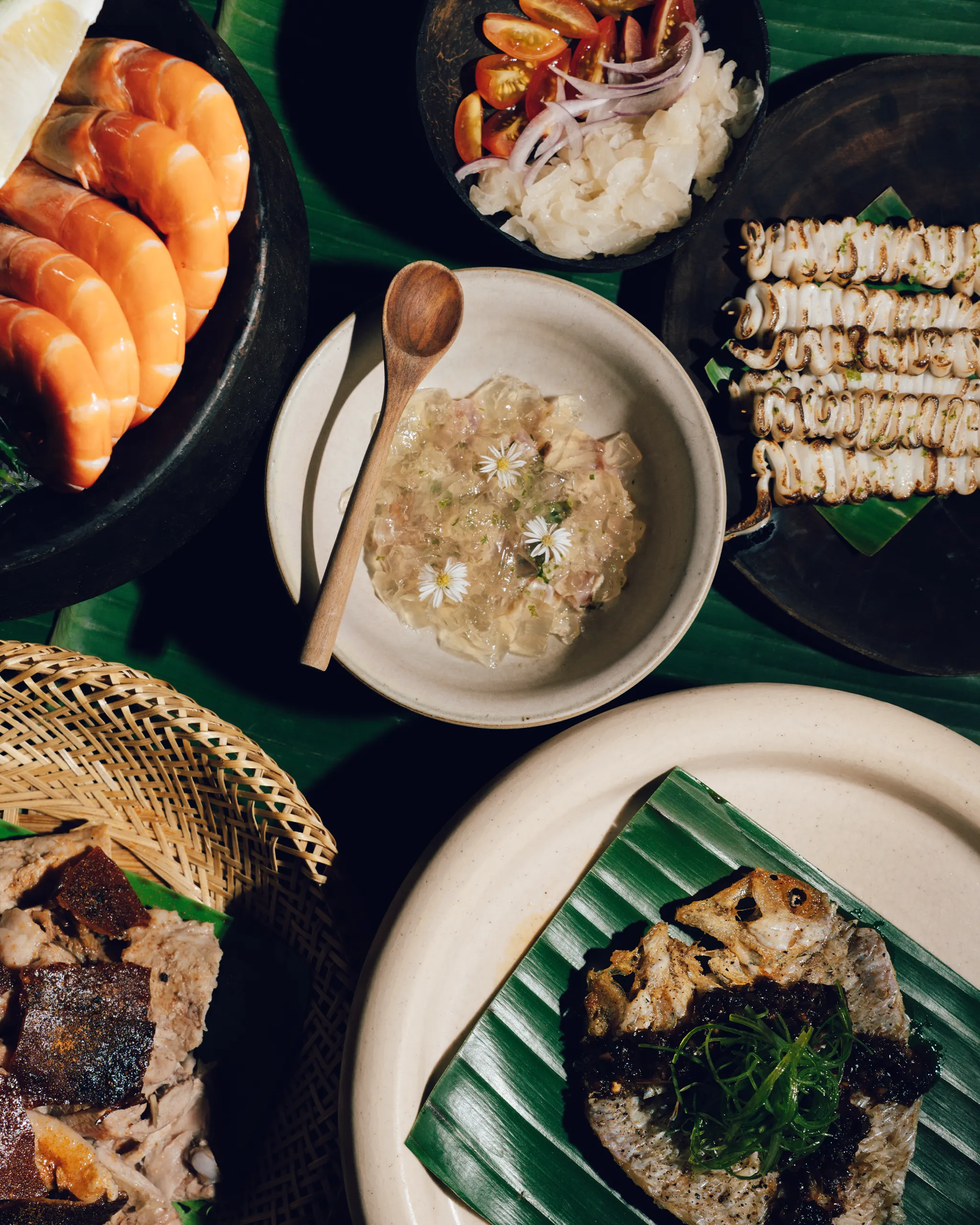
Dishes came out in succession: tuna with Real Bacon Crisps and calamansi, crab relleno with Bacon Jam and paprika foam, pancit-pancitan, hinalabos na hipon in bacon stock, fried bisugo (threadfish bream) with pickled wild garlic, and grilled squid in etag and bacon patis, featuring the new Original flavor mix for the Real Bacon Crisps, set to launch in 2026. The lechon, roasted outside of Karrivin Alley on a makeshift spit, was smoky, sharp with salt, and fragrant with aromatics.
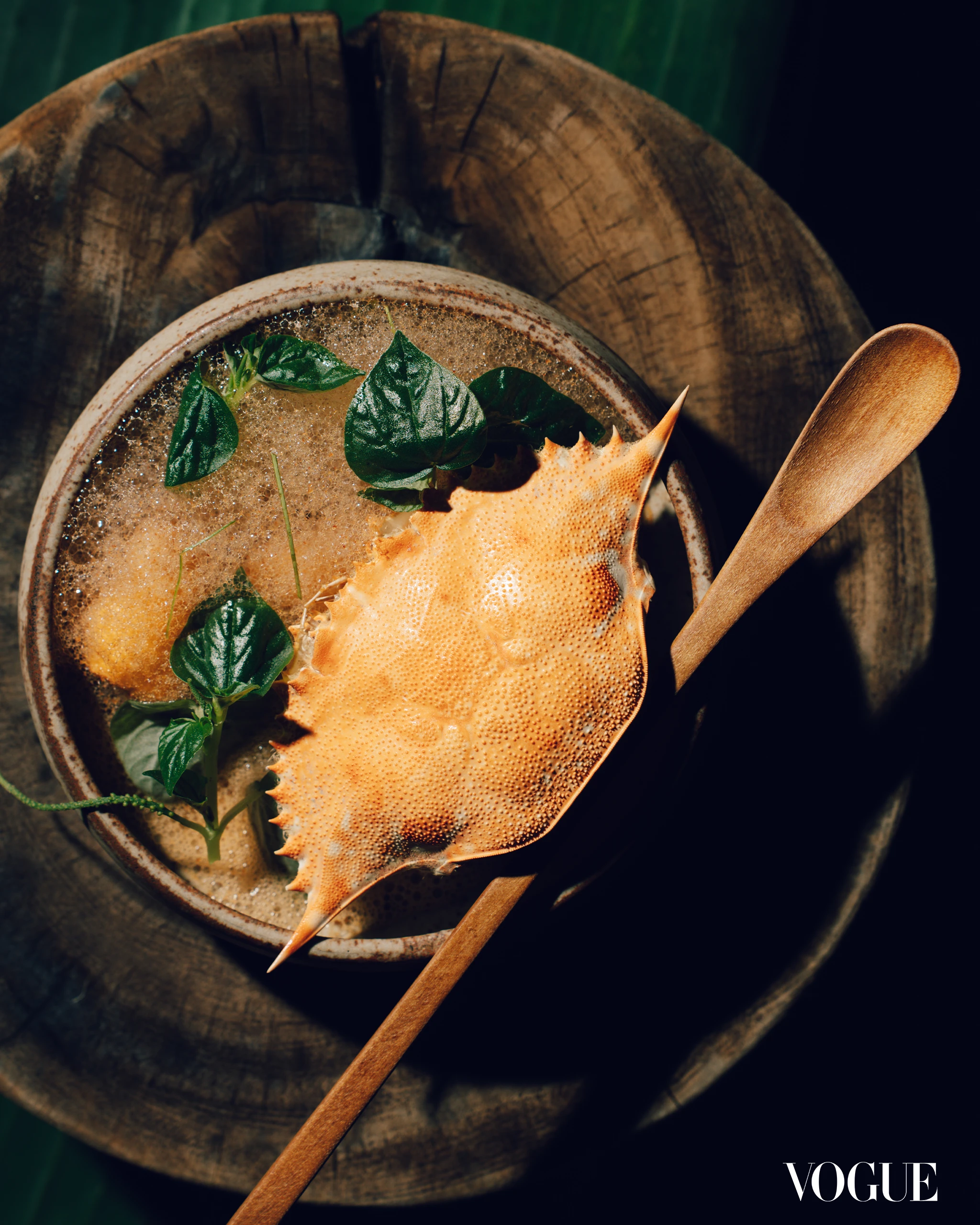
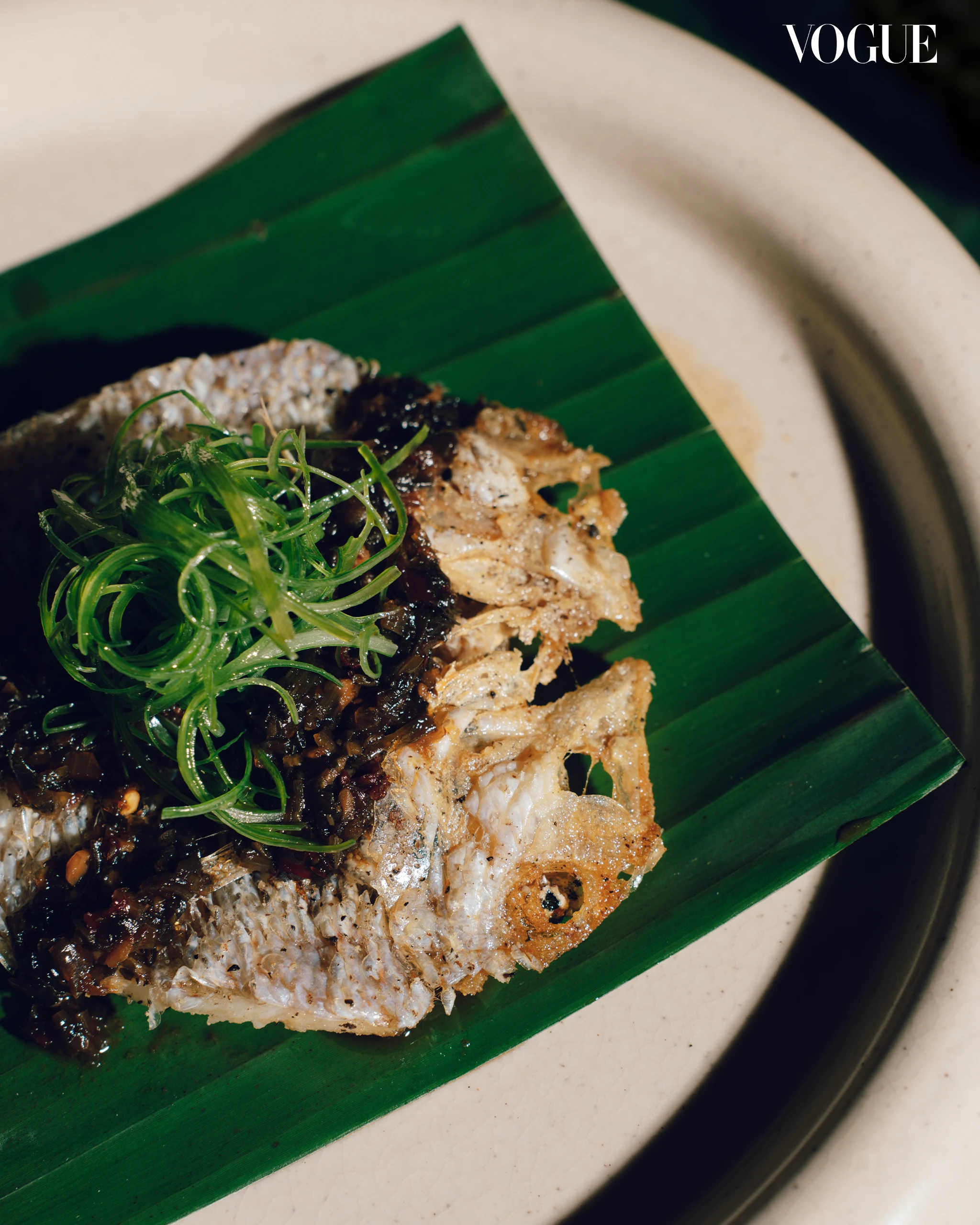
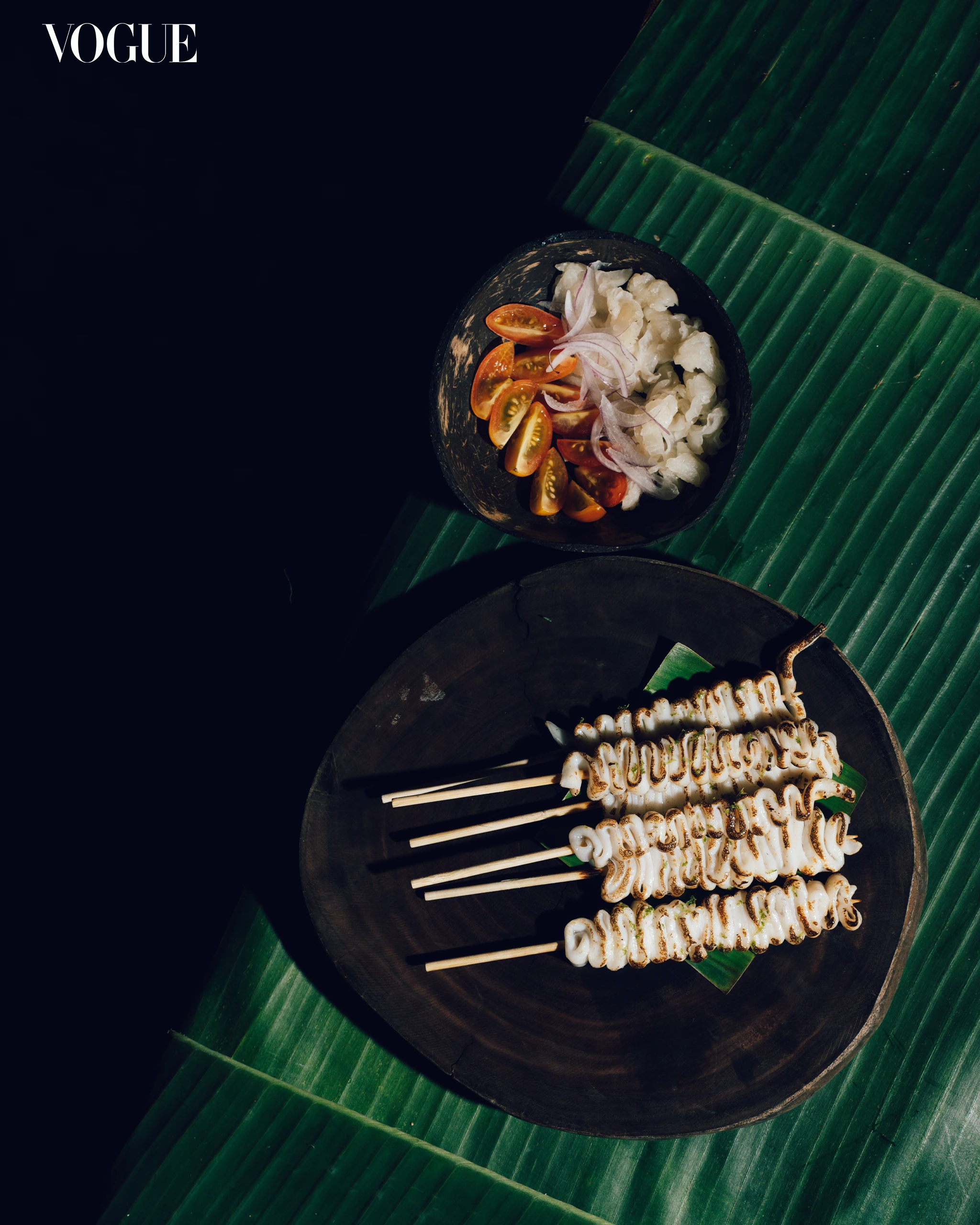
In true Filipino dining ritual, rice was unlimited. Guests built their own plate, selecting dishes, pairing sauces (emulsified with smoked bacon fat), and portioned your own serving. Between courses maître d’hôtel Clyde Zafra introduced each dish with suggested pairings, always ending with “Kain na,” grounding the evening in everyday dining rituals.
“I draw a lot of inspiration from the flavors I grew up eating, especially being overseas as a chef. That forms a big part of how I create and how I put together dishes,” shares Siy. She describes using bacon as both easy and challenging: easy because pork is integral to Filipino cooking, and challenging because bacon, particularly Baken, is already a finished product.
“Fat is flavor,” she adds. “That alone is a good starting point for any dish. It’s a great vehicle to build a very cohesive dish on its own.”
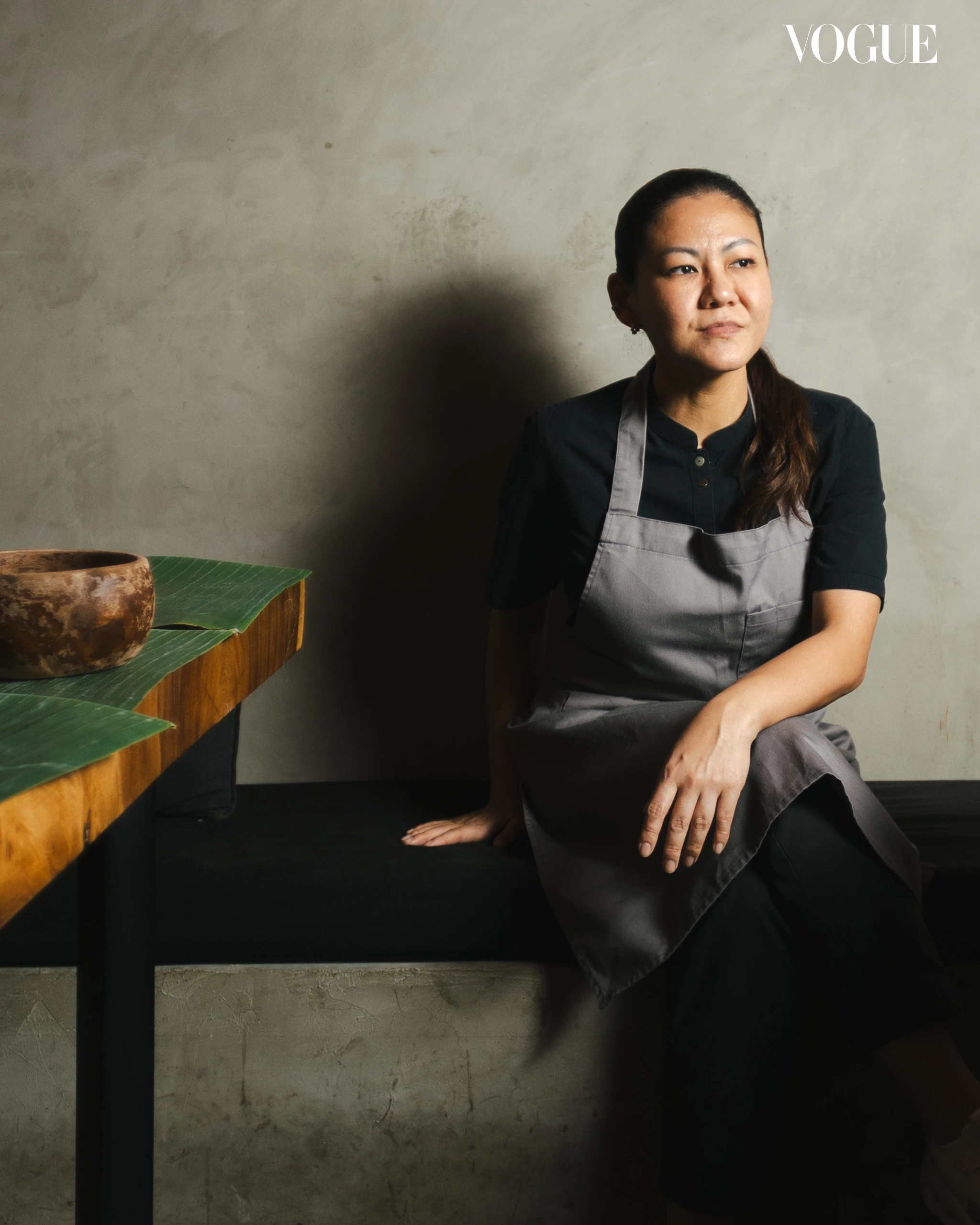
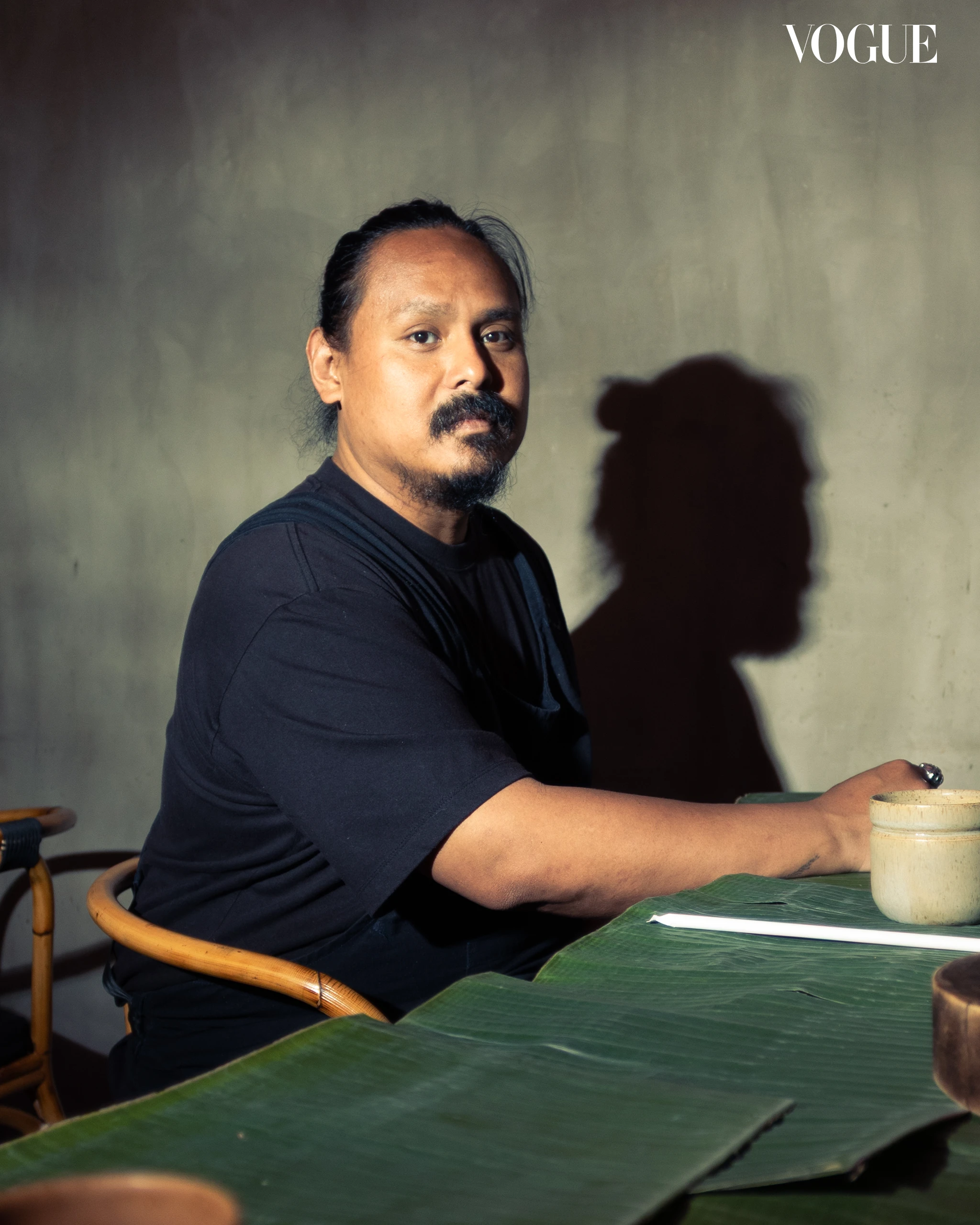
Navarra echoed the sentiment: “The cool thing about bacon is that it’s porky and smoky.” He tied those qualities to the way Filipinos associate pork with celebration and grilled food with memory. “For me, a strong part of Filipino cooking and its flavor profile is the smoky taste with either over coals or wood fire, whether it’s in kakanin or grilled meat.”
For Carrasco, Baken 1104 was about becoming their launchpad as a culinary conversation starter, expanding the business into the on-trade space. But personally, it was also about merging two of her homes: Singapore, where the meat snack brand was first registered, and the Philippines, where she was born. “Every brand has its own home. And the Philippines is my home and Baken’s home,” she shares. “We wanted to honor our heritage while modernizing Filipino culinary traditions. This dinner was about uniting both on one table.”
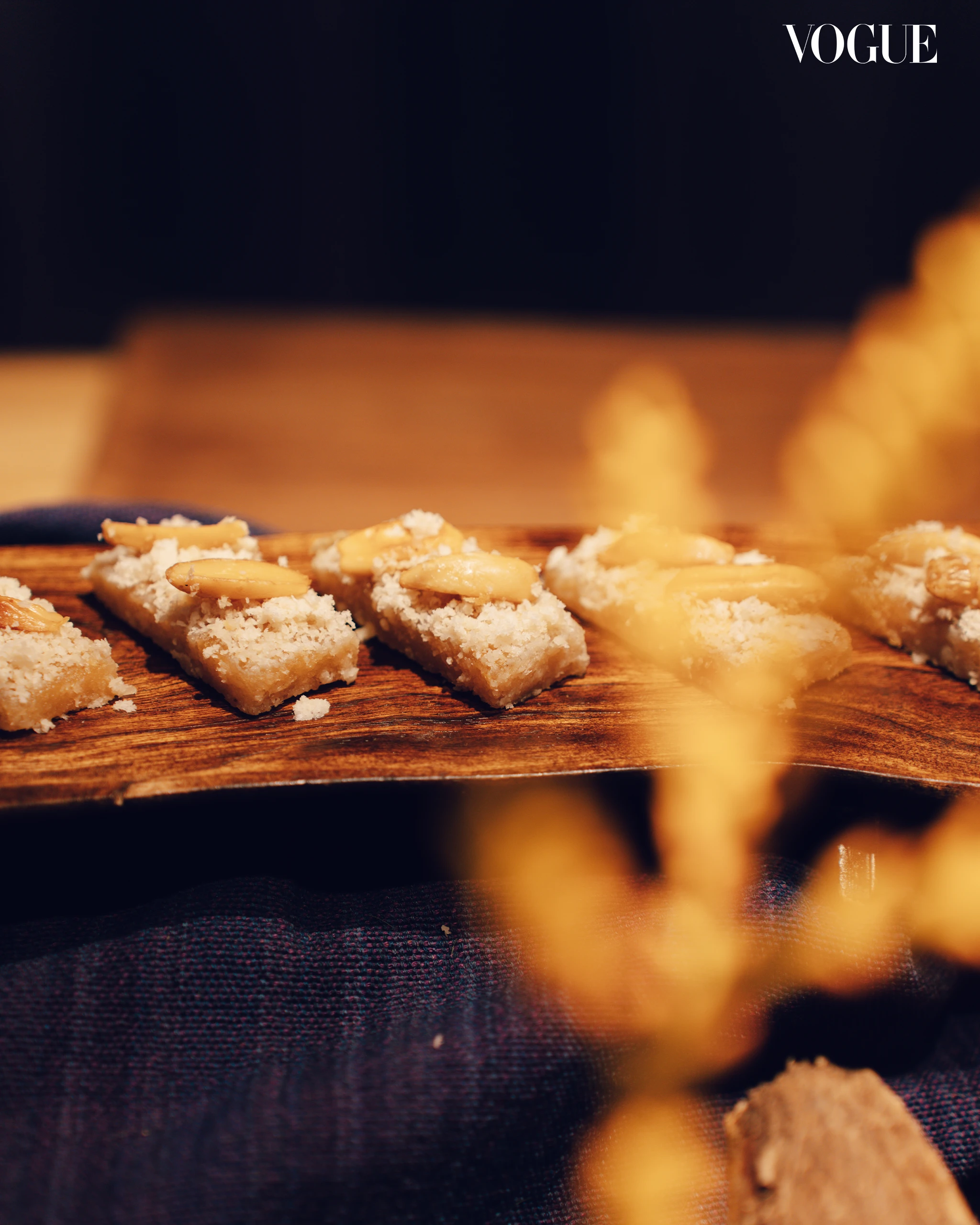
To close the night, guests were handed slips of paper and were invited to head to the second level of Toyo Eatery for a dessert surprise. Upstairs, guests were led to the Sweet Lab, a spread of desserts and snacks ranging from taho, tupig, bocho, balinghoy, ube, and a bowl of halo-halo sprinkled with bacon bits.
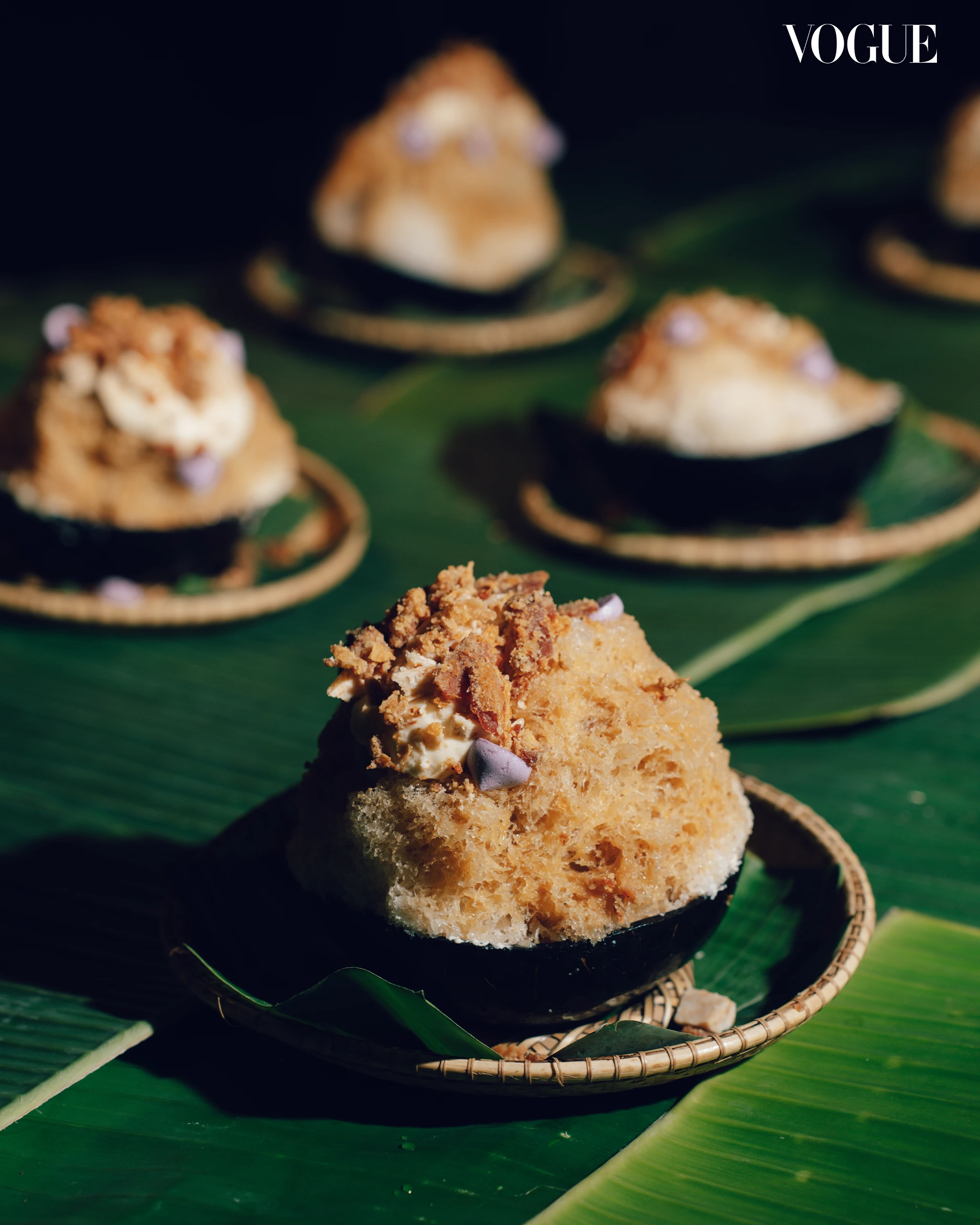
“Indulgence is intentional for Baken,” says Carrasco. “For me, it’s never about creating another menu or dinner. It’s about celebrating who we are as Filipinos and inviting culinary masters to see Baken beyond the product and discover it as a canvas.”
For more information, visit Baken’s official website.