
In Moonglow, Isabel Sandoval Finds Beauty in Moral Ambiguity


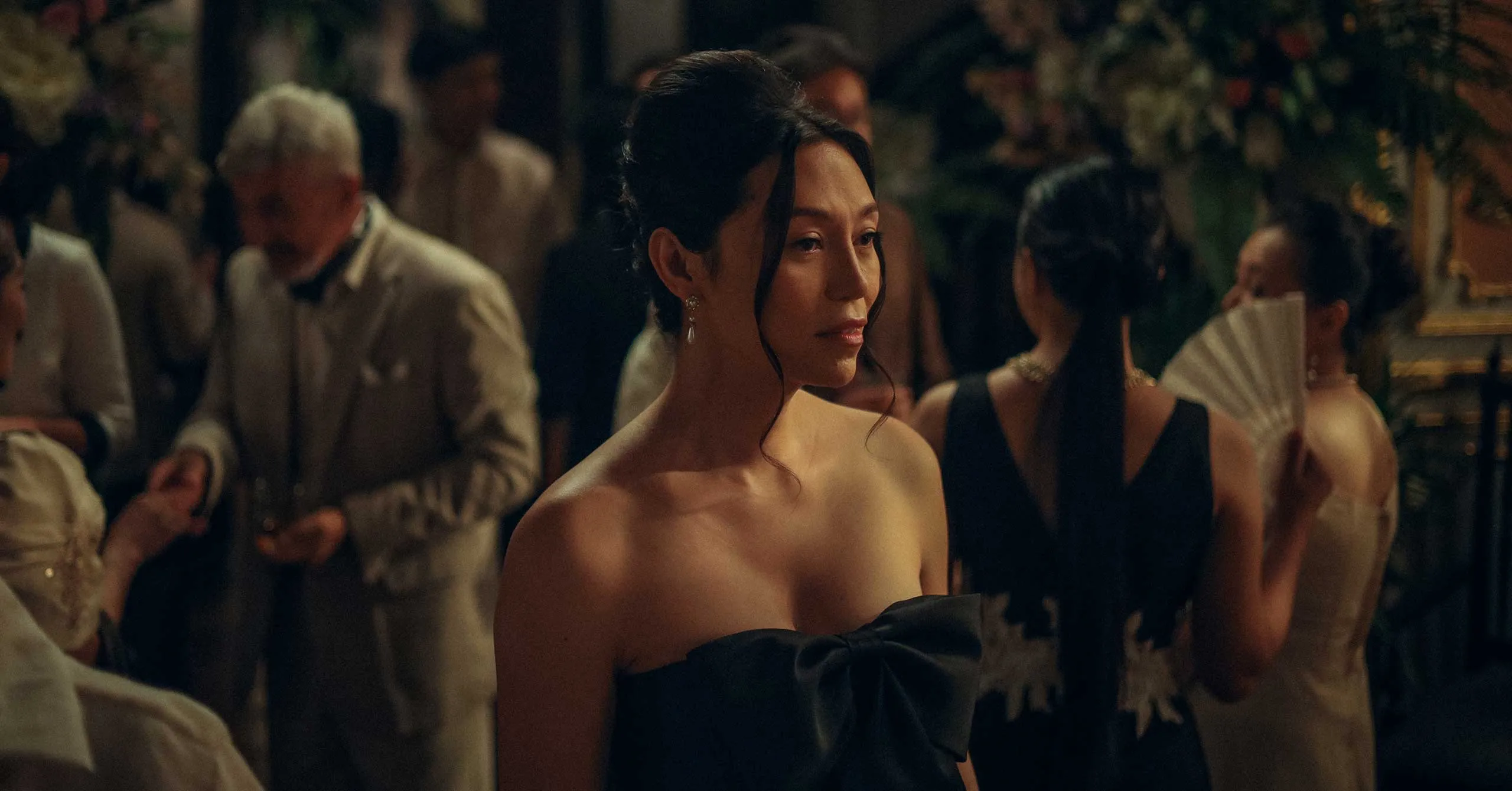
Isabel Sandoval as Dahlia in Moonglow. Photographed by Wence Trajano
Isabel Sandoval as Dahlia in Moonglow. Photographed by Wence Trajano
As her neo-noir film makes its Philippine homecoming at QCinema 2026, the filmmaker discusses authoritarianism, moral compromise, and the allure of classic Hollywood.
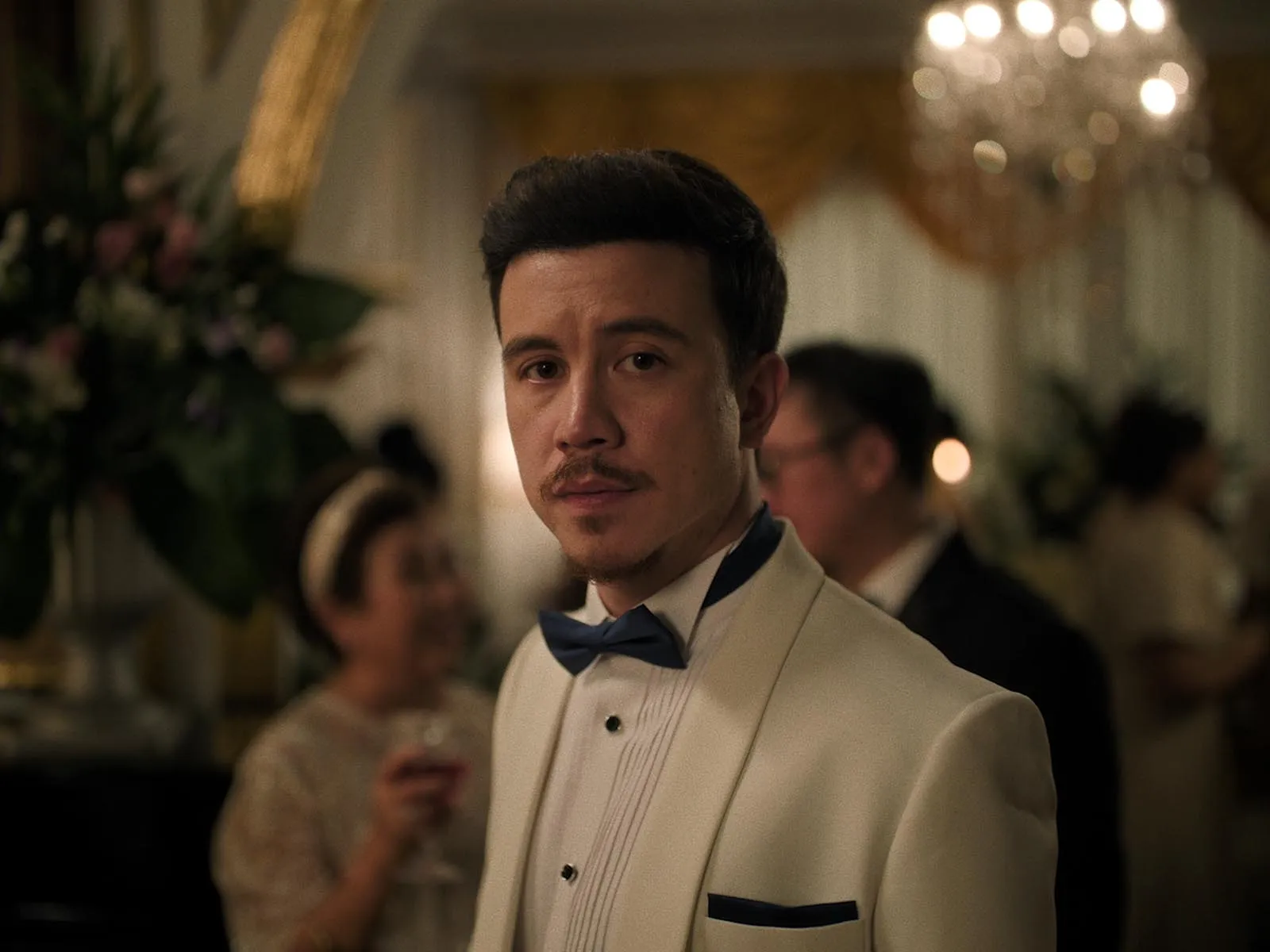
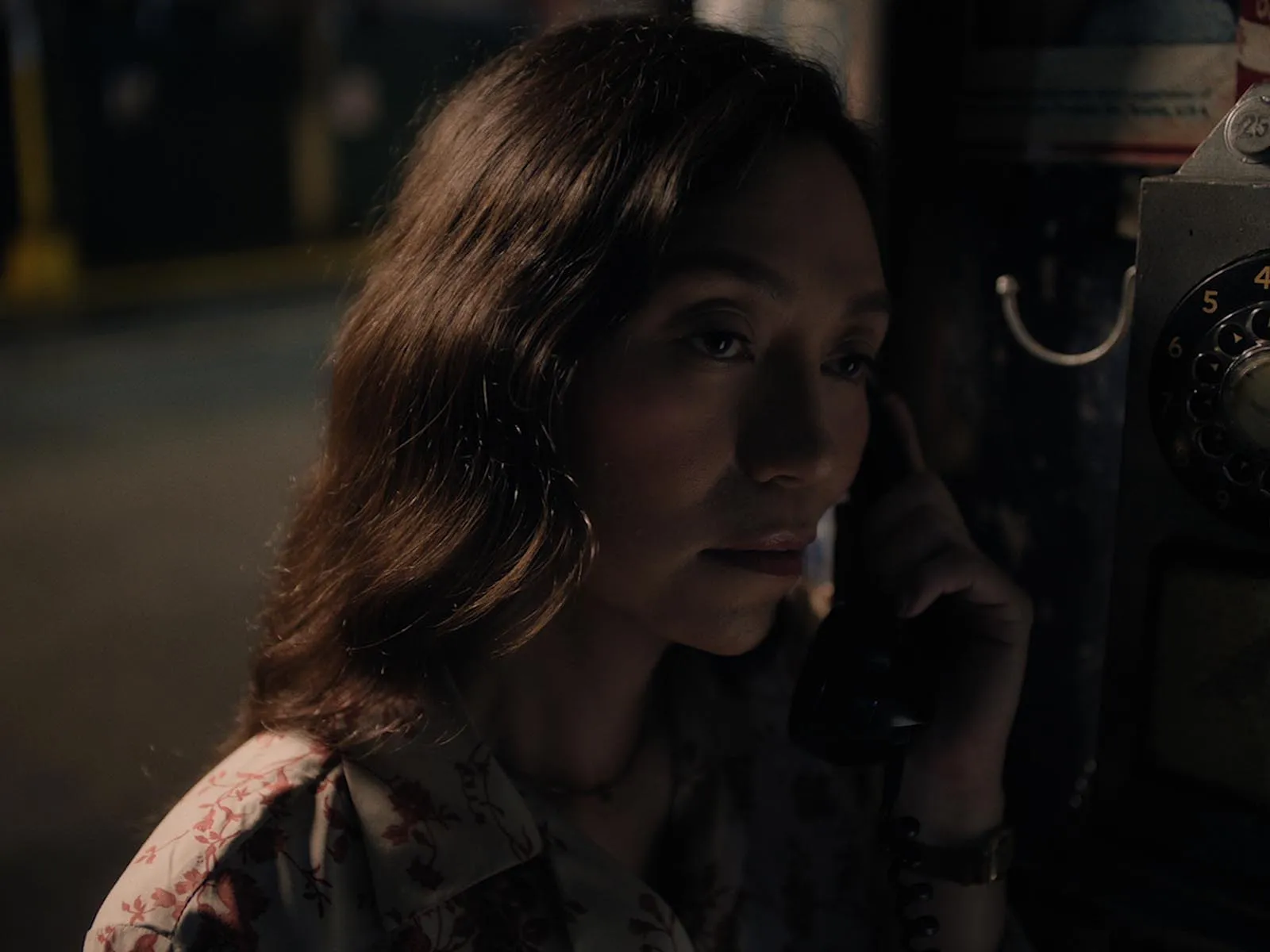
When Vogue Philippines last spoke with Isabel Sandoval, Moonglow was already in the making. Moonglow is a Filipino neo-noir crime and romance film written, directed, co-edited, and starring Sandoval. Set in late 1970s Manila, it follows a disillusioned police detective who orchestrates a heist against her corrupt superior. The twist: She gets assigned to investigate the crime she committed.
The film has toured major international film festivals across Europe, North America, and Asia, and has received nominations such as the Big Screen Competition nomination at the International Film Festival Rotterdam (IFFR). This November, Moonglow makes its Philippine homecoming at QCinema International Film Festival 2026.
Below, Vogue Philippines catches up with Sandoval ahead of the film festival.
Vogue Philippines: Moonglow is set in 1979, during the Marcos dictatorship, but much of the violence and repression of martial law exists outside the frame. You have described this as a deliberate choice, with the characters’ class privilege allowing them to remain somewhat insulated from the realities beyond their immediate world. What interested you in examining authoritarianism through the perspective of people who can afford not to look?
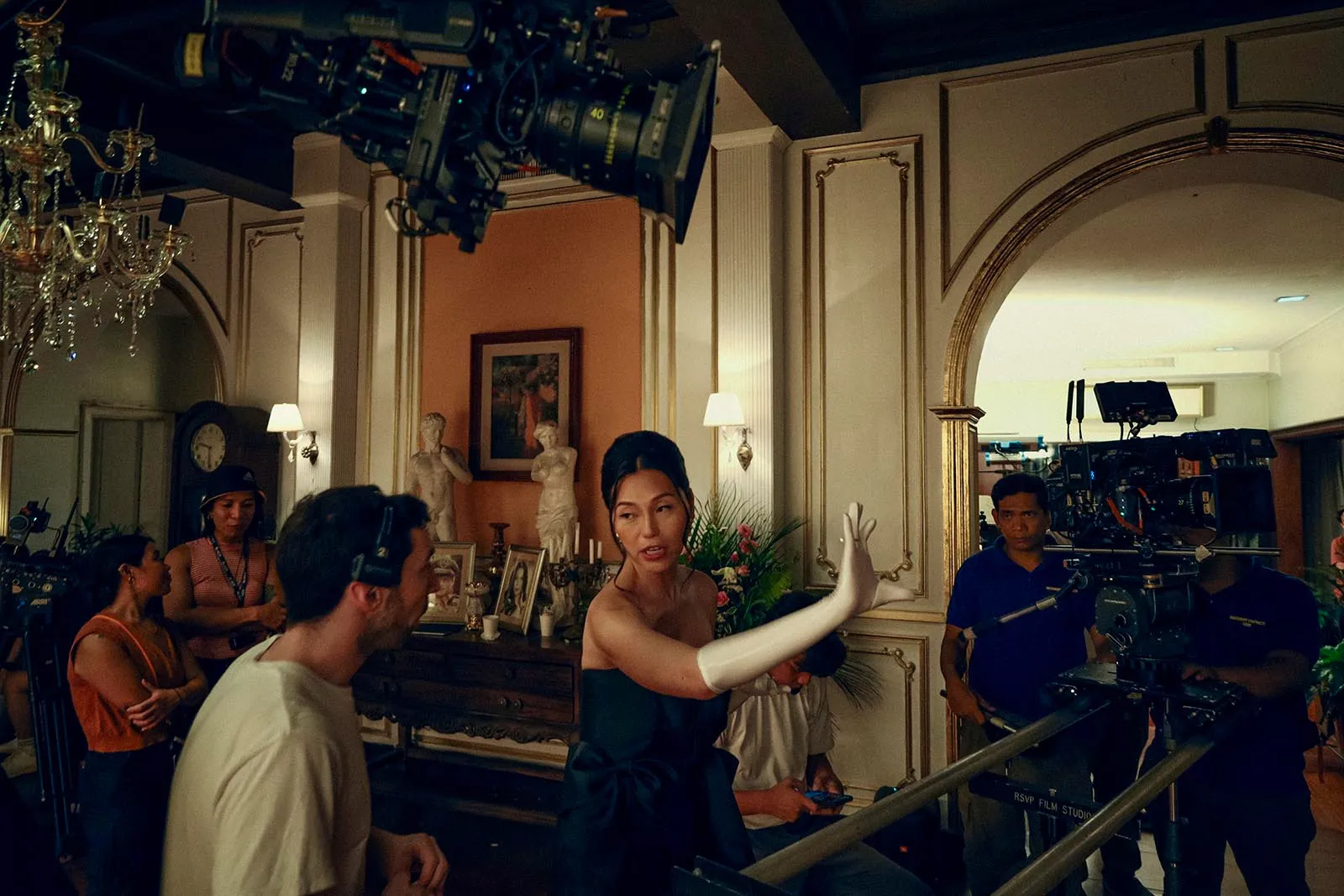
Isabel Sandoval: This is actually my second film tackling martial law, after Aparisyon, which follows a group of cloistered nuns in the months leading up to its declaration. With Moonglow, I’m approaching the period from an entirely different vantage point, that of a female detective, and through a very different stylistic aesthetic, drawing on the traditions of classical Hollywood.
In both films, I’m interested in examining a particular historical period and milieu through a very specific subjectivity. With Dahlia, I imagine a woman who began with a certain idealism but who, over the years, finds herself increasingly absorbed into the very system she might once have believed she could resist. Her class position affords her a degree of insulation from the violence and repression unfolding around her, but that insulation comes with its own moral compromises. I was fascinated by the idea of a woman confronting the person she once was, and the distance between that younger self and who she has become.
More broadly, I’m fascinated by how the past comes back to haunt us, both personally and collectively, and how the compromises we make, and the things we choose not to see, eventually become part of who we are.
The Philippines has spent decades reckoning with the Marcos dictatorship, yet the politics of historical revisionism and the romanticization of that era remain very much present. Did the contemporary political climate influence how you approached a film set in 1979? Were there parallels you consciously wanted audiences to recognize?
That’s precisely why I chose to use the grammar of classical Hollywood in Moonglow. It’s the first of my features to really acknowledge cinema as a medium of artifice, marking a departure from the realism that characterized both my earlier work and much of Philippine arthouse cinema until the 2010s.
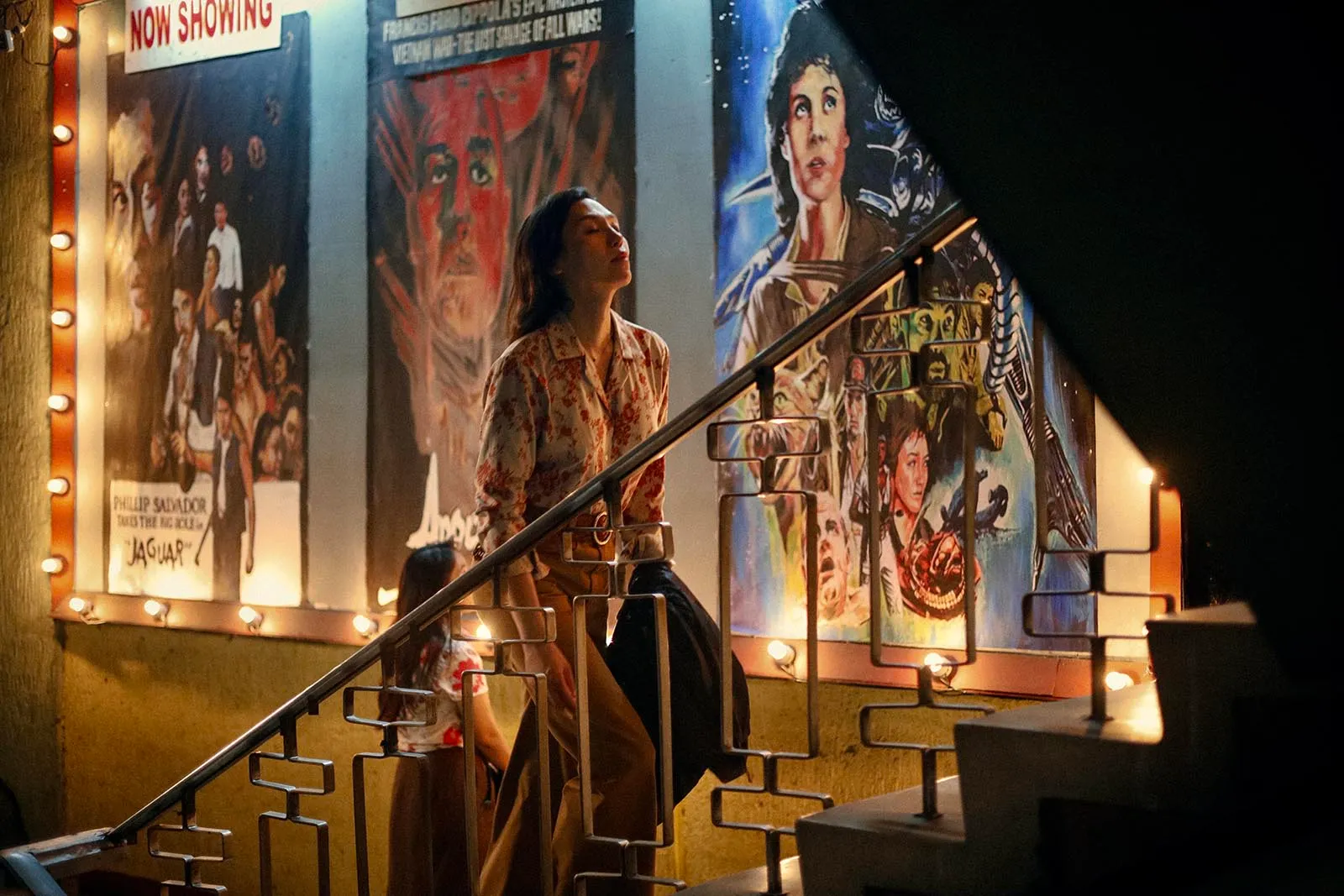
I’ve always been fascinated by classical Hollywood as a machinery of cultural seduction, one of the ways America established its global cultural influence, not simply through economic and political power, but by exporting its myths and fictions of glamour, heroism, romance, and the American dream.
My political commentary is therefore embedded in the very form of Moonglow. I’m interested in the idea that the cinematic image, however beautiful or persuasive, is always a construction, necessarily selective, limited, and potentially deceptive. I wanted to invite viewers to engage more critically with cinema itself, to question the intentions and assumptions behind the images they’re being seduced by, perhaps especially when those images are at their most beautiful.
When Vogue Philippines last spoke to you, Moonglow was still being developed, and you described it as an ambitious project that would allow you to explore the marriage of political themes and lyrical, sensuous filmmaking on a larger scale. Now that the film has premiered internationally, how has the finished work surprised you? Did it become something different from the film you initially imagined?
In some ways, I feel like I pulled off a bit of a heist with Moonglow. I was taking on these very established and popular cinematic genres—film noir or crime film and melodrama—with their recognizable conventions, and experimenting with how much I could bend them, subvert them, and ultimately make them my own. It was an experiment in seeing how much of myself I could imprint onto these templates, in terms of rhythm, thematic preoccupations, and visual language.
Rather than simply fulfilling the expectations associated with a noir or crime film, I wanted to use their grammar to explore things that have always interested me as a filmmaker: psychological interiority, female subjectivity, moral ambiguity, and the tension between the personal and the political. There’s something particularly interesting to me about appropriating what has traditionally been a rather masculine genre to explore the inner life of a woman.
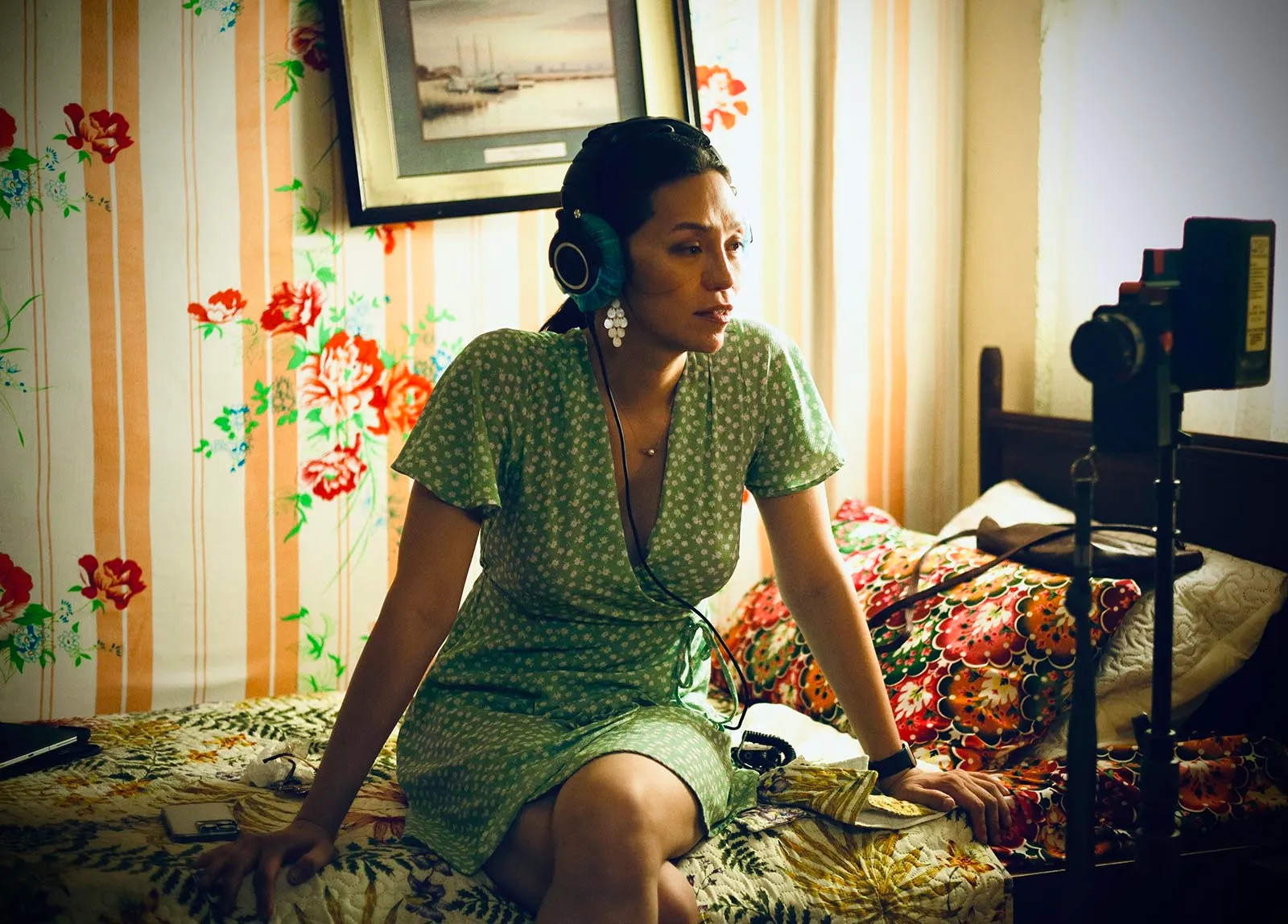
I recently rewatched Sofia Coppola’s Marie Antoinette, and it struck me that there’s perhaps a kinship between what she was attempting there and what I wanted to do with Moonglow: to regard a particular historical moment through the highly subjective experience of a woman, to find her humanity and vulnerability without necessarily letting her off the hook.
I sometimes imagine Dahlia as someone who might see herself as a Barbara Stanwyck or Jeanne Moreau character, smoking on the streets of Paris at midnight, romanticizing her own existence. Perhaps that’s her way of dignifying, or even glamorizing, her moral decline. I find that contradiction fascinating.
Ultimately, I think Moonglow became an experiment in how I could inhabit a cinematic tradition I deeply love while simultaneously bending it toward my own sensibility, and perhaps even questioning the very mythology that made me fall in love with it in the first place.
The 14th QCinema International Film Festival runs from November 13 to 22, 2026, with screenings at Gateway Cineplex 18, Robinsons Movieworld Galleria, Ayala Malls TriNoma, Fisher Box Office, and SM Cinema at SM City Fairview. Tickets are available at a discounted price of PHP 200.
Frequently Asked Questions
Moonglow is a Filipino neo-noir crime and romance film set in Manila in 1979. It follows Dahlia, a disillusioned female police detective who orchestrates a heist against her corrupt superior, only to be assigned to investigate the very crime she committed.
Isabel Sandoval wrote, directed, co-edited, and stars in Moonglow. The film continues her exploration of female subjectivity, political history, and psychological interiority.
The film takes place in late 1970s Manila, during the Marcos dictatorship. Rather than depicting martial law’s violence directly, Sandoval examines the period through the perspective of a woman whose class privilege allows her to remain somewhat insulated from the political realities surrounding her.
Moonglow explores authoritarianism, historical memory, class privilege, moral compromise, and the relationship between personal and political histories. It also examines how cinema can use beauty and glamour to construct persuasive, but potentially deceptive, narratives.
Moonglow makes its Philippine homecoming at the QCinema International Film Festival 2026, following its screenings at international film festivals across Europe, North America, and Asia.
- Vogue Profiles: Yuki Katayama on Finding Her Way Back to the Big Screen With Fujiko
- In Ella Arcangel, the Real Monsters Aren’t Always Supernatural
- A Guide to the Filipino Films in the 2026 QCinema International Film Festival
- JB Tadena Reflects on His Artistic Journey as He Joins the Cast of The Pitt