After the 2026 Cannes Film Festival, What’s Next for Philippine Cinema?



Filipino filmmaker Paul Soriano made his Cannes Film Festival debut as co-lead producer of the Hollywood feature film Diamond. Courtesy of Film Development Council of the Philippines
Filipino filmmaker Paul Soriano made his Cannes Film Festival debut as co-lead producer of the Hollywood feature film Diamond. Courtesy of Film Development Council of the Philippines.
Following the recently concluded 2026 Cannes Film Festival, Vogue Philippines sits down with Jo Andrew Torlao of the Film Development Council of the Philippines to discuss what’s next for Philippine cinema.
There are specific keywords that came to mind when we heard about the 2026 Cannes Film Festival, and the internet just proved it: red carpet, spotlights, and all the looks that hit the Croisette. But what happens behind the scenes? This year, the Film Development Council of the Philippines (FDCP) represented the country at the festival by bringing the Philippine-Singapore Pavilion on a global scale. And after a week of deliberations, it seems like pieces of what’s next for Philippine cinema are coming into place.
Every year, over 90 countries assemble bases and create more than 60 physical exhibition structures along the beachfront at the Village International. This setup at the annual Cannes Film Festival serves as a meeting hub for the film industry, allowing countries and organizations to promote their cinema, network, and secure co-productions.
FDCP has been collaborating with Singapore since 2017 to present a united pavilion that promotes Asian film and talent. In an interview with Vogue Philippines, Jo Andrew Torlao, Project Development Officer of FDCP, explains that they hosted six companies from the Philippines and another six from Singapore. “One of our main objectives is to bring Filipino producers to Marché du Film. We also have three [producers] in the Cannes Producers Network,” he says. “Secondly, for FDCP, we also want to promote the Film Philippines Office because [it offers] the Film Philippines Incentives to potential co-producers and companies that want to film in the [Philippines]. We want to position the Philippines as a viable filming destination in Asia, and in Southeast Asia in particular.”
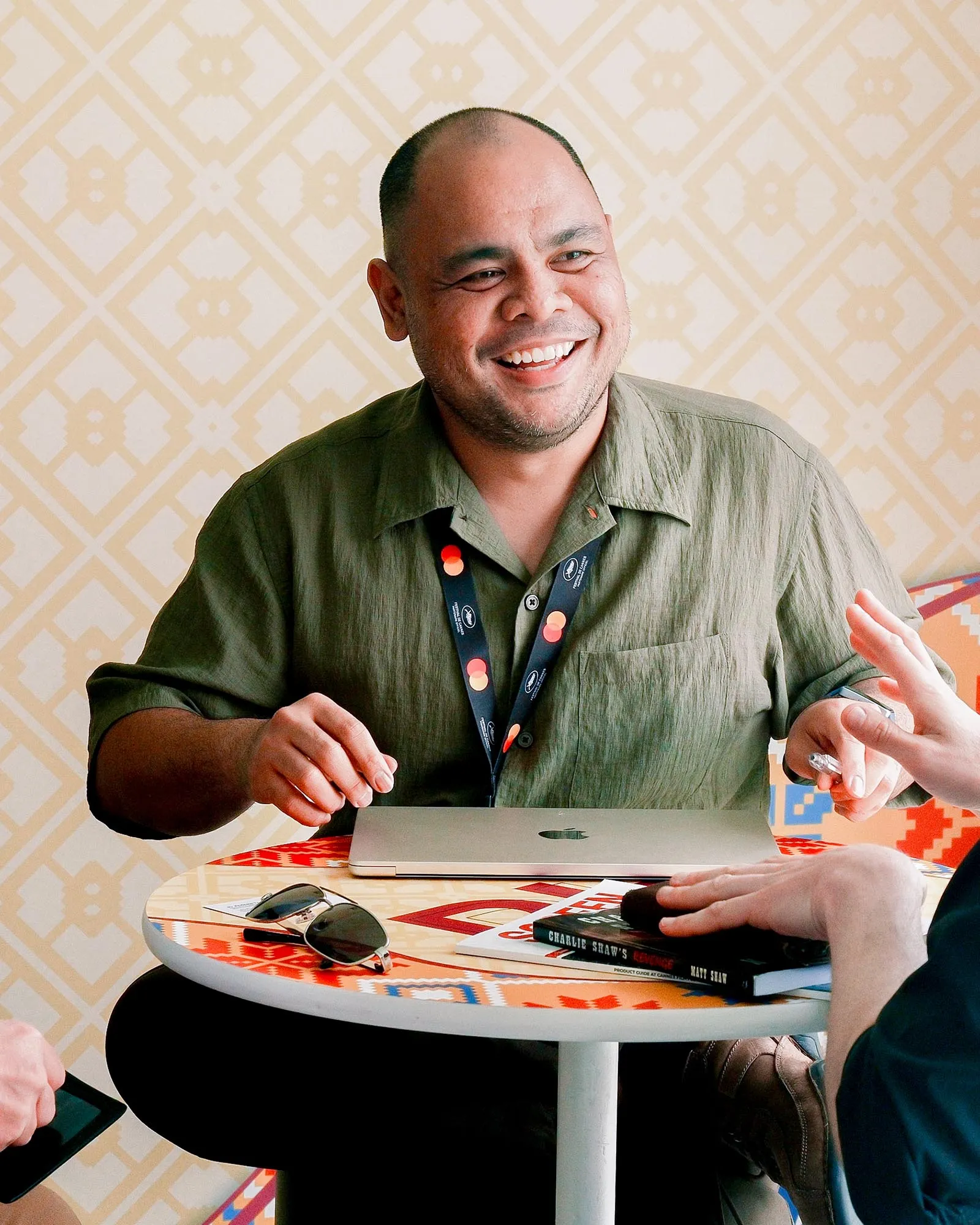
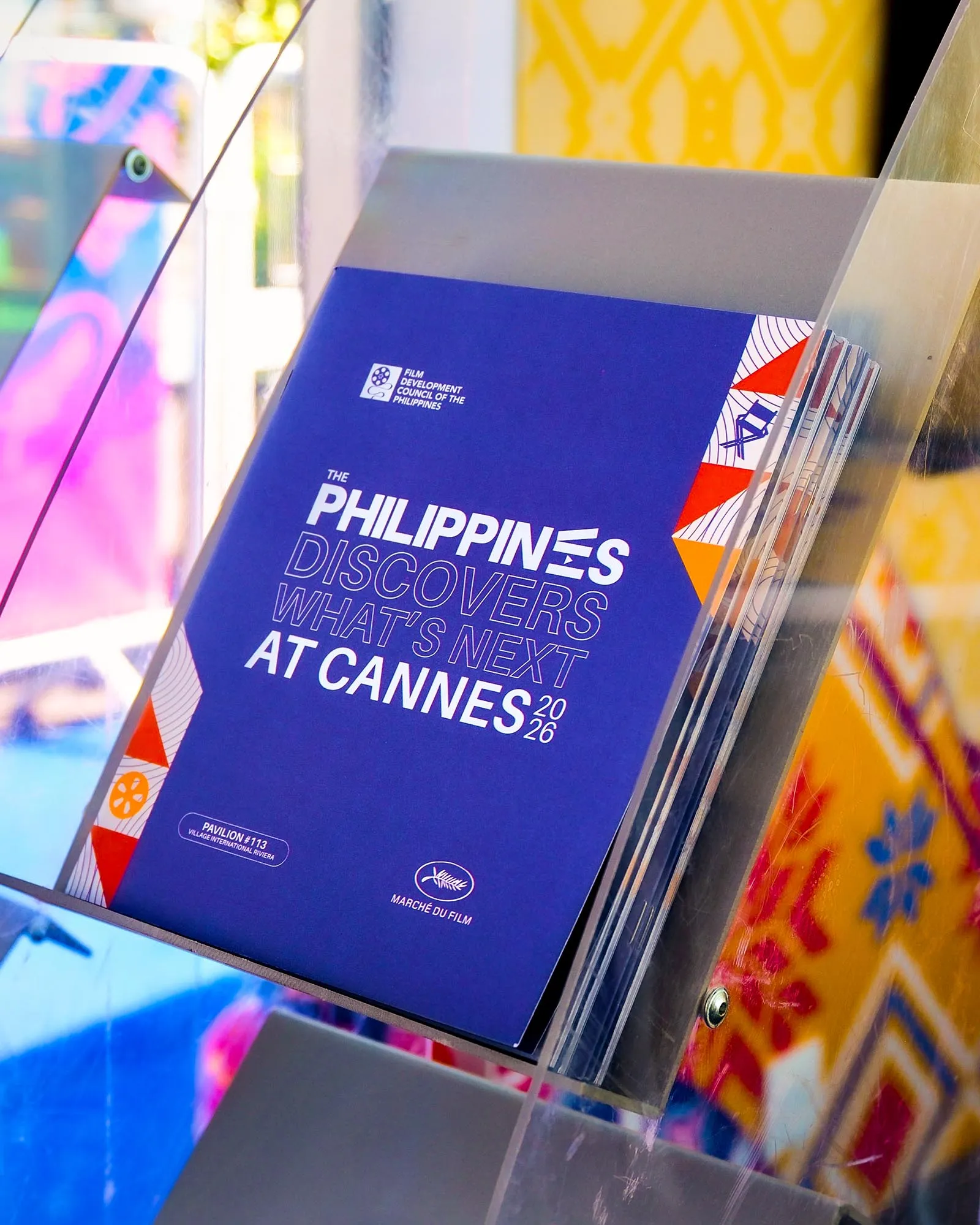
Amid these achievements, Torlao also notes the ongoing challenge that the war in the Middle East poses to these negotiations. “There were only a few people from the countries that passed through West Asia. And then some of the travels and our participation in international markets will be limited this year to follow [the] orders and observe austerity measures.” Regardless, the Philippine Pavilion remains firm in its intention to be more strategic and streamline its participation. After days of deliberation following the recently concluded Cannes Film Festival, Torlao shares that several co-productions were brought to the table: filmmakers who will be making documentaries and animations, and line-servicing international productions that will shoot in the country. And if there has been a development in their collaboration with Singapore through this representation, it’s that “the coordination is more seamless. We are supportive of each other’s objectives.”
In these challenging times for cinema worldwide, FDCP uses the tagline, “the Philippines discovers what’s next in Cannes.” So, for Torlao, this moment is more important than ever for staying immersed in the industry’s current realities. “They said the new normal now is [that] there’s no new normal. It’s just a lot of things, a lot of challenges, elements, and factors to consider in the industry. So, I think, for me, it’s positioning the Philippines. We are ready.”
As a government agency, Torlao adds that this year is part of their ongoing effort to remain accessible to international partners and open to collaboration, not just for the agency but for the Filipino filmmaking community as well. As Cannes usually marks the beginning of a new cycle for cinema and award shows, the developments discussed at the country’s pavilion have yet to unfold.
Frequently Asked Questions
The Film Development Council of the Philippines (FDCP) is the government agency responsible for supporting and promoting the Philippine film industry. Among its initiatives are facilitating international partnerships, supporting local filmmakers, and promoting the Philippines as a destination for film productions through programs such as the Film Philippines incentives.
The Cannes Film Festival is one of the world’s most prestigious film events, held annually in Cannes, France. Beyond its red carpet premieres, the festival serves as a major meeting point for filmmakers, producers, distributors, and industry organizations from around the globe.
The Philippine-Singapore Pavilion is a joint initiative by the Philippines and Singapore that has been presented at Cannes since 2017. It serves as a shared space where both countries can promote their film industries, connect with international partners, and explore opportunities for co-productions and other collaborations.
The 2026 Cannes Film Festival took place in May 2026. During the event, representatives from the Philippines participated in industry meetings, networking activities, and discussions aimed at strengthening the country’s presence in the international film landscape.
The Philippines participates in the Cannes Film Festival to showcase Filipino talent, support local producers, and build relationships with international film partners. Through its presence at Cannes and Marche du Film, the country also seeks to attract foreign productions and position itself as a competitive filming destination in Asia.
- “We Have So Many Filipino Stories to Share”: Inside the 4th Annual Filipino Forces Feast and Fiesta in Los Angeles
- Together with VENZON, JJ Acuña Brings a New Lighting Collection to Life
- Between Music and Sport, Tallulah Proulx Finds Her Rhythm on the Slopes
- Ellyse Anderson Documents the Hidden Workshops of Hanoi’s Master Craftspeople