
Ellyse Anderson Documents the Hidden Workshops of Hanoi’s Master Craftspeople


Photographed by Ellyse Anderson for the June/July 2026 Issue of Vogue Philippines
Across Hanoi’s workshops and villages, artisans continue to shape objects that resist the speed of modern life.
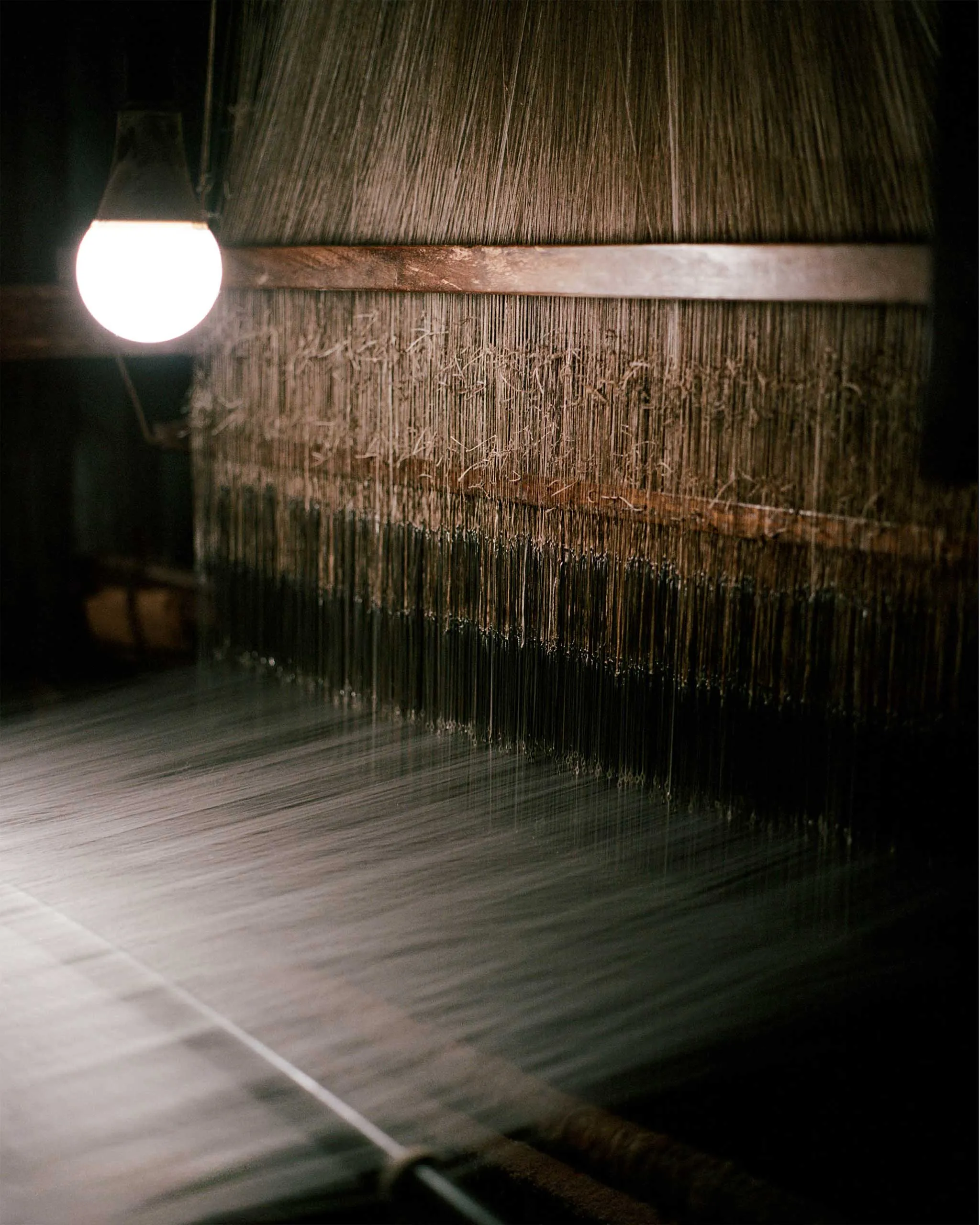
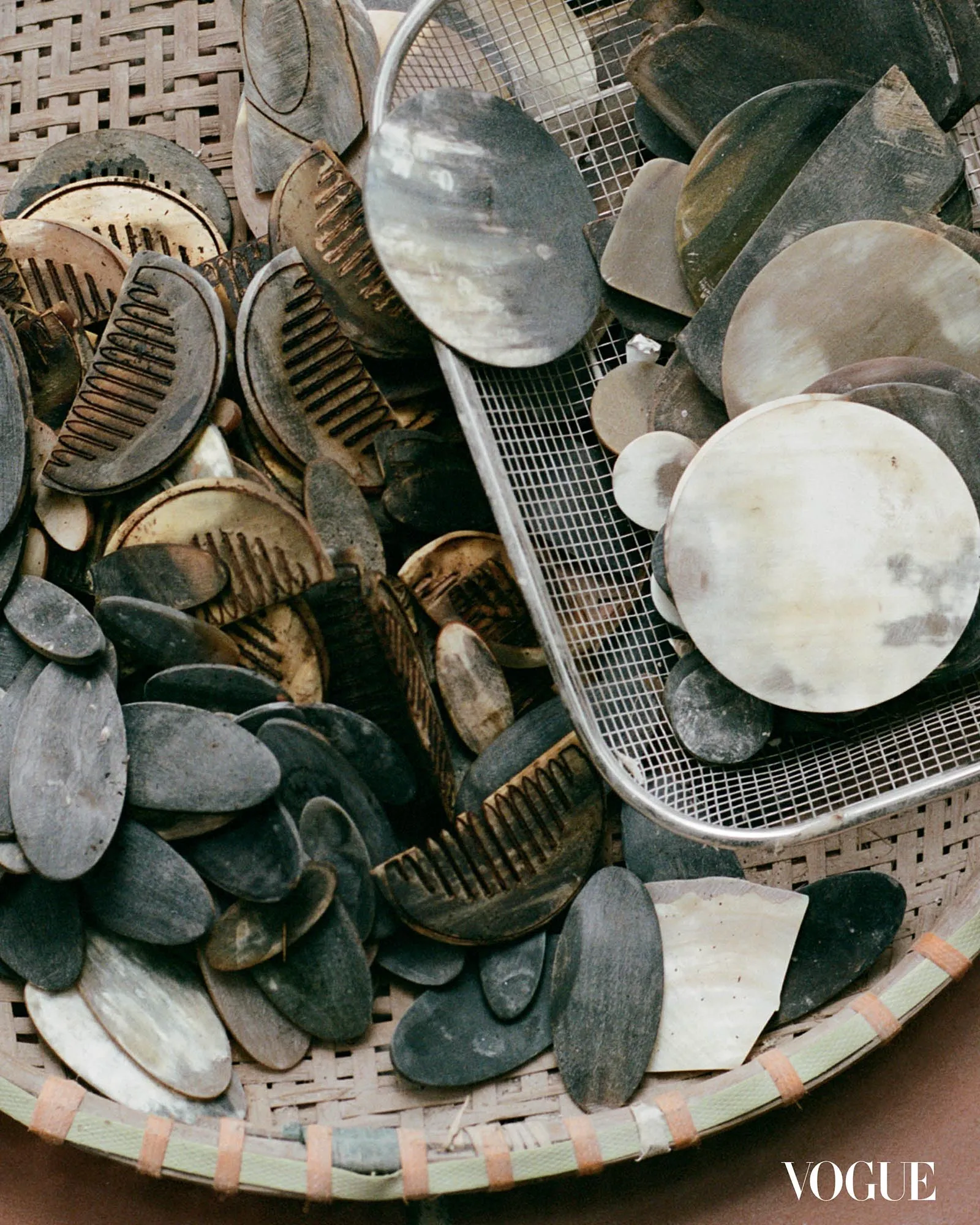
In Hanoi, craft still moves at the pace of the hand. Inside the narrow lanes of Vạn Phúc silk village, sound arrives first. Wooden looms clatter in an uneven rhythm, with threads pulling against tension before settling into fabric, while horn is polished until it catches light like stone. Elsewhere, seashells are also carved down into smooth edges. Materials that once belonged to animals, water, or earth are reshaped slowly into objects meant to last.
In Vietnam, these traditions have survived wars, industrialization, and the acceleration of modern manufacturing. However, survival has never guaranteed permanence. Across many traditional industries, younger generations are leaving manual trades behind for work that feels more stable, and more in step with contemporary life. What remains are the people who chose to stay. Mega Blonde, a Vietnamese creative producer who has worked closely with many of Hanoi’s craftspeople through collaborations with local fashion brands and cultural projects, has witnessed that tension firsthand.
“The most difficult thing for them is preserving the craft and keeping the passion alive,” she says. “With the rapid development of technology and social media, they also find it hard to keep up with younger lifestyles,” with survival now dependent on balancing continuity with adaptation.
For photographer and collaborator Ellyse Anderson, the decision to document Hanoi’s masters began almost accidentally. She was on her way to Australia for a job when she passed through Hanoi and reconnected with Mega, whom she had met years earlier on an editorialEditorialA fashion or beauty story conceived, styled, and photographed for a magazine or website, built around a theme rather than a single product. Editorials let photographers, stylists, hair and makeupGo to Editorial Glossary shoot. At the time, the two had spoken about creating a project centered on master craftspeople, but the idea had remained dormant.
“On this recent trip, Mega mentioned she was planning to visit these masters and asked if I’d like to meet them,” Anderson recalls, and what followed became a visual series documenting artisans whose lives have become inseparable from their craft. Rather than staging or dramatizing their work, the images observe the systems that sustain it, through repetition, instinct, memory, and touch.
“There are more parallels than you might expect,” Anderson says of photographing artisans after years of working with celebrities. “In celebrity work you’re often dealing with very compressed time and the pressure to make fast decisions.” But unlike controlled studio environments, Hanoi required something else entirely: “You follow the light wherever it leads you, and you work with what’s in front of you.” That unpredictability became the focal point of the series.
Entering their home studios, Anderson felt that their craft was deeply personal, and almost biographical in a way. “The organization, the tools, the rhythms of the space, everything was specific to that individual,” she says. “You can be told about mastery, but it’s not something you fully grasp until you see it.”
For artisan Pham Xuan Cuong, craft was never something he consciously chose. He grew up surrounded by horn, wood, stone, seashells, and other natural materials, helping his parents with small tasks, and before he knew it, “the profession had become a natural part of my life,” he says.
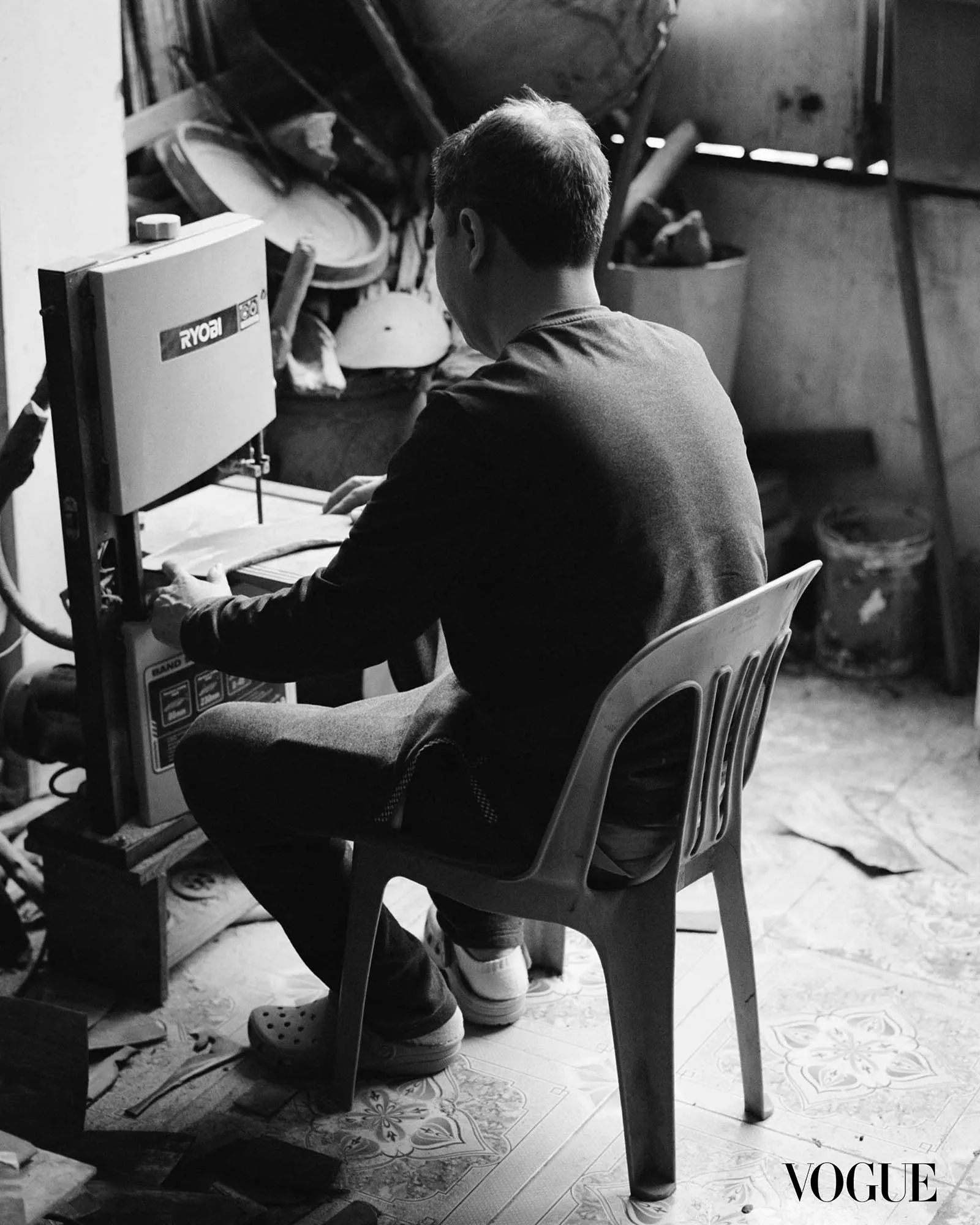
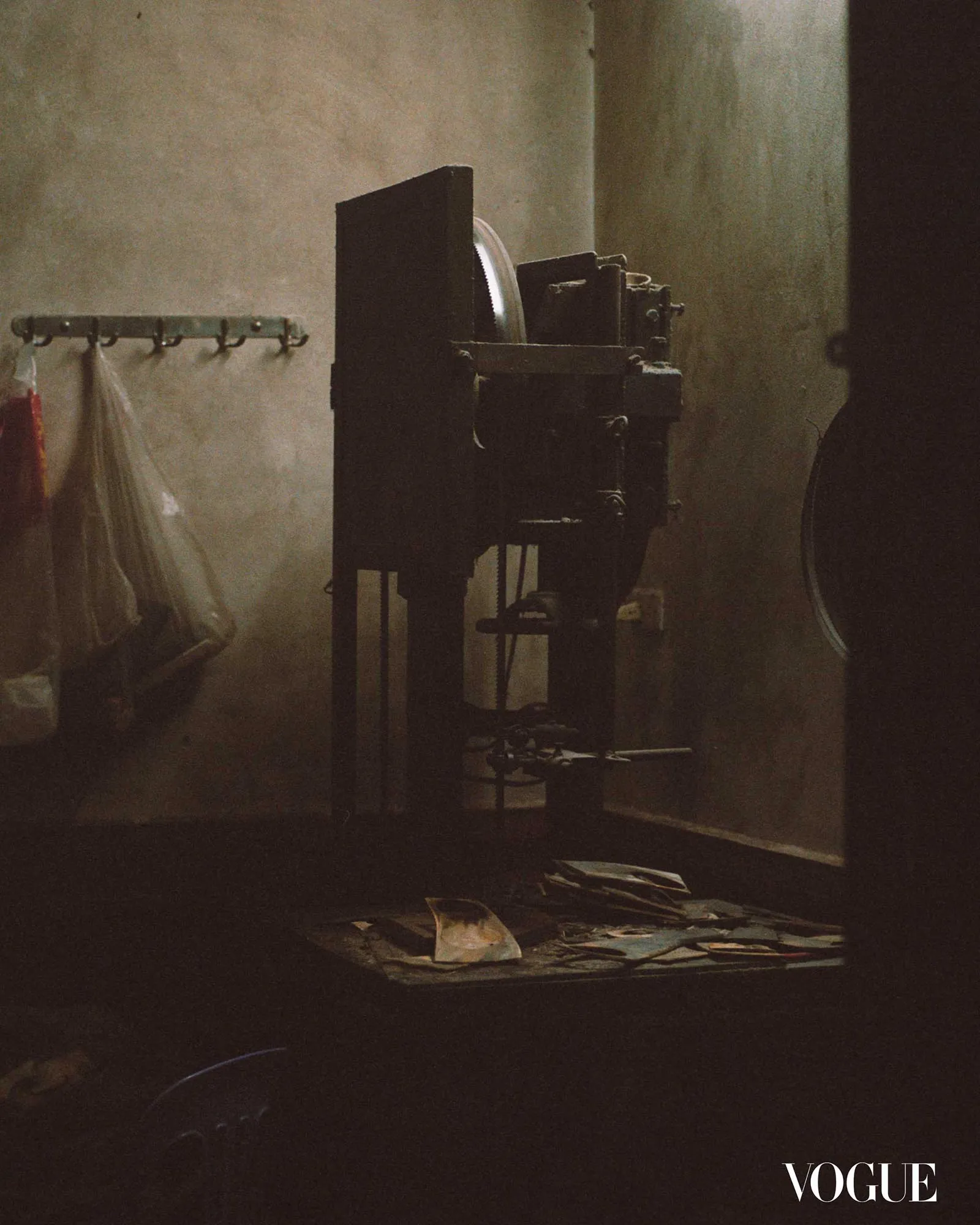
Now 56, Cuong creates handcrafted fashion accessoriesAccessoriesThe finishing pieces of an outfit, including bags, belts, scarves, hats, eyewear, and jewelry. Accessories can elevate a simple look or define it entirely, and fashion editors often treat themGo to Accessories Glossary and objects from natural materials, balancing traditional techniques with contemporary design. At 26, he began working with designers and manufacturers from the United States and Italy, experiences that shifted his understanding of what craft could become. Practicality became just as important as ornament, and materials were combined not only for aesthetic effect, but for durability and function.
Despite this, his process still demands years of accumulated knowledge. Even with machinery, much of the work cannot be automated. Horn must be understood for its density and grain. Stone also reacts differently under pressure, while shells fracture if handled incorrectly. The final object depends as much on intuition as technique.
From Cuong’s perspective, the greatest challenge facing traditional artisans today is not production, but continuity. “Fewer and fewer young people are pursuing and learning these traditional skills,” he says. “Creating handcrafted products that consumers truly appreciate and are willing to pay for is not easy.”
Yet among the artisans he has encountered over decades, there is one trait that remains constant. Endurance. “There are many craftsmen, but just as many leave the trade,” he explains, and “what keeps them holding on is their passion for the craft.”
That same sense of persistence runs through the work of Tran Thi Ngoc Lan, owner of Lan Son Premium Silk Weaving in Vạn Phúc. Her entry into silk weaving came through marriage, where in 2006, she became part of a family from the village where she learned the trade, eventually continuing a craft passed down across generations.
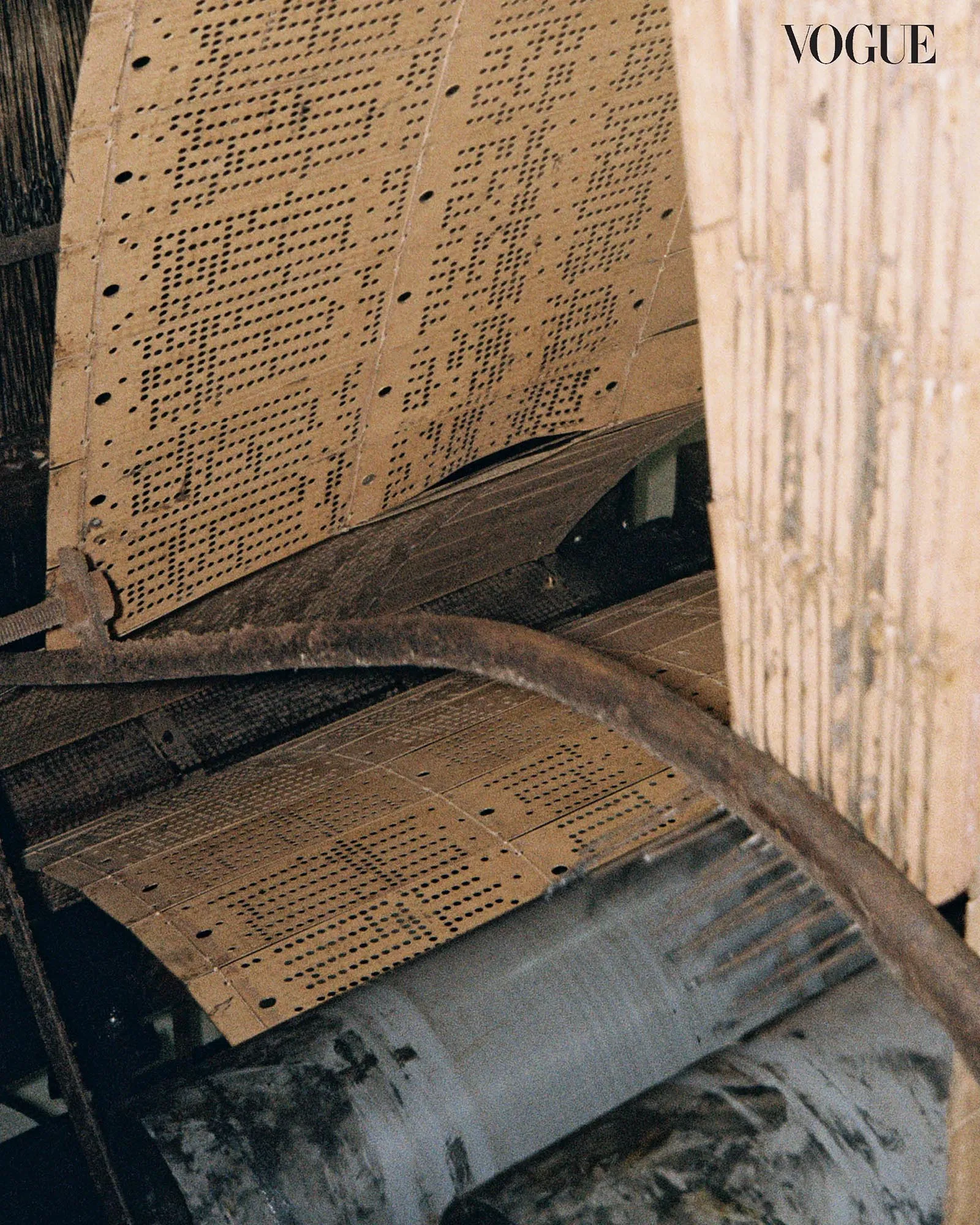
Their earliest pieces were made through trial and repetition. Designs were woven, undone, and remade until they reached the standard they wanted. “Many pieces had to be made over and over again before we were fully satisfied,” she says.
Silk weaving, Lan also explains, is a chain of interdependent processes. Selecting threads, reeling silk, dyeing, preparing the loom, weaving the final textile, with each stage affecting the next. Failure in one step reverberates through the entire fabric. Although parts of the workshop have modernized over time, the foundation remains deeply manual. Machines now assist in spinning and combining threads, easing some of the physical strain artisans once endured by hand. But weaving itself remains the decisive stage, where precision and instinct meet.
The family’s approach has also evolved aesthetically. Earlier generations focused on single-color textiles and simpler patterns, while Lan and her husband began experimenting with more structured compositions and intentional design.
“Instead of weaving uniformly as before, we now design in advance. Deciding which sections will have which colors, where patterns will appear, and how motifs and color combinations come together.”
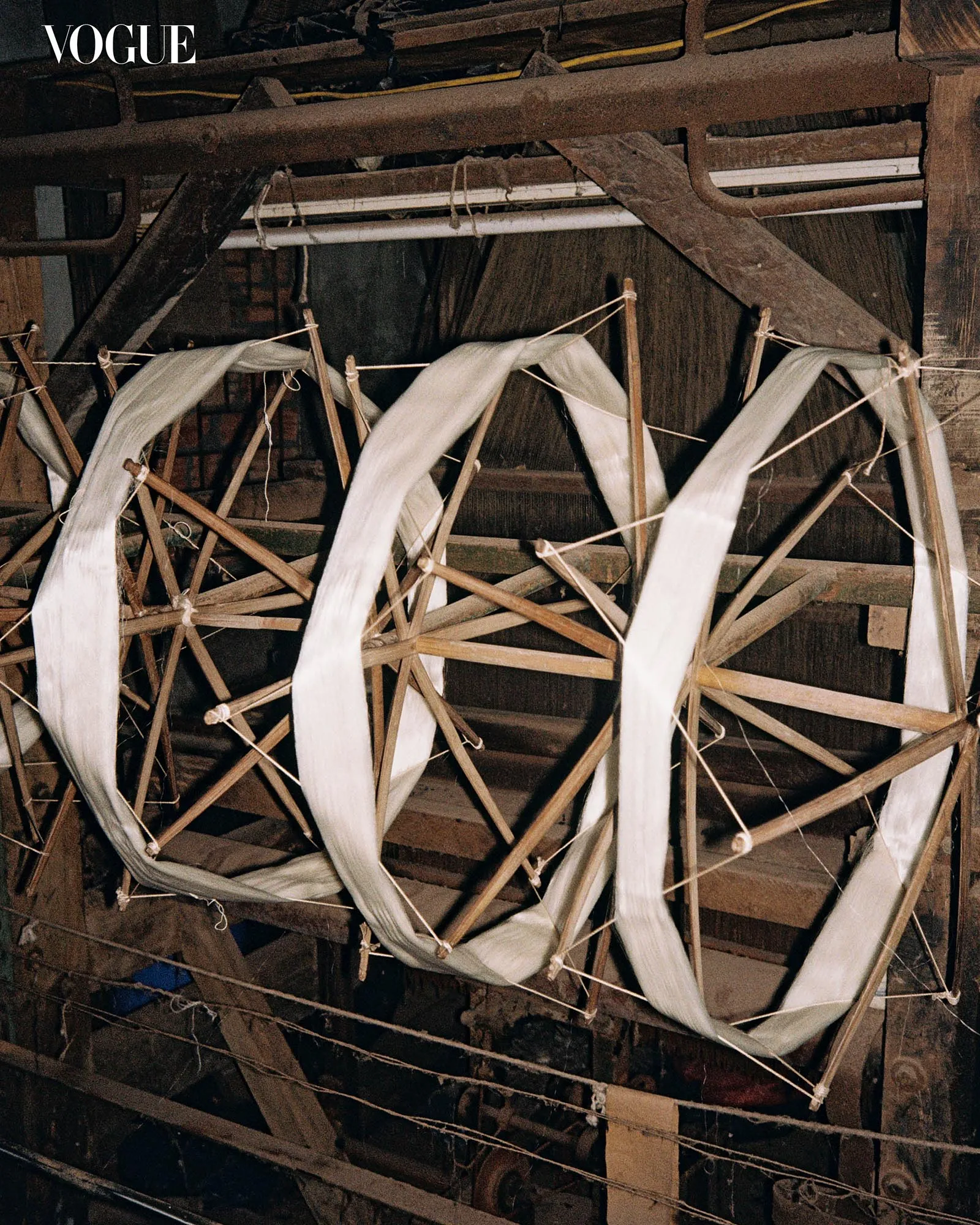
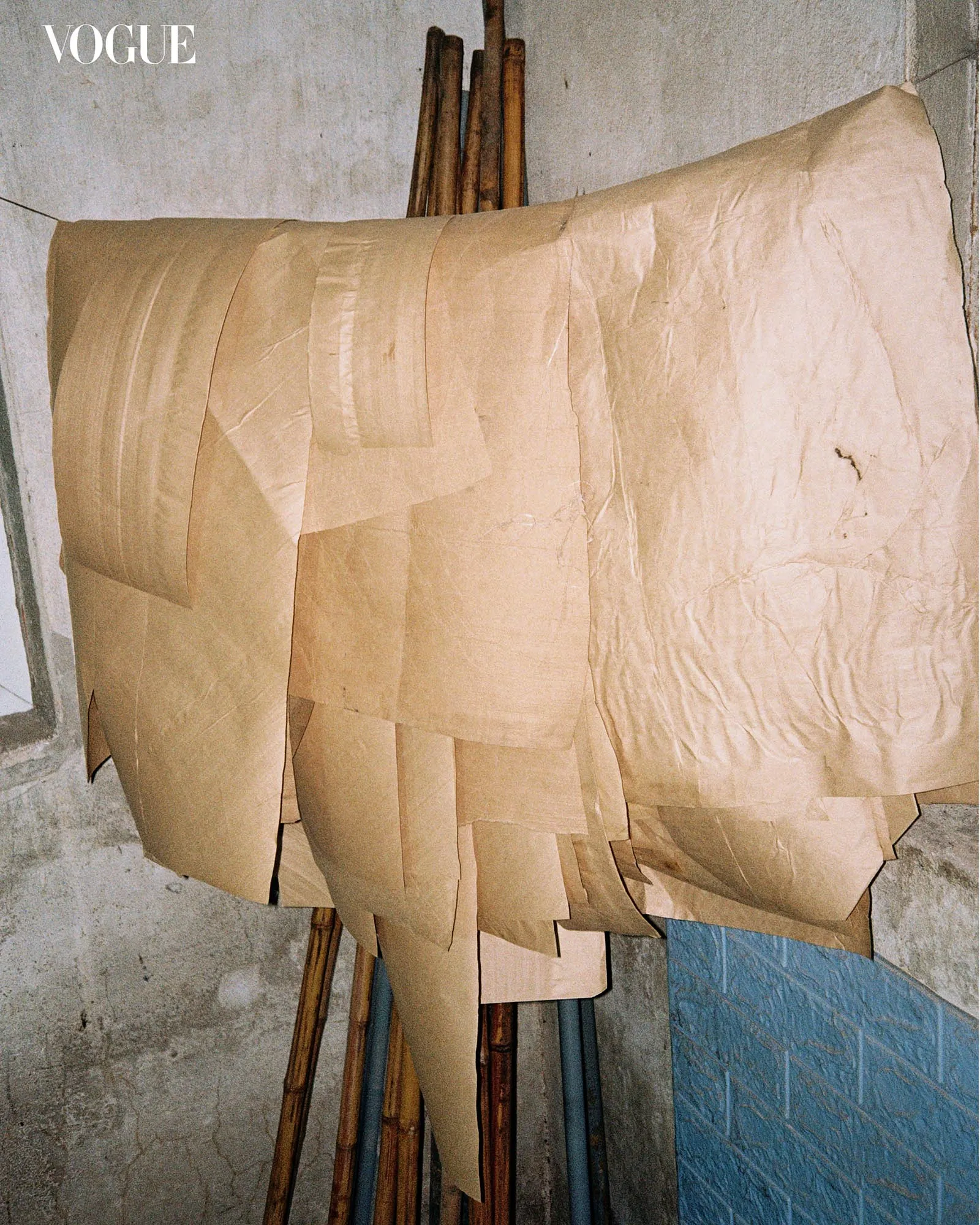
In Anderson’s photographs, these processes are neither romanticized nor flattened into nostalgia. The images dwell on labor as something lived daily as hands pressing against silk threads, tools worn smooth from repeated action, and materials suspended between raw form and finished object.
“Meeting someone in whom rare knowledge lives completely is a reminder that it all begins with a human hand,” Anderson says.
As image-making grows increasingly automated and digital life pulls attention further from tactile experience, the presence of these artisans feels almost oppositional. Their work resists speed, and instead, they ask for patience and time.
For Mega, Anderson, and the artisans she photographed, documentation is not simply a preservation of the craft, but living proof that these ways of making still exist in the present. “I hope the younger generation will still understand the value of human hands and intellect,” Mega muses, “as well as the soul embedded in art.”
By GABRIEL YAP. Photographs by ELLYSE ANDERSON.

Frequently Asked Questions
Hanoi is the capital city of Vietnam, located in the northern part of the country along the Red River. It is one of the country’s major cultural and political centers.
Traditional craftsmanship in Hanoi refers to handmade production practices such as silk weaving, carving, and textile work that are passed down through generations in craft villages and workshops.
Silk weaving is the process of creating fabric by interlacing silk threads on a loom. It is a traditional textile craft that can be done by hand or with the assistance of machinery.
Traditional craft villages in Vietnam are communities that specialize in specific handmade trades such as weaving, pottery, or carving. Many of these villages preserve techniques that have been practiced for generations.
Traditional Vietnamese crafts commonly use natural materials such as silk, wood, horn, stone, and seashells. These materials are shaped by hand using techniques developed over generations.