
Bianca Catbagan on Filmmaking and Royal Blood, Her Queer Maria Clara Feature in Development


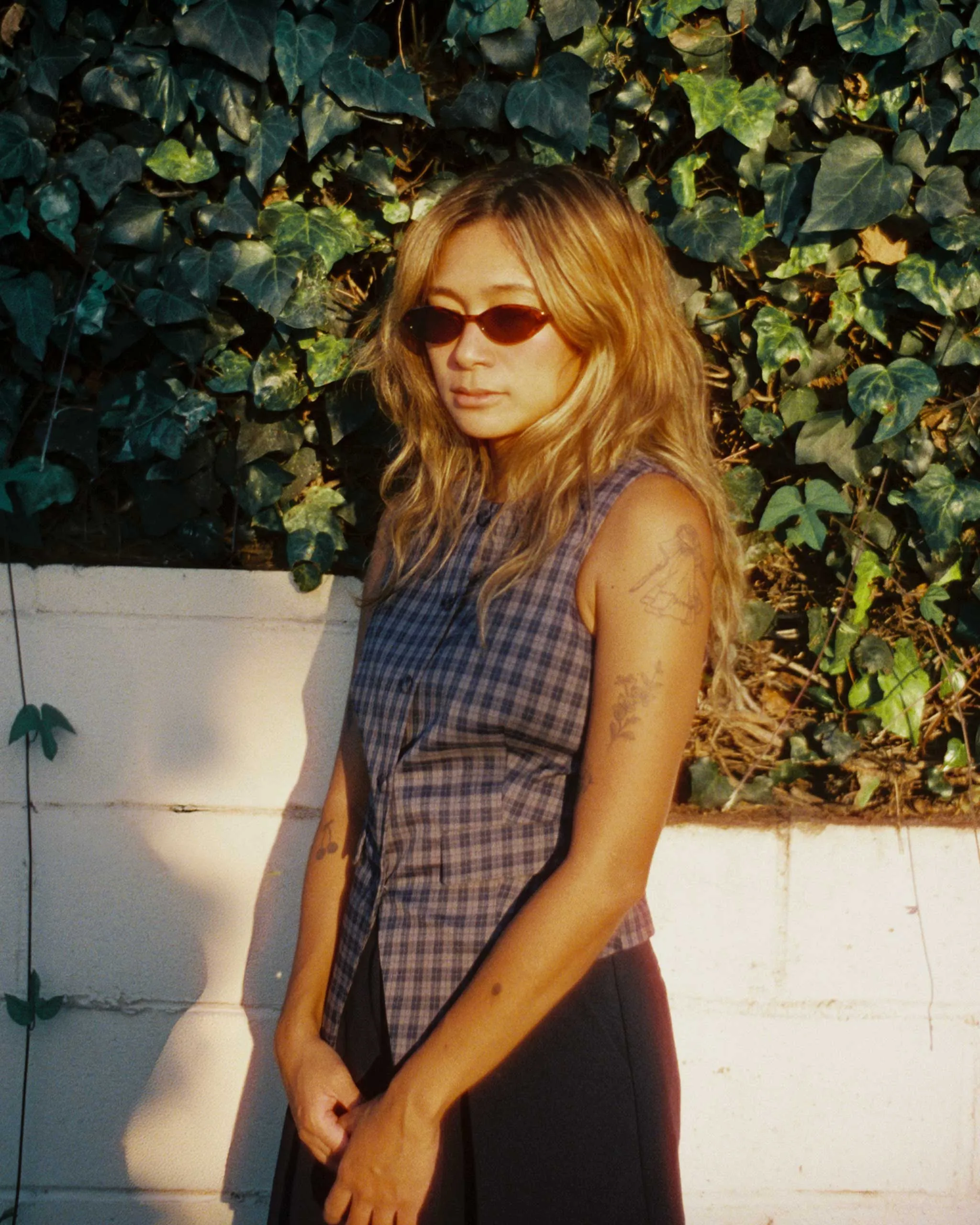
Photographed by Isaac Inocentes
Filmmaker Bianca Catbagan discusses her AFI Directing Workshop project Royal Blood, a queer reimagining of Maria Clara set in 1888 Philippines.
When Bianca Catbagan earned a place at the American Film Institute Directing Workshop for Women+, she joined a legacy that includes poet Maya Angelou, actor Ellen Burstyn, and Academy Award-winning auteur Siân Heder. All, and hundreds more, developed films with AFI-DWW+ in Los Angeles.
At this year’s Workshop, Catbagan turns her lens back home. Her film Royal Blood will follow two queer lovers preparing for a ball in 1888 Philippines. There, an enigmatic attendee, Maria, unleashes forbidden passions, and poses an existential threat to the couple’s bond.
Royal Blood continues Catbagan’s themes. Her photography and her short films Apartment 605 and Jump deal with relationship ambiguities, the danger and promise of the unsaid, and the politics of displacement pressuring protagonists. Catbagan grew up in Quezon City, and her filmmaking journey began there.
This interview was conducted via emails, texts, and Zoom, and has been edited for length and clarity.
Vogue Philippines: When in your life did you begin to love cinema? And when in your life did you decide to create cinema?
Bianca Catbagan: When I was a kid, I watched so much local TV, and I had a huge crush on Patrick Garcia. In my seven-year-old mind, he could become my boyfriend if I were an actor, too. So I took acting classes! And I directed a lot of plays in high school.
When it was time to choose a university and a major in the 2000s, the University of the Philippines Film Institute felt right. Digital cameras were becoming more accessible. I could hold a camera, direct, and translate what I loved about performance into something for the screen.
At a school like UP, we learn that everything is political, and my filmmaking has not strayed from that knowledge. To be an artist is to be engaged in the political climate around us. The stories I am drawn to and affected by consider the world at large.
What films have been touchstones for you as a director?
It changes every second, but if I must—
You must.
Transit by Christian Petzold, Ema by Pablo Larraín, Ang Nawawala by Marie Jamora.
Do these films share any characteristics that draw you to them?
Mostly, they are romantic, but the quality of the romance is harsh and clawing. Have you seen Ema?
Not yet.
It’s about a woman who wants a foster child back, but she is dangerous. I loved her passion, I loved seeing her failures. It’s a beautifully shot film. Transit is about a refugee who impersonates a dead writer to escape fascism and stars Franz Rogowski. He is so fragile and complex here.
I cried when I watched Marie Jamora’s film Ang Nawawala at Cinemalaya! I had never seen anything like it in Philippine cinema. She opened my eyes to what was possible for me, for telling coming-of-age stories in Manila.
After graduate school in NYC, you moved to Los Angeles to begin your career. What is your experience making films in the diaspora?
I never really labeled myself as a “Filipino director” or “female director” in the Philippines. In the Manila arts scene, I was surrounded by filmmakers, writers, musicians, and photographers. We just grabbed our cameras and had so much room to play.
In the US, I am aware of how I am different from other people. I wanted to be away from home, to find out who I was in a different country, to be free from the guardrails of comfort. But there’s a push-and-pull of identity politics that I never experienced back home.
It can be frustrating when white American storytellers are rarely expected to name their own identity characteristics or answer for their own identity politics, which certainly exist.
It does feel unfair sometimes. But I recognize that when I was in the Philippines, I didn’t have to explain much about who I was either. The confidence I bring to my work in America actually comes from that experience of belonging in Manila.
LA is a city full of people who write and direct your favorite films and shows. The excellence is vast. And the Filipino community’s support, wherever I am, is undying and overflowing. I’ve never felt alone in my pursuit of film.
Your partner in life and work, director Andrea A. Walter, also of the diaspora, is writing the Royal Blood screenplay. Why did you both choose to reimagine Maria ClaraMaria ClaraA classic Filipiniana gown named after the heroine of José Rizal's novel Noli Me Tangere, featuring a baro blouse, voluminous saya skirt, panuelo shawl, and often a tapis overskirt. PopularGo to Maria Clara Glossary through a queer lens?
Andrea is an incredible artist. Compared to me, they are more intuitive, emotional. I am more cerebral, big picture.
She was on a cruise ship a few years ago for a commercial job. After seeing fellow Filipinos working below deck, while ultra-rich people wined and dined above deck, she turned on the TV in her room and found Dangerous Liaisons by Stephen Frears.
Wow. Disastrous romance set in 18th-century France, watched on a 21st-century cruise ship.
The film kind of wrote itself. Andrea was like, what if this were set in Spanish-colonized Philippines? I added, what if Maria Clara wasn’t the passive girl we were told she was?
It was fun to reimagine characters we knew from childhood and make them our own. But it also became a container for me to say that we have a whole history of queer people in the pre-colonial Philippines, like the Babaylan. These queer folks couldn’t have disappeared in 300+ years of colonial rule. Let’s reinsert them into history, shall we?
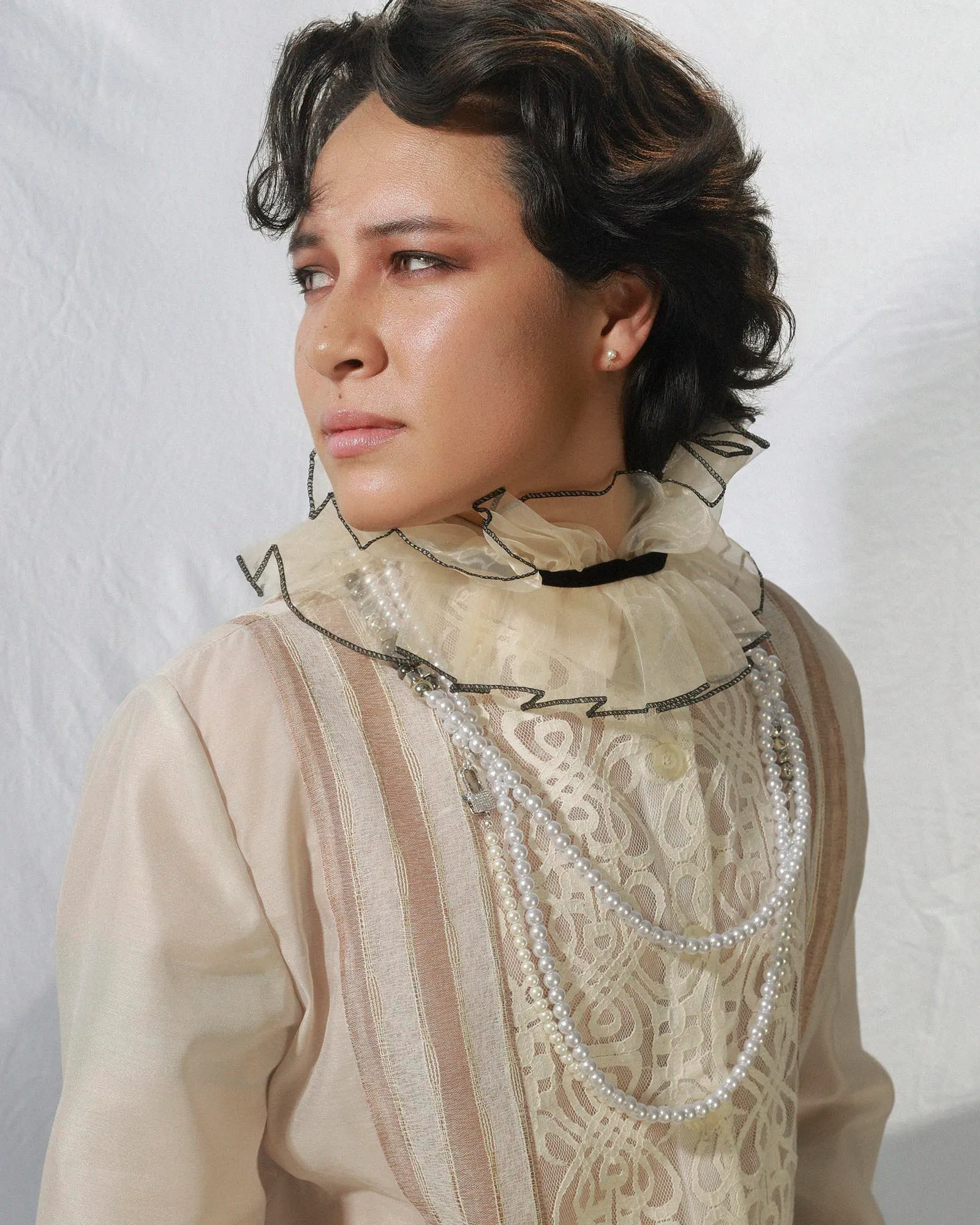
We should, and it looks like you will. During the workshop, you’ll shoot a short film of Royal Blood in Los Angeles. How are you preparing for that?
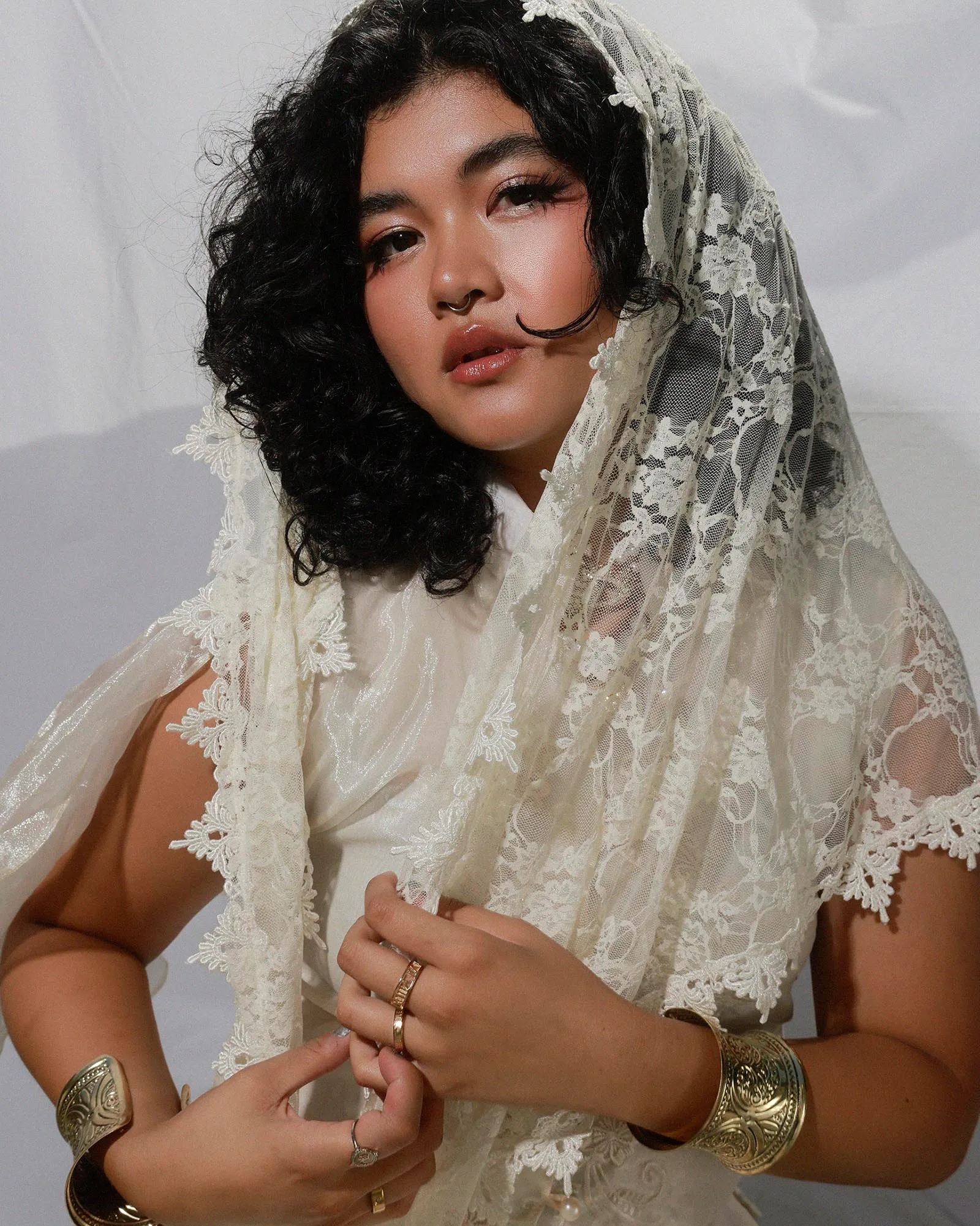
I’m so excited. Andrea and I produced a spec photoshoot to show the characters and the world. It was styled by Thea Calaguio, who so naturally found the look I was going for. Classical, but edgy. Think Romeo + Juliet.
It will be a real challenge to shoot LA as Old Manila, and scary because I’ve never seen this world on film. My mind wanders some days when I’m exhausted. I worry about that unknown. Then I remember that my team and I will discover and build the world together.
You’re also working with the French-Philippine actor Elena Heuzé. Can you talk about that artistic connection?
Royal Blood will be our third film together. It’s a gift to find an actor who is so talented, who grew up where you grew up, who fits so seamlessly into the worlds you write. You’ll hear most actor-director relationships talk about their shorthand when filming. I really do have a shorthand with Elena. We’re like Ryan Coogler and Michael B. Jordan!
Elena is open to trying things, even when their instinct says no. Their reactions are subtle but complex on screen. They have a gentleness that I want to bring into all my work.
I surround myself with collaborators who bring a natural, emotional instinct, the way Andrea has with her writing and Elena has with acting. They have this knowing, which grounds me and my work.
Film is a medium with tremendous reach, but does your intuition guide you to reach anyone in particular with your work?
I really think that watching Ang Nawawala in 2012 changed my life. It made me feel like my voice had a place in film. The older I get, the more I realize I can only ask so much of my work. Mostly, I just want it to be honest to who I am, and to affect someone the way that film affected me.
Frequently Asked Questions
Royal Blood is a short film reimagining Maria Clara, a classic Filipino literary figure, through a queer lens. Set in 1888 Philippines, it follows two queer lovers whose bond is threatened by an enigmatic ball attendee named Maria.
The American Film Institute Directing Workshop for Women+ is a program in Los Angeles that has developed films from directors including Maya Angelou, Ellen Burstyn, and Siân Heder, and now includes Filipino filmmaker Bianca Catbagan.
Royal Blood’s screenplay is written by director Andrea A. Walter, Catbagan’s partner in life and work, who conceived the idea after watching Dangerous Liaisons and reimagining its premise within Spanish-colonized Philippine history.
Catbagan wanted to challenge Maria Clara’s traditional passive characterization and highlight pre-colonial Philippine queer history, referencing the Babaylan, arguing that queer Filipino figures existed throughout history despite over 300 years of colonial erasure.
Catbagan cites Transit by Christian Petzold, Ema by Pablo Larraín, and Ang Nawawala by Marie Jamora as major influences, drawn to their harsh, emotionally complex romantic narratives and character-driven storytelling.
- Kim Jones on Her First Cannes Experience: “The Air Was Thick With a Love of Film”
- Behind the Vision of Autumn Durald Arkapaw, One of Hollywood’s Most Talked-About Cinematographers
- As Tashigi in One Piece, Filipino American Actor Julia Rehwald Returns to Familiar Worlds
- Watch: Hilda Koronel Is Not Done Telling Stories About Survival