Remembering Alexander McQueen’s Most Fantastical Catwalk Moments


Getty Images
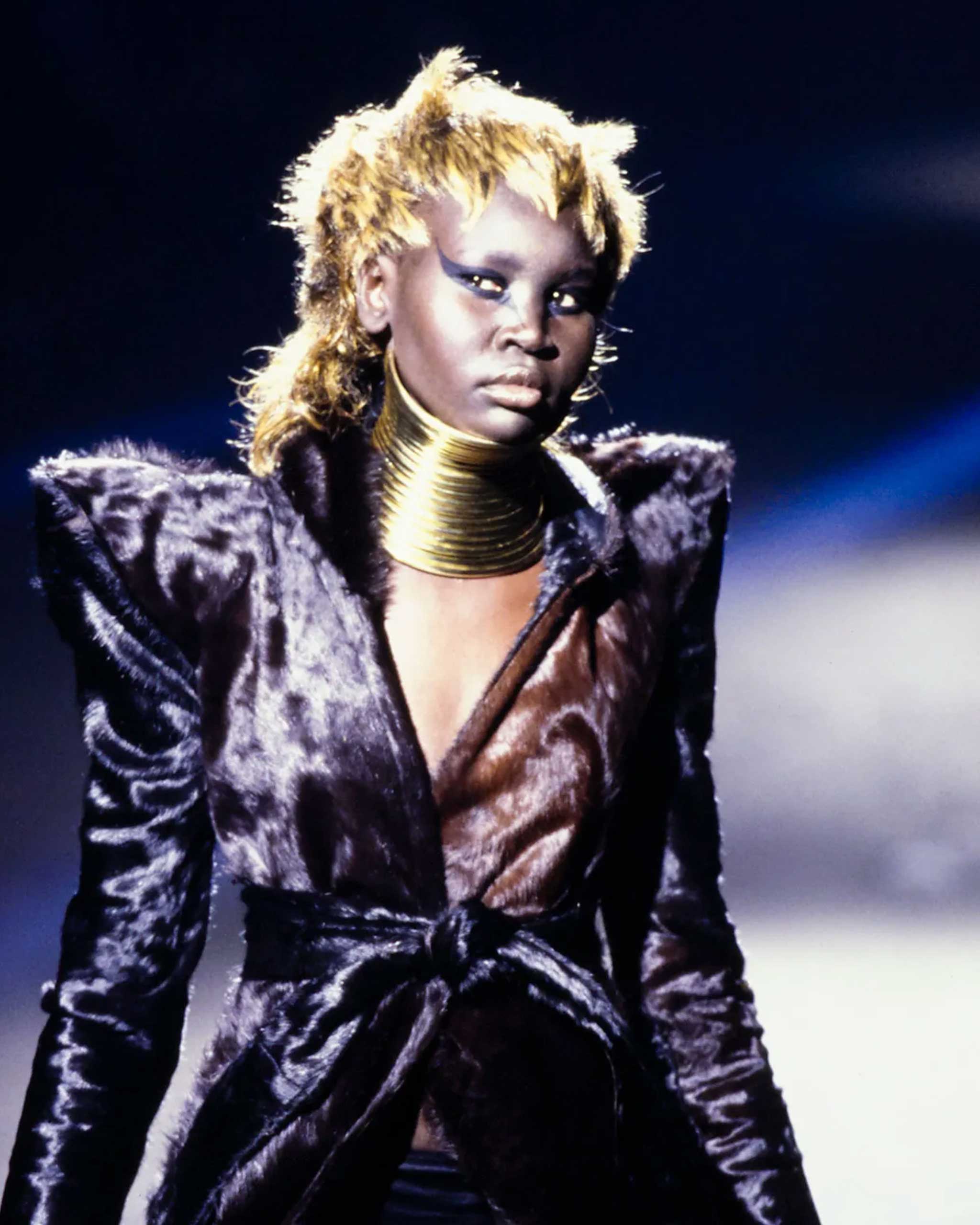
Alexander McQueen was a visionary. Over the course of his 18-year career, the designer’s presentations for both his eponymous label and Givenchy, where he served as creative director from 1996 to 2001, were the stuff of legend: 10 minutes of pure theatre that enthralled audiences with their audacity and conceptual brilliance.
The recipient of four British Designer of the Year awards, as well as a CBE, and now heralded as a genius, it’s easy to forget that McQueen’s creations were divisive from the offset. His 1992 graduate collection, entitled Jack the Ripper Stalks His Victims, included a coat printed with thorns and locks of McQueen’s own hair sewn into the garments. It set the tone for the shows that followed: Taxi Driver paid homage to Martin Scorsese’s troubled protagonist Travis Bickle; Highland Rape was a commentary on England’s violation of Scotland; and The Hunger showcased transparent bustiers filled with worms. For Dante in 1996, a skeleton was seated front row, while the 1997 show It’s a Jungle Out There saw a car catching fire, albeit accidentally.
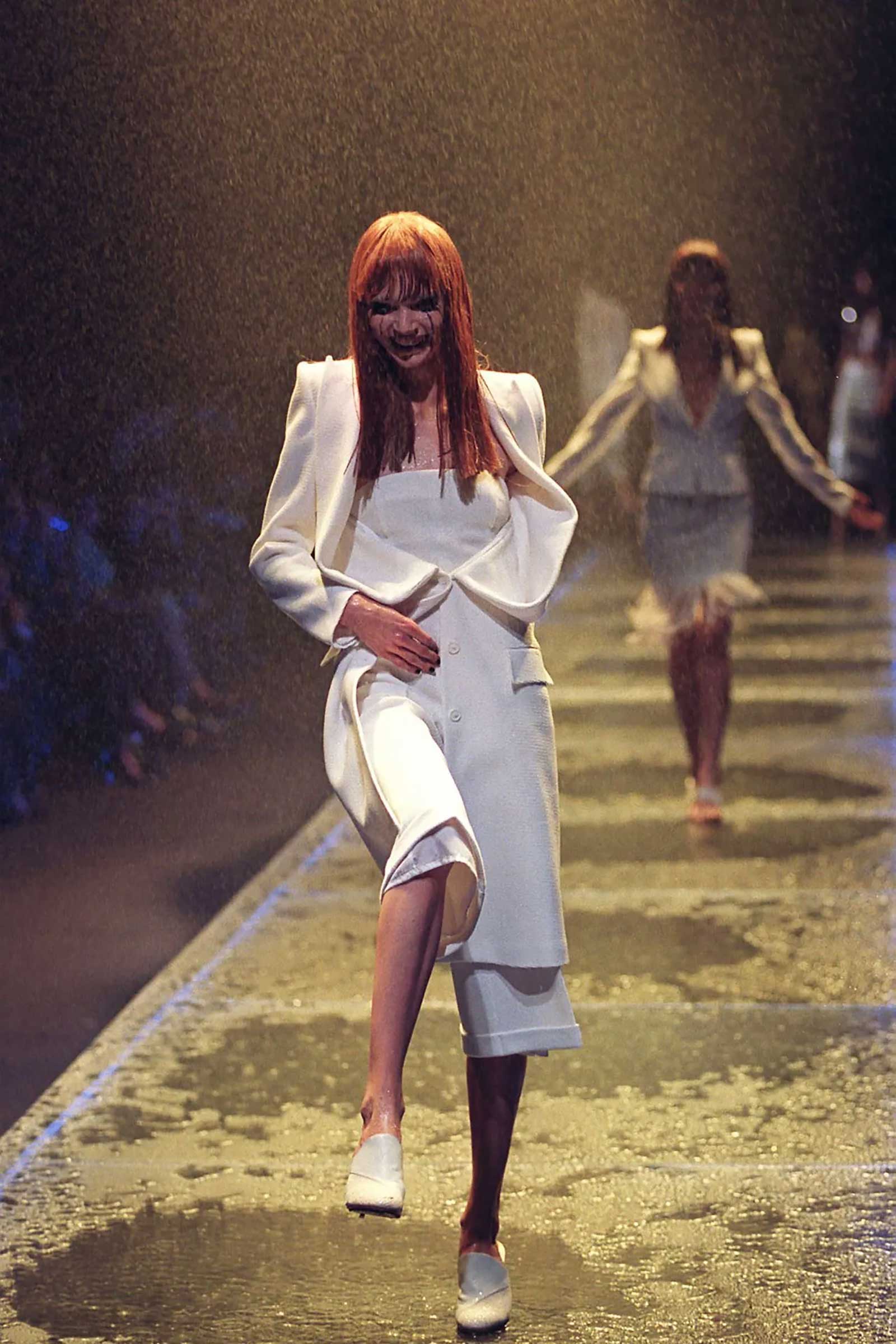
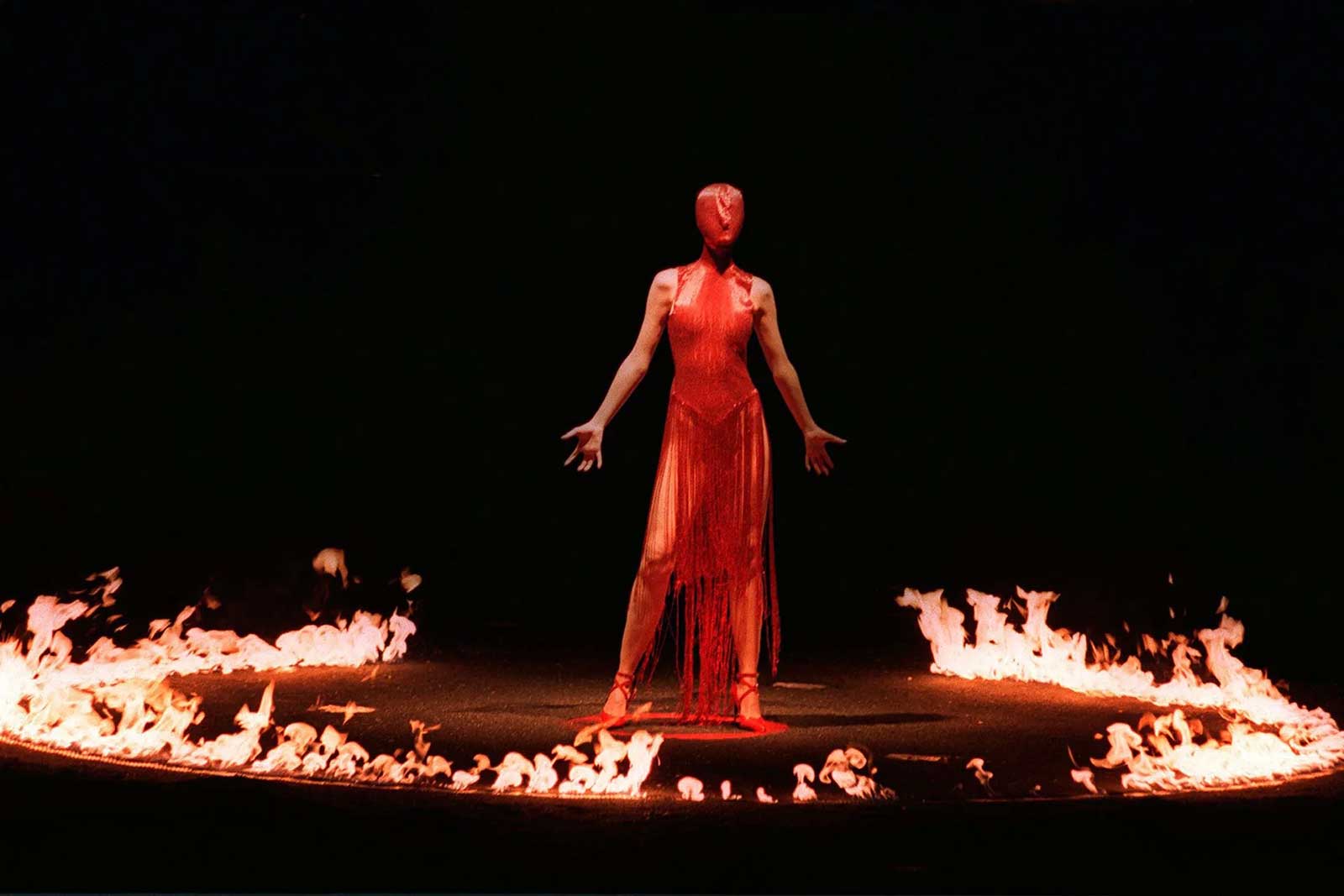
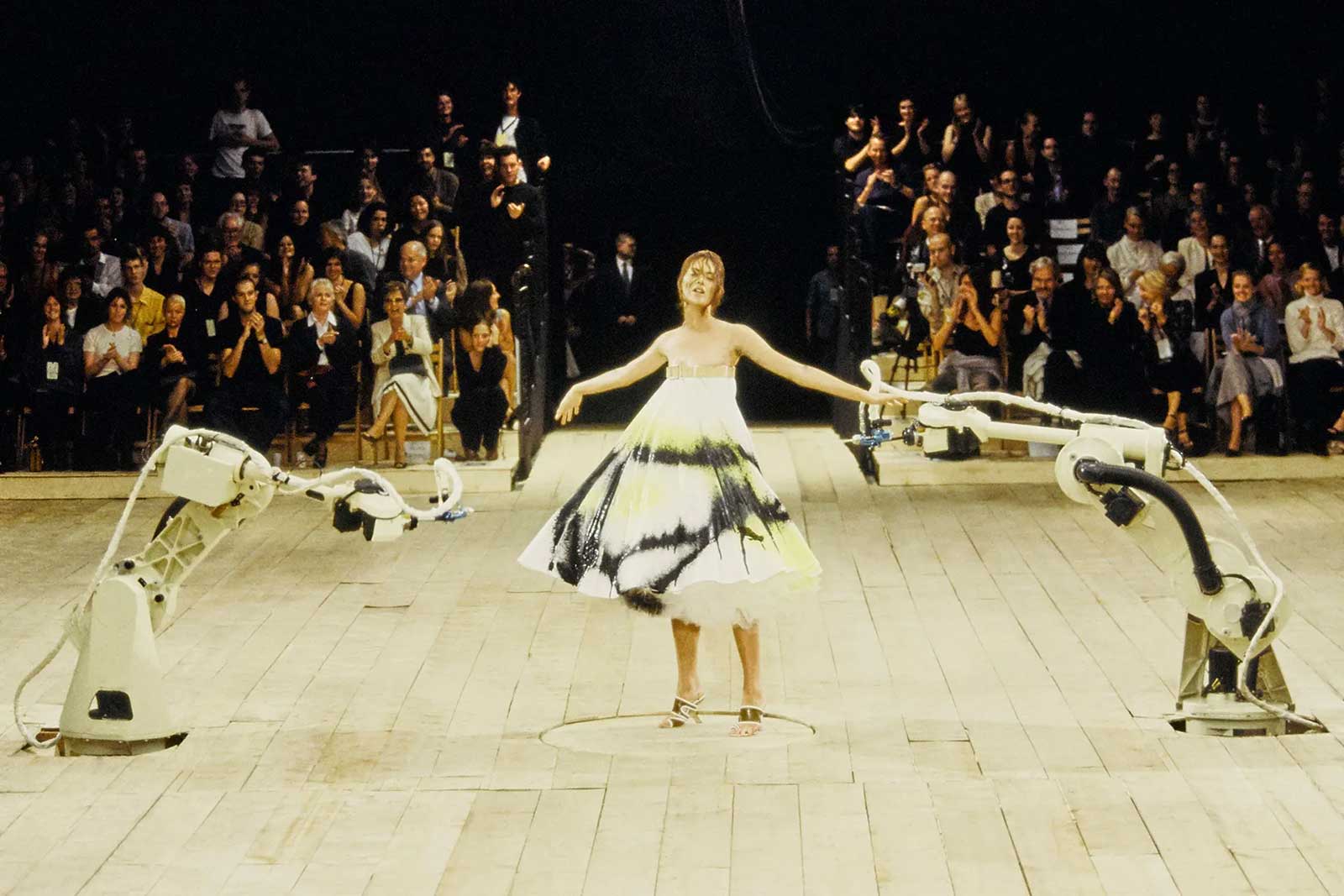
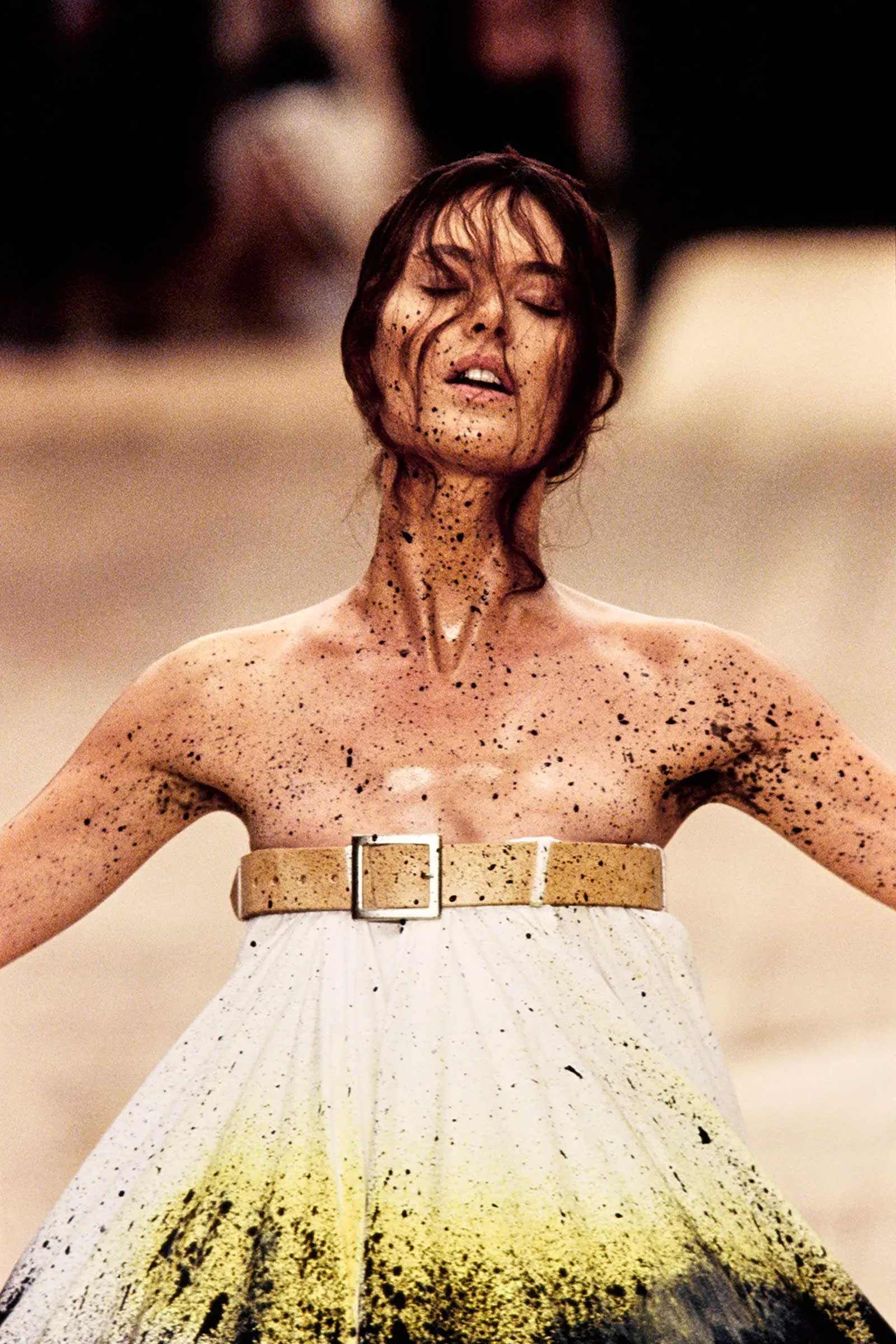
McQueen’s shock tactics weren’t always a hit with his sponsors. The designer’s spring/summer 1998 show, partly financed by American Express, was originally titled The Golden Shower before the company demanded the name be changed. McQueen conceded, calling it Untitled, but that didn’t stop him sending models down a runway made of water-filled tanks while rain poured from above and spotlights bathed them in a suggestive yellow glow. For Joan later that year, his exploration of the elements moved from water to fire with a show that ended with a masked model being surrounded by a ring of fire. Meanwhile, 1999’s No. 13 was the collection that cemented McQueen’s reputation as the ultimate showman. It not only featured Paralympian Aimee Mullins wearing prosthetic legs carved from elmwood, but ended with two robots spray-painting a dress worn by supermodel Shalom Harlow. The latter went on to become one of the most memorable catwalk finales in fashion history.
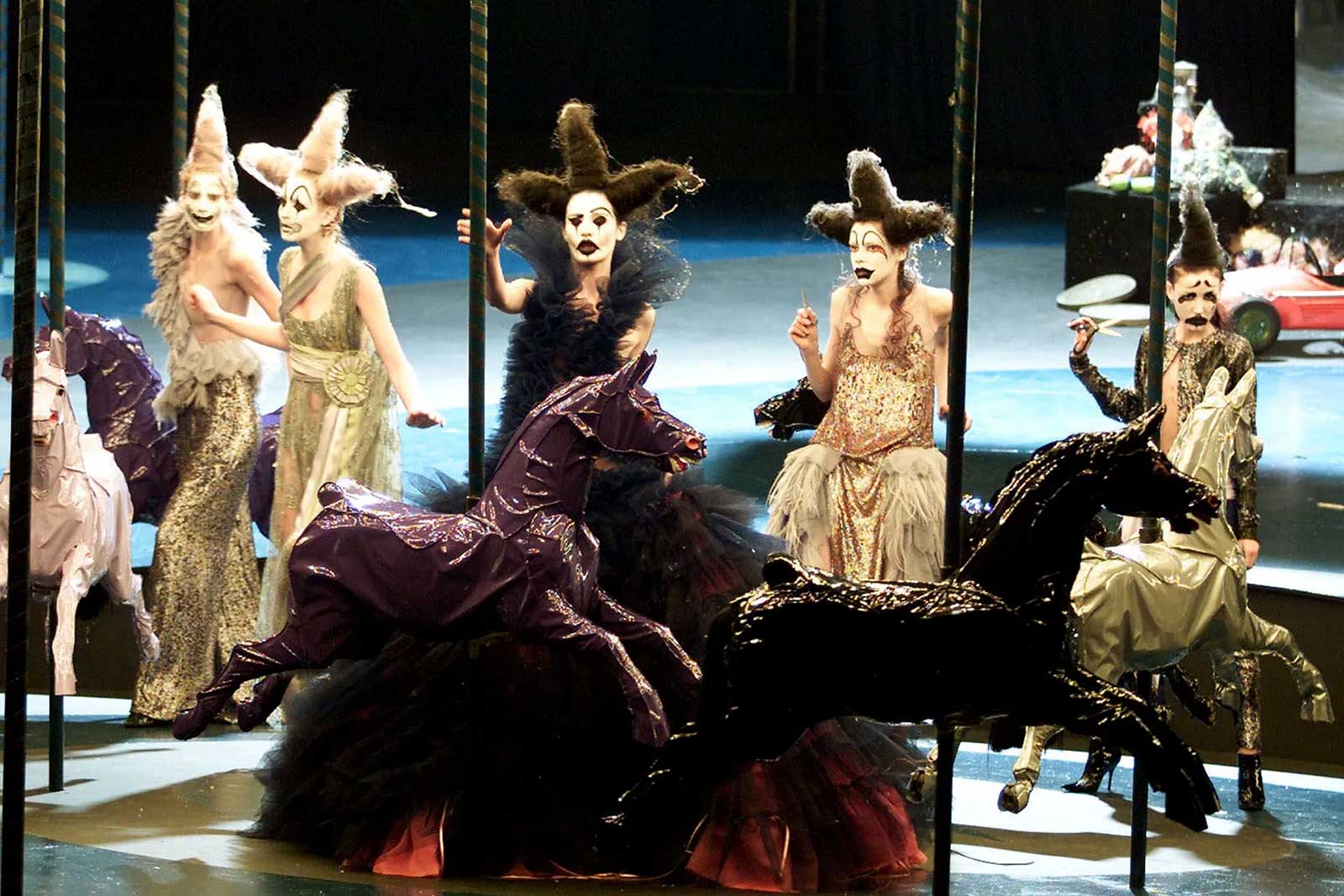
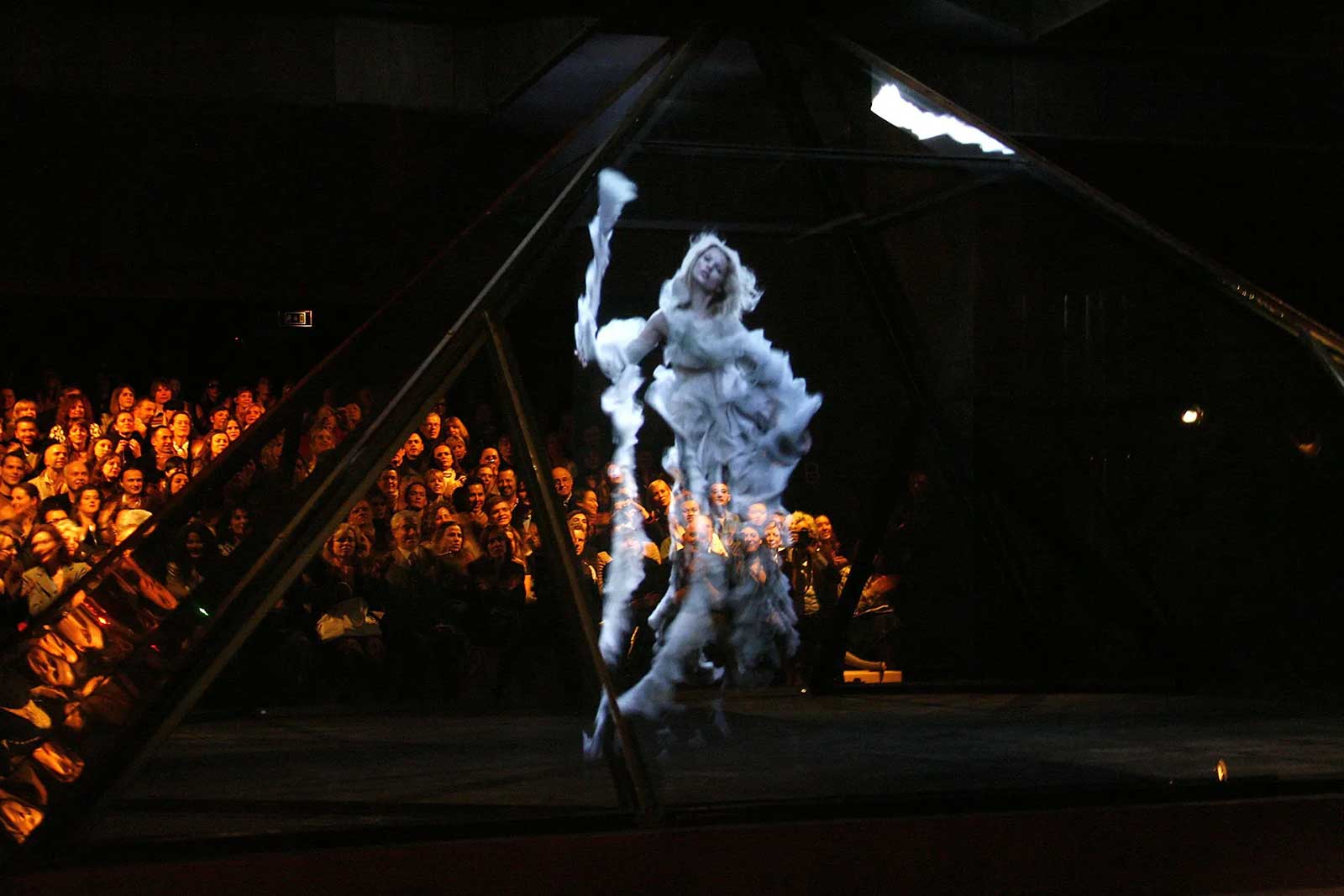
But the designer wasn’t done yet. Over the next decade, showgoers were treated to a presentation with a sinister merry-go-round, a human game of chess, a vision of an underwater world post-climate change and a ghostly hologram of Kate Moss. Ahead of Seán McGirr’s anticipated debut at Alexander McQueen – which will draw on several of the founder’s earliest shows, including The Birds, Vogue revisits his most memorable moments on the catwalk.
-
 Rex1/24
1995
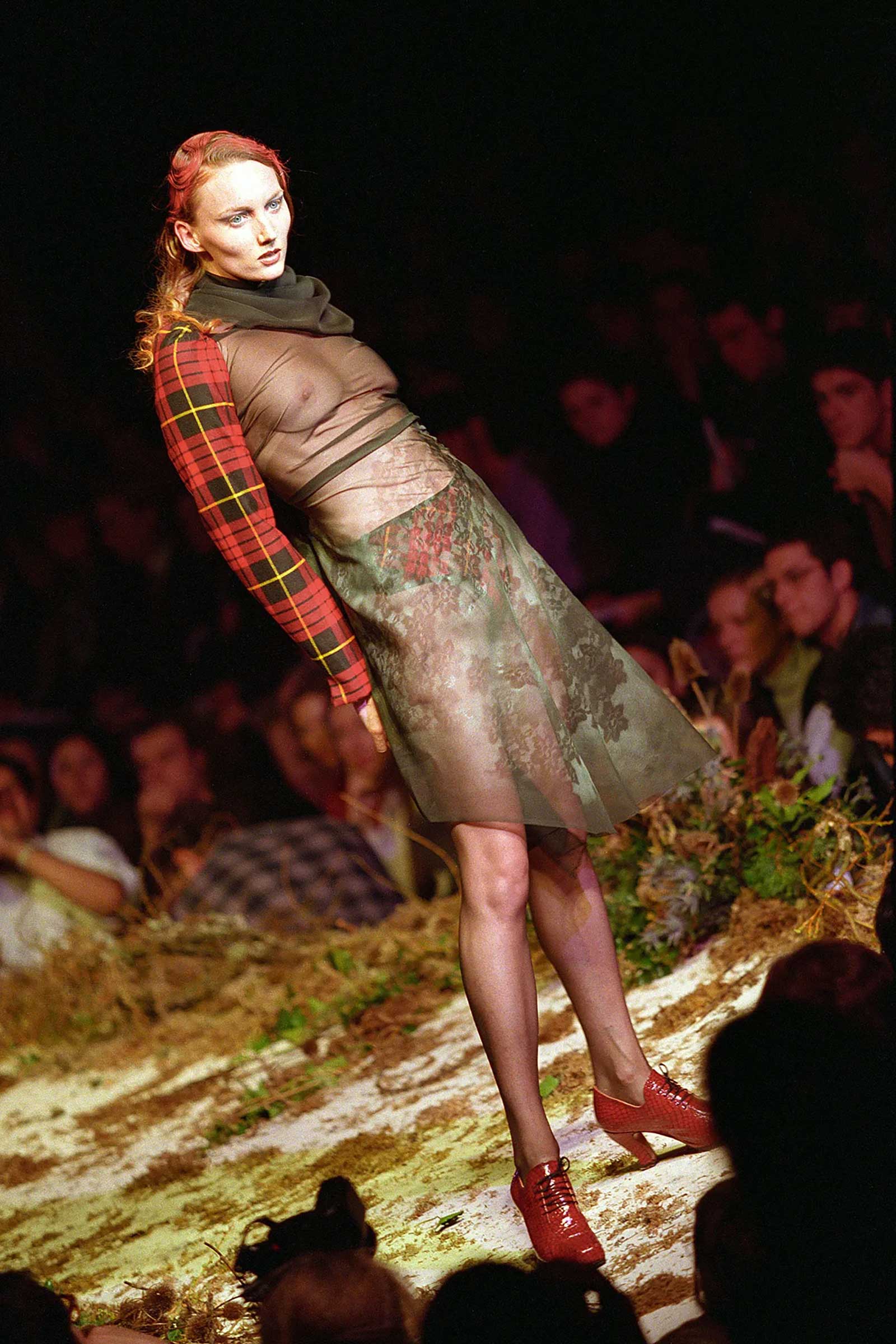
McQueen’s autumn/winter 1995 presentation, Highland Rape, referenced England’s violation of Scotland.
-
 Rex2/24
1996
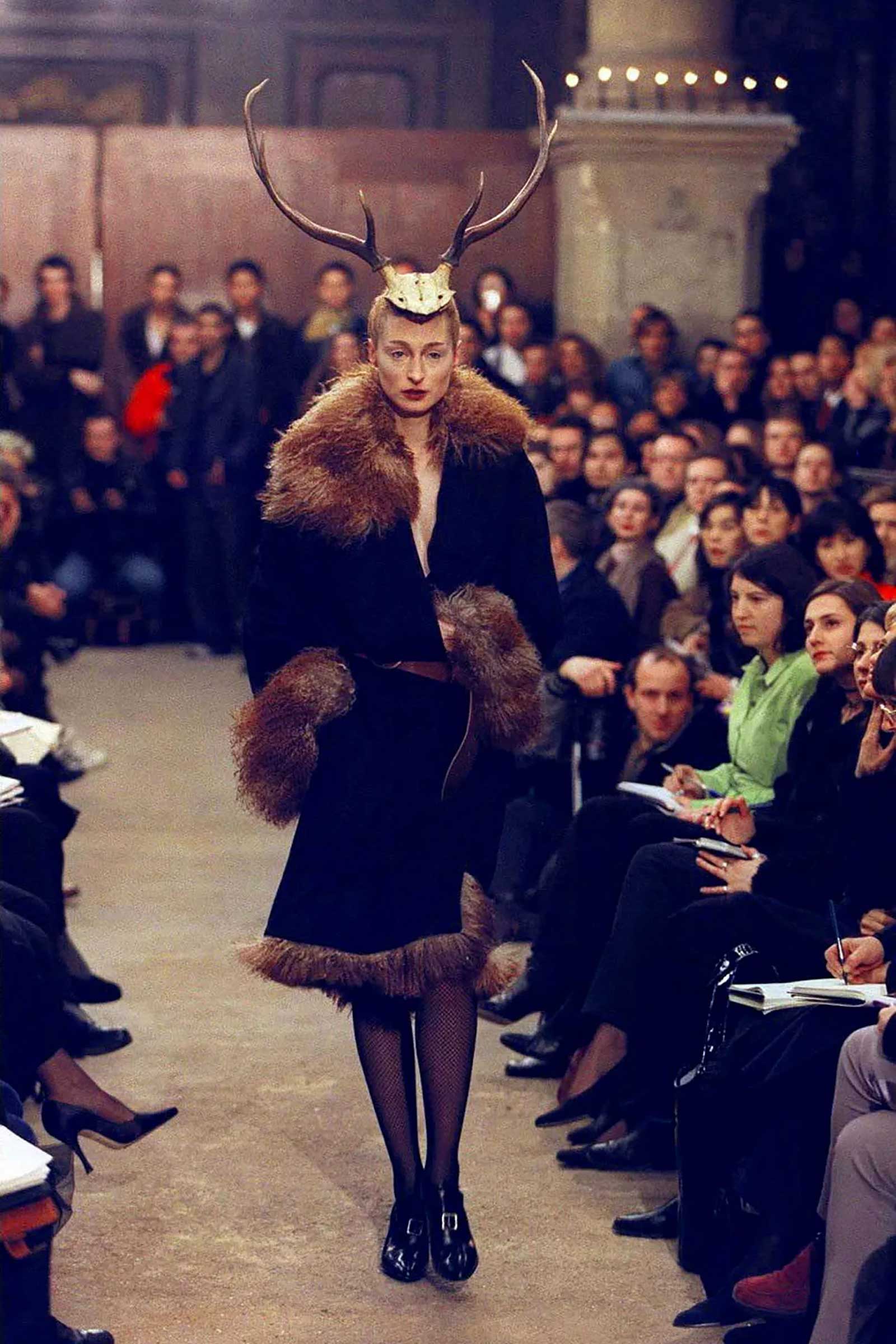
McQueen’s autumn/winter 1996 presentation, Dante, was set in a candlelit church in East London, and editors shared the front row with a skeleton.
-
 Rex3/24
1996
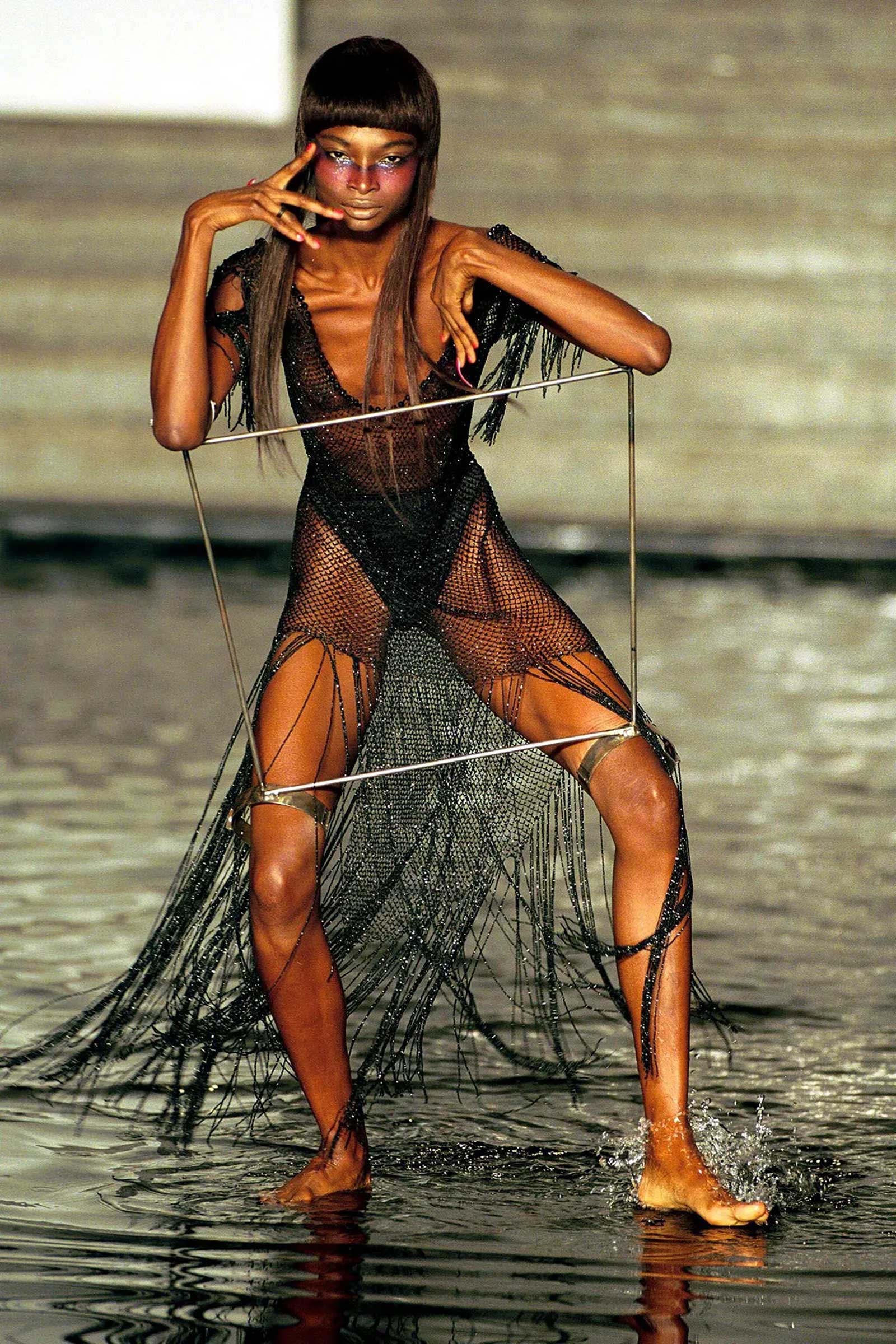
Inspired by the German artist Hans Bellmer, McQueen’s spring/summer 1997 show The Doll saw models take to the runway in metal restraints.
-
 Getty Images4/24
1997
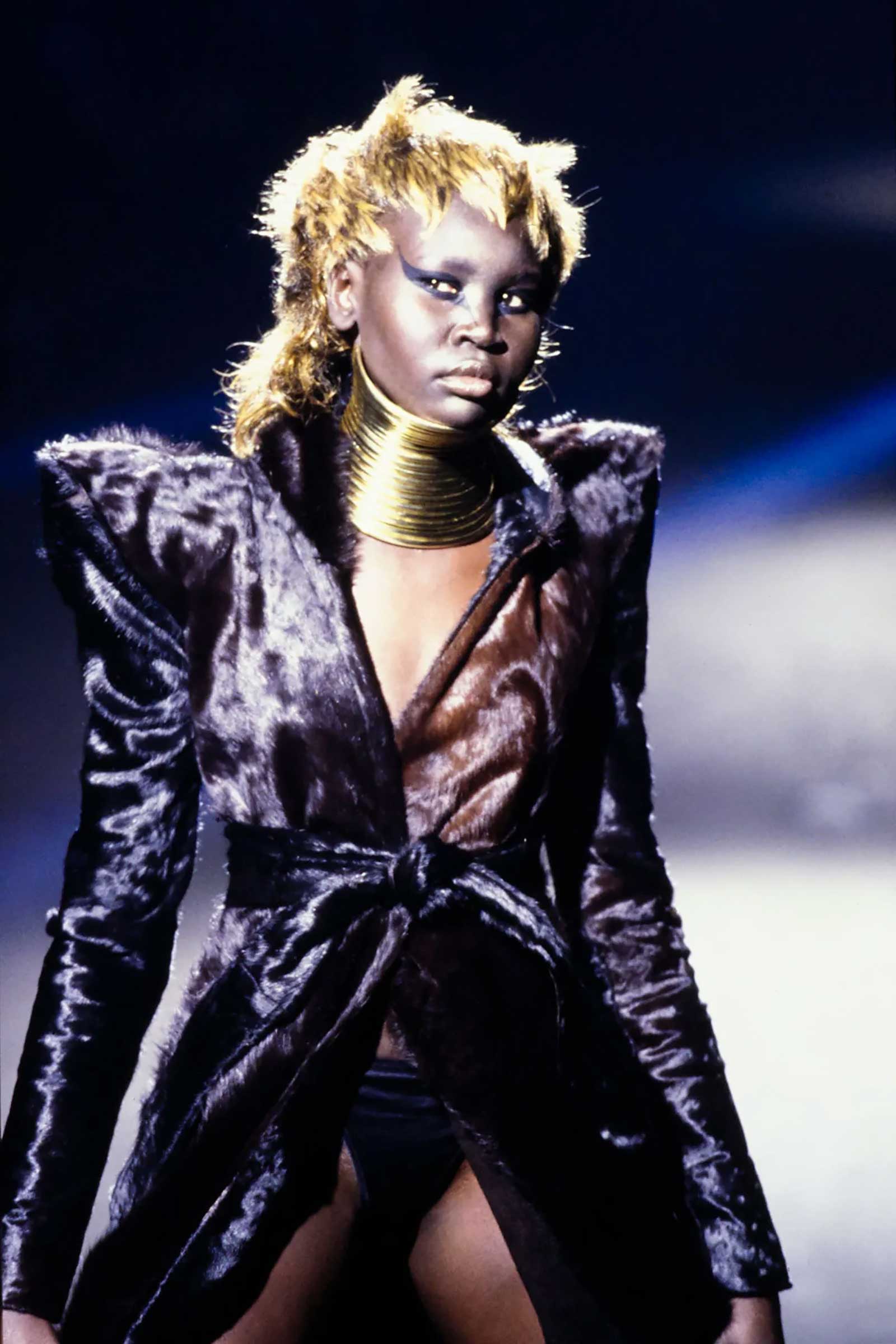
For autumn/winter 1997, McQueen drew inspiration from the H. G. Wells novel The Island of Dr Moreau, the tale of a crazed scientist who creates human hybrids from animals.
-
 Guy Marineau5/24
1997
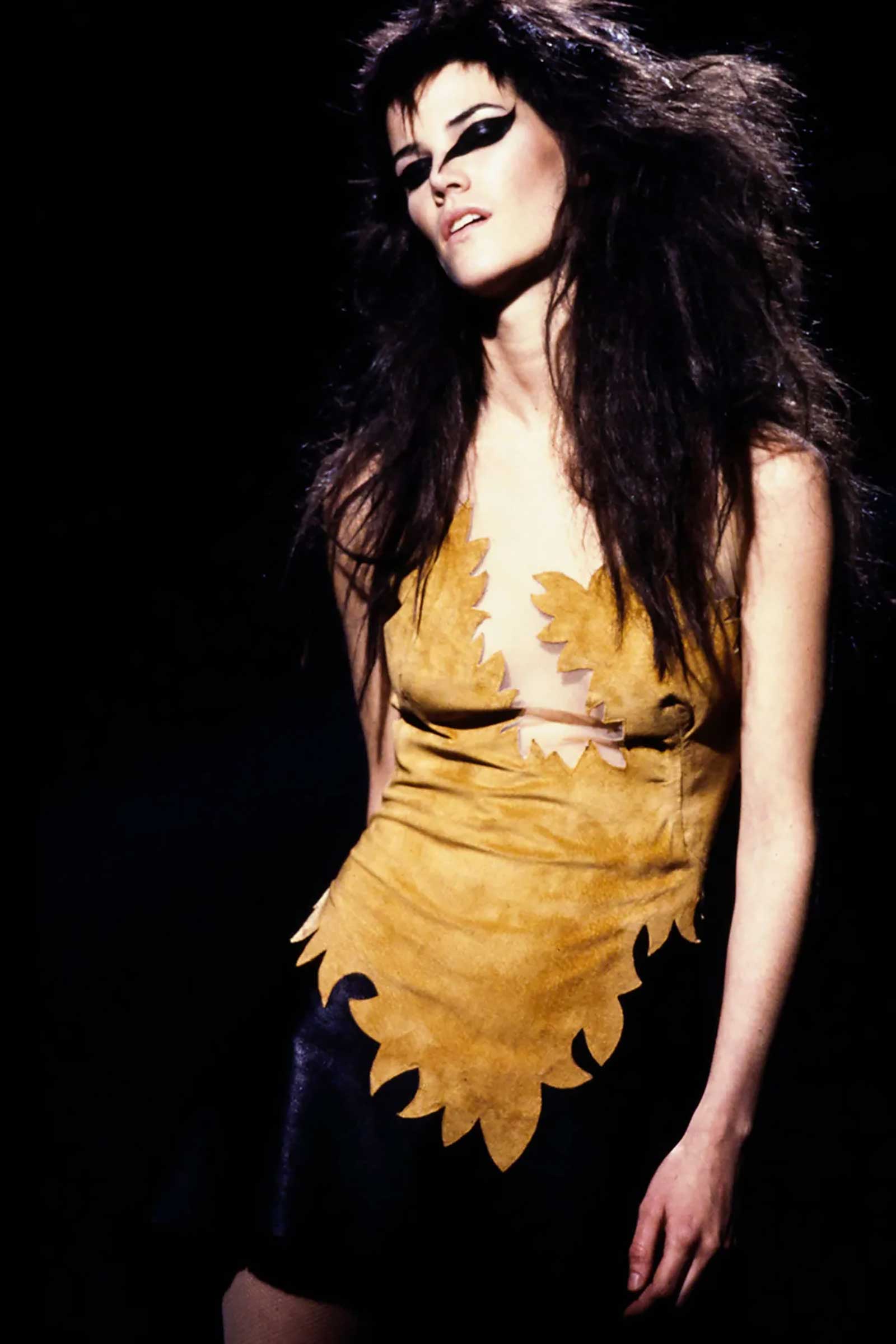
Alexander McQueen’s autumn/winter 1997 season was given the title It’s A Jungle Out There.
-
 Rex6/24
1997
Jodie Kidd walked for McQueen’s spring/summer 1998 show, originally called Golden Shower – later renamed Untitled when the sponsors grew squeamish. The models were showered with water when sprinklers turned on over the catwalk for the famous finale.
-
 Rex7/24
1998
Ever theatrical, a model stands in a ring of fire for the finale of Alexander McQueen’s Joan of Arc themed autumn/winter 1998 show.
-
 Getty Images8/24
1998
The moment Shalom Harlow’s dress was spray-painted by robots at the end of the spring/summer 1999 show became one of the most memorable catwalk finales in fashion history.
-
 Getty Images9/24
1998
Alexander McQueen spring/summer 1999.
-
 Getty Images10/24
1999
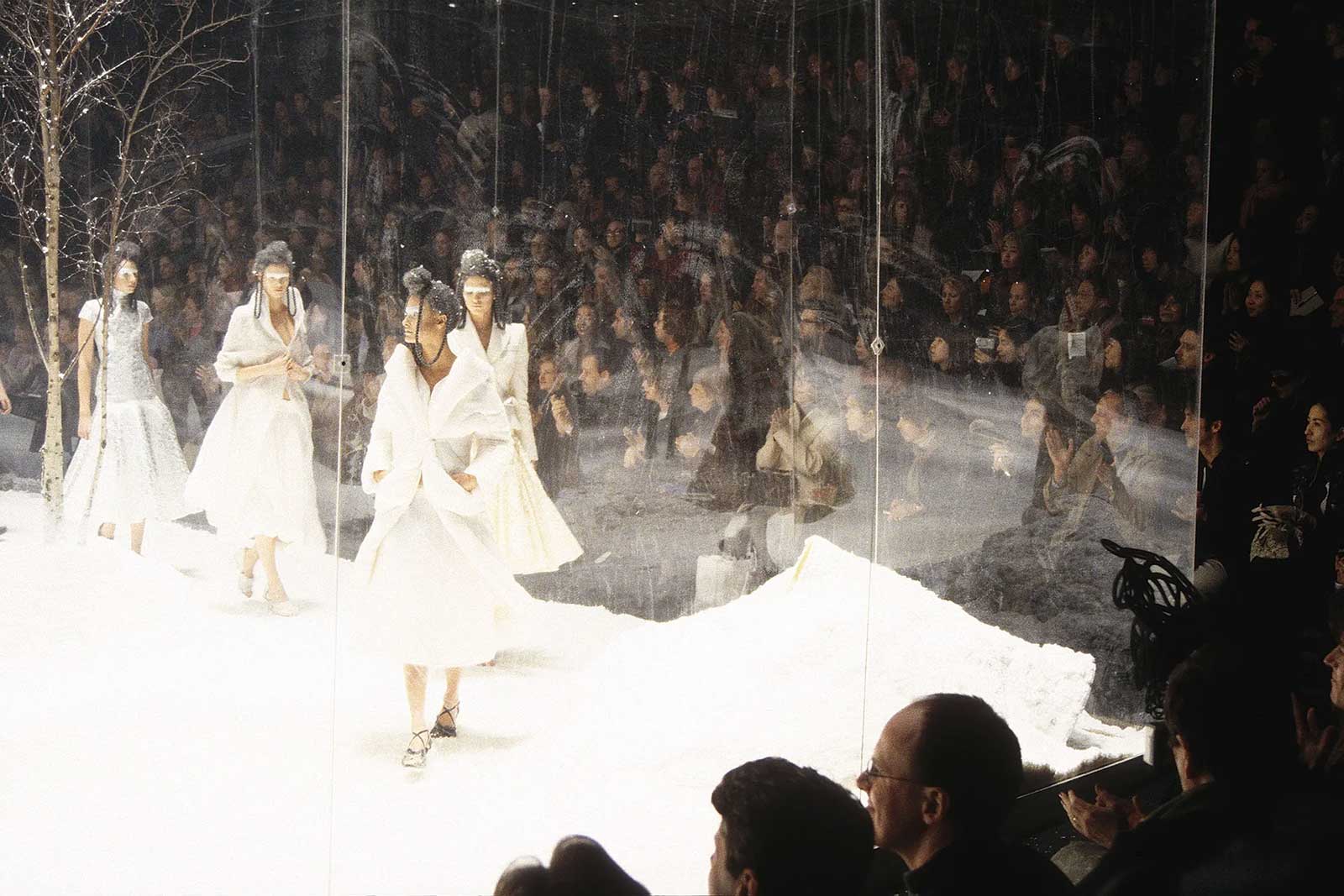
Inspired by the movie The Shining, McQueen’s autumn/winter 1999 show also called to mind a Victorian snow globe.
-
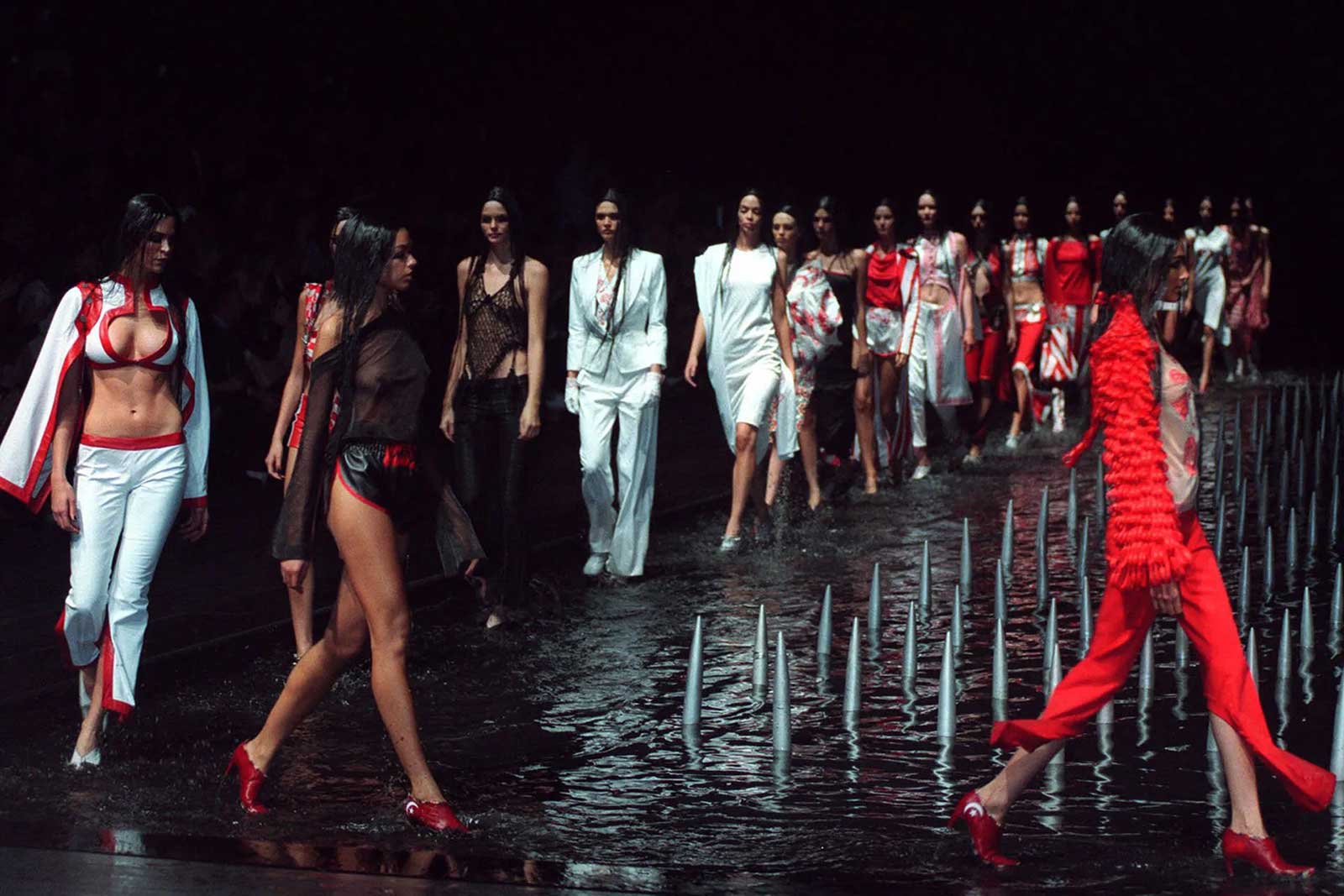 Rex11/24
1999
Models sloshed through water once again on McQueen’s spring/summer 2000 catwalk in New York, showcasing a collection with nods to sportswear, bondage and the Middle East.
-
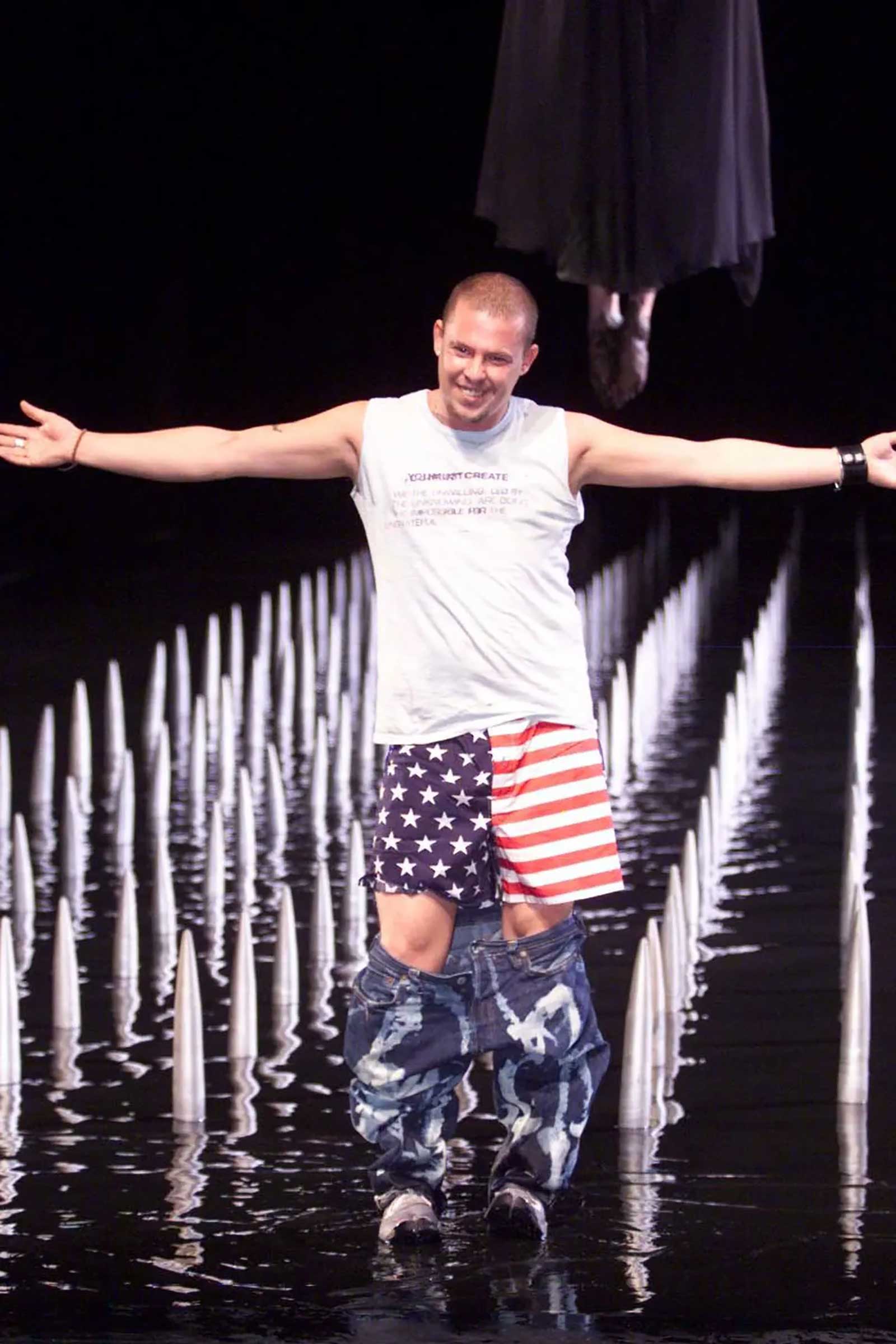 Rex12/24
1999
The designer presented a tongue-in-cheek tribute to his host country at the end of the spring/summer 2000 show at New York Fashion Week.
-
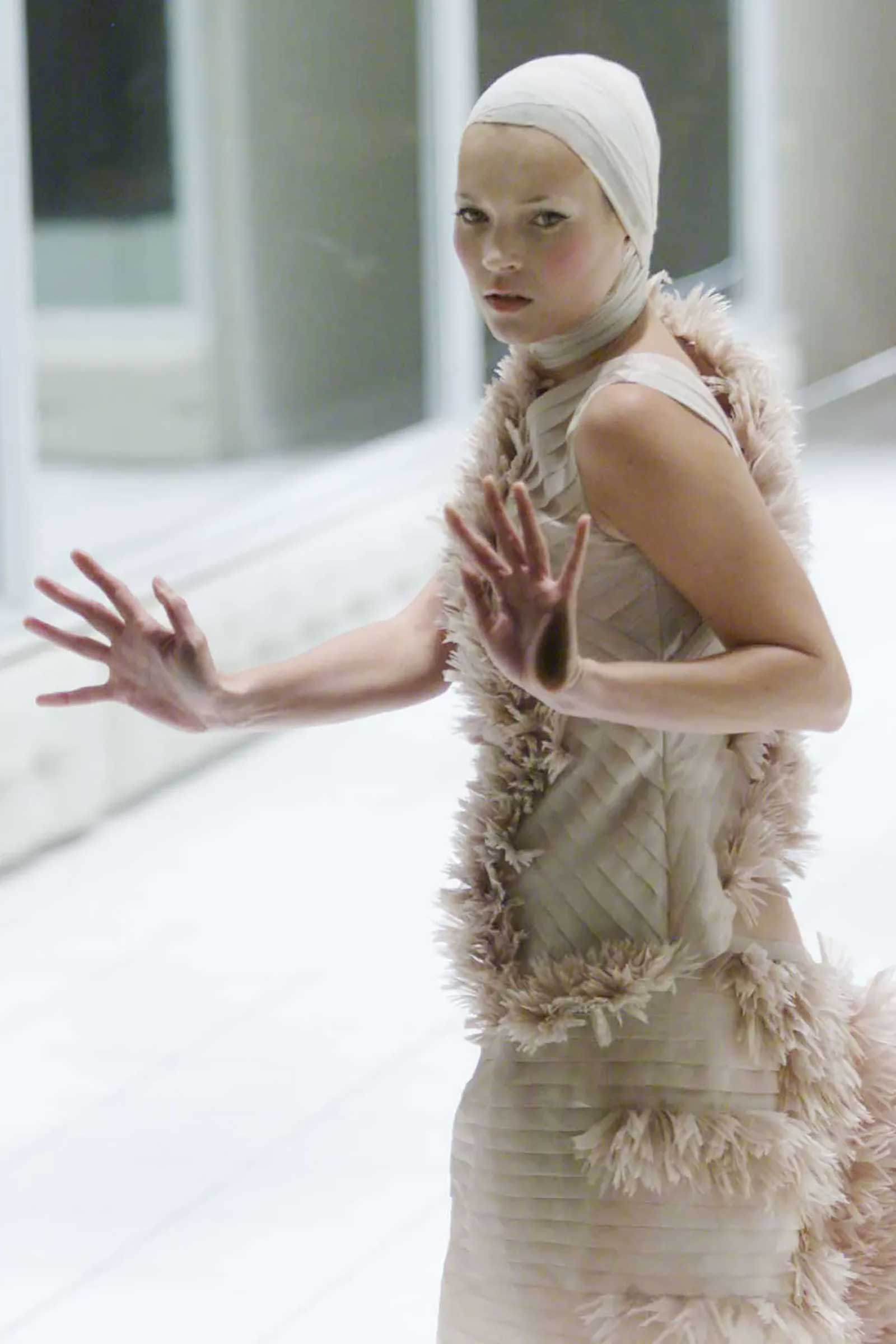 Rex13/24
2000
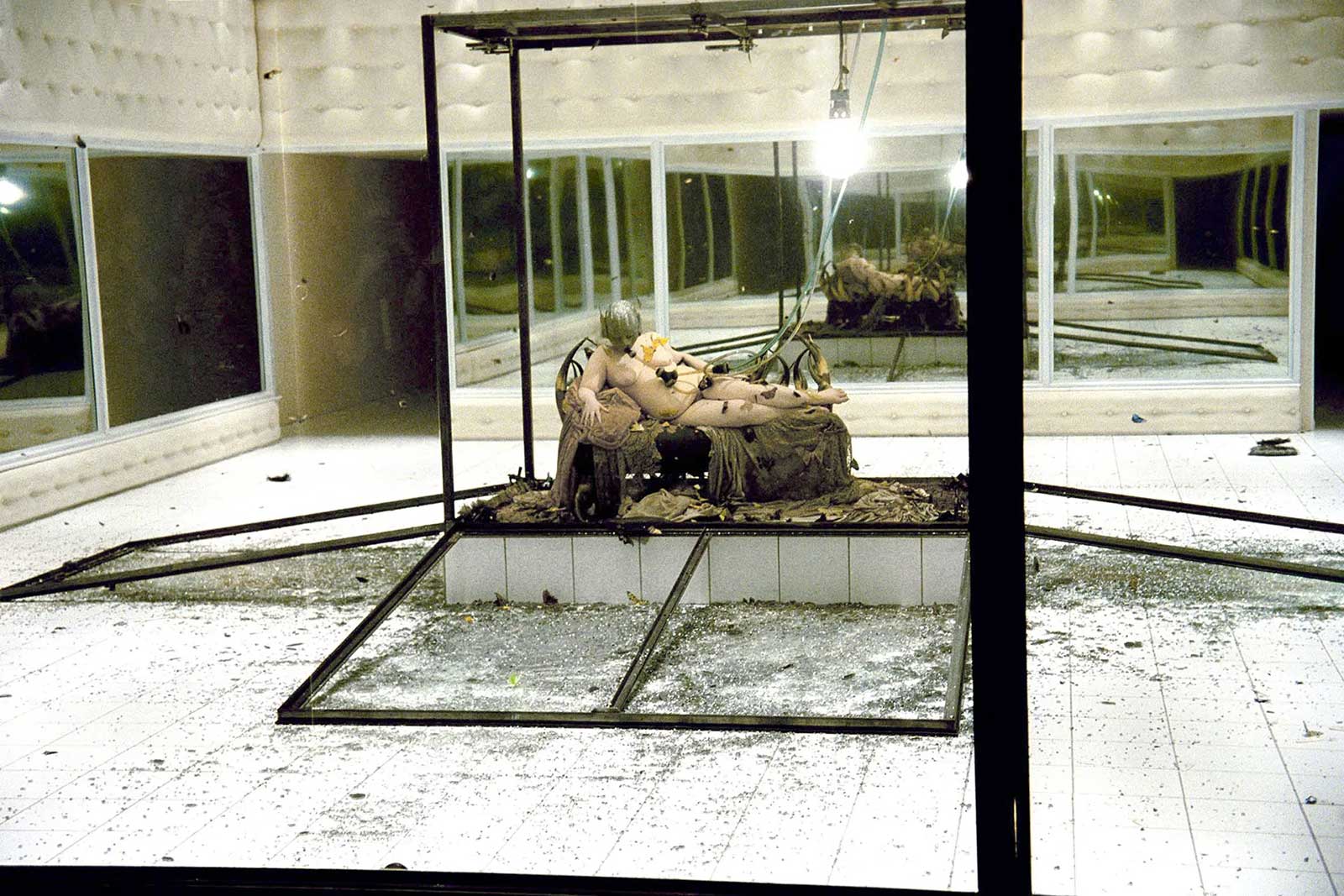
For spring/summer 2001, titled Voss, Lee McQueen turned the catwalk into a clinical glass box in which models – including Kate Moss – appeared trapped.
-
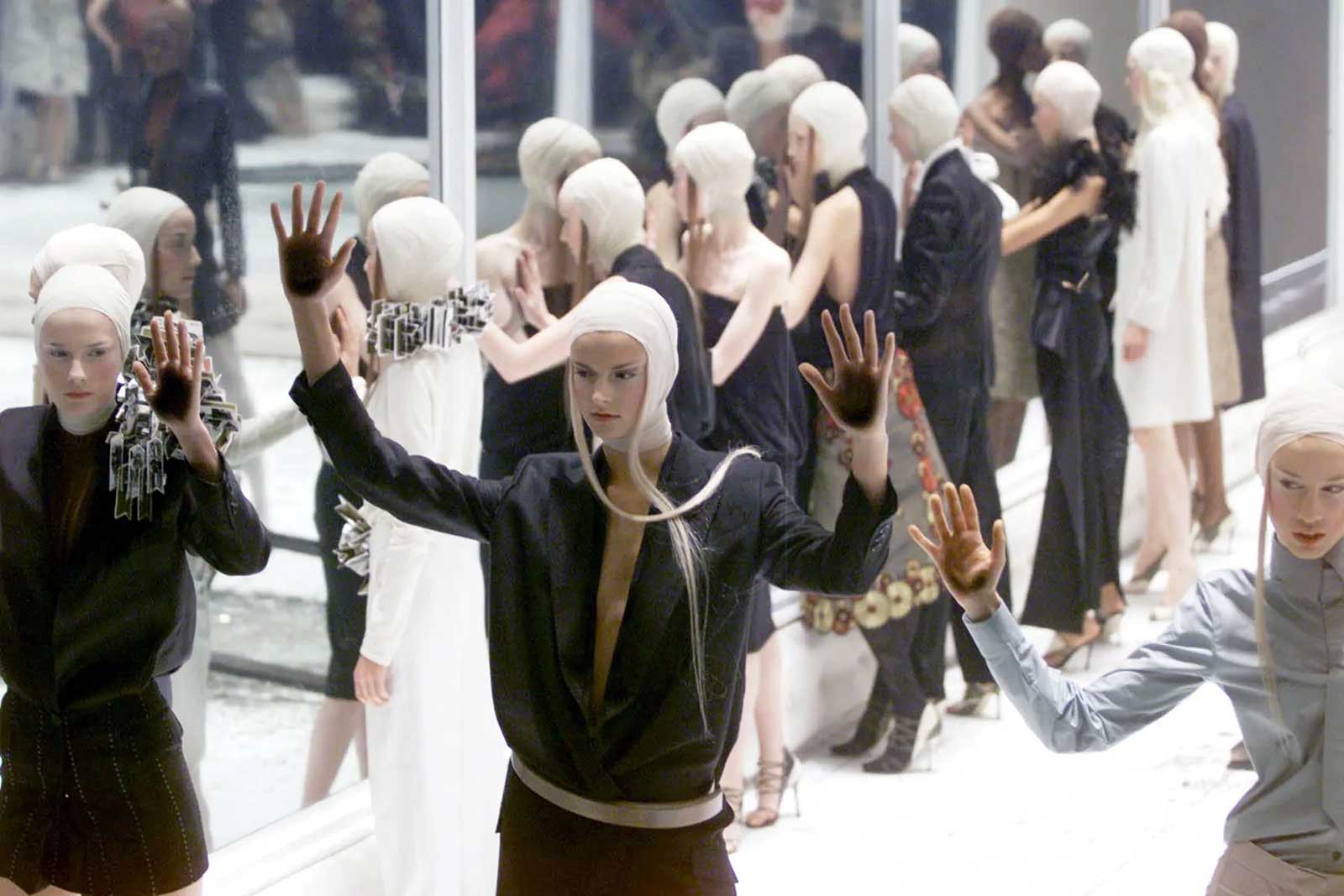 REX/Shutterstock14/24
2000
Alexander McQueen spring/summer 2001.
-
 First View15/24
2000
The dramatic finale saw the glass box shatter to reveal writer Michelle Olley reclining nude on a chaise longue, wearing a mask attached to a breathing tube.
-
 Rex16/24
2001
The fairground scene McQueen conjured for his merry-go-round-themed autumn/winter 2001 presentation was anything but family-friendly.
-
 Rex17/24
2003
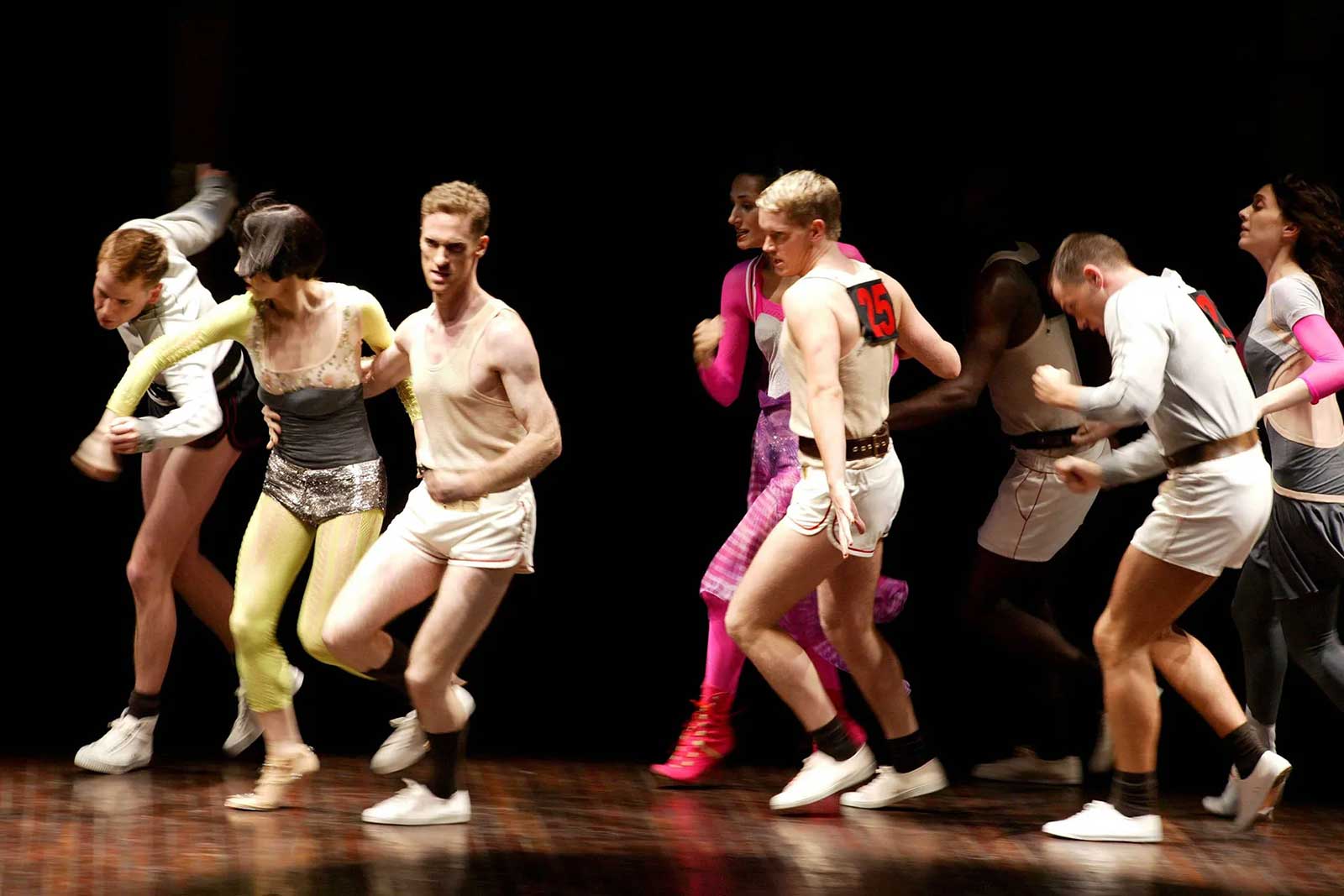
Staged in a 19th Century Parisian dance hall, spring/summer 2004 was choreographed by Michael Clark and inspired by the film They Shoot Horses, Don’t They? starring Jane Fonda.
-
 Getty Images18/24
2005
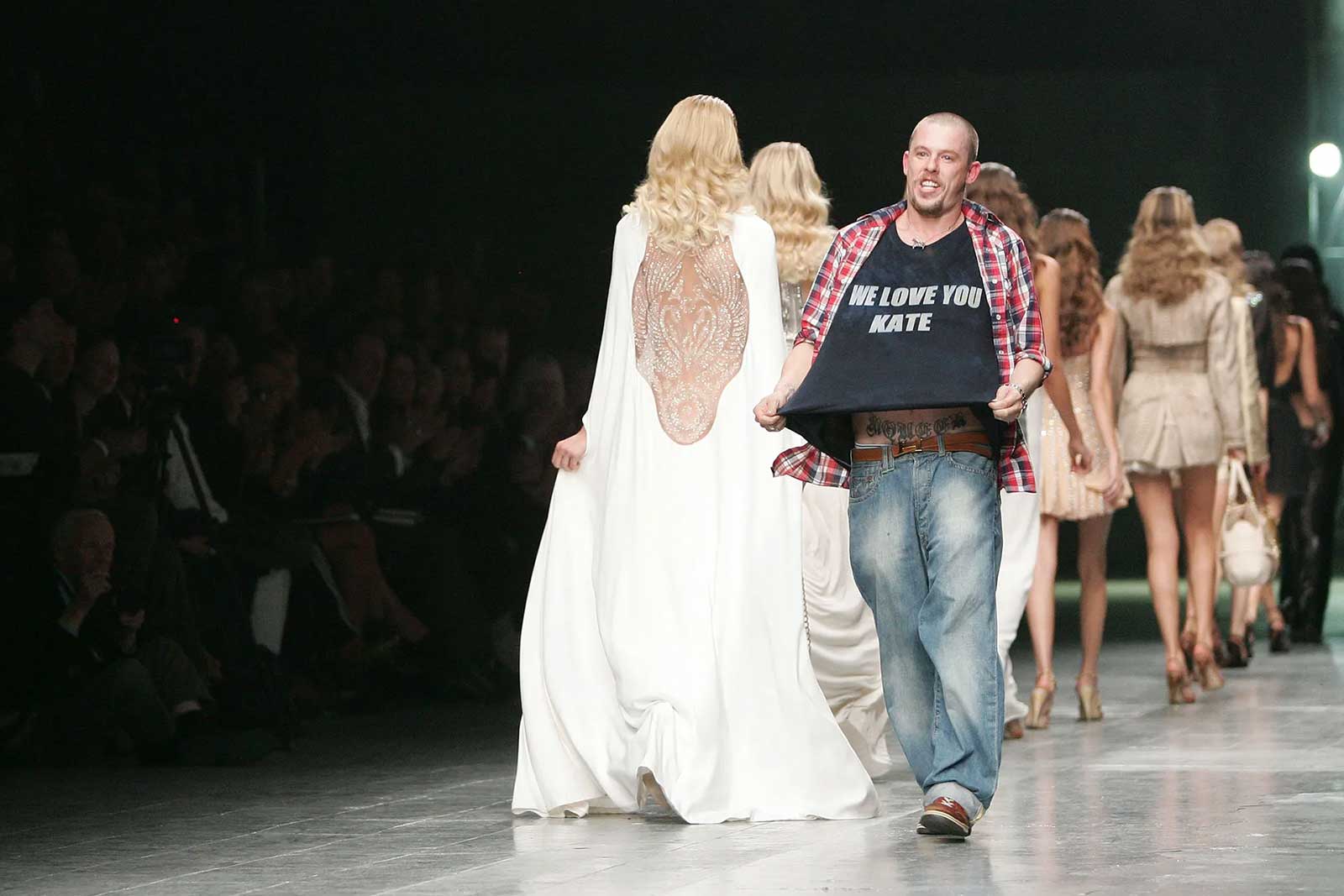
At the end of his spring/summer 2006 catwalk presentation, McQueen strode out onto the catwalk in a T-shirt that read “We Love You Kate”, a show of support for his supermodel friend.
-
 Getty Images19/24
2006
In a moment that will be known forever as one of fashion’s all time highs, Kate Moss made a cameo on McQueen’s autumn/winter 2006 catwalk in hologram form.
-
 Getty Images20/24
2007
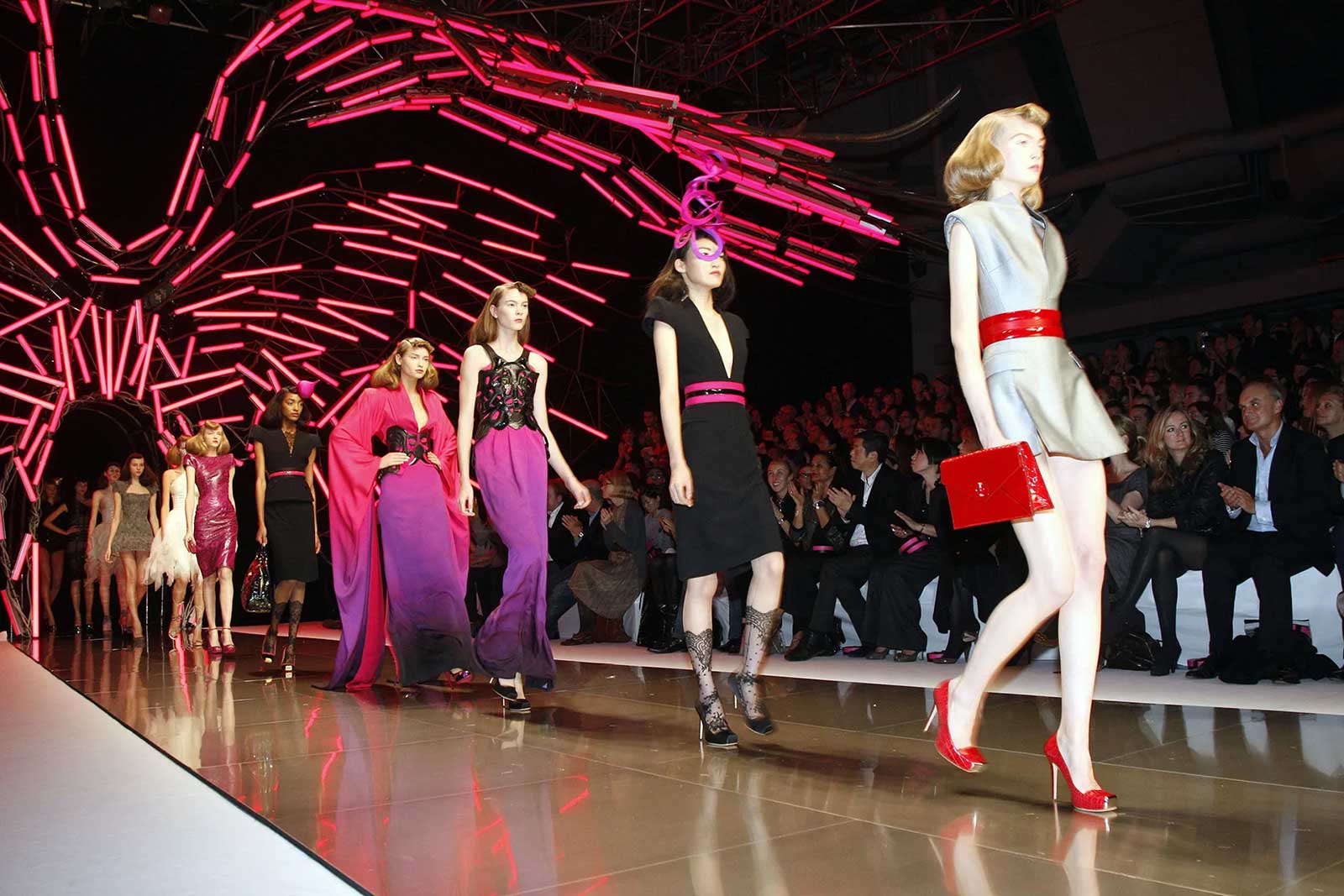
For spring/summer 2008 the designer paid tribute to his late friend and mentor, Isabella Blow.
-
 Getty Images21/24
2007
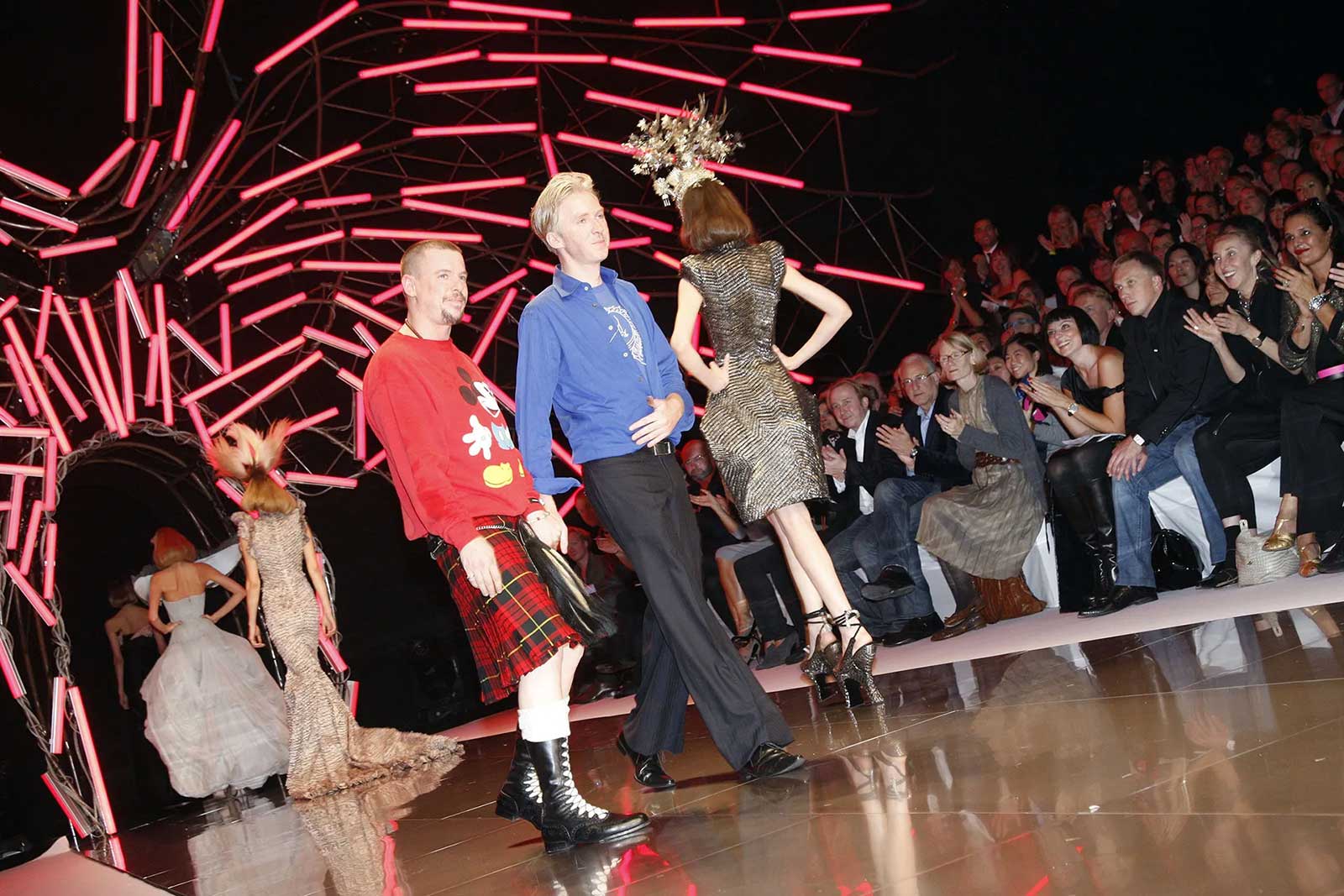
Lee McQueen appears after showing his spring/summer 2008 collection.
-
 Getty Images22/24
2009
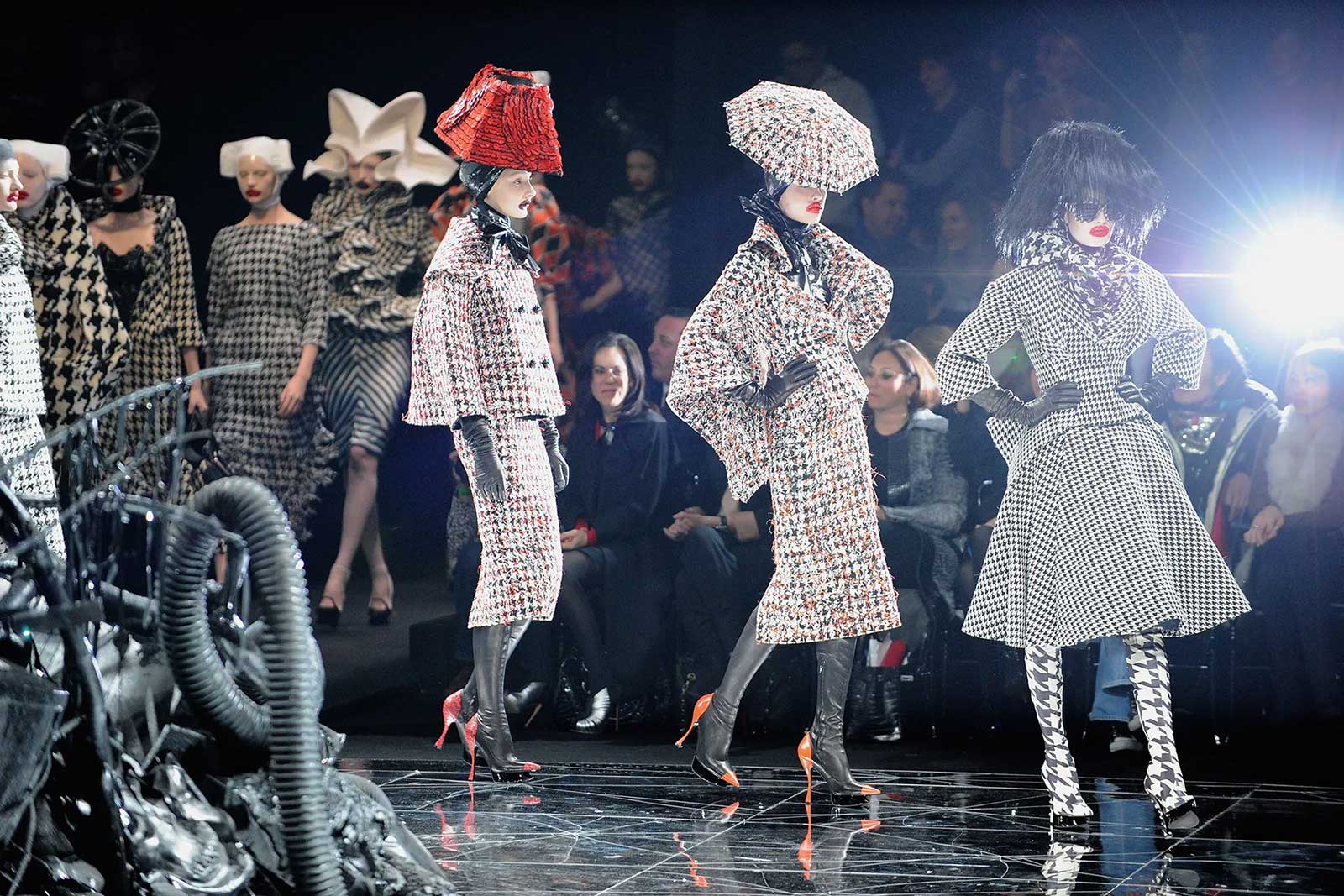
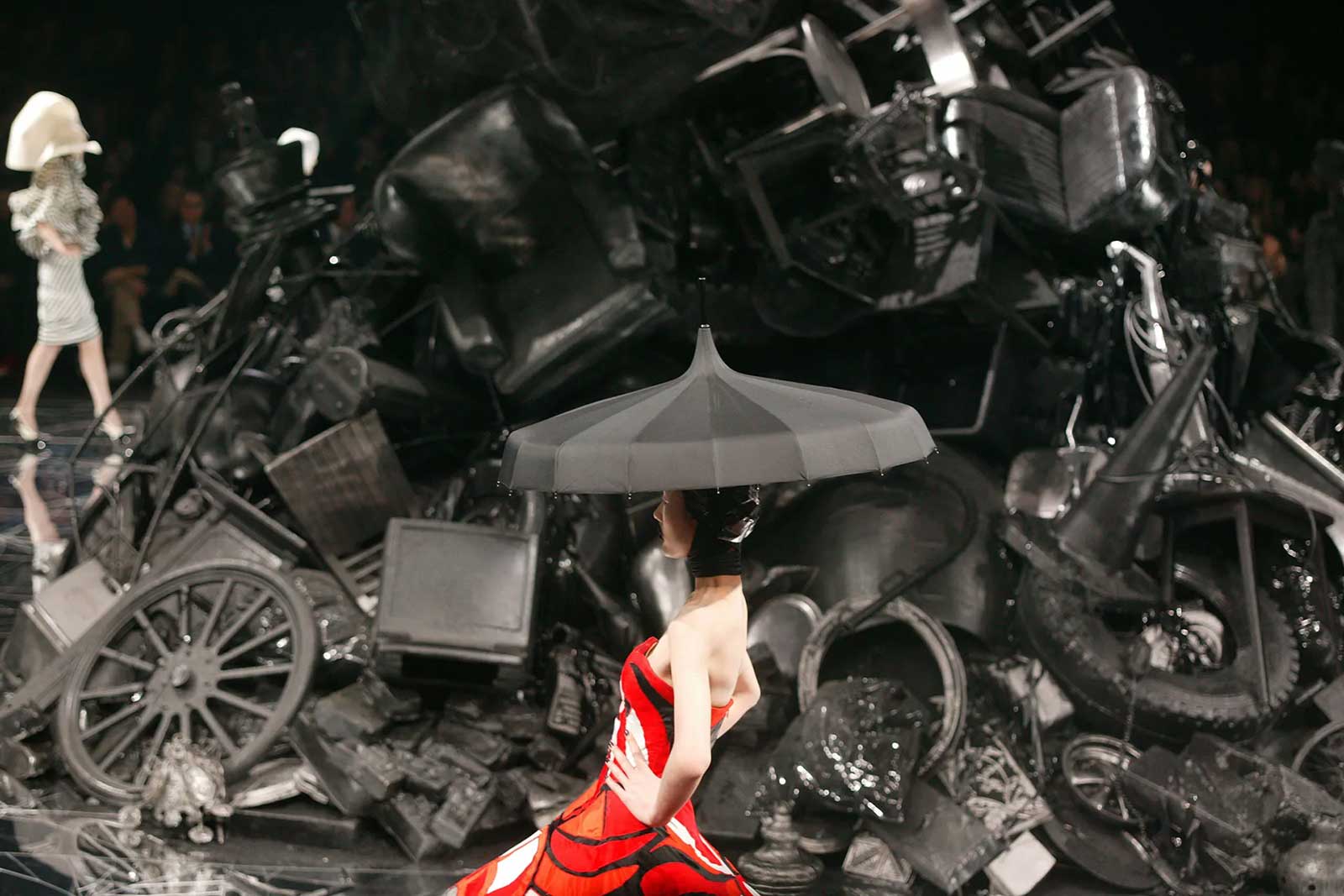
Models teetered around a rubbish pile at the centre of the catwalk during McQueen’s Horn of Plenty autumn/winter 2009 show, which he dedicated to his late mother.
-
 Antonio de Moraes Barros Filho23/24
2009
Alexander McQueen autumn/winter 2009.
-
 Getty Images24/24
2009
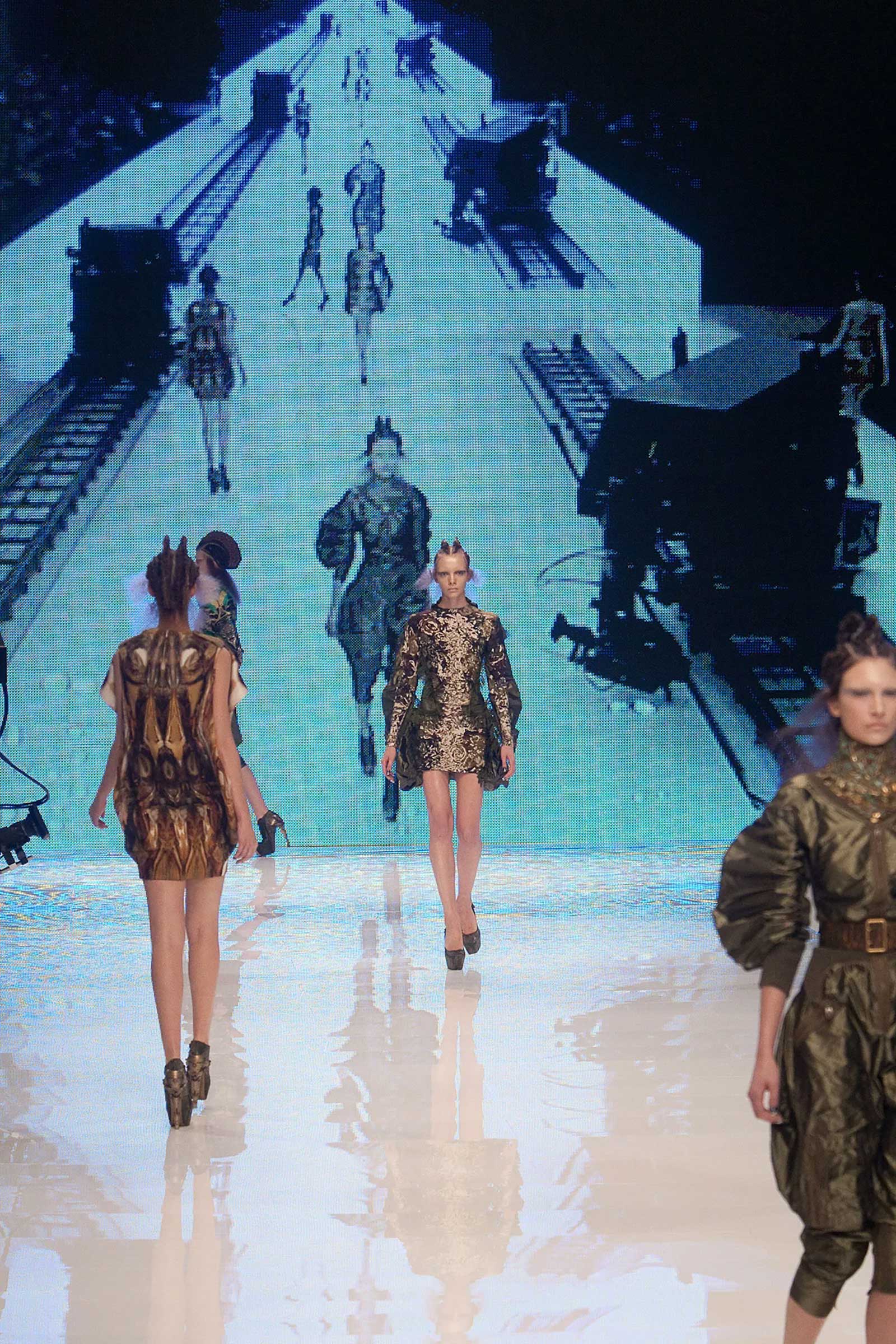
The reptilian spring/summer 2010 collection was the birthplace of those armadillo shoes, later favoured by Lady Gaga. As well as marking the first time a brand live-streamed its catwalk show online, Plato’s Atlantis would also be McQueen’s last ever presentation.
This article was originally published on British Vogue.
- Alexander McQueen Taps JW Anderson’s Seán McGirr as Creative Director
- Kaia Gerber, Sadie Sink, and More Say Goodbye to Sarah Burton at Alexander McQueen
- Before Her Final Bow at Alexander McQueen, a Tribute to Sarah Burton and Her Extraordinary Talent
- 5 Things To Know About Sarah Burton’s Final Show For Alexander McQueen