
All Roads Lead to Forés! Inside Amado Forés and Carmela Fortuna-Forés’ Second Wedding


Photographed by Jaja Samaniego
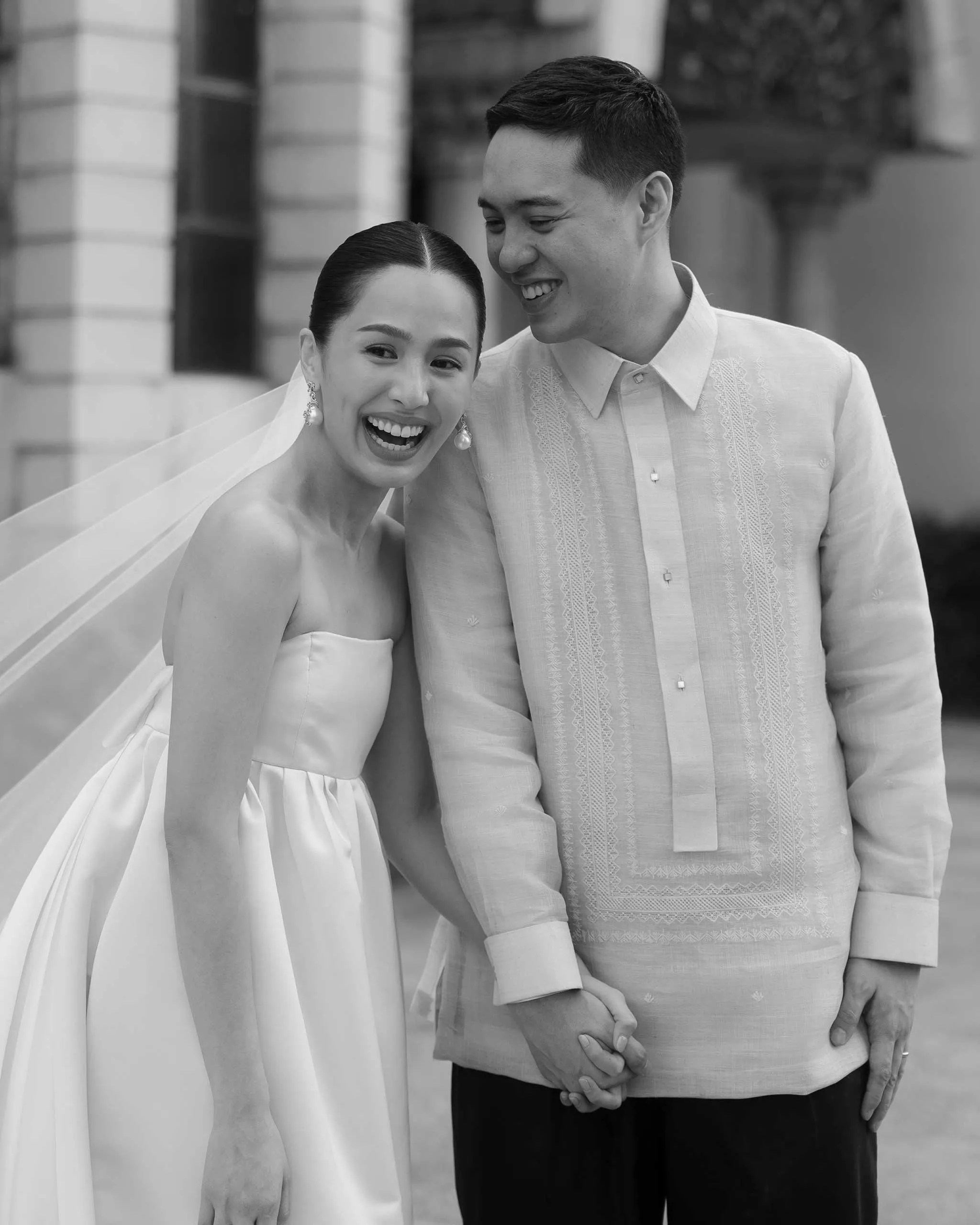
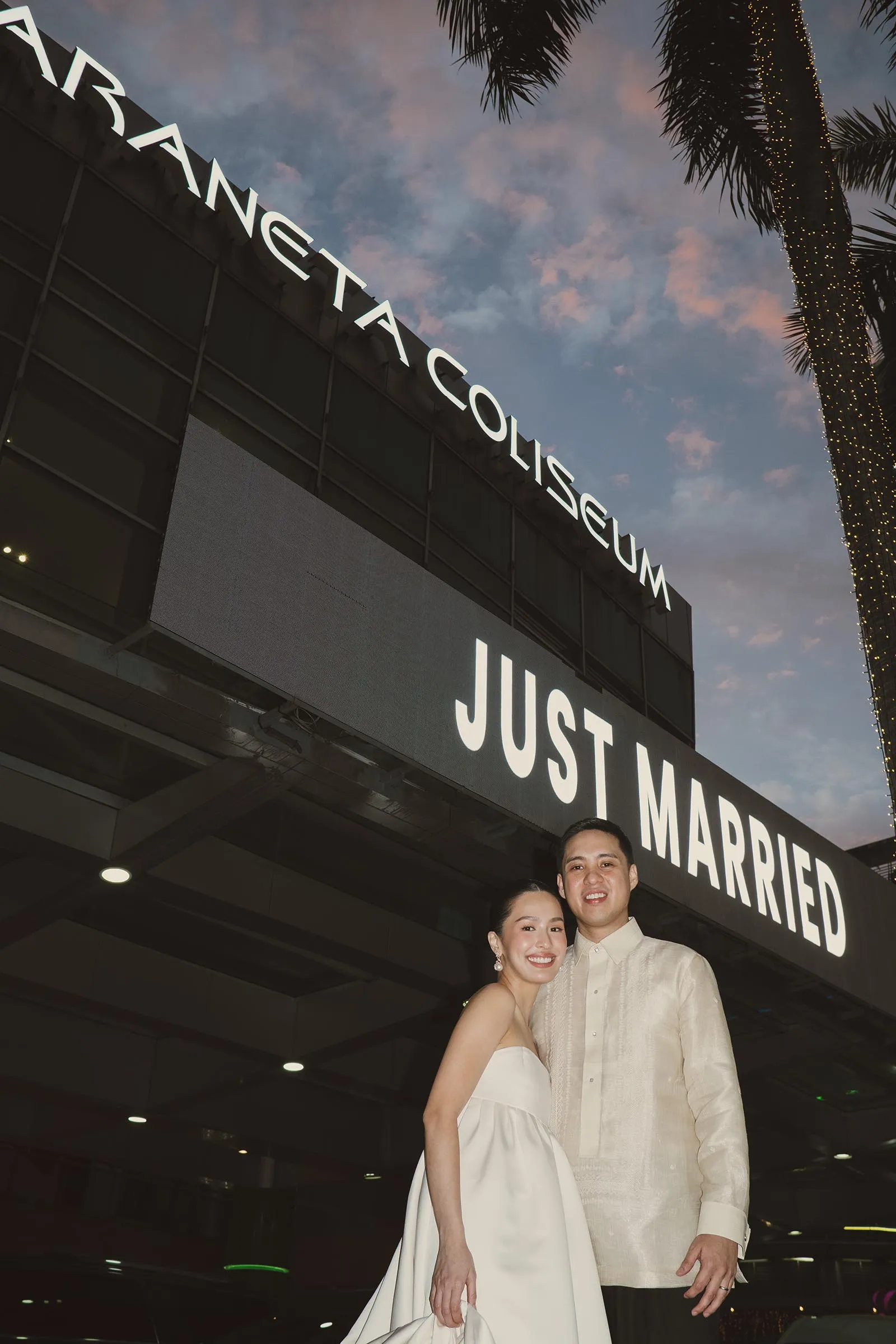
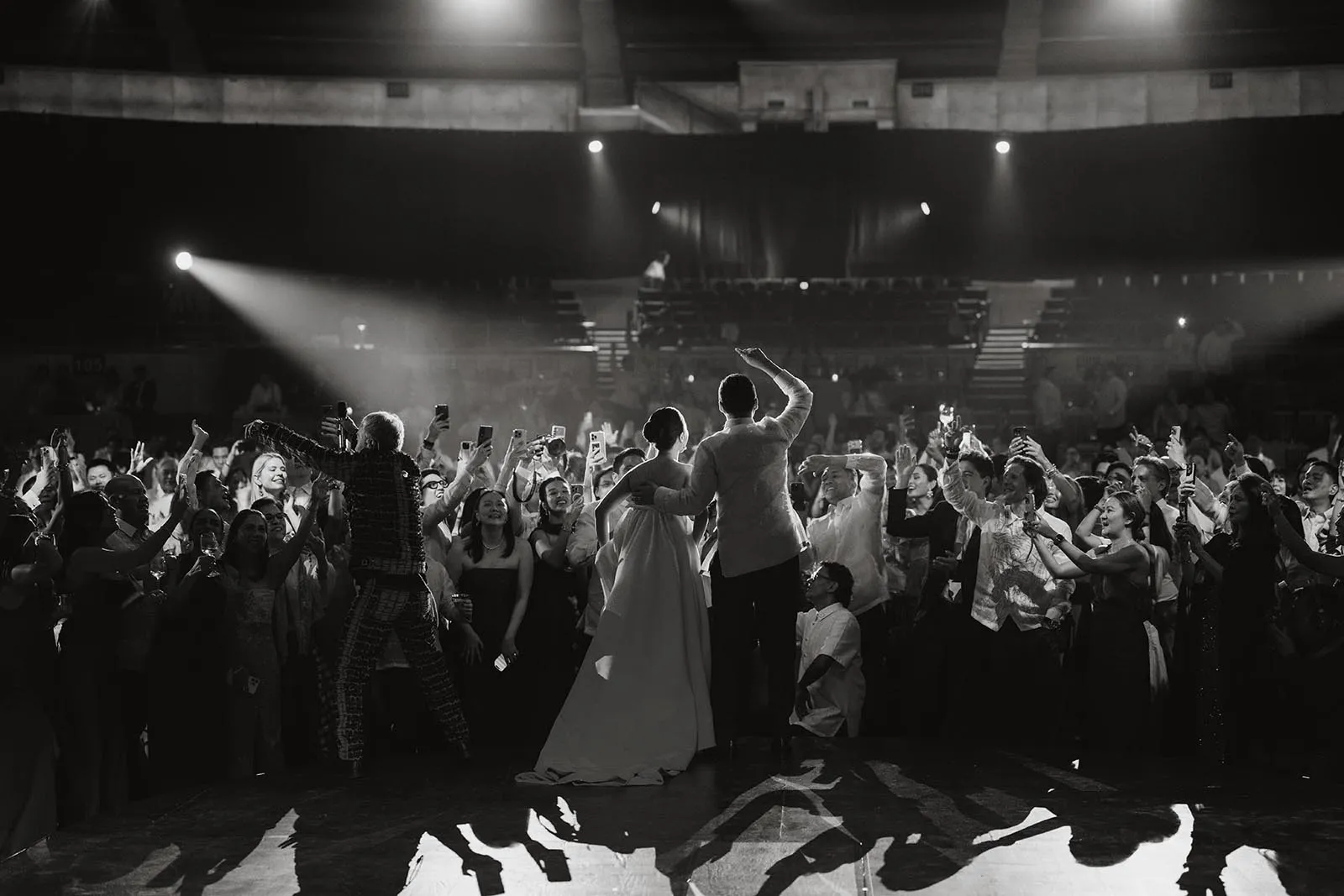
After a private ceremony at Amado’s family home last year, Amado and Carmela Fortuna Forés celebrated their second wedding at Cubao Cathedral, then hosted a reception at the Araneta Coliseum.
In Cubao, a place defined by the vision of the Araneta family, Amado Forés and Carmela Fortuna-Forés’ wedding wasn’t just a single day of bloom, but a continuation of the imagination of Margarita Forés, the restaurateur behind Cibo and one of the most influential culinary figures in the country, whose legacy extends far beyond the dinner plate.
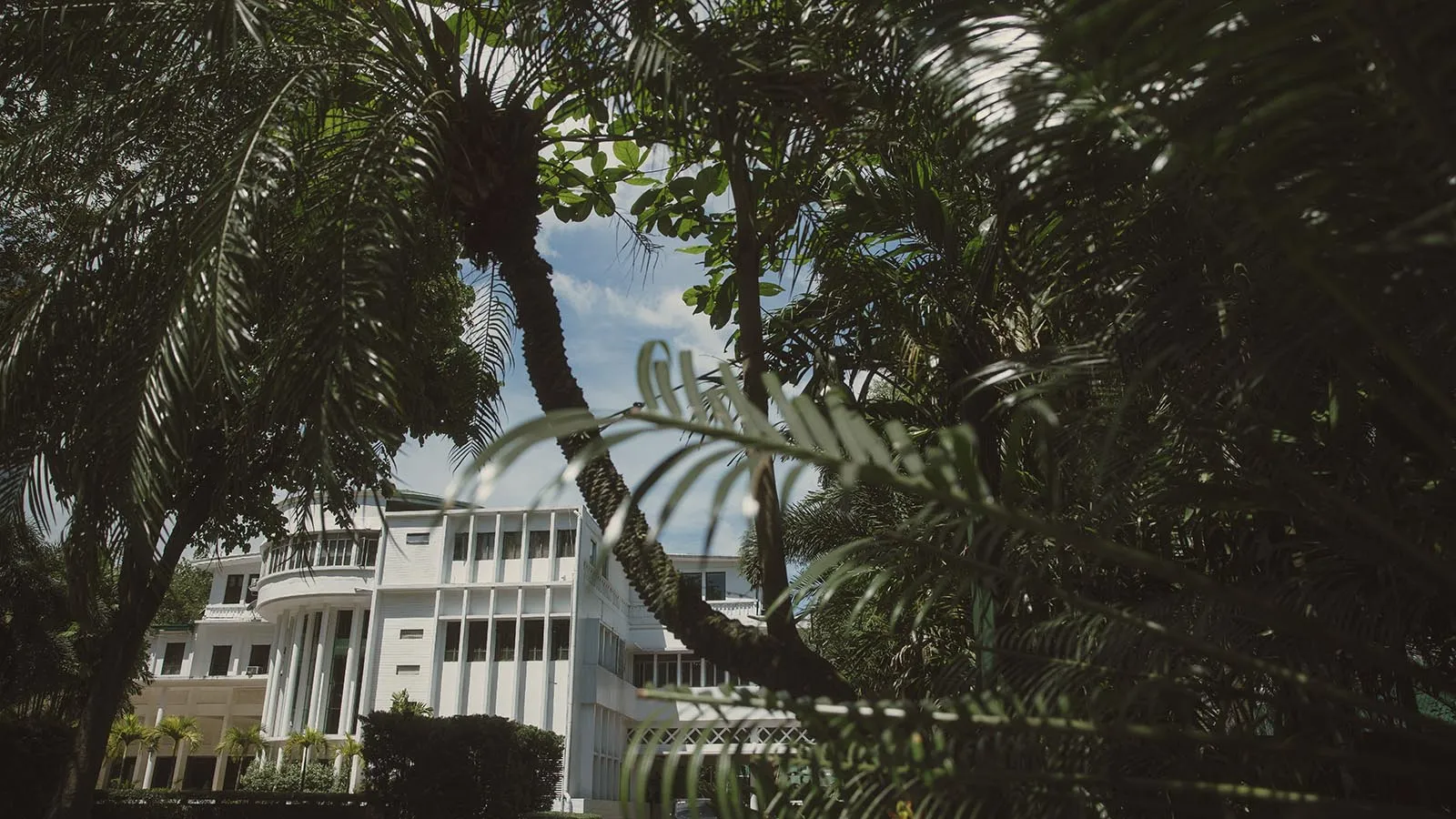
“After our engagement, we had always planned to have a big celebration, especially because of Amado’s mom. She had imagined a complete Cubao wedding for us, starting with a ceremony at Cubao Cathedral, then gathering at Bahay na Puti, and ending with a big party at Araneta Coliseum,” says Carmela. That plan was postponed last year when Margarita passed. “We decided to get married quietly and intimately instead, so we had a small ceremony at Bahay na Puti. It felt right for that moment, but we always knew we would celebrate with everyone eventually.”
What followed was not a revision but a tribute to that earlier dream, revamped and refined with the couple’s personal touches. “This second ceremony became our way of honoring the celebration she had imagined, while also celebrating each other with the things we love most. Music, food, and the people who have been part of our lives.” Shared familiarity rather than singular spectacle served as the principle shaping the tone of the entire day.
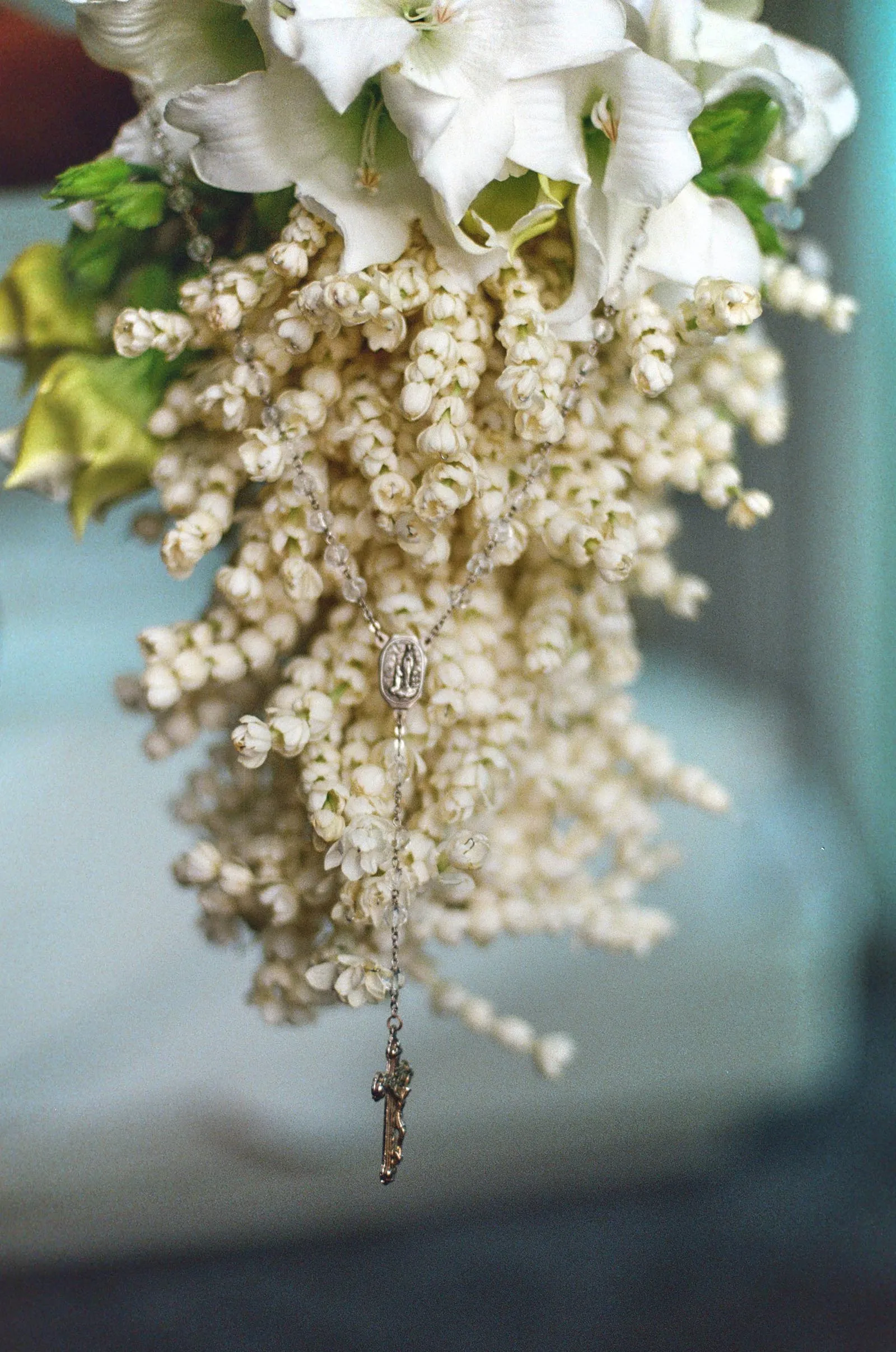
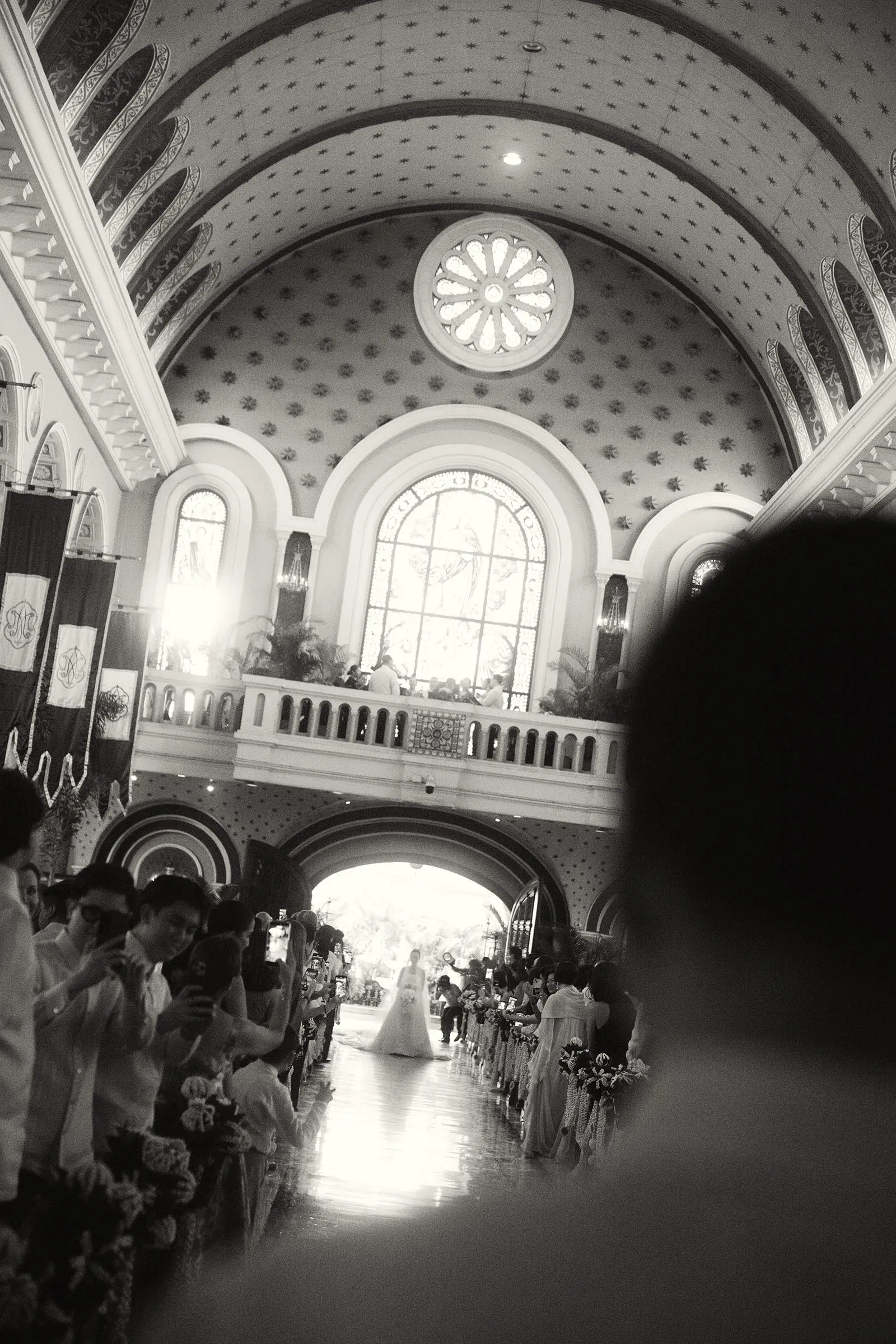
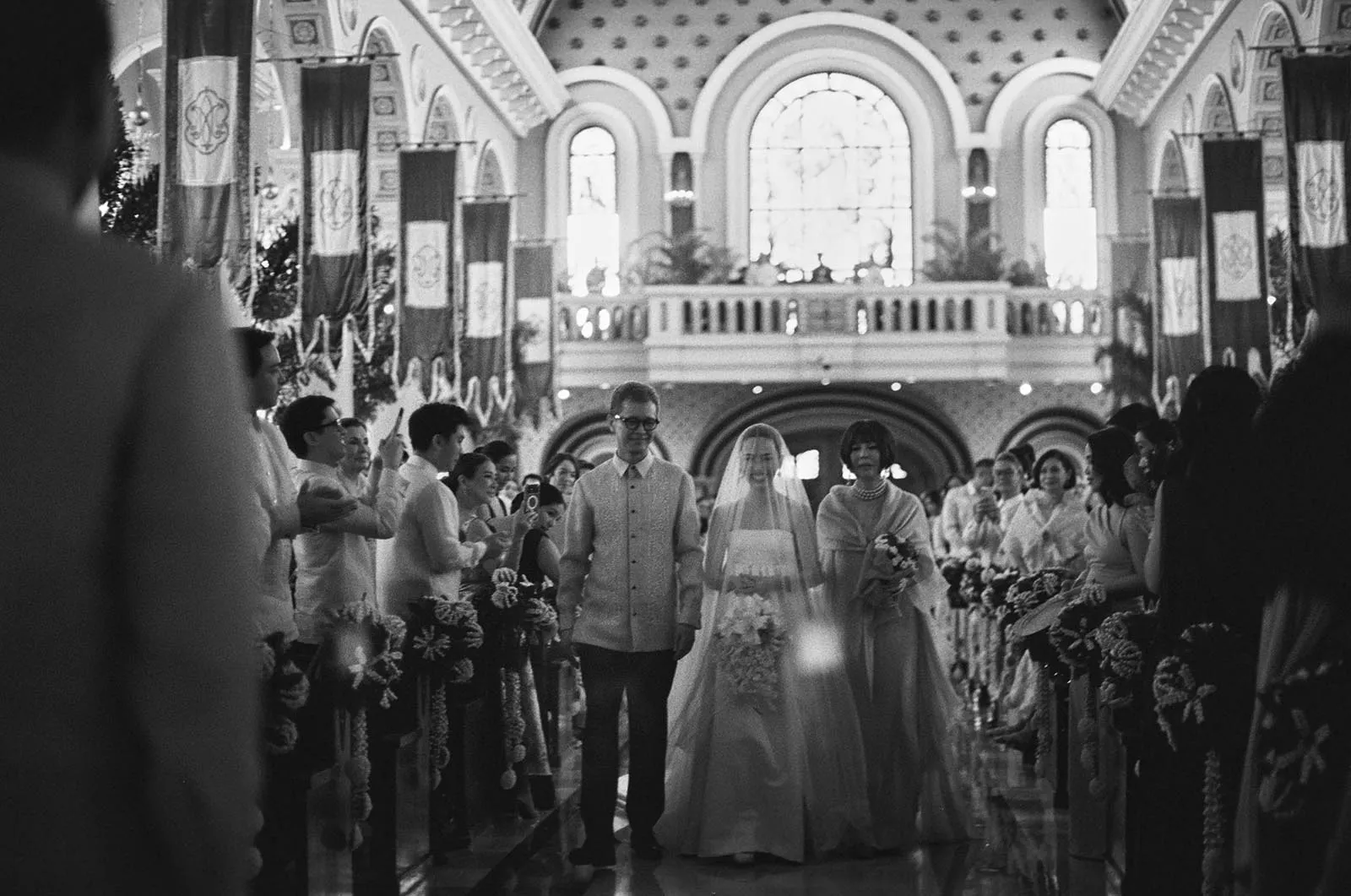
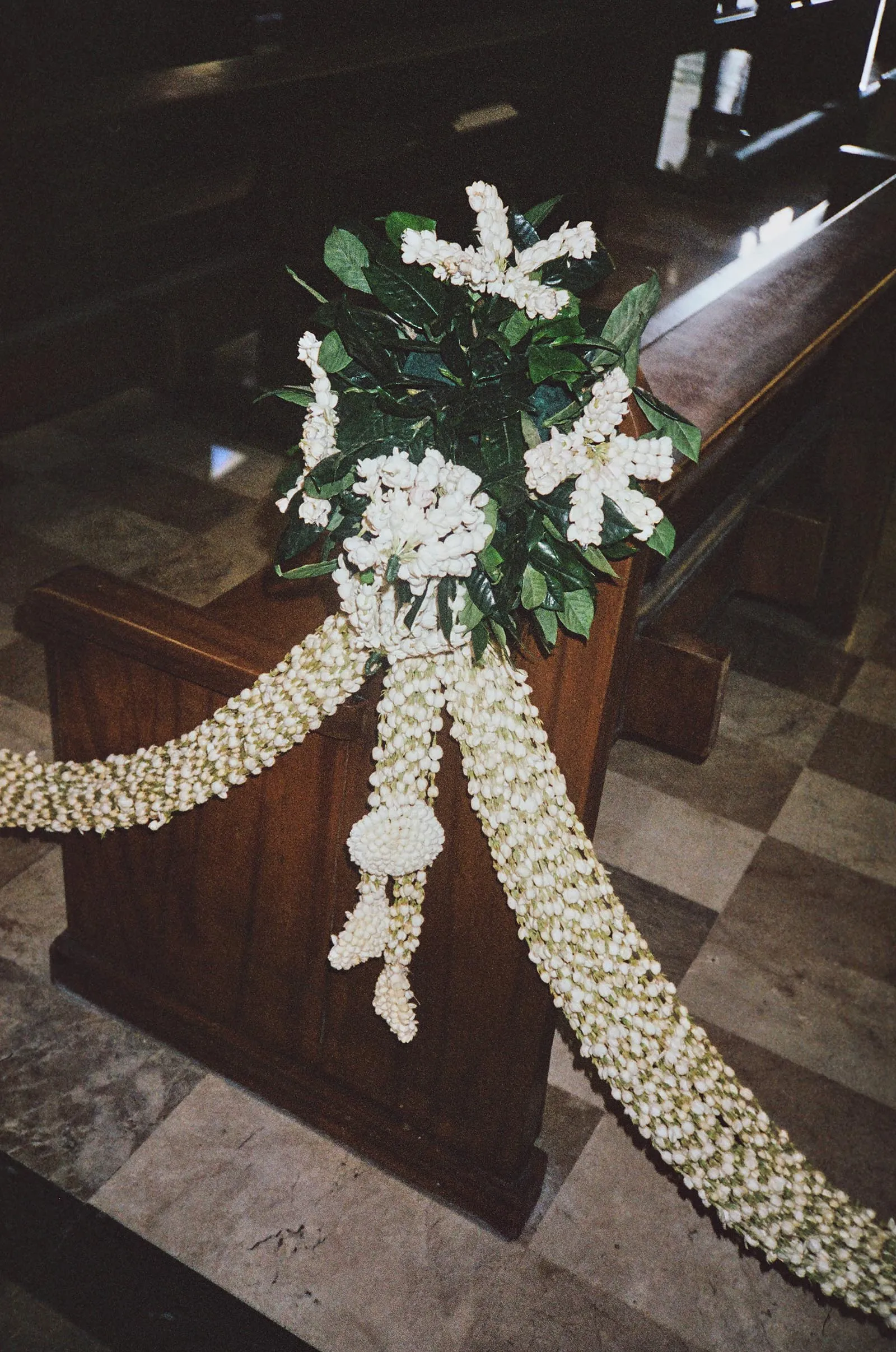
“For the church, we wanted something nostalgic and very Filipino but still relaxed,” she says. Opulent sampaguita garlands lined the aisle, anchoring the gilded grandeur of the space in aroma and informality. At the same time, imported palm trees softened the Neo-Romanesque architecture, importing a sense of coastal charm to the metropolitan venue. “Serge Igonia focused on the sampaguita arrangements, while Kevin Kyle Asuncion, who is a botanist and also helps us with the fauna in some of our restaurants, brought in the 18-foot palm trees. I was so proud of the Margarita Florals team for managing the collaboration and executing it so beautifully.”
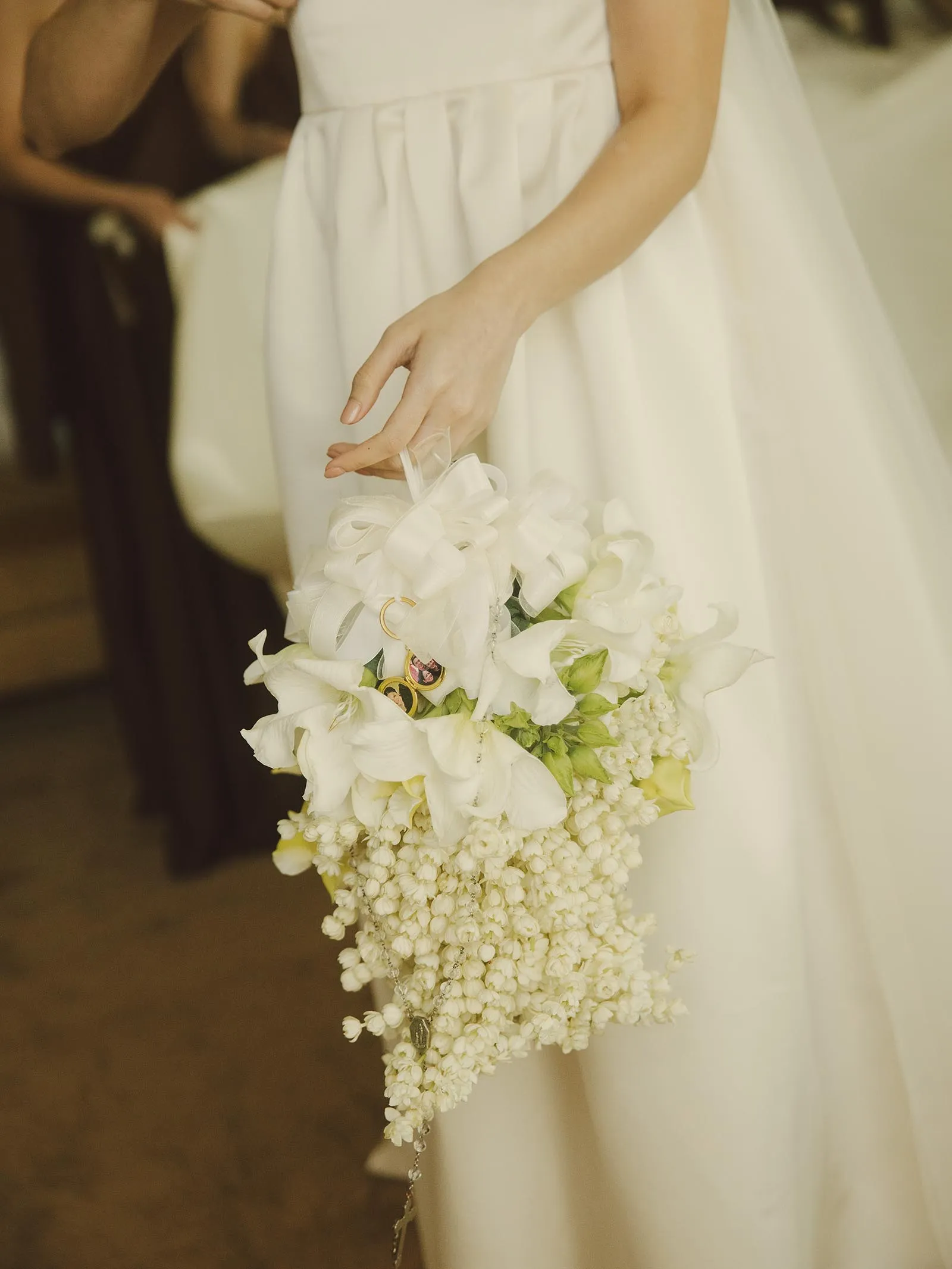
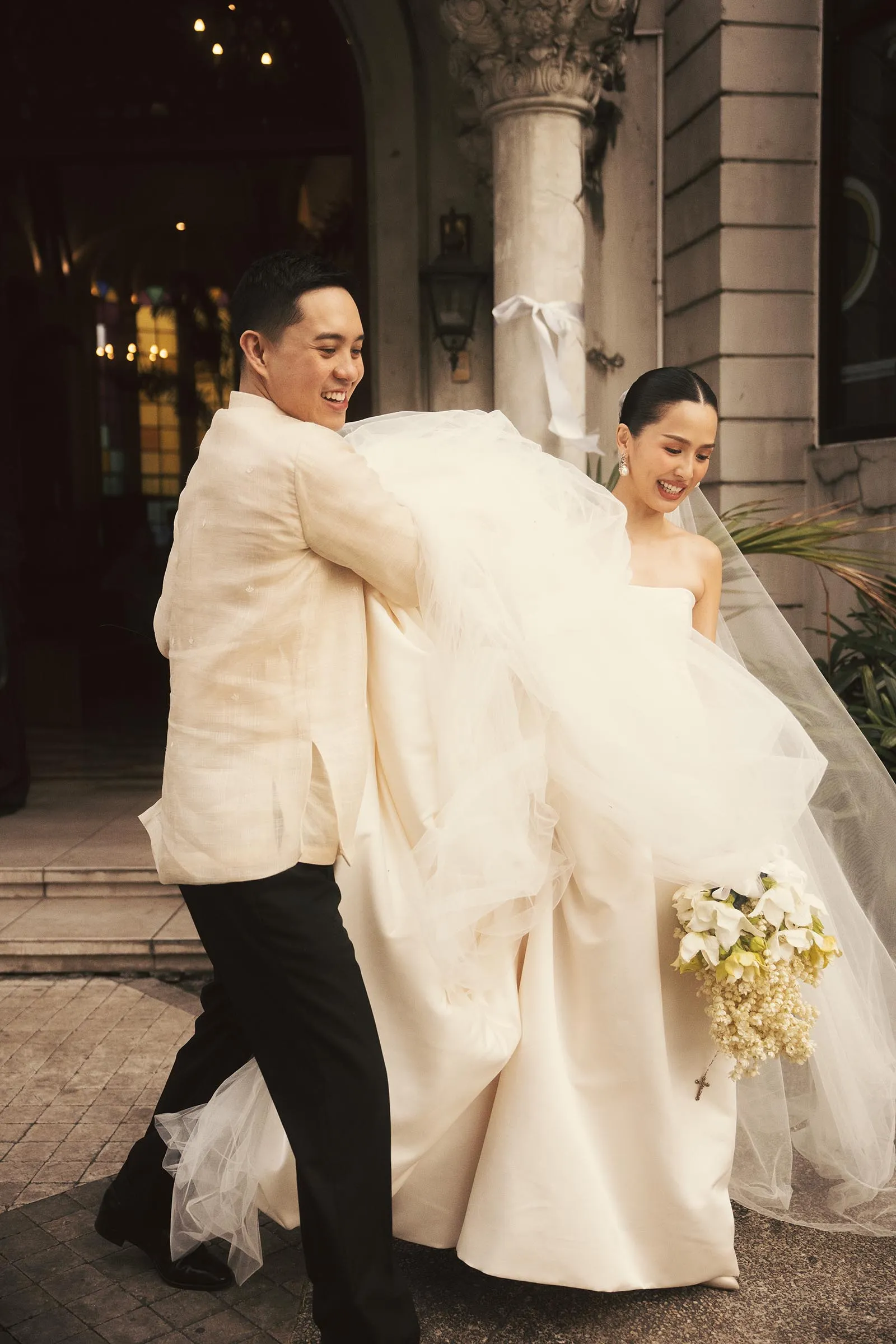
Even the bouquet carried its own family affair. “Amado and Tita Veana Forés also surprised me with my bridal bouquet made by Tita Toni Parsons. She had actually taught my late mother-in-law how to arrange flowers, which made the gesture even more special. The bouquet even included sampaguita, something she designed without even knowing it was the church motif, so everything tied together naturally.”
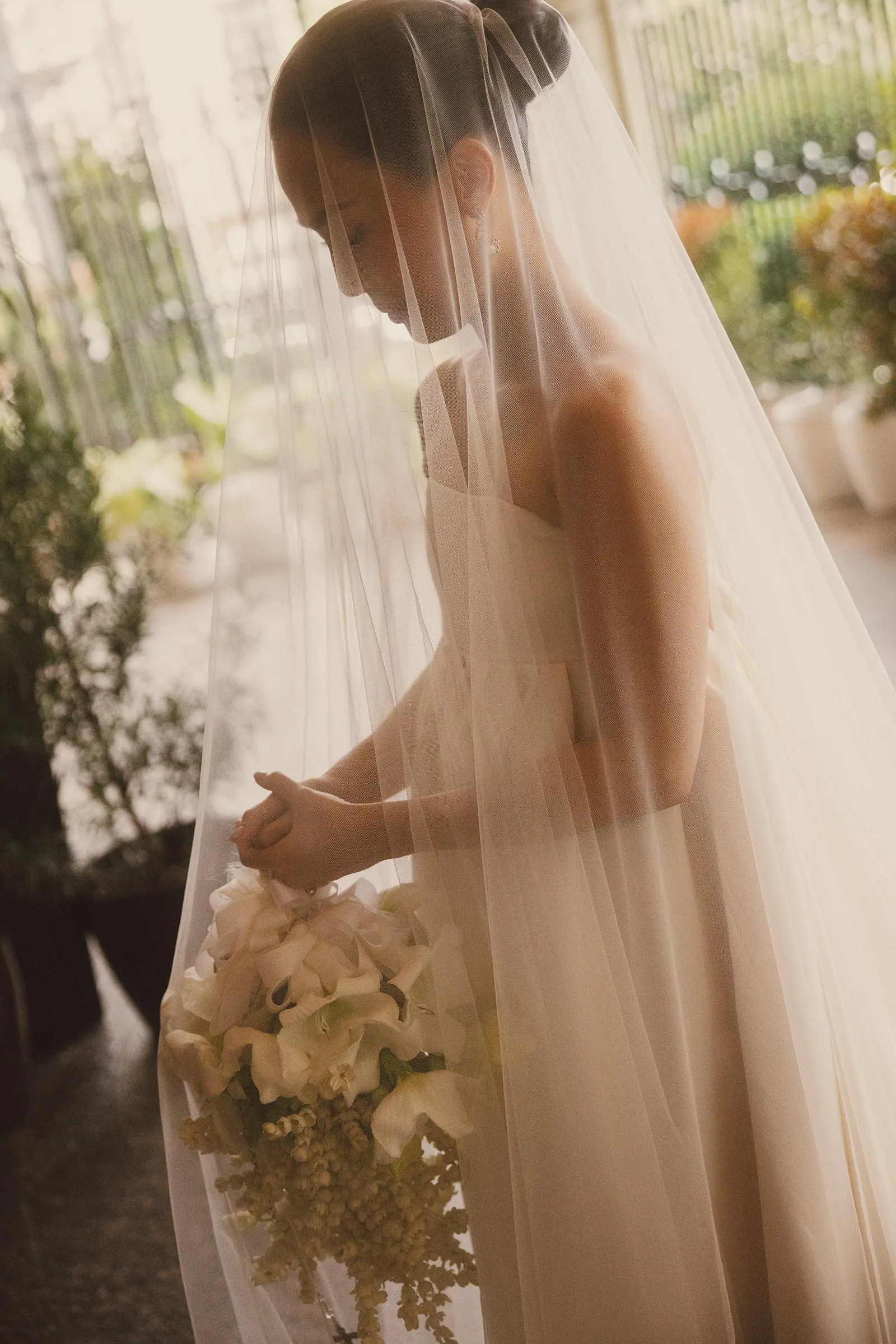
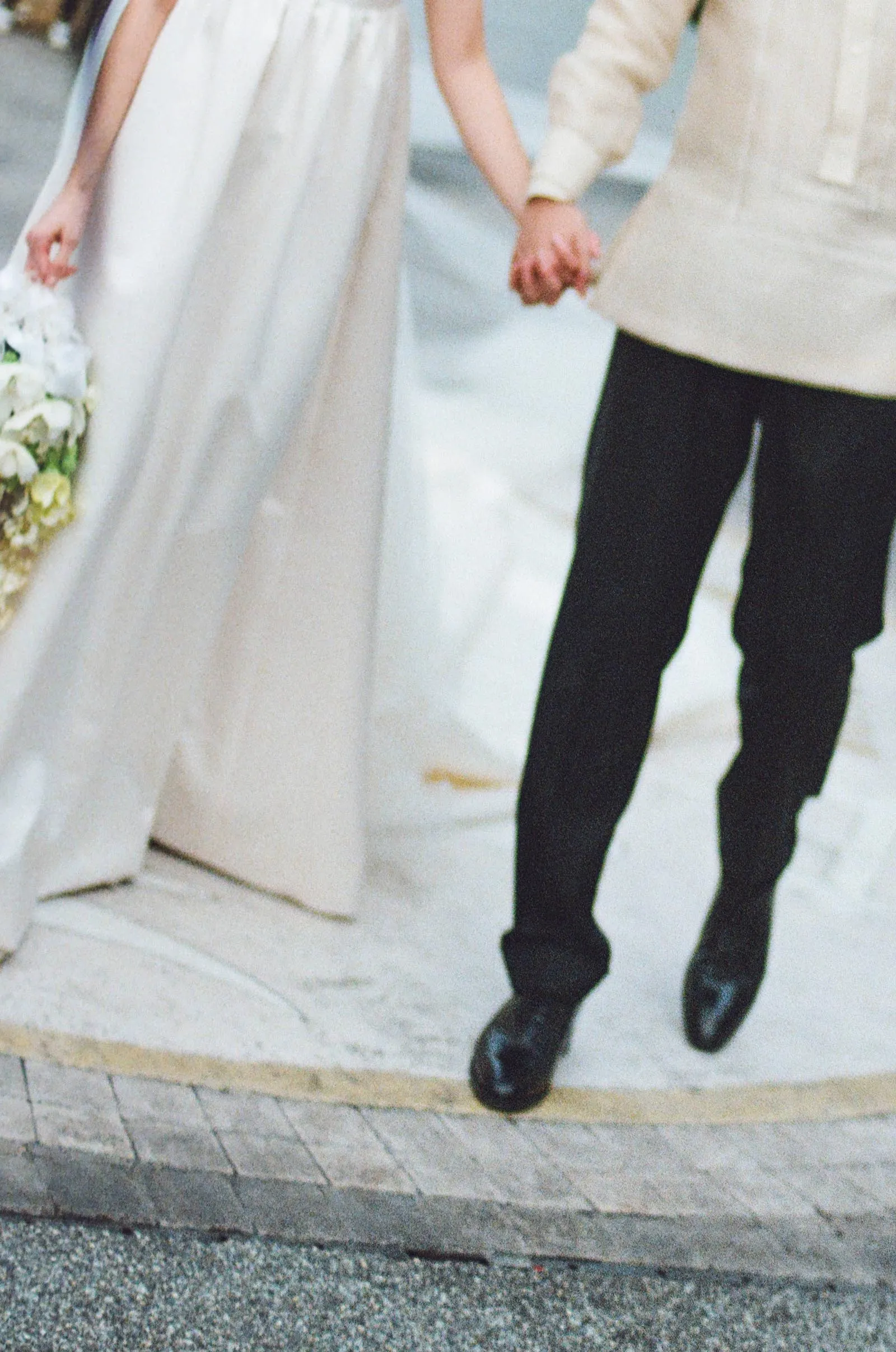
Rather than clutching at the stem, Carmela held the flowers instinctively with her two index fingers, which felt “a little unusual at first, but I loved that it was classic with a slightly unexpected touch.”
If the ceremony celebrated affinity, the reception at Araneta Coliseum united everyone in a Filipino symphony of music and cuisine. Its genesis was an illustration tied to a place the couple has long cherished. “The starting point was our invitation illustrated by Andrea Ferolla of Chez Dédé in Rome, one of our favorite little shops there,” she explains. As the author behind the Assouline book Italian Chic, Ferolla’s work had become a mutual interest, made even more meaningful by the discovery that Margarita herself had once frequented the lifestyle boutique, adding another layer of sentimentality.
They interpreted the book’s theme of “old-world glamour and playful elegance” mood and curation of the evening’s décor, working with Fullhouse Asia on production and set designer Ohm David, known for his work on Theatre Group Asia’s staging of Into the Woods. “The illustration featured warm golds, bronzes, and rich browns, which we translated into the space through bronze and gold linens, dark wood panels, a floating capiz ceiling, and gold cocktail bars placed around the room,” she says.
There was a specific detail they were keen to include. “Amado had one request. A huge disco ball.” As the night progressed, it scattered kinetic light across the space, transforming the atmosphere from dinner into celebration. Florals were designed by Jojie Duque, yet the central challenge remained, with what was once the largest indoor arena in the world in 1960. “The biggest challenge was making the Coliseum feel warm and intimate. We kept coming back to the feeling of Bahay na Puti and tried to recreate that sense of welcoming guests into a home. In the end, it somehow worked out!”
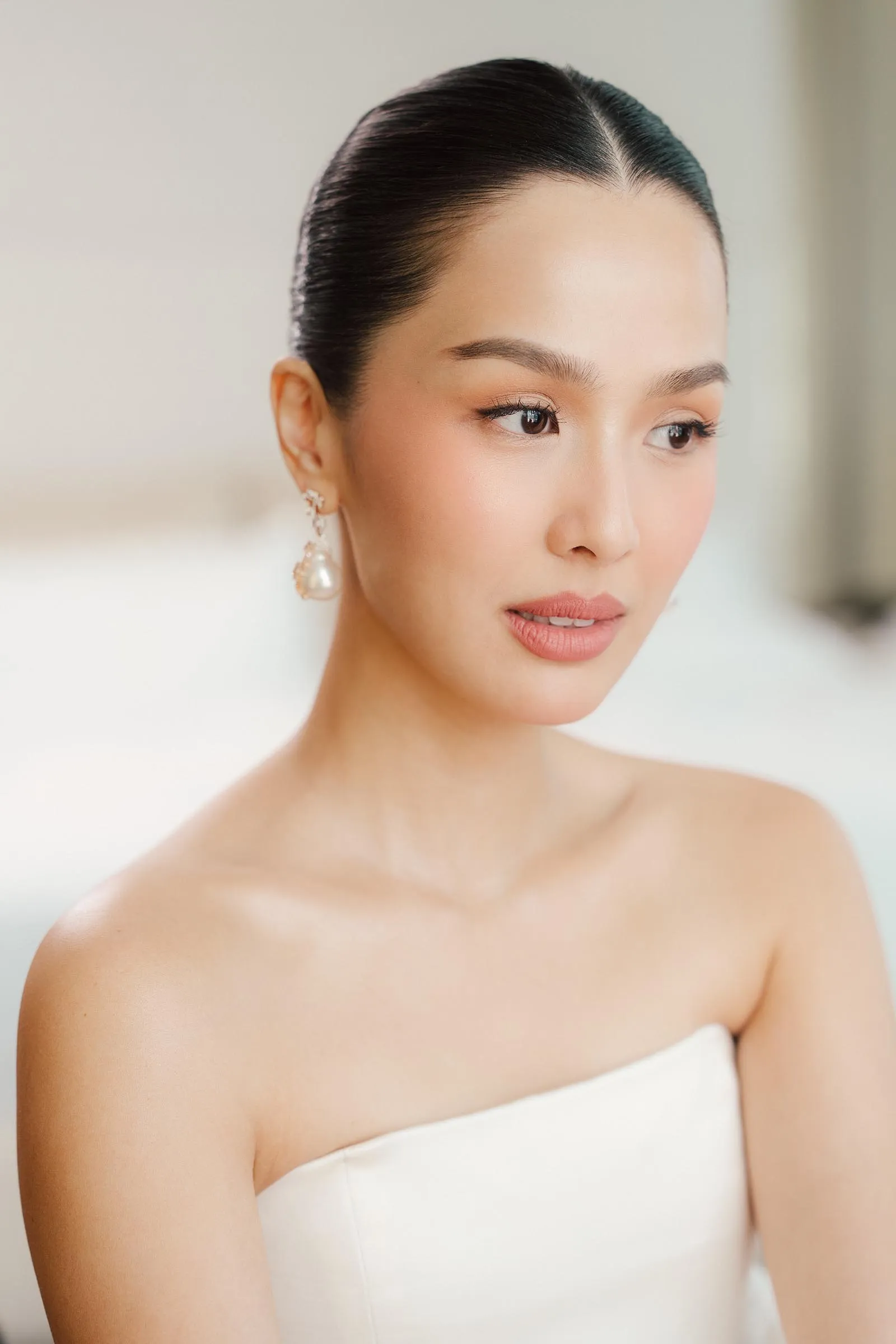
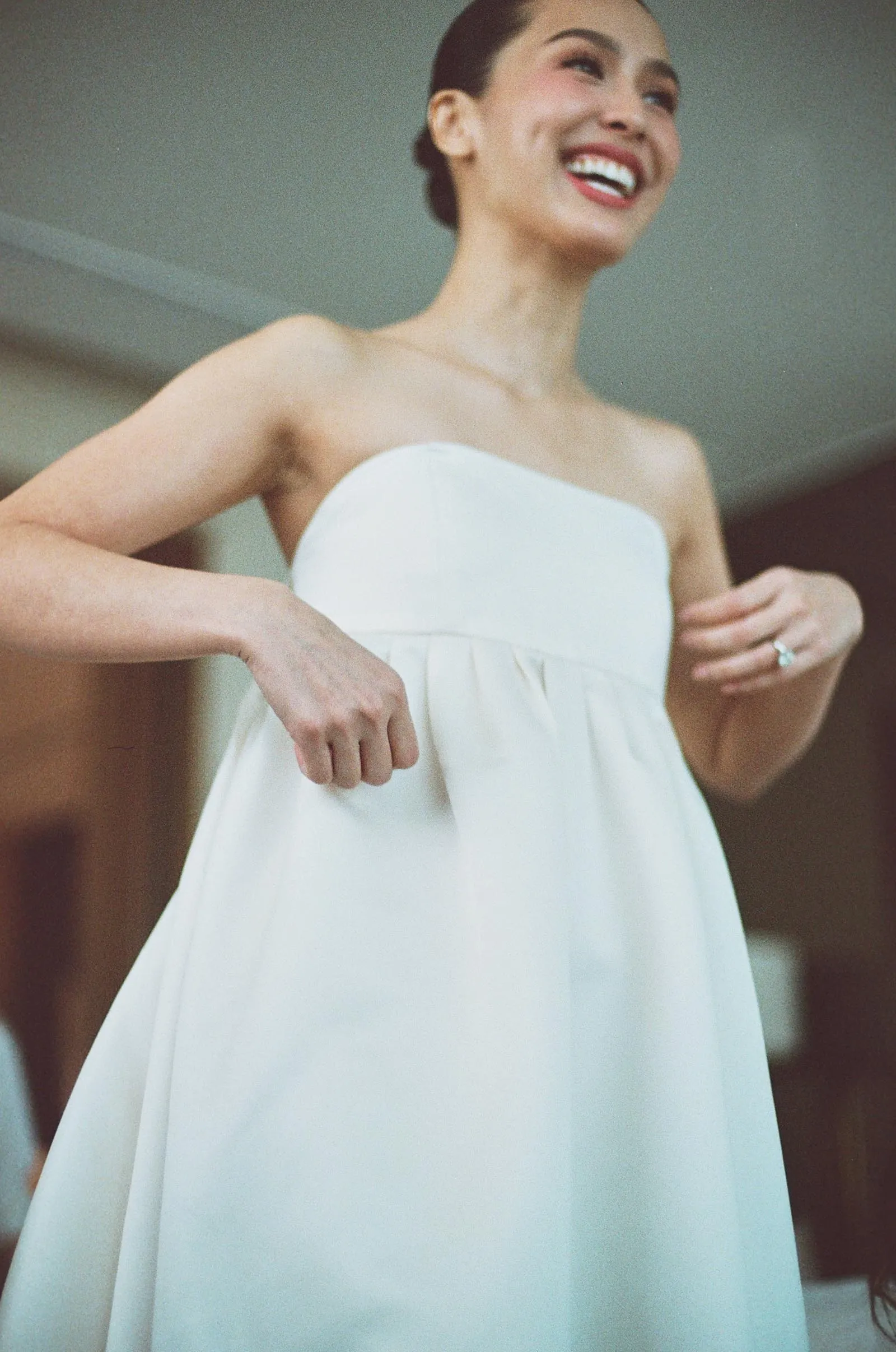
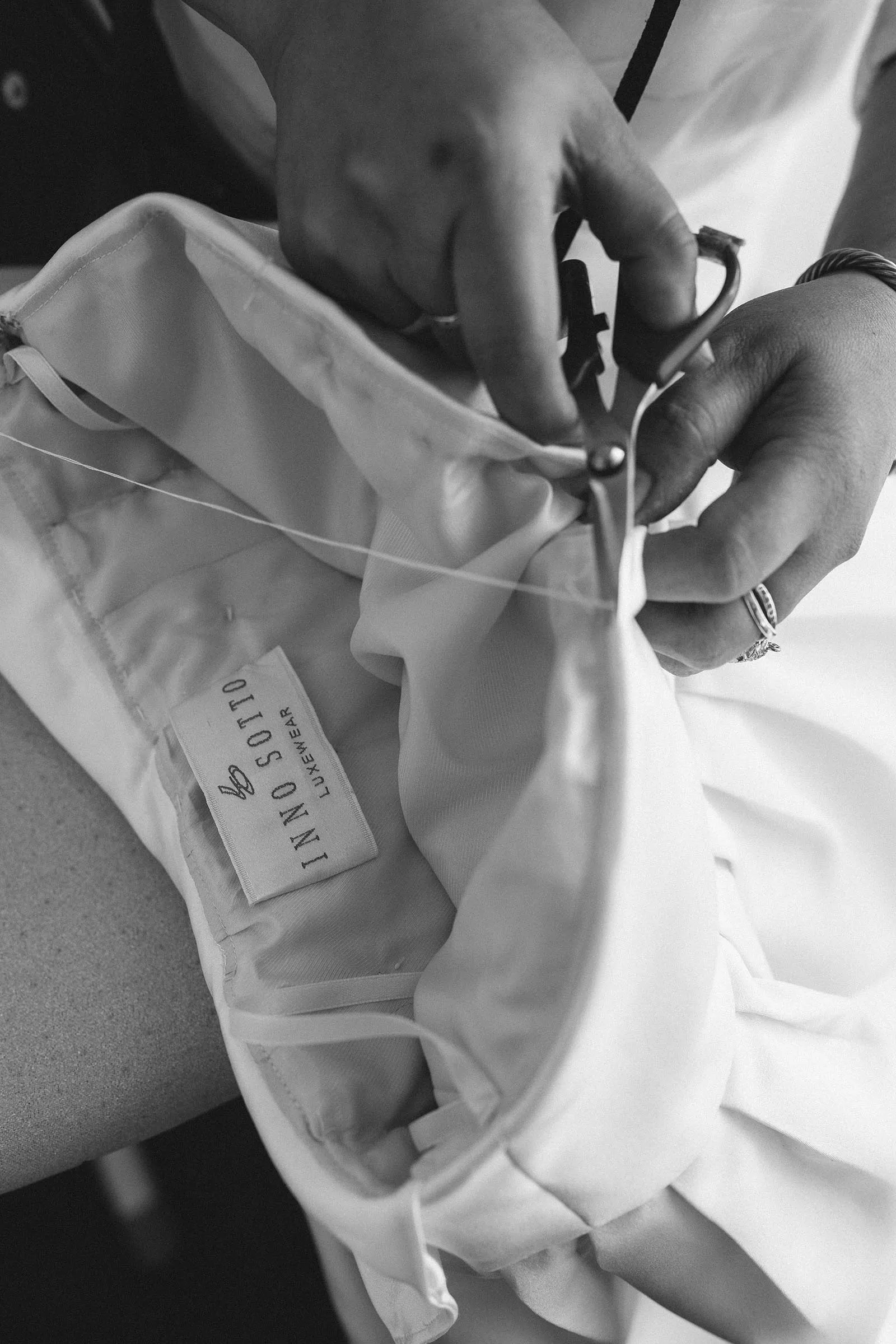
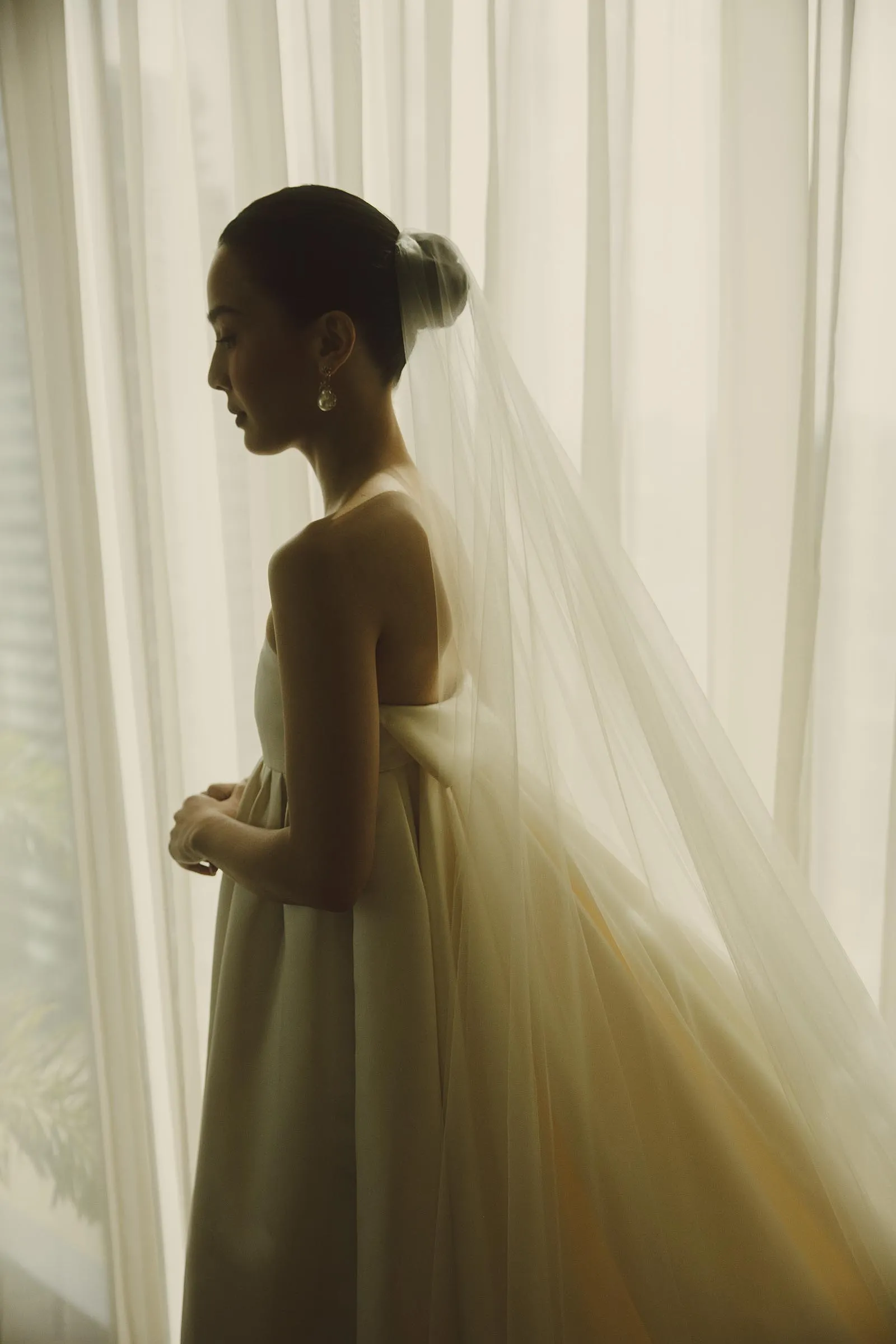
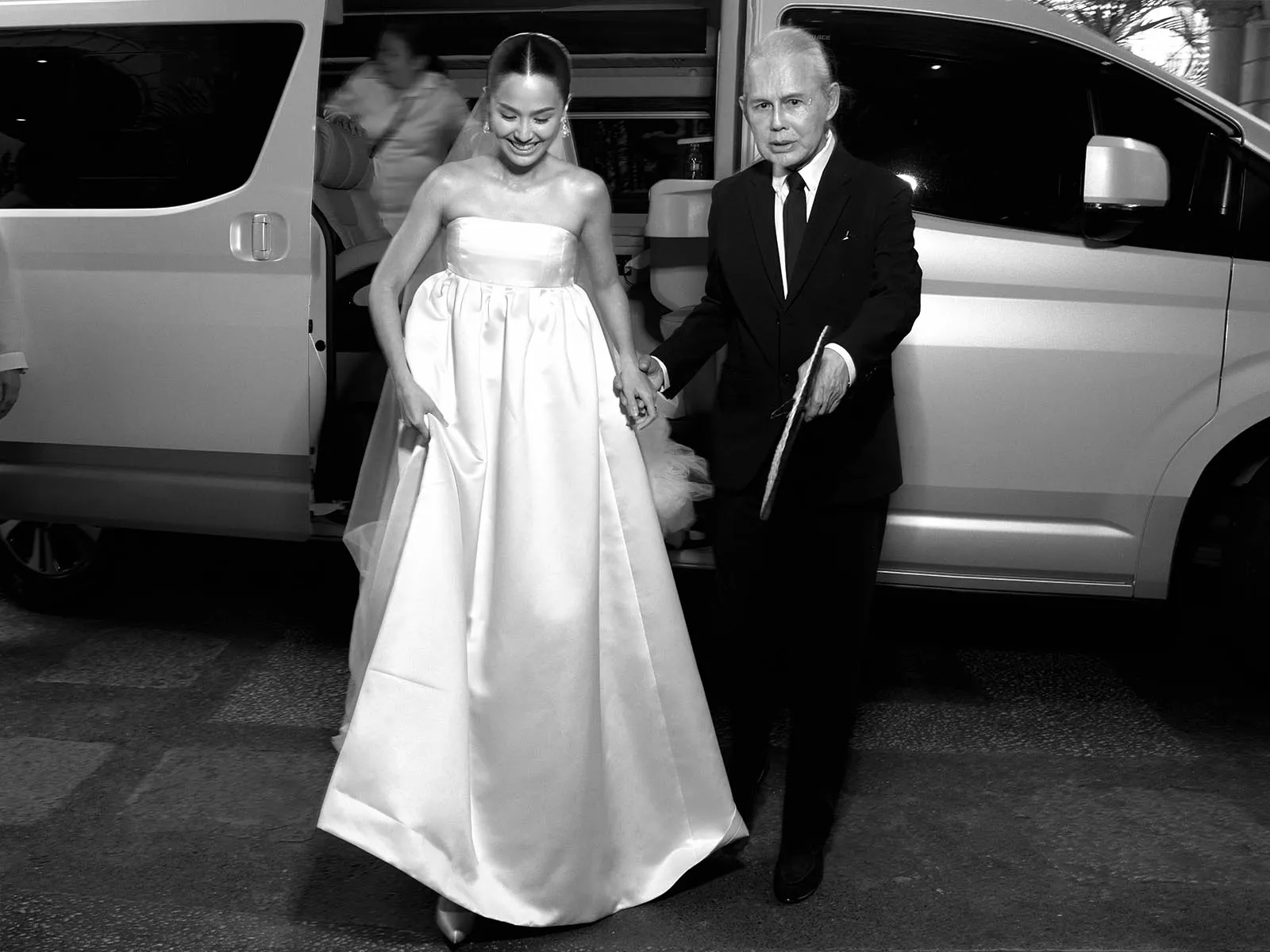
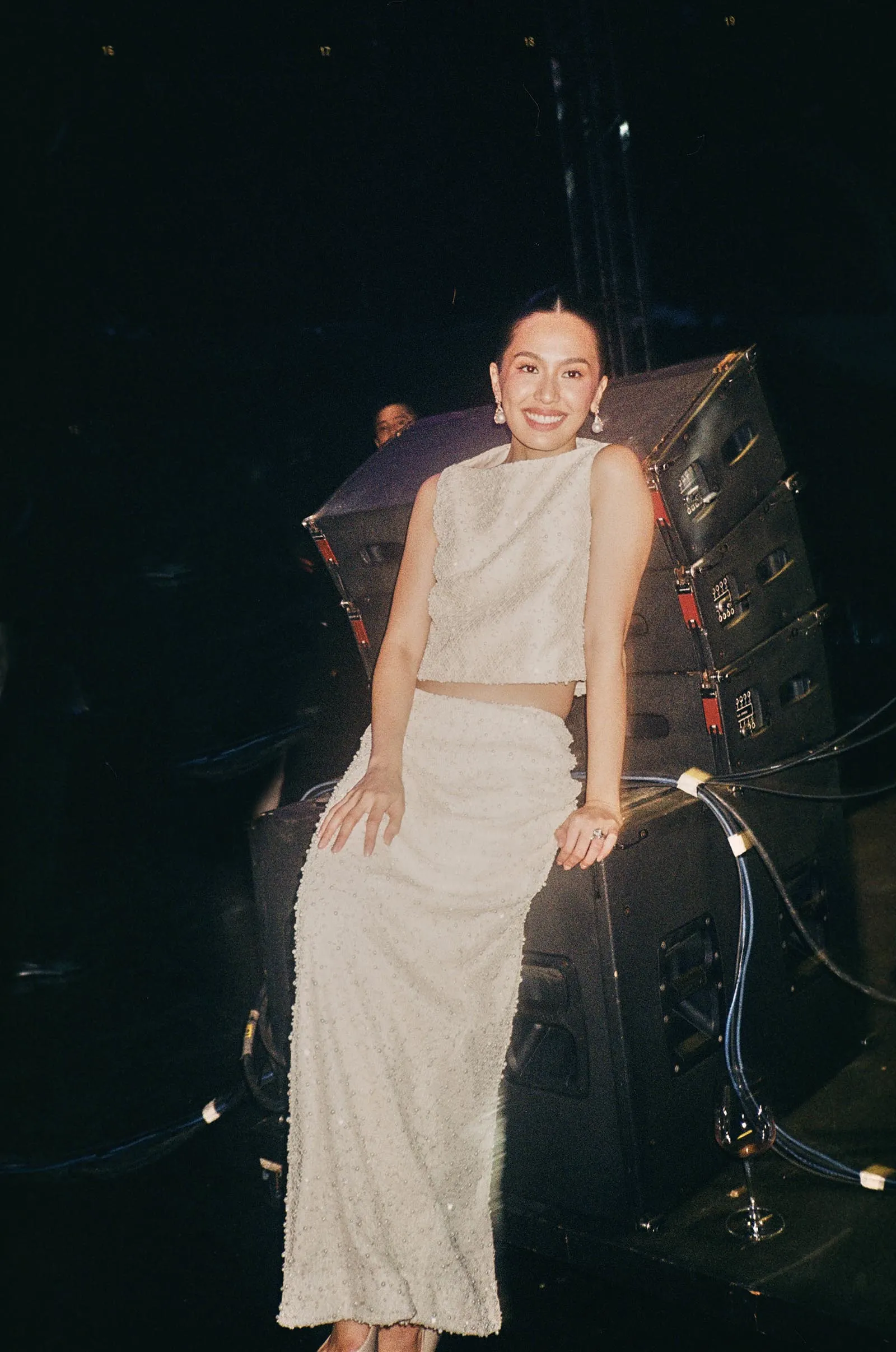
Carmela’s gown carried its own sense of lineage and emotional weight. “When our mom Margarita was still around, it had already been decided that my gown would be made by Inno Sotto, who was a very close friend of hers.” The collaboration blossomed with ease. “Working with Tito Inno felt very natural. He really felt like a fairy godmother. He cares so much about every detail, not just the dress. I’ve also always admired how his designs balance elegance with ease.”
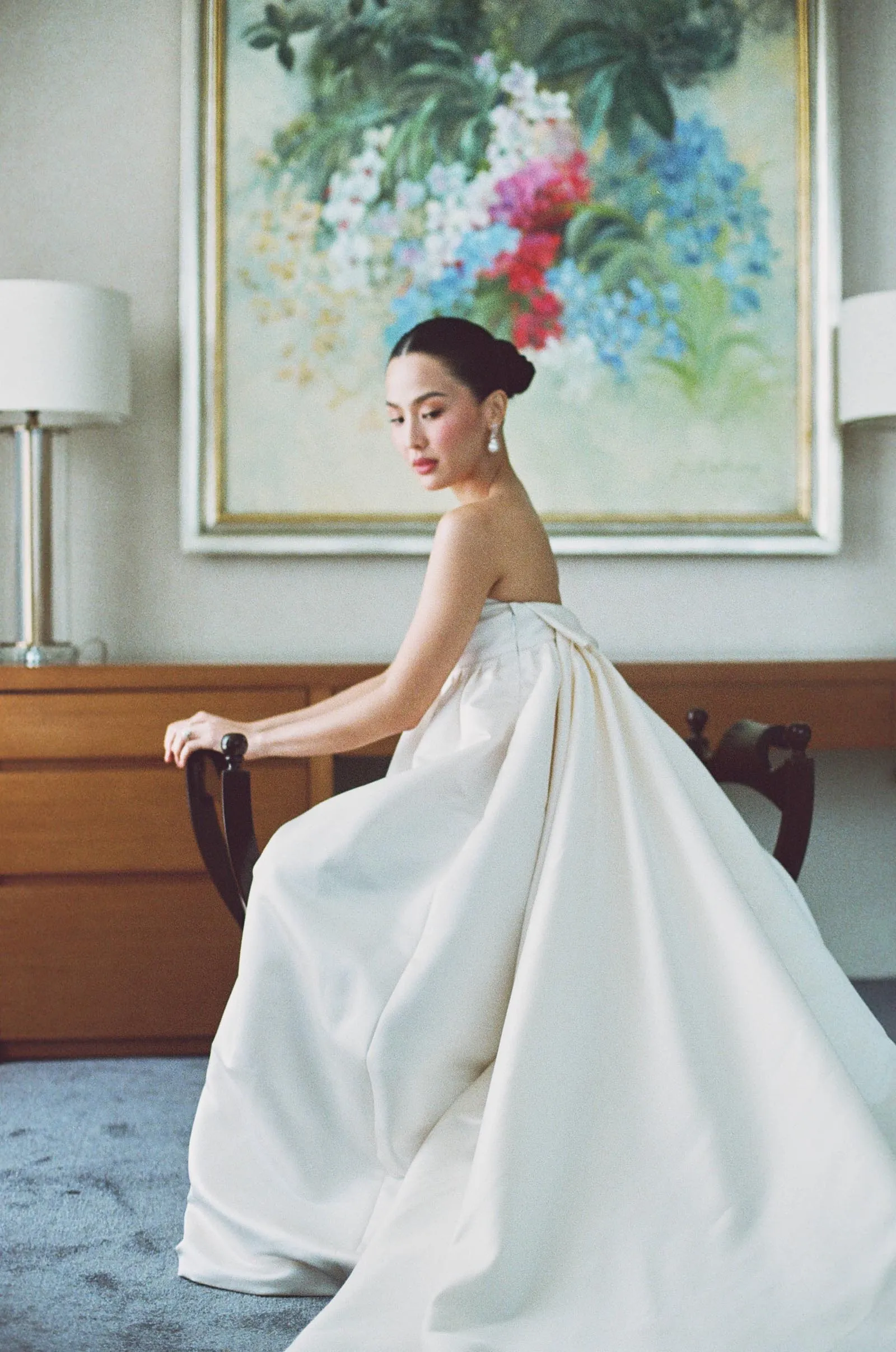
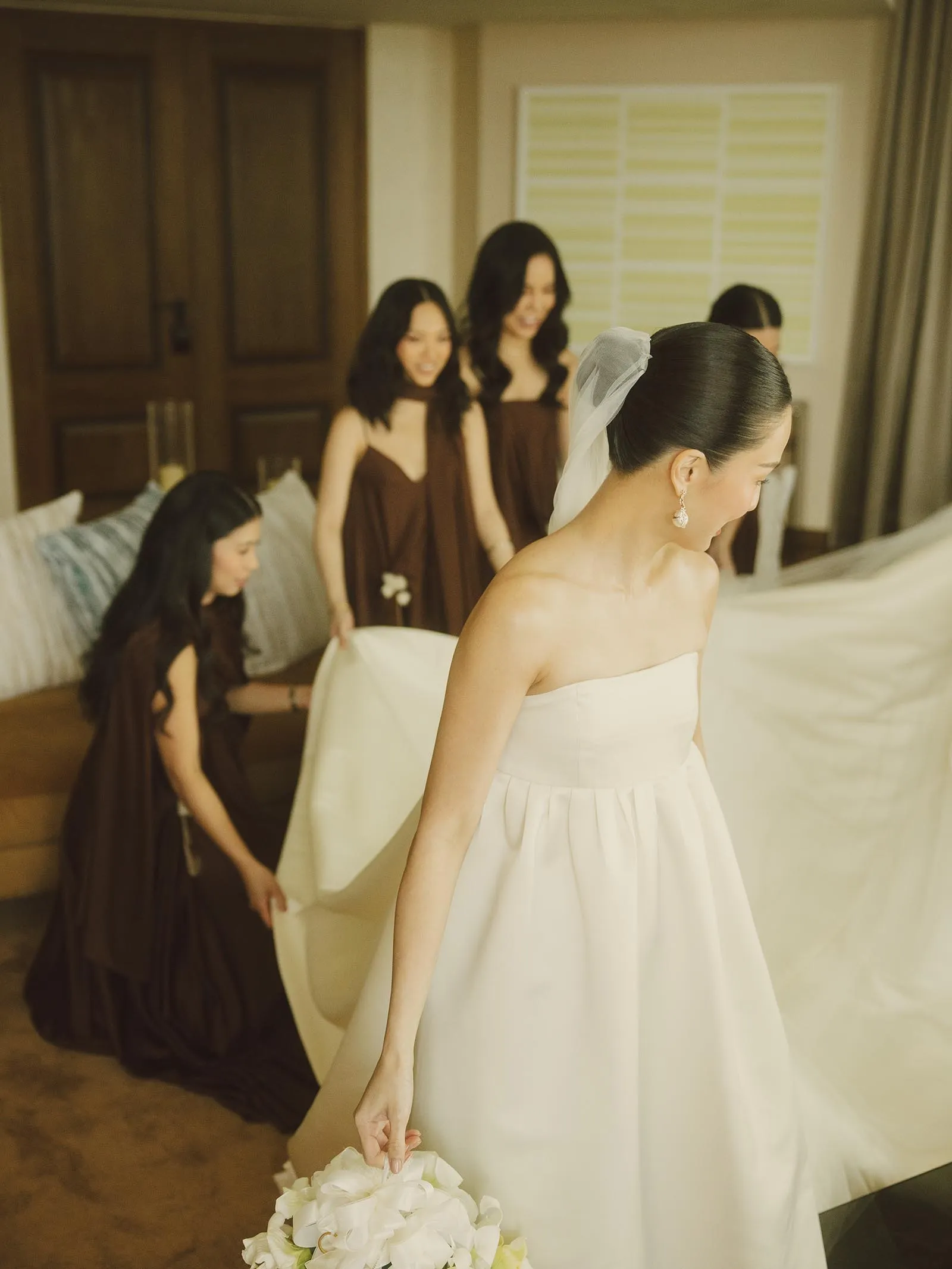
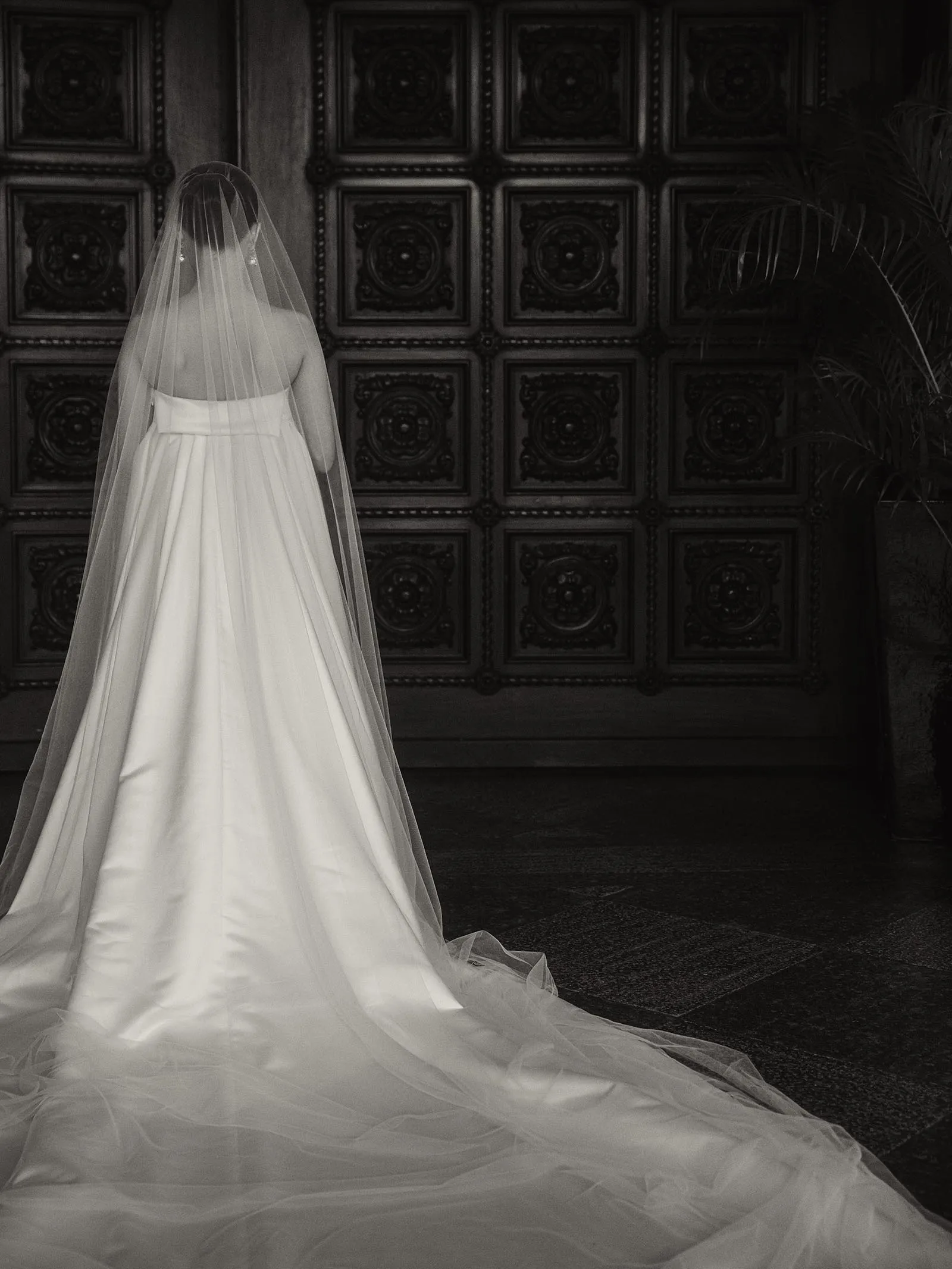
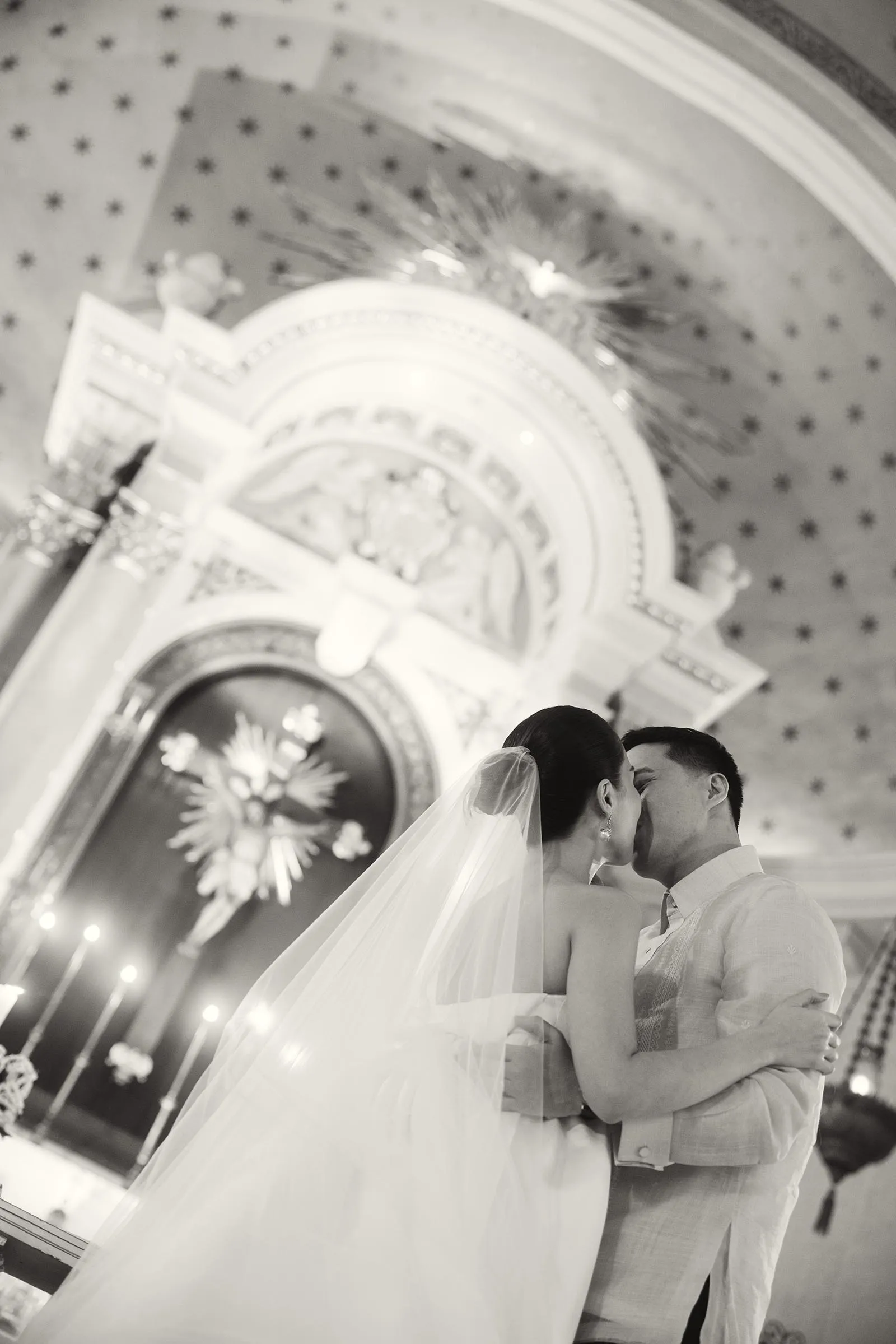
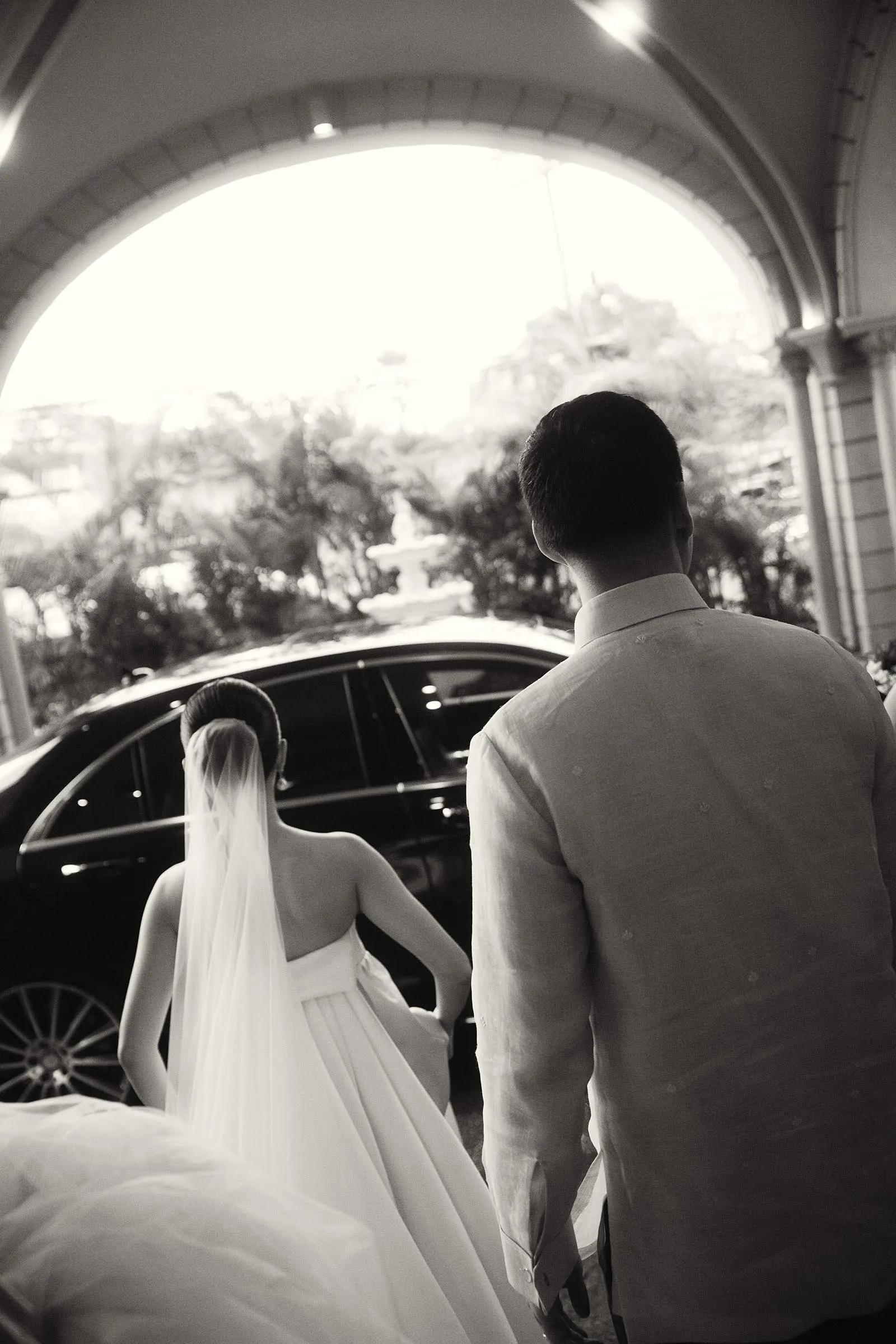
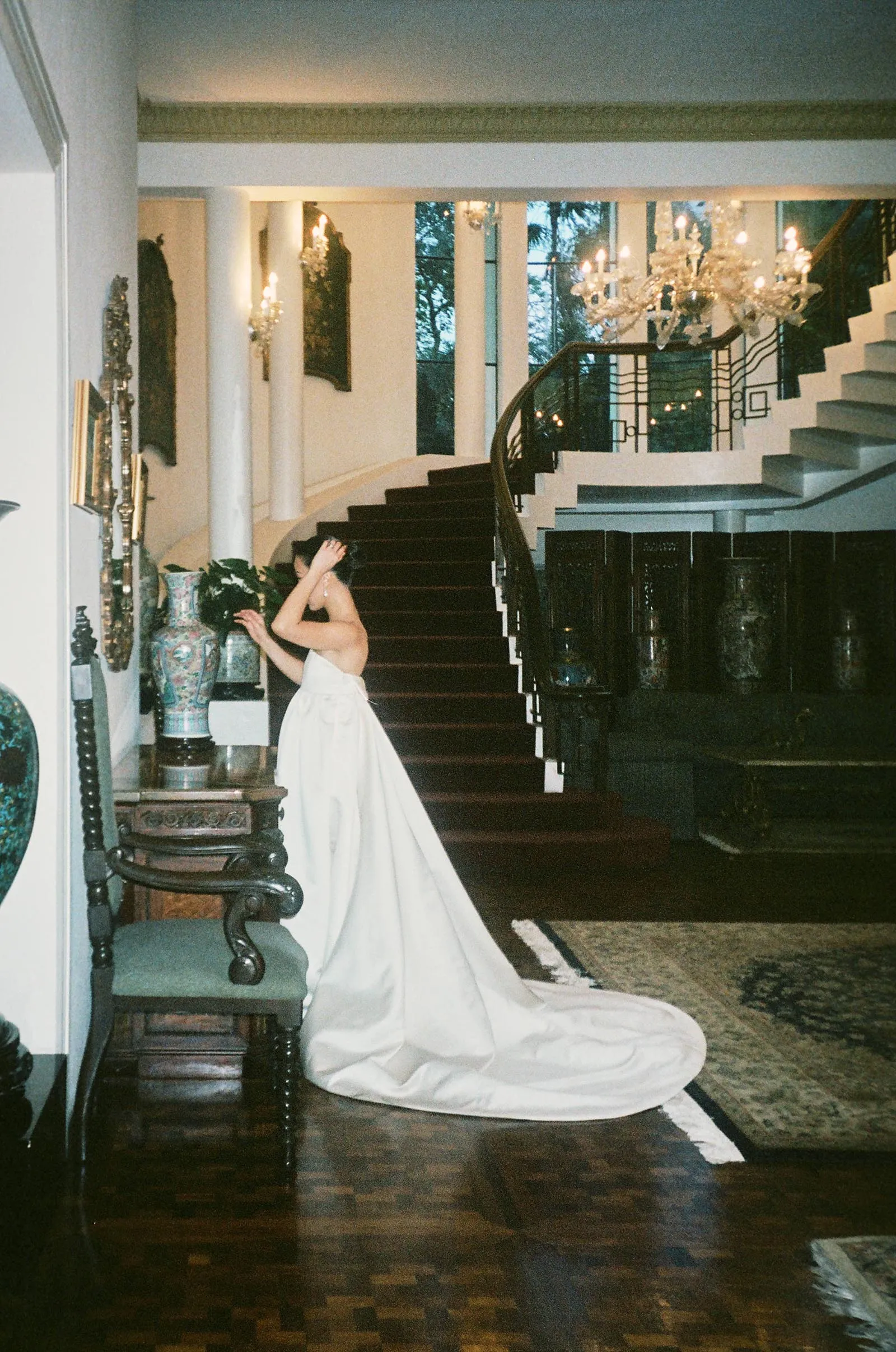
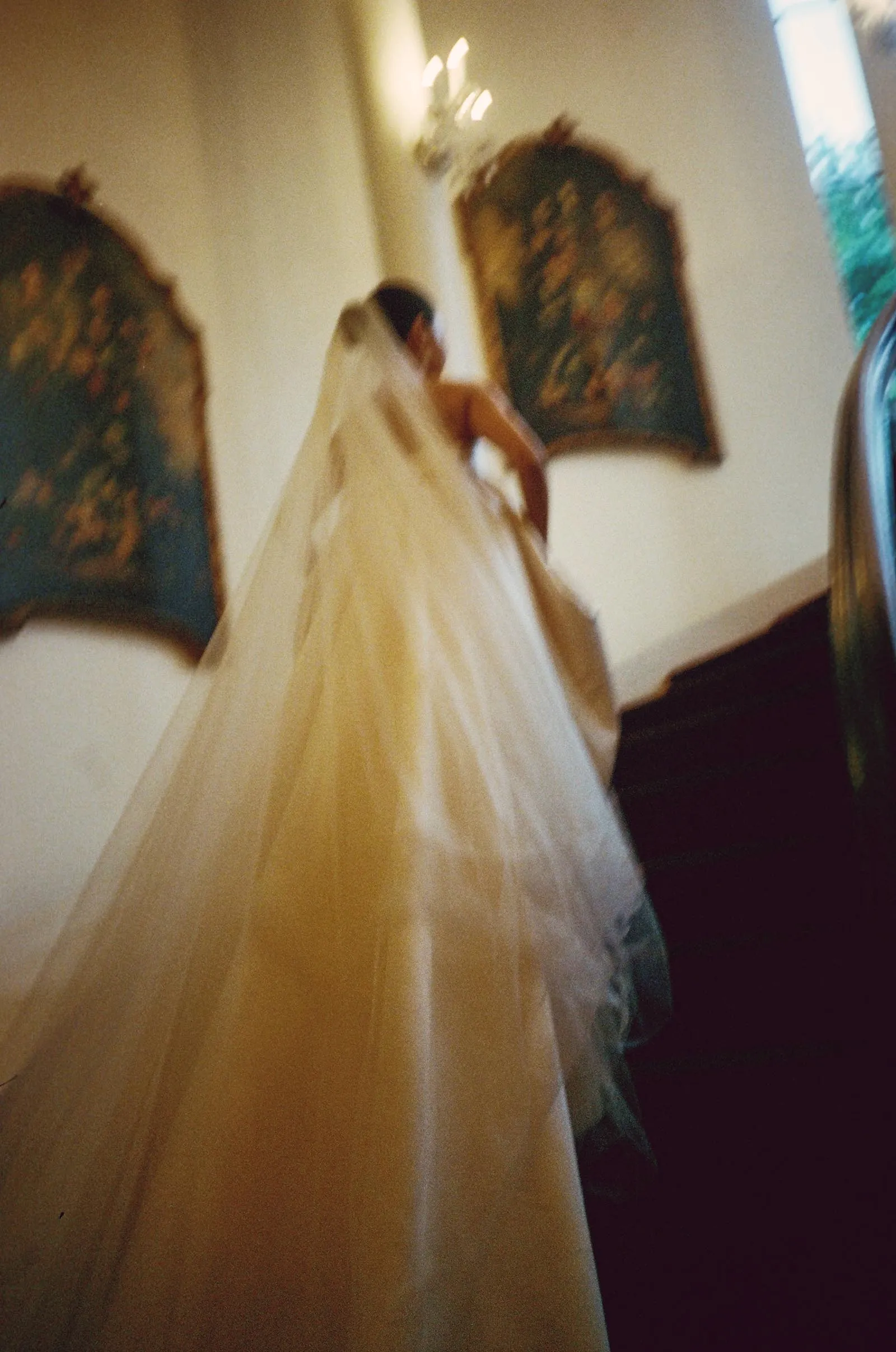
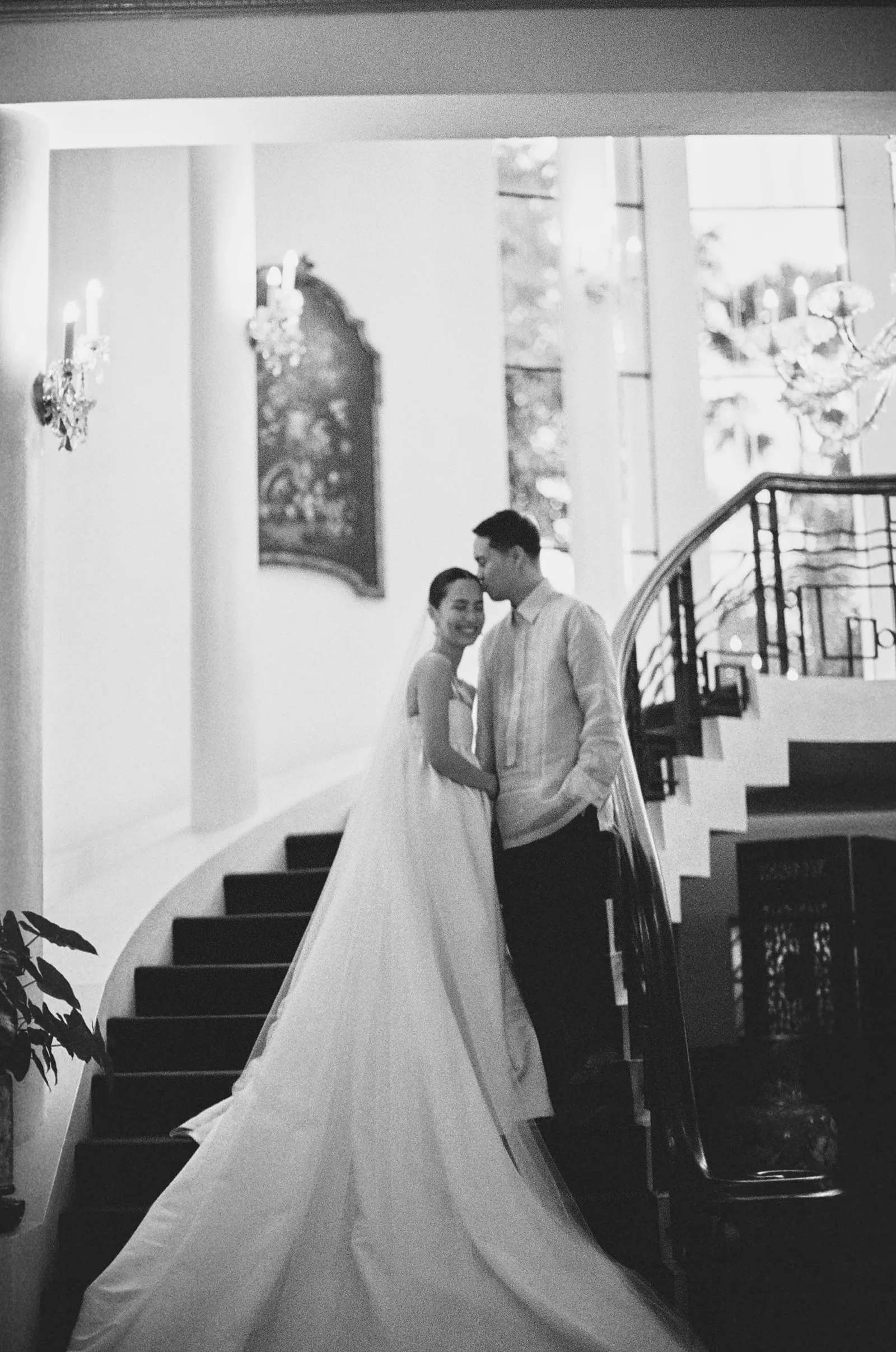
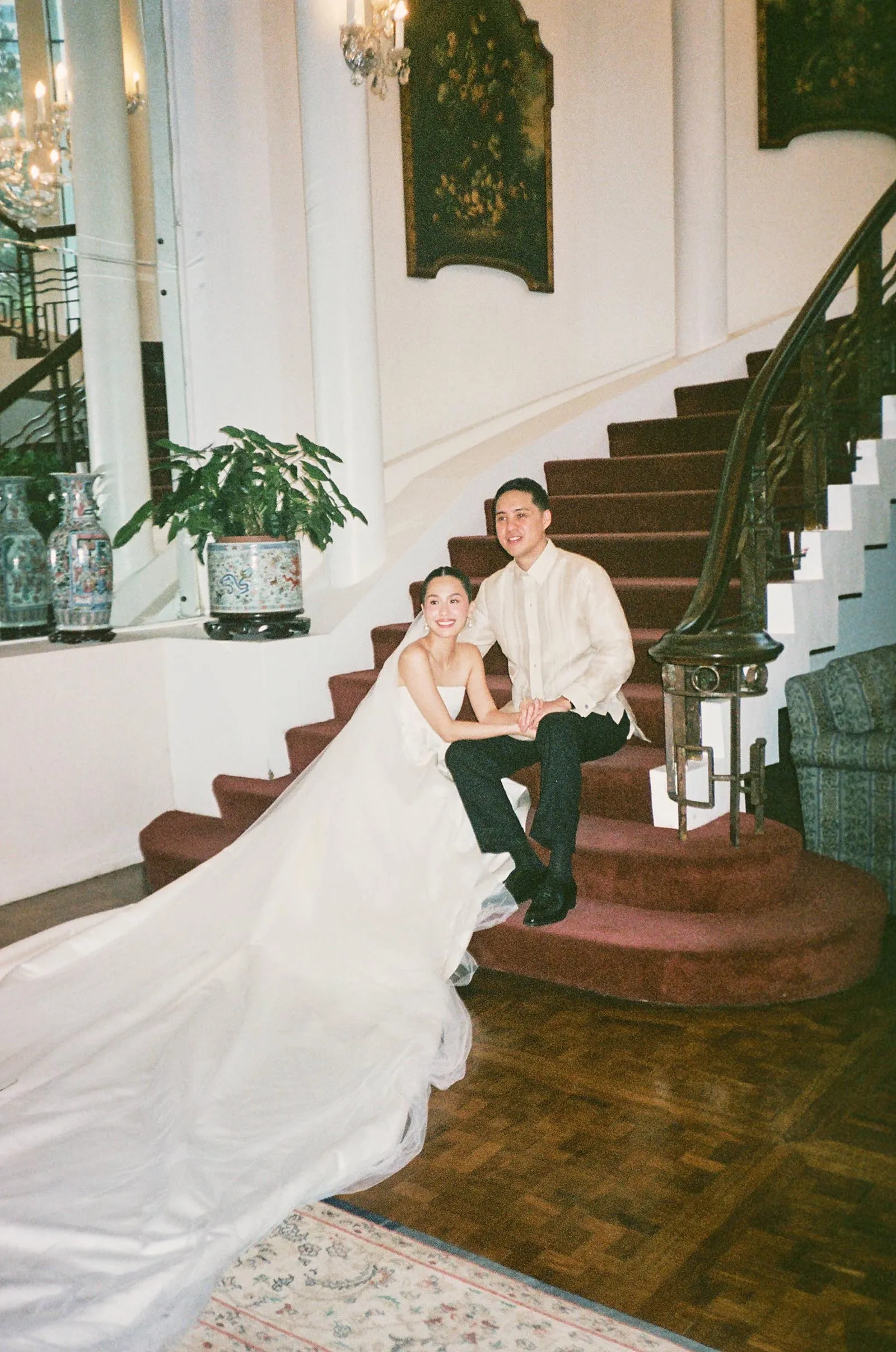
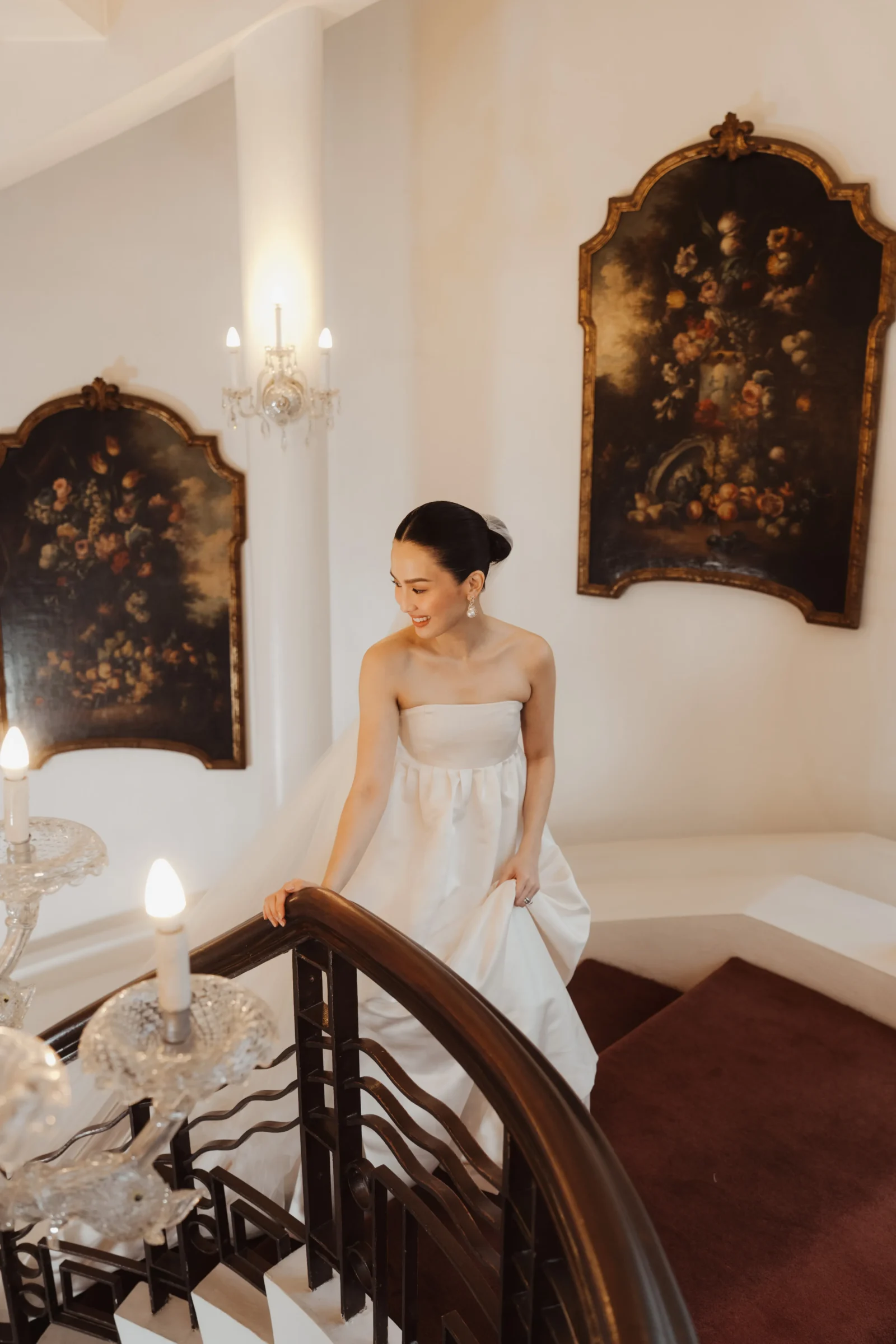
The starting point was a black ball gown by Hedi Slimane for Céline, which Carmela had seen just after their engagement, reinterpreted into something more appropriate for the occasion. “We were inspired by how simple and clean the silhouette was.” From there, they added a detachable seventeen-yard train. “Tito Inno always says the length of the train should match the size of the church, and since the church was a cathedral, we went quite dramatic.”
Rather than opting for a “stark white dress,” she chose a duchess satin in a “softer, more eggshell or ivory” tone that effortlessly blended with the surroundings. Jewelry became an instinctive choice. Though diamond drop earrings were suggested by Sotto, Carmela found herself drawn elsewhere like a magpie. “I felt strongly about wearing pearls despite the Filipino superstition that they bring tears. I’ve always loved pearls regardless, so I wore a pair of drop pearl earrings from my mom, Tati, which made them even more special.”
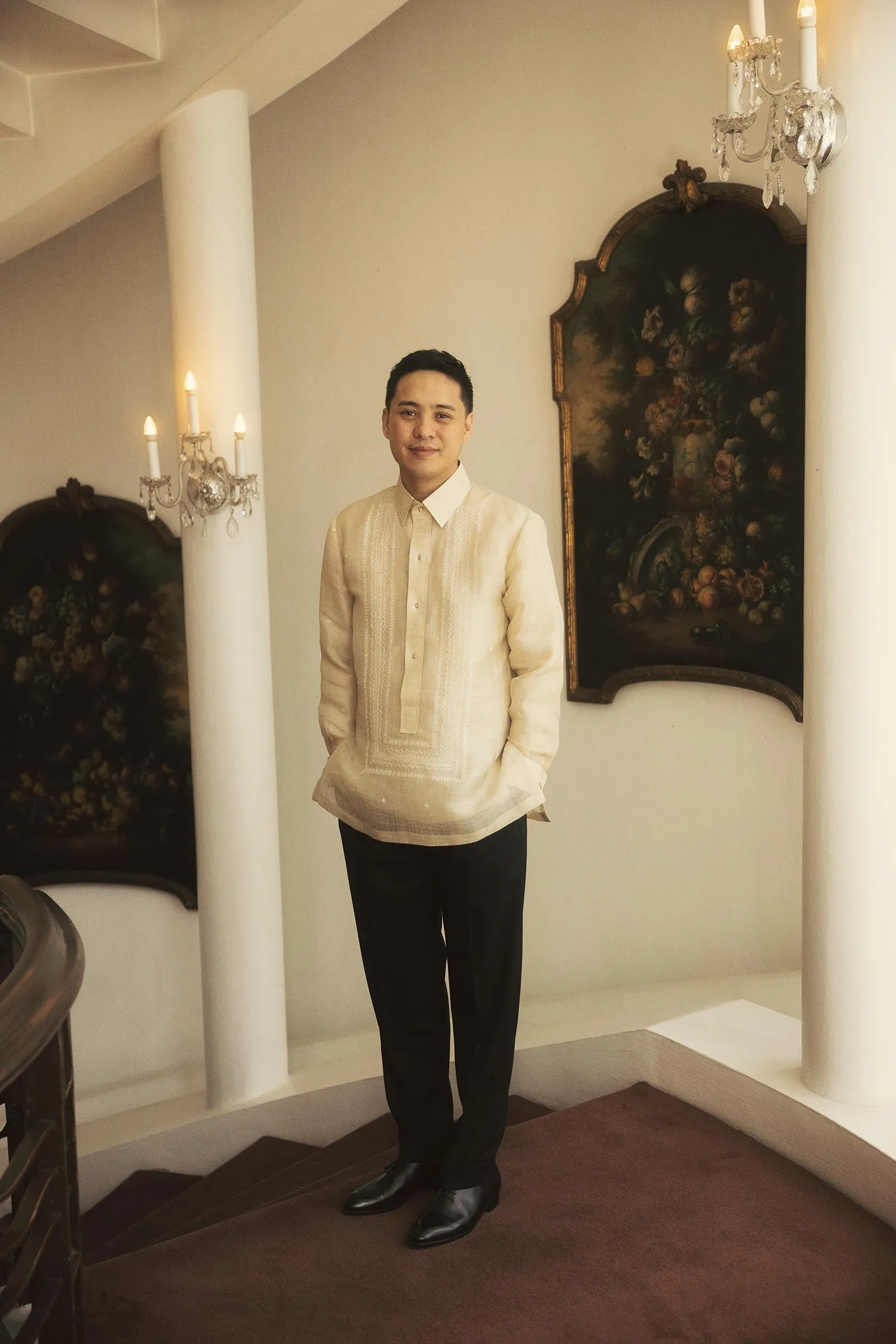
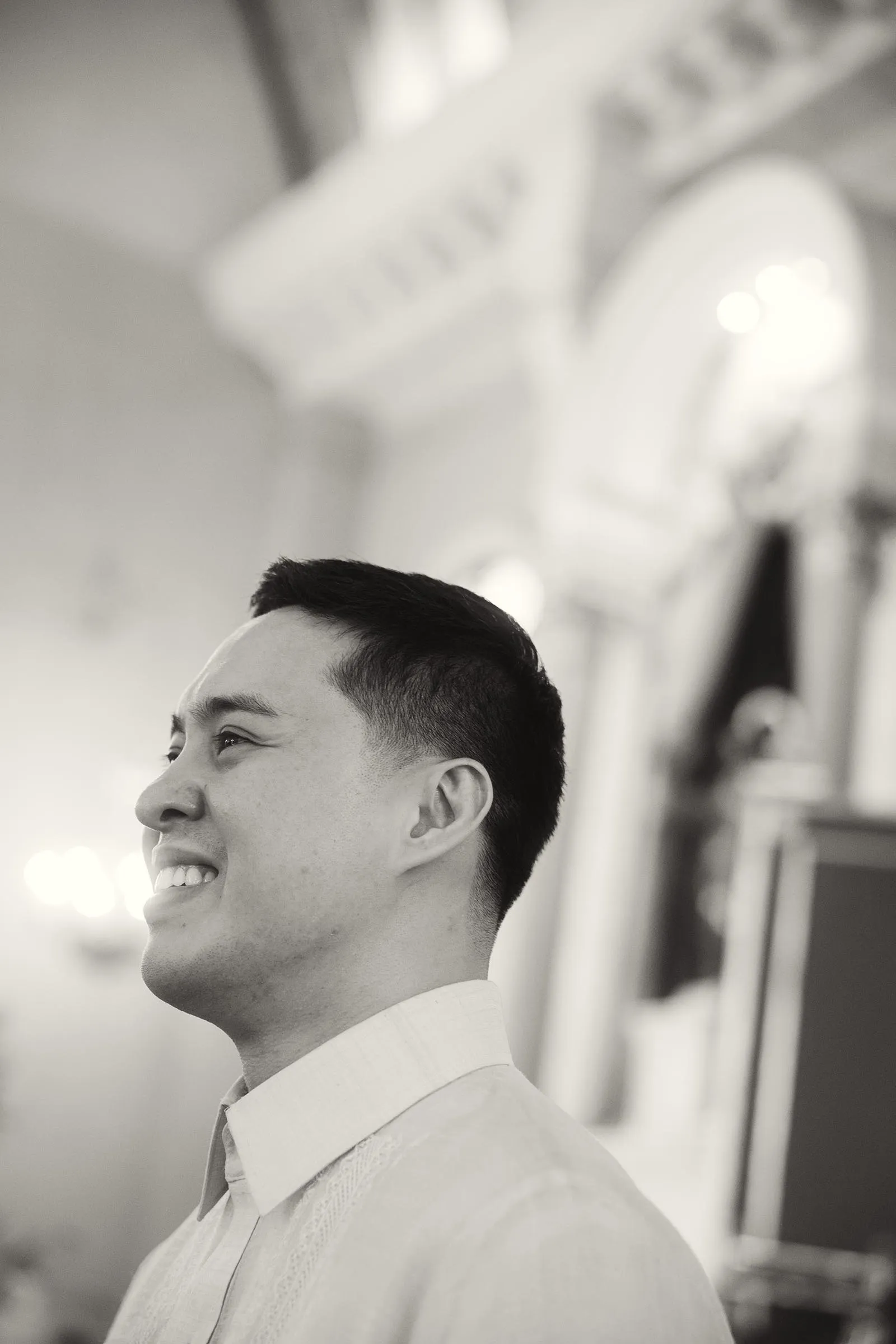
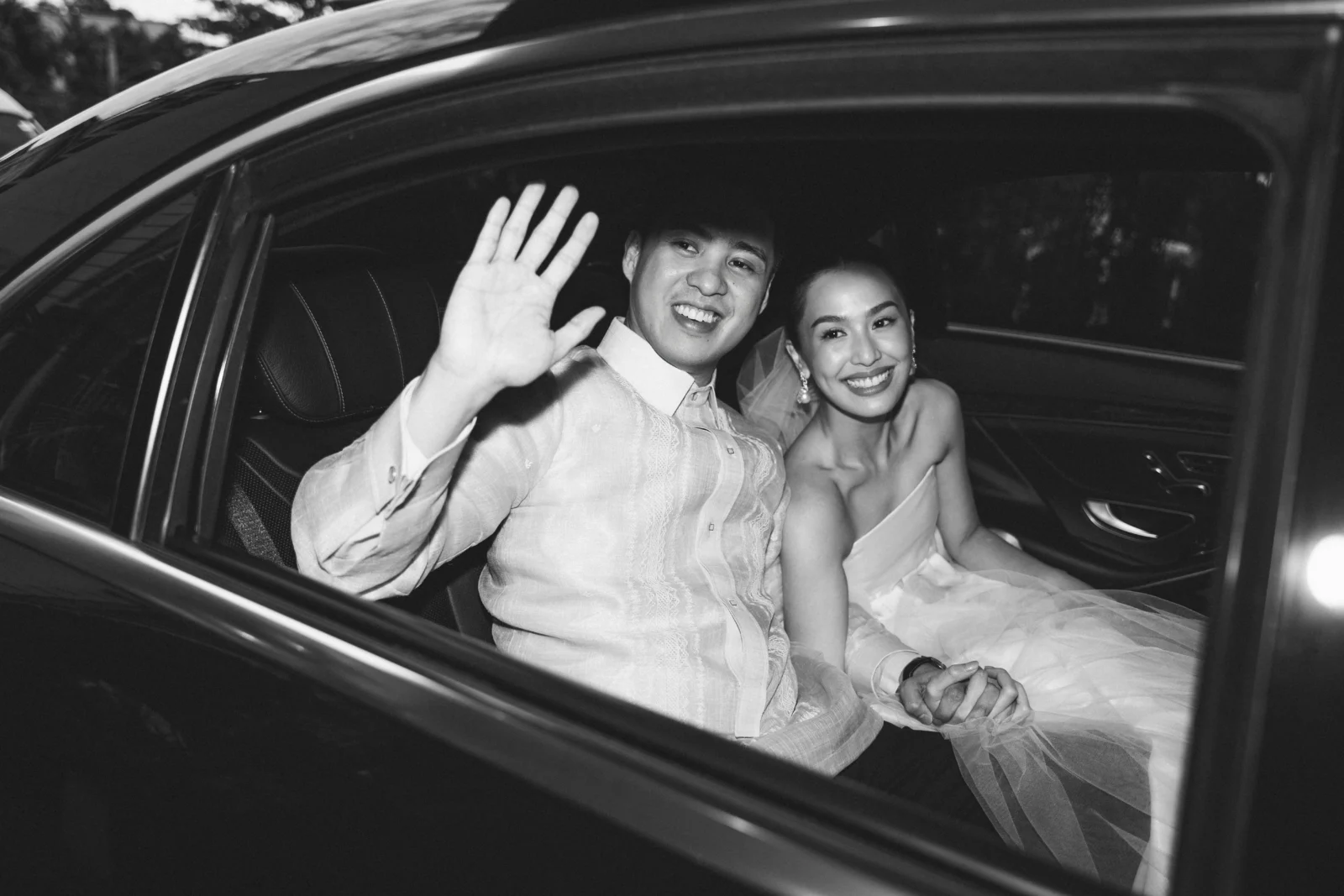
Amado’s bespoke barong echoed that same sense of familial connection, crafted by Tahi, the atelier of Carmela’s mother, Tati Fortuna. “He also wore cufflinks and buttons that belonged to his lolo. His mom had set them aside for him years ago, knowing he would one day use them for something important like this.”
Free from a rigid agenda, the celebration flowed like a stream, each moment giving way naturally to the next. “We thought a lot about how the evening would feel for our guests. More than anything, we wanted people to feel like they were walking into a big celebration in our home rather than attending something overly formal.” Music became an integral element in crafting that atmosphere, with the couple curating Spotify playlists together, selecting “a mix of English and OPM favorites from the 60s, 70s, 80s, and 90s with a few newer songs mixed in” to blast in the venue.
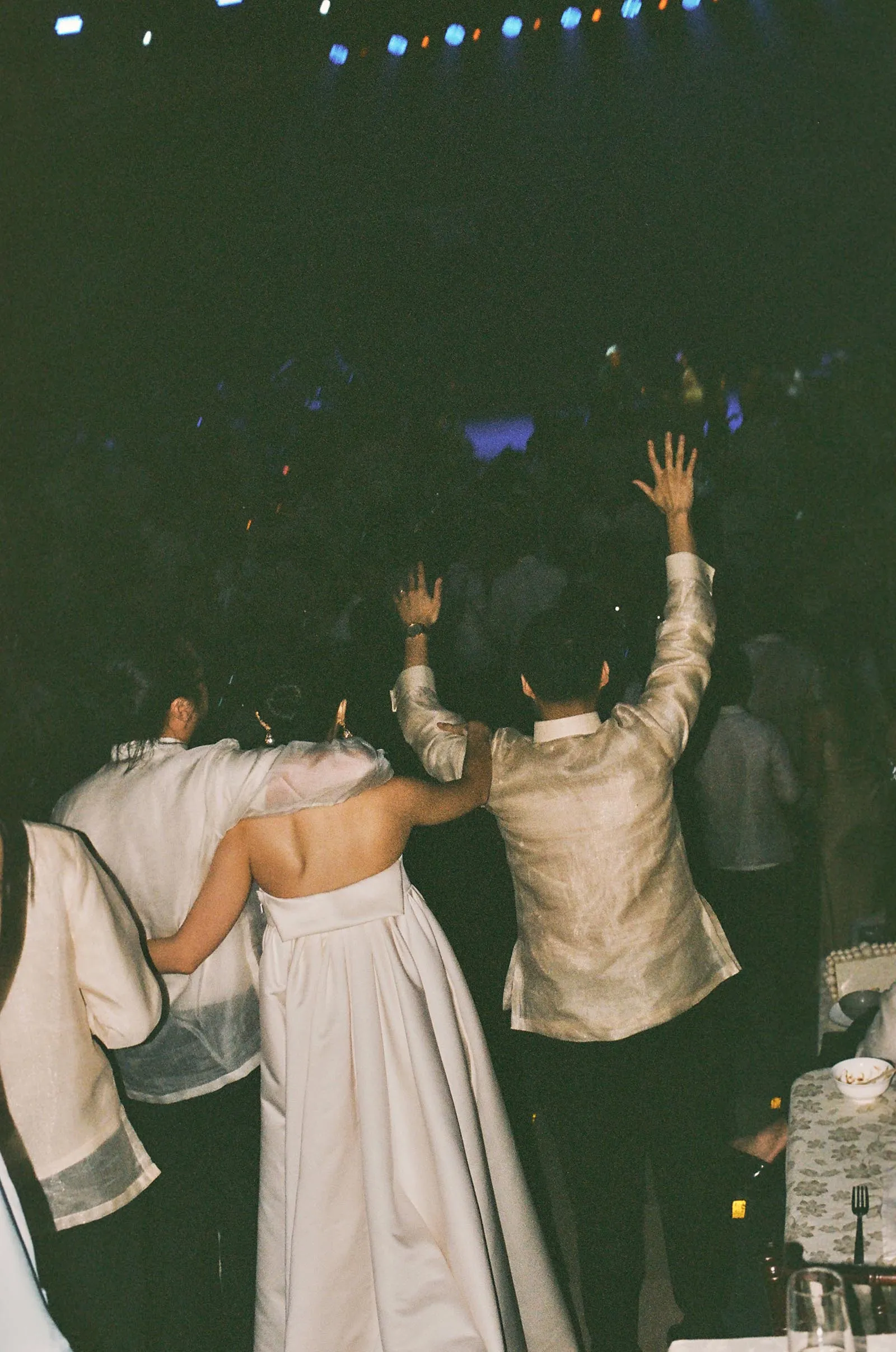
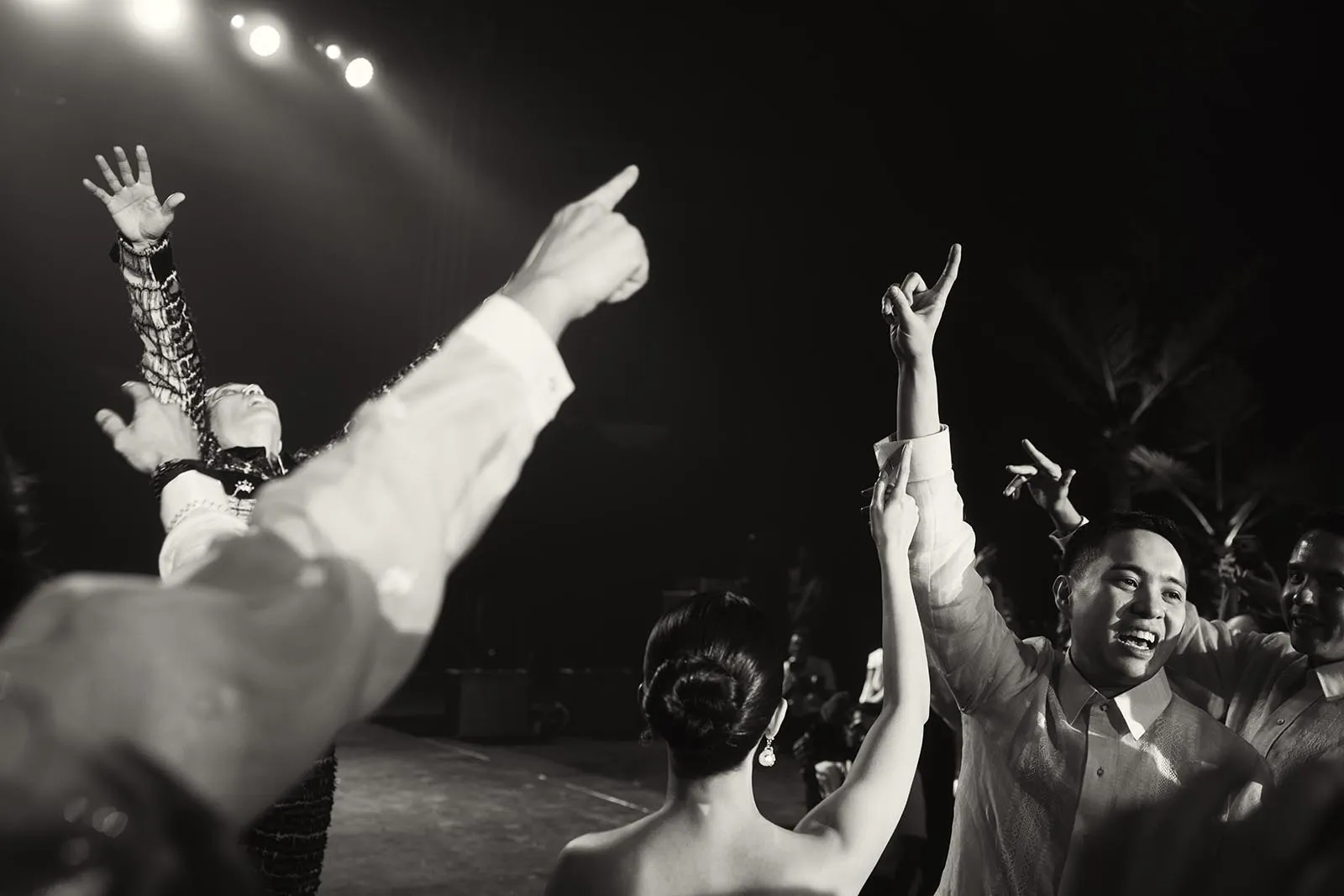
Like the tale of the Pied Piper of Hamelin, Mel Villena and the AMP Big Band opened with a drumline that led guests in a procession into the building, before moving through classics like Can’t Take My Eyes Off You, My Girl, and Cuando Cuando Cuando. They also invited artists whose music had long been part of their lives: Juan Karlos performed Buwan, Ikaw Lang ang Aking Mahal, and Through the Years, followed by Arnel Pineda of Journey with Faithfully, Open Arms, and Don’t Stop Believin’. Afterwards, the night flowed across the decades with Flight Facilities delivering a three-hour set, and then friends Tomas Cabili, AJ Chan, and Euric Lumanog taking over the decks till the early morning.
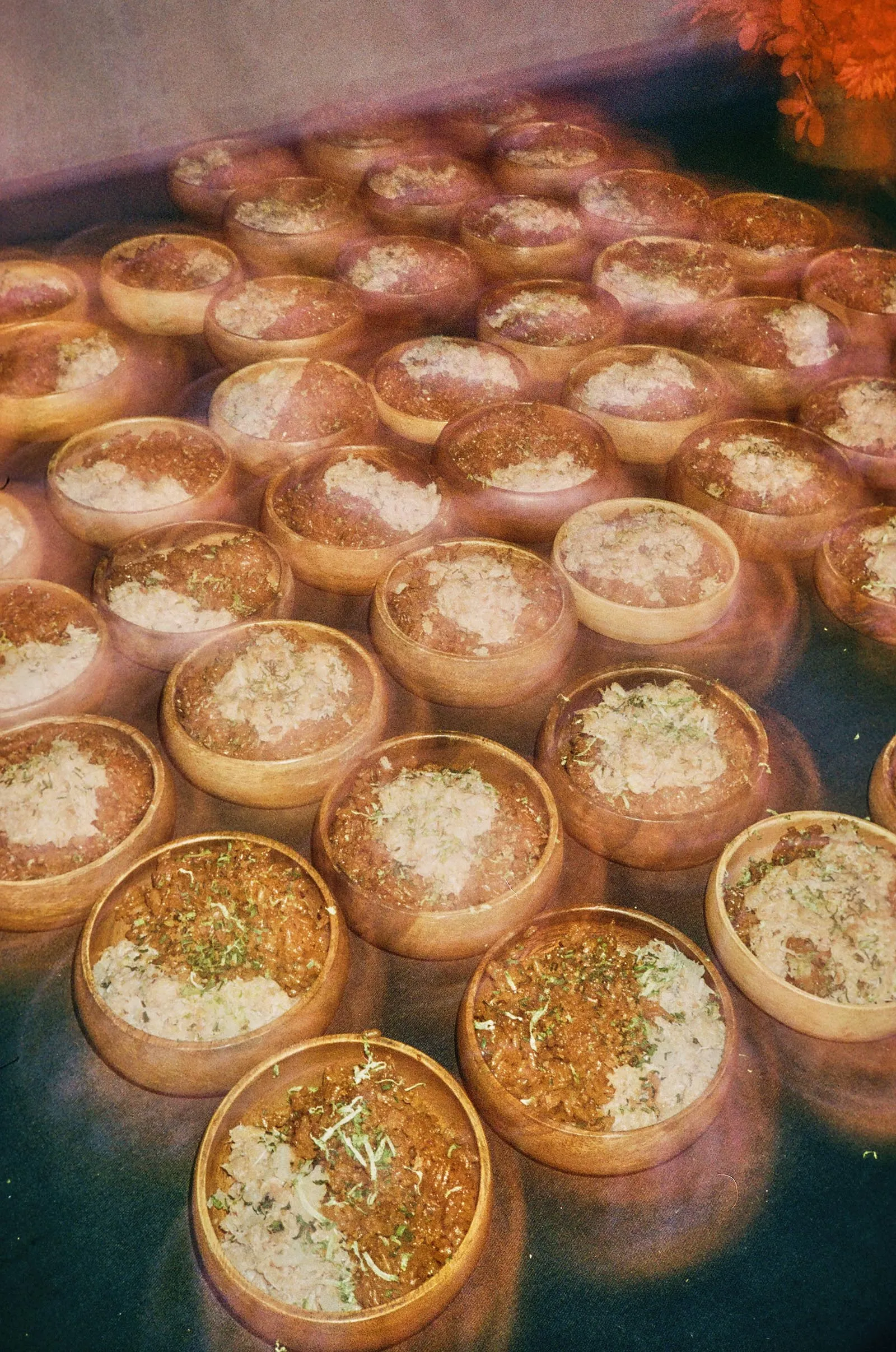
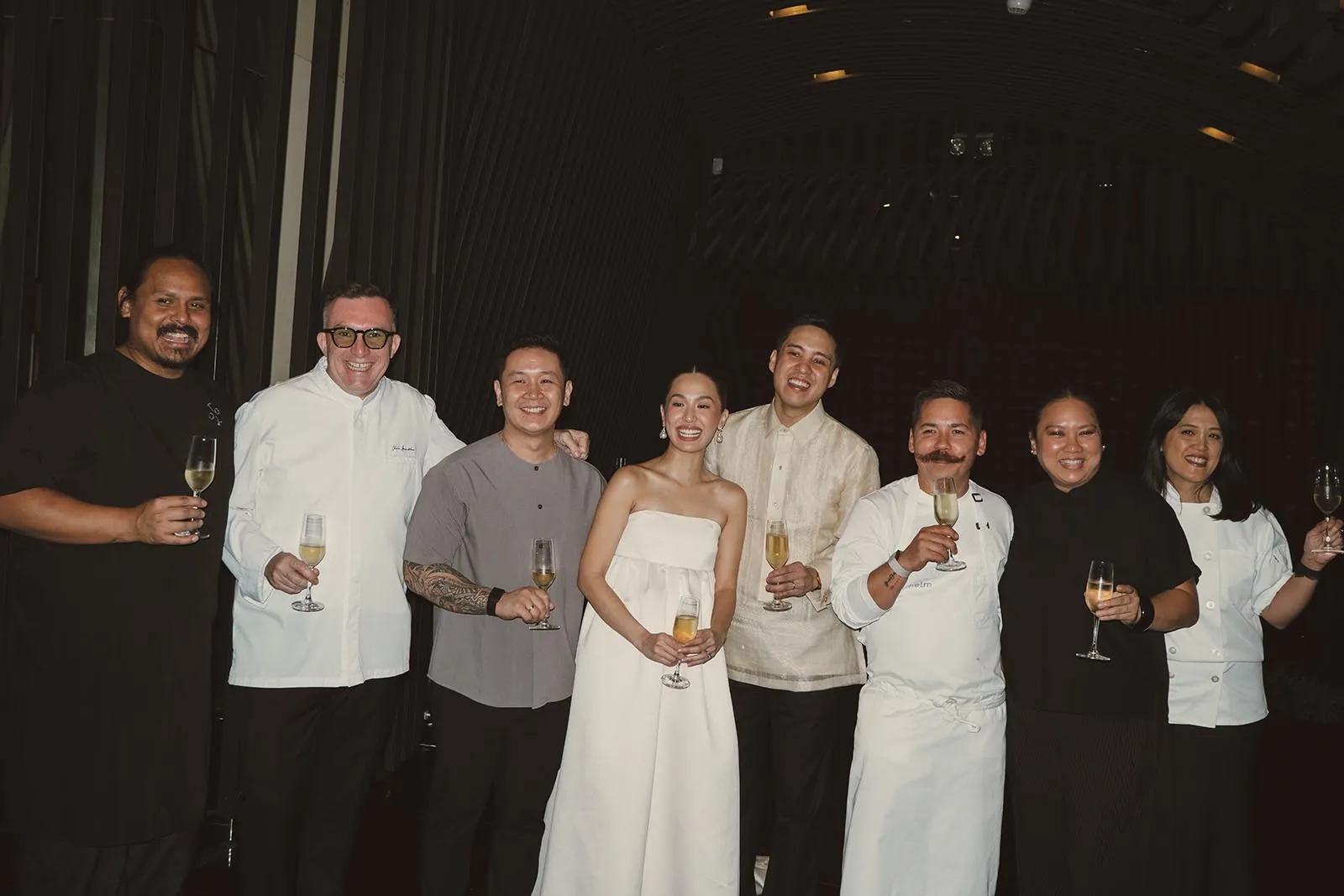
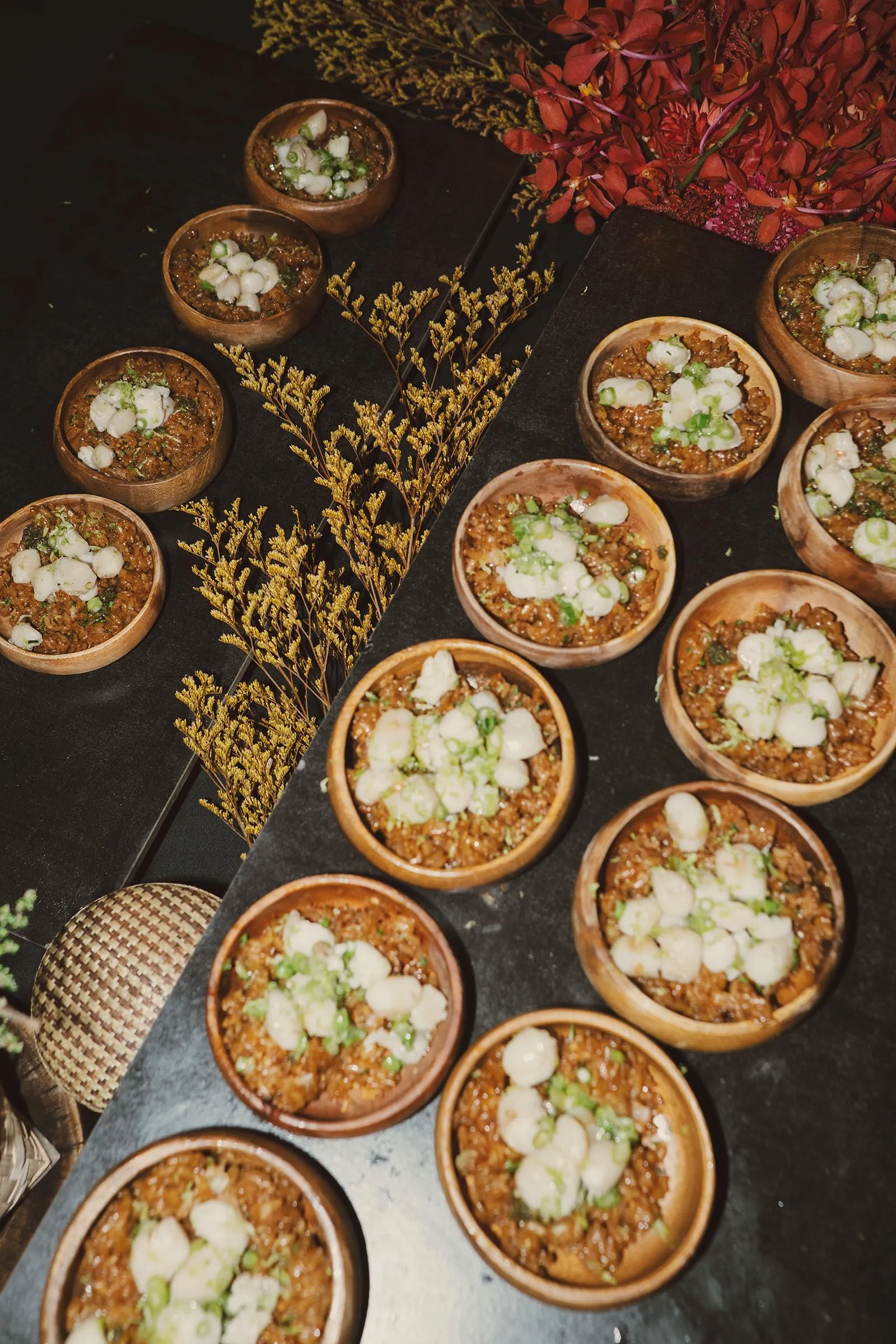
Food was naturally paramount. Not simply as a familial vocation, but as a symbolic celebration of everything that preceded the union. “We began by making sure all of our restaurants were represented, choosing favorite dishes from each so our teams could be part of the wedding in their own way,” they explain, describing it as “a kind of greatest hits menu” that allowed their shared work and community to be present in a tangible way.
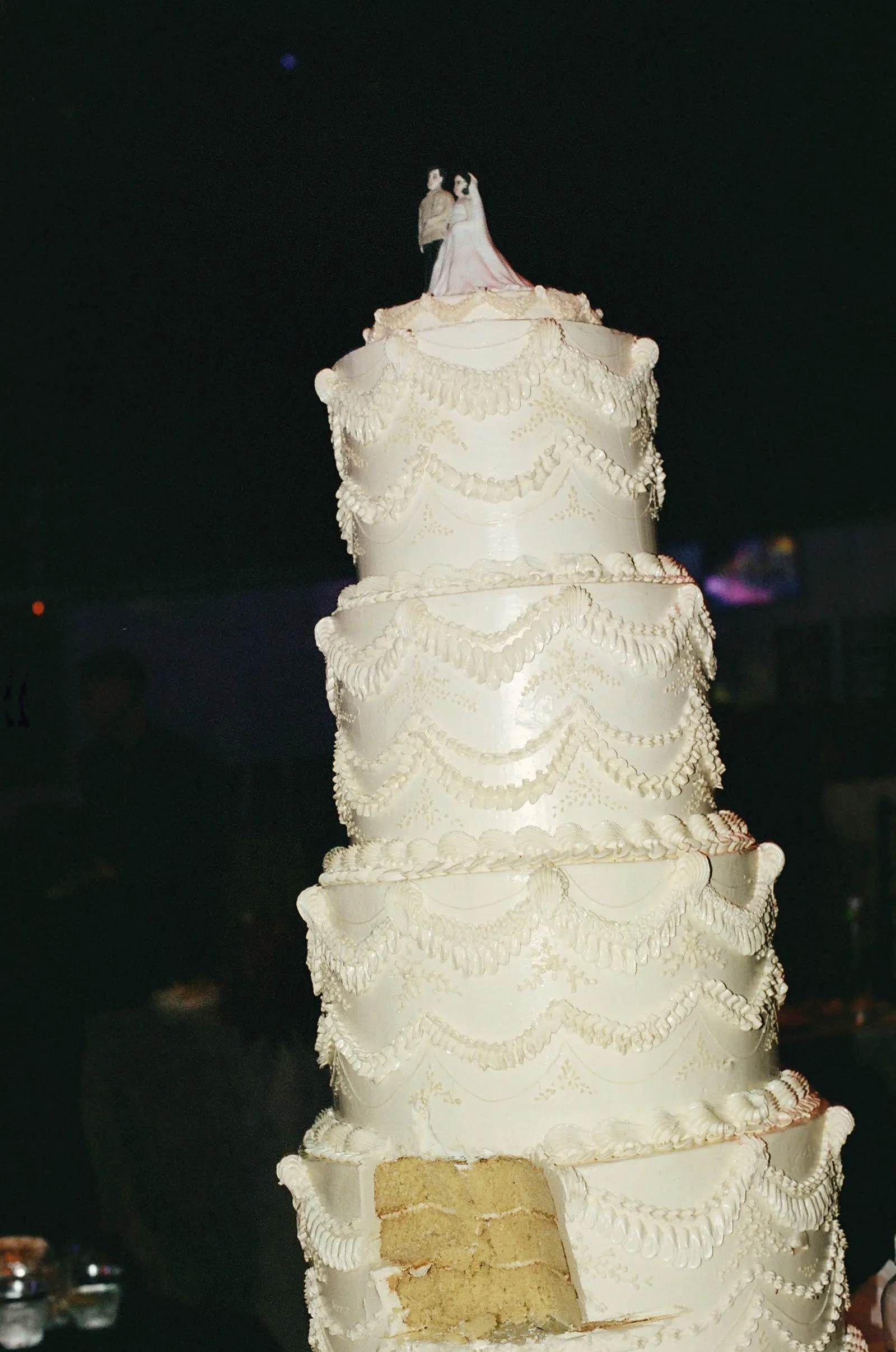
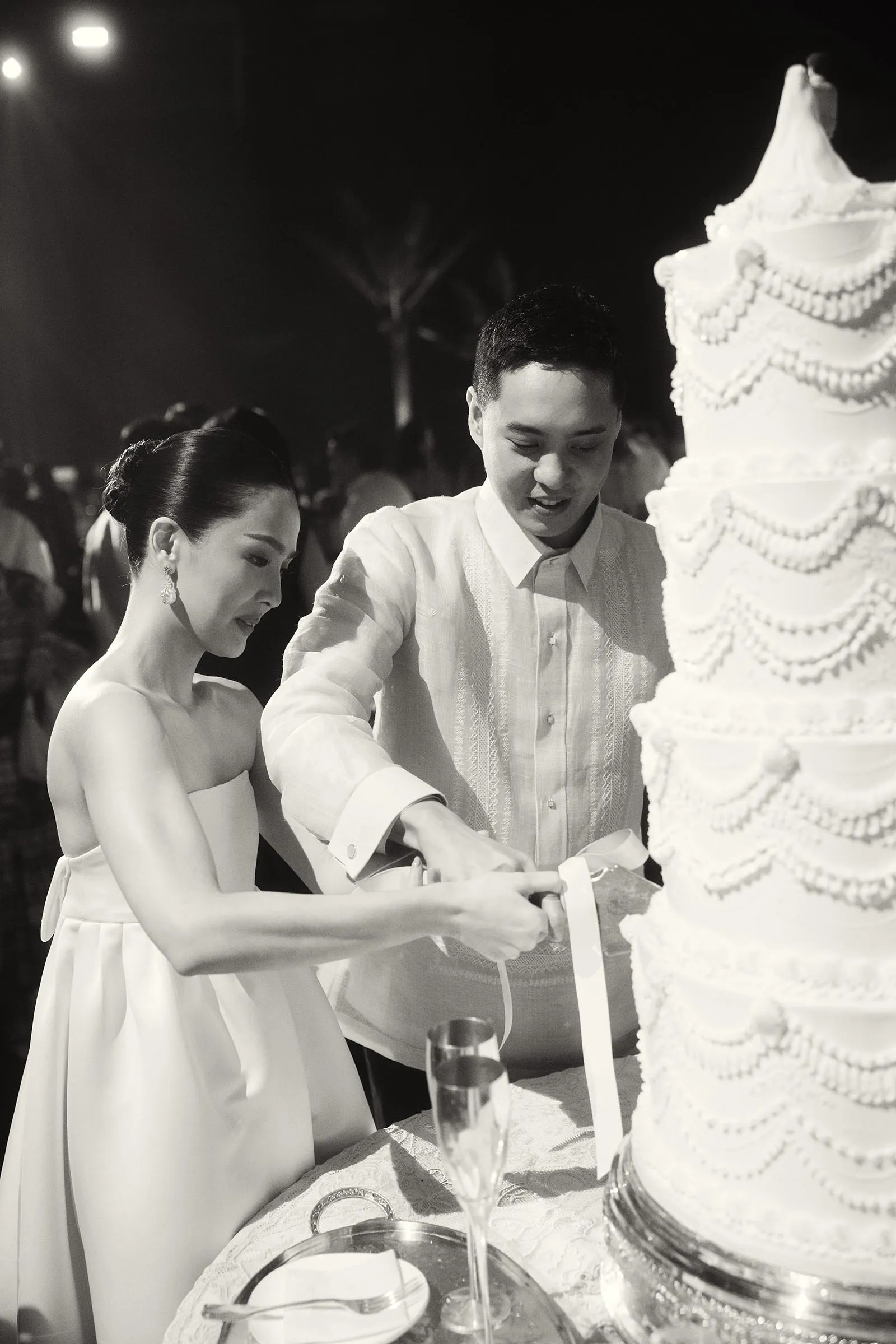
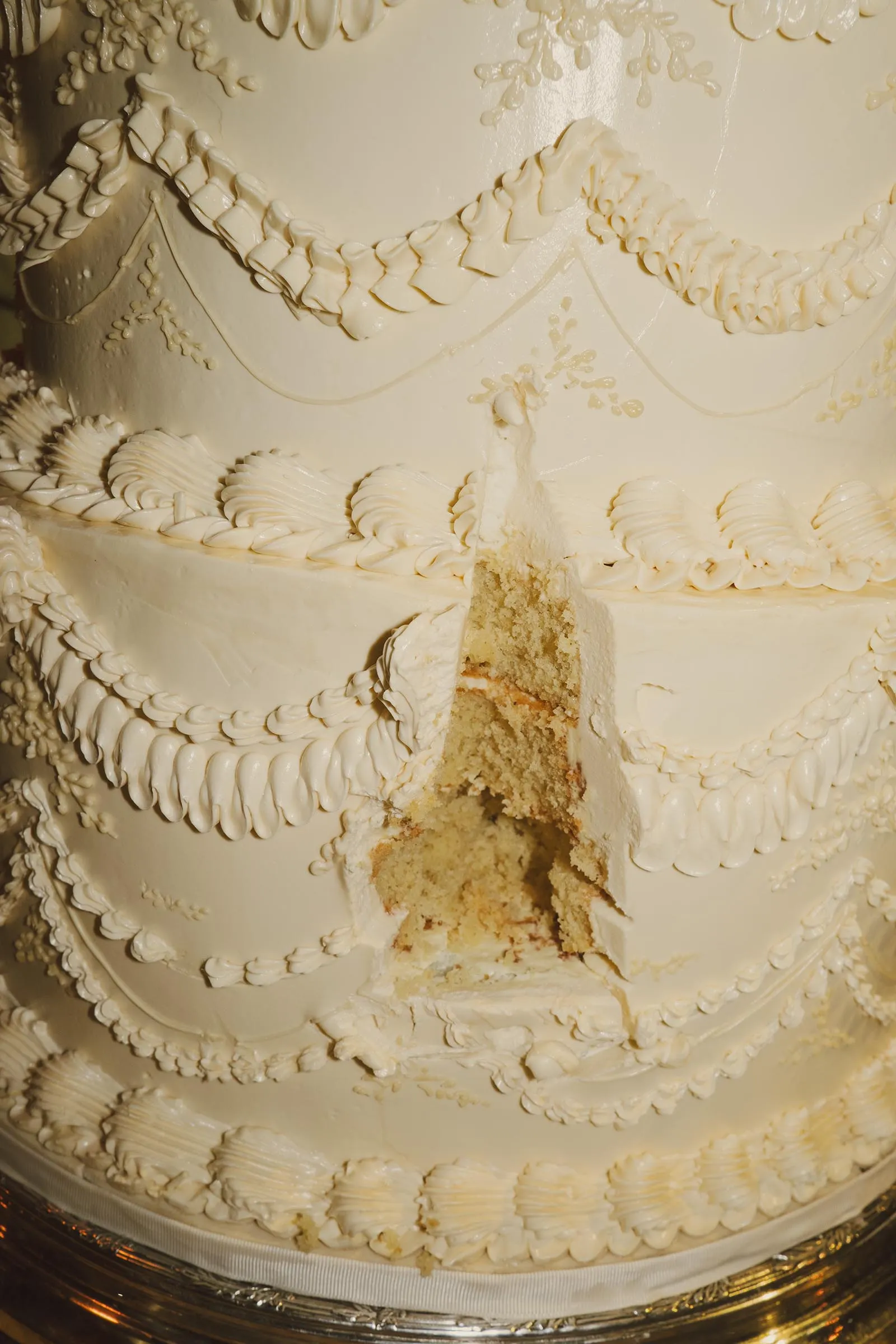
They invited Margarita’s closest chef and industry friends, many of whom felt like family, to create dishes inspired by her favorite meals from their restaurants, infusing her spirit into the dishes. Their cousin, Mercedes Forés, who leads the Margarita Signature Caterer team, coordinated the process. The wedding cake, with added mini cupcakes to share and created by Sonja Ocampo, featured Bordier butter, something they describe as “one of Amado’s slightly crazy suggestions.”
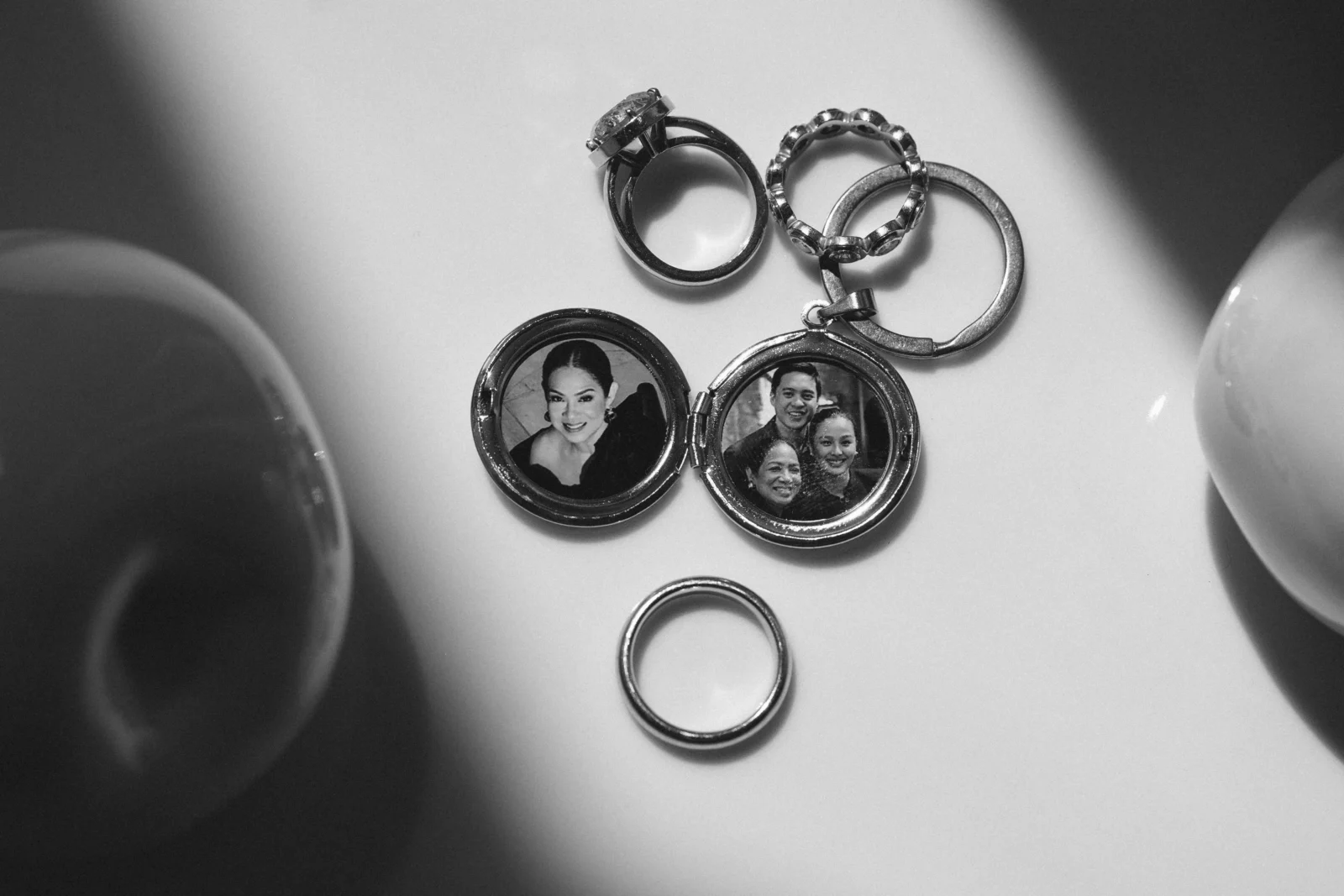
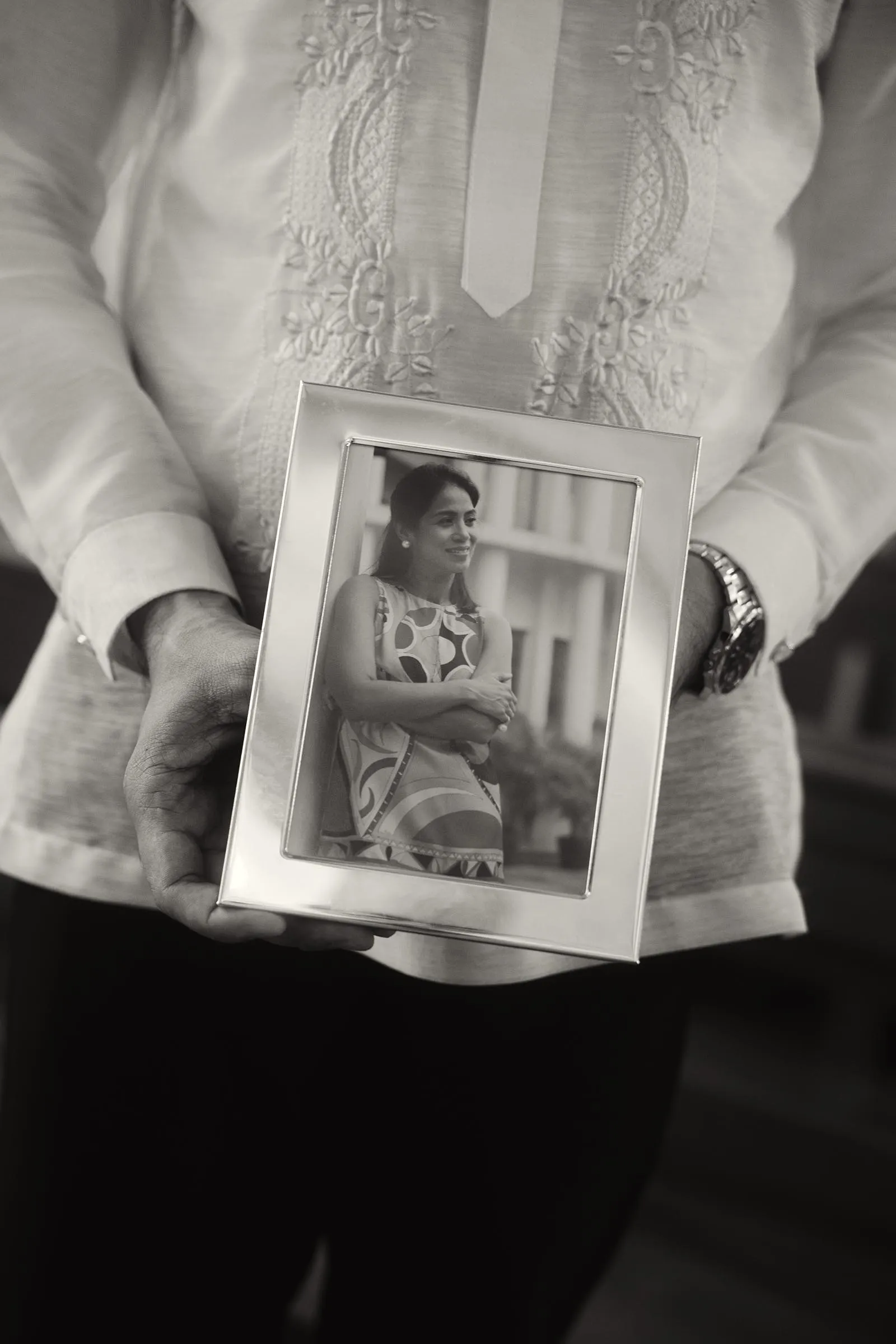
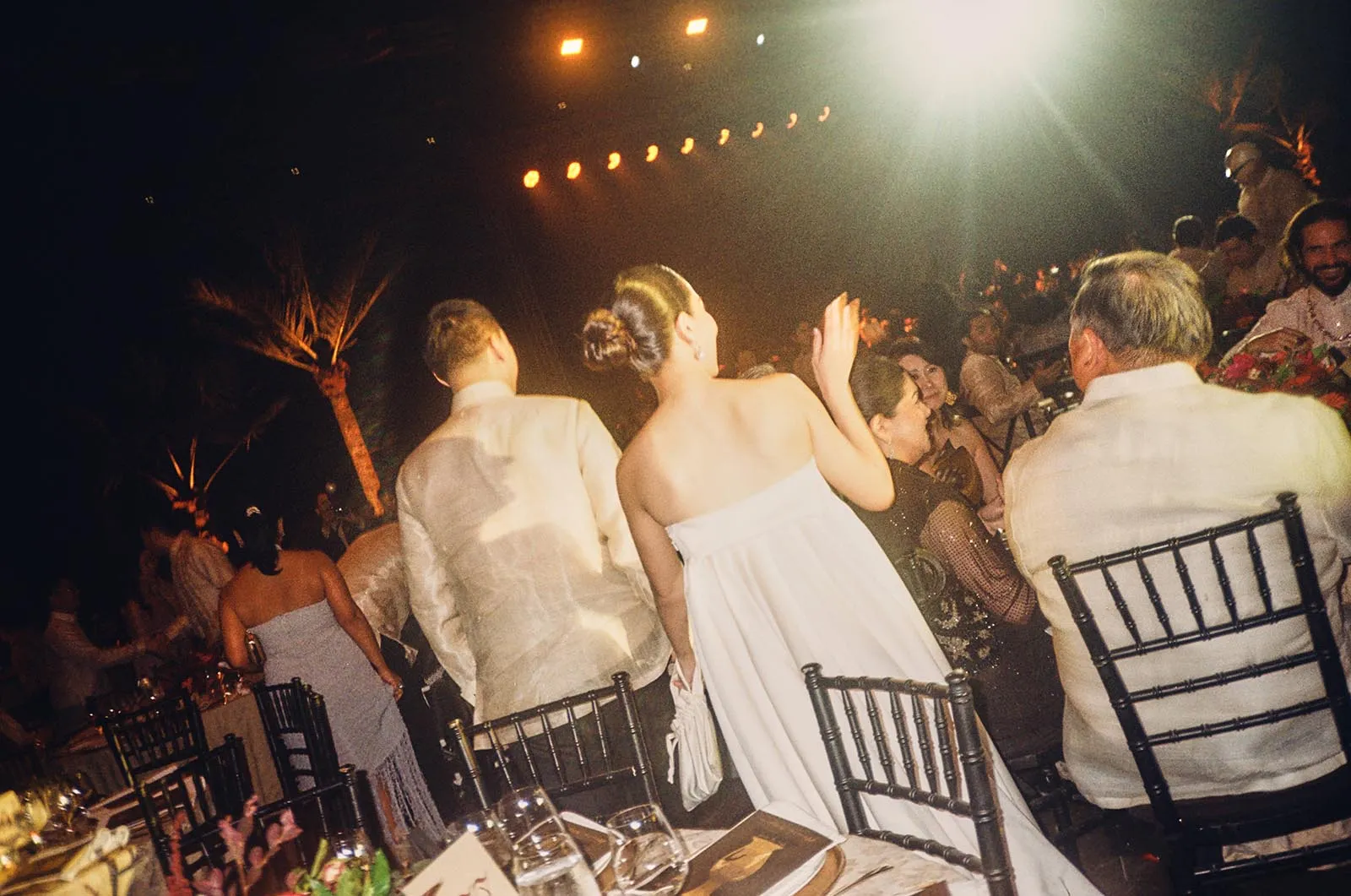
Throughout the day, her presence was saluted in detail. “We reserved a seat for her both at the ceremony and at the reception.” They carried her with them in subtle ways: Tita Bledes and Tito Joe carried a photo of Margarita in the aisle; both the bride and groom each carried one of her lockets; and they continued her tradition of handwriting place cards for every guest she served. “To honor that, we included a photocopy of our names, Amado and Carmela, written in her handwriting on our church missalette.” When they entered the reception, they did so in a manner that felt distinctly Margarita. “We had a white wine parade… she loved a bit of showmanship and was famously devoted to white wine.”
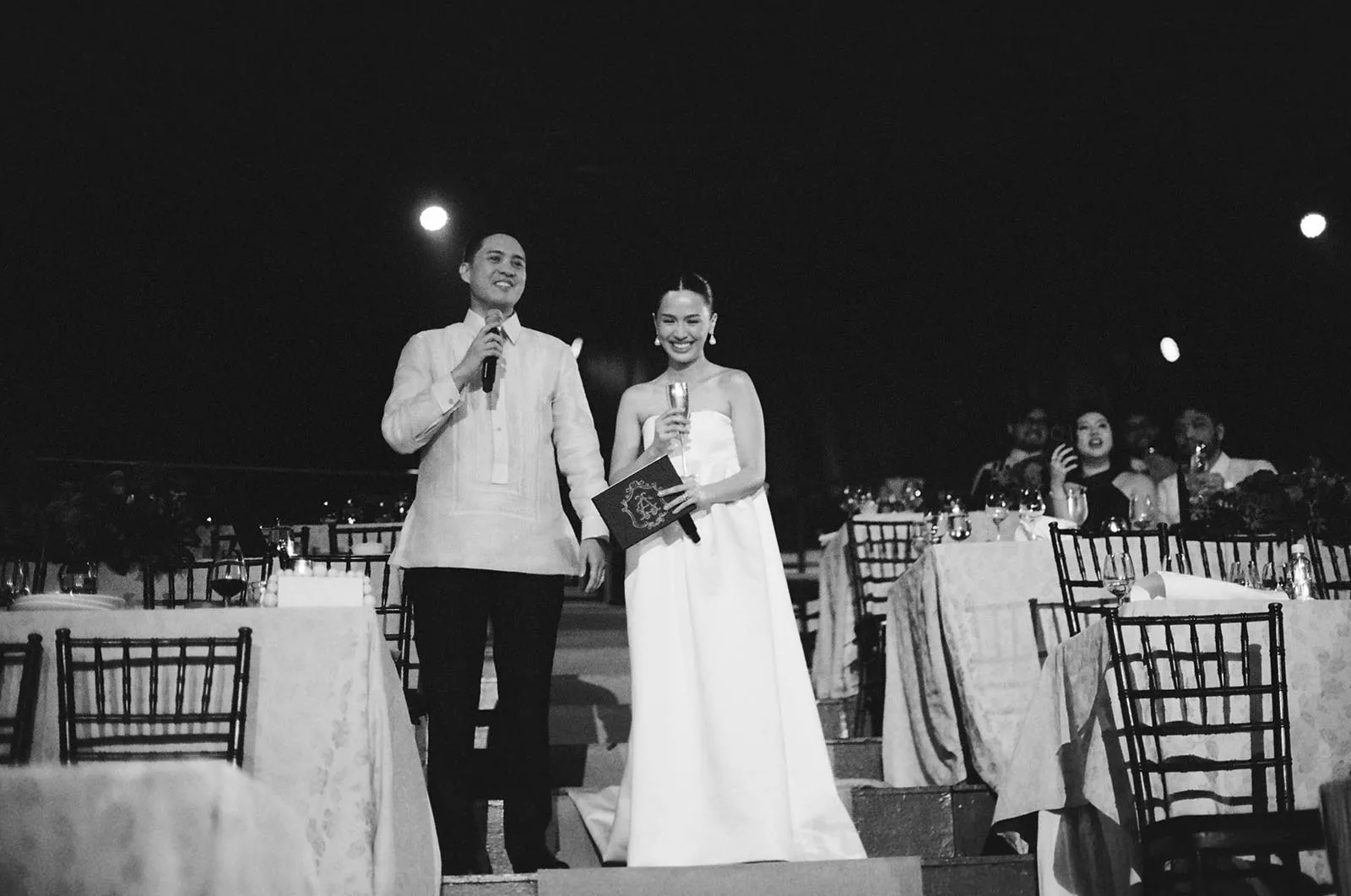
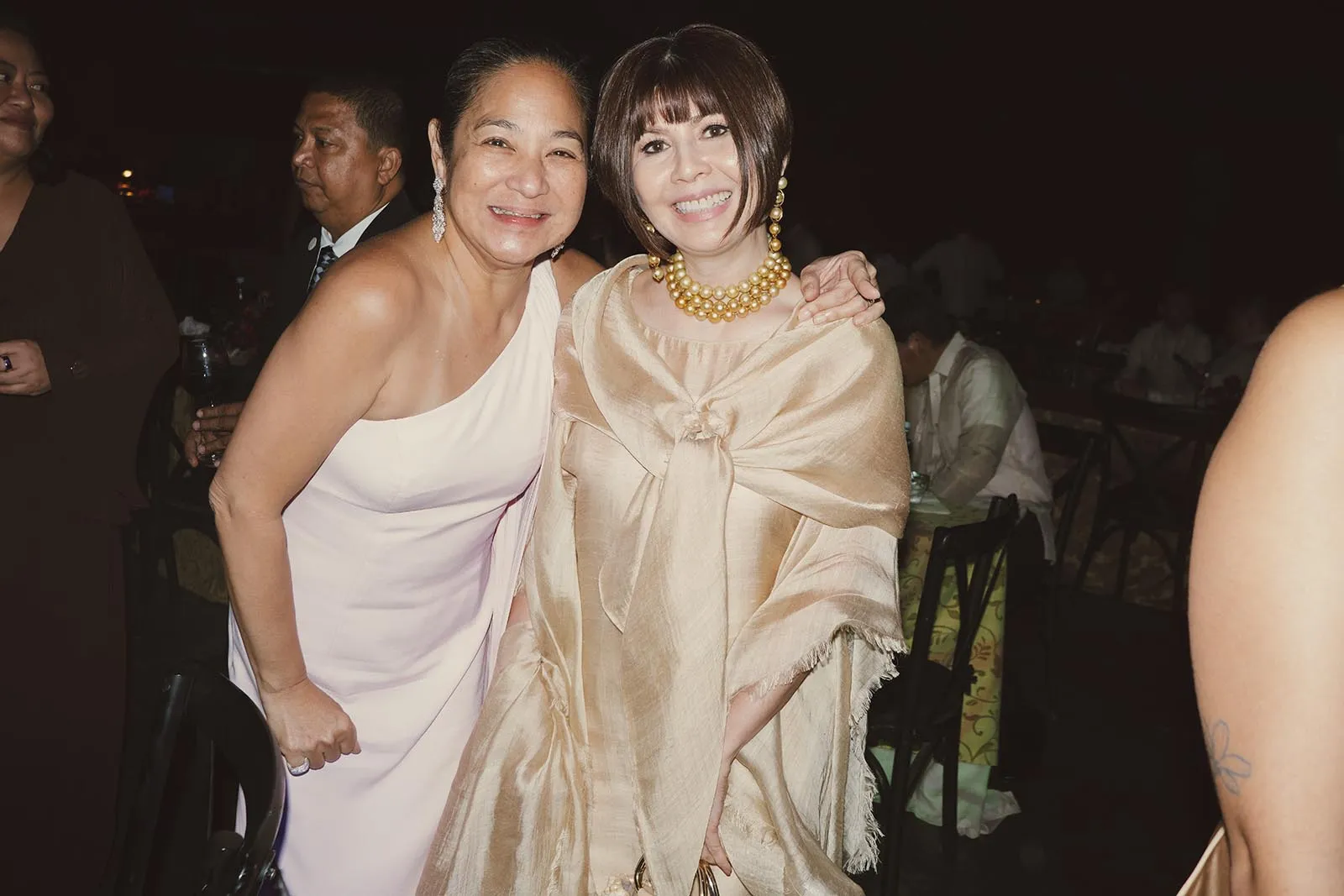
On reflection, it’s the act of togetherness that lingers most in their hearts. “For both of us, what we appreciated most was simply being able to celebrate with all our family and friends. Many of them live abroad, so having everyone together in one place meant a lot.” Speeches from their groomsmen, maids of honor, Tati, and Tita Bledes were the evening’s final act, and the final bow took place when the family took the stage for a rendition of More Today Than Yesterday. “By that point, the evening felt less like a formal wedding and more like a big salu-salo with everyone and everything we love.”
-
 Photographed by Joseph Pascual1/47
 -
 Photographed by Aya Cabauatan2/47
 -
 Photographed by Jaja Samaniego3/47
 -
 Photographed by Jaja Samaniego4/47
 -
 Photographed by Aya Cabauatan5/47
 -
 Photographed by Jaja Samaniego6/47
 -
 Photographed by Aya Cabauatan7/47
 -
 Photographed by Joseph Pascual8/47
 -
 Photographed by Jaja Samaniego9/47
 -
 Photographed by Joseph Pascual10/47
 -
 Photographed by Joseph Pascual11/47
 -
 Photographed by Joseph Pascual12/47
 -
 Photographed by Joseph Pascual13/47
 -
 Photographed by Aya Cabauatan14/47
 -
 Photographed by Mark Nicdao15/47
 -
 Photographed by Joseph Pascual16/47
 -
 Photographed by Joseph Pascual17/47
 -
 Photographed by Joseph Pascual18/47
 -
 Photographed by Joseph Pascual19/47
 -
 Photographed by Aya Cabauatan20/47
 -
 Photographed by Joseph Pascual21/47
 -
 Photographed by Aya Cabauatan22/47
 -
 Photographed by Joseph Pascual23/47
 -
 Photographed by Aya Cabauatan24/47
 -
 Photographed by Joseph Pascual25/47
 -
 Photographed by Aya Cabauatan26/47
 -
 Photographed by Jaja Samaniego27/47
 -
 Photographed by Aya Cabauatan28/47
 -
 Photographed by Aya Cabauatan29/47
 -
 Photographed by Aya Cabauatan30/47
 -
 Photographed by Aya Cabauatan31/47
 -
 Photographed by Jaja Samaniego32/47
 -
 Photographed by Joseph Pascual33/47
 -
 Photographed by Aya Cabauatan34/47
 -
 Photographed by Aya Cabauatan35/47
 -
 Photographed by Aya Cabauatan36/47
 -
 Photographed by Joseph Pascual37/47
 -
 Photographed by Joseph Pascual38/47
 -
 Photographed by Joseph Pascual39/47
 -
 Photographed by Joseph Pascual40/47
 -
 Photographed by Joseph Pascual41/47
 -
 Photographed by Aya Cabauatan42/47
 -
 Photographed by Aya Cabauatan43/47
 -
 Photographed by Joseph Pascual44/47
 -
 Photographed by Aya Cabauatan45/47
 -
 Photographed by Aya Cabauatan46/47
 -
 Photographed by Jaja Samaniego47/47
- In Her Own Words: Margarita Forés Leaves A Message for Women
-
Inside Chloë Grace Moretz and Kate Harrison’s Final Wedding Dress Fittings at the Louis Vuitton Atelier in Paris
- The Brides Wore Simone Rocha: An Ode to Rocha’s Many Frou-Frou and Fantastical Vogue Wedding Looks
- This Bride’s Black Archive Dolce & Gabbana Gown Was The “Something Borrowed” For Her London Wedding