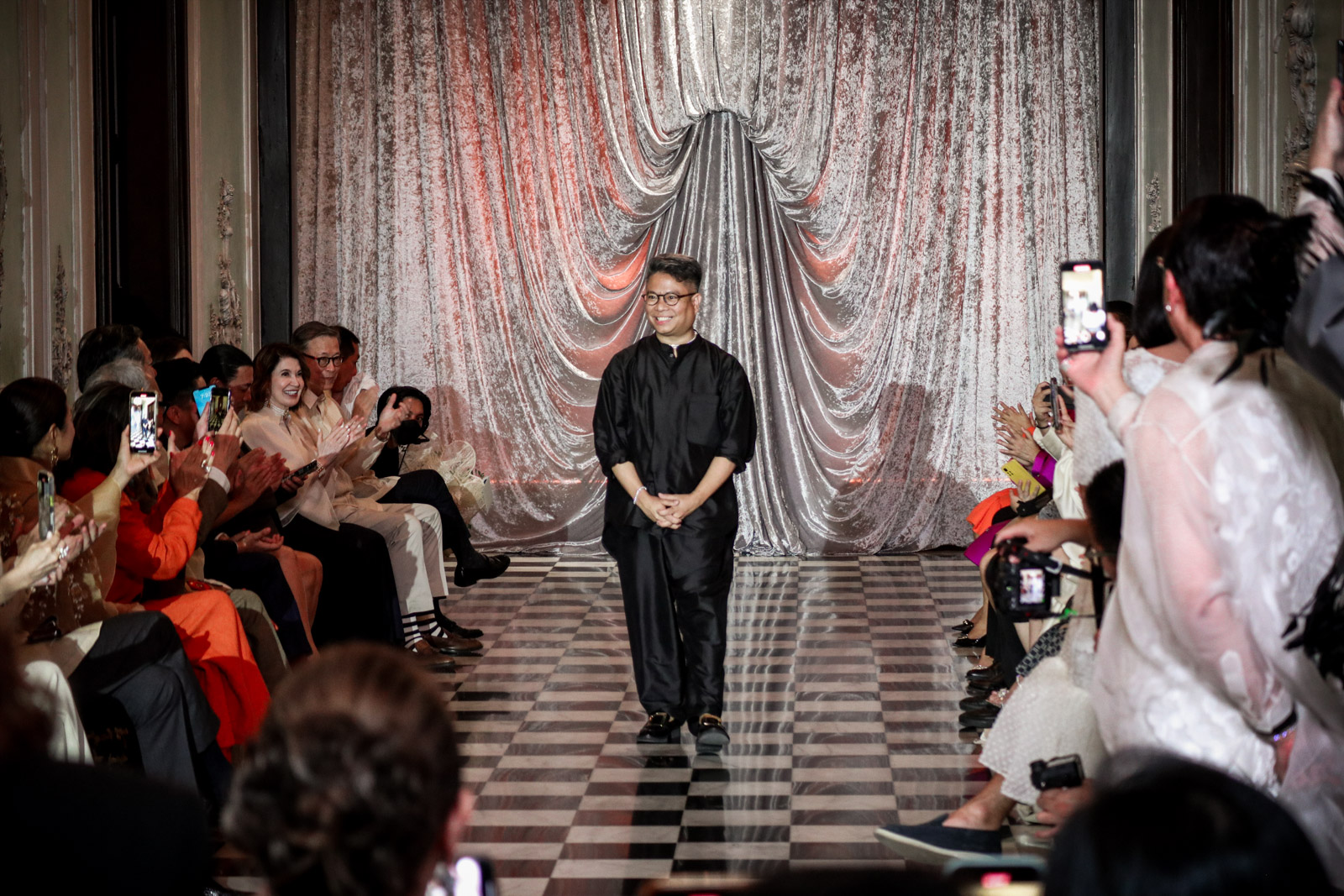
“Puey Quiñones FILIPINO” Is A Love Letter To A Life Of Work


At the Goldenberg Mansion in Malacañan, the Filipino designer pays homage to the eras that defined a career.
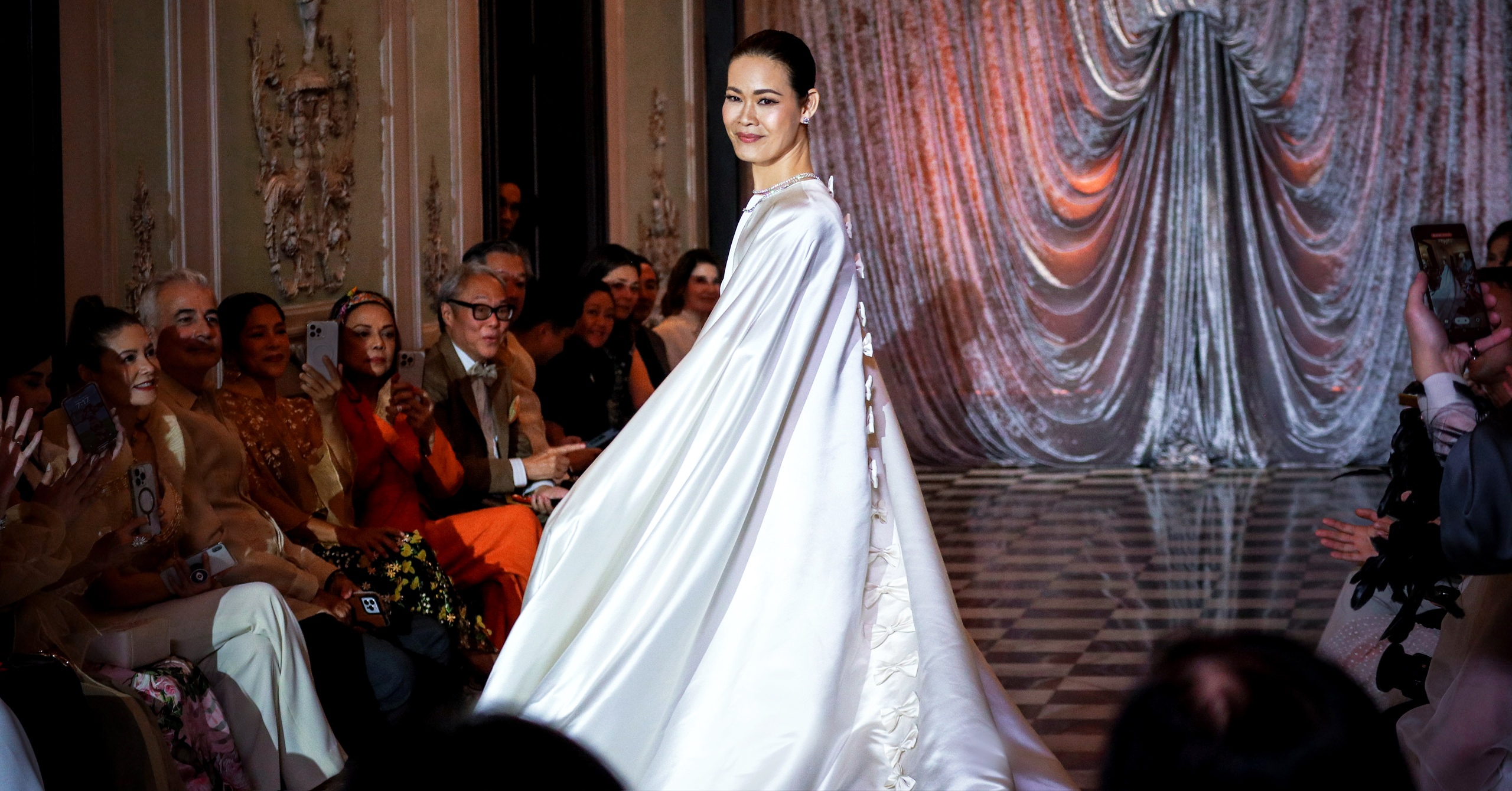
“Puey Quiñones FILIPINO,” the designer’s latest collection, spoke in volumes: amorphous shapes that billowed and swelled, draped to move with the body. A rush of free-flowing feminine silhouettes flitted down the runway in vivid hues of fuchsia, chartreuse, and cobalt blue. It held the tone of a celebration, which the designer says he would have called it otherwise.
“I wanted to call it ‘Celebration,’” Quiñones tells Vogue Philippines. “I’m celebrating my works, and I’m celebrating the Filipino.”


The collection is based on a journey that spans the designer’s entire career, referencing what he likes to call his “eras.” Each one delves deeper into his different signatures: tailoringTailoringThe craft of cutting, shaping, and sewing structured garments such as suits, blazers, and trousers to fit the body precisely. Good tailoring relies on skilled pattern work and fine finishing,Go to Tailoring Glossary, deconstruction, and a constant need for evolution through design. He says, “As designers, we have to evolve to stay in the industry—to survive. This is why you see the evolution of my designs from when I started.”
Quiñones finds introspection within the collection, exploring his identity and heritage through shape, color, and texture—a language he knows best. He calls it his “halo-halo” collection, as it not only harkens back to his roots but also leaves room for his many inspirations.
Based in Los Angeles, the Filipino designer constantly shifts between two worlds. A cross-cultural interplay is evident in the different translations of glamour: Old Hollywood-inspired gowns and a fluttering of butterfly sleeves.
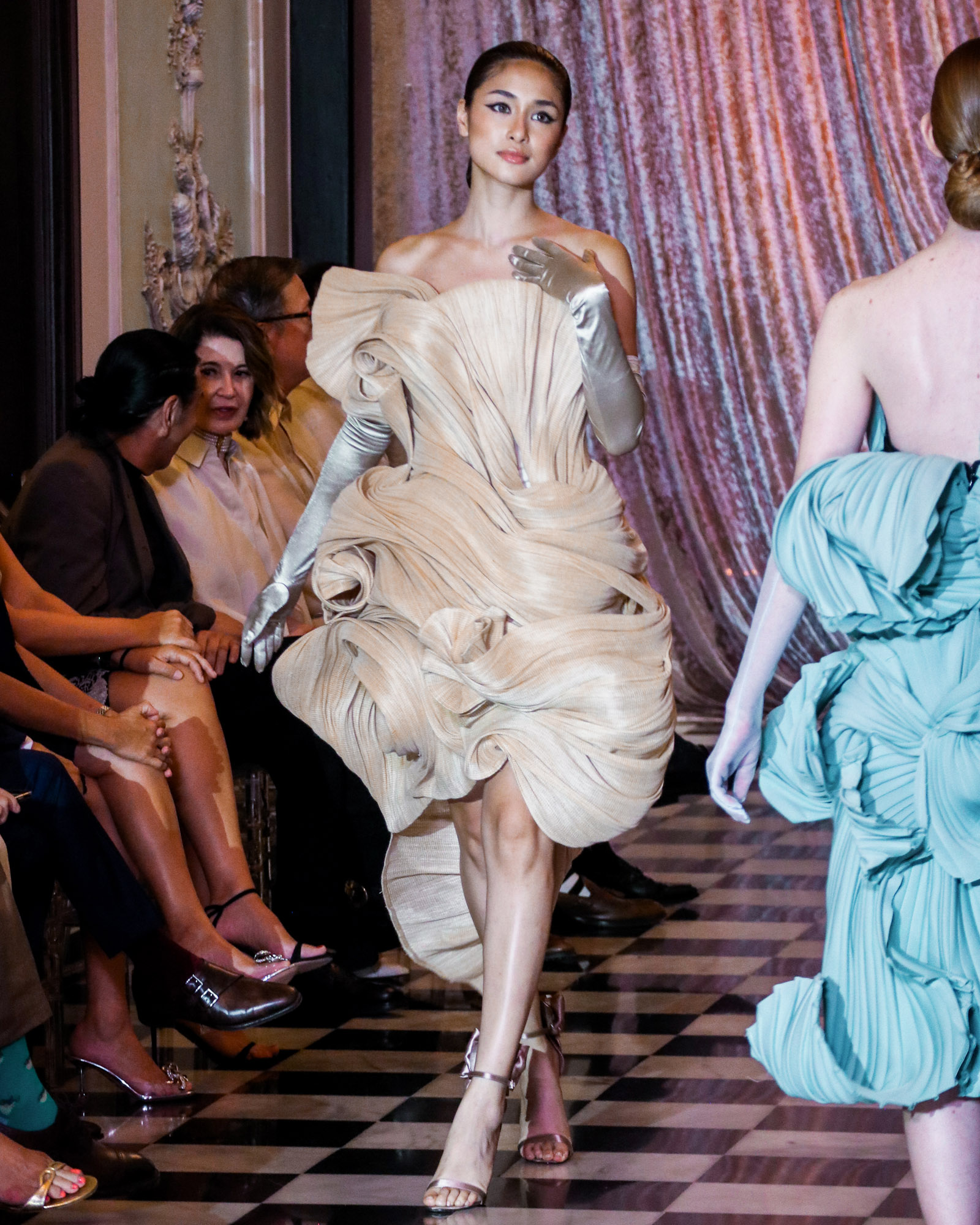
1950s gowns are a nod to costume designer Edith Head, who dressed the film Sunset Boulevard—a constant rewatch for the designer and his husband. Quiñones reinterprets the silhouettes for a new audience with shots of neon, paired with oversizedOversizedA cut that is intentionally larger and roomier than the body, producing a relaxed, voluminous silhouette. Oversized blazers, shirts, coats, and knits balance comfort with style, and they work especiallyGo to Oversized Glossary bows and embellished with beaded detailing.
“It’s a tribute to my LA home,” he said. “I fell in love with Los Angeles because it’s very relaxed, it’s laidback, and it’s glamorous. I attend red carpets, and I see how actresses wear their dresses, so some [of the looks in the collection] are red carpetRed CarpetThe ceremonial walkway at premieres, award shows, and galas where public figures pose for photographers in their most carefully chosen looks. Red-carpet fashion launches trends, fuels designer visibility, and generatesGo to Red Carpet Glossary-ready.”
Quiñones’s tribute to the modern Filipina is a rendition of ternos with printed florals, tulle, and silver filigree. He uses local fabrics, sinamay and abacaAbacaA strong natural fiber from the abaca plant, also called Manila hemp, native to the Philippines. Designers and weavers use it for textiles, bags, hats, and sculptural fashion, prized forGo to Abaca Glossary, to engulf the body in shapes beyond convention. This exploration is also iterated in gleaming organza, neoprene, and a multitude of rich fabrics he collects on his worldly travels.


Designing this collection allowed Quiñones to reflect on his 23 years in the industry. One thing he has realized is that he couldn’t be more grateful for the team behind him. And, how the future of fashion, to him, looks increasingly bright.
“I’m happy I get to work with the young designers [on my team]. They’re very talented,” he says. “It’s an opportunity and a blessing for me to share [the work I do] with them.”