Inside Shone Puipia’s Crafted World


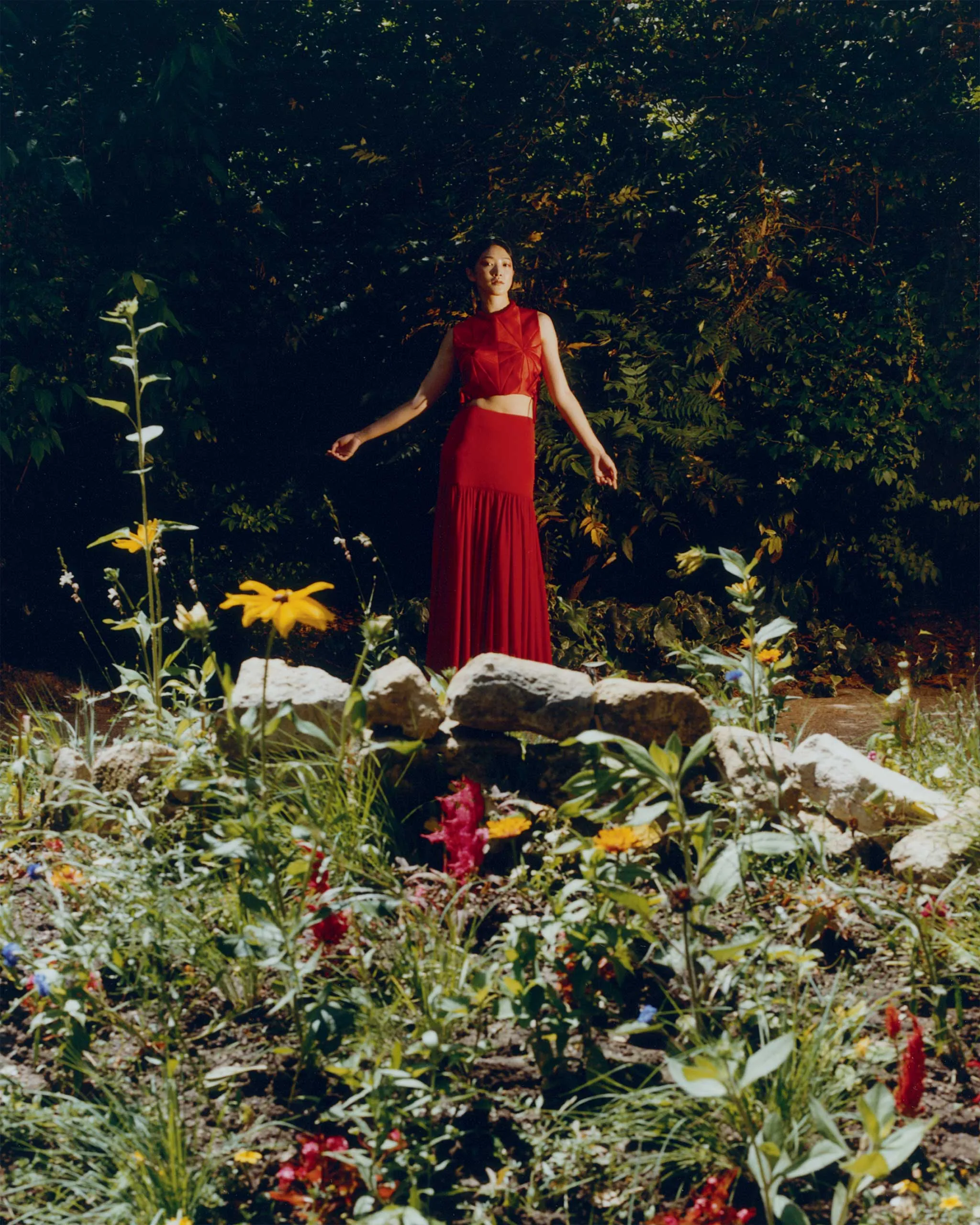
A Puipia garment is a solved equation. To this day, the designer handles pattern-making himself, ensuring that each puzzle-like piece is aligned. Photographed by Lee Wei Swee
In his studio in Bangkok, the founder and creative director works on his namesake label in close orbit with his family, where the line between home and studio is rarely fixed.
Though the name Puipia might immediately bring to mind expressive portraits and vessel-like installations in Thailand, Shone Puipia applies the same instinct to his namesake label’s clothes.
Growing up, the Puipia home was a refuge for creative exploration. Born into a family of artists, he shared his parents’ interest in artistic pursuits from a young age. Still, Shone is preoccupied with the act of making, in all its forms.
This, too, was part of his inheritance: Shone’s mother, Pinaree Sanpitak, is one of Thailand’s leading contemporary artists and his father, Chatchai Puipia, is a celebrated painter and sculptor whose monumental work, Wish You Were Here (2008), joined the collection of the Hirshhorn Museum and Sculpture Garden this spring.
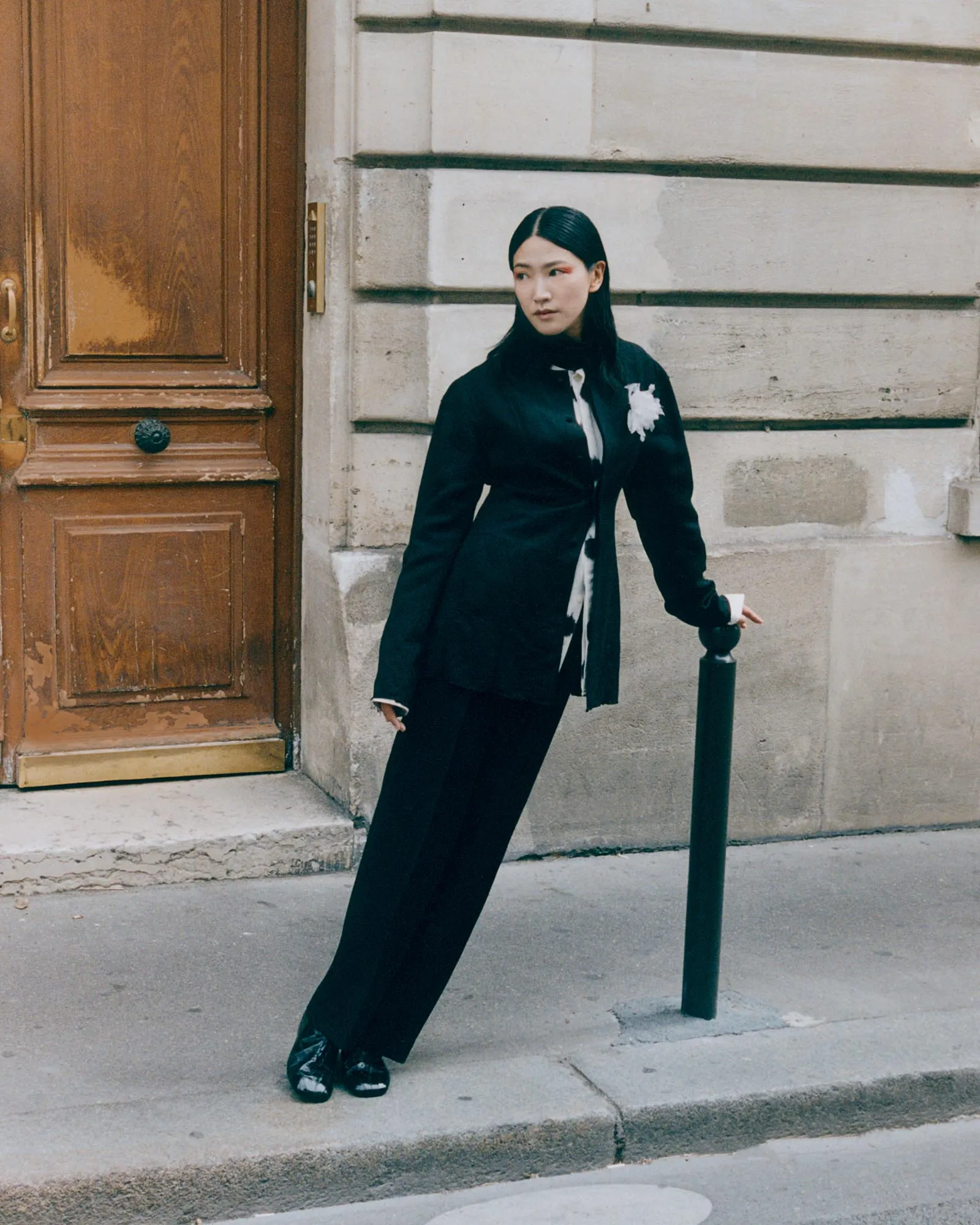
They remain, as he puts it, “the greatest supporters in my creative journey,” a dynamic he describes as one where “together as a family, we make the best team.” From his father comes “a sense of fearlessness and dedication to your art,” while with his mother, “our works share a lot in common in terms of the body, femininity, and materiality.”
This inheritance finds its most tactile expression in Suan Phlu. Shone’s own constructed world is built close to home and at eye-level. At his studio, soi sa:m, the space becomes an anchor for his creative state. Tucked away in a side alley just a stone’s throw from the heart of Suan Phlu market, the atelierAtelierThe French word for workshop, describing the studio where a designer's garments are cut, fitted, and finished by hand. In couture, the atelier is the heart of the house, homeGo to Atelier Glossary functions as a sanctuary. The noise of the street stays outside. Inside, everything slows.
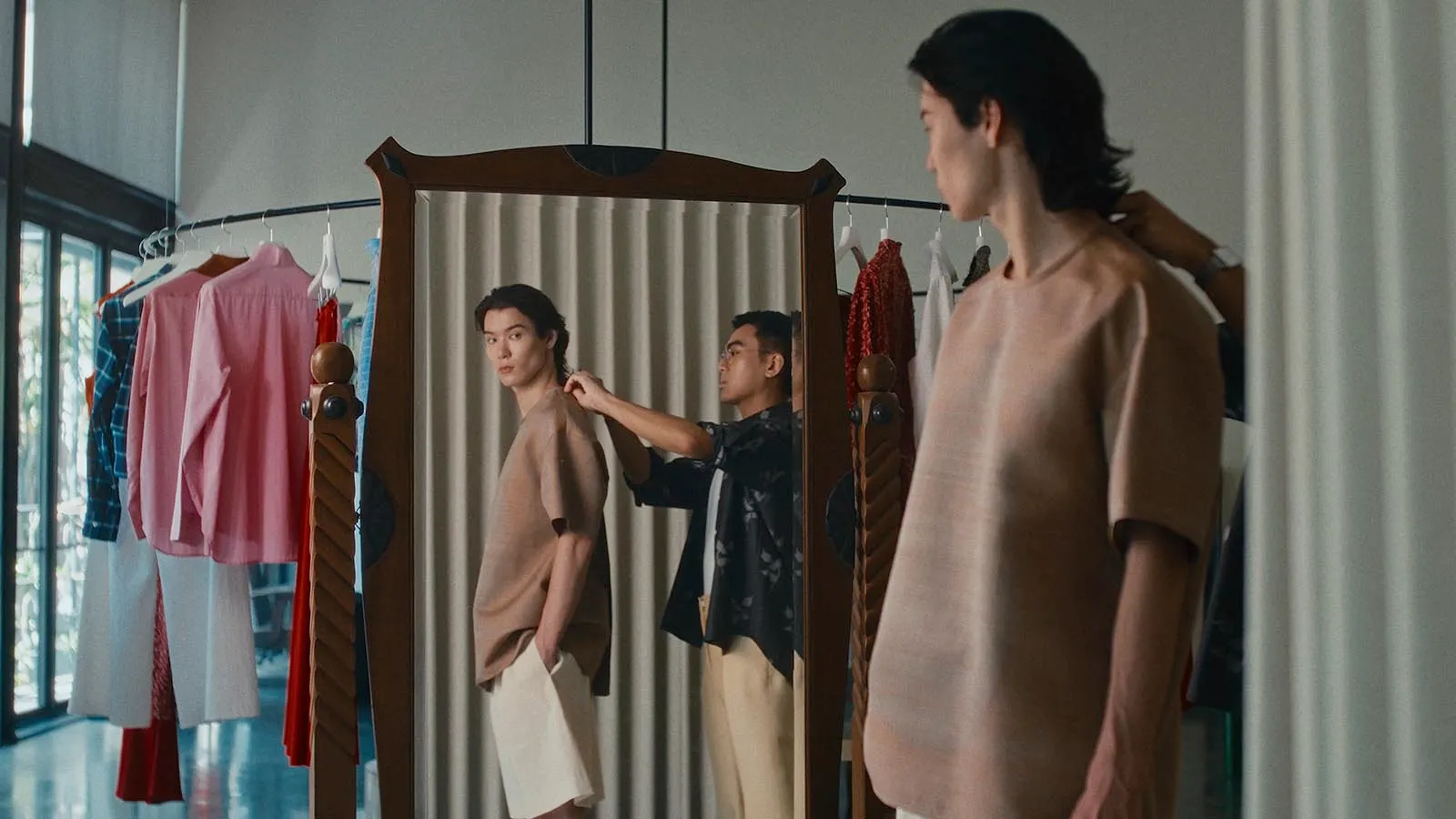
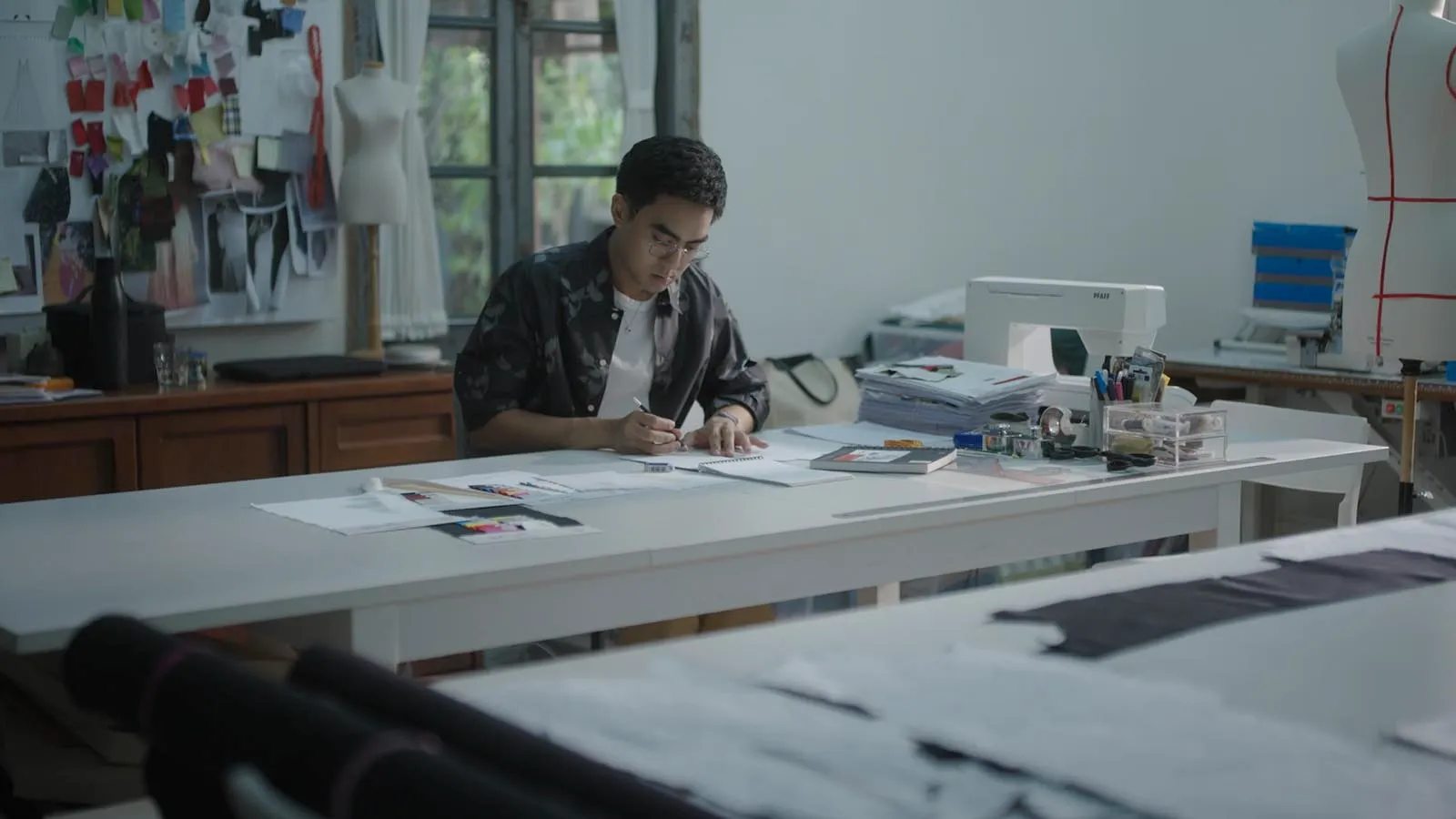
Within these walls, Shone maintains a strict ritual. The 32-year-old designer often arrives in the early morning, before his team, to reclaim a solitary hour of coffee and preparation. After a recent renovation, he now has a private space where he can “lock in” and refine the technical complexities of his label.
That way of working is grounded in his training at the Royal Academy of Fine Arts Antwerp. For Shone, the workbench is a place where drawing, the two-dimensional basis of his work, is translated into three-dimensional forms. It is a discipline that demands an almost scientific obsession with construction; he still handles the patternmaking himself, ensuring that every “puzzle-like” piece aligns with a specific mathematical logic.
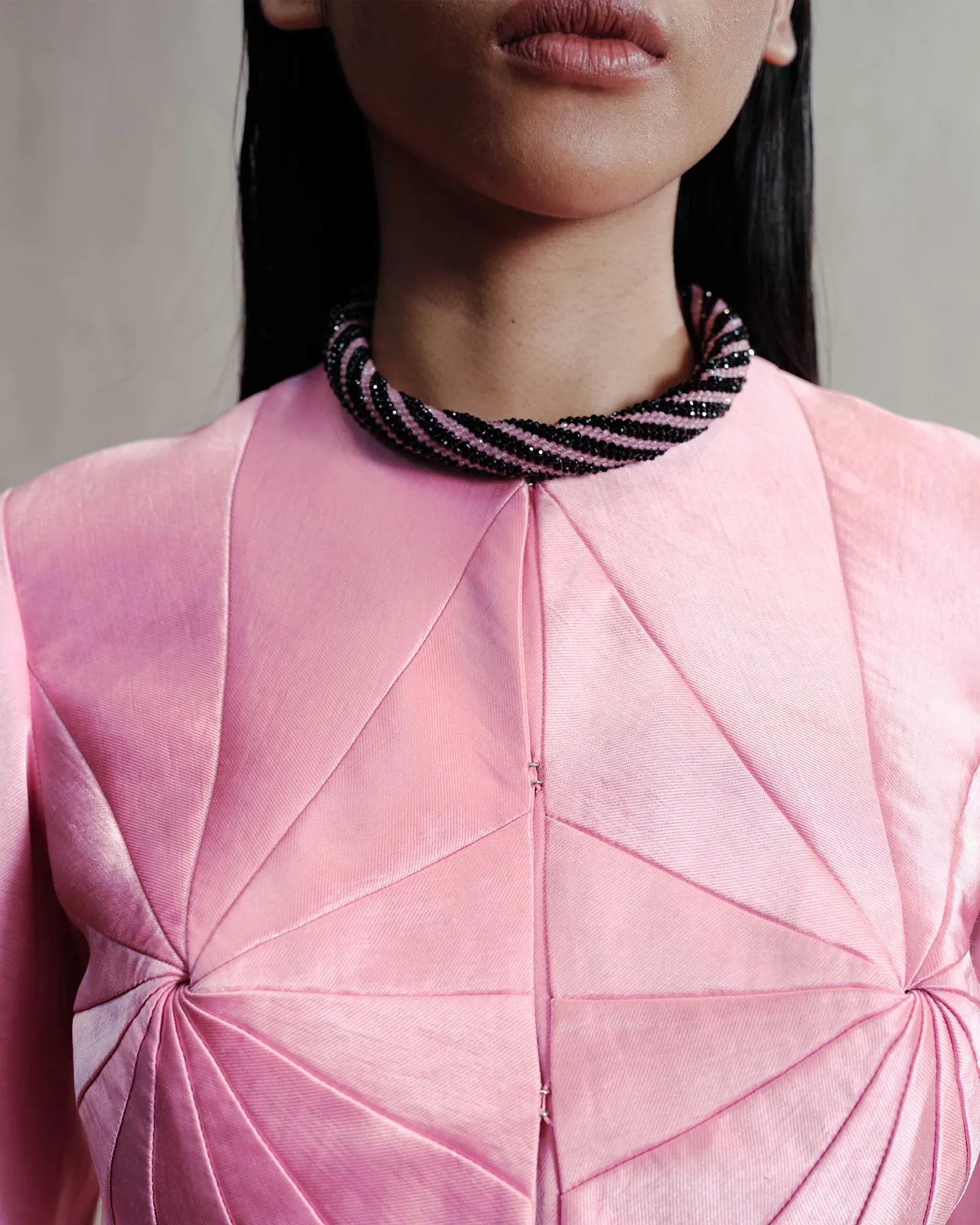
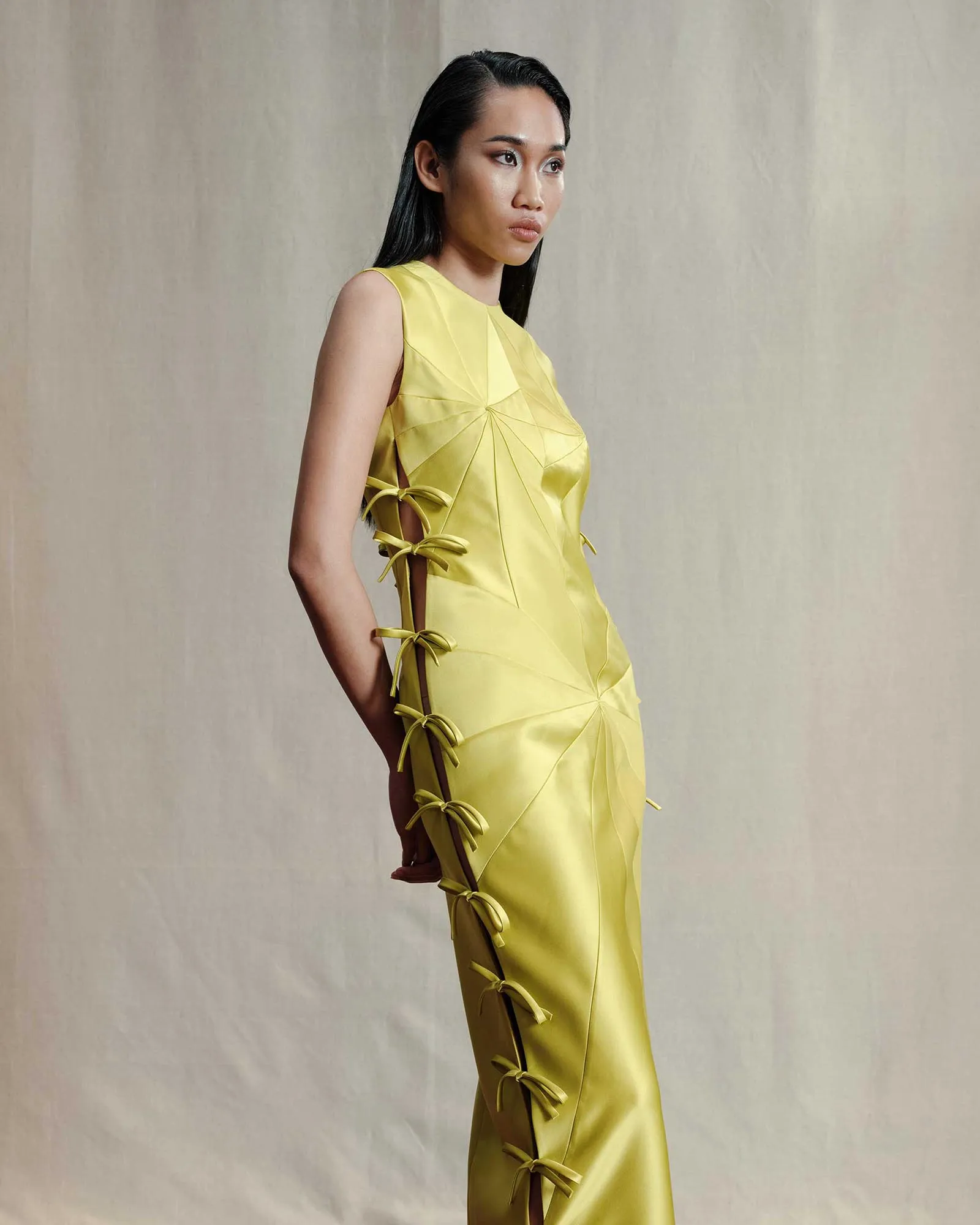
This is the first lesson for the uninitiated: a Puipia garment is a solved equation. His background in a traditional Thai high school, where the quantitative was held in high regard, underlies his work. His pieces may look deceptively simple, yet exhibit a strong technical foundation.
Those familiar with the brand can spot the abstracted breast forms demonstrated through the layering of fabrics, fluid bias-cut dresses that outline the curves of the body, or paneled jackets inspired by the Renaissance doublet from a block away. He mentions, “Fashion is the art of making clothes. You have to learn and know your craft, in order to subvert it.”
“We’re still lucky to be working in the few fields left that utilize time-honoured skills and know-how in our creations.”
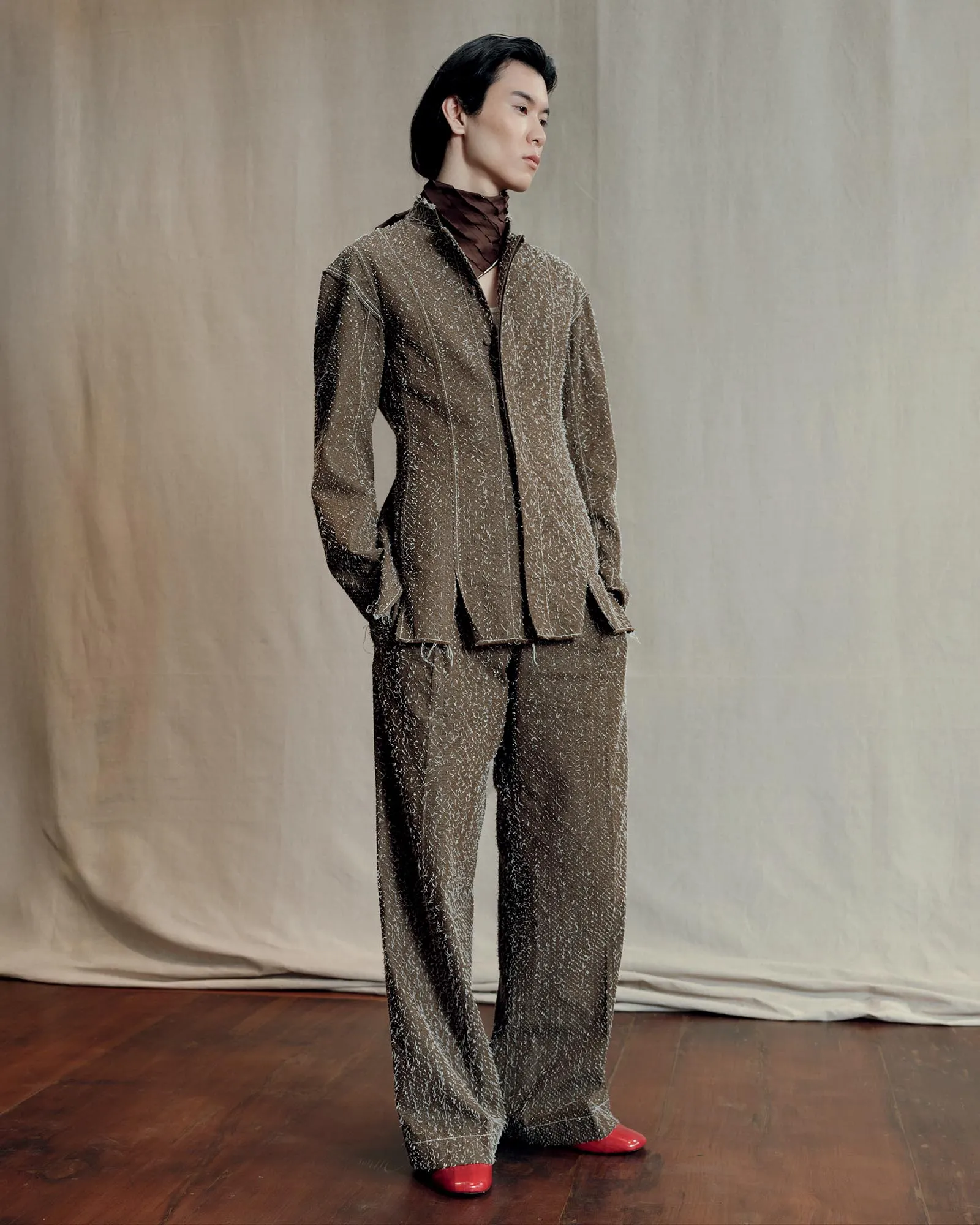
His collections are unmoored to a time or place, centering artisanship. “We’re still lucky to be working in the few fields left that utilize time-honored skills and know-how in our creations,” he explains. His pieces move through texture and silhouetteSilhouetteThe overall outline or shape of a garment or look, such as A-line, column, or hourglass. Silhouette defines the first visual impression of an outfit and is often the mostGo to Silhouette Glossary in ways that feel personal, sometimes idiosyncratic.
Whether he is prototyping paper garments or manipulating needle-punched denim, Shone is proving that luxury is found in the irregularities and imperfections that a machine is too efficient to replicate. It lies, as he frames it, in “the knowledge of craft, the artisans, the time.”
In his work, that knowledge shows up in the balance between structure and ease, in garments that oscillate between feminine and masculine, formal and relaxed, held together by what he describes as “an ease that breaks [the collections] away from tradition.” There is, in his words, “never a fixed way to how I work on a collection… The work will lead the way.”
In the Puipia universe, the formality of European garment-making is offset with lightness and vibrancy “that resonates with the spirit of Bangkok and of Asia in general.” Instead of framing his work in cultural terms, the influence of Thailand is present through “the joyful sensibility, the lush colors, [and] the rich detailing” that runs rampant through his pieces.
In a house of makers, the line between the personal and the professional is, as might be expected, as porous as raw silk before it’s complete. The boundary between a shared meal and a shared project is perpetually blurred. Materiality becomes their medium of expression.
“The design process is never linear,” he continues. “While sketching, I also start to work on the fabrics and the textures [which] will often dictate the direction of the piece.” This multi-generational dialogue has been felt most in the work itself.
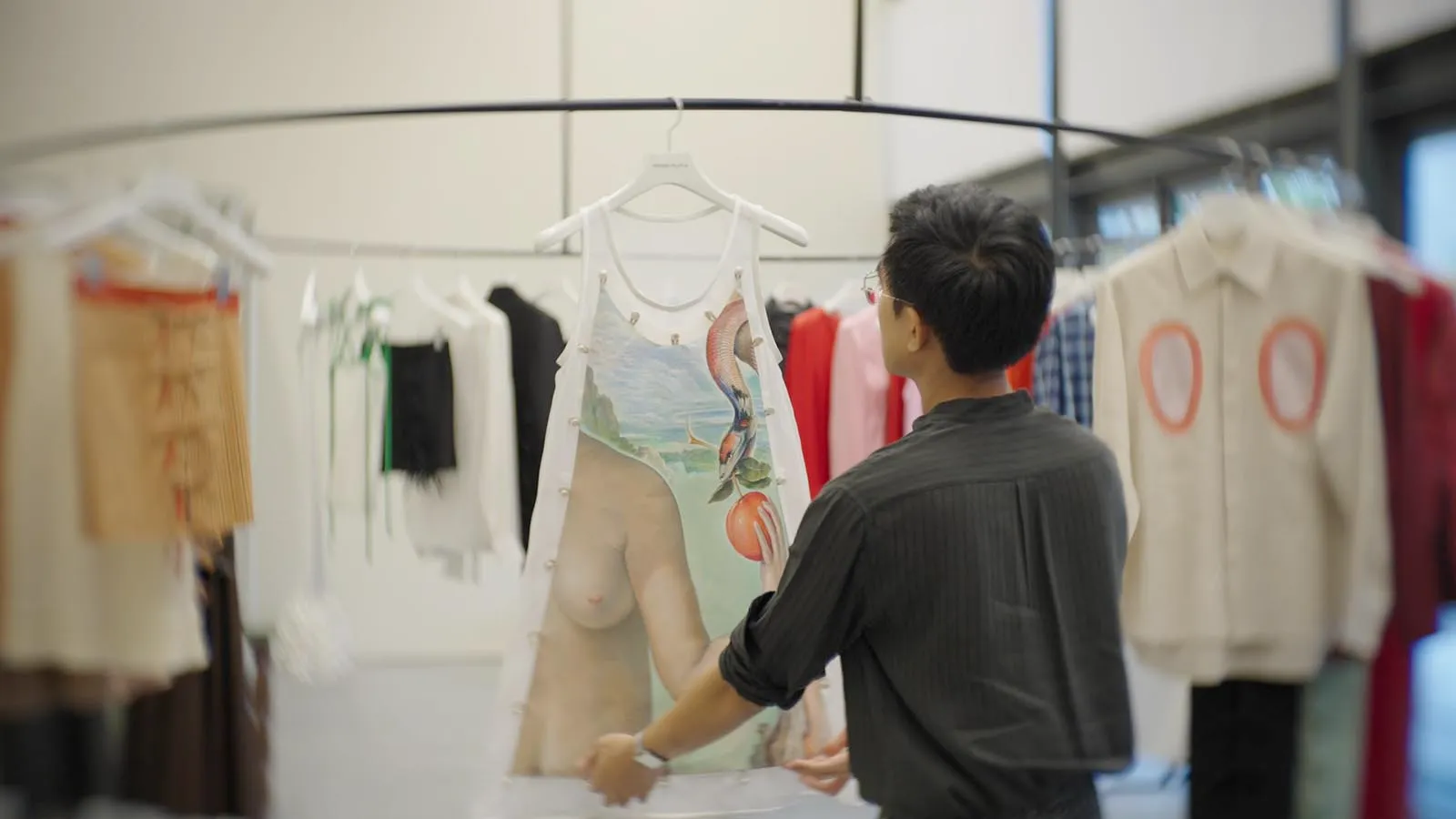
In their Hands Reshape (2025) collaboration, the exchange was visceral: Shone translated his mother’s recurring motifs from Breast Stupas into the literal grain of his textiles, pulling silk threads row-by-row until the fabric is reorganized around the body. “We bounce ideas off each other naturally and borrow from each other,” he says.
It is a slow form of construction, one that mirrors his father Chatchai’s approach to composition, but in smaller, more intimate terms. A shirt cuff that can be buttoned a number of ways or a hand-finished hem that camouflages within the texture of a blouse are among the “quietly beautiful” details that Puipia injects into his collections. The longer you linger, the more you see the intricacy within a piece. The clothes, he explains, “are made for the wearer… designed with details that only the wearer may find.”
Elsewhere in the same body of work, his father contributes painted panels (gouache on canvas) buttoned directly onto the garments, bringing his practice into the construction of the pieces.
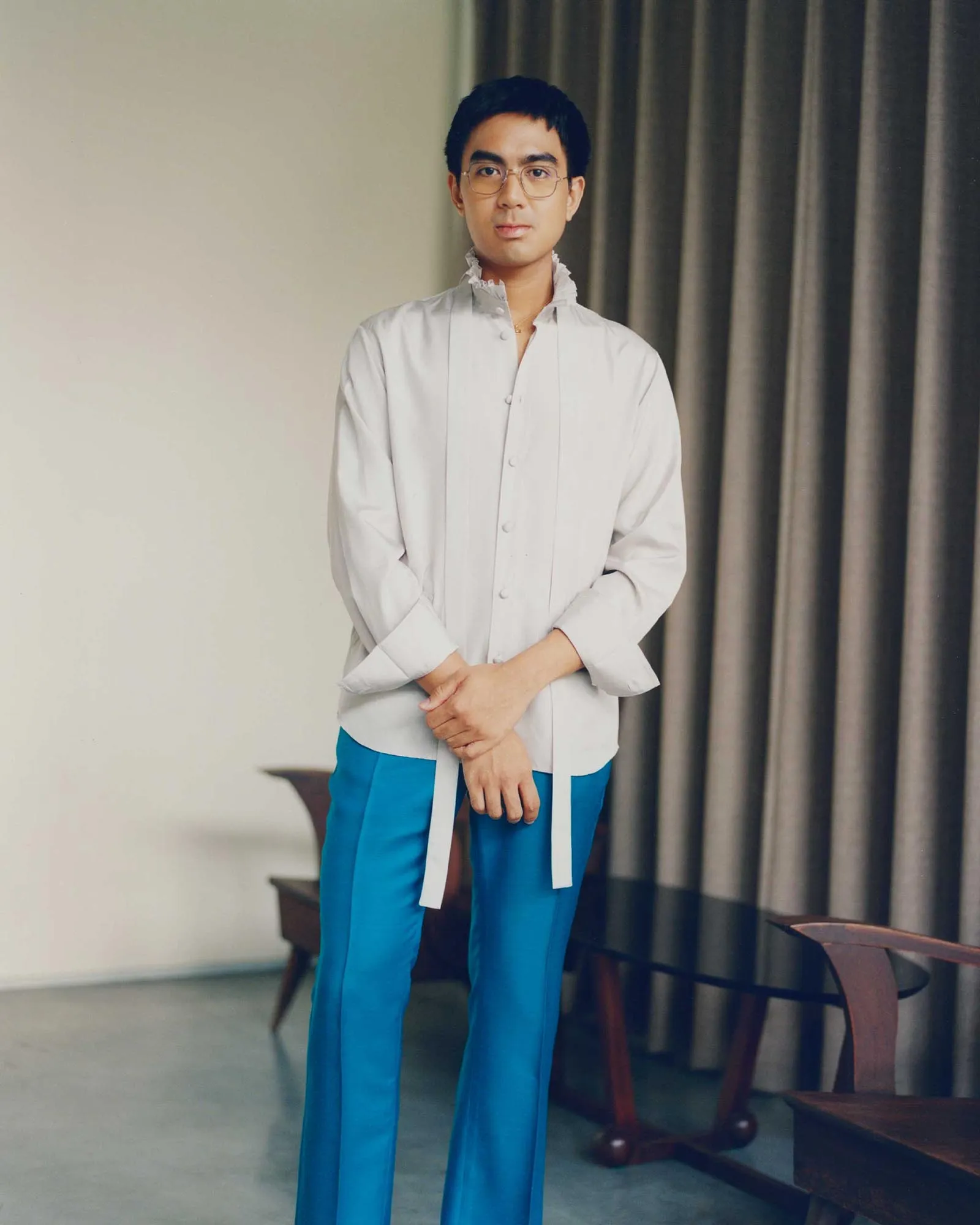
The Puipia name may be etched into museum collections, but Shone’s contribution to the family archive is written in the ephemeral language of periwinkle silk and marigold knits. He takes the presence of his father’s work and the tactile femininity of his mother’s forms and brings them onto the body.
The work remains within the same orbit it came from; and the studio, a continuation of the home. By the time the evening Negroni is poured and the scent of lemon peels and fresh flowers fills the studio, the atelier returns to its intended context. Drinks flow, friends gather, and garments are tried on.
Here, Shone refracts the Puipia limelight, proving that an archive is only alive when it is brought back into these moments. It is dressing for an audience of one surrounded by those closest to you.
Photographer: Lee Wei Swee. Creative Direction: Shone Puipia. Makeup: Natsuki Oneyama. Hair: Chiao Chenet. Models: Tavi Chen, Joris Van Kempen. (LookbookLookbookA curated collection of photographs that showcases a designer's collection, usually styled and shot to convey the season's mood and story. Lookbooks serve buyers, press, and customers, and they haveGo to Lookbook Glossary) Creative Direction: Shone Puipia. Art Director: Boonsong Thaodee. Photographer: Montis Songsombat. Makeup: Benjapron Tanpisaipaisi. Hair: Saijai Pinkrod. Model: Yuse Suzuki.