
Lizandro Acera Unpacks Filipino Aspiration in His CSM BA Graduate Collection


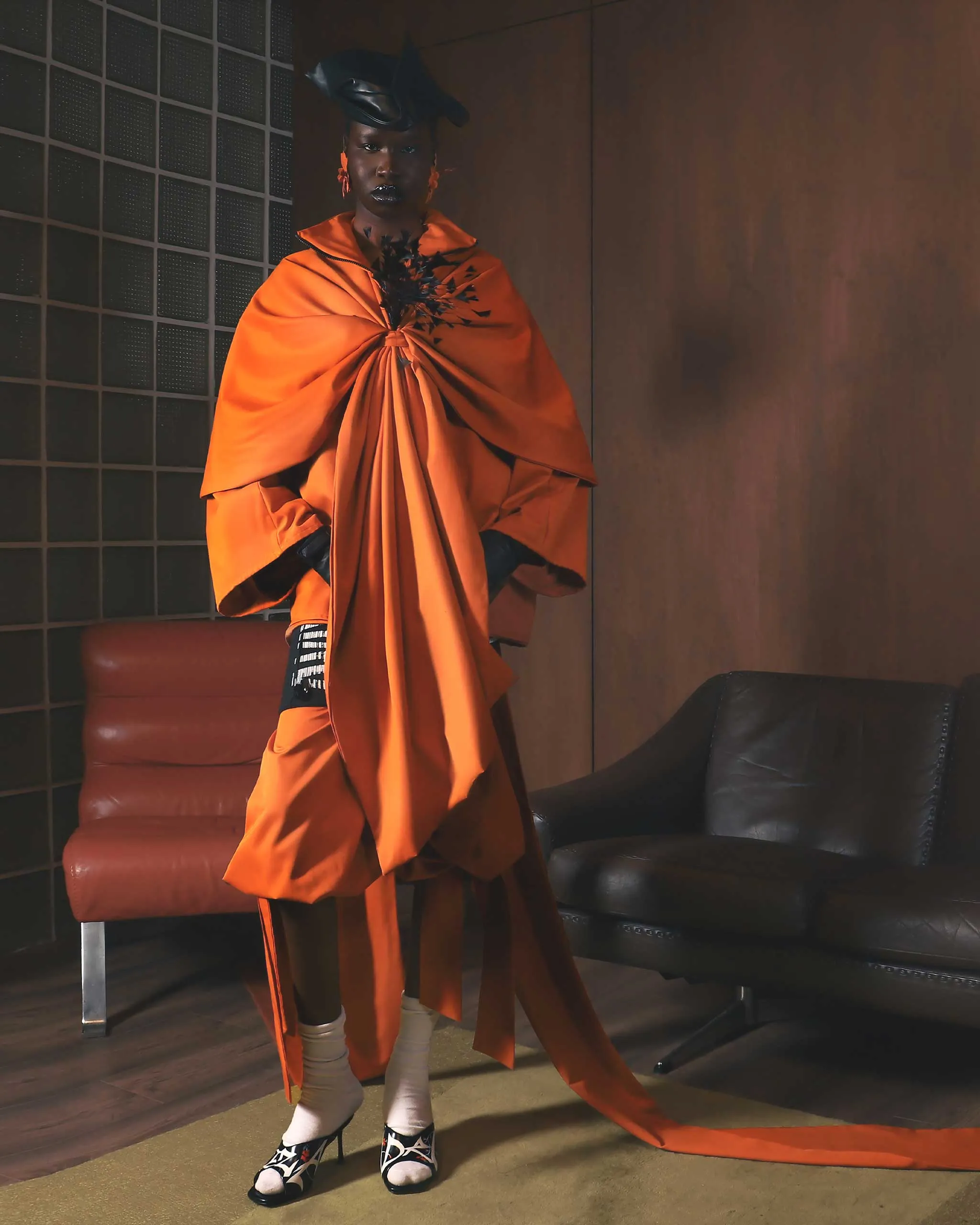
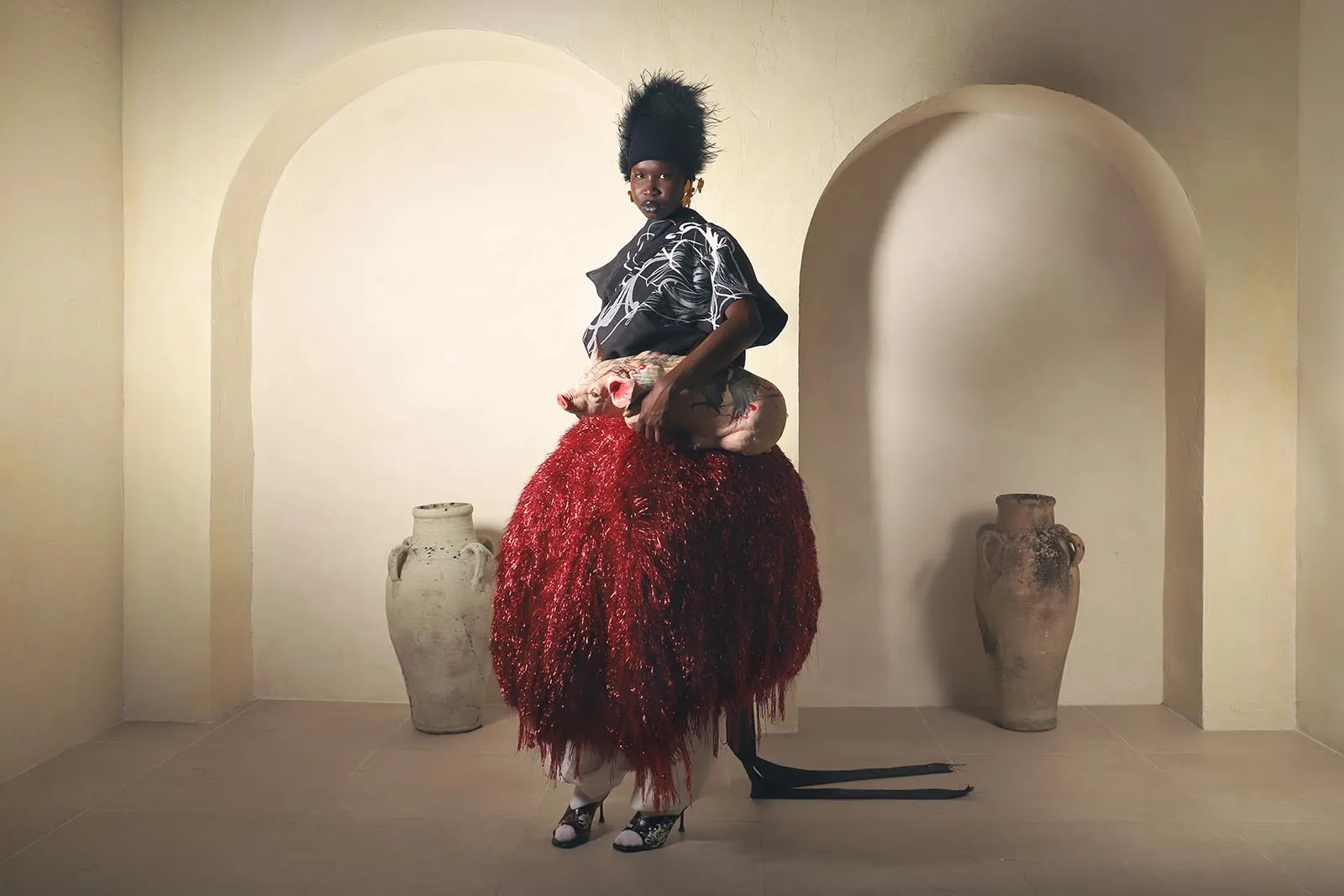
Lizandro Acera, Fortuna, 2026. Photography by Luigi Abano Acera
Inspired by his parents’ sacrifices, Lizandro Acera channels his family history into Fortuna, a collection that reflects on the pressures of projecting an image of success in Filipino society.
With its influential tutors, LVMH-sponsored projects, and internationally acclaimed BA and MA graduate shows, Central Saint Martins has long been regarded as the Harvard of the fashion industry.
Among the Class of 2026 is Spanish-Filipino designer Lizandro Acera, who graduates from the prestigious BA Fashion: Womenswear pathway, which admits just 50 students each year. Throughout his studies, Acera has challenged and sought to expand representations of the Philippines beyond the Western lens and Filipiniana, using fashion to explore the intersections of identity, migration, cultural memory, and a growing desire for a more “decolonized” vision of luxury.
His graduate collection, Fortuna, turns inward. Inspired by his parents’ sacrifices and the inherited drive for upward mobility, it examines the emotional weight of aspiration through garments that are opulent, ornate, and meticulously detailed.
Below, Acera reflects on his roots, breaks down his final collection, and shares his vision for the future after graduation.
Vogue Philippines: Can you tell me about your childhood and the journey that led you to where you are today?
Lizandro Acera: I was born in Spain to Filipino parents and moved to London when I was 10. Growing up, I was obsessed with sports and video games, which gave me a competitive mindset that still drives me today. I was mostly a problem child and very outspoken, which led me into a lot of trouble.
Moving to London introduced me to a world outside of regular academia. When I was 16, it was the first real decision on what career I wanted to pursue. I chose to go to an art college for Fashion Design and Textiles; this felt like an excuse to get away from the strict rules of school and learning. However, it made me realize that art and design induced a much more nuanced way of thinking. I really enjoyed the challenge this imposed, and it helped me develop a stronger competitive spirit, which ultimately helped me get into the Fashion Design: Womenswear programme at Central Saint Martins.
Your collection draws from dreams and aspirations within your family. What role have your parents played in shaping your perspective on ambition and success?
My parents have always been a point of reference for many of my philosophies. Long before I was born, they were constantly adapting to new environments, moving between countries and jobs simply to provide my siblings and me with the privilege of making the choices we can make today.
My mother, in particular, has lived a thousand lives. There is something deeply encouraging about a sixteen-year-old girl arriving in a new country on her own and learning new languages, cultures, and ways of understanding the world without the support of anyone around her, only to go on to build and support a family of her own. She has gone from working as a cleaner to becoming a hairstylist, taking on whatever was necessary so that I could pursue success on my own terms. Even today, she continues to strive for perfection in everything she does.
All she has ever asked of us is that we do our best. She is content with us pursuing what we love, aiming high, and allowing ourselves to try; opportunities that she and my father were not always able to afford themselves. This mindset, and the way they have consistently sacrificed so much to give us opportunities, continues to shape how I approach and honor my work today.
Growing up, what life experiences most impacted you as a designer and influenced this collection?
Whenever we traveled back to the Philippines or spoke to relatives, there was a silent pressure to maintain an image of success. There was always a performance in the way we carried ourselves and how rigid every answer was. We were never able to show any signs of struggle, or it had to be brushed off as a normal human condition. There was a need to present mental strength and perfection, even when reality was more complicated.
A lot of my collection explores that idea. In the culture, we protect ourselves through carefully constructed appearances that shift over time, continuously redefining what perfection means. I have looked into family rituals, revelations, and histories, and channeled these visual languages of desire into the collection.
Who has inspired the way you see the world and approach your work as a designer?
Definitely my mum. I know a lot of people say that, but she genuinely shapes the way I see the world and the way I design. I’ve always admired how she could be bold and command attention without ever feeling like she was trying too hard.
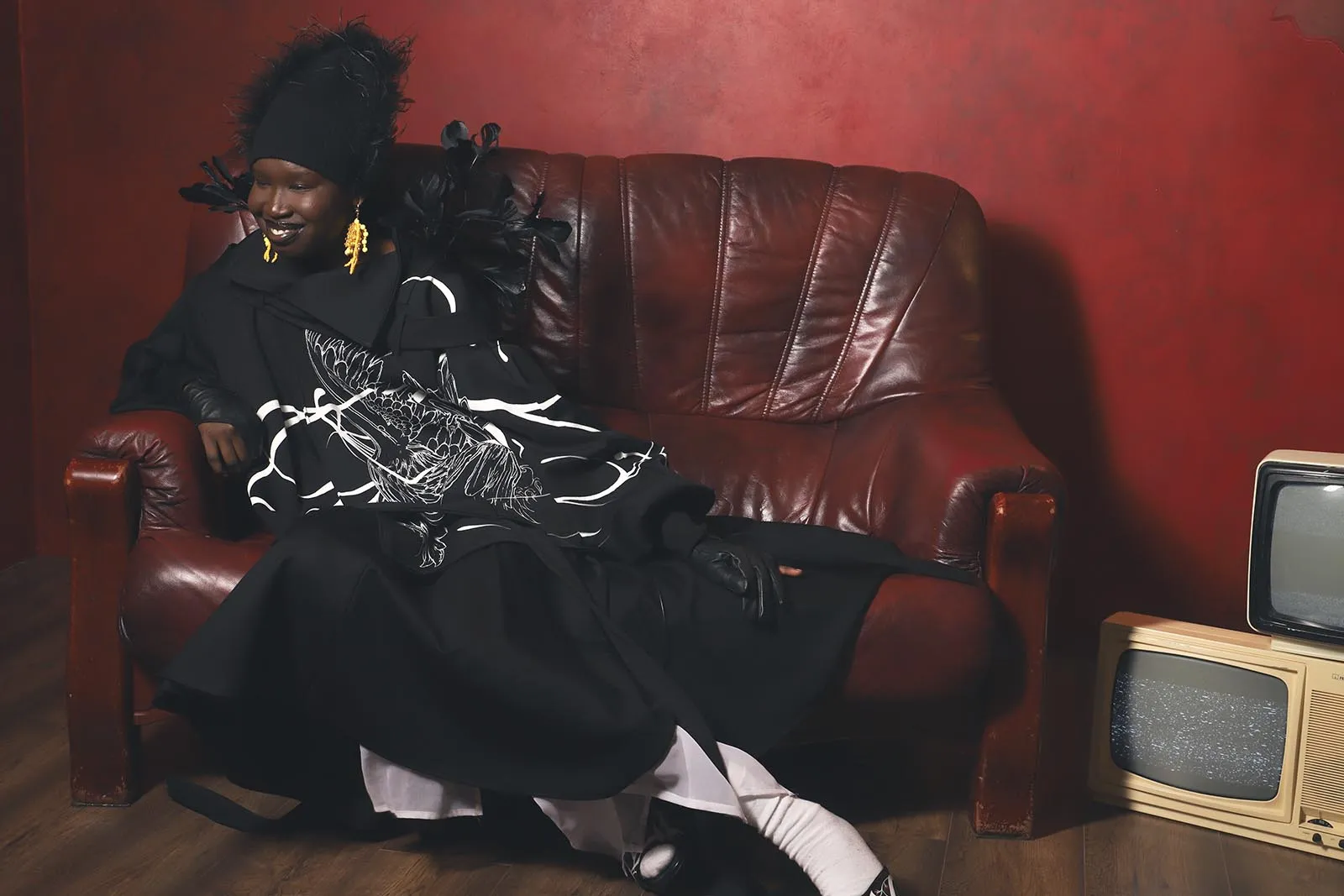
This year, I noticed in particular that she is always drawn to oversizedOversizedA cut that is intentionally larger and roomier than the body, producing a relaxed, voluminous silhouette. Oversized blazers, shirts, coats, and knits balance comfort with style, and they work especiallyGo to Oversized Glossary silhouettes, often as a way to cover parts of herself she feels insecure about or to conceal changes in her weight because she didn’t want people worrying about her. Her choice of fabric is always very purposeful, wearing sheer fabrics inside a wide-collared knit to tease part of her shoulder, skin-colored tights with short skirts to allude to the shape of her legs. What stayed with me was how clothing became both a form of protection for her, which inspires me every day.
Studying at Central Saint Martins is a dream for many designers. How did that experience change you, both creatively and personally?
I’m incredibly grateful for my time at Central Saint Martins. More than anything, it taught me how to stand by my ideas and trust my perspective. Coming from a Filipino background, a lot of the references and experiences that informed my work weren’t always familiar to the people around me. I was one of two Filipinos in more than a hundred students and tutors in my cohort, and there were moments when I felt like my concepts weren’t fully understood.
That experience pushed me to become more confident in my voice. Instead of seeking validation, I learned to believe in the value of my own story and the importance of telling it authentically. Creatively, it reinforced that the work I want to make comes from my lived experiences, and personally, it taught me self-belief.
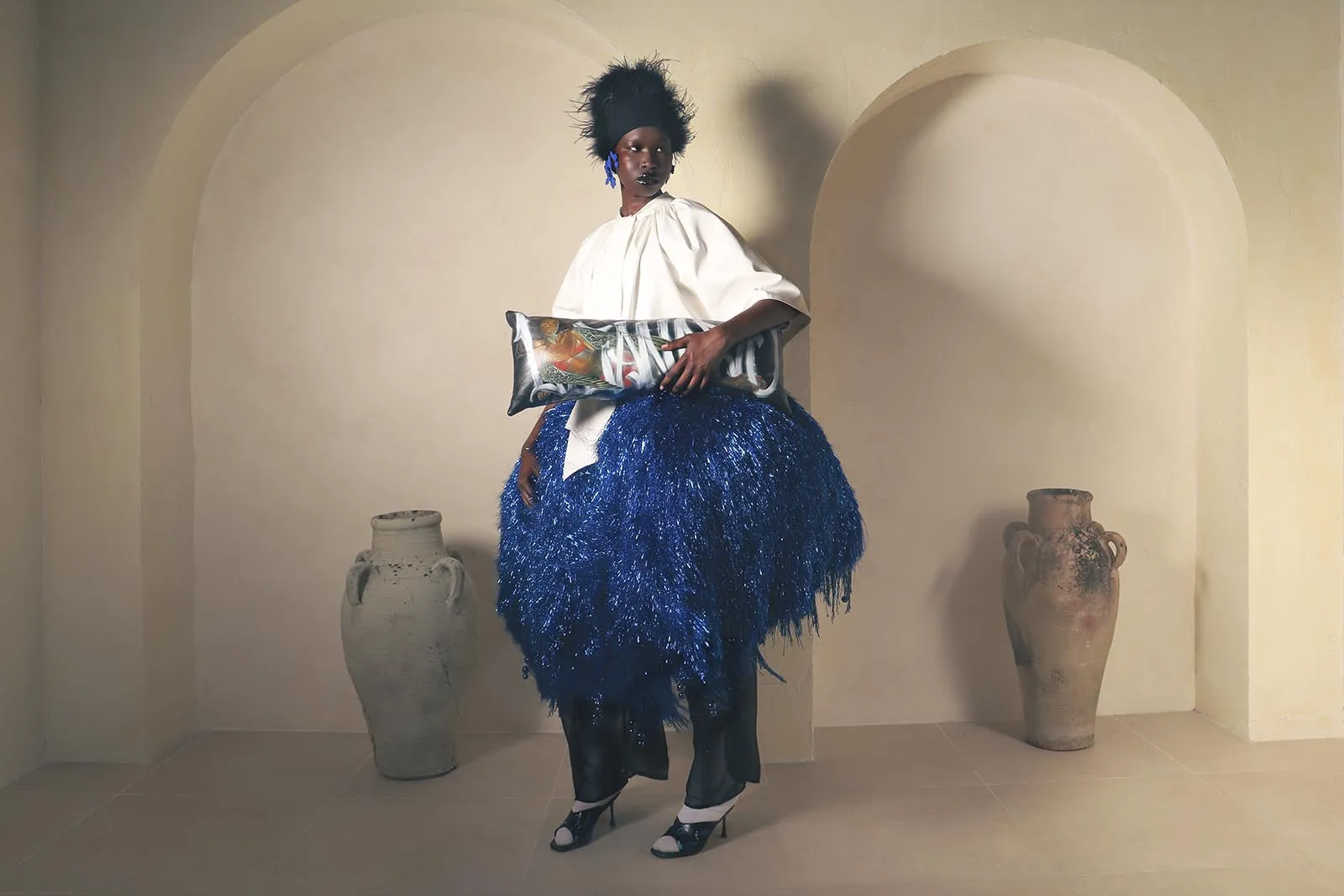
How did Fortuna come to life, and what are the references and symbolism behind the collection?
Fortuna came to life during my gap year, when I found myself working full-time in retail to support my family. I often told people I was doing it for work experience, while concealing the real reason behind it. That experience became the foundation of the collection. As mentioned, Fortuna is an exploration of what ‘aspiration’ is through the language of clothing, drawing mostly from my family’s experiences, old photographs, and reflections on my diasporic upbringing.
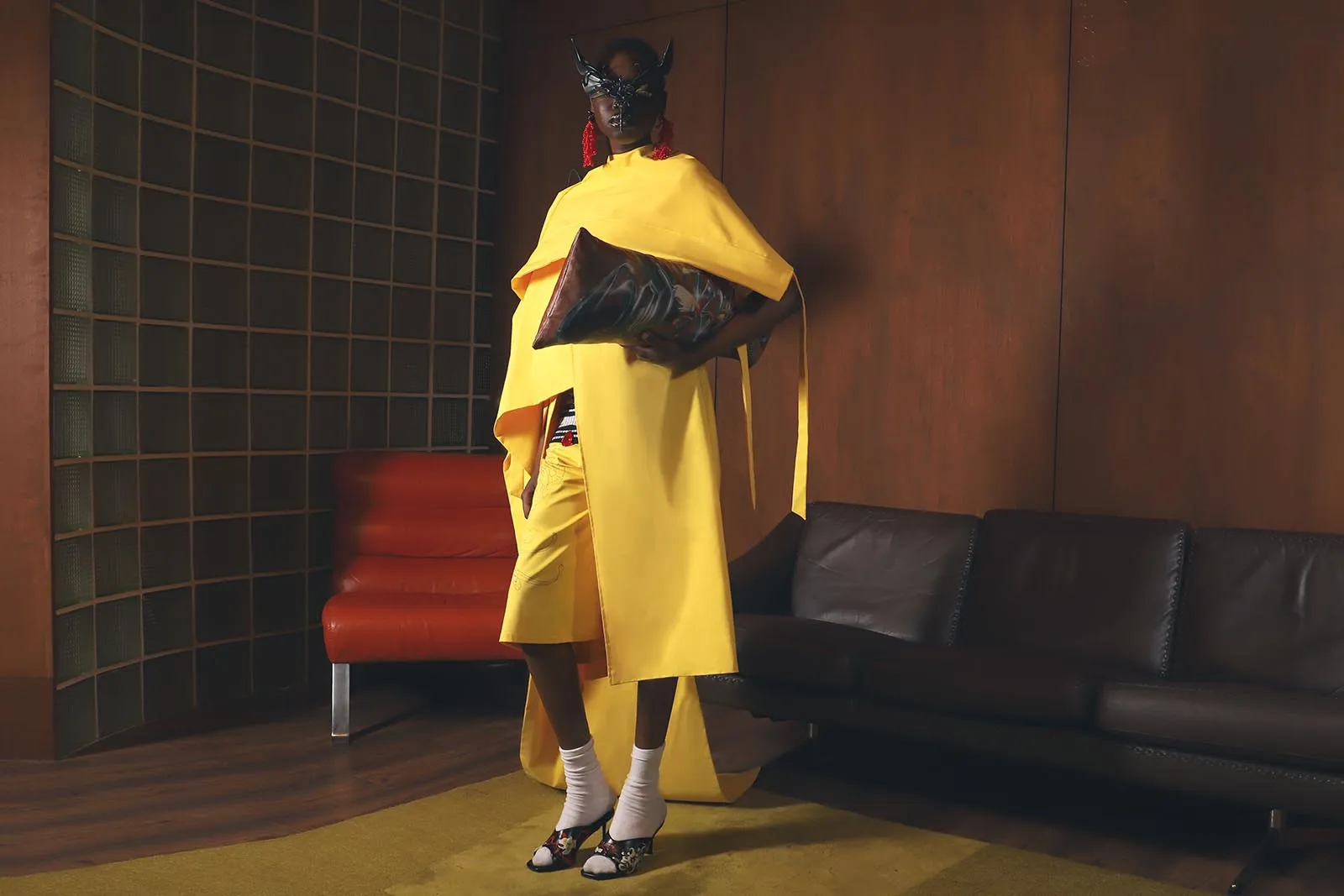
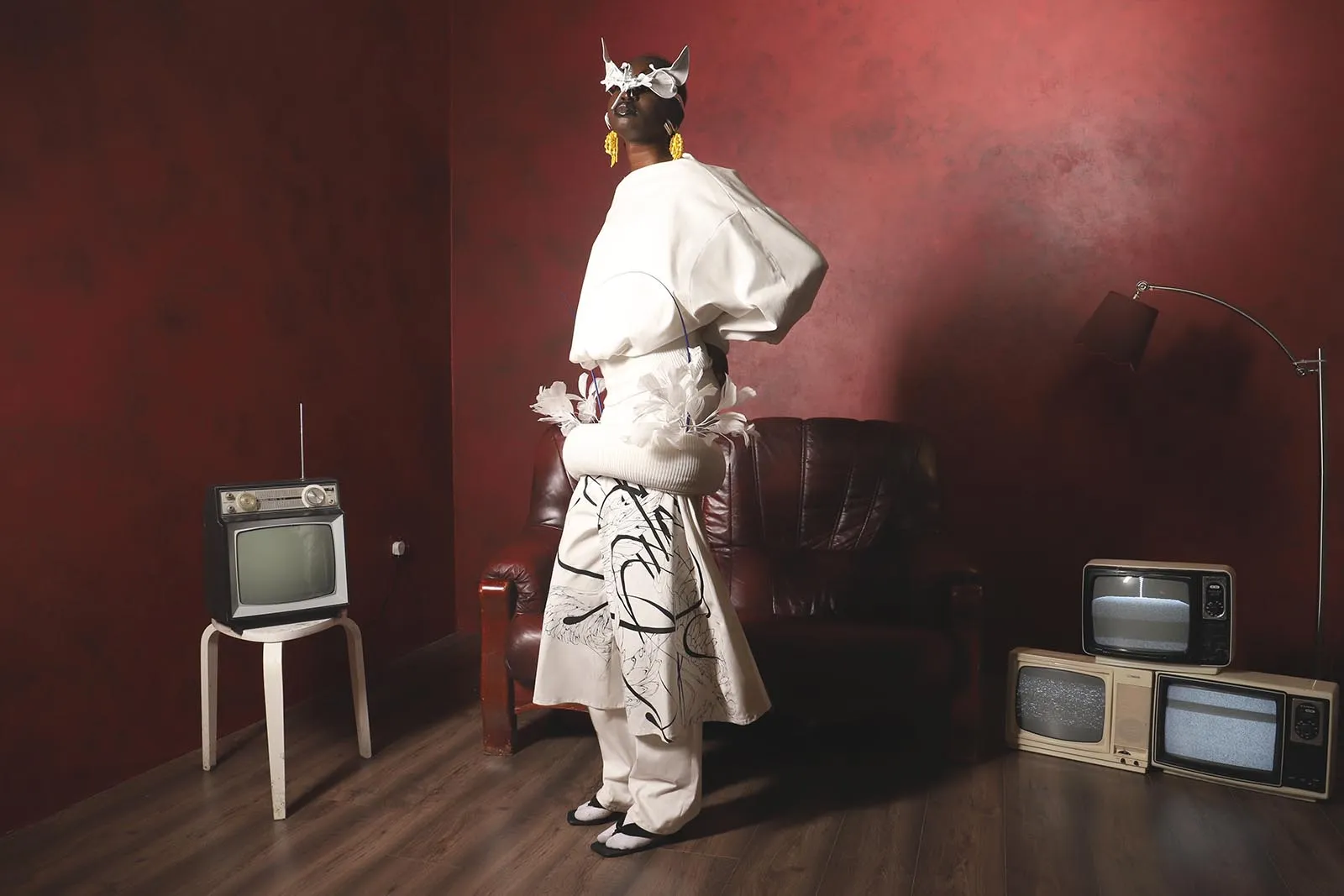
The garments speak through scale and celebration: large, loud, and unapologetic. There are a lot of intricacies in my construction through the waistbands or the trails, for example, and I explore clashing ideas of affluence shaped by my family’s life in the Philippines and my own experience growing up in London and Madrid.
Also, hand-drawn illustrations interrupt the garments and accessoriesAccessoriesThe finishing pieces of an outfit, including bags, belts, scarves, hats, eyewear, and jewelry. Accessories can elevate a simple look or define it entirely, and fashion editors often treat themGo to Accessories Glossary, reflecting an observation that wealth is often about presenting yourself like a billboard. In the Philippines, I was drawn to jeepneys, where bespoke graffiti and illustrations are used to make them stand out and attract more passengers. That idea of visual excess and self-promotion runs through the collection.
In the final look, the wearer holds a pig, a symbol of wealth within my family. I was taught that the larger the pig prepared for lechon, the more mouths it could feed.
What are your hopes and dreams for the future and the next chapter of your career?
Throughout my years at university, I’ve been focused on establishing my identity as a designer and understanding who I am creatively. Every project has been a step towards building my own visual language and perspective. I don’t feel like I’ve fully arrived yet. I’m still learning and evolving, but I think I’ve built a strong foundation.
Right now, my goal is simply to keep building on that foundation, continue refining my voice, and create work that feels honest to who I am and where I come from. I would also like to start more visual conversations with Filipino creatives around me. In this collection, I collaborated on the headwear with designer Benny Andallo, and I thoroughly enjoyed the process and conversations we had. He understood so much of what I was talking about, which made the process of producing the pieces smoother. I would like to expand this ethos to other parts of my production, such as textiles and imagery, and hopefully build a respectable community that can rely on one another, both creatively and personally.
This conversation has been edited for clarity and brevity.
Lizandro Acera @lizandroacera, Photography: Luigi Abano Acera @umlui, Makeup: Natalie Messino @vinvivaa, Illustrations: Daniel Santangelo @danielsantangelo, Model: Dagi Nyok @daginyokk, Photography Assistant: Kyl Valdez @kyl2k, Headpieces: Benny Andallo @bennyandallo, Wardrobe Assistants: Trinity Allen, Stacey Marie
Frequently Asked Questions
Lizandro Acera is a Filipino Spanish fashion designer based in London.
Lizandro Acera was born in Madrid to Filipino parents and moved to London at the age of 10.
Lizandro Acera studied Fashion Design at Central Saint Martins in London, one of the world’s leading fashion schools known for producing influential designers.
His work draws inspiration from Filipino traditions, childhood memories, family, and the experience of growing up in the diaspora.
Lizandro aims to rethink cultural identity through fashion, celebrate Filipino craftsmanship, and explore how heritage shapes contemporary design.