
The Painter & The Pack: National Artist Ang Kiukok’s Most Recognizable Subjects


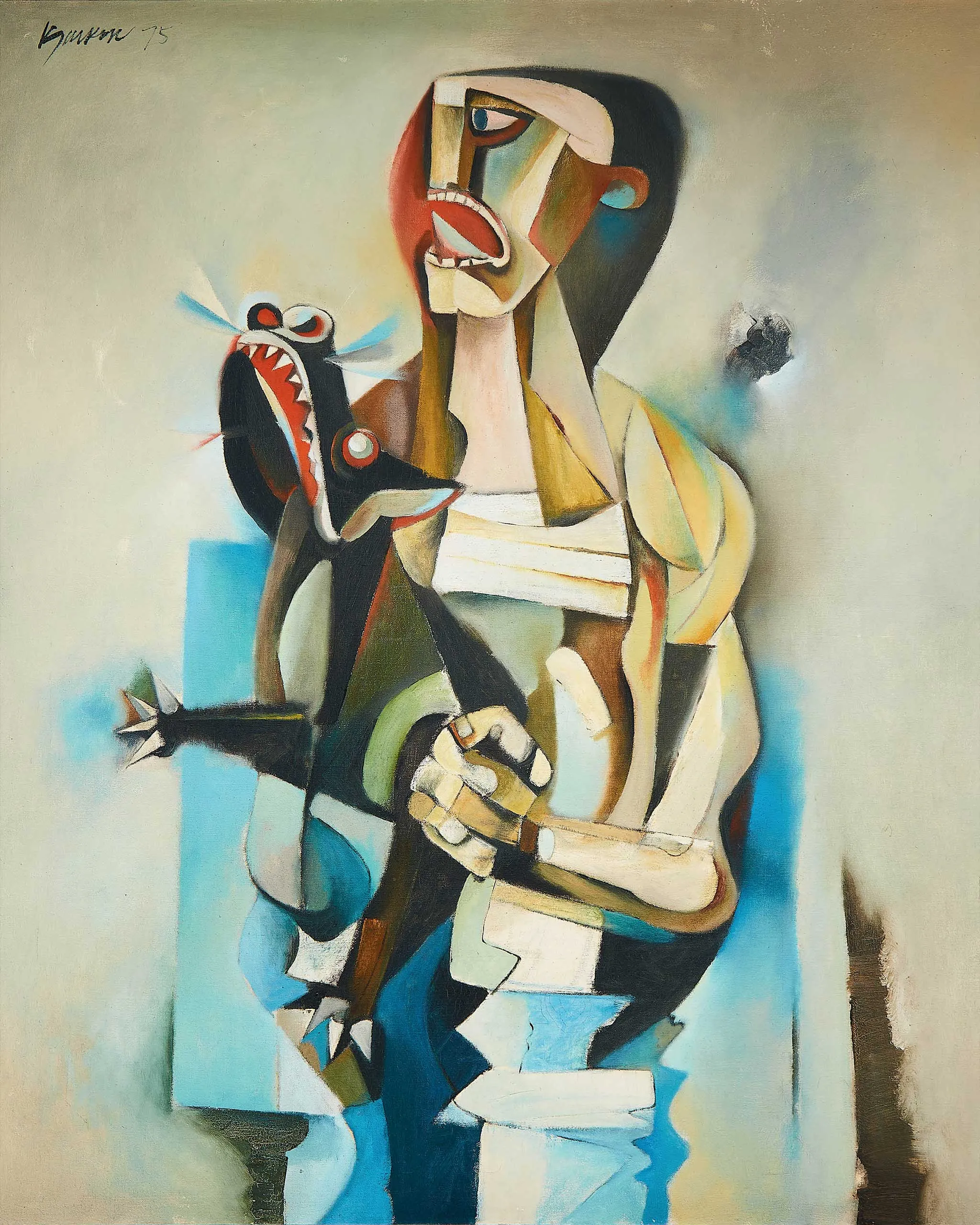
From a private collection, Ang Kiukok’s “Man with Dog,” 1975. Archive photography by Sela Gonzales
Dogs were rarely featured in the art of prewar Philippines, and Ian Christopher B. Alfonso, author of Dogs in Philippine History, theorizes this has something to do with dogs losing their status as hunting animals. In pre-Hispanic and early colonial times, they were celebrated in epics, legends, and indigenous art as trusted companions of heroes and holy men. As the Spaniards began restricting the movements of the natives, hunting declined and, along with it, the role of the dogs. “Aspins, which were the traditional hunters prior to the introduction of foreign hunting dogs, became mere asong kalye or askals (street dogs) in the compressed Spanish-style settlements called poblaciones (town centers) and pueblos (townships)… Our colonial experience made Aspins destitute and unpleasant.”
By the mid-20th century, dogs regained their rightful place in art, as ingrained members of the household or community, as witnesses to history, or front and center as the main character. National Artist Ang Kiukok (1931 to 2005) is known for subjects that include fish, fighting cocks, and scenes of Crucifixion, abstracted and distorted in his characteristic cubist style to convey psychological tension. But it is his paintings of dogs that have become closely associated with him, particularly his dogfight series, which displays the artist’s remarkable skill in capturing their sinewy movements, “drawn from his lengthy observations of the animals,” as described in the Christie’s lot essay for his 1982 painting “Dogfight.”
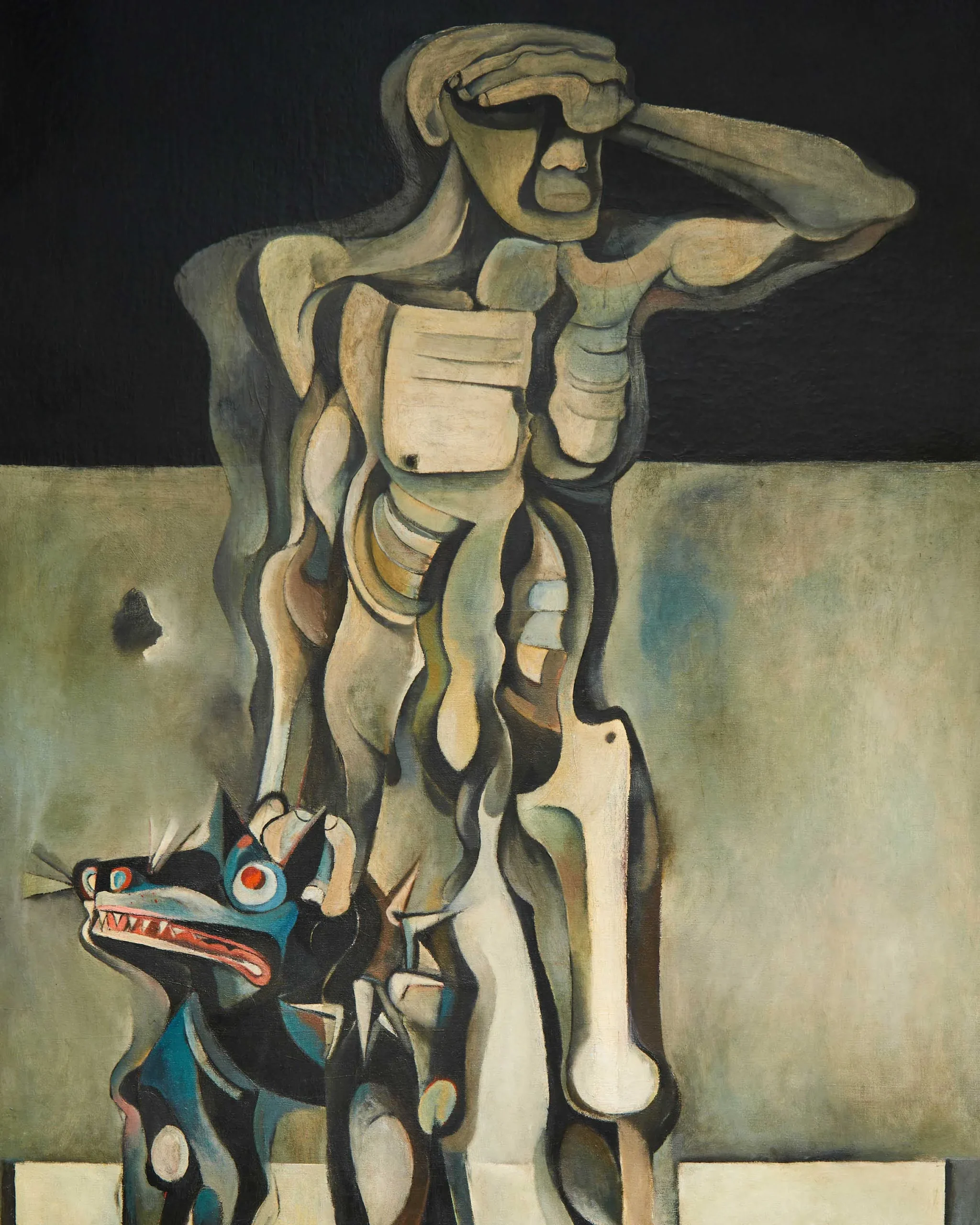
Arlene Ang, Kiukok’s daughter, was taking her husky out for a run in Venice, Italy, when she told me about her father’s many dogs. “In the old house, we had three Dobermans at some point, poodles, askals, German Shepherds,” she said. “He also loved cats, he would feed stray cats.” But the pet closest to his heart was a German Shepherd named Nikka, whom he spoiled, feeding her raw meat and lots of treats.
Kiukok’s painting “Man with Dog” (1975) is a rarely seen masterpiece. A human figure holds a dog close; they share the same expression of alarm and caution: beware of dog. But the way the person is holding the dog could also indicate the dog is injured or in need of protection, and the human is duly concerned. Instead of the usual ferocity, this is one of his few works that express vulnerability, and ultimately human responsibility.
In the collector’s house, this painting hangs beside Kiukok’s “Man with Dog” (1975), which is similarly more serene than his fighting dogs, which he saw as metaphors for “humanity’s innate aggressive temperament and self-centered nature,” according to the lot essay of Salcedo Auctions. In contrast, these two works offer a gentler reading of Kiukok’s dogs, reflecting a rich home life filled with animals. Calm on some days and chaotic on others, but never without moments of tenderness and selfless care.
In this story: Producer, Bianca Zaragoza; Multimedia Artist: France Ramos; Photography Assistant: Jom Ablay.
Frequently Asked Questions
Ang Kiukok (1931-2005) was a Filipino modernist painter of Chinese descent. Some of his most notable works include “Pieta” (1962), “Crucifixion” (1968), and “Dogfight” (1982).
Ang Kiukok is best known for a style that mixes cubism, surrealism, and expressionism. His famous works include fish, fighting cocks, and scenes of the Crucifixion, abstracted and distorted to convey psychological tension.
Ang Kiukok was named a National Artist for Visual Arts in 2001.
In Dogs in Philippine History, author Ian Alfonso, Ph.D., traces the intimate relationship between Filipinos and their dogs throughout history.
Dogue is an official annual digital takeover and multi-platform media series launched by Vogue US in 2024 under the creative direction of then-Vogue.com editor Chloe Malle. Vogue Philippines launched its local edition of Dogue as a section within its September/October 2026 print issue.