
How Dogs Have Shaped Filipino Life Through History


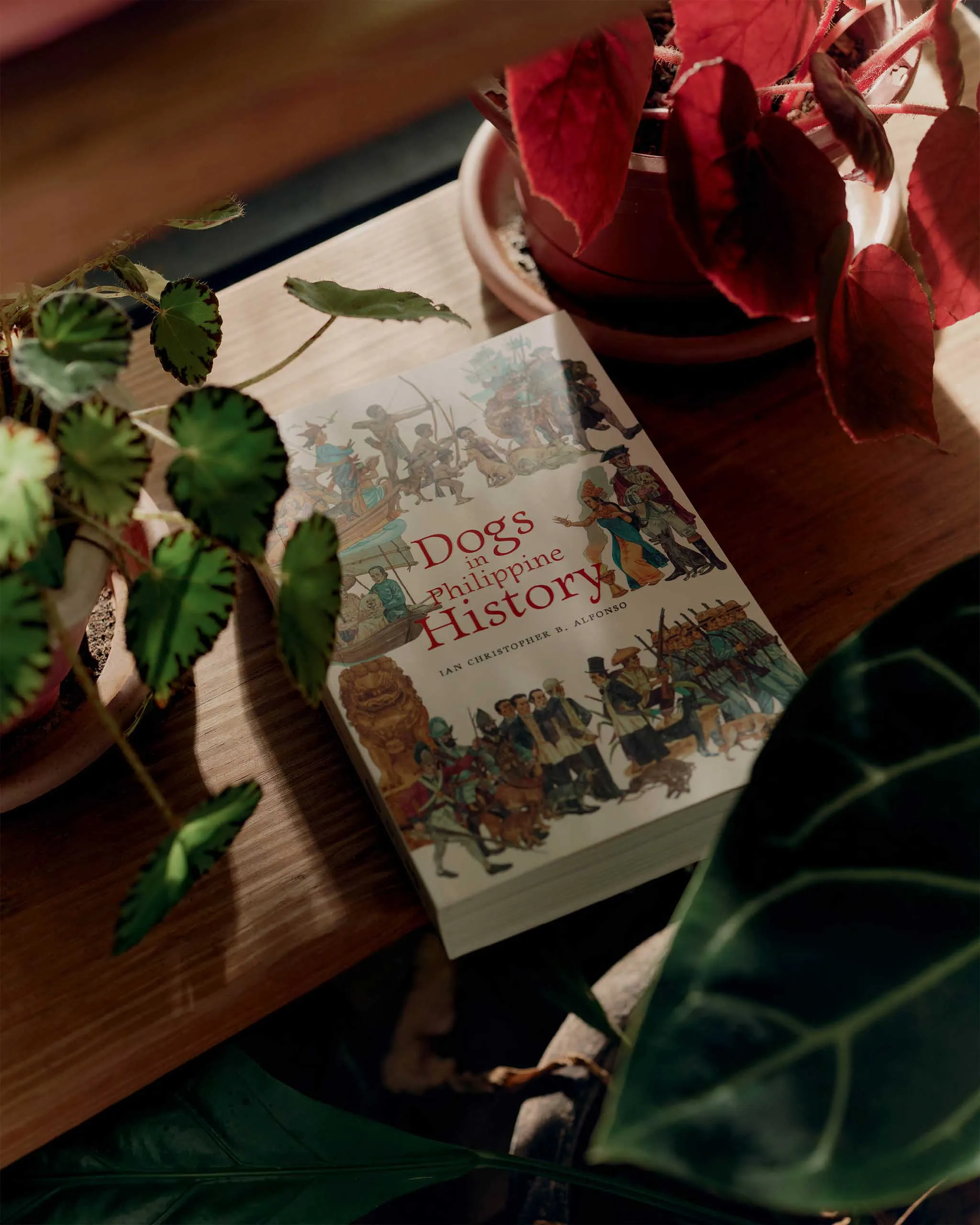
Photographed by Artu Nepomuceno for the September/October 2026 Issue of Vogue Philippines
In Dogs in Philippine History, Ian Alfonso, Ph.D. traces the intimate relationship between Filipinos and their dogs, revealing that every story about them is also, in many ways, a story about ourselves.
“Historically, we were dog lovers.”
And this heritage of friendship has been passed down through generations. Found in El Nido, the earliest documented domesticated dog dates back nearly 4,000 years. From the hunting dogs brought by our Austronesian seafaring ancestors, to the dogs that appear in indigenous belief systems and folklore as symbols of life, to the beloved companions of historical figures like Jose Rizal, Marcelo H. del Pilar, and President Manuel Quezon, our relationship with dogs stretches across centuries.
These images and more are illustrated across the cover of Dogs in Philippine History. Authored by Ian Christopher B. Alfonso Ph.D., a professor of history at the University of the Philippines Diliman, the book brings together years of archival research, historical accounts, and cultural observations to trace the place of dogs in Filipino life across centuries. In this collection of essays, rather than treating dogs as a footnote to history, dogs are positioned not only as witnesses to it but as worthy and influential subjects themselves, revealing how the ways Filipinos have cared for, lived with, and understood dogs reflect the values of the societies they belonged to. The book was published in 2023 after 10 years in the making, and proceeded to become a National Book Awards’ awardee for Best Book Design and a finalist for Best Book on History.
“The 1668 Historia de las yslas e indios de bisayas by Fr. Francisco Ignacio Alcina, SJ detailed how our ancestors loved their native dogs, ‘perhaps greater than any nations in the world,’” Alfonso tells Vogue Philippines. “Our society is imperfect. There were reported animal abuses, too, during the time of our ancestors. But we are never that bad. I believe we are generally people who love dogs (and cats) so much.”
Dogs in Philippine History is a tribute to the Philippine dog, demonstrating how they are closely linked to human life first as hunting dogs, then as watch dogs, and then most recently as household companions. Through each historical essay, Alfonso traces “how dogs became part of Filipinos’ consciousness through time.” Arranged chronologically, the book begins with our ancestors’ encounters with these gentle creatures in mainland Asia, followed by the origins of the aspin (or the asong pinoy, our native breed of dog). The opening chapters examine the flourishing of Philippine native dogs as reflected in our languages, folklore, and belief systems before turning to their adjustment during the Spanish colonial period. The latter chapters explore the arrival of foreign breeds, the changing place of native dogs in Filipino society, and the coexistence of native and foreign dogs through the years.
Among the most poignant of topics is perhaps the book’s account of the aspin. Alfonso traces the present-day bias against aspins to the colonial period, when an 1800 rabies order specifically targeted aspins for killing while exempting dogs owned by Spaniards. This was a turning point, he believes, for dogs once celebrated in epics and valued in hunting. “If we open the book of our past, we will be surprised that aspins are survivors of history,” shares Alfonso. “They endured neglect, antipathy from the very people they know in this world. At any rate, they were never inferior to those with different breeds.”
“I believe history can embolden Filipinos’ dog (and cat)-loving heritage,” he continues, reflecting on his most meaningful takeaway from the decade-long research. “It is manifested in a number of vocabularies Philippine languages have for dogs, folklore associated with these animals, and in our culture of loving different kinds of dogs because our ancestors bequeathed us such, accorded first to our Aspins for nearly 4,000 years.”
Animals, in general, are largely unseen in Philippine history. Dogs in Philippine History challenges this tendency by piecing together fleeting references scattered across archives to show that dogs were never merely passive observers of history. As Alfonso notes, a growing body of work over the past decade has begun positioning animals as both affecting and affected by the movements of their time. Tracing the everyday narrative of dogs through memoirs, travel accounts, newspapers, and personal correspondence restores their “presence” in the historical record and consequently illuminates broader aspects of Filipino culture. From memorials dedicated to faithful dogs to accounts of individual animals woven into local history, these seemingly ordinary stories become windows into the values of the people who lived alongside them.
Complementing these narratives is an array of personal and historical images (though, as the book suggests, the personal is itself historical). By its conclusion, the work becomes more intimate as Alfonso reflects on his own experiences with dogs and what they reveal about the nation’s relationship with them. At its heart, the history of dogs is also the history of people’s relationships with them. The book ultimately hopes to foster greater public care for the creature often described as “man’s best friend.” Yet Alfonso’s research reveals that they have historically been more than that: “they have been family to us since the time of our ancestors.”
Language itself reflects this enduring bond. In the book’s foreword, cultural historian Felice Prudente Sta Maria points to the Filipino word kalawingi, which in the seventeenth century referred to the care a father extended to his family or a leader to his people. A century later, the term evolved to describe caring for someone as though they were one’s own child. Today’s language of “fur parenting” may feel distinctly modern, but history suggests it continues a much older tradition of extending affection, responsibility, and kinship to the animals entrusted to our care.
That sense of kinship is easy to recognize today. Across the Philippines, dogs leisure in strollers through malls, accompany families on errands and holidays, flood personal social media accounts, have birthdays celebrated, and appear in family portraits.
“It is the ancestral wisdom that dogs are regarded more than pets and best friends,” notes Alfonso. “They are a family member, too, recognized as a child and a sibling; sleep in the bedroom with us and share a blanket with us; being kissed; mourn in their death; and are buried human-like, all recorded in history (especially by Alcina) and corroborated by our vocabularies, archaeological discoveries, and ethnographic reports.”
The summary of Alfonso’s decade-in-the-making journey, he says, is the statement: “Every dog deserves a loving Filipino home.” We need to write down our observations about dogs in present Filipino society, he writes, to understand ourselves better. In the book’s final chapter, Alfonso encourages readers to write their own dog stories, a reminder that the history of Philippine dogs is still unfolding. As he pens in the prologue, “I know there are more dog stories waiting to be unearthed. I encourage everyone to write them, too.”
Frequently Asked Questions
Dogs in Philippine History explores the 4,000-year cultural, social, and historical relationship between Filipinos and dogs.
Ian Alfonso is an assistant professor at the Department of History, University of the Philippines Diliman. He is also a board member of the Philippine Historical Association and a member of the Philippine UNESCO Memory of the World Program. He has also authored several books, with the latest being Dogs in Philippine History.
An aspin is a native mixed-breed dog from the Philippines. The word “aspin” comes from asong Pinoy, which translates to “Filipino dog.”
The Philippines has two primary native canine groups: the ubiquitous Aspin and the rare Philippine Forest Dog.
Dogue is an annual installment by Vogue that features personal stories about public figures and their dogs, accompanied by a Dogue digital cover competition. American Vogue helmed the first iteration in 2024, and it has since become a regular event. This year, Vogue Philippines joins the fray with original Dogue stories and a Dogue casting call within the country.
- Raising Hope: Meet Rina Ortiz, The Filipina Who Never Tires of Rescuing Stray Animals
- A Guided Sound Bath Moves a Vogue Editor and His Pet to Silence and Stillness
- Jacob Elordi Doesn’t Mind Being Mogged by His Co-Star, Rak the Dog
- Millie Bobby Brown’s Miniature Poodle, Winnie, Has Been to the Upside Down