
Rooted Together: The Making of Vogue Philippines’ April 2026 Issue


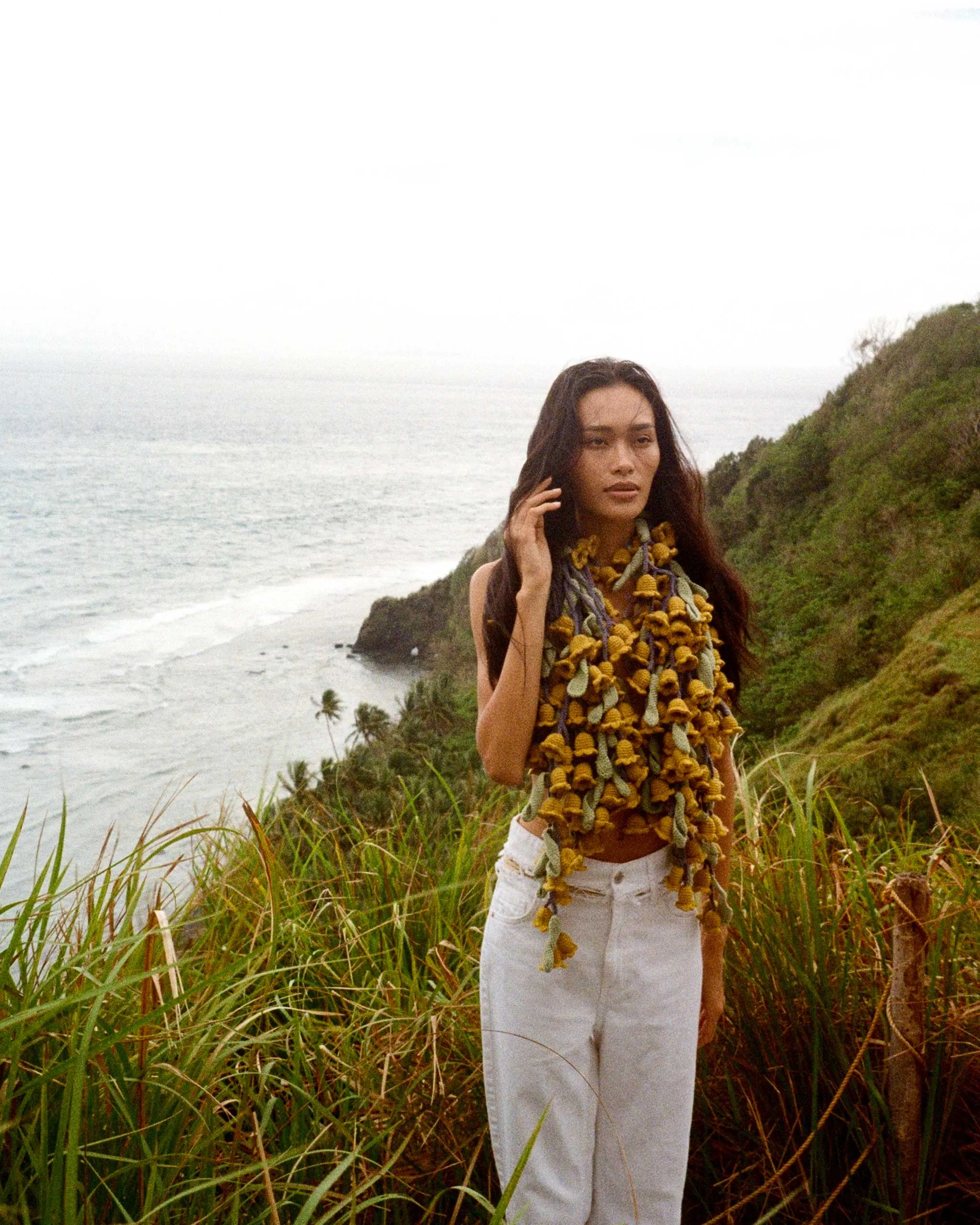
Photographed by Mavi Sulangi
From summit climbs to coastal towns, the Vogue Philippines team shares what it took to bring each story in the April issue to life.
In a time when the world feels both expansive and uncertain, where headlines stretch from conflict to discovery, from rising costs to journeys beyond our own atmosphere, it becomes easy to feel how much is happening at once.
Our hope is that as you move through the stories of the April 2026 issue, that sense of everything happening at once begins to slow. Across the creatives involved, there was a shared thread in their reflections. Even amid complexity, there is a consistent pull to what remains hopeful. Perhaps that is something to carry forward, to continue creating with care in uncertain times.
Time spent refining a detail, the care in choosing a material, and the patience required to see something through are signals. They show what we are willing to protect, prioritize, and return to again and again. The stories we choose to tell, the way we collaborate, and the people we choose to work with all become part of the language of what we value.
No two stories hold intention in the same way across this Earth issue.
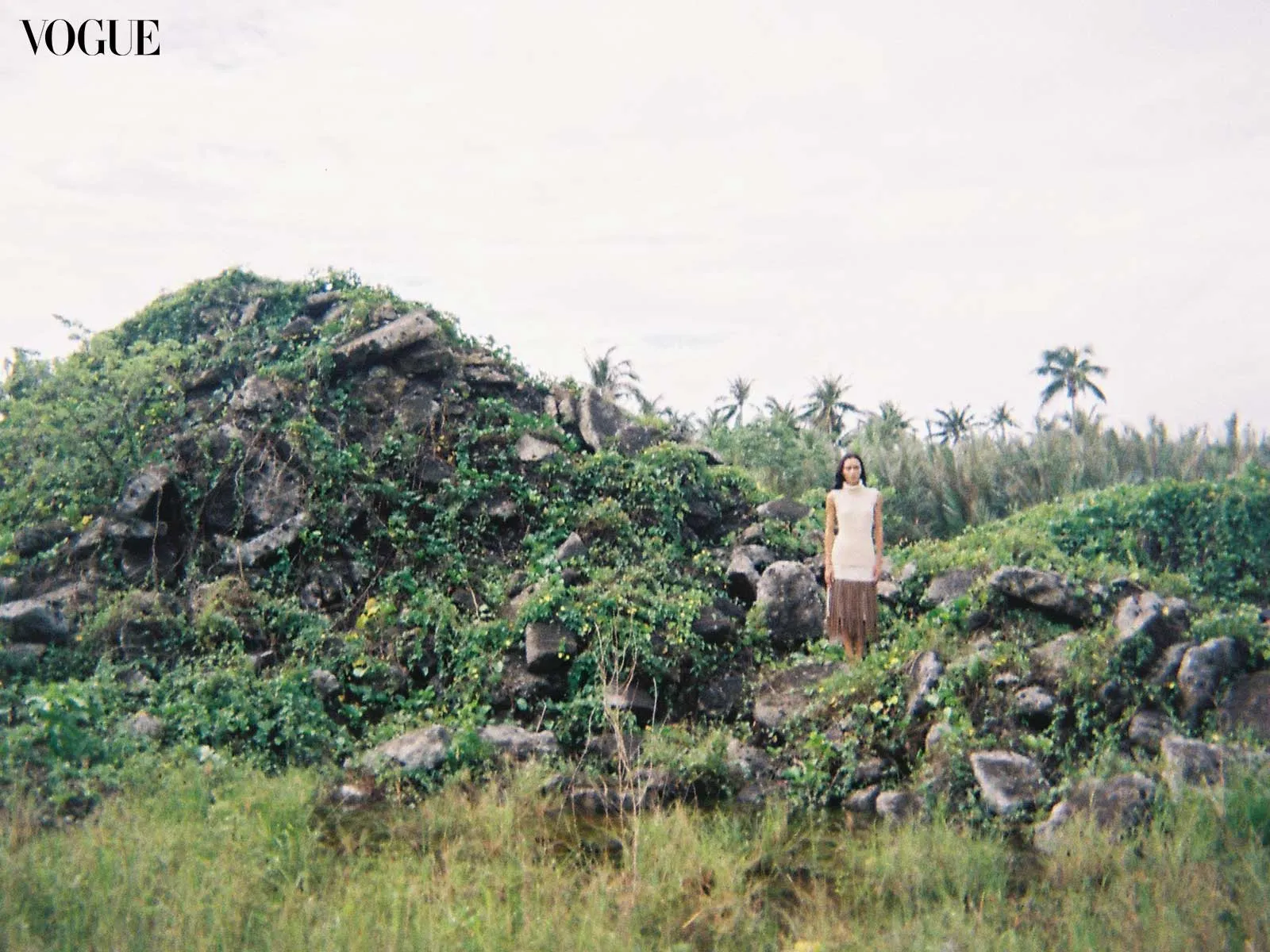
Above the Clouds
“What made this unique for me as a mountaineer was how different it was climbing at higher altitudes and colder temperatures,” Gab shares. “The Philippines is no slouch when it comes to terrain, but for Asia’s tallest peak in the northeast, we naturally felt the challenges of the highland because we are a lowland people.”
In Yushan, Taiwan, temperatures dropped below zero, and oxygen thinned with elevation. “The team needed more time to acclimatize than they would back home. But what made the experience more tolerable, in spite of the biting cold and dizzying heights, was being part of an expedition team that was supportive and understanding,” he adds.
At around 4,000 meters above sea level, the body begins to struggle in ways that are difficult to ignore. “The average time one can stay at the summit is around 20 minutes,” he explains. “Past that point, the body actively struggles to find oxygen.” He and several others chose to stay for nearly two hours, waiting for everyone in the group to reach the summit, no matter how long it took.
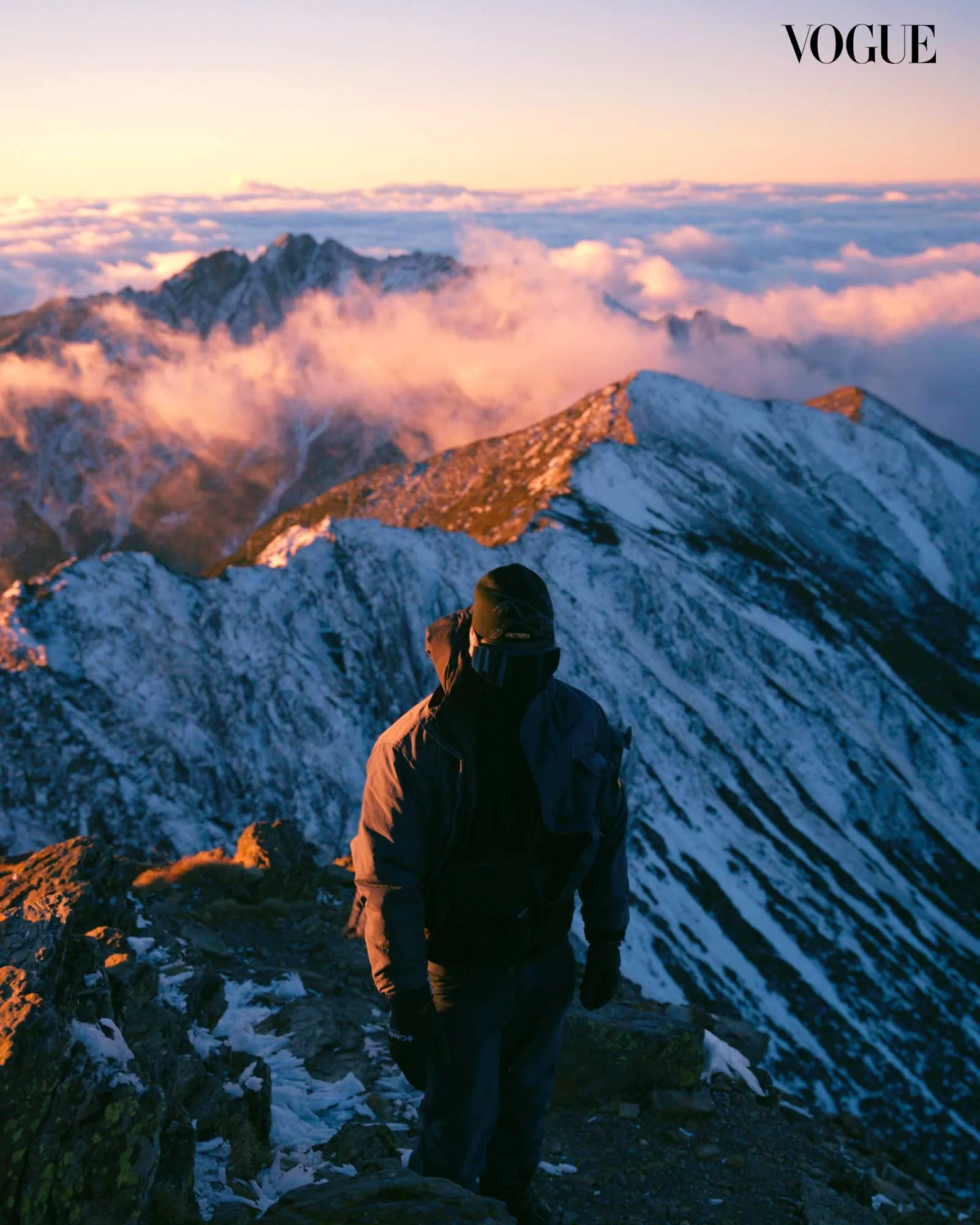
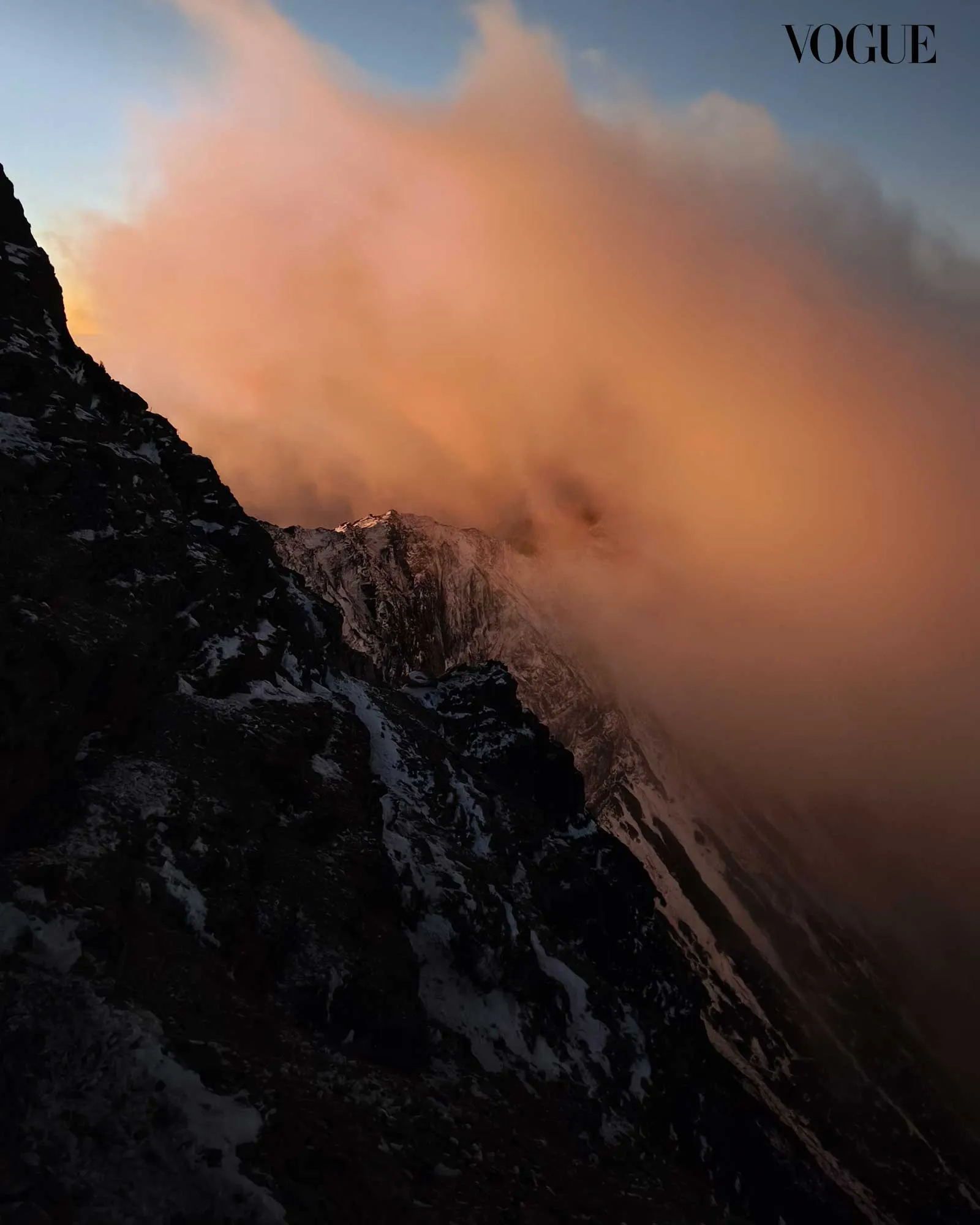
“It’s moments like this that make me appreciate the sense of community that persists in our mountaineering culture,” says Yap. “In more individualistic contexts, people focus on reaching the peak. But for us, taking care of the group, regardless of discomfort or risk, is the most important factor in a successful expedition.”
Returning to Yushan brought a different kind of awareness for story photographer Matt Tiongco. He has summited over 30 mountains since 2023, and this marked his second climb of this mountain.
He went with his friends from his hiking club this time, which was a chance to make new memories in a familiar environment. “It was inspiring to see them push beyond their limits and hear their personal experiences dealing with snow, ice, and altitude,” he shares.
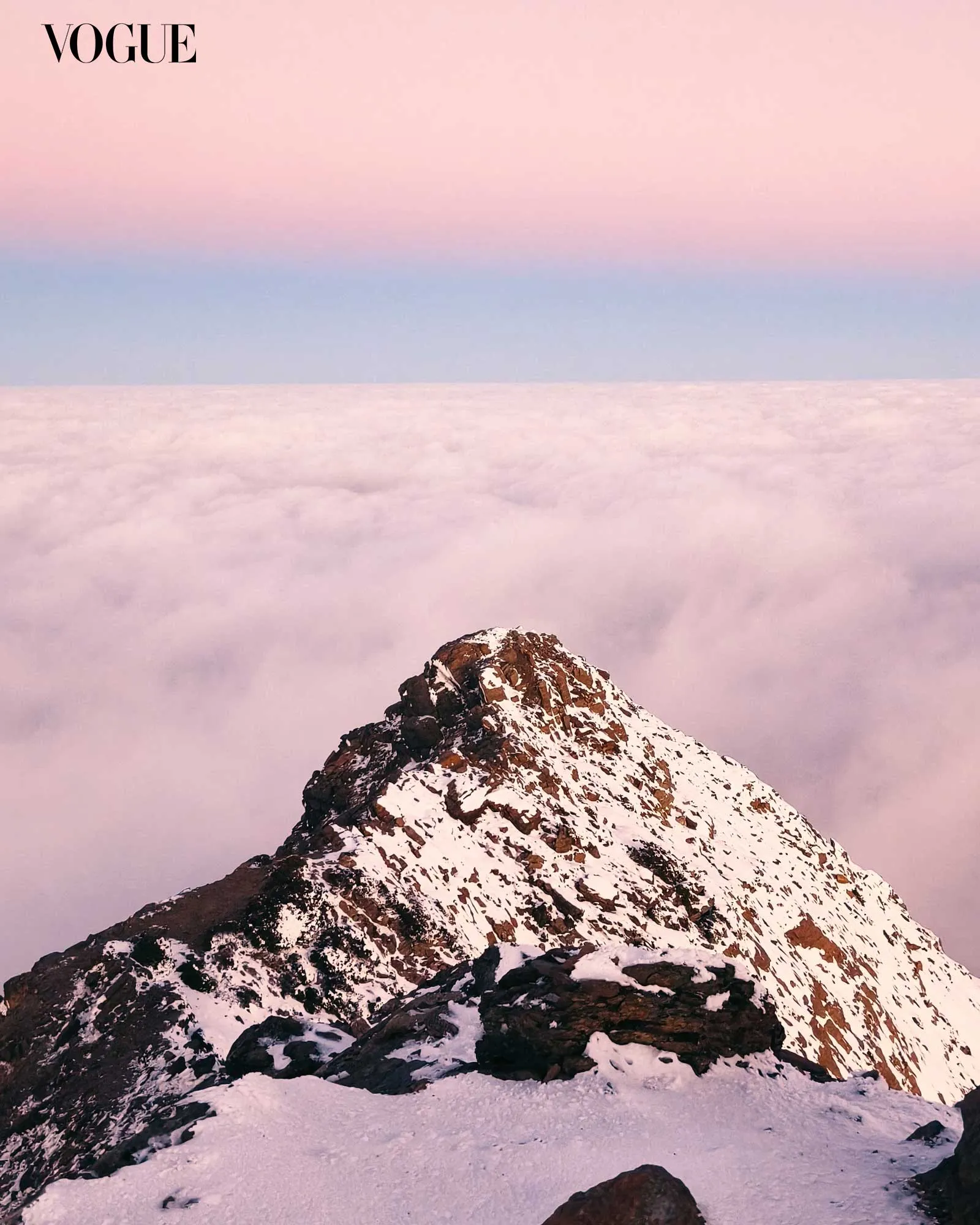
What shifted most was how he moved through the mountain itself. “I was more observant of my companions, my physical limits, and how much I’ve changed compared to the first time,” he says. ” I felt more confident, but aIso self-aware enough not to become complacent.” And that also carries into how he approaches imagemaking. For Tiongco, whose work is being published in print for the first time, outdoor storytelling asks for something deeper than documentation. “I’ve always had a passion for nature, culture, and intentional color grading, so for my work to be featured in a publication that embodies that same wavelength of storytelling and artistry is a meaningful accomplishment for me,” he shares.
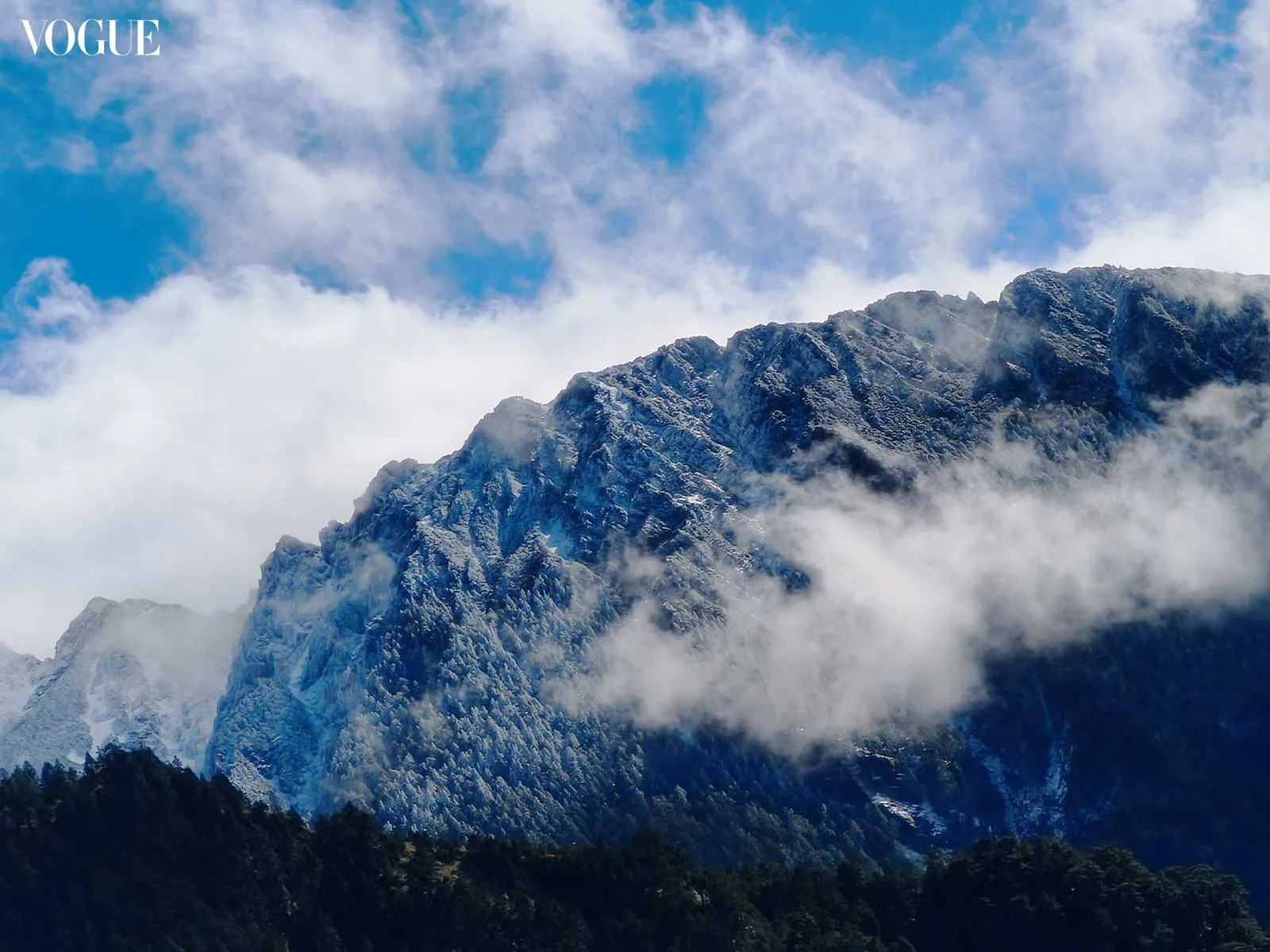
“There is an abundant, but finite number of locations in the world you can visit,” he says. “But meaning comes from how you experience them, and how you choose to tell that story.”
He adds, “I want to inspire people to spend more time offline, even if that means I have t o be online to share that message. It’s a balance I choose every day.”
Natura Sacra
In our Beauty section, we feature the work of photographer Alexi Lubomirski through Natura Sacra: When The Earth Was God, a project that reflects on beauty, time, and transformation.
Lubomirski recalls being drawn to the overlooked, to moments of beauty that linger as they fade. ” I try to find beauty in places that other people don’t see,” he says to writer Bianca Custodio, describing how the project began with observing flowers as they wilted, curled, and changed form.
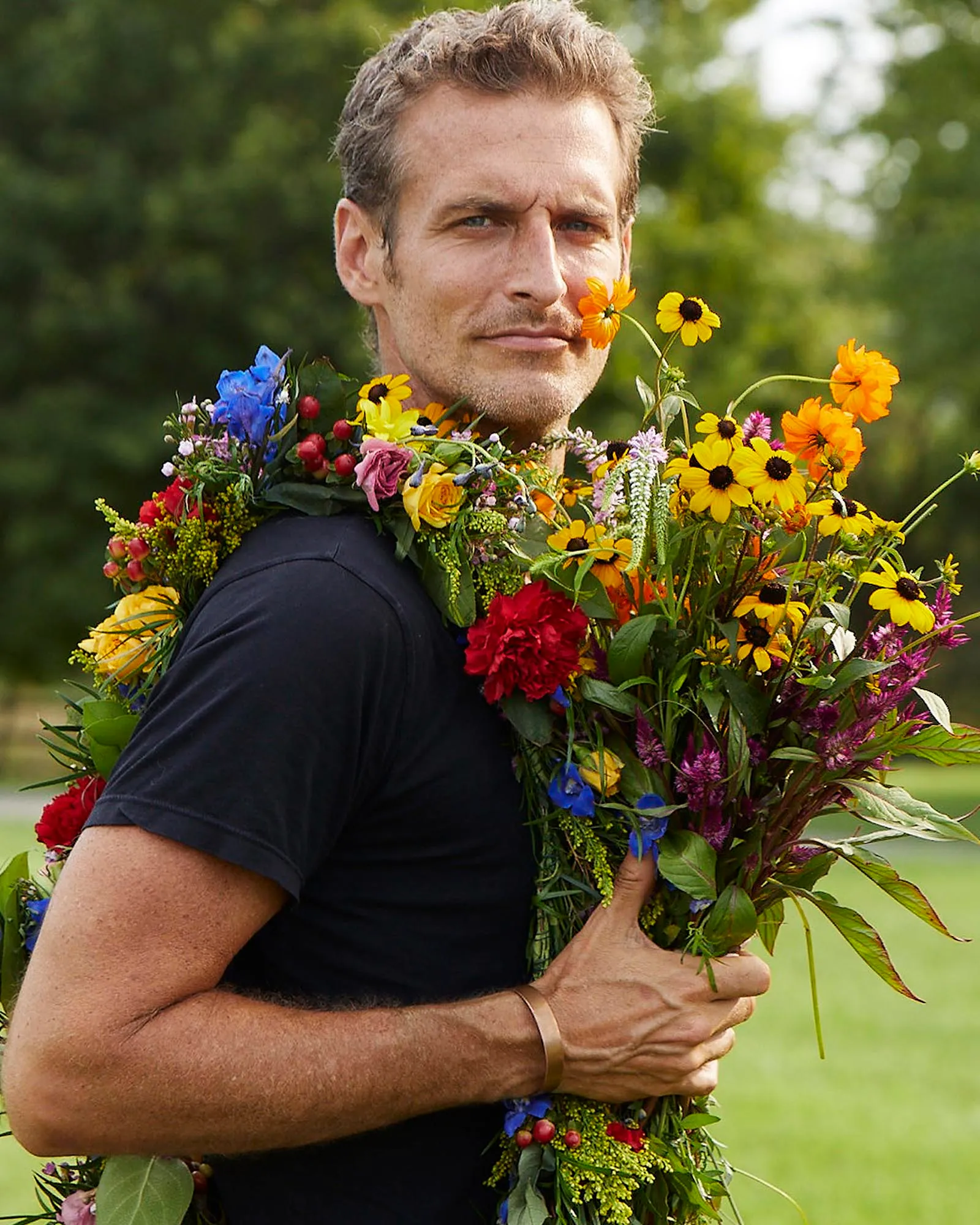
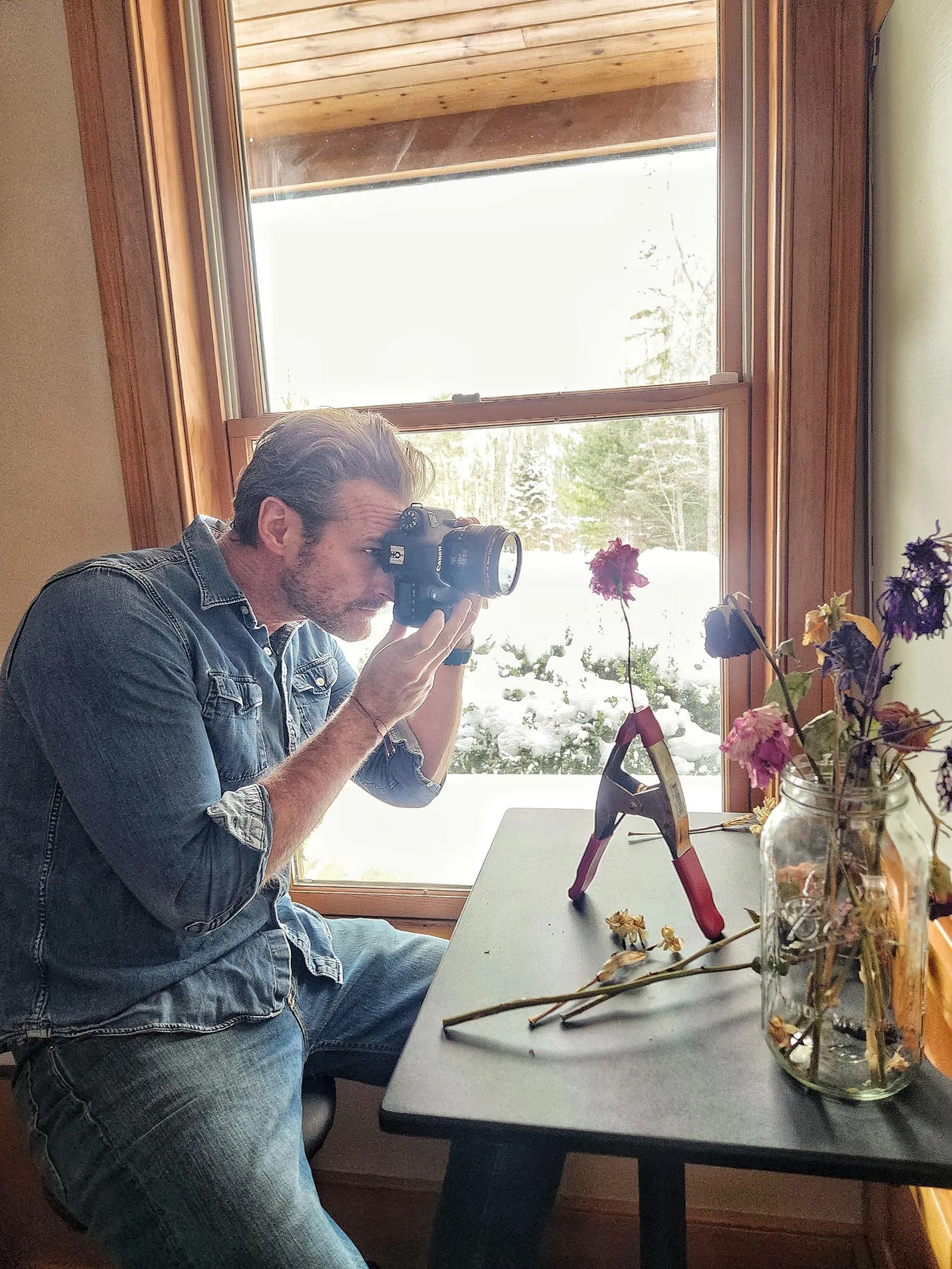
But reading Custodio’s piece, what resonated was how the project expanded beyond the images themselves. What began as an observation of form became a response to a call for support.
All proceeds from the book are dedicated to Hope and Play, a Palestinian charity supporting children through education, creative programs, and trauma care. The organization works with partners on the ground to provide food, clean water, medicine, and safe spaces for learning and play across the Gaza Strip, West Bank, and Lebanon.
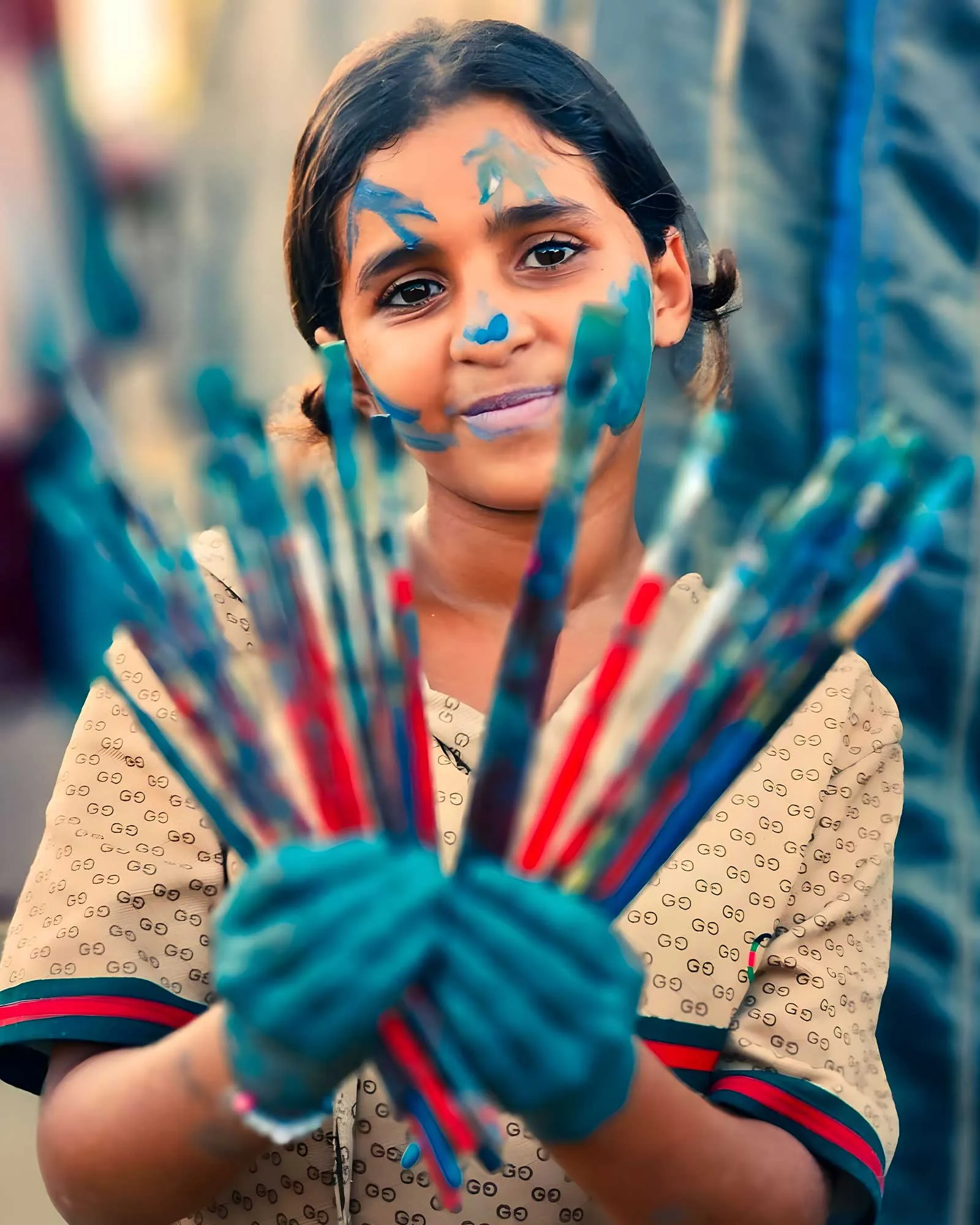
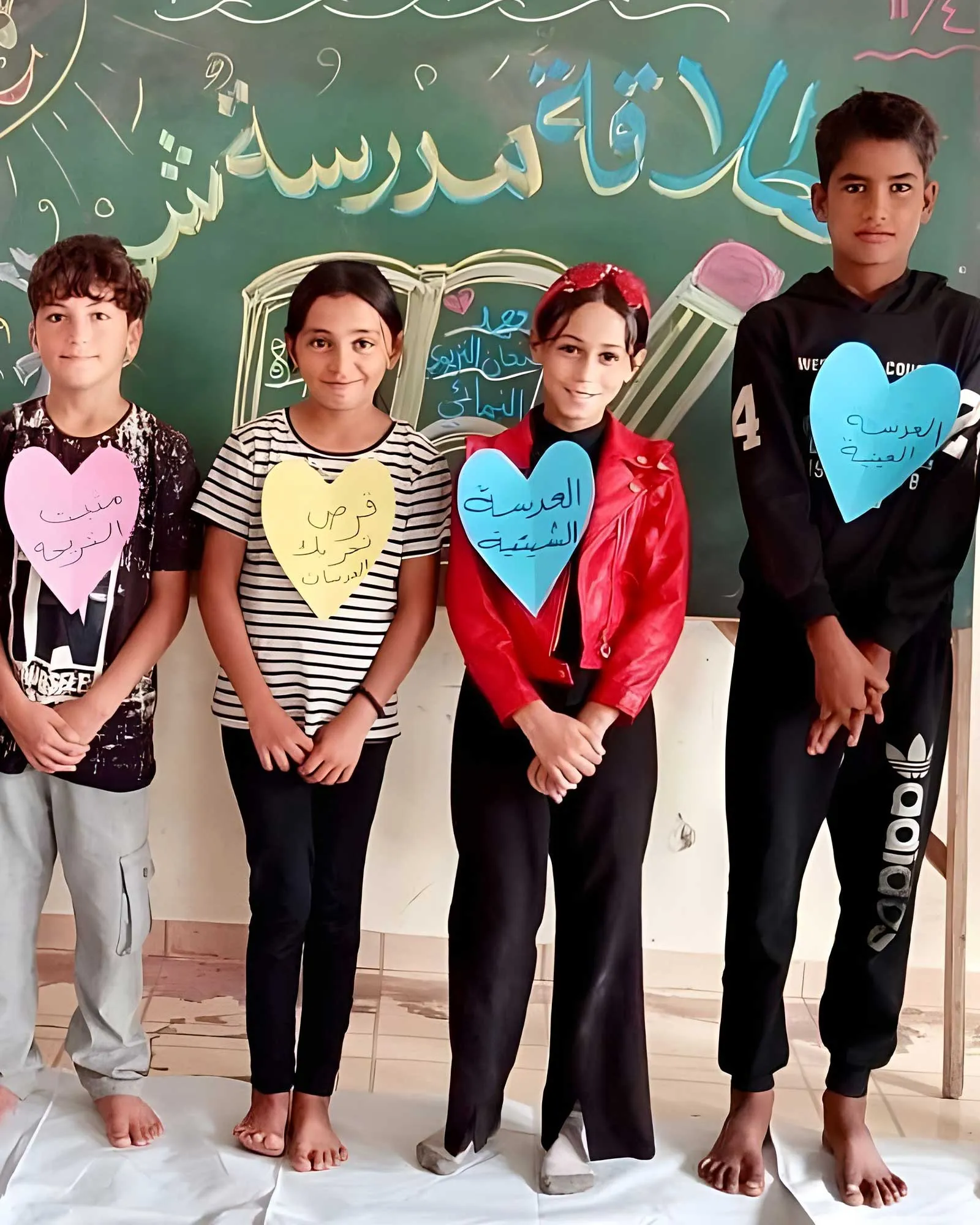
Lubomirski explains that the project grew out of a direct exchange with the organization. “After speaking to them about their projects, I offered them the idea of m y new photography book as a way of raising money, but also raising awareness for the charity,” he shares.
The act of making and the act of giving come together in this project. The images ask us to look closer, while carrying something outward.
Hands of Sorsogon
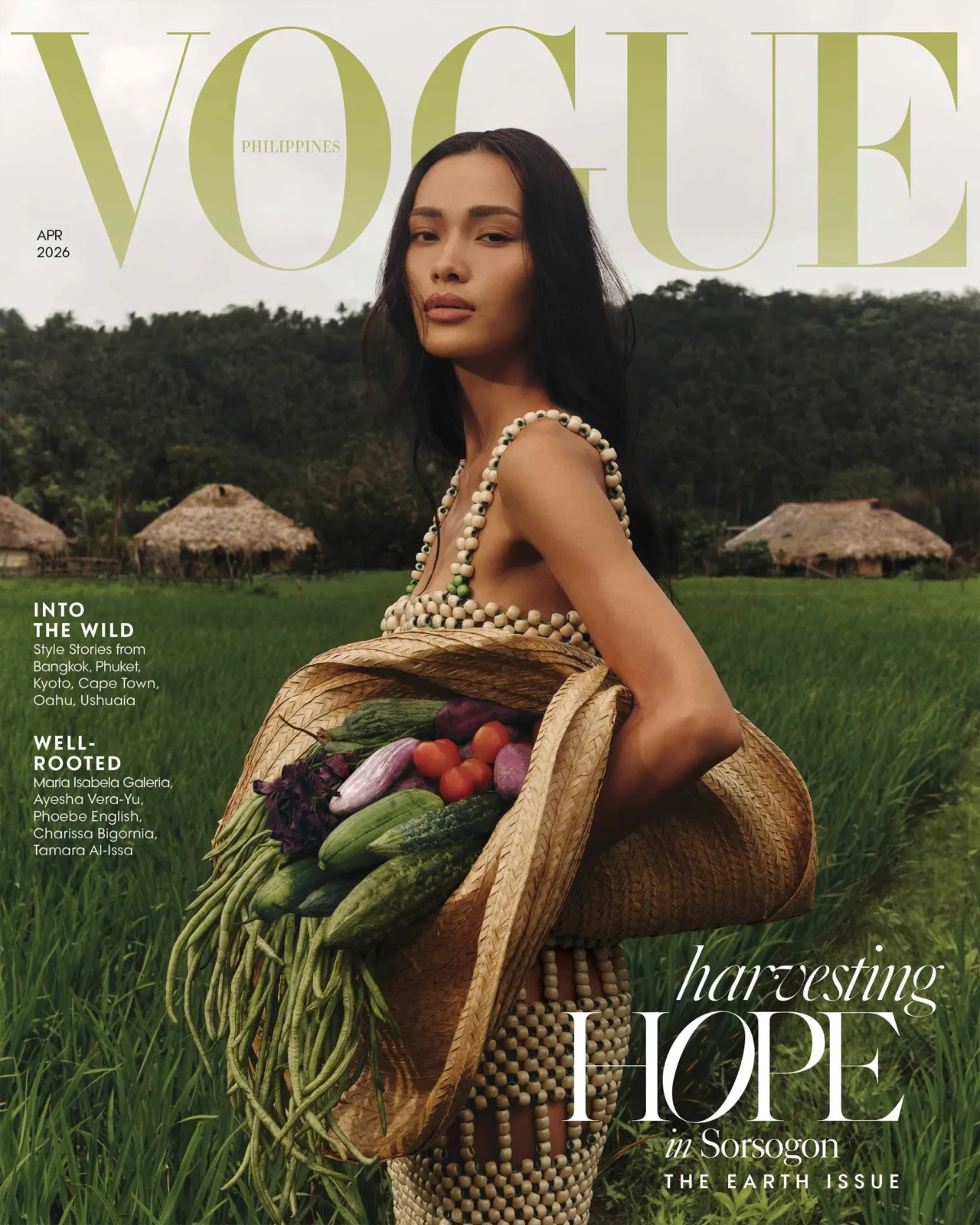
There was a shift in the room when our art director Jann Pascua first showed the Vogue Philippines team the cover image for the April issue. The abundance of produce, the colors of the landscape and coastline, and the harvest laid out in full were the first things we all noticed.
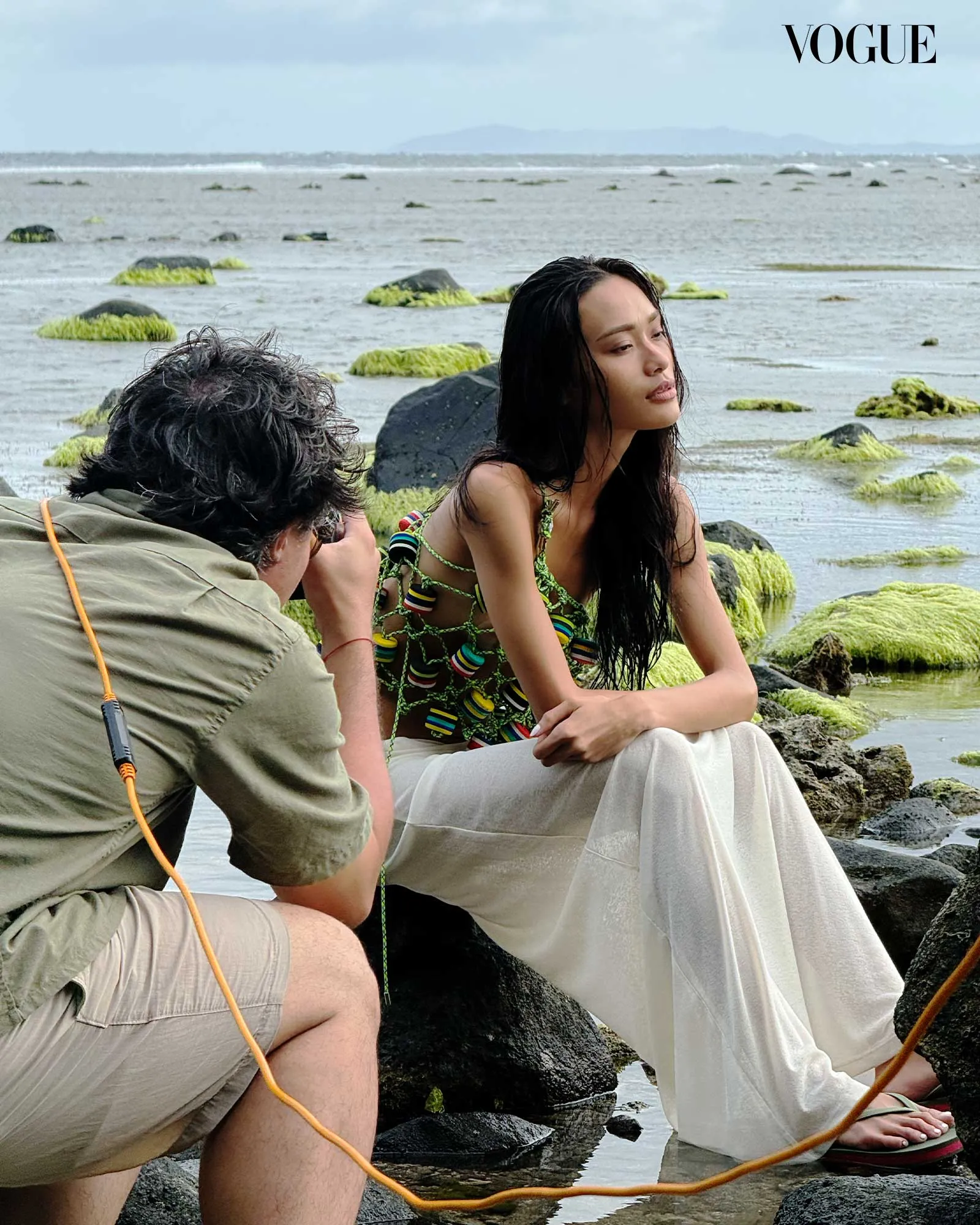
But after speaking with cover storyCover StoryThe headline feature that accompanies a magazine's cover star, combining an in-depth interview, a styled photo shoot, and a distinct point of view. A Vogue cover story is carefully plannedGo to Cover Story Glossary producer Mavi Sulangi following their week-long shoot, something more layered began to surface. Even in the months leading up to the trip, the team had already begun researching and understanding the weight of ARK’s Feed Back program. Planning the shoot required careful coordination, especially in a place unfamiliar to many of them. “We had to rely on ARK’s guidance, Google Maps, and our own research,” Sulangi shares. “We spent several calls mapping out each day, getting meticulous with schedules, locations, and contacts.”
Even then, things continued to shift. “Schedules would rearrange, locations would change, new ideas would come in, ” she says. These detours required patience, but also became part of the process. “It was in those moments that we were brought closer t o the place and to each other.”
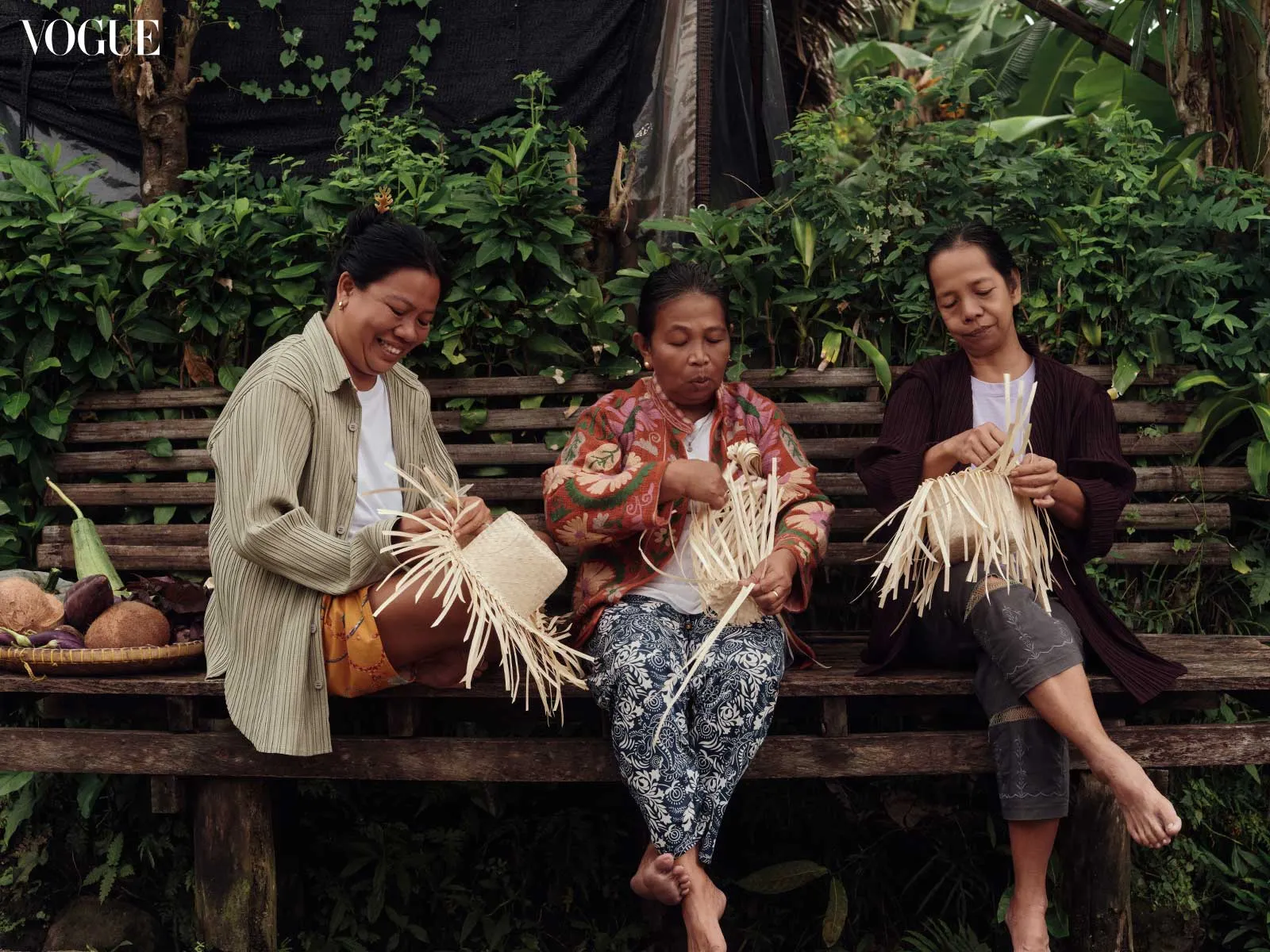
It was only upon arriving in Barangay San Antonio, Bulusan, that everything fully came into view: “We spent nearly an entire day there just observing,” she shares. “Walking through the streets, you could feel the atmosphere of calm. It was breezy and quiet, the sounds of children running, women weaving buri hats, waves crashing nearby.”
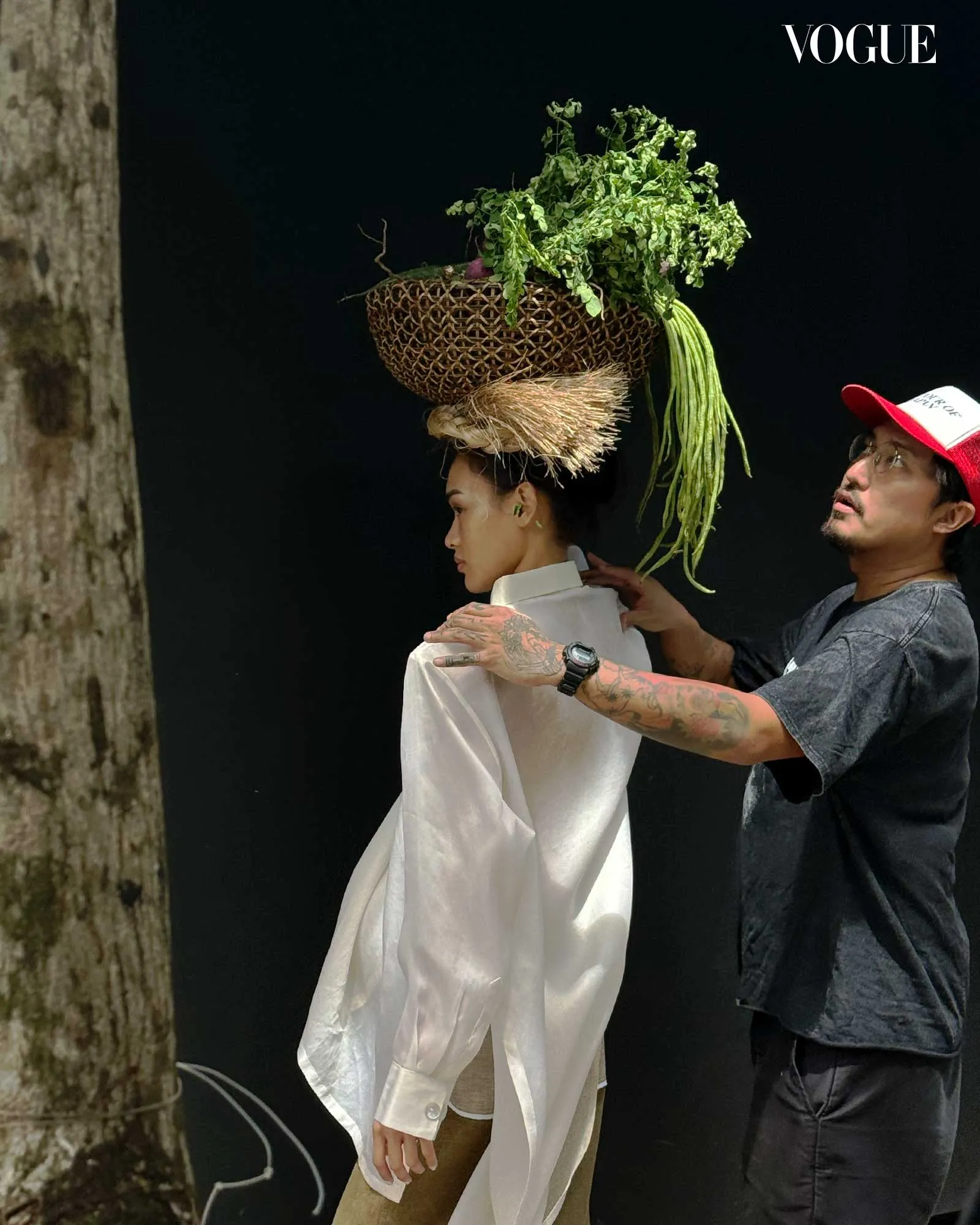
Women carried their harvests through the streets, balancing bilaos filled with fruits and vegetables, while others loaded produce onto tricycles bound for the exchange. “It almost felt as i f the harvests were extensions of the people themselves,” Sulangi reflects. “A reflection of weeks of care.
When the exchange began, the covered court filled with food and movement. Music played, people danced, vegetables became bouquets, and the act of trading turned into something that felt like a celebration, “where everyone had something to bring to the table, from their own table,” Sulangi says.
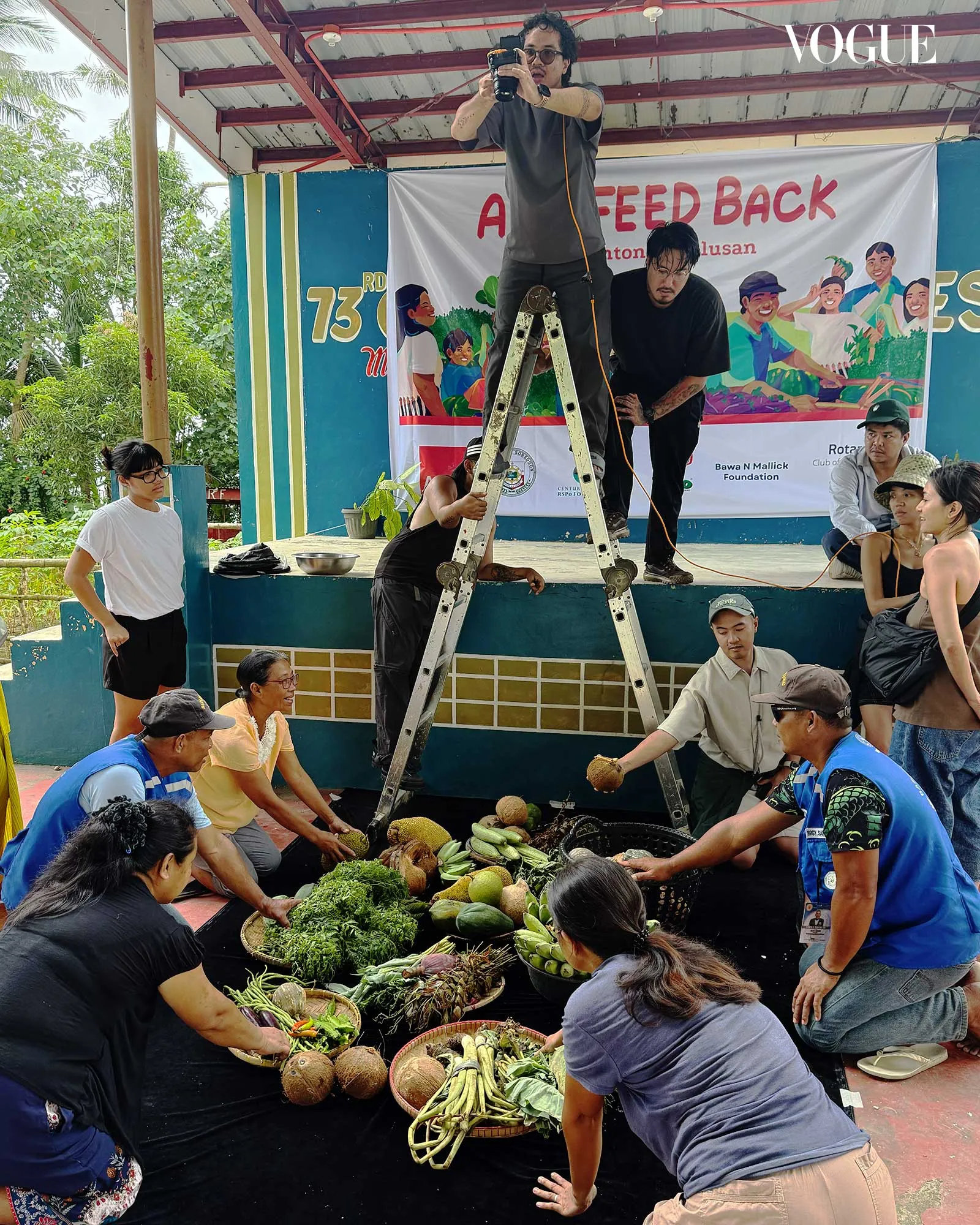
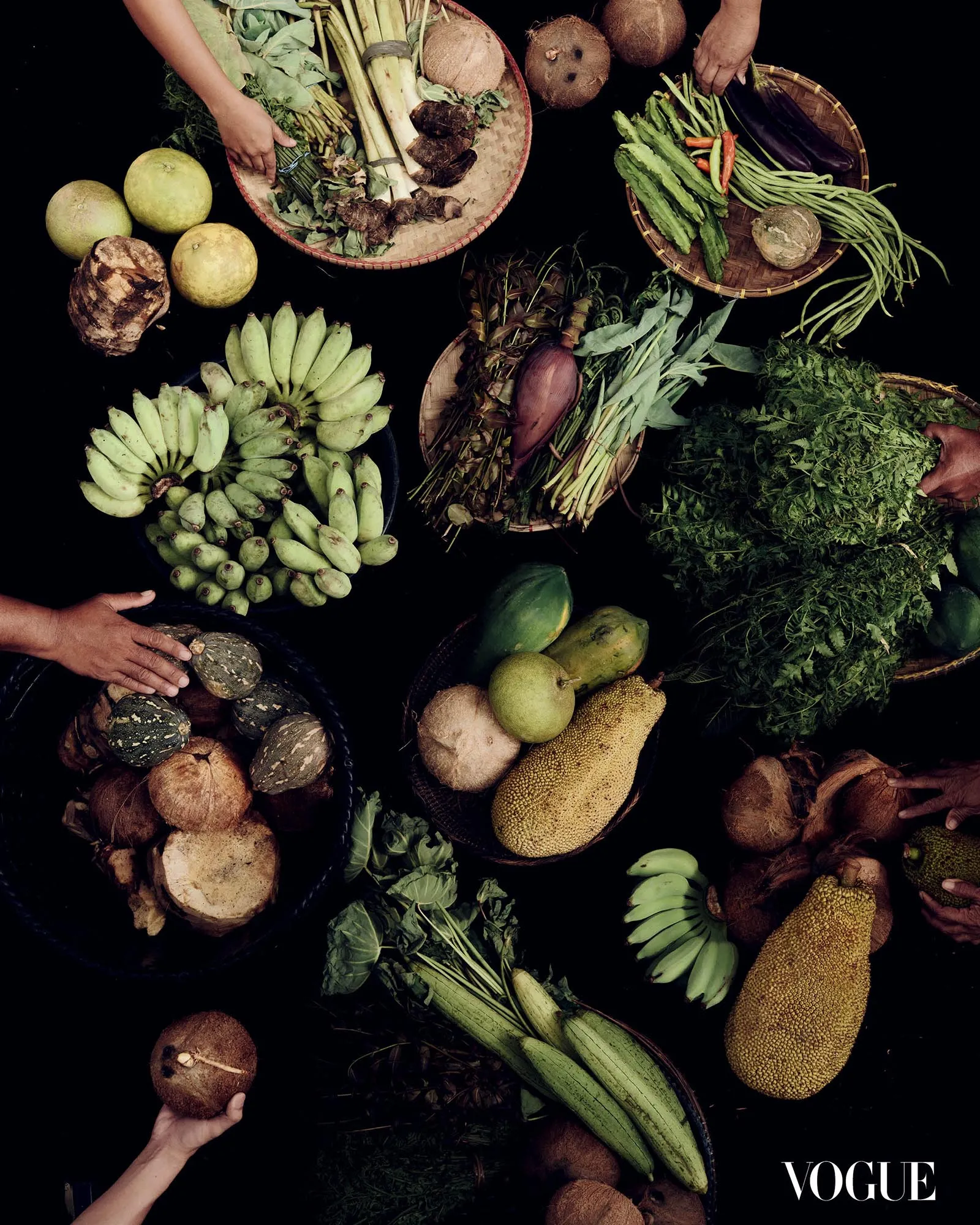
Even with all that abundance, what defined the day was how people moved around each other. Passing, sharing, laughing, calling one another in. Even from a distance, it carried. “While our team was shooting out at sea during low tide, we could still hear the celebration, she recalls.
For Yap, who was also the writer, the story deepens the further he steps into it. Splitting off from the main team, he follows ARK founder Ayesha Vera-Yu across rivers and fields, barefoot to keep from sinking into the terrain. It is there, with a family who briefly takes them in, that the story sharpens.
“The narrative does not exist without its people, Yap says. “In speaking to weavers, farmers, and fisherfolk, I realized that Filipinos, even amid nature’s harshest conditions, will always find their way back to each other.”
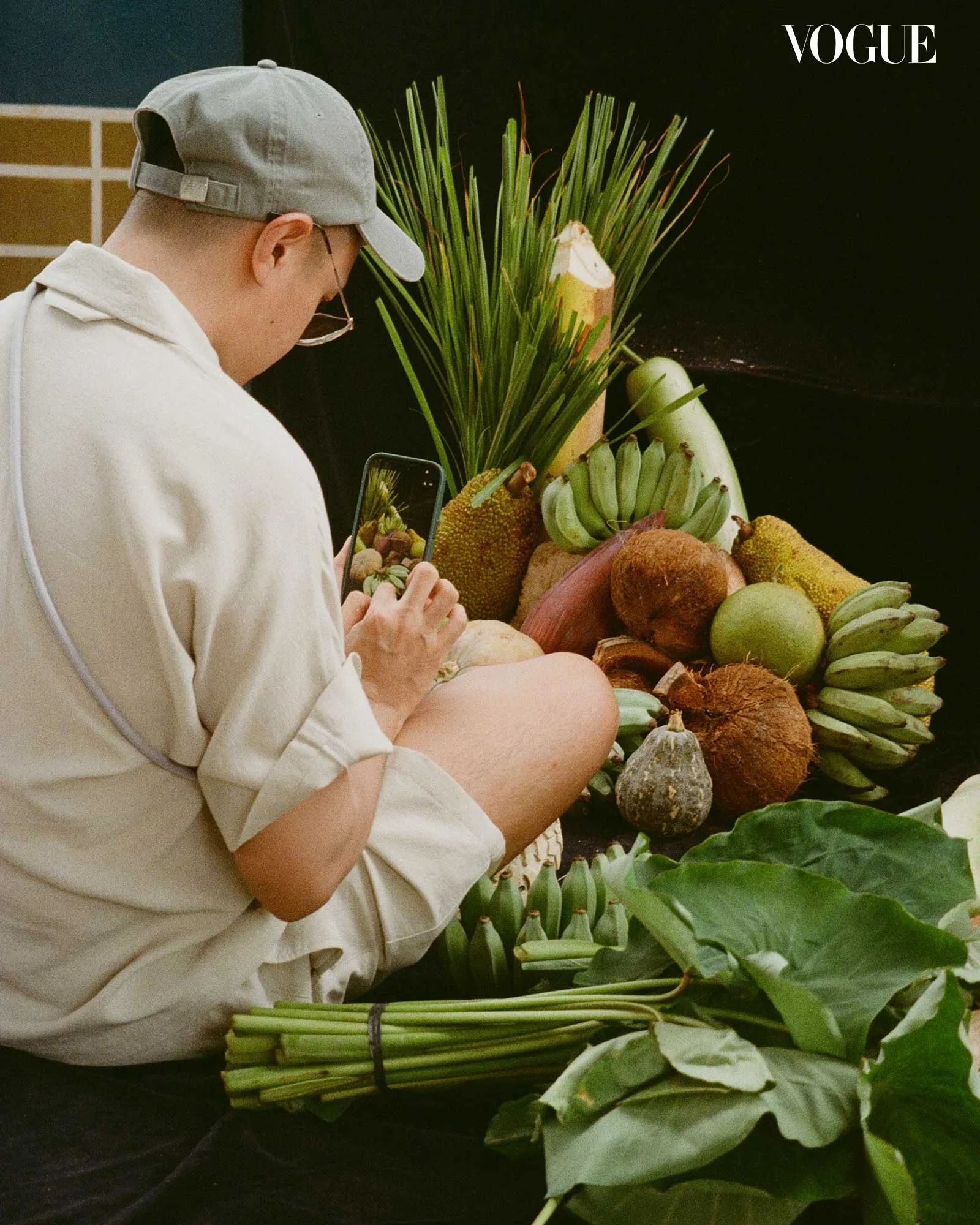
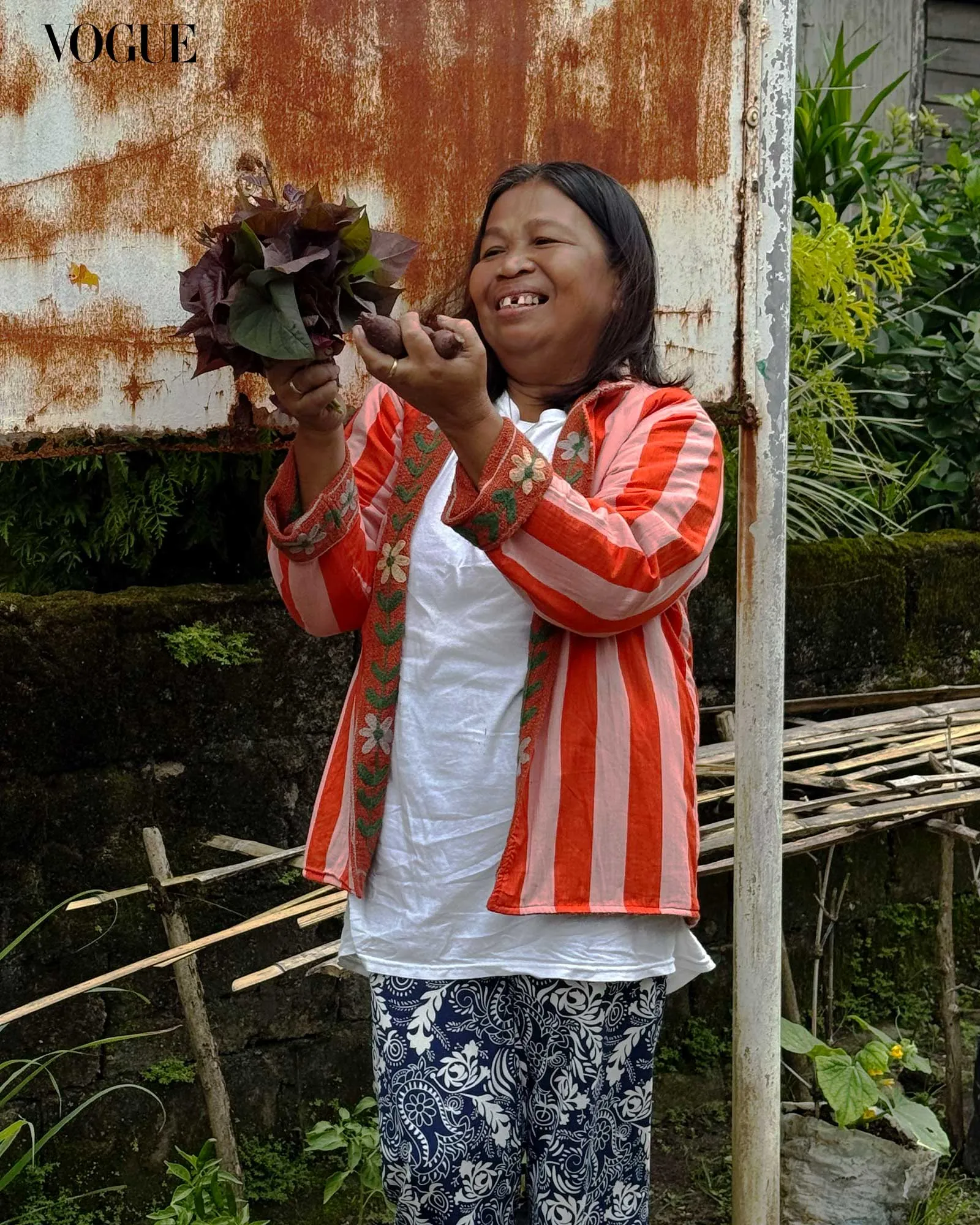
What strikes him most is how care persists, even in uncertainty. Flanked by volcanoes and shaped by typhoons, the community remains intact because connection is constant.
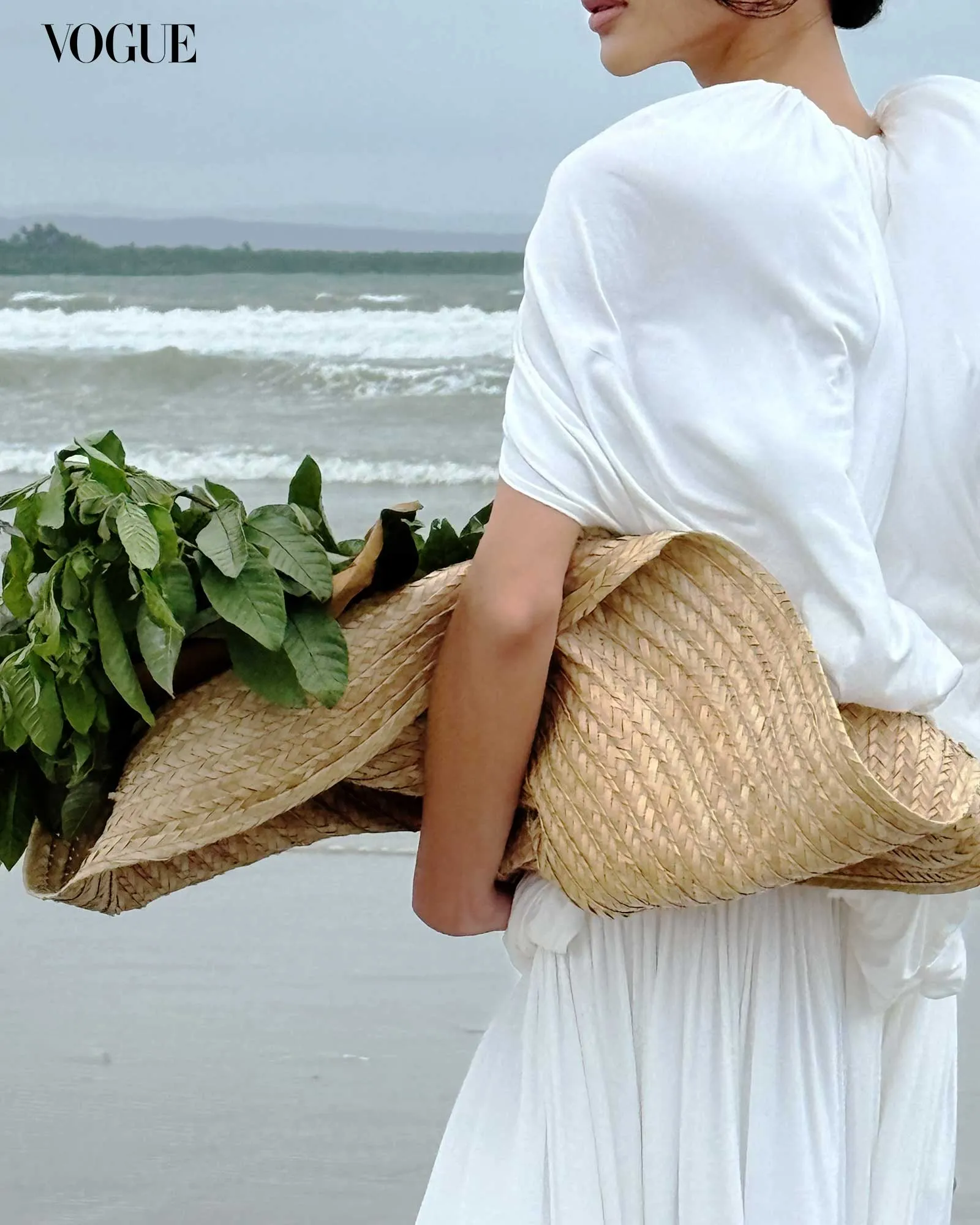
That same mindset guided the team behind the shoot. Sulangi shares that when she and beauty editor Joyce Oreña were building the creative team, they knew from the start that the story had to be made with the people of Sorsogon. “It only felt right that in order to tell a story about a place, you needed the voices, hands, and hearts of the people who come from it.” From the communities of Santa Magdalena and Bulusan, to the Bicolano glam team, to Sorsoganon model Maria Isabela Galeria, the images come to life because of them.
Photographer Artu Nepomuceno echoes this sentiment in his “Light Notes” series on Instagram, reflecting on how every element, from light to logistics to safety, moves in conversation with one another.
“Truly, it takes a village,” he says.
In Sorsogon, the harvest and the landscape hold their place at the center. So did the people moving within them, returning to one another throughout the day. Community shows up in the way people share what they have, and make space for others within it.
Harvesting Hope
A few houses appear in the background when you look at the cover of the April 2026 issue of Vogue Philippines. A bahay kubo, long associated with rural life and bayanihan. Many Filipinos grow up learning the folksong, “Bahay kubo, kahit munti, ang halaman doon ay sari-sari.” A home may be small, yet it holds a variety of plants. There is something enduring in the image that what may seem modest can still be abundant, and that our strength often lies in our differences, in the many ways we grow alongside one another.
That same idea feels present even beyond the ground we stand on. The world today may feel stretched in many directions at once. And yet, when people speak about what stays with them, the answer is often simple. Recently, after returning from a mission around the moon, the Artemis II crew was asked what they would miss most about space. Without hesitation, they pointed to one another.
For Christina Koch, the first woman to travel around the moon, the response came without hesitation: “I will miss the camaraderie. I will miss being this close with this many people, having a common purpose, a common mission, getting to work on it every day… with the team on the ground.” I’d like to believe there is something striking in how, even in a place as immense and unfamiliar as space, what remains most vivid is the closeness of the people within it.
The stories in this issue kept orbiting back to the same idea, and perhaps that is what this Earth issue leaves behind. A reminder that even in the vastness of the world, what makes it meaningful comes into focus through who we stand beside.
In the end, the sense of abundance lives in the relationships that form around the shared effort behind every image and is rarely found in the finished work alone.
What we create may be what others see, but what it takes to create is where the meaning settles. We create better and see more clearly when we choose to do it together, as stewards of this home called Earth.
-
 Photographed by Mavi Sulangi1/5
 -
 Photographed by Mavi Sulangi2/5
 -
 Photographed by Sela Gonzales3/5
 -
 Photographed by Mavi Sulangi4/5
 -
 Photographed by Sela Gonzales5/5
- When Women Lead The Frame: The Making of Vogue Philippines’ March 2026 Issue
- Behind the Pages: Love, From Many Hands and The Making of Vogue Philippines’ Love Issue
- Smiles All Around: Behind the Scenes of Jon Santos’ First Vogue Philippines Shoot
- In Suspension: Gifts for the Aquarius, Libra, and Gemini in Your Life