
Tai Chi Walking Is Good for Your Body and Mind


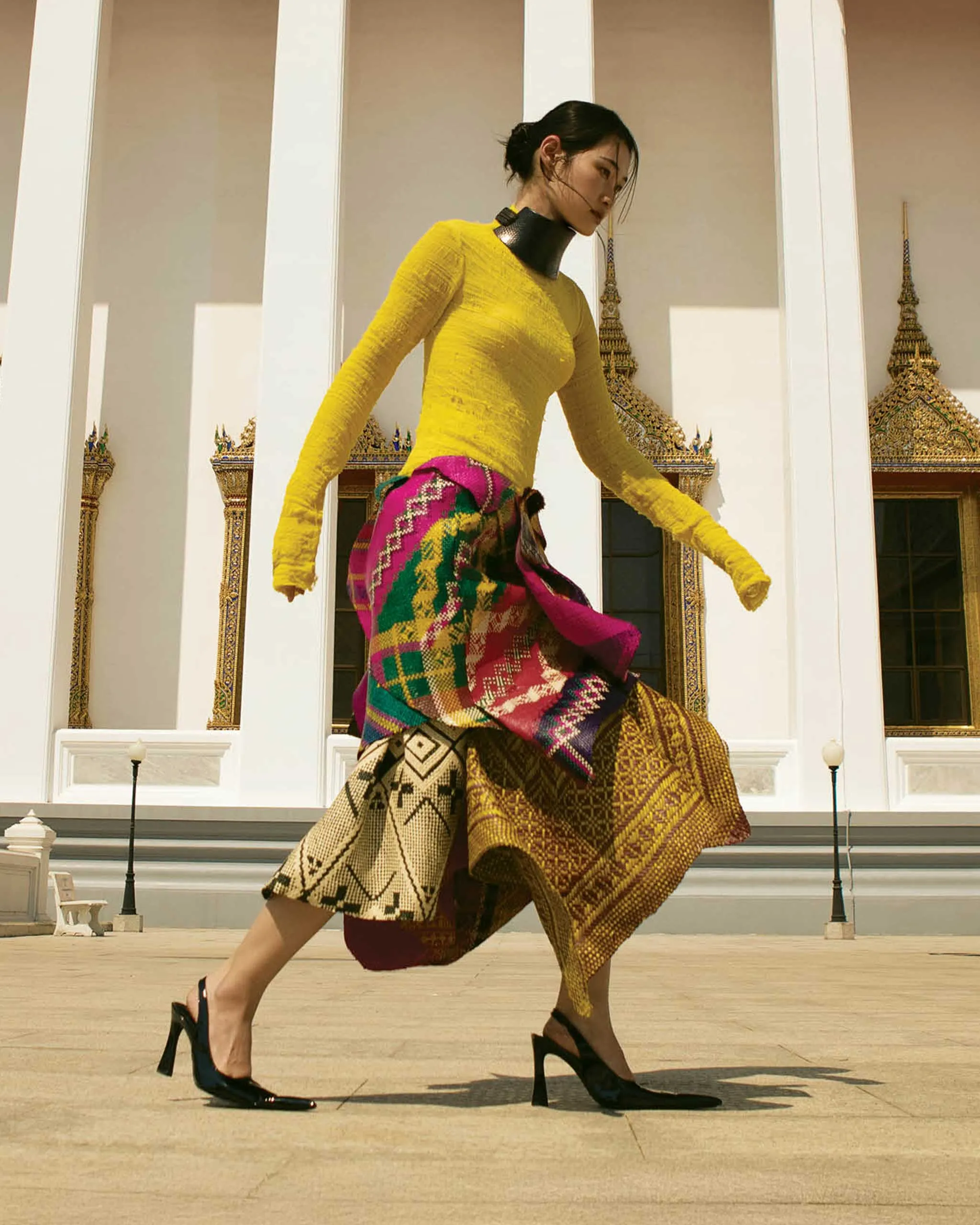
Photographed by Camille Robiou Du Pont for the April 2026 Issue of Vogue Philippines
It’s often recommended to go on a walk when you’re feeling stressed. Whether that means taking a quick lap around the block or escaping to the nearest park to be one with nature, the act of walking has many well-documented physical health benefits—and, depending on how you do it, mental benefits too. One that falls into both categories is tai chi walking.
The practice of tai chi, a meditative martial art that dates back to ancient China, consists of gentle, purposeful movements to relax the body and the mind. It’s been done for centuries in China, and now tai chi walking is taking over social feeds everywhere.
“People are being drawn to practices that help them feel grounded, while also supporting their physical health,” says Leda Elliott, tai chi master and author of The Five Seasons Method. “Tai chi walking is incredibly easy to do; requires no special clothing, equipment, props, or studio; and can be practiced almost anywhere.”
Plus, given our obsession with all things longevity-related, experts say we are all looking to improve our overall health with easy workouts. “As people recognize that maintaining balance, mobility, and independence is just as important as cardiovascular fitness, practices like tai chi walking become more attractive,” says Christopher Gold, DO, assistant professor of internal medicine at Mount Sinai.
What Is Tai Chi Walking?
Elliott defines tai chi walking as a foundational practice to teach the movement principles of tai chi. “It is one small part of a much larger system that includes complete movement forms, internal awareness, and the cultivation and circulation of qi,” she says. (For those who don’t know what that is, qi is the life force that flows through every living being.)
She goes on to explain that in tai chi walking, you move slowly and intentionally, learning how to transfer your weight fully from one leg to the other. When practicing, you should focus on heavy-foot-and-light-foot awareness, which is a foundational practice of being aware of each and every step you take.
Compared to regular walking, where our movement is automatic and our attention is more focused on the destination (with your headphones on), tai chi walking focuses on the quality of movement and teaches you to remain present. “Every part of the step [in tai chi walking] is deliberate and intentional,” she says. “The weight settles completely into one leg before the other moves.”
How to Do It
It’s pretty simple to do. First, Elliott says, focus on feeling aligned, with your shoulders relaxed. You’ll want to keep your gaze forward rather than looking down at your feet to maintain good posture. To start, you’ll slowly shift your weight onto one foot until you can feel that it is “heavier” on that side. Step the other, lighter foot forward in what she calls a “sit step,” where you place your heel lightly on the floor with the toes gently lifted. Then slowly lower the rest of your foot to the floor and shift your weight onto that foot.
“Only after the weight is completely settled in the front foot does the back foot become light,” she says. “The back foot can then lift and move forward into the next sit step. Continue slowly, paying attention to the clear distinction between the heavy foot, which supports your weight, and the light foot, which is free to move.”
The Benefits
Elliott says that one of the most well-known benefits of tai chi walking is improved balance. Dr. Gold adds that it may also offer cardiovascular benefits that you’d get from regular walking and tai chi. “Research on tai chi in general has shown improvements in balance, functional mobility, and quality of life in many older adults. While tai chi walking itself has been studied less extensively, it incorporates many of the same movement principles that likely contribute to these benefits,” he says.
Other potential benefits he lists include:
- Better coordination
- Strengthening of the legs, hips, and core
- Improved posture and body mechanics
- Increased flexibility and joint mobility
- Stress, anxiety, and bad-mood reduction
- Improved mental focus
From the traditional tai chi perspective, Elliott says it will help develop “rooting,” which is the ability to feel connected to the ground. The deliberate shifting of weight helps encourage the flow of qi through the legs and feet, creating a greater sense of stability.
The Downsides
For the most part, tai chi walking is generally safe as it is considered a low-impact activity. Just be careful of doing too much at once, especially if you’re a beginner. “Adding too much shifting or turning at the beginning can make someone feel wobbly,” says Elliott. “Starting with a simpler stepping pattern allows them to develop stability and body awareness before progressing.”
Dr. Gold adds that those with episodes of dizziness, acute vertigo, significant balance disorders, or recent injuries should consult with their doctors before incorporating this into their workouts, and anyone recovering from recent orthopedic surgery, stroke, seizures, and other neurological episodes may need physical therapy guidance first.
Elliott cautions those with chronic knee or hip issues to make sure to get proper guidance so they’re putting weight where the joints can carry it and that the knee and hip stay in alignment. That’s why the most important thing to tai chi walking is correct form to minimize any chance of injury. “Proper technique matters,” says Dr. Gold. “Learning from a qualified instructor or reputable resource initially can help maximize benefits and reduce unnecessary strain.”
“When taught correctly and adapted to the individual, tai chi walking can be a wonderful practice,” adds Elliott, “for people of all ages and a wide range of fitness abilities.”
So if you’re looking for an easy workout that also helps keep you present, give this walking method a try. “[It’s] an excellent option for people looking for an exercise that’s gentle on the joints while still providing meaningful physical and mental health benefits,” says Dr. Gold. “It can be especially valuable for older adults, individuals beginning an exercise program, or anyone wanting to improve balance, posture, and body awareness.”
“In many ways, tai chi walking mirrors life,” adds Elliott. “The path of our life is created by each step we take. When each step is taken with awareness and intention, we create a more meaningful path.”
Curious about a beauty or wellnessWellnessA holistic approach to wellbeing that includes physical health, mental balance, sleep, nutrition, movement, and self-care. In beauty and lifestyle, wellness has expanded from spa treatments to therapy, mindfulness, andGo to Wellness Glossary trend? We want to know! Email Vogue’s senior beauty and wellness editor at [email protected].
This article was originally published on Vogue.com.
Frequently Asked Questions
Tai chi walking is a foundational tai chi practice involving slow, intentional movement that teaches how to fully transfer body weight from one leg to the other, using heavy-foot-and-light-foot awareness to build presence and control with each step.
To practice tai chi walking, align your shoulders, keep your gaze forward, and slowly shift weight onto one foot. Step the other foot forward heel-first in a “sit step,” then gradually lower it and shift weight completely before the back foot lifts.
Tai chi walking may improve balance, coordination, posture, and joint mobility, while strengthening the legs, hips, and core. It can also offer cardiovascular benefits and support stress reduction and mental focus, particularly for older adults and beginners to exercise.
Tai chi walking is generally low-impact and safe, but those with dizziness, vertigo, balance disorders, recent injuries, or a history of stroke or surgery should consult a doctor or physical therapist before beginning the practice.
Unlike regular walking, where movement is automatic and attention is focused on the destination, tai chi walking emphasizes slow, deliberate weight transfer and full presence in each step, treating the quality of movement itself as the point of the practice.