Sarah Reid on Art Therapy and the Healing Traditions of the Philippines


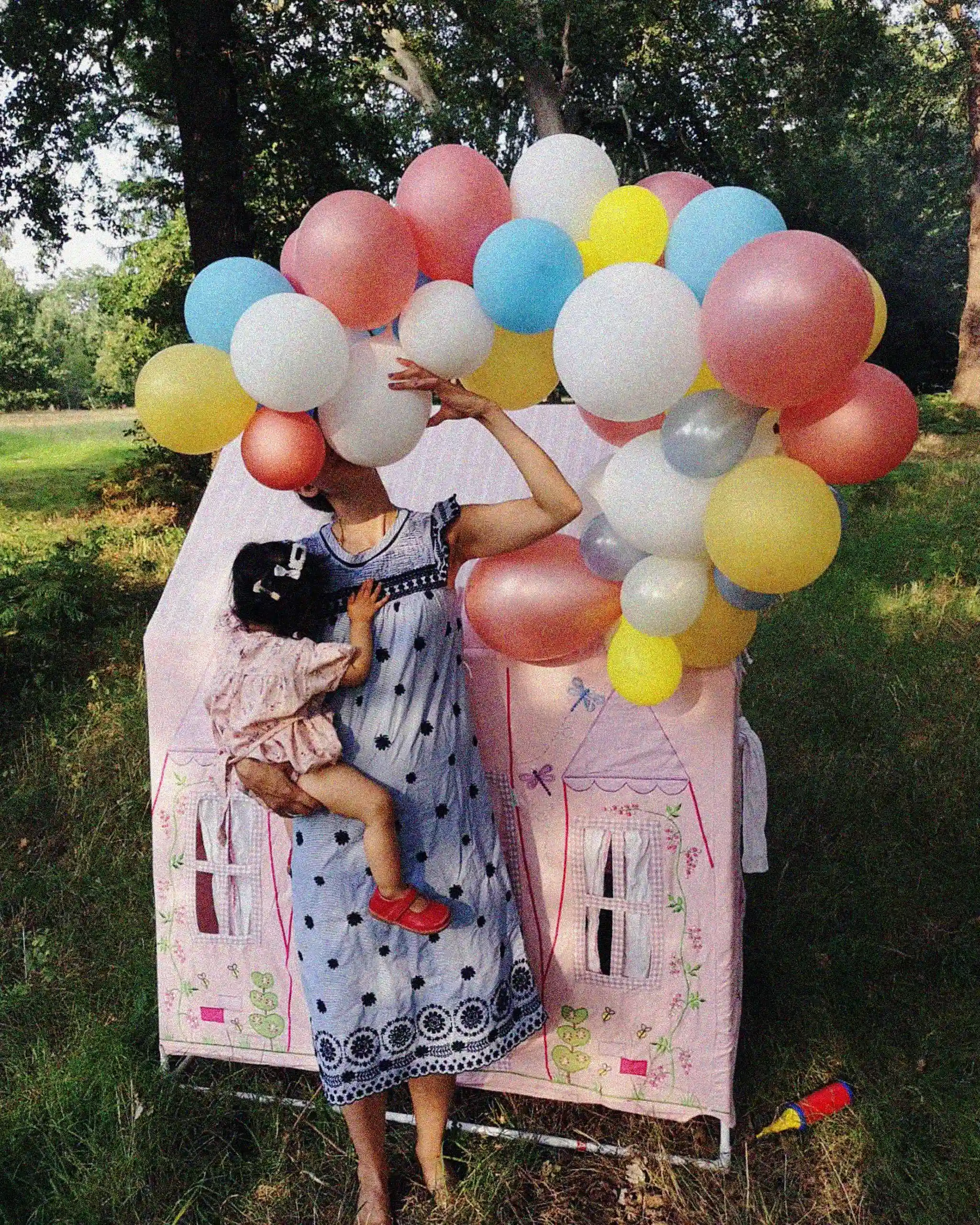
Self Portrait with My Daughter by Sarah Reid, 2020. Created after months of self-isolating with a newborn during the UK’s strict lockdown, the work reflects a visit to the artist’s parents with her sister. It embraces color and whimsy as an act of resistance to an otherwise bleak period. Courtesy of Sarah Reid
British Filipino art psychotherapist Sarah Reid explores how art therapy helps people process difficult emotions and find new ways to heal.
In Manila, healing often happens communally. It lives in karaoke rooms, in gardens, in long dinners with family, or in the comfort of sitting beside someone without needing to speak. For Sarah Reid, those simple actions and rituals are deeply connected to the philosophy behind art therapy.
“The whole ‘let’s talk, it’s good to talk’ is so Western,” she says. “Growing up in the East, just the power of being with somebody and not talking, or just play, or dance, or singing, but not words, words, words, is super important.”
Reid, a British Filipino art psychotherapist based in London, has spent years working with grief, trauma, migration, autism, and emotional distress across hospices, schools, charities, and healthcare institutions. Yet her understanding of care was shaped long before her formal training: through her Filipino family, her upbringing in Hong Kong, and the cultural fluidity she experienced between Southeast Asia and Europe.
“My Filipino family, a lot in healthcare; nurses, pharmacists, doctors,” she says. “Being an art therapist kind of marries both creativity and health.”
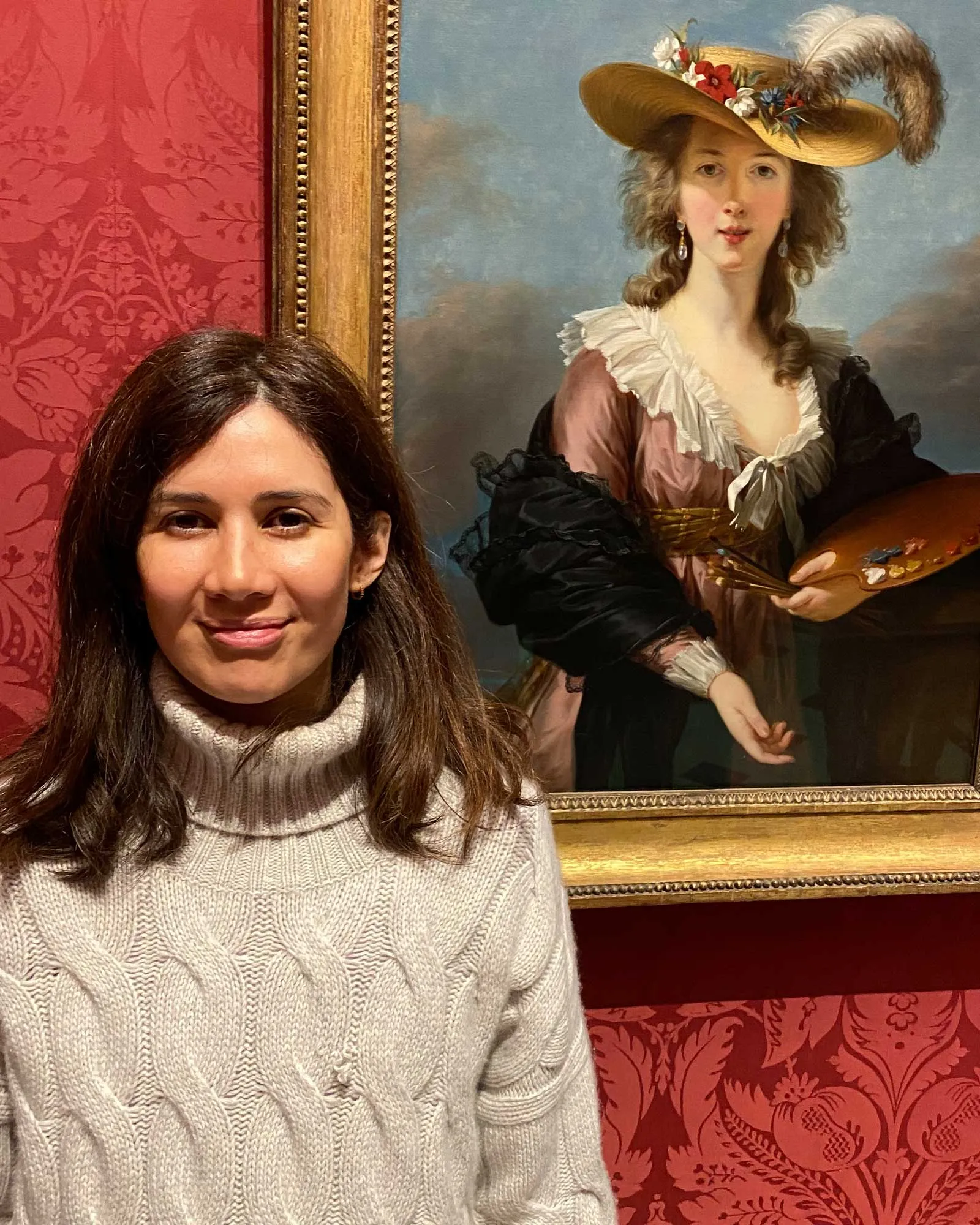
Raised by a Filipino mother, a former Cathay Pacific flight attendant from San Juan, Batangas, and a Scottish father, Sarah describes a childhood shaped by travel, play, and a deep appreciation for aesthetics. Her mother was “always dancing and singing and taking us through sports,” while her father loved drawing and interior design. “One of my ancestors was an interior designer,” she adds. “So I’ve always been encouraged to use art, but also use the body.” That physical relationship with creativity remains central to how she understands therapy today. “Art therapy is very somatic,” she explains. “Movement is very powerful and very underrated.”
Becoming qualified was extensive and nonlinear. Reid first studied history and Italian at University College London before earning another degree in Population and Development Studies at the London School of Economics. She later completed teacher training through Teach First, studied art at Morley College, and eventually qualified through a degree in art psychotherapy at Goldsmiths, University of London.
“I loved learning, so I did quite a few degrees,” she says.
Her studies and travels broadened her understanding of identity and perspective. Living in Venice, working with a documentary filmmaker in Alaska, and moving between cultures made her increasingly aware that “truth is relative.” She also remembers formative memories from the Philippines, including watching a family friend borrow her grandmother’s jewelryJewelryDecorative adornments worn on the body, from fine pieces in gold, diamonds, and pearls to fashion jewelry made of accessible materials. Jewelry completes an outfit and often holds sentimental orGo to Jewelry Glossary for a drag performance. “It made me really see the fluidity of gender at a very young age,” she says. “I’m so appreciative that I learned that this culture is also ancient in the Philippines.”
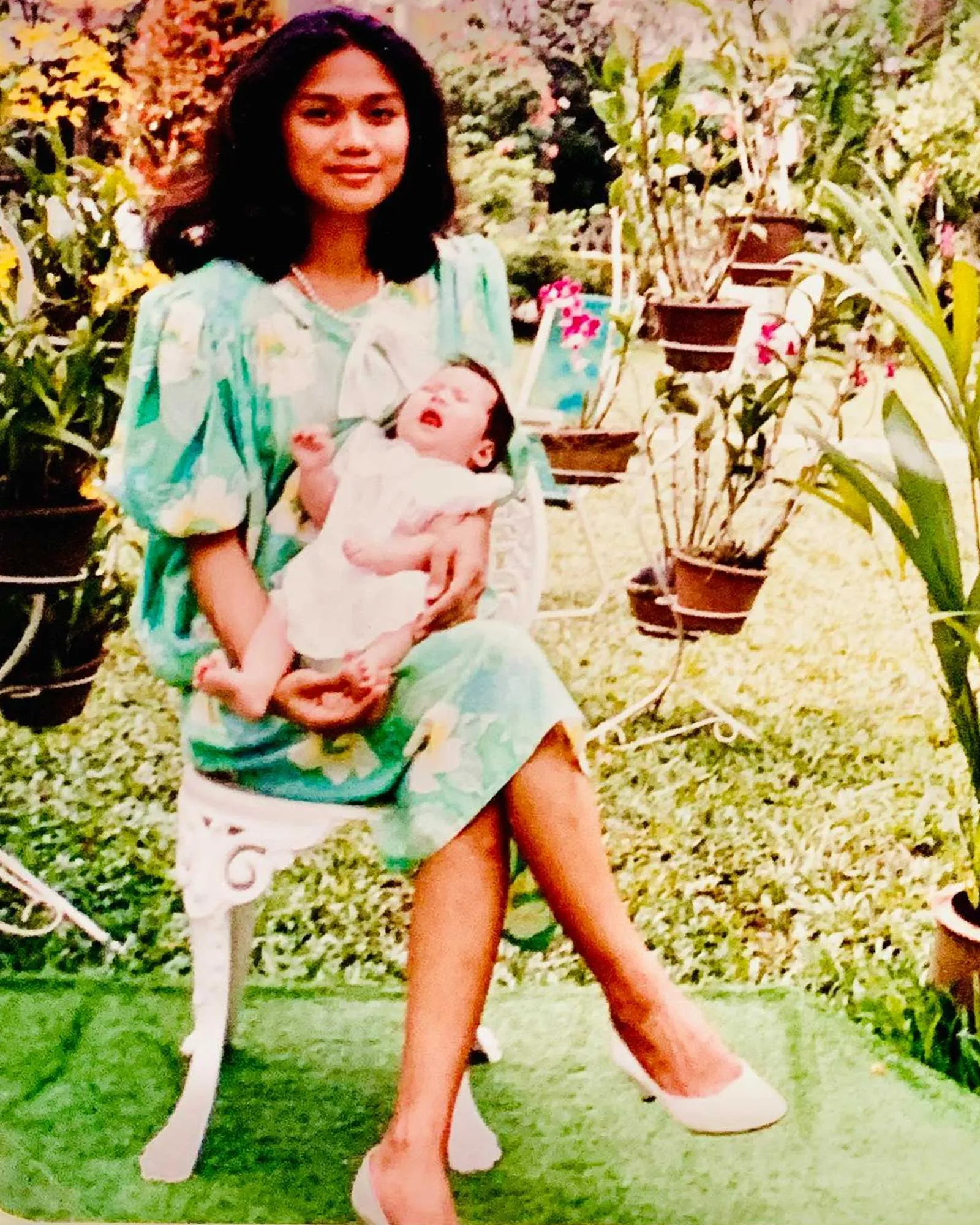
History, she believes, reveals how many contemporary anxieties surrounding gender, identity, and self-expression are not new at all. “That’s always been there,” she says.
The decision to pursue psychotherapy emerged gradually. After qualifying, Reid worked at St. Christopher’s Hospice, supporting terminally ill patients and families experiencing grief. Many of the children she worked with had lost parents through illness, accidents, suicide, or violence. “I’ve always been fascinated by mysteries, and death, and birth,” she says.
She later expanded her work to include East and Southeast Asian women in the UK experiencing domestic abuse through the charity SEEAWA (South East and East Asian Women’s Association), as well as autistic children in schools and private practice. Much of her work today focuses on helping people express emotions that feel impossible to verbalize directly. “Talking about trauma is like looking at Medusa,” Reid says. “It freezes their bodies. But art therapy is like looking at a shield to see that trauma. It’s a much safer way.”
That idea, creating distance through creativity, sits at the center of her practice. In art therapy, emotions become externalized through images, movement, texture, color, gardening, or objects. The work is not about artistic skill, but about allowing the subconscious space to emerge. “It gives a chance to your subconscious to come into play,” she explains. “Something else might come up in the art that you’re not even aware of.”
Sessions are usually 50 minutes long and can continue for weeks or over the course of a year depending on the client’s needs. Reid works with a range of materials depending on the person, though she increasingly incorporates eco-art therapy into her practice, using plants, gardens, and other natural materials. Sometimes, she says, clients do not make art at all. Some do not even speak. “You are able to be there, and digest, and be so attuned to them,” she says, particularly when working with profoundly autistic children.
Importantly, Reid rejects simplistic ideas around symbolism in art therapy. “People always assume if they use this color, it means this,” she says. “But every person has their own way of seeing the world.” Instead, art therapy is rooted in observation, attunement, and reflection. Reid credits her art foundation training with teaching her “the power of observation,” a skill she says applies not only to art, but even medicine. “To really look,” she says. “Not just at the art, but at the person.”
Among the artists Reid admires are Pacita Abad, whose vibrant work on migration and identity challenges assumptions about race and joy, and photographer Deborah Herford-Brown, whose portraits of Filipino domestic workers in the UK left a lasting impression on Reid. She also cites Derek Jarman, whose Prospect Cottage in Dungeness became a symbol of resilience while living with HIV. “There was literally no soil in that garden,” she says. “But he made flowers grow.”
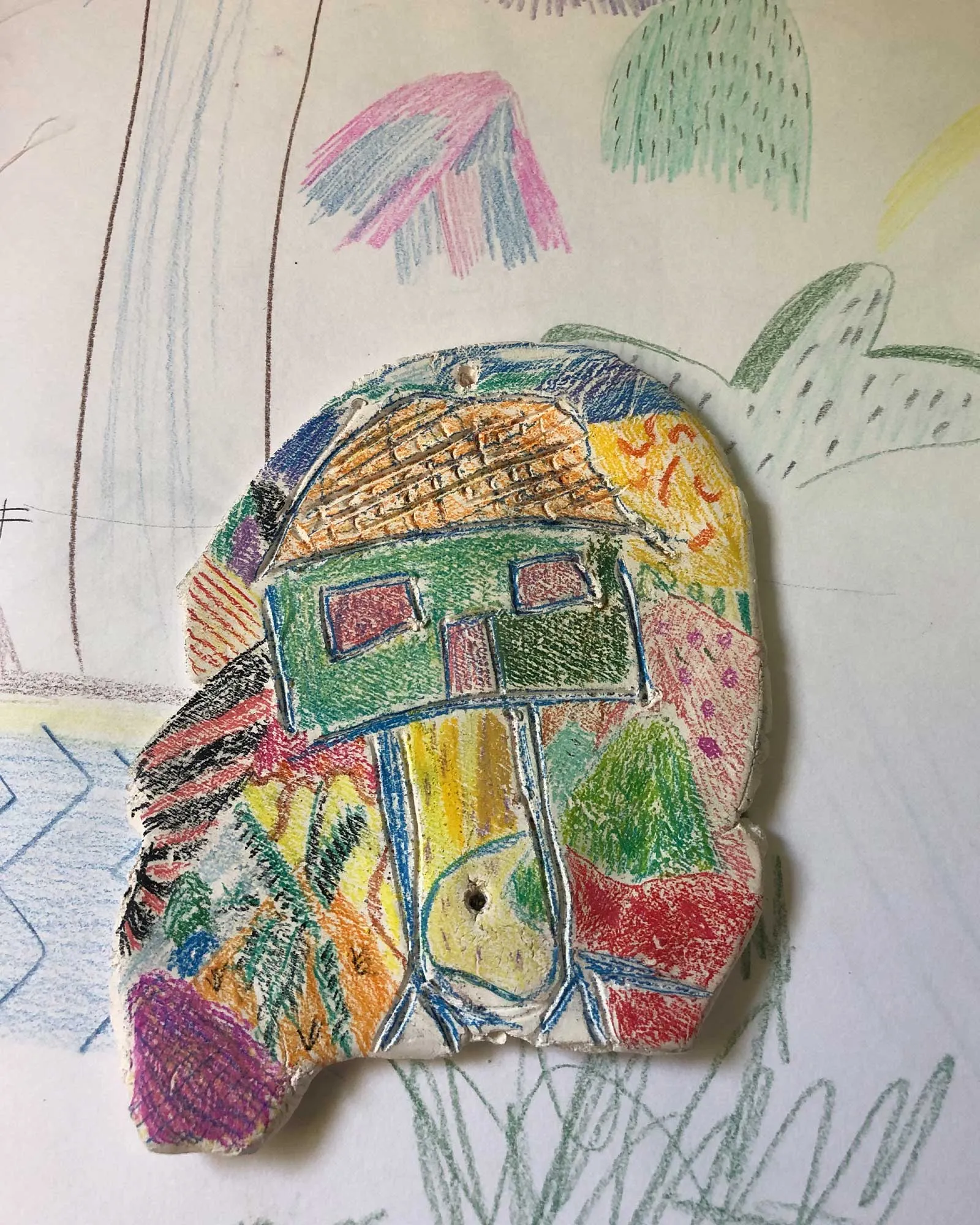
Outside formal therapy, Reid believes everyone can benefit from cultivating creative rituals in daily life. An artistic practice, she says, does not even need to involve traditional art forms. “It could be gardening, it could be writing, it could be going on a nature thing, whatever suits them.”
She also believes everyday habits can become grounding creative acts. Cleaning a room, preparing a space, arranging flowers, or singing karaoke all hold therapeutic potential. “Preparing a space and cleaning a space,” she says, “it challenges your ego.” Karaoke in particular feels culturally significant to her understanding of emotional release and collective expression. “Humans sang and danced before we even spoke,” she says. “I think it’s something that’s so undervalued.”
For readers curious to explore art therapy themselves, Reid encourages starting small and focusing less on outcomes than on the process. She recommends attending an art class, spending more time in nature, gardening, writing, or simply building a regular creative practice into daily life. When seeking professional support, she advises meeting several therapists to find someone who feels “safe enough,” rather than perfectly comfortable.
She points people to the British Association of Art Therapists and Psychology Today directories, while noting that Manila-based mental health platform Magis Creative Spaces also offers art and dance therapy.
Ultimately, Reid sees art therapy as something larger than self-expression. It is about survival, connection, and transformation; not only individually, but socially. “When you change an individual,” she says, “they change their family, they change their community.”
Frequently Asked Questions
Art therapy is a form of psychotherapy delivered by qualified art therapists that uses creative expression, including drawing, painting, sculpture, movement, writing, or other artistic processes, to support mental, emotional, and social well-being. The emphasis is on the therapeutic process rather than producing artwork.
No. Artistic skill or experience is not required. Sarah Reid emphasises that art therapy is about expression, curiosity, and self-discovery, not creating “good” art. The artwork simply becomes another way to communicate experiences that may be difficult to explain with words.
Art therapy offers a non-verbal pathway for processing difficult experiences. Sarah Reid compares trauma work to “looking at Medusa through a shield,” allowing clients to approach painful memories indirectly through creative expression rather than confronting them head-on.
Sarah Reid is a British-Filipino art psychotherapist, consultant, and facilitator based in London. She specializes in supporting children, adolescents, adults, couples, and families through art psychotherapy, using creative expression to promote emotional wellbeing and mental health. She is also a registered art psychotherapist with the UK’s Health and Care Professions Council (HCPC) and a member of the British Association of Art Therapists (BAAT).
She studied History and Italian at University College London (UCL), Population and Development Studies at the London School of Economics (LSE), completed teacher training through Teach First, studied art at Morley College, and earned a Master’s degree in Art Psychotherapy from Goldsmiths, University of London.