
Tessie Sy-Coson: Small Businesses Are the Way to Go in Tough Economy


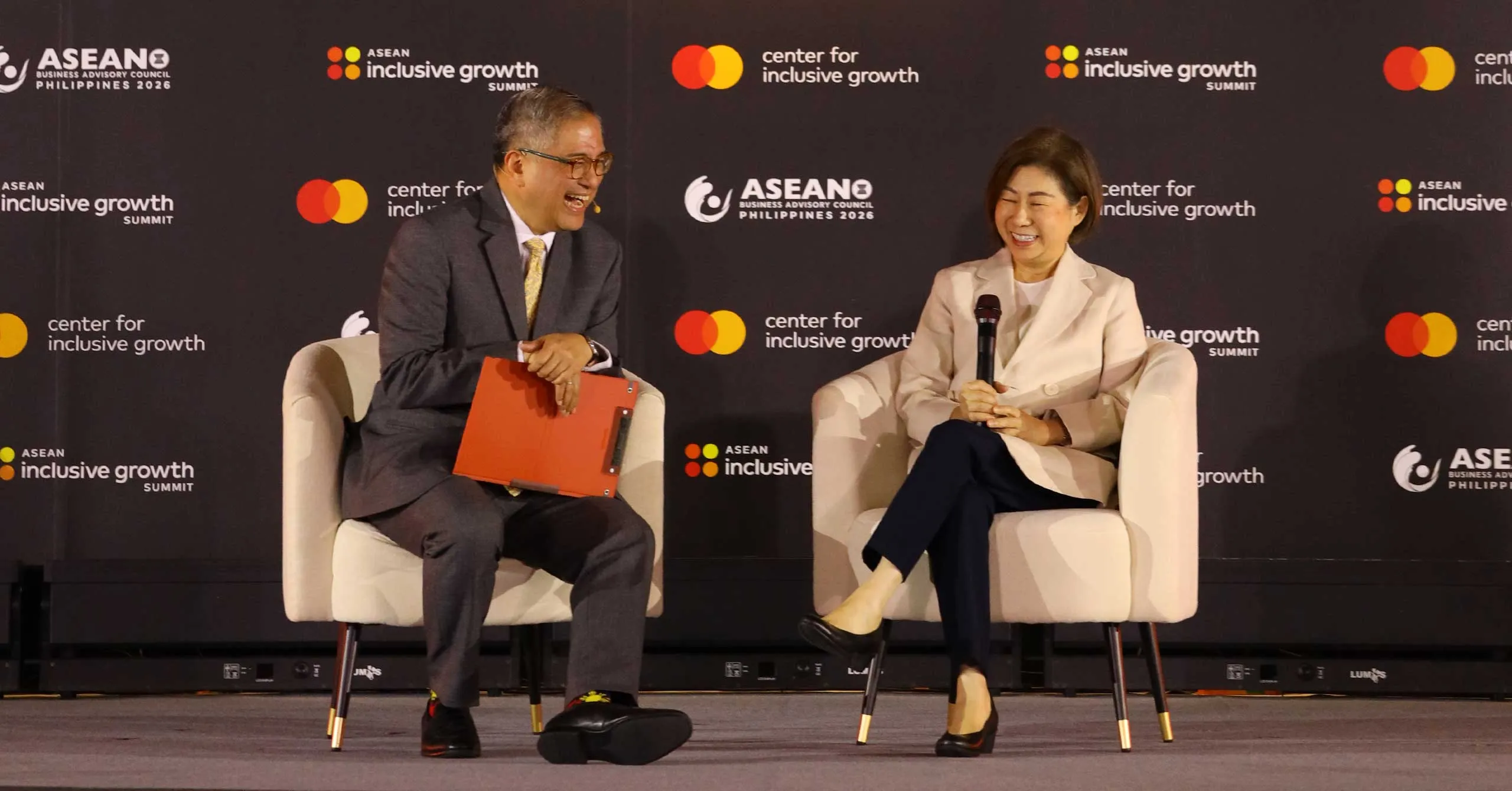
News anchor Rico Hizon and SM Investments Corporation vice chairperson Teresita “Tessie” Sy-Coson. Photographed by Excel Panlaque
News anchor Rico Hizon and SM Investments Corporation vice chairperson Teresita “Tessie” Sy-Coson. Photographed by Excel Panlaque
At the 2026 ASEAN Inclusive Growth Summit, the SM scion and tycoon shares how her early years in the family’s shoe store shaped her views on entrepreneurship, financial discipline, and supporting MSMEs.
Before becoming a leading figure in Philippine business, Teresita “Tessie” Sy-Coson was a little girl helping at her family’s shoe store.
At eight, she was already assisting customers at her grandfather’s store. By 13, she was working at Shoemart, the small store her father, Henry Sy, opened in downtown Manila in 1958 that would become the SM mega chain of malls. She helped parents choose shoes for their children, especially during the busy Christmas season.
“I was just trying to help out the family business,” Sy-Coson recalled during the In Her Shoes fireside chat at the 2026 ASEAN Inclusive Growth Summit held in Manila on November 11. “Everybody was expected to help out somehow.”
News anchor Rico Hizon moderated the conversation.
Hizon revealed that he had consulted ChatGPT and Claude to learn about Sy-Coson’s early years. “I cannot hide from ChatGPT now,” she quipped, drawing laughter.
Her childhood work gave her an early understanding of responsibility and contribution. “I have to work to show the family that I can contribute,” she said, recalling how she helped during the busy holiday season.
Asked what keeps her going after decades in business, Sy-Coson pointed to the pursuit of something new. “In life or in business, you always look for something new, and the newness of the things that you’re doing will keep you going,” she said.
Hizon observed that she always seemed up to date on trends, particularly those attracting millennials and Gen Z. Sy-Coson said she does her research and keeps an eye on social media.
“Are you on TikTok, ma’am?” Hizon asked.
“No, you don’t know that I’m in TikTok, but I do research the TikTok as well,” she replied, prompting laughter.
Asked which lessons from the family store she still applies in the boardroom, Sy-Coson pointed to financial discipline. She recalled that her father closely monitored the company’s finances and ensured spending did not exceed the budget.
“The financial statement tells a lot of stories,” she said.
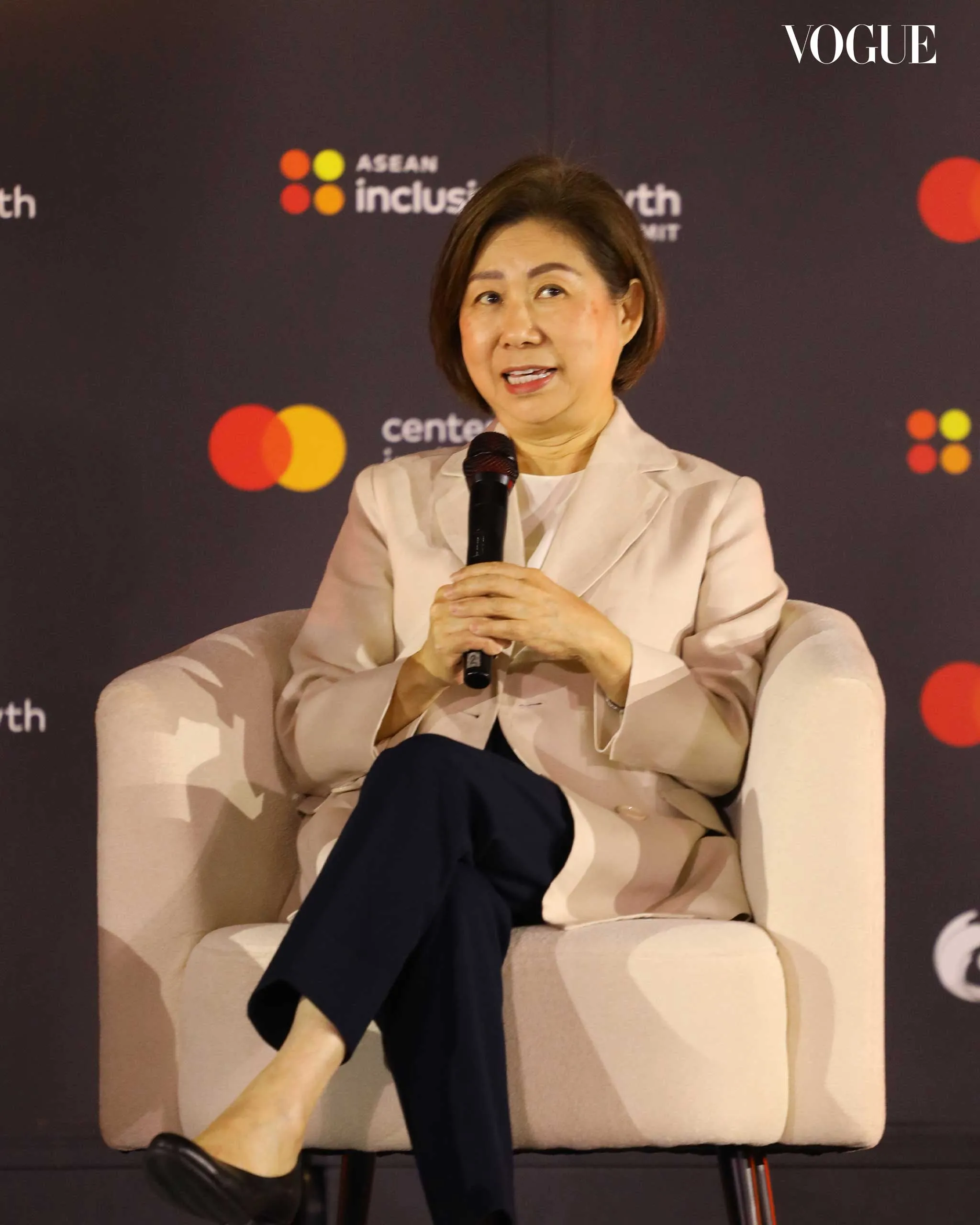
The discussion turned to the role of MSMEs in the economy and the challenges of helping small businesses grow. Sy-Coson spoke about how many of the merchants in SM malls started out as small enterprises, with some eventually becoming regular tenants. The fairs held in its malls, she explained, give entrepreneurs a chance to test their products and see how customers respond.
Sy-Coson believes small businesses have an important role to play, particularly when economic conditions are less than favorable. Higher living costs, fuel prices, interest rates, and currency fluctuations may weigh on entrepreneurs, but she sees small enterprises as an important source of resilience for the economy.
“When the economy is not as comfortable as we want it to be, the small businesses are the way to go,” she said, encouraging more people to venture into business and urging existing entrepreneurs not to lose hope.
She acknowledged the many challenges they face but said that sometimes these can be “just noises.” Her advice was to stay focused on the market, serve customers well, and keep working.
“That’s the good thing about small businesses,” she said. “You don’t have to worry about government regulator, accounting principle, compliance, environment,” referring to the more complex requirements that larger businesses have to navigate.
For Sy-Coson, the connection to small businesses is rooted in her family’s own experience. SM, too, began as a modest retail operation, a history she said remains central to how she views entrepreneurship.
“My dad always [told] his friends that if he can do it, you can do it too,” she said. “Micro and small businesses are really the foundations of our business, whatever business we’re in.”
Asked what she would like ASEAN leaders to prioritize for MSMEs, Sy-Coson said access to financing and data matter, as does awareness of the regional business landscape. Entrepreneurs need to understand opportunities, competition, and technologies that could affect their businesses. She specifically cited artificial intelligence as an area small enterprises should learn more about.
Her hope is for more small businesses to emerge and grow despite difficult economic conditions, including higher living costs, fuel prices, interest rates, and currency fluctuations.
But she believes small businesses have an advantage in their ability to adapt.
“Sometimes those can be just noises, and you just look into the market, serve your market, work hard, and you’ll be able to get over it,” she said.
Her message to aspiring entrepreneurs was to keep going, understand their customers, and not lose hope when circumstances become difficult.
For Sy-Coson, the foundations of business remain hard work, financial discipline, adaptability, and the willingness to grow alongside others.
Frequently Asked Questions
Teresita Sy-Coson is vice chairperson of SM Investments Corporation and chairperson of BDO Unibank. She is the daughter of SM founder Henry Sy.
Henry Sy started with a small shoe store in downtown Manila in 1958. The business eventually grew into the SM Group, with interests in retail, property, and banking.
She was eight years old when she began helping customers at her family’s shoe store, assisting parents in choosing footwear for their children.
She encourages entrepreneurs to stay focused on their customers, understand their market, work hard, and persevere despite difficult economic conditions.
The ASEAN Inclusive Growth Summit is a gathering of business leaders and industry stakeholders to discuss economic growth, financial inclusion, digital innovation, and opportunities for small businesses across Southeast Asia. It is spearheaded by Mastercard’s philanthropy arm Center for Inclusive Growth. It was held in Manila in 2026.