
The Future According to Marian Pastor Roces and Tad Ermitaño


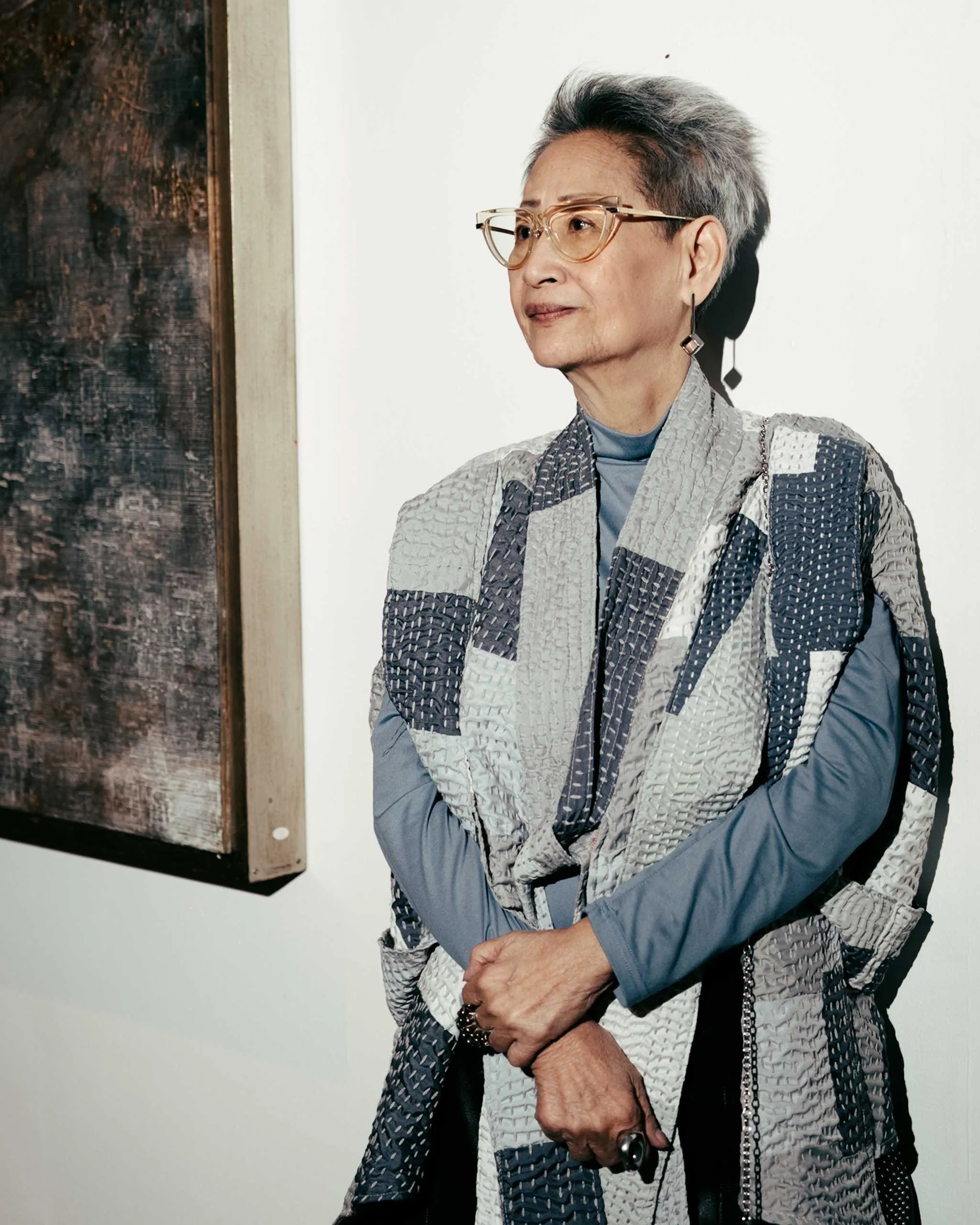
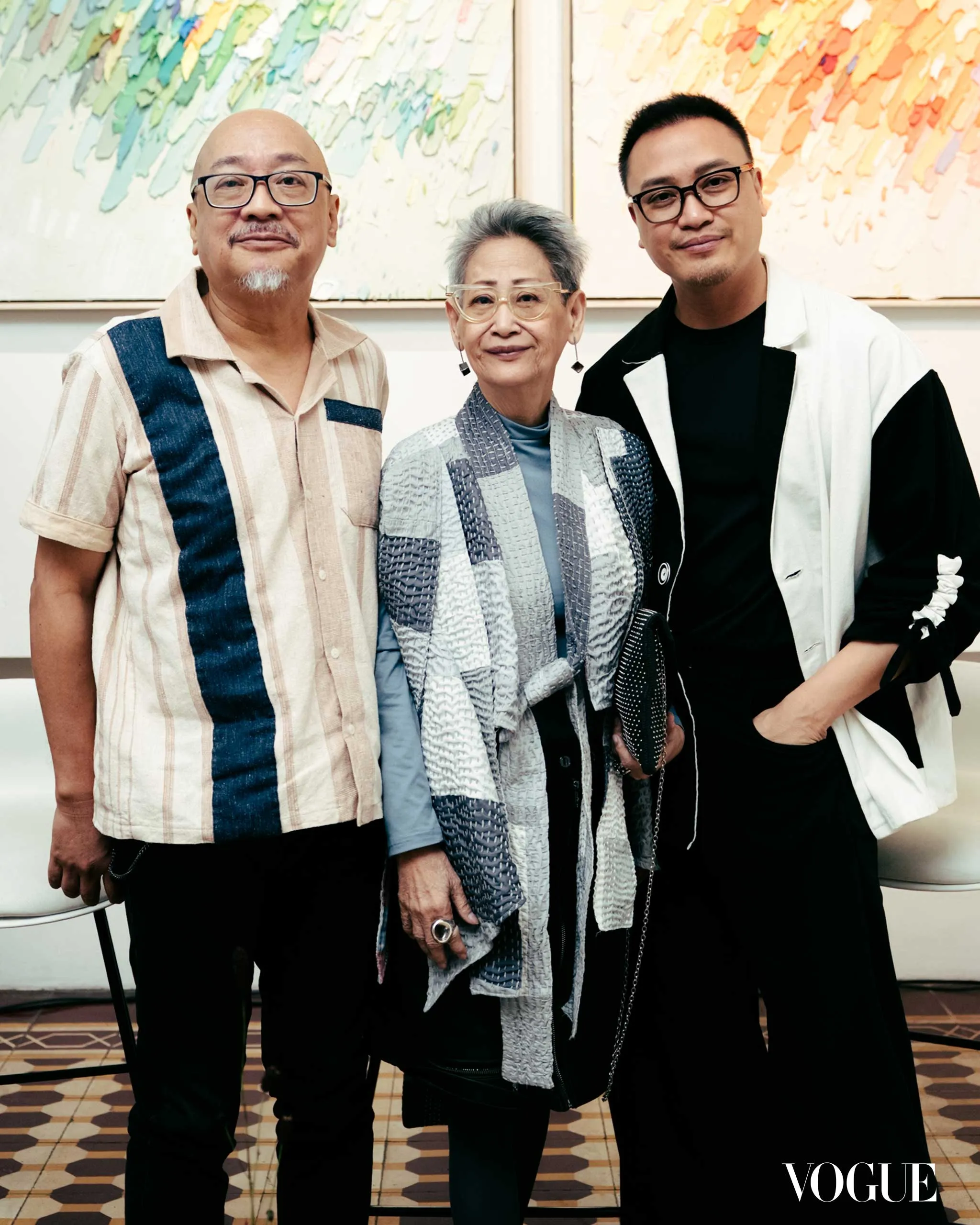
Photographed by Kim Santos
At Vogue Threads 2026, the acclaimed critic joins the experimental artist to talk intelligence, agency, and the impact of AI on creative culture.
The future is here. Who isn’t freaked out yet?
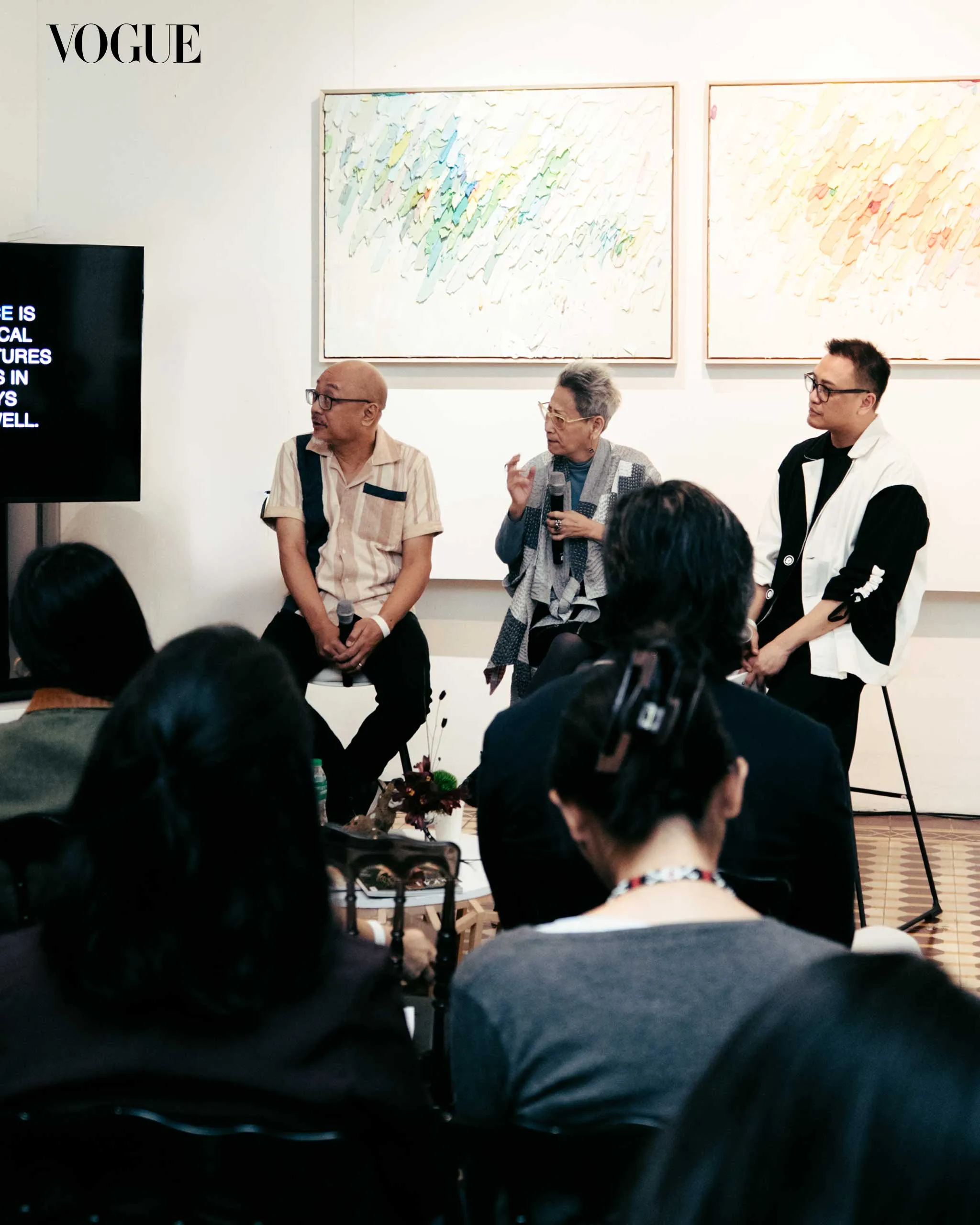
Opening the final session of Vogue Talks, moderator Jorell Legaspi throws this question to the crowd, acknowledging the technological shift that we’re experiencing as designers, artists, and cultural workers. The mix of anxiety and anticipation it brings is palpable inside the packed room, where audiences have gathered for three days to learn about Vogue Philippines’ fourth anniversary theme: artistic and ancestral intelligence, or the ways of making that are rooted in Filipino heritage and handwork, rather than machine learning.
When the talk begins, the working definition is something that our speakers immediately trouble, as independent curator and critic Marian Pastor Roces explains that the three terms are fundamentally different, followed by new media artist Tad Ermitaño, who shares his thoughts on why artificial intelligence can’t replicate the human creative process anyway.
“AI, AI, AI,” Marian rattles off. “They are apples and oranges. They can’t be compared. So I’d like to frame everything that we’re going to talk about from the perspective of, these are totally different things.” A moment of shocked silence, then the sense that everyone in the room is leaning forward. It’s enough to tell us that we’re in for a real conversation.
Reframing and redefining AI
Clicking through her slides, Marian says that what we think we know of ancestral culture is largely lost in translation. Unless we can fluently speak one of the Austronesian languages of the Philippines (as it was spoken at least in the 1950s), it remains inaccessible to most and we can’t claim to understand it. For this reason, she doesn’t consider picking up motifs from traditional textiles or objects a form of engaging with ancestral knowledge.
She then describes artistic intelligence, which centers on the tinkering process of creating something we can perceive and playfully prod at: “It revels [and] enjoys cognition pathways, figuring out how something is known.” Lastly, she asserts that artificial intelligence is not a tool, as it is often touted. Rather, “It is agency,” and she believes that over the next seven years “when we arrive at AGI” or artificial general intelligence, a hypothetical system that can match or surpass human thinking across multiple tasks, the question we need to ask ourselves is whether we’re using AI or allowing AI to use us.
As an artist who works closely with electronics, exploring human perception through sound art and experimental film, Tad has often returned to philosopher Marshall McLuhan’s idea of technology as an extension of the body. Yet, he also agrees that AI is different, a BS machine that has no concern for truth and whose relationship with words is not like ours.
He cites the writer Michel de Montaigne, who coined the word “essay” from the French “essai,” which means to try or attempt, to stumble our way into realization. But AI doesn’t stumble; it seeks to satisfy. The result, Tad says, is a lot of fake art that floods our screens and drowns or distracts from meaningful work. “It becomes a bunch of stuff that looks like it was written by a human, but does not mean like a human does. And I think that’s the real danger.”
The ethics of AI use and who decides the future
Now deep into the discussion, Jorell asks the loudest question on everyone’s minds: Is it bad to use AI? Marian responds, “Well, it’s too late for that,” followed by laughter from the crowd.
For the critic, the situation is far ahead of us, as ANI or artificial narrow intelligence today already raises ethical dilemmas. She offers one scenario: A self-driving car, which humans have programmed “to not kill people,” finds that it must choose between hitting a bus full of children or harming its occupants upon veering off the road. “So what did you program that car to decide?” she asks. “Those moral questions are no longer decided by philosophers, by priests, by intellectual gatekeepers [or] experts. These moral decisions are made by designers.”
Tad adds that the buck has historically stopped with humans, someone who can account for the consequences wrought by a machine they created, operated, or signed off on. But the conversation becomes muddier when AI comes in, and responsibility could be shirked by assigning blame to the algorithm or the user whose data it feeds on. He also mentions AI companies that buy and scan antique books, then destroys them so they only exist as virtual forms. How do we consider the ethical use of an AI program that is trained unethically?
Marian sources hope by recognizing the enormity of the situation, saying that if we can face it, we can creatively respond to it. “If [we] can encompass the scale in our minds, then we are now creatives for the 21st century,” a position that she encourages the audience to take on.
The joyful friction between idea and result
The talk steers back to artistic practice, as Jorell asks Tad about his interest in technology and why reconfigured devices fit into his art. Tad’s answer is simple: attraction and stubbornness, his belief that machines are an important part of culture. “It was like an artificial barrier to think that art is only stuff that happens in paint and sound,” he expresses. “If people are using jeepneys and cellphones, then these machines should show up in art and not just as pictures.”
From his observations on the discourse surrounding AI, its benefits are speed and efficiency; what would take a week to make by hand, it can do in 30 seconds, a win for productivity and getting things done. But as a creator, Tad finds that the importance placed on the finished product devalues the labor behind it, the doing which is itself a kind of pleasurable friction.
“In an ideal world, there would be zero friction between the idea and the product; that’s the dream that AI is supposed to implement. And I think we have it backward,” he says. Pointing to an illustration in his slides, he continues, “The mathematician and the artist think of labor the way Montaigne thought of the essay. It is labor [that moves you to] further your understanding, make your meaning, that is so intense that people are moved.”
It’s something Marian relates to later on. Where the fictional editor Miranda Priestly despised the “glacial pace” of her staff, it is exactly that awkward slowness which Marian rejoices in as a museum curator. “I love how it takes 20 years to have an exhibit that I like,” she admits with a grin. “It’s really sensuous, and it’s really intellectually satisfying.” Who can argue with that?
Immersion, encounter, and tough imagination
Jorell brings us back to the beginning: to ancestral and artistic intelligence, and what it would look like to truly tap into them. As Marian and Tad close the talk, it becomes clear that ancestral intelligence must be arrived at through extended immersion and deep inquiry, while artistic intelligence tends to start with a naive (and therefore open and curious) encounter, which are two steps in a practice that AI can’t do.
Marian conveys this by sharing an anecdote: a French linguist who spent 60 years living in Palawan and studying the island’s ethnic group. Over the decades, she learned that the community had their own names for constellations and life on earth. They had “up to 10,000 species in their heads,” she relays, “by which they can record direction with tangents that include mountains, particular trees… So it’s just astounding. This is ancestral knowledge.”
Tad returns to his own process, where making music and noise often begins with found objects, which he listens to without prior information. “I have no ancestral knowledge. I have no idea what this means,” he states, “I sort of make my own shapes or structures that make sense to me… A mishmash of influences.” For him, art is about attending to the world, an act through which human intelligence is molded and made. “In my view, I’m an ancestor in the making.”
The idea of taking and transforming something isn’t inherently good or evil. Marian cites a composer who changed Western music after chancing upon Indonesian percussion, and how piñaPiñaA luxurious, translucent fabric hand-woven from pineapple leaf fibers, most closely associated with Aklan in Panay. The painstaking process of extracting and knotting the fibers makes piña rare and costly,Go to Piña Glossary, which arrived in the Philippines through maritime trade, nonetheless became a source of cultural pride because ours is the only country that extensively produces, weaves, and wears it. “It’s what you make of it, right? It’s how you make it yours,” she emphasizes.
That the task requires us to claim our own abilities and decisions could be the key to pushing forward in unprecedented times. AI is a capable engine: It can extract, generate, and predict; it can rob us of organic encounter; and it can override the process of immersion to skip straight to the answer. But, it is unable to stand by what it says or see past it, because it doesn’t imagine. However bleak the future seems, the act of envisioning, listening, and forming our own conclusions alongside the speakers is gleeful and exciting. “You have to have the imagination to understand this,” Marian tells the creatives in the room, and it feels like we do.
The final session of Vogue Talks ends on a note of urgency, but also reassurance and clarity, where the future we’re headed toward is not the only option.
Frequently Asked Questions
Marian Pastor Roces is an acclaimed independent curator, critic, and policy analyst known for her work in developing local museums, such as MCAD and 21AM of the CCP, and for her publications and keynotes on anthropology, culture, politics, and power. She is also the founder of Tao Inc., and the author of Gathering: Political Writing on Art and Culture.
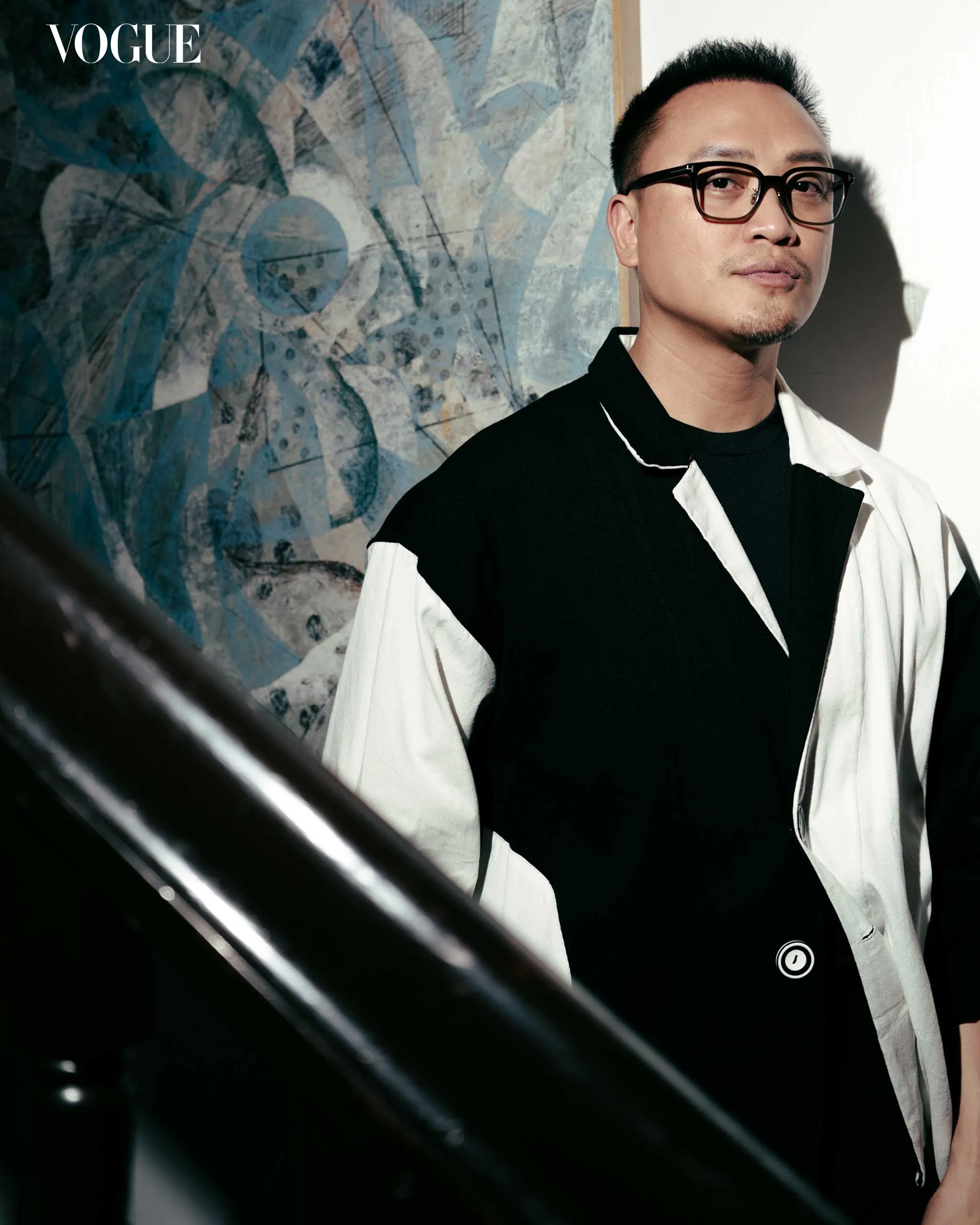
Tad Ermitaño is a mixed media artist whose work explores how the body experiences technology through space, sound, and experimental film. Considered a pioneer figure in Philippine sound art, he was also a founding member of the media collective Children of the Cathode Ray. His recent exhibit Somatodelic was held at the Ateneo Art Gallery.
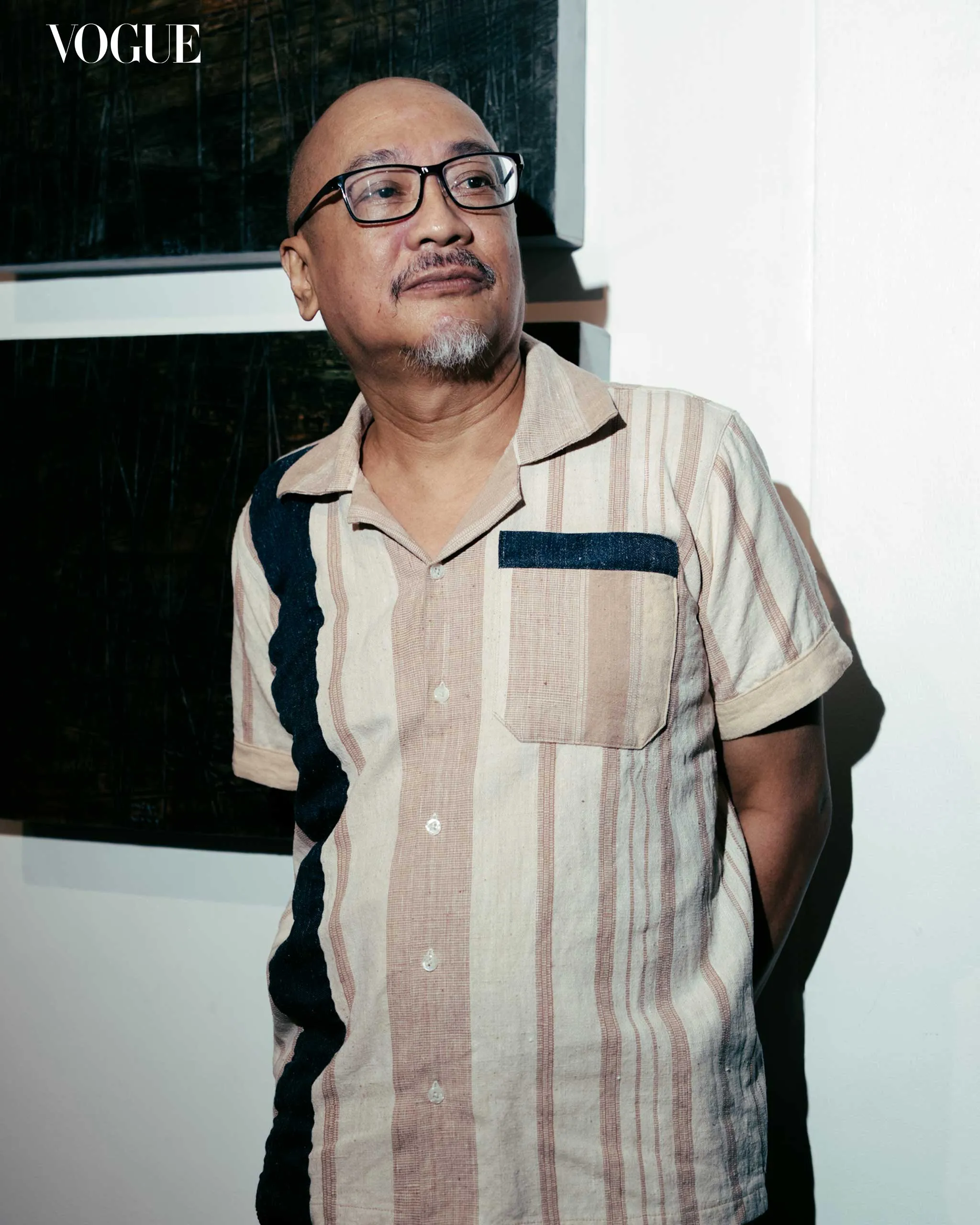
Jorell Legaspi is the senior director for arts and culture at Ayala Foundation and the director of Ayala Museum. With a background in community development and heritage management in Qatar, where he served in the founding team of Mathaf: Arab Museum of Modern Art, his work currently spans curation, research, and public programming.
Vogue Talks was held from October 26 to 28 as part of this year’s Vogue Threads event. The talks took place on the first floor of F.A.B. Creatives, which is the last house in the 2680 Compound on F.B. Harrison Street in Pasay.
Vogue Threads is an annual celebration of Filipino culture, creativity, and community, helmed by Vogue Philippines. The event bridges local heritage and contemporary art through exhibitions, interactive experiences, Vogue Talks, and portfolio reviews for emerging creatives.