
Review: Bajuyo Interprets the Hanbok with a Myriad Ways to Tie the Goreum


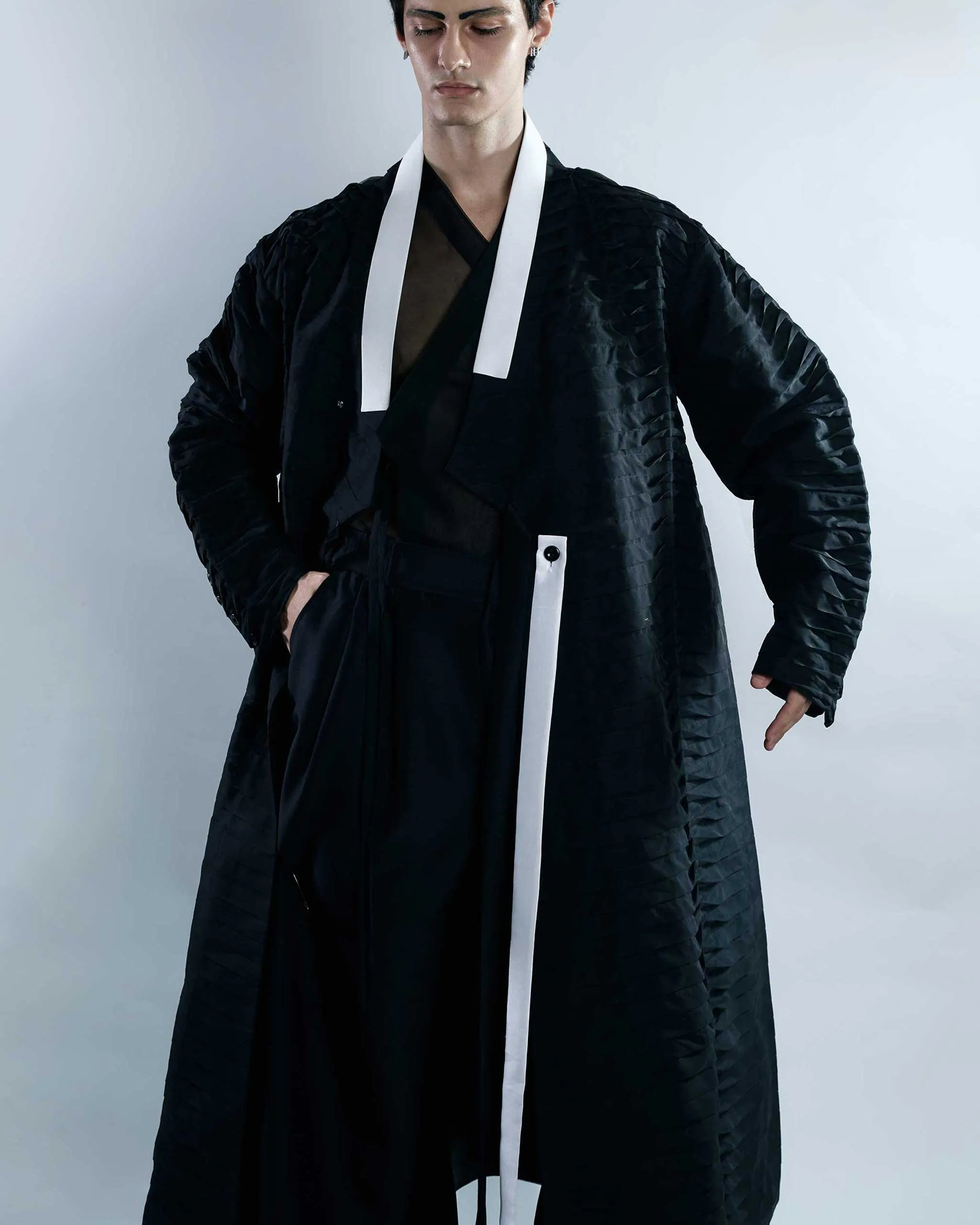
Photographed by Gab Villareal
For his first show in the Philippines, creative director Darni Park fixates on the Hanbok’s goreum.
“Life! Too easy! What’s the point of gettin’ dirty?”
So begins jivicxi’s “There Are Good People In The World,” the opening soundtrack of Bajuyo’s runwayRunwayThe platform or catwalk on which models present a designer's collection to an audience of editors, buyers, and guests. Runway shows establish the creative statement of a season, and Vogue'sGo to Runway Glossary show for Fashion Week Asia. Initially resembling a gospel-like harmony sung in English, the song shifts abruptly to a bass-heavy Korean rap, prompting the audience’s collective, instinctive head bobs, and foot taps to the beat.
For anyone privy to creative directorCreative DirectorThe person who sets the overall visual vision of a fashion house, publication, or campaign and guides designers, photographers, and stylists toward it. A creative director's influence shapes collections, imagery,Go to Creative Director Glossary Darni Park’s collection notes, the music is both sensible and surprising. With his collection Tie Time: Korea came the endeavor to express the harmony between past and present, tradition and modernity. He tells Vogue, “For this collection, we focused on one of the most symbolic elements of Hanbok: the goreum, a traditional fabric tie used to fasten the garment. To us, the goreum is more than a functional detail. It represents connection, the act of bringing separate elements together to create something meaningful.”
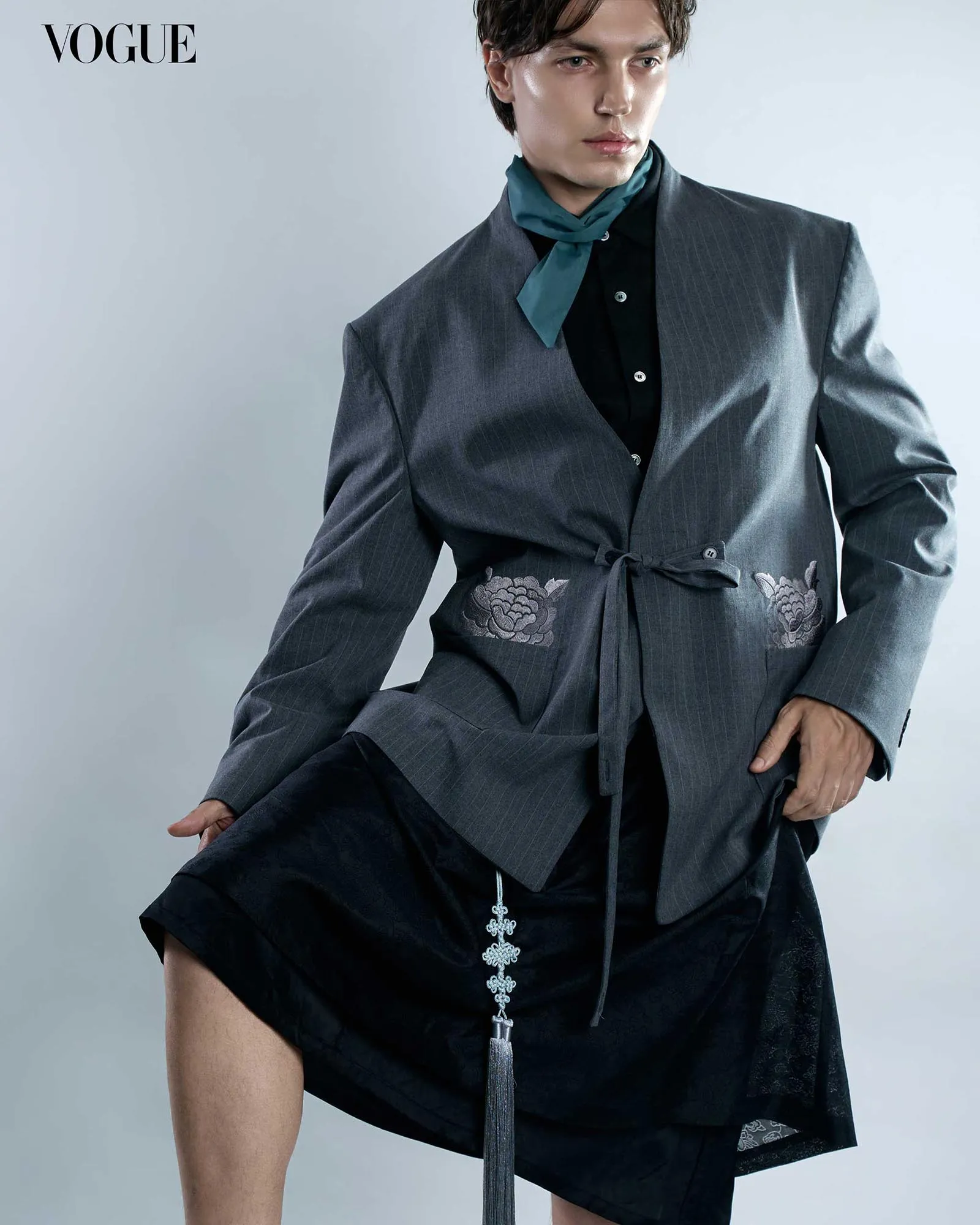
And he delivers. Outright, goreum becomes a neck scarf, obi belt, and repetitive decorative motif, adorning deconstructed garments that also make up the traditional Hanbok. The jeogori or upper garment is shrunken to resemble a bolero and paired with a layered chima or skirt, while the traditionally male baji or trousers (which billow down the leg) are worn by women and men alike. Silk trims substitute lapels, while a sprinkling of camouflage and leopard prints evoke a street sensibility that might initially register as counterintuitive, but as the show progresses, decreasingly seems out of place.
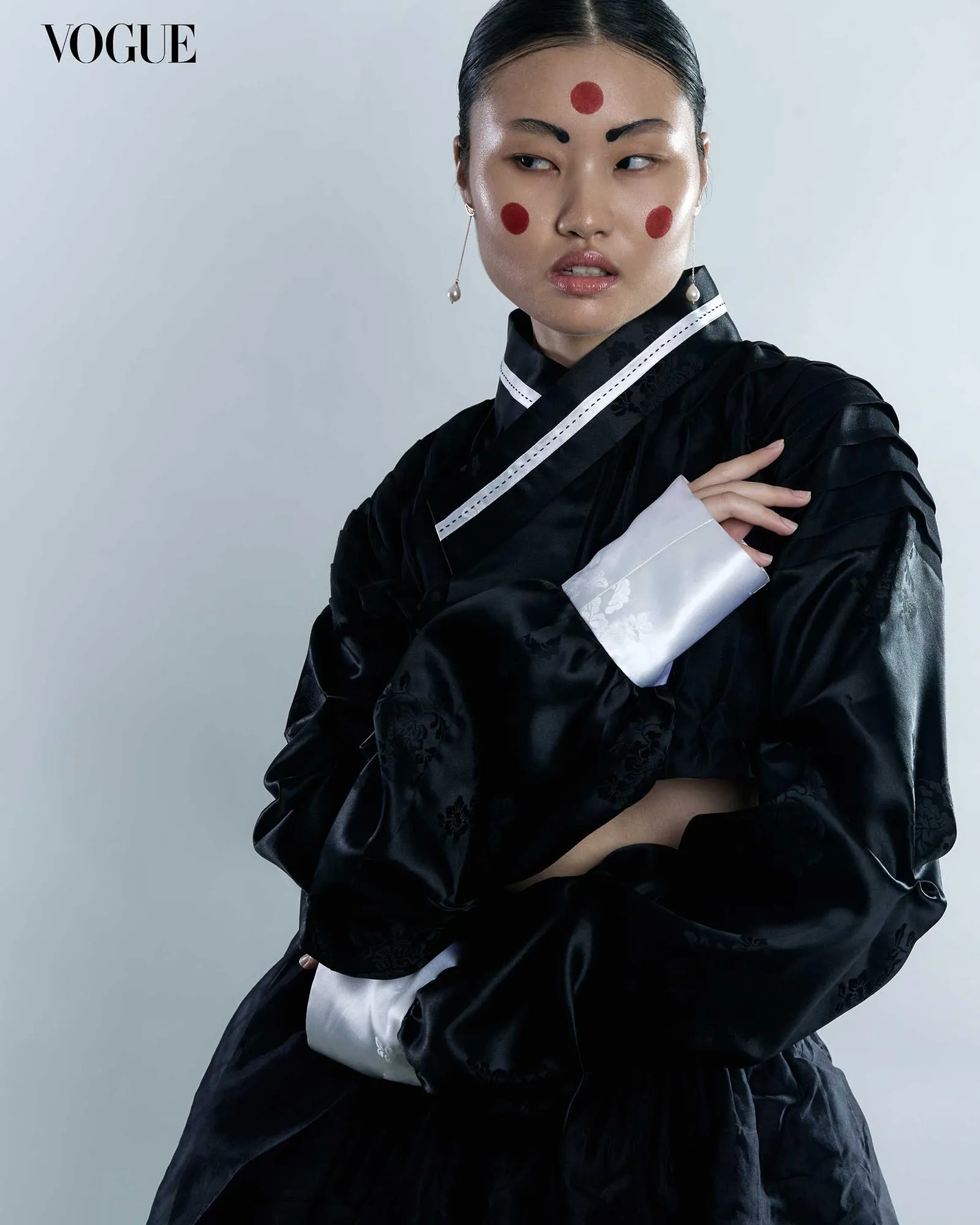
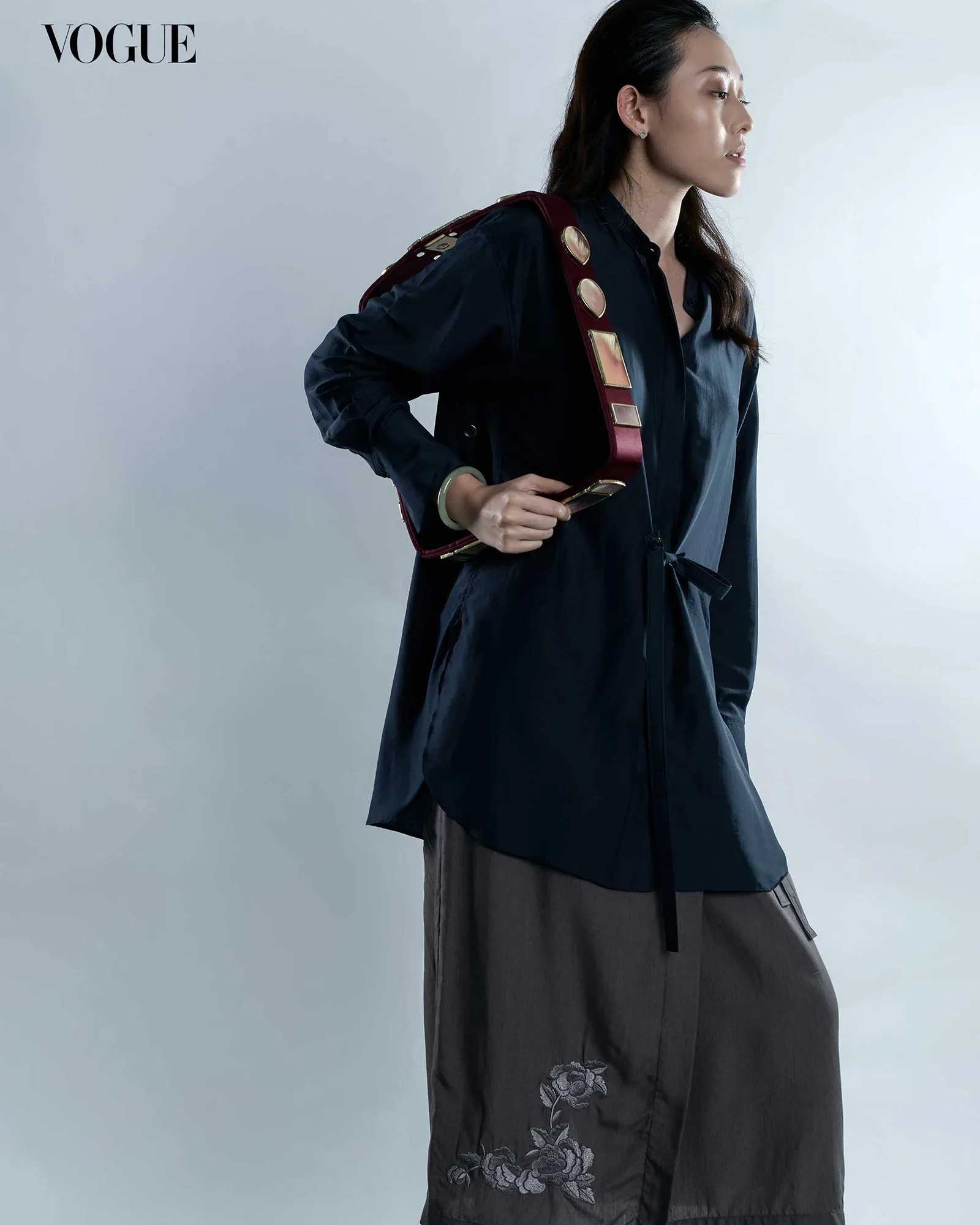
Meanwhile, Joseon dynasty-era accessories like the gat or hat and norigae or decorative tassel pendant are made modern; the latter, in particular, is dramatically elongated, and dangles to and from from the rear center of suit jackets like a pendulum. The Hanbok’s quintessential floral embroidery also makes multiple cameos by peeking out of jacket pockets, camouflaging across a plaid shirt, and peppering trouser hems.
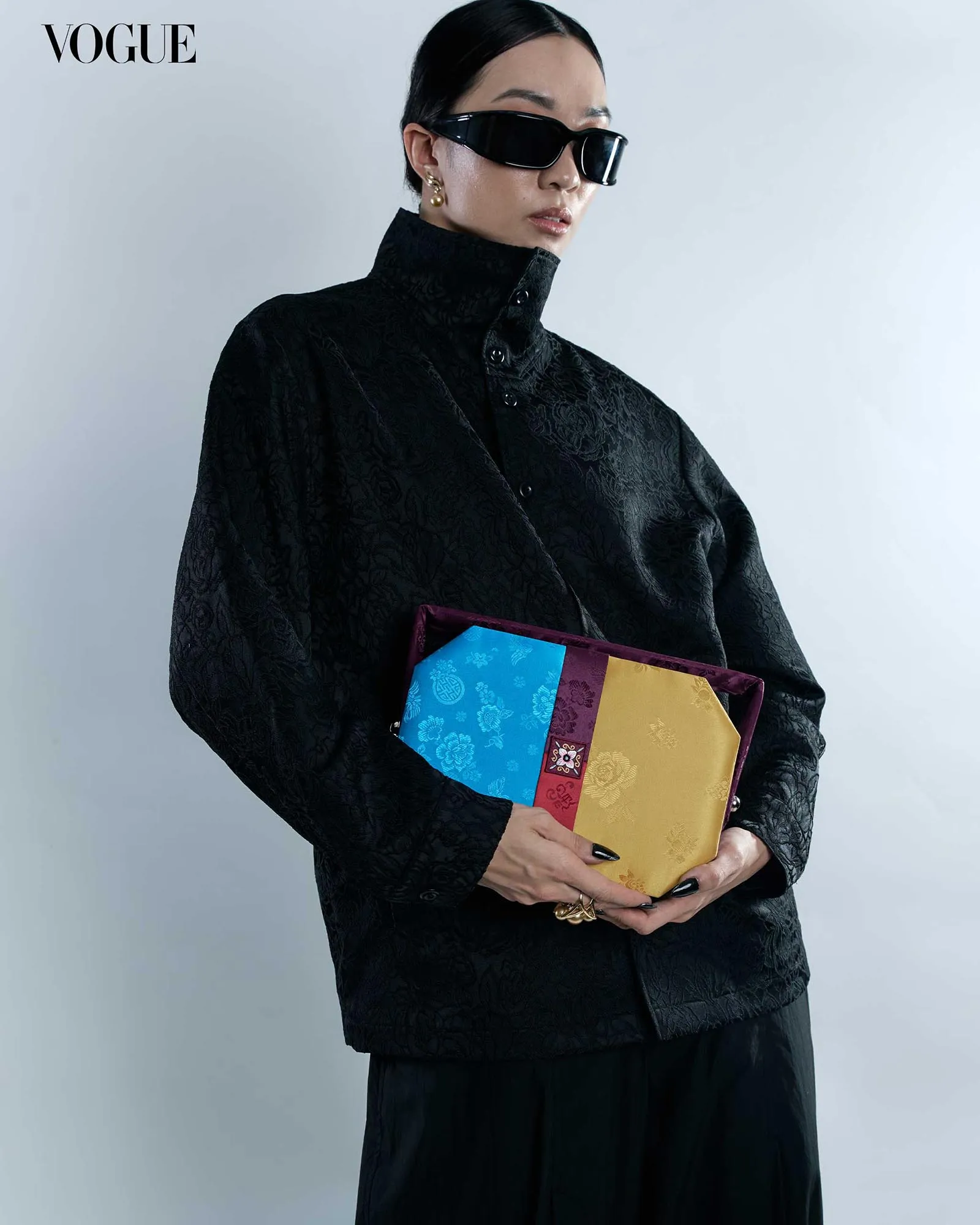
If Hallyu brought the Hanbok to the mainstream, Park introduces it anew by stripping the ensemble to its foundational components, instead of presenting it as a sum of its parts.
“In an industry where trends change rapidly, I believe cultural heritage has the potential to remain relevant through continuous reinterpretation,” Park ruminates. “I don’t want tradition to exist only as something preserved in the past. I want it to become a living culture—something people can wear, experience, reinterpret, and pass on to future generations.”
Frequently Asked Questions
Bajuyo is a contemporary Korean fashion brand and “Korean Future Vintage” label led by designer Darni Park.
Its aesthetics include reworked jeogori jackets, layered skirts, and sculptural proportions that emphasize structure and craftsmanship.
The brand is known for reinterpreting Korean hanbok and menswear into modern, everyday wear.
Darni Park is the founder and creative director of Bajuyo, a Korean fashion brand.
You can buy Bajuyo directly through its official channels and special international events.