
EXCLUSIVE: Paloma Urquijo Zobel de Ayala on the Heritage and Care Behind Two Michelin Key Lagen Island


Courtesy of KOHLER
At the newly awarded ecoluxury resort in El Nido, the creative director of Ayala Land Hospitality looks to Filipino craft and care, thoughtful restraint, and stewardship.
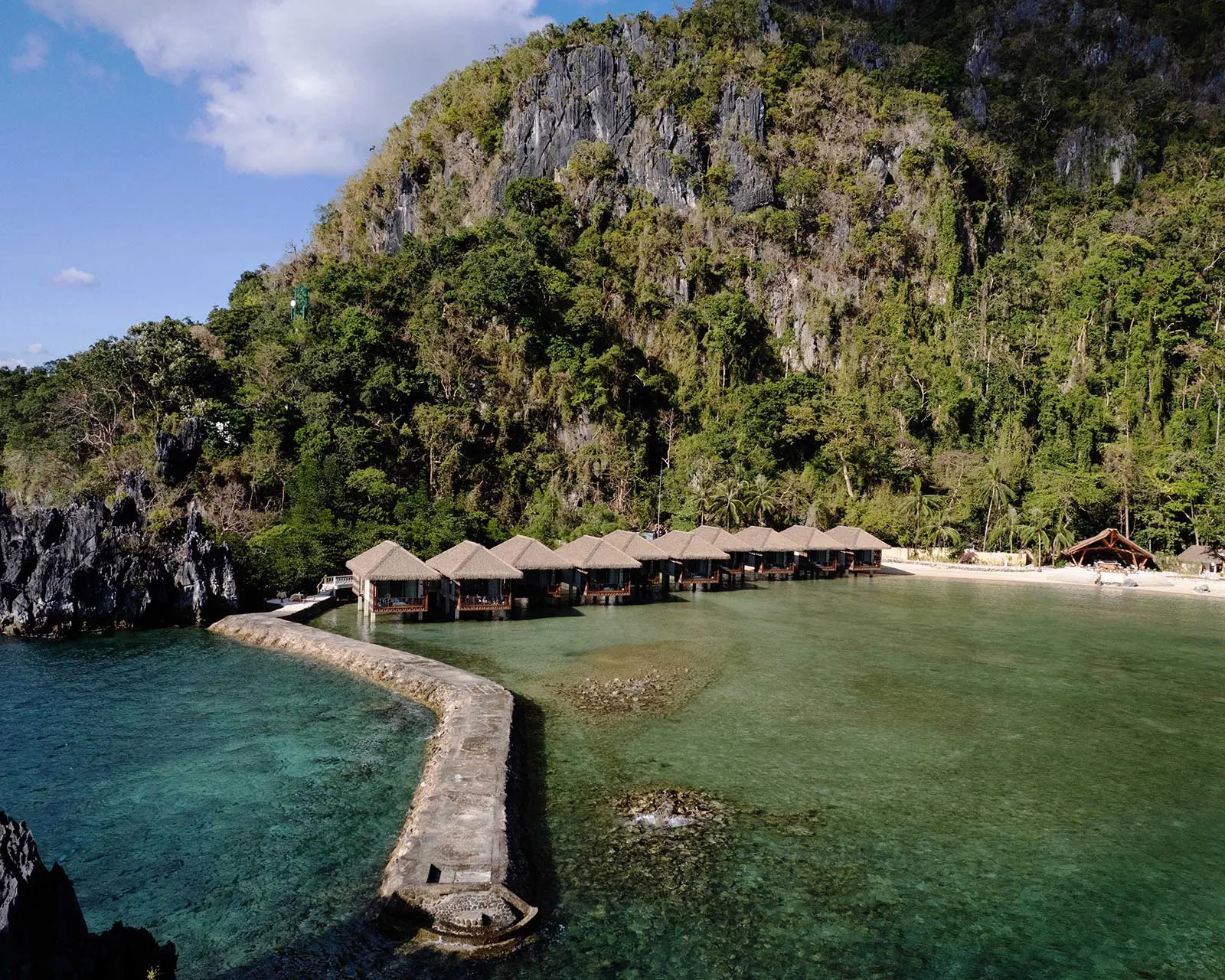
On a hot summer day in April, we arrive at Lagen Island by way of Bacuit Bay, its aquamarine water hemmed in by forest and towering limestone cliffs. The first structure to meet us is the Boathouse, its roof shaped like an overturned paraw, the traditional sailboat long used by Palawan’s coastal communities. Jimwell, our island guide, had indulged the group with spirited stories of the bay during the short boat ride, and by the time we reached the dock, smiles and glasses of lemongrass-calamansi juice were waiting to welcome us.
It is an apt introduction to Lagen, where design is rarely there for design’s sake. Each distinct Filipino detail, as we later learn, is meant to carry either a story, a function, or both.
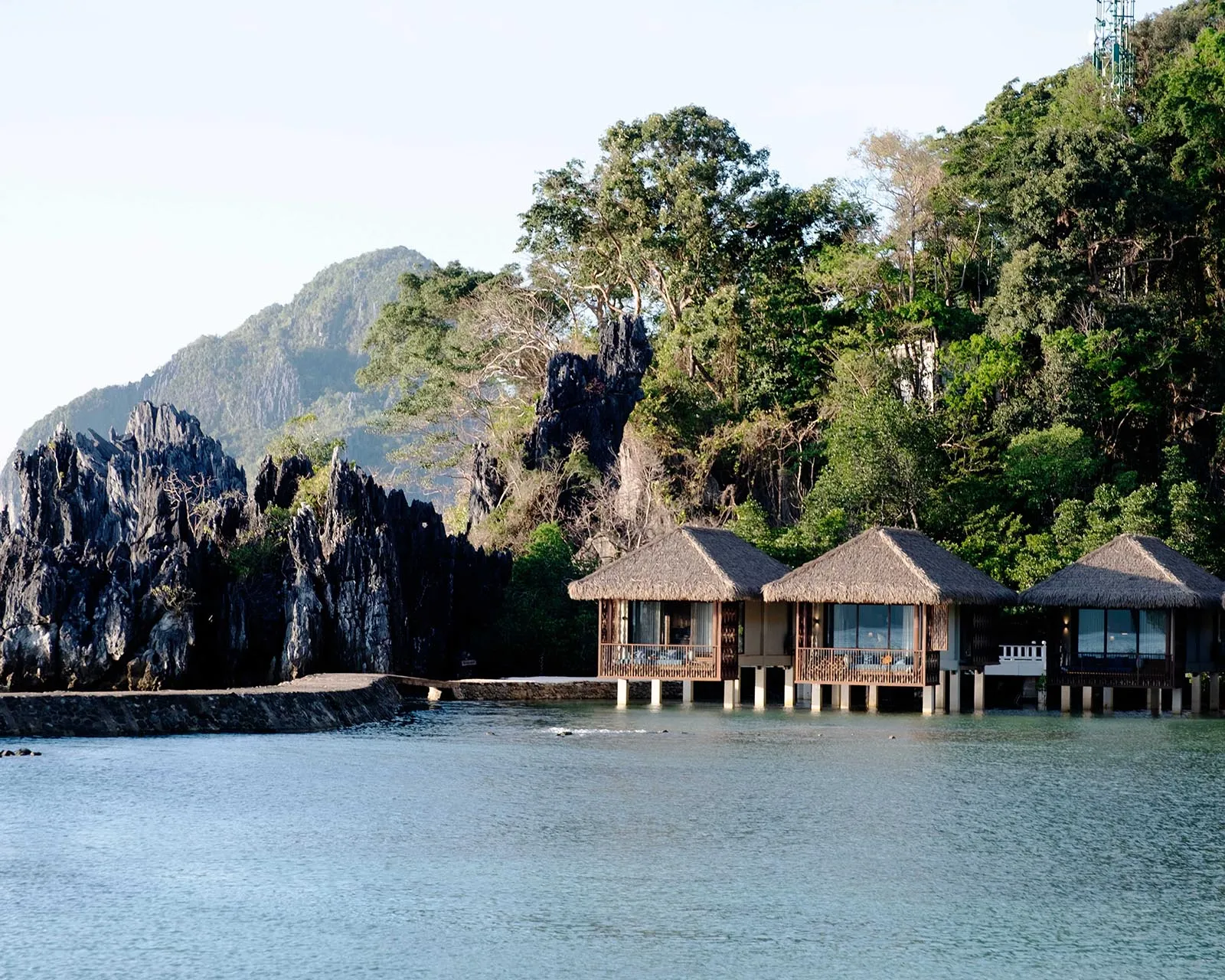
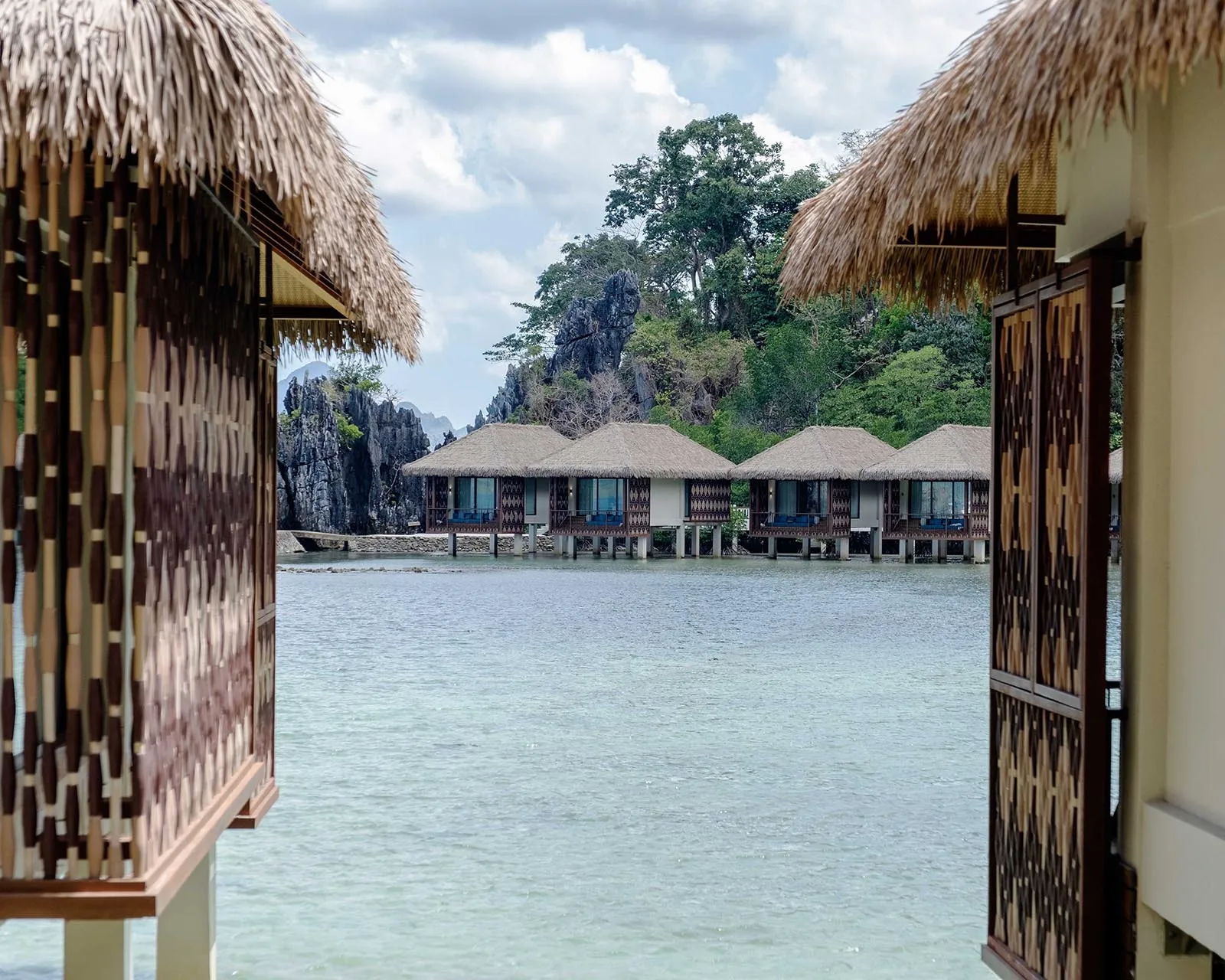
The resort reopened in 2026 after an extensive year-long renovation led by Paloma Urquijo Zobel de Ayala, creative director of Ayala Land Hospitality, with WATG, Wimberly Interiors Studio and Henning Larsen. The approach was preservation-first and deliberately restrained: Room count was reduced from 50 to 42, spread across water cottages on stilts, beachfront cottages, forest rooms, and forest suites. Rather than build over the island, the redesign sought to work around what was already there.
That philosophy has since earned Lagen Island wider recognition. In 2026, it became one of the Philippines’ first two Michelin Key hotels, alongside Raffles Makati, with the Michelin Guide noting both its setting and its long-standing environmental practices.
But much of what defines the resort reveals itself in subtle ways: woven details, carved wood, local ceramics, and architectural references that look back to Filipino forms without treating heritage as something fixed in time.
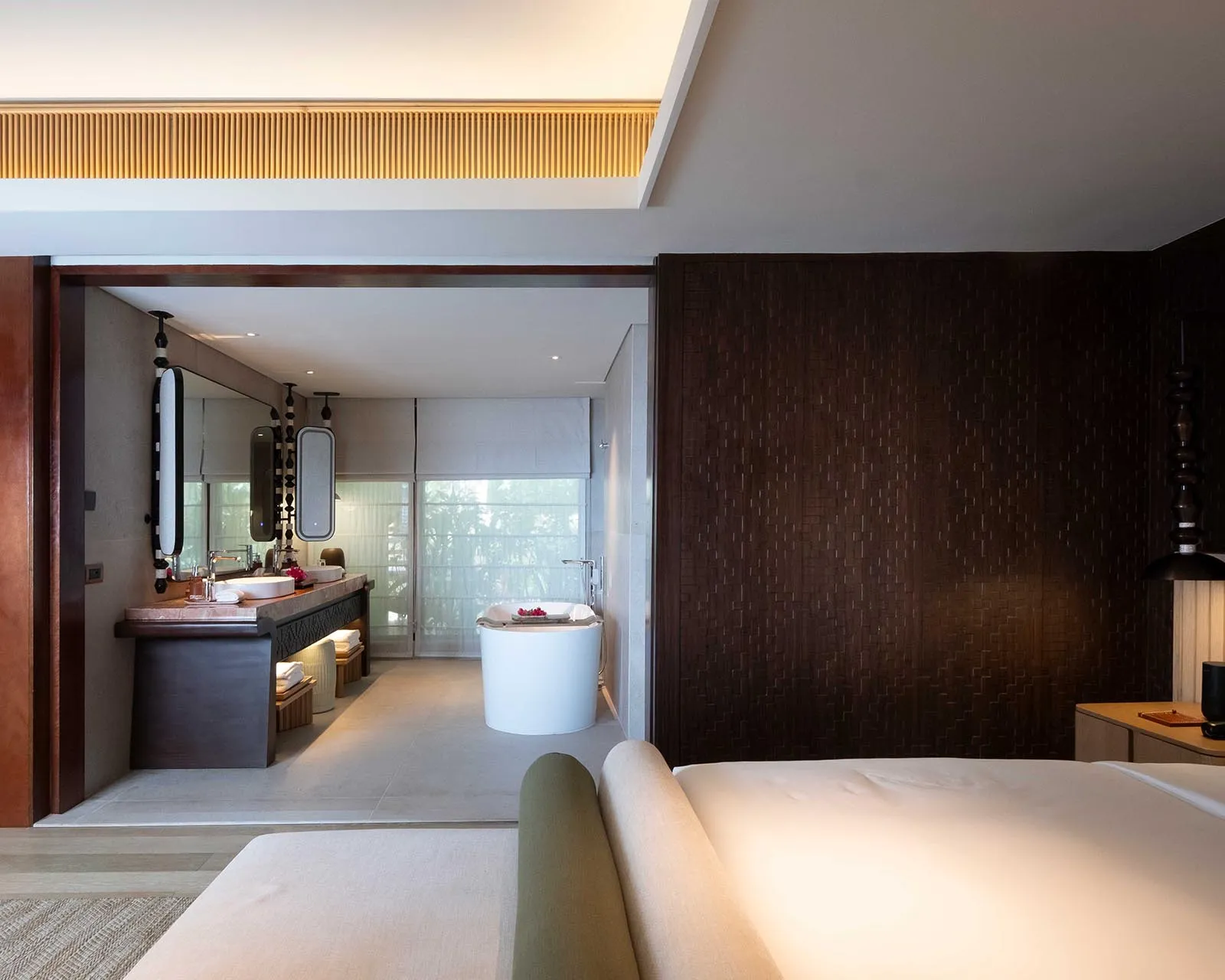
The same thinking extends into its partnership with heritage kitchen and bath brand Kohler. Founded in 1873, Kohler began with an enameled cast-iron trough transformed into a bathtub, an object that turned something utilitarian into one associated with comfort and dignity. More than a century later, that meeting of function, design, and care finds a contemporary expression at Lagen, where smart toilets and water-conscious hand showers are integrated into the rooms without competing with the island around them.
Over the course of a few days, the island welcomed us to a plethora of activities: massages and hot-and-cold plunges, mornings spent snorkeling, and Schiller water bikes in place of jet skis out front. Above, Palawan hornbills and other birds move through the canopy, crows flutter about during lunch, and nature walks and birding activities are encouraged as a reminder that guests are entering an ecosystem already in motion.
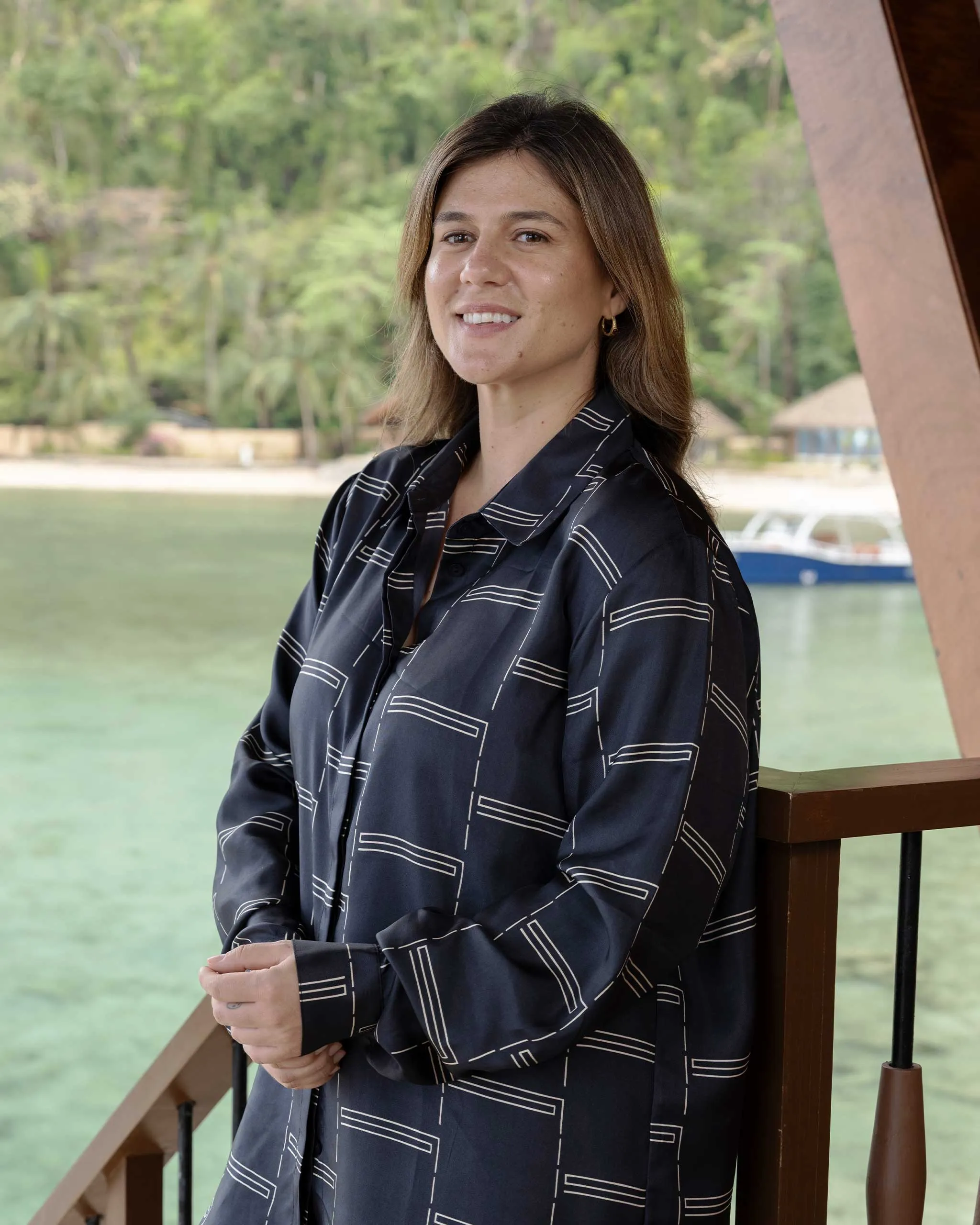
Freshly returned from Milan Design Week, Paloma sits in conversation with Vogue Philippines at the height of summer. She speaks about Lagen’s renovation, Filipino craft, heritage, and the relationships that hold the island together: between place and people, one generation and the next, and a team she describes with enough affection to bring her to tears.
Vogue Philippines: You just came from Milan Design Week. How was that?
Paloma Urquijo Zobel de Ayala: It was fantastic, honestly. I think the renaissance of craft and creativity that I saw was just fabulous. This is a good time to be alive and be in design.
What would you say makes Filipino design and craftsmanship unique?
The layers. I’m always asked, “What is Filipino?” And I’m just like, we’re such a halo-halo of different things, and that’s our beauty. What’s so unique about us Filipinos is our ability to put things together in an original way and get creative with what we’re given. I mean, look at our jeepneys. They’re the best example of Filipino creativity: taking this functional vehicle that was left behind and putting our own Filipino touch on it.
I think our arts and crafts are the same. It’s about what we’ve learned over the years, what has been left with us, and what we’ve been able to take from that and make our own. Just like halo-halo, we’re literally layering. I think that’s what makes us wonderful. We keep layering our identity, but we make it our own. We don’t let other people tell us what we should be.
How fitting that we are here now at Lagen Island. In your own words, can you describe Lagen and what it is?
Lagen is a boutique hotel resort [with] 42 rooms in a beautiful location in Bacuit Bay, El Nido, Palawan. The hotel is over a decade old, but every few years we feel the need to really breathe new life into it and to get it ready and set up for the next generation of travelers.
Before you reopened recently, reconstructions took over a year. What was this process like, and what areas were you focusing on?
We really looked at this through a lens of restraint. Instead of adding layers, it was: What can we remove? And what can we add that will be the most meaningful? I was also very adamant that we have a narrative-driven design story. I wanted our teams to feel very familiar with the space and for it to be easy for them to connect with the inspirations behind the different design elements. For example, the patterns on the villas represent the sawali you see on a bahay kubo. The wood carvings in the rooms are very nostalgic of old ancestral homes or that old midcentury design we had. You also see a lot of ceramics inspired by what the Tagbanwa tribe used to do. They do less of it now, but the Tagbanwas used to do a lot of weaving and pottery around Palawan.
We are a culture of storytellers. That is how our stories have been passed down. Through colonization, it has been storytelling, through weaving, through the arts, through all of these things. We haven’t always been able to write things down, but we’ve been able to pass them down by word of mouth. That storytelling is something I think we’re so great at as Filipinos. So that’s what I really wanted: for it to be rooted in narrative. And then I wanted functionality to follow. I wanted us to build only what was needed and make it as seamless as possible for both our guests and our teams.
Research is obviously a big part of laying the groundwork for a project like this. And you previously said you start every project by “listening: to the place, to its history, to the people who know it intimately.” How did you do this with the native land and living beings in Lagen?
Palawan has so many layers of different cultures. You look at the IPs, the different groups, the Tagbanwa, and ask: What are the arts and artisanal crafts? What were the ways of living? You have a lot of fishermen, a lot of ceramics and weaving, and a lot of wood carving. We wanted to be very careful and respectful of all this culture, but because there was so much to pull from, it became about working with local artisans and saying, “Okay, let’s take whatever the medium is and reinterpret it and think it through.”
So there was a lot of research, but it wasn’t exclusively about Palawan. There are also things that I and the team have picked up from other places. We travel around different places, whether it’s Manila or Batangas, and I take them wherever I can to show them different architectural styles. I try to show them a bahay kubo, a bahay na bato, all of these different forms, because people tend to think Filipino architecture is just ancestral Spanish homes. I’m like, “No, that’s Spanish. We need to look at what predates that.” You look at Maranao houses, the south, where a lot of that architecture and culture is still very much intact, or up north, to Banaue and Sagada, where those traditions are also still very much present.
It’s really about pulling from a lot of different areas. But I think that’s what the Philippines is. We’re very layered when it comes to design and references, and this is an output of a lot of that.
Do you have a favorite design detail in Lagen that visitors might overlook?
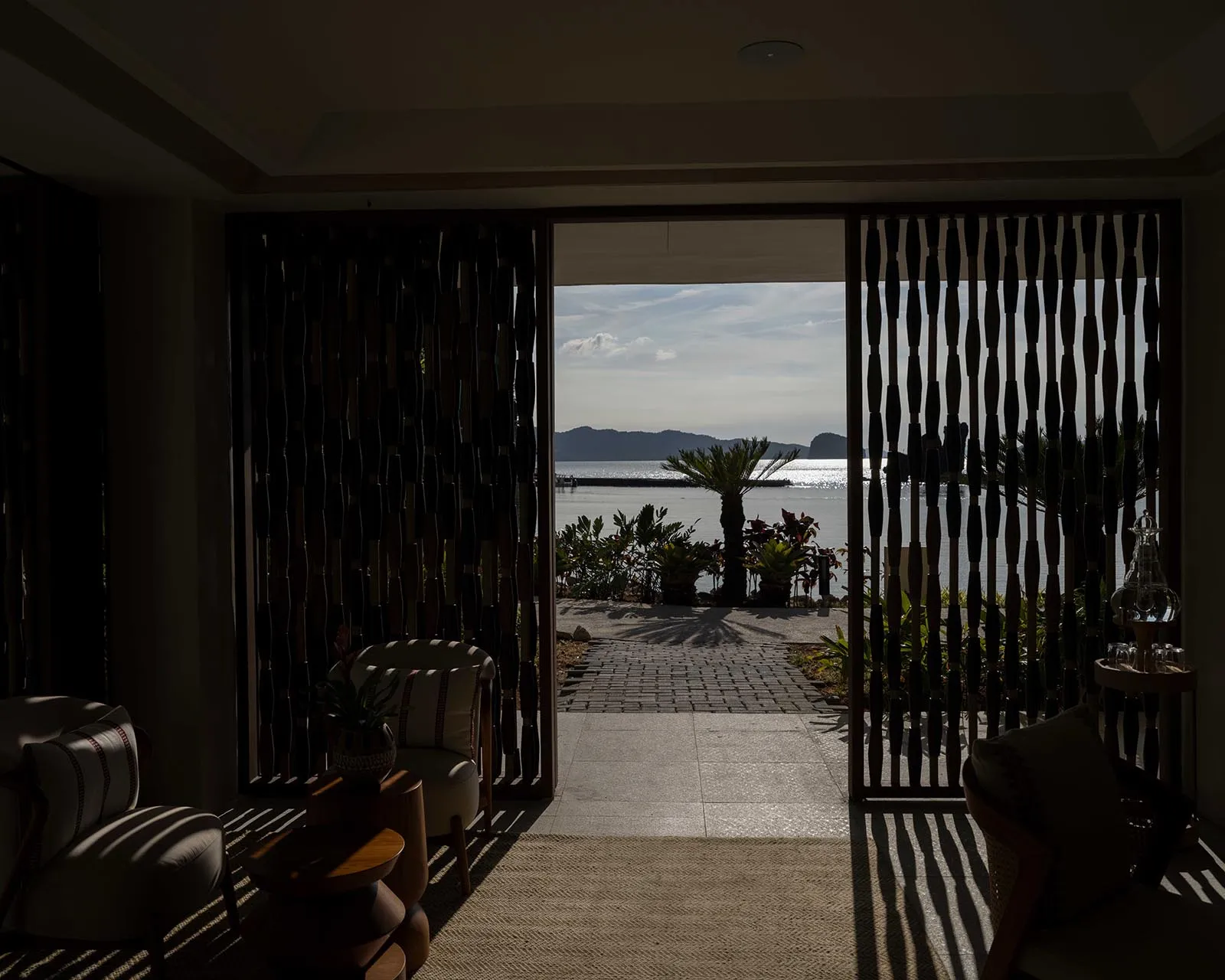
I love what we did with the beads, to be completely honest. During different times of day, how the light comes through it and the shadows it plays with… I just love the effect they have. They also tell so many different stories: the artisans we worked with are based in Olongapo and work with actual clay. It’s a small community of craftsmen who really want to show that we can do more than just hollow bricks. I love that detail.
And then I love our small touches. The placemats are my first love: weaving. It’s a modern weave done in Palawan with a group that we collaborate with here.You also see it in the uniforms and even in the belts we use, which we worked on with NiñoFranco and Wilson [Limon], who did a lot of the work with the Tboli. There are lots of little Easter eggs of my love letters to the Philippines and to everything I love about it.
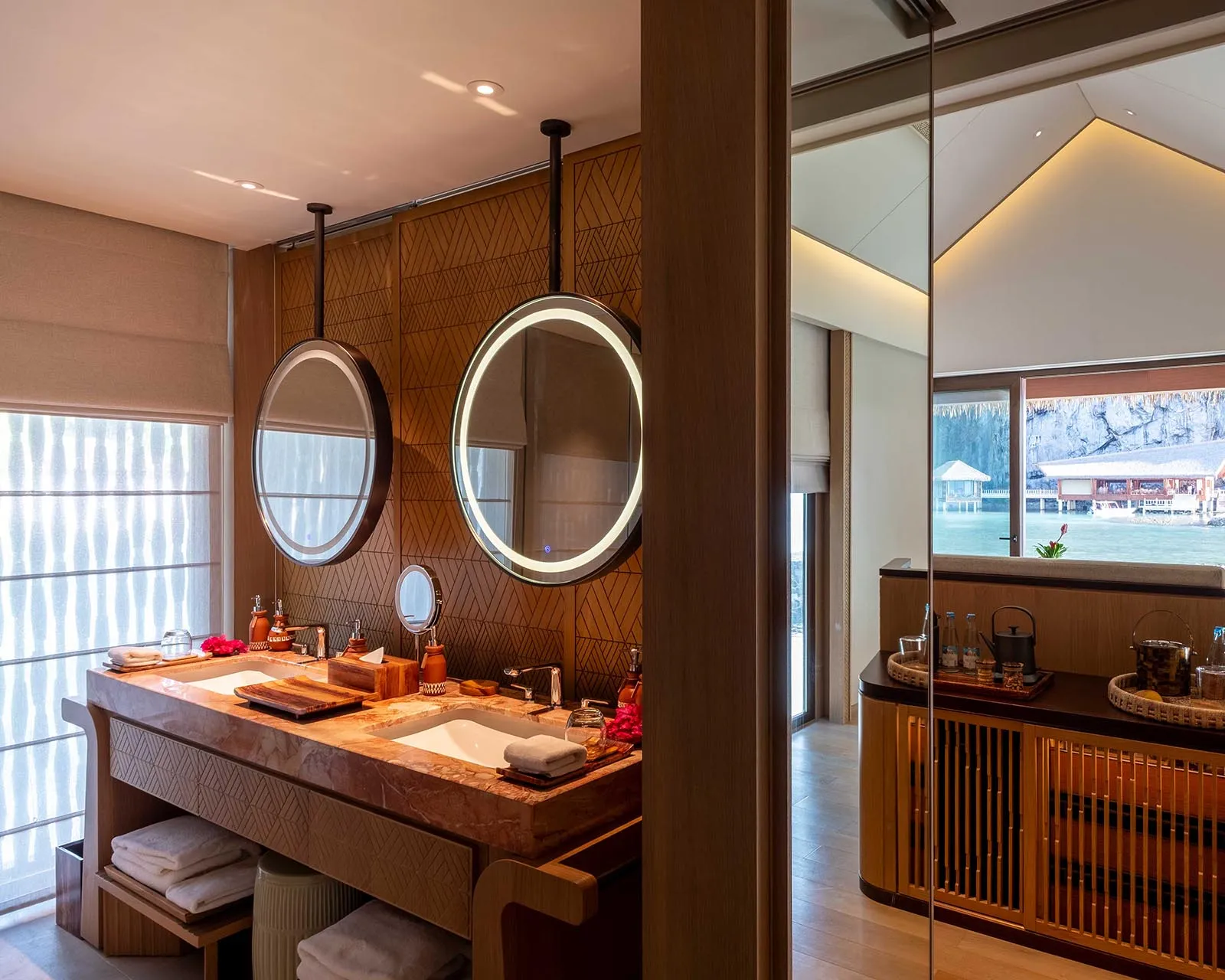
The attention to detail in every corner is apparent, even in the bathrooms, which many consider as an indicator of luxury. Why did a partnership with Kohler feel like the right choice for a place like Lagen?
Kohler is always in conversation with us in any of our developments. There are a lot of values that we’re aligned on. We want to offer the best possible experience when it comes to either our water and bathroom amenities or our spa, but also keeping in mind that, hey, we need to use minimal water here. What are the possible ways that we can save on that?
So [Kohler] comes into that conversation ready. When it comes to residential, commercial hospitality, they’ve done it all. And it’s been a brand that’s been around forever with us. It’s the range of products they offer, the integrated systems that they’re able to design for us, and the fact that it doesn’t take away from the design intent that we had for the villas. It’s sleek. It fits in really nicely and doesn’t shout for attention.
Honestly, you can go to a dingy restaurant, and it can be a hole in the wall, but if they thought about the bathroom, [you know] they care about their customer. I really care about our bathrooms. I wanted people to feel as if we’ve thought about every single touch point in the customer journey, and I really wanted to ensure that they felt that we treated this just as we would our personal home.
There are also PWD rooms, where this intentionality clearly carries on. Can you tell me more about that?
When we think about our properties, they’re very personal to us. I think about my grandparents, how I want my lolo to be able to experience this too, and how we can make that journey as seamless as we can for them. Whether PWD, elderly, whatever it may be, everybody should be able to enjoy it. So we make sure that our spaces are inclusive, and that we’re offering the same seamless journey for every body.
On the note of this project being personal, I heard that you would come visit Lagen growing up?
I think there’s a photo of me on the balcony of the third villa from when I had just gotten my PADI dive certification. I must have been 13 or 14. So I’ve been coming back to this property for a long time. The first owners [of this property] were a group of divers and environmentalists who really wanted to prove that tourism was a way of conservation.
When they saw that this was growing, they wanted to give it only to somebody they knew they could trust to really carry on that mission. At that time, luckily for us, that was Ayala. We said, “We will come and we will keep doing everything that you put in place.”
It was that framework: having the sustainability team, having the right conservation practices, the sustainability pillars, all of that. So nothing’s really changed in terms of how we manage it. It’s just a new look and feel, but it was a big responsibility. And it’s been a wonderful privilege to be able to say that, this is what the new era of Lagen will look like for the next seven years, 10 years.
Walking through the island, it’s easy to tell how much heart went into this project. And I noticed how you embraced each of the staff as soon as you came in.
(Laughs) We’ve been through a lot, I’m telling you!
With our guide Jimwell, for example, you just went and hugged him!
Jimwell, he’s my dive buddy! We’ve really been through a lot. I think these projects humble you because everybody is pulling up their sleeves. We all came together, and just, there’s no hierarchy here. Everybody is here for the same goal. It’s my blessing and curse that I’m an empathetic person, and I really feel and really love everybody I work with. And again, it’s family to me. I don’t know how to explain it. We’ve just been through a lot together, and I get emotional thinking about it and talking about it. It’s family.
Like you said in our previous interview, you take care of the people and they will take care of the work.
They will. And I think that’s exactly how this team operates. You show up for them, and they’ll show up for you. And they always say that: “Palo, we’ll take care of it. We’ve got you.” You pay it forward. You treat people how you want them to treat you and others. That’s the culture we have here. It’s also about breaking down those silos you see in a lot of hospitality and even companies in the Philippines, where everything is so “ma’am, sir.” I’m like, guys, no. Everyone here is on a first-name basis. We are all working toward the same mission.
Like you don’t understand, during the last typhoon, Jimwell was literally in one of the coves just protecting our boats. I was telling him, go take shade. And he’s like, no, I’ve got this, I’m protecting it. I saw videos, and he was literally holding on to the ropes. And not everybody does that. You do it because you genuinely care, and I think it’s because of just this love that’s passed around. And I love these guys, and I have the best time [with them.] They’re my adventure buddies. On our time off, I try to do as many activities. Jimwell’s my dive buddy, so we’ll explore new sites that we can then share with our guests. They’re my friends. When I’m here, this is my family.
On that note, there is a corner here called Bea’s Cove, which is a beautiful place, but of course, it’s also a tribute to your grandmother Bea. Can you tell me about that?
This was actually the first Christmas that we had without my lola. My mother’s also named Bea, and so she took the last villa and kept going to the cove, and she kept telling us how much Lola would have loved to… (Paloma pauses, her voice quivering as tears begin to form.) How much she would have loved to see the resort. So the team named it after her. It was a wonderful tribute, and it came from the team. It didn’t even come from us. My mom would swim in [the cove], and when the team saw that she was enjoying it so much, they decided to name it Bea’s Cove. It’s a tribute to Lola who would have loved it here because she loved to swim. And we didn’t even ask for it. That’s the love of the team.
All this love and care seem to stem from the mindset you have that, at the end of the day, design and ownership is stewardship. Where do you think that that philosophy came from?
It was instilled in us from a very young age. There’s a sentence my grandfather told me that I’ll never forget: “You have done nothing to deserve being born into this family. You need to work for it. Don’t take anything for granted, and be humble.”
I think we all grew up with that idea that we haven’t done anything to deserve what we’ve been given. We need to work at it and make sure we’re setting things up for the generations to come. If we want this to survive another 200 years, it’s not about resting on our laurels or being comfortable. It’s constantly asking how we can improve and how we can set things up properly for the next generation. I mean that both family-wise and in the properties we take care of: leaving them better than we found them, setting them up properly for the next generation, and making sure our teams and their families are taken care of. It’s a whole ecosystem and a whole responsibility. So I think it’s that.
It’s all the wonderful values being passed down from my grandfather, my mom, my grandmother, and seeing how they acted. From a young age, my grandmother took me to the Mangyans in Mindoro to help those communities and support their livelihoods. She brought their artisan crafts to Manila so we could sell and export them. I was seeing this at five, six, seven years old. My family set that example for me. When you see it being done, you follow that example. And then it’s also about the relationships you form and being open to them.
Some may think of heritage and luxury as opposing concepts. But how do you think they can both coexist?
Heritage and luxury are different things. Heritage is, yes, something you inherit, like legacy, but it’s not your ceiling. It’s your floor. It’s your foundation. You should always be building up from that. And so that’s our job, to keep thinking about what’s next, what’s new, what’s going to keep us relevant. Luxury means something different to everyone. Some people define luxury as space, opulence, or a certain finish. To others, luxury is a good high-pressure shower and hot water in a resort in the middle of nowhere, good food, or simply time. It can mean so many different things to different people.
For Lagen, luxury is time with your family. It’s spaces and amenities that allow for comfort while letting you fully experience the place without taking away from its beauty. Where you’re able to be fully present and comfortable. I think that’s true luxury: when there’s no friction, when you’re not thinking about things because everything feels seamless. That’s what good design brings together.
Frequently Asked Questions
Paloma Urquijo Zobel de Ayala is a Filipino entrepreneur and the creative director of Ayala Land Hospitality, where she collaborates with global design firms like WATG, Wimberly Interiors, and Henning Larsen to champion local craftsmanship and sustainable design.
Michelin Key is a prestigious award introduced by the Michelin Guide to highlight the world’s most outstanding hotels, functioning similarly to Michelin stars for restaurants.
Lagen Island is located in El Nido, Palawan, in the western Philippines, nestled between a dense four-hectare forest and a calm marine lagoon.
Kohler is a well-known American manufacturing company famous for producing kitchen and bathroom plumbing products, furniture, and engines.
Milan Design Week 2026 took place from April 20 to April 26, 2026.
- At Lagen Island, Luxury Is Defined by an Immersion in Nature
- The Romantics: For Paloma Urquijo, Design Is an Act of Care
- Paloma Urquijo Zobel de Ayala Talks Hospitality, Local Artistry, and the Future of Luxury Residential Living
- JJ Acuña Shapes the Parklinks Experience Center Around Filipino Design