
How Tad Ermitaño Forges a Connection Between Man and Machine


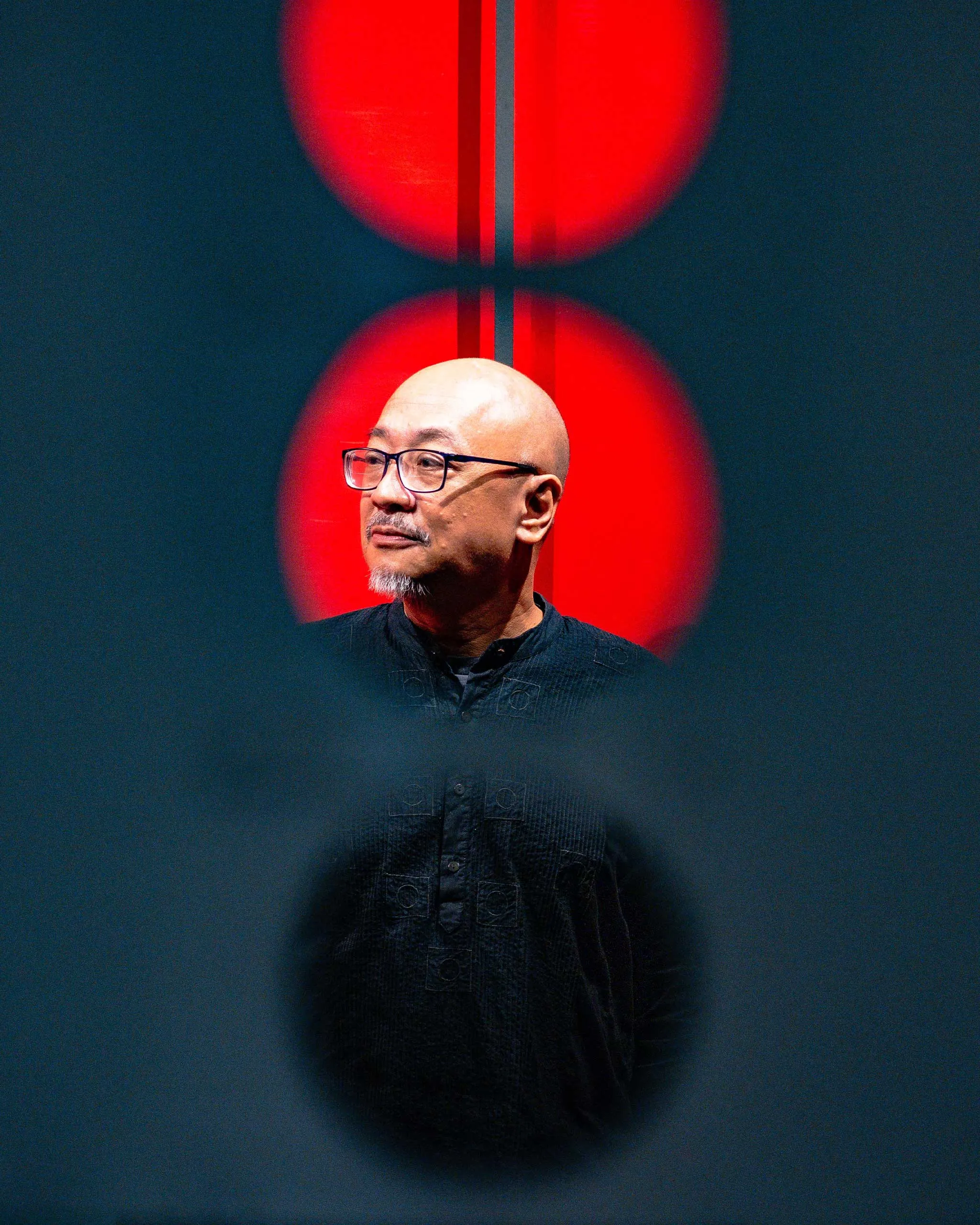
Photographed by Reeltime Photography
For his exhibit Somatodelic, the artist looks beyond the spectacle of futurism to explore how technology is felt, experienced, and understood.
Flying cars and floating cities are dreamt-up fantasies of futurism. For Tad Ermitaño, this idealization can be impressive to the eyes but far less imaginative to the senses. With his latest installation Somatodelic, the artist argues that the simple whirs and clicks of a machine have a far greater impact on how the body responds to technology’s current realities.
Ermitaño has had the privilege of being an artist with an educational background in Biology. Integrating both fields into his work, he points out that many scientists struggle to find the language that makes engineering legible to the public.
“I think C.S. Lewis was talking about how art and science are two different cultures, so I think many art writers and critics do not have a scientific background to pay deep attention to how technology is impacting the culture,” he says.
What arises is a mystified portrayal of innovation that Ermitaño hopes to dispel. “I don’t like technology portrayed as magic,” he says, asserting that rifts between science and art make it harder to examine humans’ relationship with technology. Through Somatodelic, Ermitaño unites both fields and explores how automation can impact how we interact with our modern world.
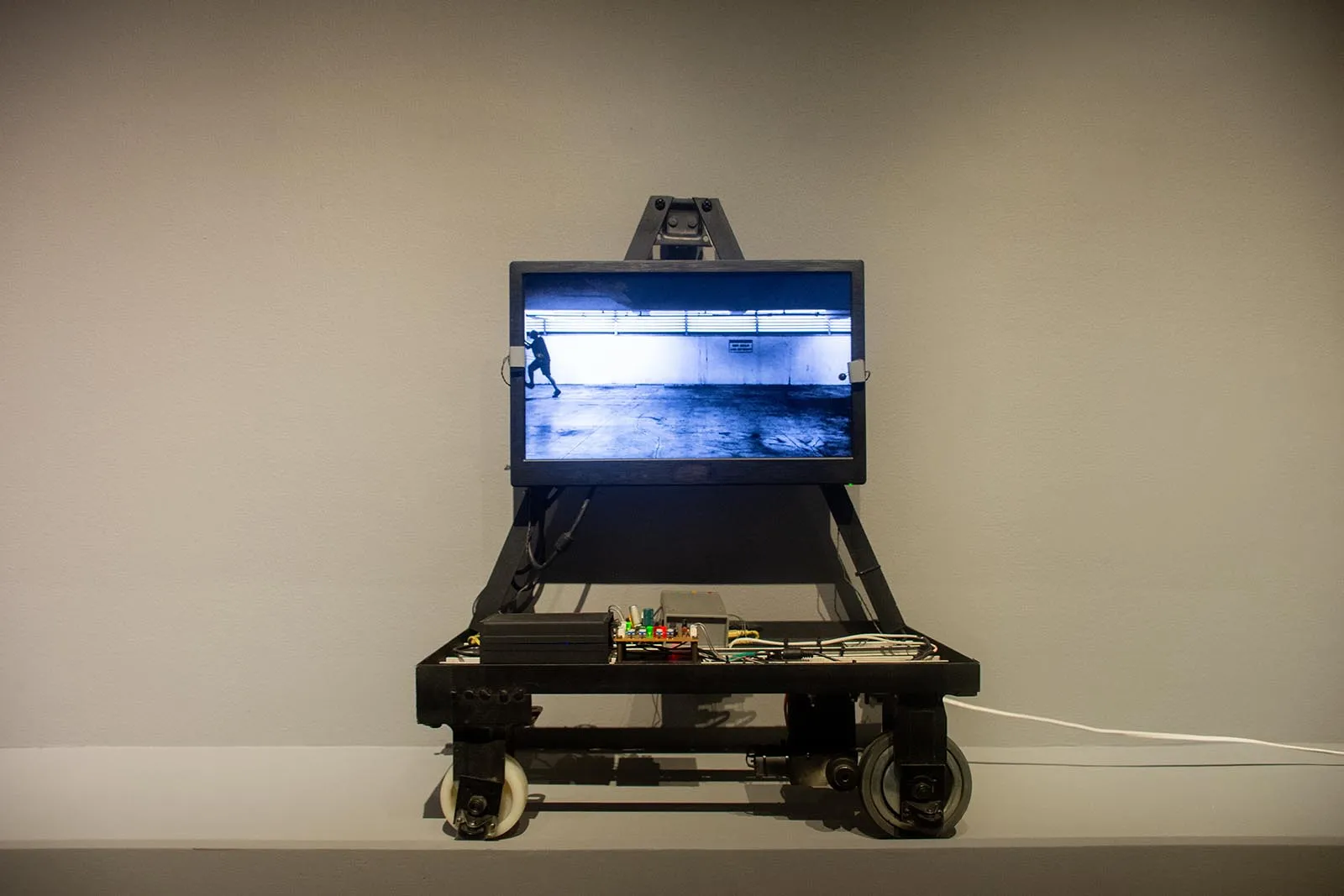
He counters such sensationalized depictions of technology in simple ways. For instance, Spinning Jimmy v 2.0 (2017) works as a simple circuit attached to a cart that moves based on a video loop of a man pushing the sides of a screen. On view are the circuit boards and wires that move the entire machine, allowing visitors to observe how the piece is constructed. This transparency dismantles how invention is portrayed to the public. Fashioning items designed for one task, such as the Rasen (2023), which uses an egg beater to create sounds, shows that good design is both versatile and multipurpose in its use.
“I disapprove of things [products] which you buy, and then they’re unfixable and basically do what the designers in the corporation want to give you,” he says.
Ermitaño argues that popular depictions of futurism undermine technology suited for the Philippines. Citing the Tikling, a taller version of a tricycle designed to avoid the prevalent floods, he admires inventions that respond to local problems. “Machines are treated the way they were always treated: as a way to help you live life fully and solve a particular problem, instead of buying stuff,” he says. Yet, Ermitaño believes that this resourcefulness is overlooked and often perceived as “dirty” and “primitive.”

And so, he creates pieces that draw from the nation’s context and appeal to Filipino sensibilities. “The Filipino language, like Japanese, is very good at leaving suggestive gaps in words where you just use placeholders like kuan,” he says. Through this observation, he crafts pieces that don’t explicitly point toward a certain ideological framework or current issue. For instance, his work Twinning Machine v. Ed 1 of 25 (2026) features a live feed that records visitors and distorts their movements. While he shares that some draw political or societal meanings from the piece, he encourages any interpretation, preferring not to impose anything.
Ermitaño is responding to a trend in contemporary art that pushes viewers toward a specific insight, limiting their freedom to freely connect. Because many collections preface their works with an established framework or context in mind, Ermitaño believes it can age pieces, relegating them to a particular time period and era. While he clarifies that there is a place for political and contemporary work, this is simply not his vision. “There’s a balance to be struck, where maybe too little or no limits [to context] is as paralyzing as excessive limits, and I think that there’s a balance,” he qualifies.
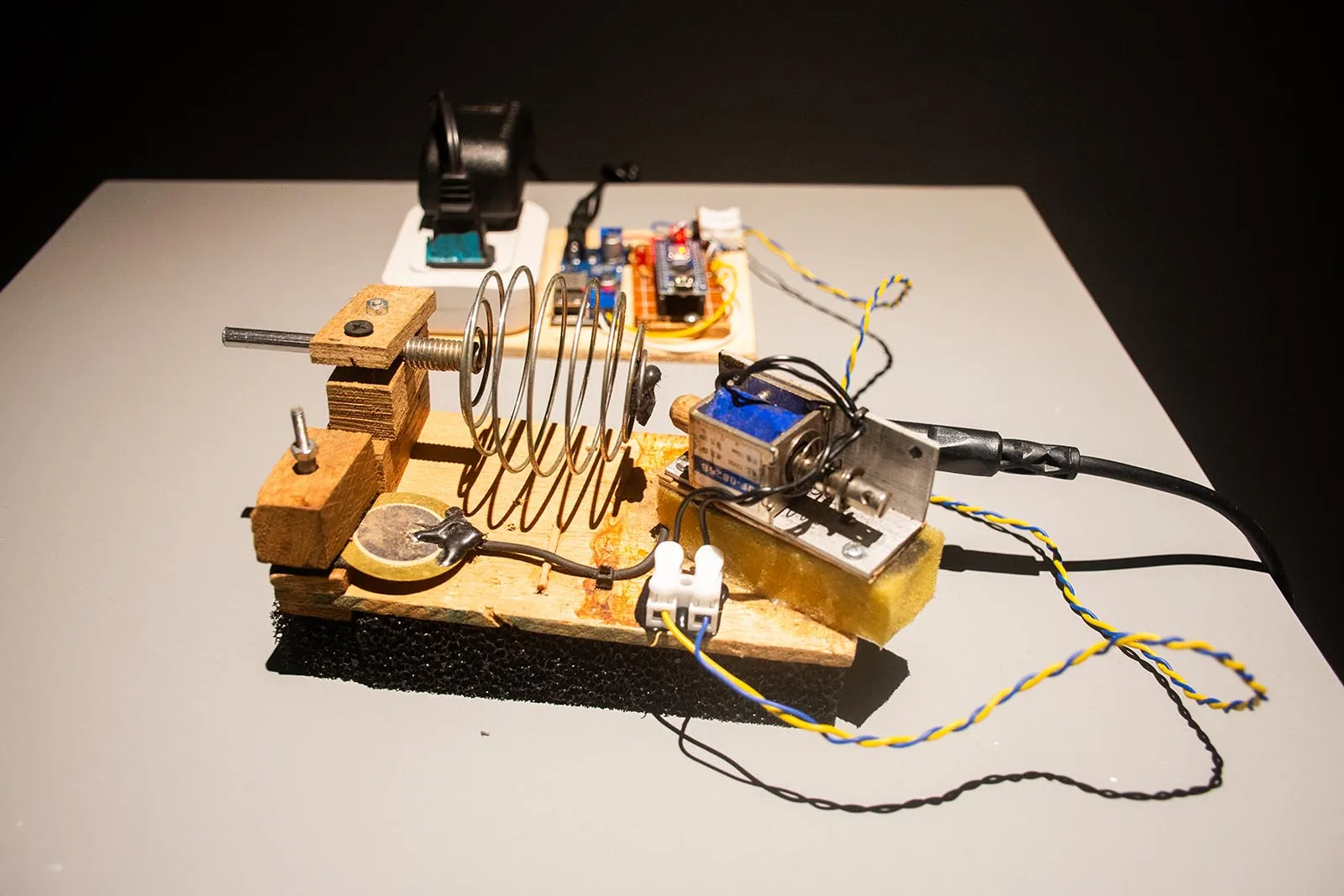
Providing ambiguity in his work while presenting technology at its most realistic, Ermitaño urges visitors to fill in the blank spaces. “Some people may run into a work and then find it puzzling, frustrating, or trivial. But hopefully irritating in a way so that it sticks to them,” he says. So, Ermitaño intentionally grabs people’s attention through striking sounds and ambient noise. Before they can form an opinion, their senses are responding to the collection.
In a time when technology is advertised as flashy gizmos, Somatodelic grounds visitors and draws out any heavy and confusing feelings from his audience. It reorients technology not as a promise of endless possibilities but as a mirror to one’s inner world.
Frequently Asked Questions
Tad Ermitaño is a Filipino artist who studied Biology at the University of Hiroshima and earned his degree in Philosophy from the University of the Philippines. His artwork integrates sounds, technology, and coding.
This is an immersive art exhibit featured by the Ateneo Art Gallery, which explores how people engage with modern technology.
Somatodelic literally translates to “body-manifesting,” as Tad Ermitaño encourages people to explore their bodily reaction to his work.
Somatodelic is at the Wilson L. Sy Prints & Drawings Gallery on the second floor of the Ateneo Art Gallery (AAG) until October 10, 2026.
He cofounded The Children of Cathode Ray, known as one of the first experimental sound art groups in the Philippines.