
Meet the 10 National Artists of the Philippines for 2026


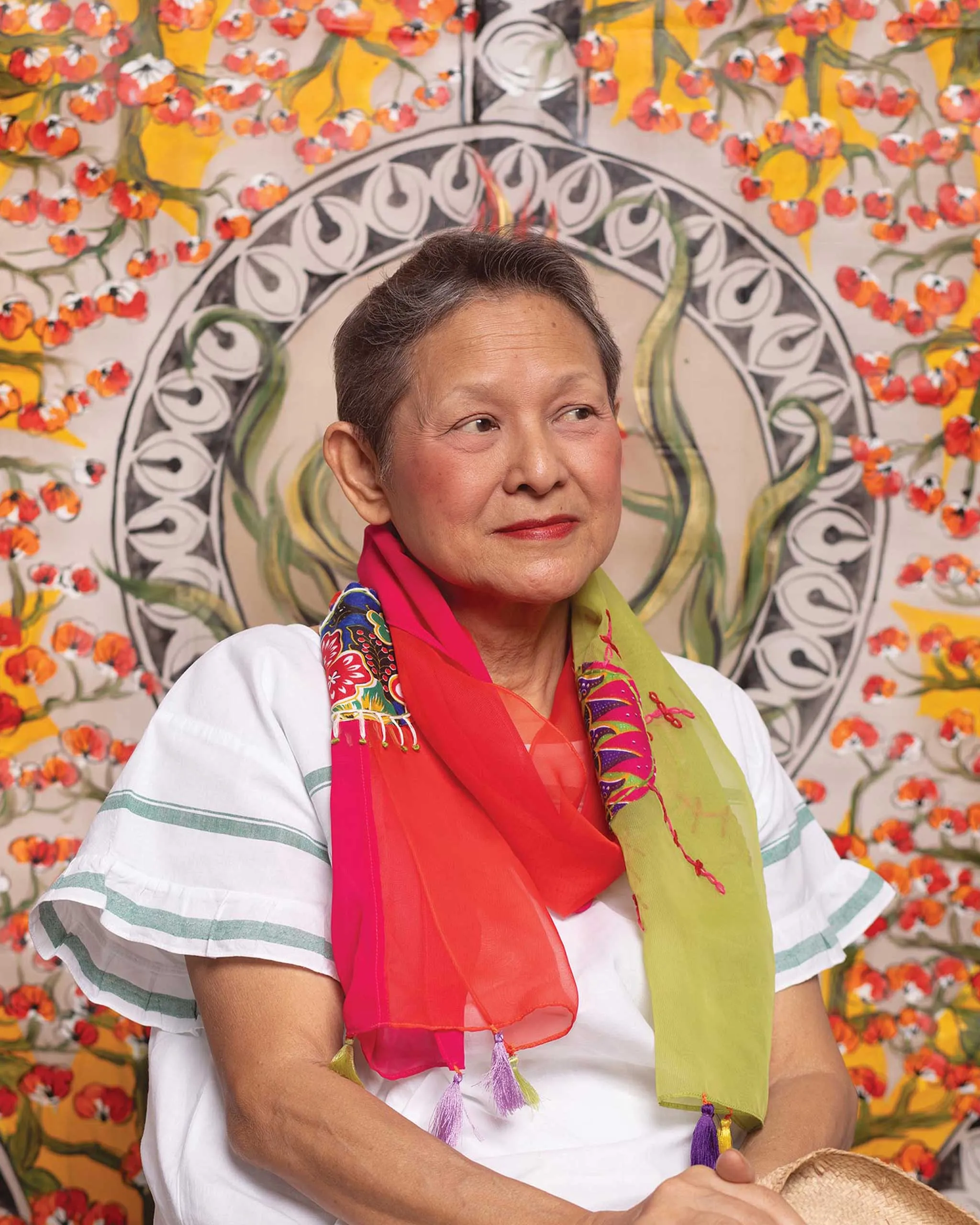
Photographed by Jake Verzosa
A look at the lives and legacies of the artists whose work has shaped Philippine culture and the arts.
This September, a new batch of National Artists was announced by Malacañang Palace through Proclamation No. 1414.
The National Artist Award, or the Order of National Artists, is the highest national recognition granted to Filipinos for significant contributions to the Philippine arts and letters. It was established in 1972 by Presidential Proclamation No. 1001, and elevated to a cultural order in 2003, jointly administered by the National Commission for Culture and the Arts (NCCA) and the Cultural Center of the Philippines (CCP), and conferred by the President.
Ten new artists are conferred this award: Gabriel O. Formoso, Rafael “Nonoy” Catalino Froilan, Maria Beatriz “Patis” Tesoro, Armando “Bing” Lao, Gregorio C. Brillantes, Nicanor G. Tiongson, Alfredo S. Buenaventura, Tedoro L. Hilado, Imelda Cajipe Endaya, and Nunelucio M. Alvarado. They join the ranks of Fernando Amorsolo, F. Sionil José, Ryan Cayabyab, Lino Brocka, Francisca Reyes Aquino, Francisco Mañosa, and others.
Learn more about each of the newly proclaimed National Artists below.
Gabriel P. Formoso, Architecture
In 1939, Gabriel Formoso became one of the first 100 licensed architects in the Philippines. Throughout his practice, he designed the Asian Institute of Management Building, the Central Bank of the Philippines Building Complex on Roxas Boulevard, the Manila Garden Hotel, the Regent of Manila, the Doña Narcisa Building, the BA-Lepanto Building in Paseo de Roxas, and the Peninsula Manila.
His accolades include the 1977 Patnubay ng Kalinangan Award from the Commission on Arts and Culture, the 1979 Outstanding Architect of the Year Award from the Professional Regulation Commission, and the 1990 Likha Award, the highest distinction conferred by the United Architects of the Philippines.
With his posthumous recognition as a National Artist, Formoso is credited as a central figure in the development of postwar Philippine architecture and for his contributions to the international recognition of Filipino architects through his advocacy for the profession of architecture.
Rafael “Nonoy” Froilan, Dance
In dance, Rafael “Nonoy” Froilan is posthumously honored for advancing dance as a profession for Filipino men, shaping new generations of dancers and choreographers. In 1972, he joined the Cultural Center of the Philippines Dance School and became a member of Ballet Philippines in 1973. Soon, he became Ballet Philippines’ principal male dancer, training under masters such as Norman Walker and Jean Deroc, and performing more than 100 leading roles in classical, modern, and contemporary productions.
He also danced with renowned ballerinas such as Lisa Macuja, Maniya Barredo, and his wife and fellow dancer, Edna Vida. Several works were created for him, such as Walker’s Songs of a Wayfarer (1974) and Deroc’s Roi David (1978). Froilan also created works as a choreographer: Study for Four Boys (1974), One Afternoon (1988), and Ako ay Ikaw Rin (1991).
After retiring as a dancer, he continued to support the art through teaching, coaching, acting, and video documentation. He also won first prize in the CCP Alternative Film and Video Competition with his documentary Encantada: The Creation of Dance (1994). He also received the Gawad CCP para sa Sining for Dance (2020) and the Metro Manila Commission on Culture Award (1981).
Maria Beatriz “Patis” Tesoro
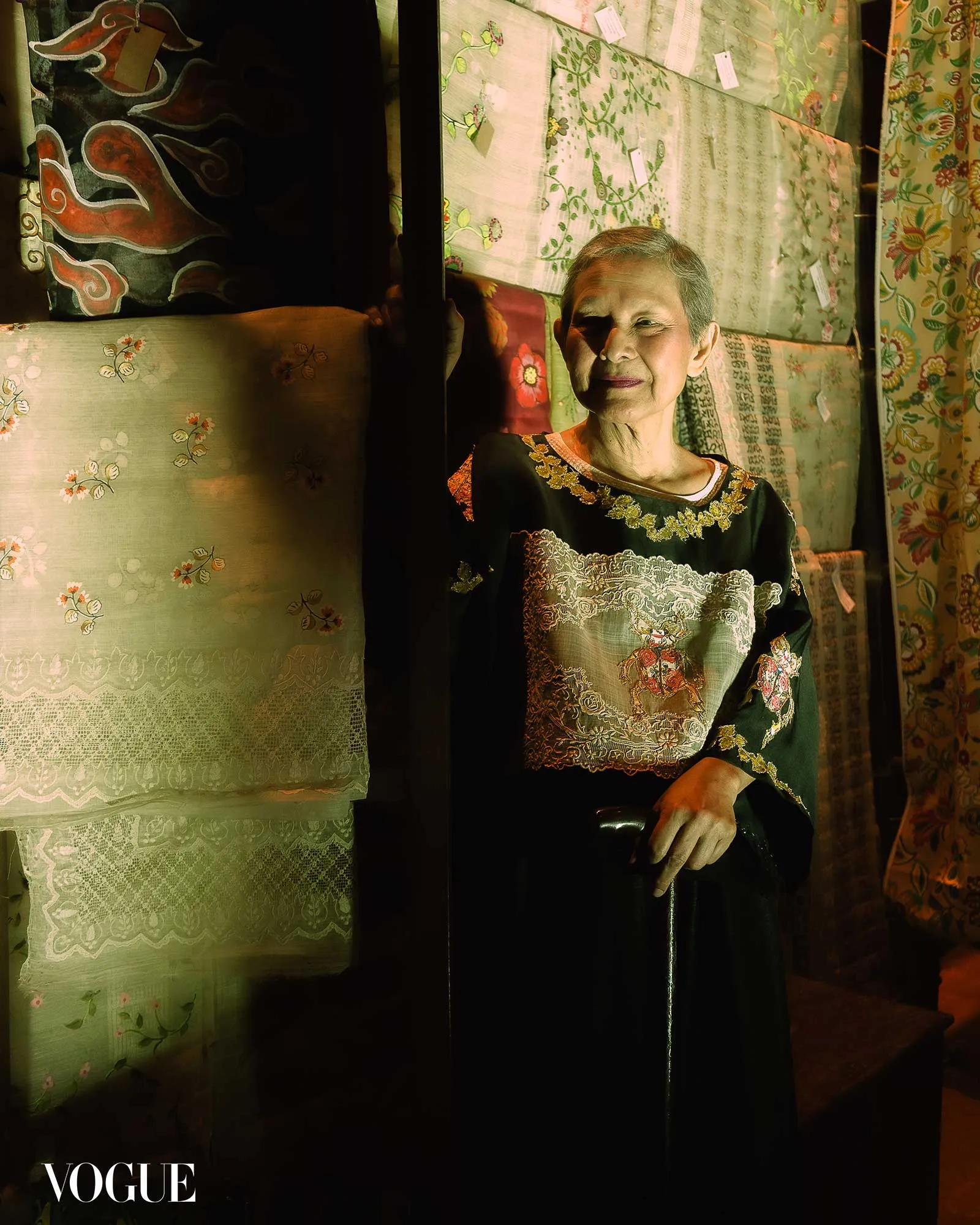
As a pioneer of Filipiniana fashion, Patis Tesoro was conferred the National Artist award. Tesoro innovated the terno, Maria Clara gowns, and the barong Tagalog with her interpretations, which helped preserve and enhance the global visibility of Philippine fashion and textile heritage.
Born in Iloilo in 1950, Maria Beatriz “Patis” Pamintuan grew up around her dressmaker mother’s business. While attending Assumption Iloilo, she was taught embroidery by a nun, Sister Maria Paz. Later on, she studied art education at Marygrove College and attended Maryknoll College, now known as Miriam College, but did not finish a degree, leaving after marrying into the Tesoro family.
She began selling embroidered clothes in a section of her mother-in-law’s shop, Tesoro’s The House of Philippine Treasures. By the age of 19, she was working in ready-to-wear fashion. By the late ’80s and ’90s, her label was associated with made-to-order Filipiniana bridal and formal wear.
In 1986, she began making trips to Aklan, after noticing the piña cloth was becoming scarce. There, she worked with weavers and local officials to promote weaving programs for younger generations. She then continued to work with artisans and craft communities in Lumban, Abra, Ifugao, and Iloilo. In the 2025 book and documentary Filipiniana Is Forever, five decades of her career were documented, including designs and textile work.
Armando “Bing” Lao, Film and Broadcast Arts
In film, Armando “Bing” Lao is posthumously recognized for his creation of the “Found Story” approach, emphasizing stories discovered through fieldwork and immersion. As a filmmaker, he wrote award-winning screenplays such as Takaw Tukso (1986), Itanong Mo sa Buwan (1988), Pila Balde (1999), Tuhog (2001), and La Vida Rosa (2001).
Together with Brillante Mendoza, he produced Serbis, which competed at the 2008 Cannes Film Festival, and Kinatay, which won Mendoza the Best Director award at Cannes in 2009. He is also the creative consultant for films such as Masahista (2005), Thy Womb (2012), Ma’Rosa (2016), and John Denver Trending (2019), among others.
Through his Found Story School of Filmmaking, he taught and challenged generations of writers and directors to search for stories in real life. He is also the recipient of the Lifetime Achievement Award from the Film Development Council in 2024.
Gregorio C. Brillantes, Literature
With the posthumous National Artist award, Gregorio Brillantes is recognized as one of the most accomplished and influential Filipino writers in English, known for his mastery of the short story form and his engagement with Philippine social, cultural, and moral experiences.
Brillantes received many awards throughout his career: the Cultural Center of the Philippines’ Gawad CCP Para sa Sining, the Ateneo De Manila University’s Tanghal ng Lahi, the Free Press Literary Awards, the Unyon ng mga Manunulat sa Pilipinas’ Gawad Pambansang Alagad ni Balagtas, and was inducted into the hall of fame of the Carlos Palanca Memorial Awards for Literature.
His first story was printed in the Philippine Free Press in 1953, after graduating from Ateneo and while teaching at the university. Brillantes joined the Free Press staff in 1961, working alongside writers Nick Joaquin, Pete Lacaba, and Kerima Polotan. He also served as editor for publications such as Sunburst, The Manila Review, Focus, Asia-Philippines Leader, and Philippines Graphic.
In 1960, he published his first short story collection, The Distance to Andromeda and Other Stories, followed by two other collections: The Apollo Centennial: Nostalgias, Predicaments, and Celebrations and On a Clear Day in November, Shortly Before the Millennium: Stories for a Quarterly Century. In 2024, these were collected into the omnibus edition, The Collected Stories of Gregorio C. Brillantes.
Nicanor Tiongson, Literature
Serving as the editor-in-chief for both the 1994 and 2018 multi-volume editions of the CCP Encyclopedia of Philippine Art, Nicanor Tiongson pioneered the academic study of traditional Philippine theater forms: komedya, sinakulo, and sarsuwela. Throughout his career, he wrote plays that bring historical and social awareness, including Pilipinas Circa 1907, Noli at Fili Dekada 2000, and Mabining Mandirigma. His knowledge of literature extends into the academe, as he fulfilled his role as the former dean of the University of the Philippines (UP) College of Mass Communication and continues his tenure as professor emeritus at the UP Film Institute.
Born in Malolos, Bulacan, Tiongson built his academic foundation at the Ateneo de Manila University before earning his M.A. and Ph.D in Philippine Studies from UP Diliman. Deeply interested in grassroots traditions that were often marginalized by colonial-era education, he dedicated his early academic career to field research into local theater.
Eventually, his groundbreaking publications, including Kasaysayan at Estetika ng Sinakulo (1975) and Kasaysayan ng Komedya sa Pilipinas (1982), established the historical legitimacy and aesthetic value of native dramatic forms. Pursuing artistic pursuits beyond the academe, his works in theater served as a tool to challenge Philippine nationhood, political corruption, and colonial legacies.
Alfredo Buenaventura, Music
Alfredo Buenaventura is a composer, conductor, and music educator, with over 1,000 compositions. His knowledge of music led him to blend Western classical forms like operas, symphonies, and concertos with traditional Filipino folklore and indigenous melodies. This combination birthed major operas like Maria Makiling, Prinsesa Urduja, and Diego Silang, as well as the Kayumanggi Symphony.
Buenaventura was formally trained at the University of Santo Tomas, CEU Conservatory, and the Gregorian Institute. Early in his career, his service at the Manila Cathedral shaped his grasp of sacred and choral music.
He later served as dean of the CEU Conservatory of Music for three decades. Buenaventura’s signature style, which blended Western structures with native rhythms, earned him the Republic Cultural Heritage Award twice, in 1964 and 1972, as well as the Araw ng Maynila Cultural Award.
Teddy Hilado, Theater
Widely recognized as the “Father of Light Design in Philippine Theater,” Teodoro “Teddy” Hilado receives the posthumous National Artist Award for theater. Hilado initially studied law before shifting to theater under the tutelage of Dom Bernardo Maria Perez. When he realized that lighting was treated as a simple utility, he established it as an expressive narrative art by developing technical standards to define stage space, set dramatic pacing, and evoke emotional atmosphere.
He served as the inaugural technical director of the Cultural Center of the Philippines from 1969 to 1973, and as theater director of the Folk Arts Theater from 1973 to 1986. His work included designing lighting for major ballet, dance, and theatrical productions, as well as architectural lighting for landmark churches and institutions.
Hilado eventually expanded into public light-and-sound design, including The Malinta Tunnel Experience on Corregidor Island and the Rizal Park sound-and-light tableau. His service in the institution was recognized when he received the inaugural Gawad CCP for Excellence in Lighting Design and Technical Theater in 1997.
Imelda Cajipe Endaya, Visual Arts
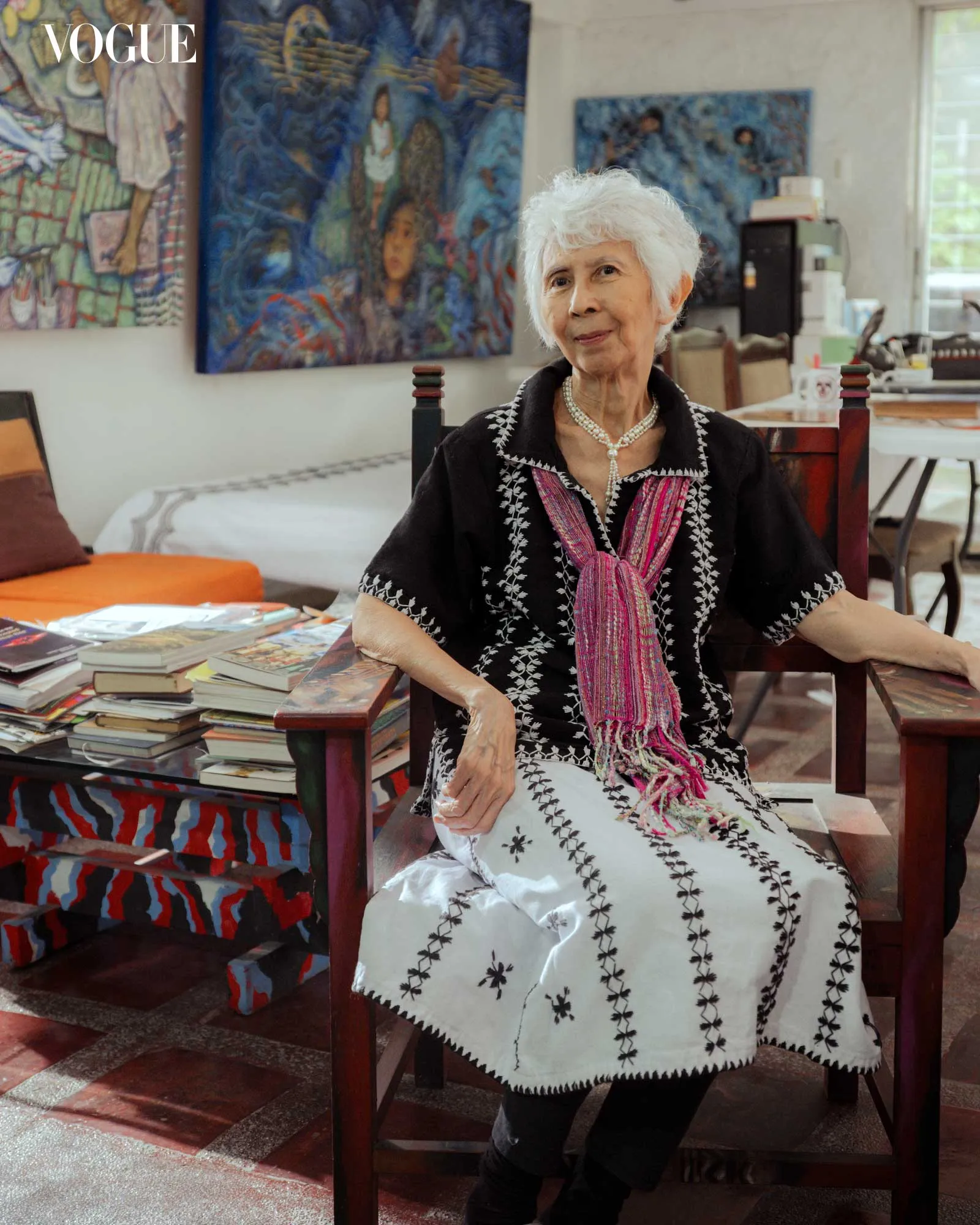
The first woman to be named National Artist for Visual Arts, Imelda Cajipe Endaya is a printmaker, painter, and curator. She pioneered socio-political mixed-media installation and feminist art in the Philippines.
Born in 1949, Endaya grew up in an environment shaped by historical memory. Her father was a survivor of the Bataan Death March. Her grandfather was also a noted scientist. Her early art practice took shape during the political ferment of the 1960s and 1970s, when she used her work to resist martial law and state violence.
Endaya earned her degree in Visual Communication from the UP College of Fine Arts in 1970. Her artistic practice began with printmaking before expanding into collage, painting, and large-scale mixed-media installations. In her works, she explores women’s rights, labor, identity, and diaspora through indigenous materials, textiles, and found objects, as seen in Pasyong Bayan and Bintana ni Momoy. She also founded Kasibulan (Kababaihan sa Sining at Bagong Sibol na Kamalayan), a women artists’ collective that amplifies these advocacies.
Endaya’s work has been recognized through several awards, including the Gawad CCP Para sa Sining, NCCA Ani ng Dangal, and CCP Centennial Honors for the Arts. In 2022, the Cultural Center of the Philippines also honored her with a major 50-year retrospective exhibition titled Imelda Cajipe-Endaya: Pagtutol at Pag-Asa.
Her notable works include Filipina DH (1995), which highlights the realities of overseas Filipina domestic workers; May Bukas Pa, Inay (1982), and Daing ng Puso (1985), which address the threats of nuclear energy; and Woman Power/Stop Nuclear Plant (1984), a protest-inspired tempera work depicting mothers and children resisting state power.
Nunelucio Alvarado, Visual Arts
A leading figure of the Social Realism movement in the Philippines, Nunelucio “Nene” Alvarado is a painter and social realist. He is known for his bold graphic style, which documents the labor struggles and human rights issues faced by sugar plantation workers, or sacadas, and rural communities in the Visayas.
Alvarado studied fine arts at UP Diliman and La Consolacion College in Bacolod. Despite his ties to the city, he chose to remain rooted in Negros Occidental rather than move permanently to Manila, allowing him to stay connected to local working-class communities.
In 1986, he co-founded the Black Artists in Asia collective, helping establish Bacolod as a hub for contemporary art. He also founded regional community spaces, including Syensya Gallery and Pahanocoy Eco-Art Park. His artworks are held in the collections of major institutions such as the Metropolitan Museum of Manila, the Fukuoka Asian Art Museum, and the Singapore Art Museum.
Frequently Asked Questions
The Order of National Artists of the Philippines is the highest national recognition given by the Philippine government to individuals who have made significant contributions to the development of Philippine arts and letters.
To qualify for the Order of National Artist in the Philippines, a nominee must meet five core criteria set by the National Commission for Culture and the Arts (NCCA) and the Cultural Center of the Philippines (CCP).
The new National Artists are Gabriel “Gabby” Formoso, Rafael “Nonoy” Catalino Froilan, Patis Tesoro, Armando “Bing” Lao, Gregorio C. Brillantes, Nicanor G. Tiongson, Alfredo S. Buenaventura, Teodoro L. Hilado, Imelda Cajipe-Endaya, and Nunelucio M. Alvarado.
The Order of National Artists in the Philippines is officially scheduled to be proclaimed every three years, though the actual timing often varies in practice.
Fernando Amorsolo, Guillermo Tolentino, Amado V. Hernandez, Carlos “Botong” Francisco, Antonio J. Molina, Francisca Reyes Aquino, and Carlos P. Romulo are among the pioneering inductees of the Order of National Artists of the Philippines.