Who Are the Women in SPAM and What Do They Do?


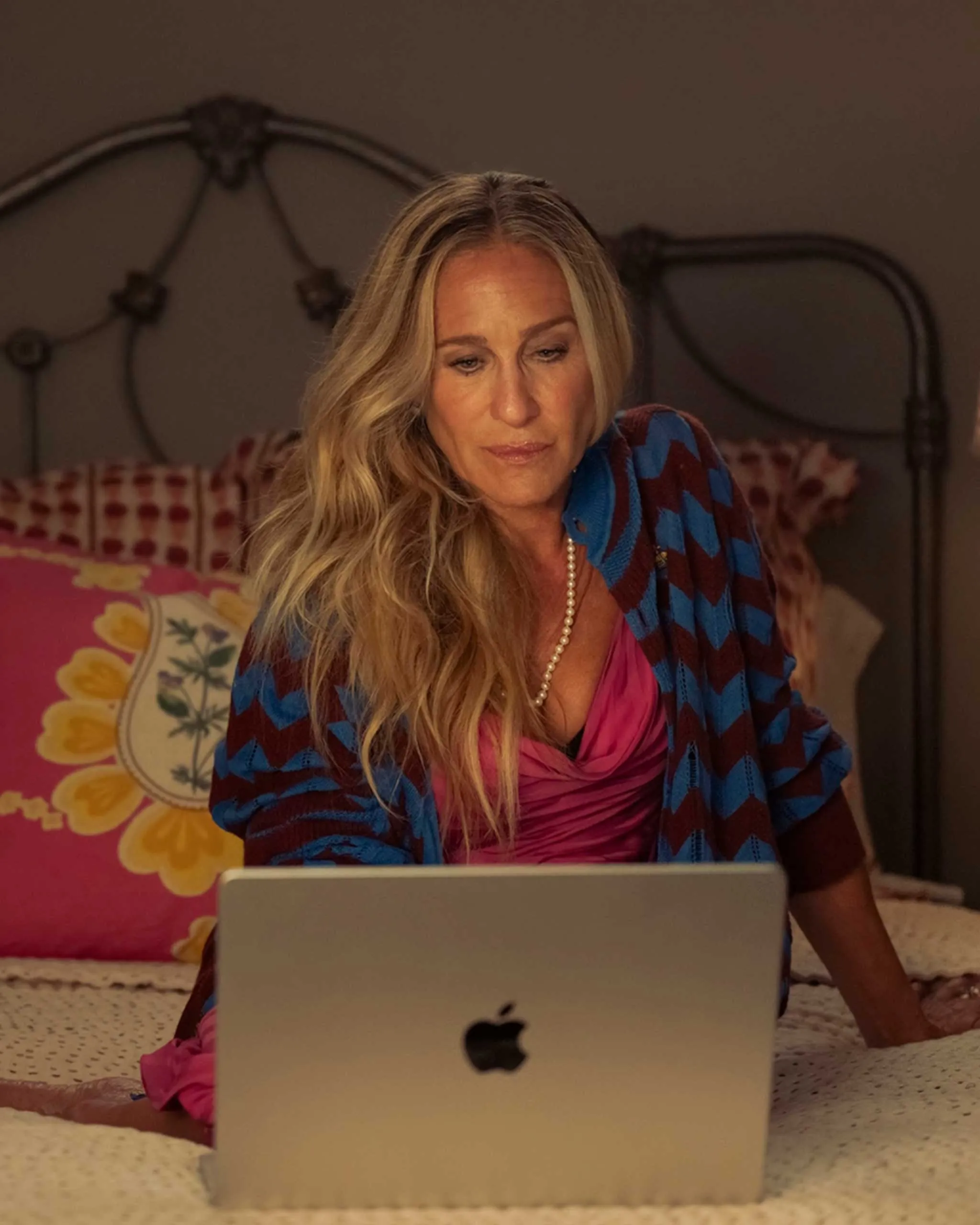
Courtesy of HBO
It’s all over the internet: “women in SPAM,” a term for those working in social media, public relations, advertising, and marketing.
It’s halfway through 2026, and what better time to coin a new acronym than now? Introducing the term “women in SPAM.” Apparently, this year, the word is not about tinned meat or a bot flooding your inbox with emails. SPAM stands for Social Media, Public Relations, Advertising, and Marketing. One tap on the search bar and a certain aesthetic appears: women holding coffee, a phone, or a laptop, all while dressed to the nines. It may feel familiar as it echoes the romcom and pop culture women many grew up watching, from Andie Anderson in How to Lose a Guy in 10 Days, Carrie Bradshaw in Sex and the City, and of course, Andy Sachs and Miranda Priestly in The Devil Wears Prada, which recently returned with its second film this May.
The term was popularized by Laura Cameron, a creative strategist and digital content creator who came across the acronym and posted a video in mid-May 2026 declaring herself a “woman in SPAM.” The term has since become a shared identity for women working in communications and media-related industries, pushing back against the notion that their jobs are merely about posting on Instagram. “In reality, modern SPAM careers require a huge combination of skills. We’re expected to understand strategy, psychology, analytics, content creation, storytelling, community building, brand management, and increasingly emerging technologies, too,” Cameron says in an interview with Vogue Philippines.
Moreover, Cameron has also spoken about how the sudden attention surrounding the term stems from the fact that women in these careers are often less recognized than the more widely acknowledged “women in STEM.” While SPAM was born of a romanticized, glamorous image of the industry, statistics show that women in these careers face challenges that extend beyond external perceptions. They also encounter barriers within the very spaces where they thrive.
Research from Pennsylvania State University found that although women make up nearly two-thirds of the global public relations industry, they remain underrepresented in leadership positions and continue to face salary disparities. Despite progress over the years, challenges like these persist, and women in these fields continue to navigate structural inequalities that have yet to be fully addressed.
“For years, we’ve had terms like ‘marketing girlie,’ but I don’t think many people felt that fully reflected the breadth or seniority of what we do. You don’t hear people referring to [male] software engineers as ‘software boys,’ so it felt like there was a gap in language that acknowledged these careers as the complex, strategic professions they are,” Cameron adds.
With all that said, Cameron believes the term’s rise is ultimately a celebration of the women behind many of the campaigns we interact with every day, shaping conversations and helping businesses grow. “I think I just gave a name to a community that was already there.”
Frequently Asked Questions
SPAM stands for Social Media, Public Relations, Advertising, and Marketing. The acronym has recently gained popularity online as a collective term for professionals working in these communication-related industries.
STEM stands for Science, Technology, Engineering, and Mathematics. The term is commonly used to refer to academic and professional fields in these disciplines and has inspired initiatives that encourage greater diversity and representation.
Laura Cameron is a creative strategist and digital content creator who helped popularize the term “women in SPAM” through a viral social media video in 2026. Her content sparked conversations about recognition and visibility for women working in communications and marketing-related fields.
Public relations, or PR, is the practice of managing communication between an organization and its audiences. PR professionals help shape public perception through media relations, strategic messaging, events, and other communication efforts.
The term gained traction after content creator Laura Cameron popularized it in a viral video, giving women in social media, public relations, advertising, and marketing a shared identity online. Beyond the trend’s aesthetic appeal, many professionals have embraced it to celebrate their work and push back against misconceptions about their industries.
- How Toton Januar Turns Fragments into Couture for the June/July 2026 Cover Story
- French-Girl Stripes And Noughties Hotpants: 4 Essential Primavera Fashion Tips For Festival Season
- How Ang Babae sa Septic Tank Is Making the Leap to Theater
- The 5 Best Moments From the Opening Days of the 2026 World Cup