
The Bench Fashion Week Spring 2026 Show Celebrated a Cross-Cultural Tapestry Between Japan and the Philippines


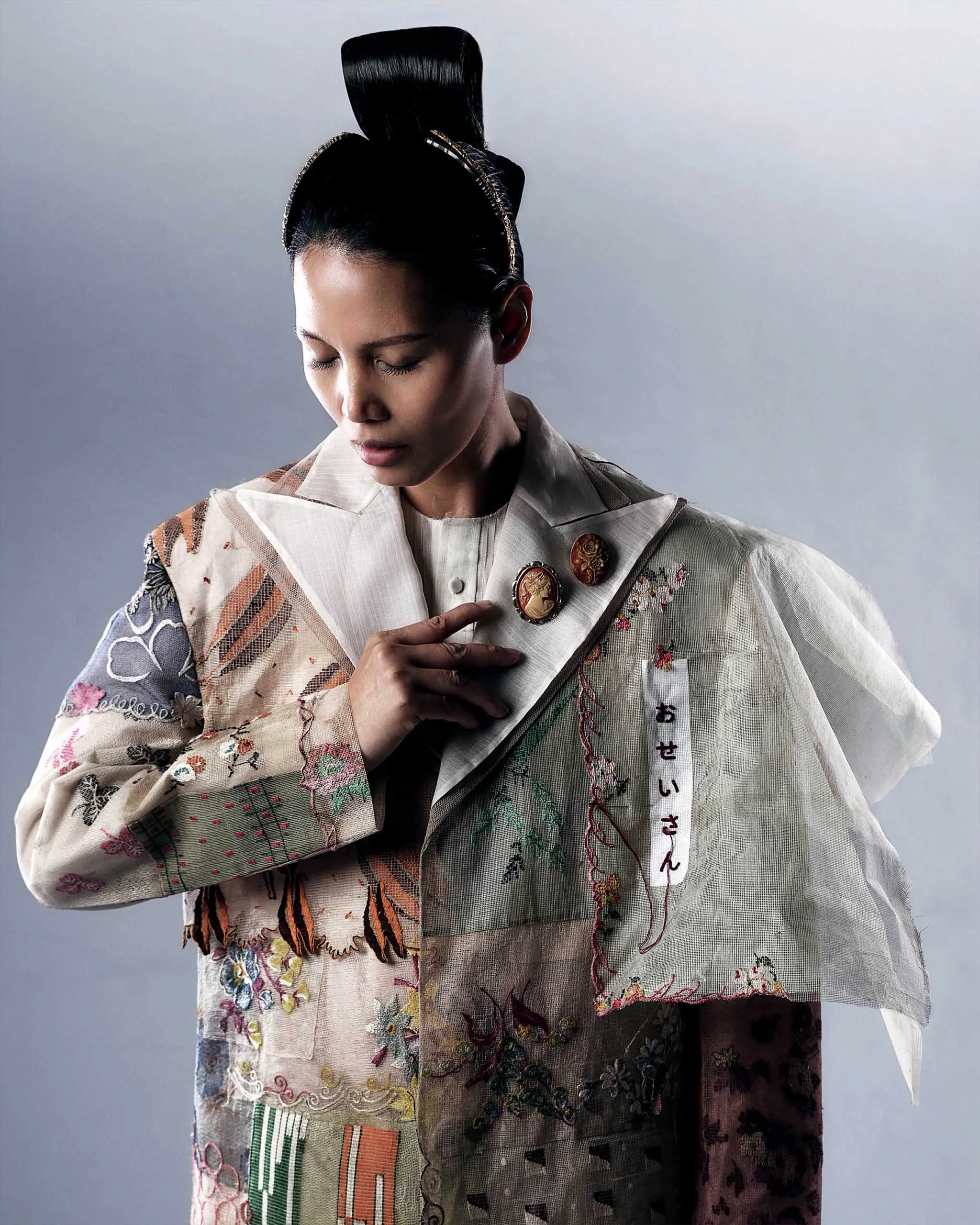
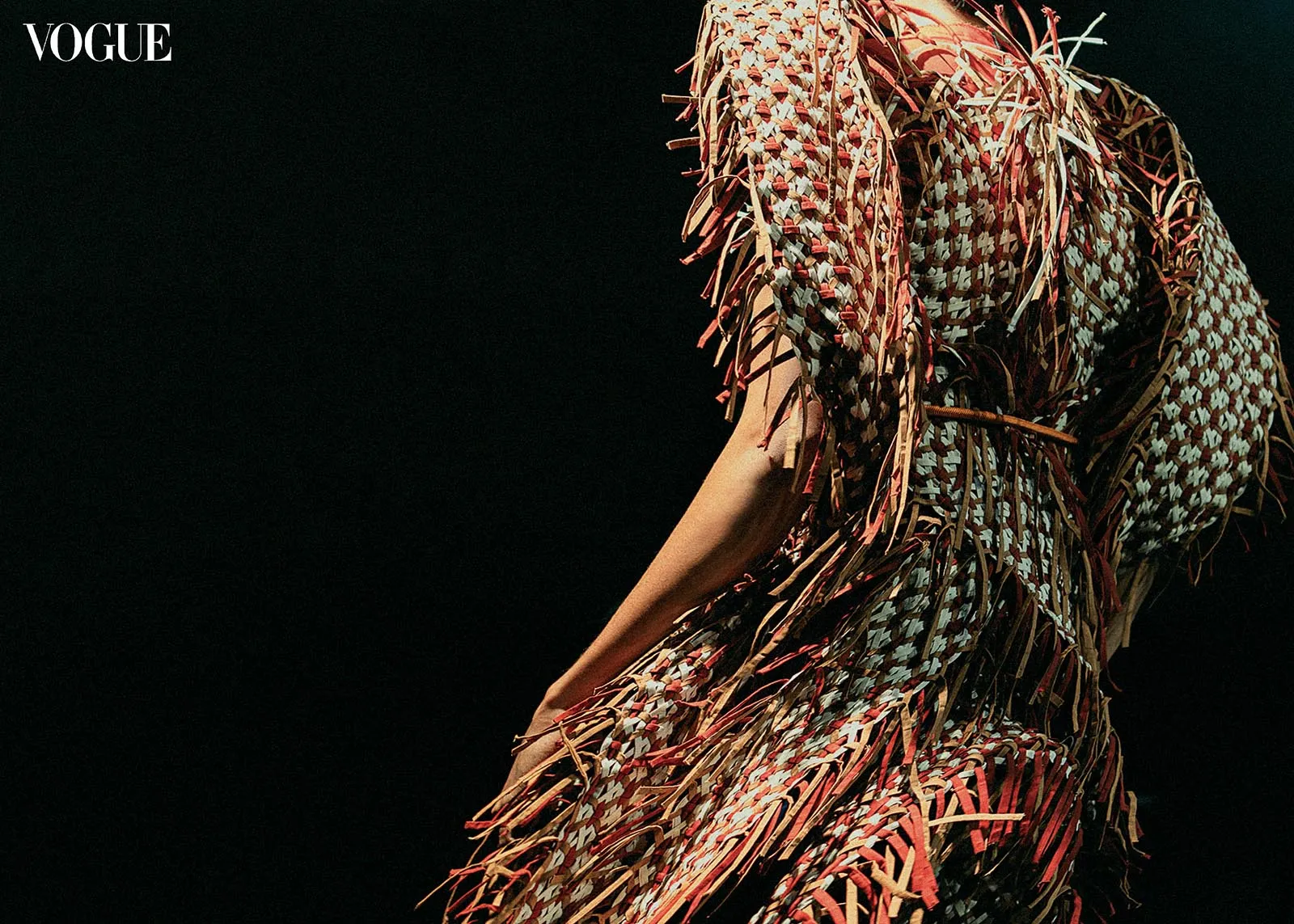
This patchwork coat by JOEY SAMSON was crafted with antique and vintage kanyamaso, baro, terno sleeves, and panuelos. “I think with these kinds of garments, it’s important to pay respect and retain their integrity,” the designer says. Photographed by Gab Villareal for the June/July 2026 Issue of Vogue Philippines
From the Philippines to Japan and back, Bench Fashion Week Spring/Summer 2026 held space for a contagious communal spirit.
Backstage at Bench Fashion WeekFashion WeekA series of seasonal events where designers debut their latest collections, setting the tone for upcoming fashion trends and showcasing creativity, craftsmanship, and innovation across the global fashion industry.Go to Fashion Week Glossary’s Spring/Summer 2026 show, the area is cordoned off into three separate sections next to each other, like a row of stalls in a market. Leftmost is Joey Samson, flitting from one rack to another with garments flung over his arms; there’s Rhett Eala, all smiles as he and his team inspect the pieces up close; and on the farthest end of the room is Jaggy Glarino, the youngest of the three, sitting on the floor enjoying a katsudon for a very late lunch.
“I wasn’t really expecting to be part of it,” Jaggy tells Vogue of today’s showcase. For the second day of BFW titled Threads of Dreams, the retailer has partnered with the Embassy of Japan in the Philippines and Japan Foundation, Manila to celebrate 70 years of the two countries through fashion. “This fashion show becomes a metaphor for the relationship between Japan and the Philippines, where diverse threads come together to form a vibrant and harmonious tapestry,” says His Excellency Endo Kazuya, Ambassador of Japan to the Philippines.
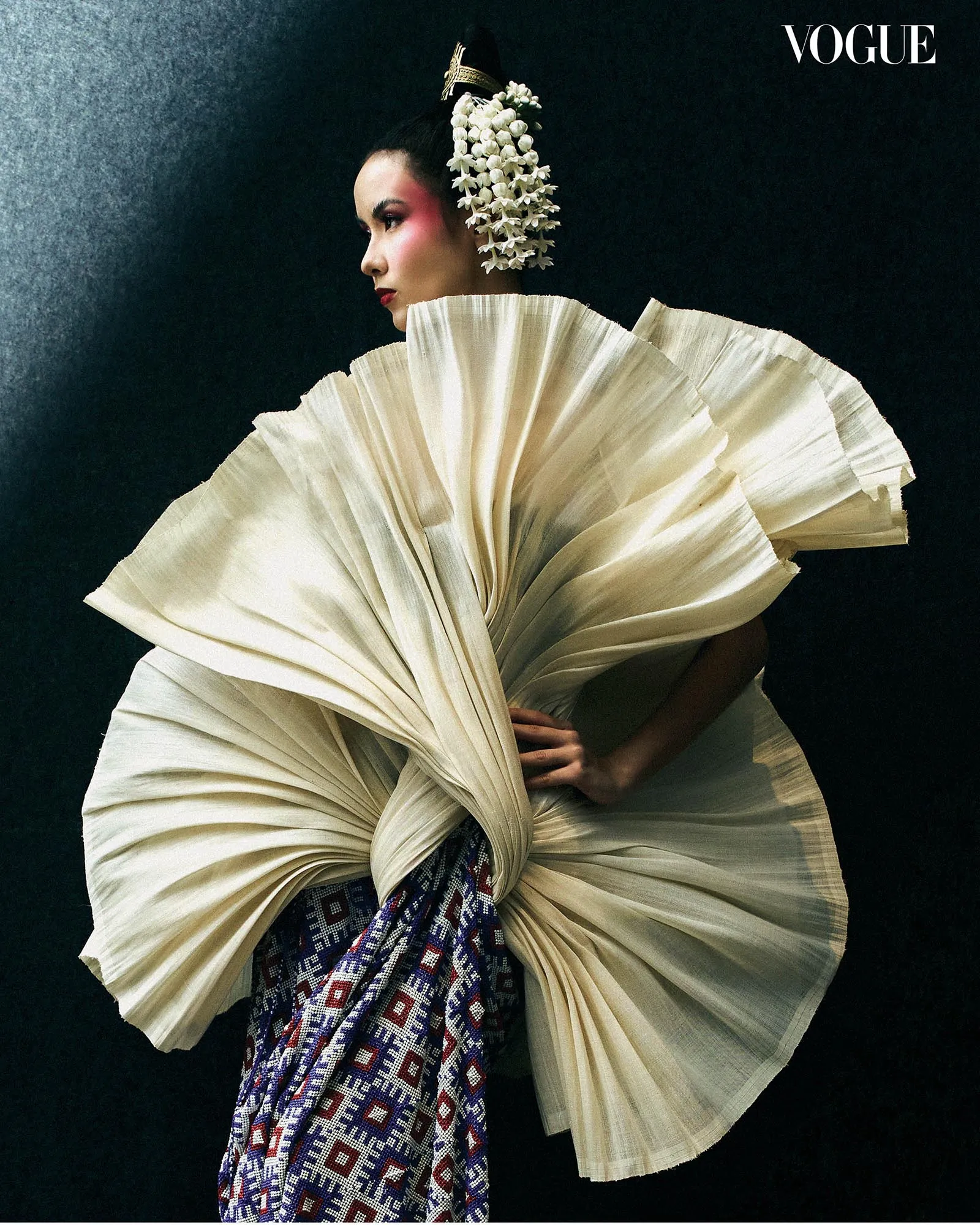
Planning for the show began mid last year, after each of the three designers received a call from Noel Manapat, creative consultant and stylist at Bench. Rhett recalls the invitation arriving after he had decided that his Red Charity Gala 2025 show would be his last. What made him reconsider was the opportunity’s diverse nature. “Tokyo is one of my favorite cities in the world, and I just did TernoCon, so it’s nice to merge both cultures,” he recalls thinking.
The visual disparity between Joey, Rhett, and Jaggy’s collections reflected their vastly differing approaches to that cultural coexistence.
A memorable fixture of Rhett’s Inherited Stories collection were bulbous twin dresses in ivory and noir, inspired by his late mother’s library of Japanese pottery. She would sojourn to Japan to collect objects and textiles for her antique shop in Hong Kong and their home in Manila, and once stayed in Osaka for a month in 1970.
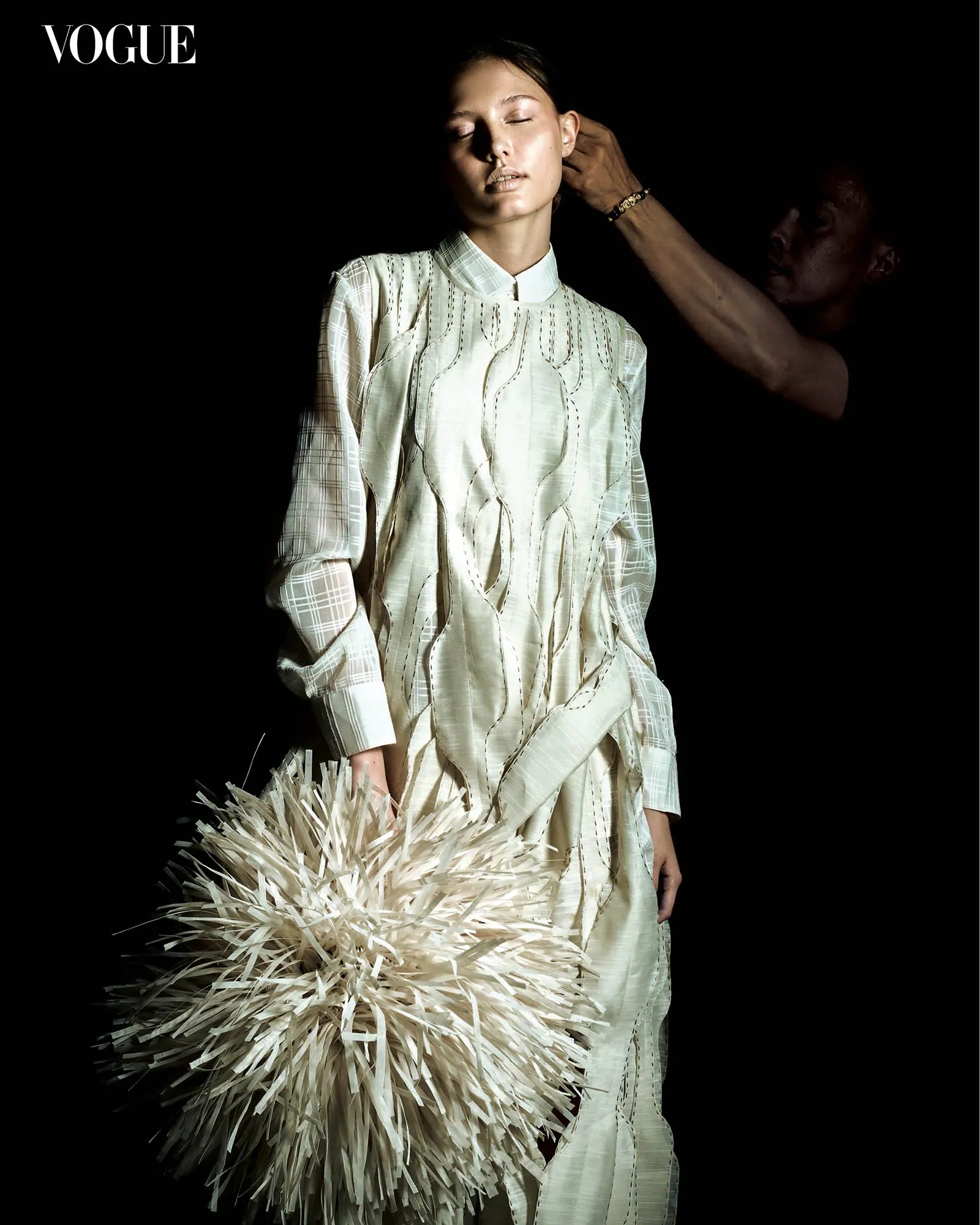
As a child, Rhett didn’t quite comprehend her affinity for the country, but eventually, repeated excursions to their capital and other prefectures bloomed in him a love for it, too. In more overt homages, Rhett joined the Philippines’ piña textile with Japan’s Boro fabrics, and fashioned a fringe terno in white, a single crimson circle plastered on each butterfly sleeve; the Japanese flag embodied.
Conversely, Joey made muses out of fictitious encounters with Imagined Dialogues: Una Bulaqueña & O Sei-Sa. The designer conjured up a conversation between the Filipino art persona and Japanese lady, both of whom were loosely connected to Philippine national hero Jose Rizal. Joey, who also goes by the moniker “garment surgeon,” spliced together fabrics from the women’s lineages.
In one look, calado embroidery peeks out of a predominantly tangerine kimono-blazer-barong collage. In another, a patchwork coat tells a thousand stories with antique and vintage kanyamaso, baro, terno sleeves, and panuelos from Joey’s maternal grandmother, and his friend and the scenographer Gino Gonzales. “With patchwork, people would think that you just cut it up and then that’s it,” Joey prefaces, but the highly delicate fabrics required meticulous yet light hand-stitching to prevent further degradation. “I didn’t cut it up to pieces. Whatever is there, I just find a way to find a place for it. I think with these kinds of garments, it’s important to pay respect and retain their integrity.”
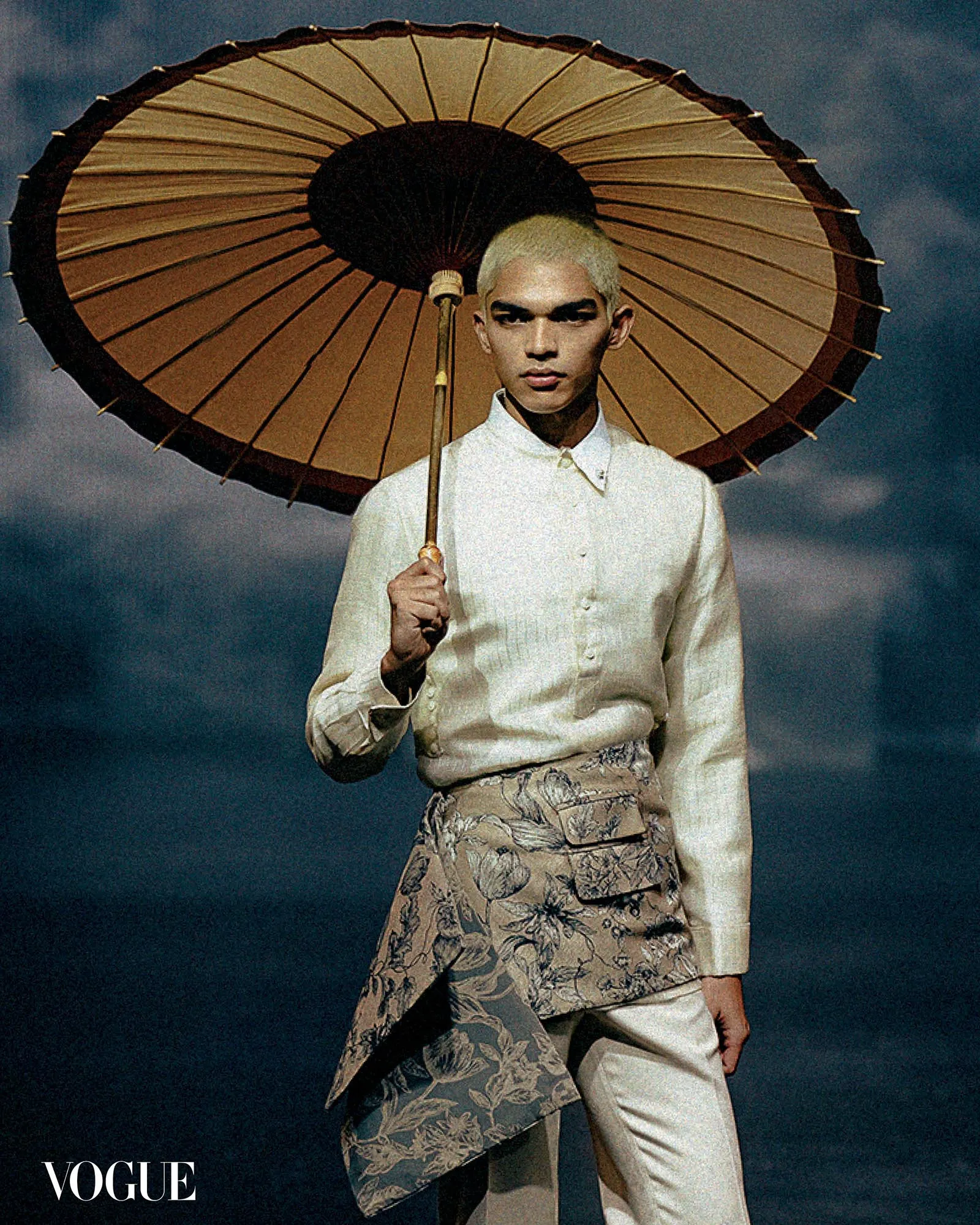
Both designers incorporated hand fans and parasols (Joey sent a trio of tent-sized ones down the runway), and although Jaggy did the same, he included a unique addition: Tboli brass jewelry from Lake Sebu in Mindanao, where he is from. “I found out that there was a pre-war Japanese migration in [the Mindanaoan capital of] Davao to farm abaca,” he details of his process forming his collection, which is titled Imin or “immigration” in Japanese. “I feel like that’s the best find I had doing the research, because that takes me home. That takes me to the people that I know, the culture that I know.”
Those elements gave way to a somewhat mosaic narrative, with Tboli jewelry and Tausug textiles in medley with three suitcases worth of kimono fabrics and vintage umbrellas that Jaggy asked friends to bring in from Japan. The maximal assemblage was a vivid interplay of hues, textures, and prints that pertain to both Filipino and Japanese sensibilities. “I don’t want to tokenize a particular culture,” Jaggy clarifiies. “It’s really more of trying to create a good mix.”
All this of course is yet unknown to the audience outside, who are slowly settling in their seats. Backstage, the three designers have begun to dress their models, but not without the help of hefty teams that include fashion students, interns, and friends. Some were even finalists of last year’s Bench Design Awards, the competition that named Peach Garde, Karl Nadales, and Steph Verano its winners. The day before, on BFW’s first day, the three had each debuted new collections; their first since winning BDA.
“When I was finishing the collection parang, ‘Oh my god, hindi pala talaga ako ganun kagaling [it turns out I’m not really that good], even after winning two awards!’” says Peach, who took home gold for both BDA and TernoCon. “So the experience of finishing the collection really humbled me.”
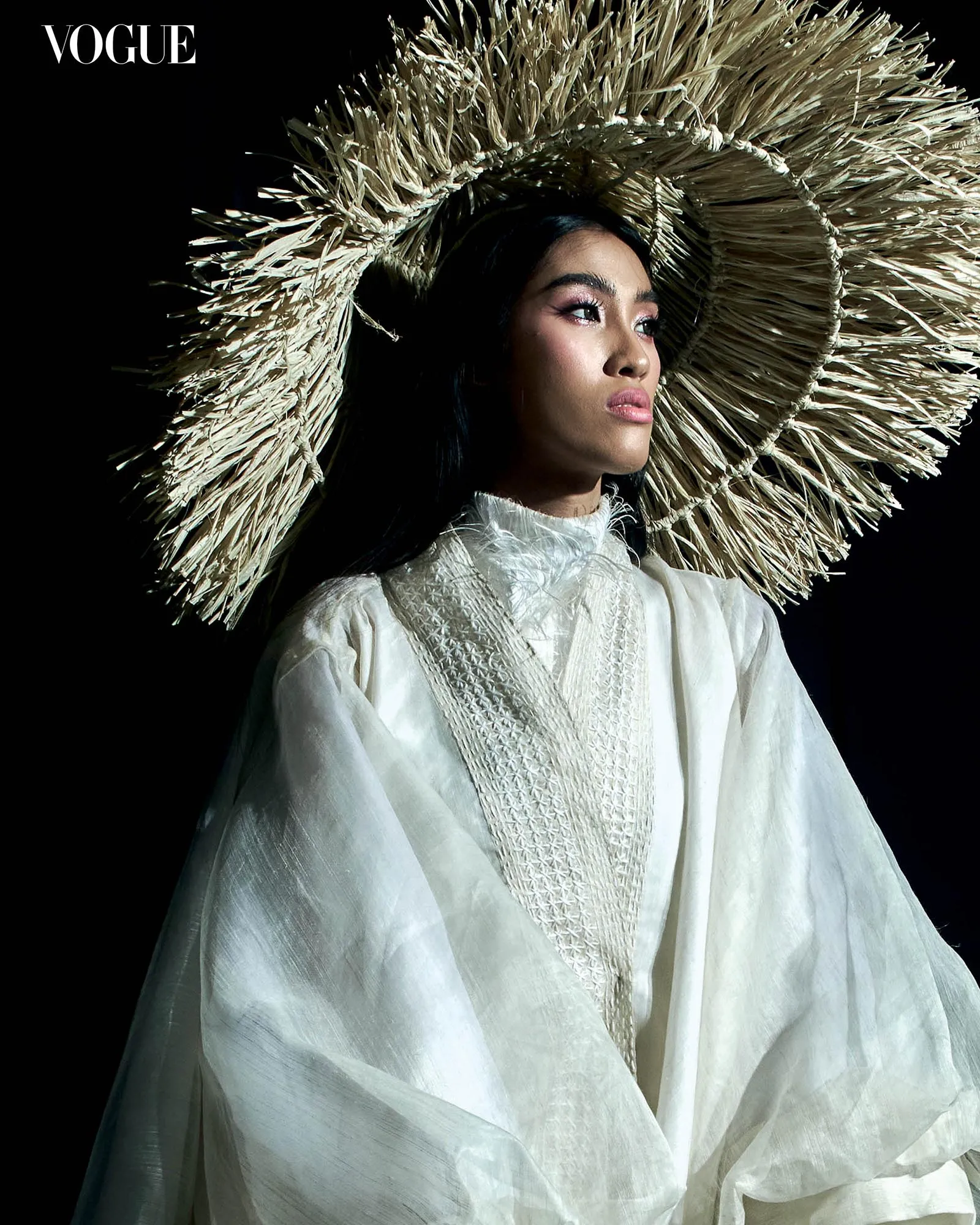
A native of Panay Island’s Capiz province, Peach’s latest collection titled Paddys’trian culled from a childhood spent crossing rice paddies to get to school or to town. “I imagine people in line walking on the pilapil, like pedestrians on the street,” he narrates with a smile. On his garbs, the views on these walks become embellishments, such as embroidered patola and gabi, a slingshot hanging casually down the chest like a necktie, and palaspas or dried palm fronds as a menswear accent, “because I wanted to show the relevance of religion, kasi most of us are Catholics from the province.”
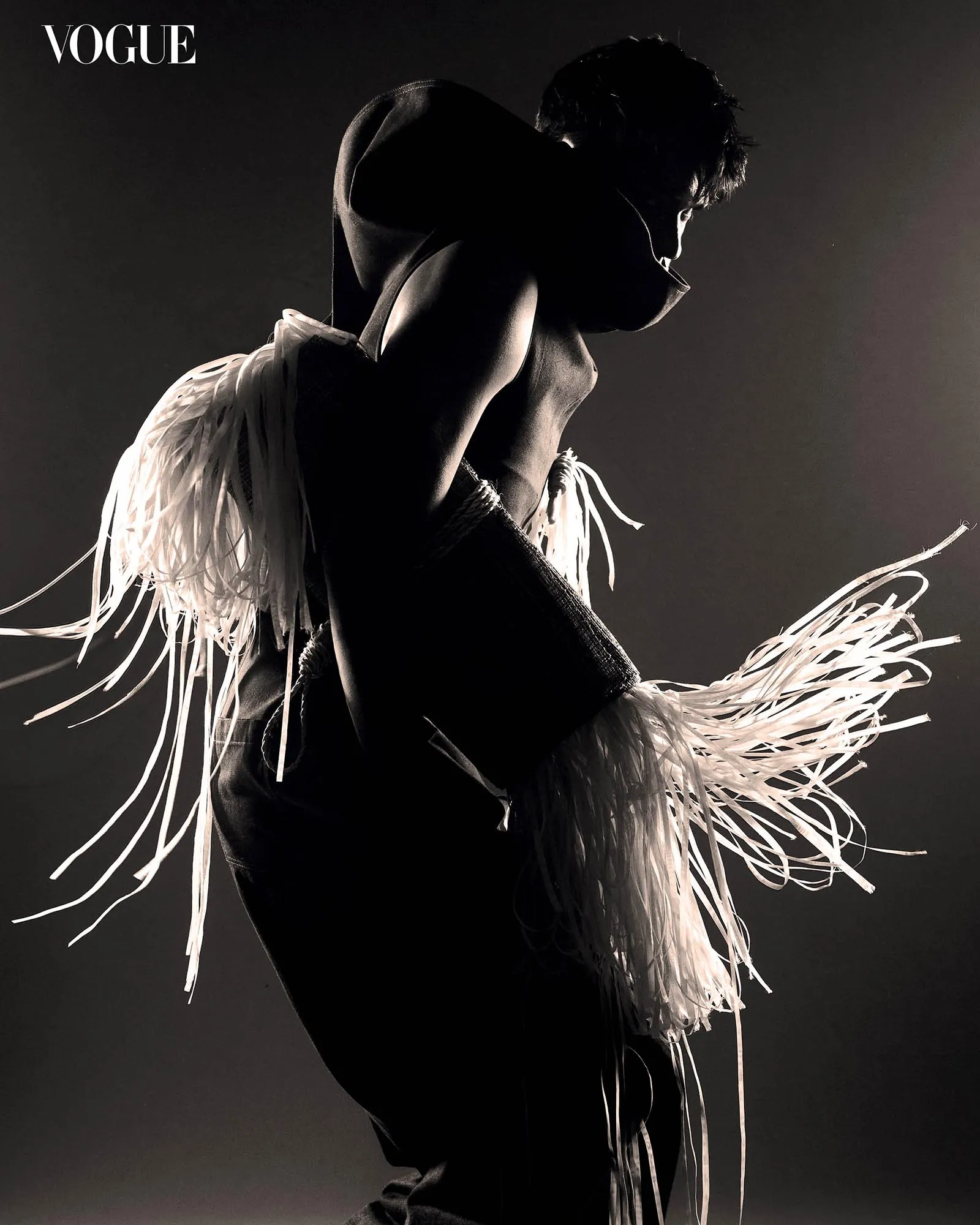
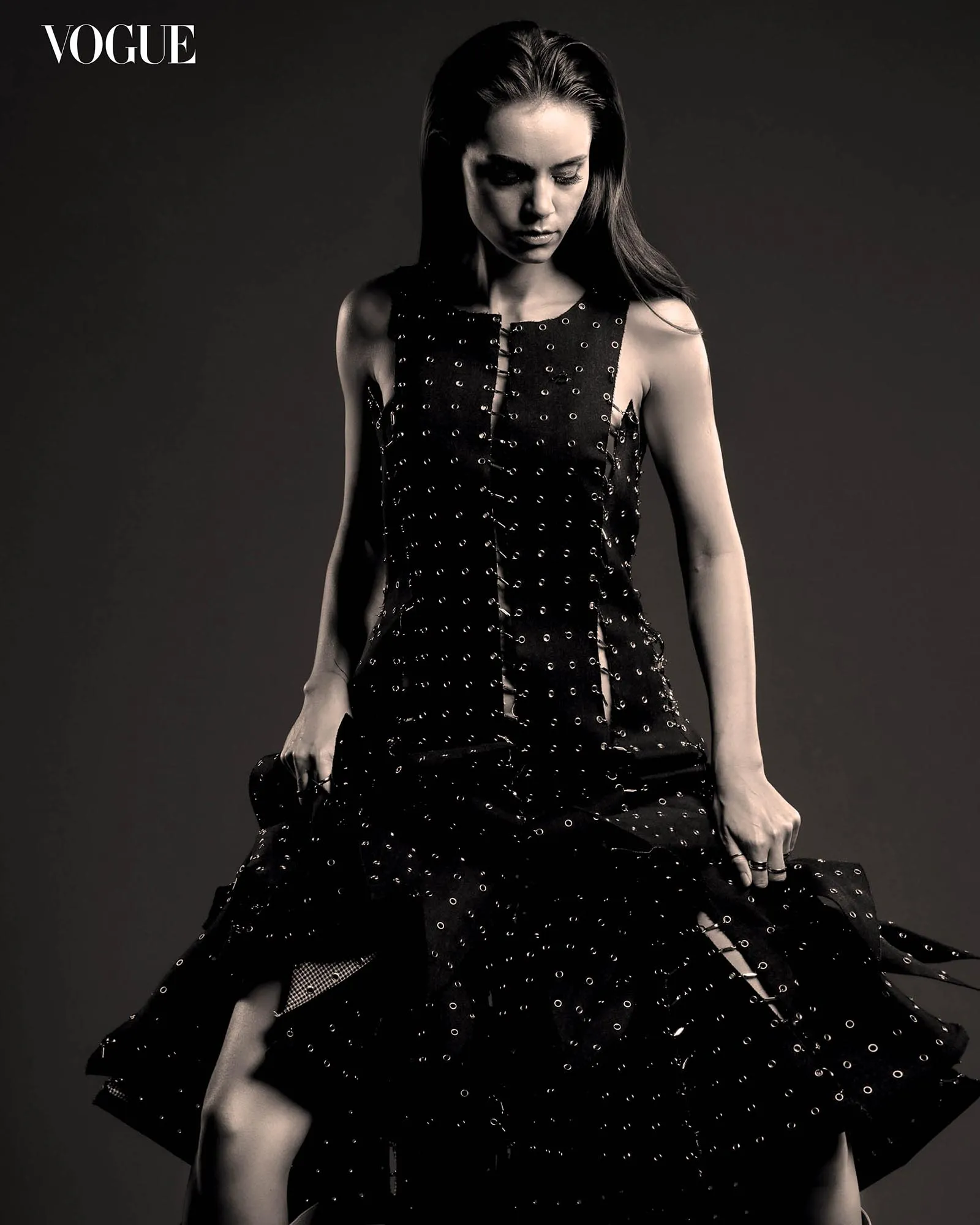
Meanwhile, Steph’s sophomore Bench showcase took her to the skies. For her collection, Airhart, Steph took off from a fascination with aviator Amelia Earhart, but became more invested in the lesser known fact that she had a companion on the very flight that notoriously disappeared. “Amelia turned out to be with Fred Noonan on that flight, who served as her navigator,” Steph remarks in Filipino, “most of the articles say that he had a great impact on American aviation.”
She endeavored to tell a story of weightlessness, making use of eyelets, mesh, and tulle, interspersed with a plethora of pockets and undone, utilitarian tailoring. The process was an exercise in balancing her artistic inclinations with client preferences, which, over the past few years of joining pop-ups, she realized were one and the same. At those events, she was taken aback by how quickly her experimental one-offs were selling out.
The same is true for Karl, who was surprised that clients gravitated toward his deconstructed pieces. These tailored wares make up his newest oeuvre for BFW, called Meet Me at Shinjuku Station. Despite the title’s specificity, Karl prefers to lean into abstraction instead of explaining too much of his concept, which he says is focused on the anticipatory feeling of change being afoot, whether positive or negative.
“My dungan is very malakas,” he explains using three languages. Dungan is a Bisayan word that loosely translates to “soul” or “life force,” which guides Karl in his work. It’s perhaps why he’s able to “go with the flow. I just trust my instinct and take the risk.”
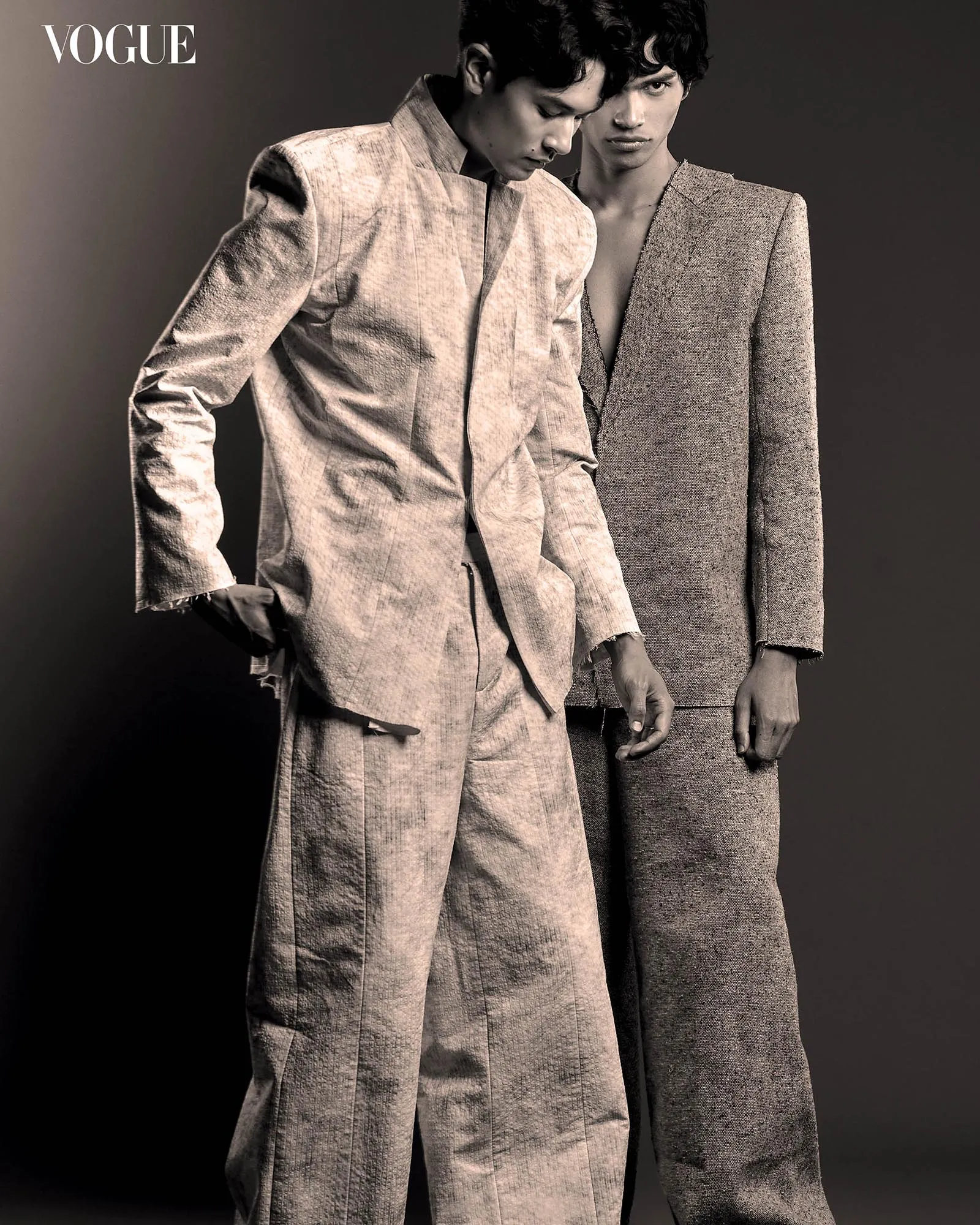
He makes the leap straight away with his opening look. At first glance, the vertical panels register as fabric strips, before a closer look reveals what they really are: a bunch of long shirt sleeves. An offhand comment from his fashion school mentor Inno Sotto gave way to the idea; Sotto specifically told Karl he was “hiding the magic hands” upon noticing that his shirt sleeves were extended.
Working in tandem with his angels (his term of endearment for his seamstresses) with input from mentors and friends in the field, Karl’s irreverent take on tailoring lent novel perspectives to his materials of choice: upholstery, curtains, lace scraps, and more. “For me, collaborating with other creatives is important because when I make a collection, it’s a part of me,” he emphasizes. “There’s pictures in my mind or memories that I can’t put into words.”
This communal spirit unites Bench’s collaborators across the board, making it both a microcosm and example for the industry at large. For a conglomerate to champion independent designers is to eliminate the concept of competition, and insist on the abundance of room for everyone to be seen. “It’s nice that there’s an entity that encourages designers and young designers,” Rhett reflects. “And then, of course, we get to meet each other. I get to meet the young generation of designers.”
Joey adds, “If not for Bench, very few platforms or stages for us designers to be able to showcase what we can. What I really feel every time, be it a big or small project, every time they ask me to be part of something, it’s really more of gratitude.”
By TICIA ALMAZAN. Photographs by GAB VILLAREAL. Media Channels Editor ANZ HIZON.
Frequently Asked Questions
Bench Fashion Week is an annual fashion showcase by the Philippine retail brand Bench, featuring collections from both established and emerging designers. It presents ready-to-wear and conceptual collections on a runway platform.
Bench Fashion Week Spring/Summer 2026 was held in the Philippines as a multi-day runway event. It featured designers presenting collections inspired by cultural exchange and contemporary fashion.
The Bench Fashion Week Spring/Summer 2026 showcase included designers Joey Samson, Rhett Eala, and Jaggy Glarino, among others. Each presented collections reflecting personal narratives and cultural influences.
One of the key themes, “Threads of Dreams,” explored cultural exchange between Japan and the Philippines. It highlighted collaboration, identity, and shared creative expression through fashion.
The collaboration celebrates 70 years of diplomatic relations between Japan and the Philippines through fashion, featuring designers who interpreted cultural exchange through their collections.