Trunks to Icons: The Louis Vuitton Monogram as a Symbol of Craftsmanship and Heritage


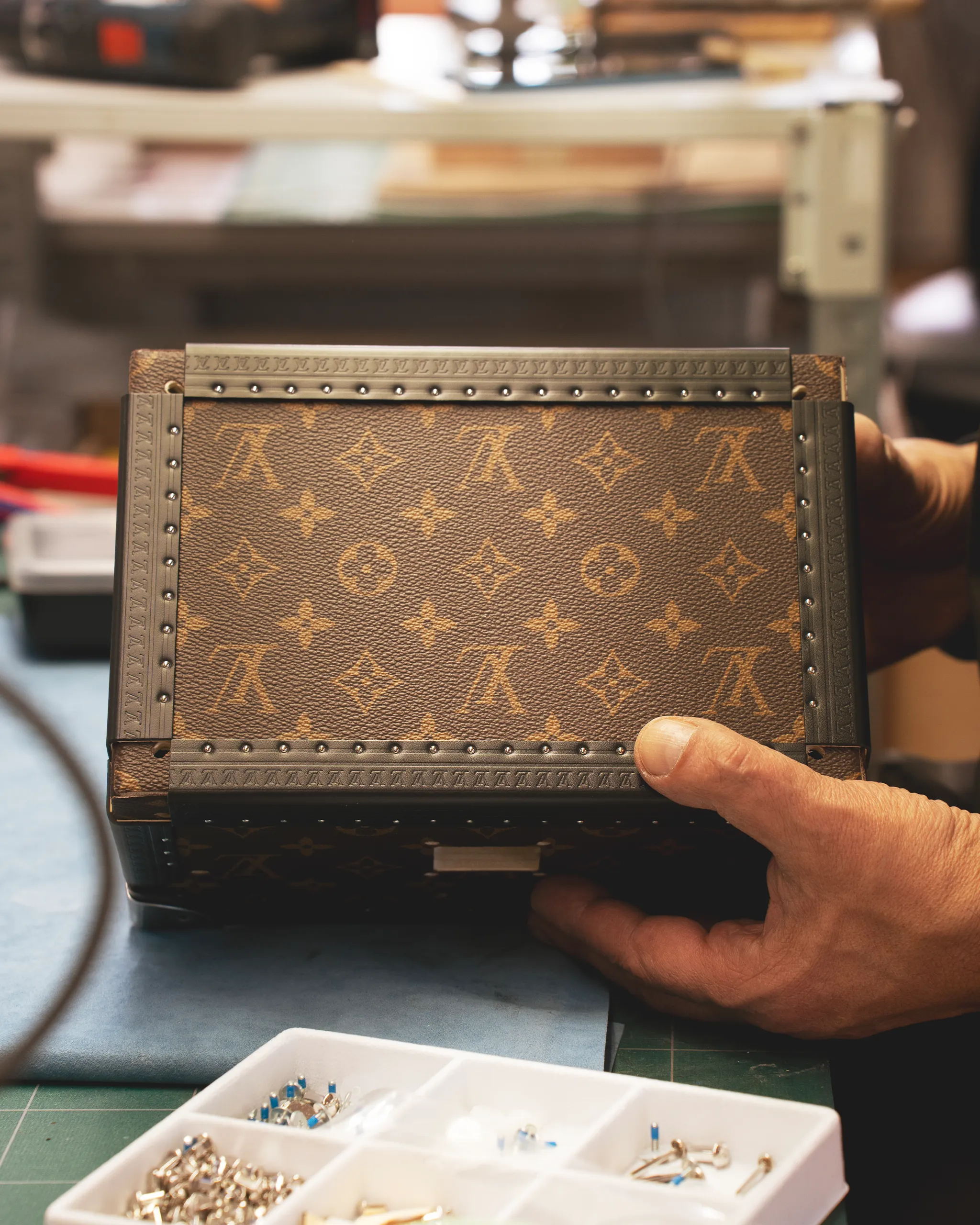
Photographed by Joel Camacho.
Celebrating 130 years of the Louis Vuitton Monogram, a symbol of craftsmanship, heritage, and continuous innovation in luxury.
For 130 years, the Louis Vuitton Monogram has remained one of the most recognizable visual signatures in fashion, luxury, and popular culture. Instantly identifiable from across a room, it has appeared on trunks, handbags, luggage, ready-to-wear, jewelryJewelryDecorative adornments worn on the body, from fine pieces in gold, diamonds, and pearls to fashion jewelry made of accessible materials. Jewelry completes an outfit and often holds sentimental orGo to Jewelry Glossary, and works of art, embedding itself not only in fashion, but in culture at large. Yet behind its familiarity lies a deeper story, rooted in craftsmanship, innovation, family history, and a continuous dialogue between tradition and reinvention.
The Monogram was created in 1896 by Georges Vuitton as a tribute to his father, Louis Vuitton. At the time, Louis Vuitton trunks were already highly desirable and widely imitated. Georges responded not only with protection, but with vision, designing an intricate composition of interlaced LV initials and stylized floral motifs that would become one of the earliest expressions of modern brand identity. From the outset, the Monogram functioned as both a marker of authenticity and a statement of values: precision, durability, innovation, and a deep commitment to craftsmanship. Over time, it evolved into something far greater, a symbol of travel, aspiration, and modern luxury itself.
To understand the Monogram fully is to return to its origin: the Maison et Ateliers Louis Vuitton in Asnières-sur-Seine. Just outside Paris, Asnières remains the historic and emotional heart of the brand. It is where the Vuitton family lived, where the first trunks were made, and where generations of artisans have refined and transmitted the brand’s savoir-faire. Unlike a static heritage site, Asnières continues to function as a living environment. The stained glass, decorative tiles, painted trunks, and original workshops exist alongside active ateliers, creating a rare continuity between past and present. It was here that Georges Vuitton first imagined the Monogram, grounding what would become a global symbol in a deeply human and artisanal context.
The design itself reflects the artistic influences of its time. Georges drew from Neo-Gothic ornamentation, Japanese family crests, floral motifs, and the decorative arts of late 19th-century Paris, resulting in a motif that feels both structured and expressive, refined yet layered with symbolism. As Gaston-Louis Vuitton later explained: “First of all, the initials of the company are interlaced in such a way as to remain perfectly legible. Then a diamond… Finally, a circle containing a flower with four rounded petals.” This balance between geometry and ornament is precisely what has allowed the Monogram to endure, timeless, yet continually adaptable.
Few understand that continuity more intimately than Pierre-Louis Vuitton. A sixth-generation member of the Vuitton family, he grew up in Asnières surrounded by artisans, materials, and the rhythms of the atelier. Today, as Head of Savoir-Faire, he is tasked with preserving and transmitting the brand’s craftsmanship while helping articulate its meaning for a contemporary audience. For him, the Monogram is not simply a logo or a decorative signature.“It is recognized worldwide,” he says. “It became iconic.” But Pierre-Louis Vuitton is equally interested in what lies behind that visibility: the work, the time, and the continuity required to sustain it.“The Monogram continues,” he says. “It is part of the legacy.”
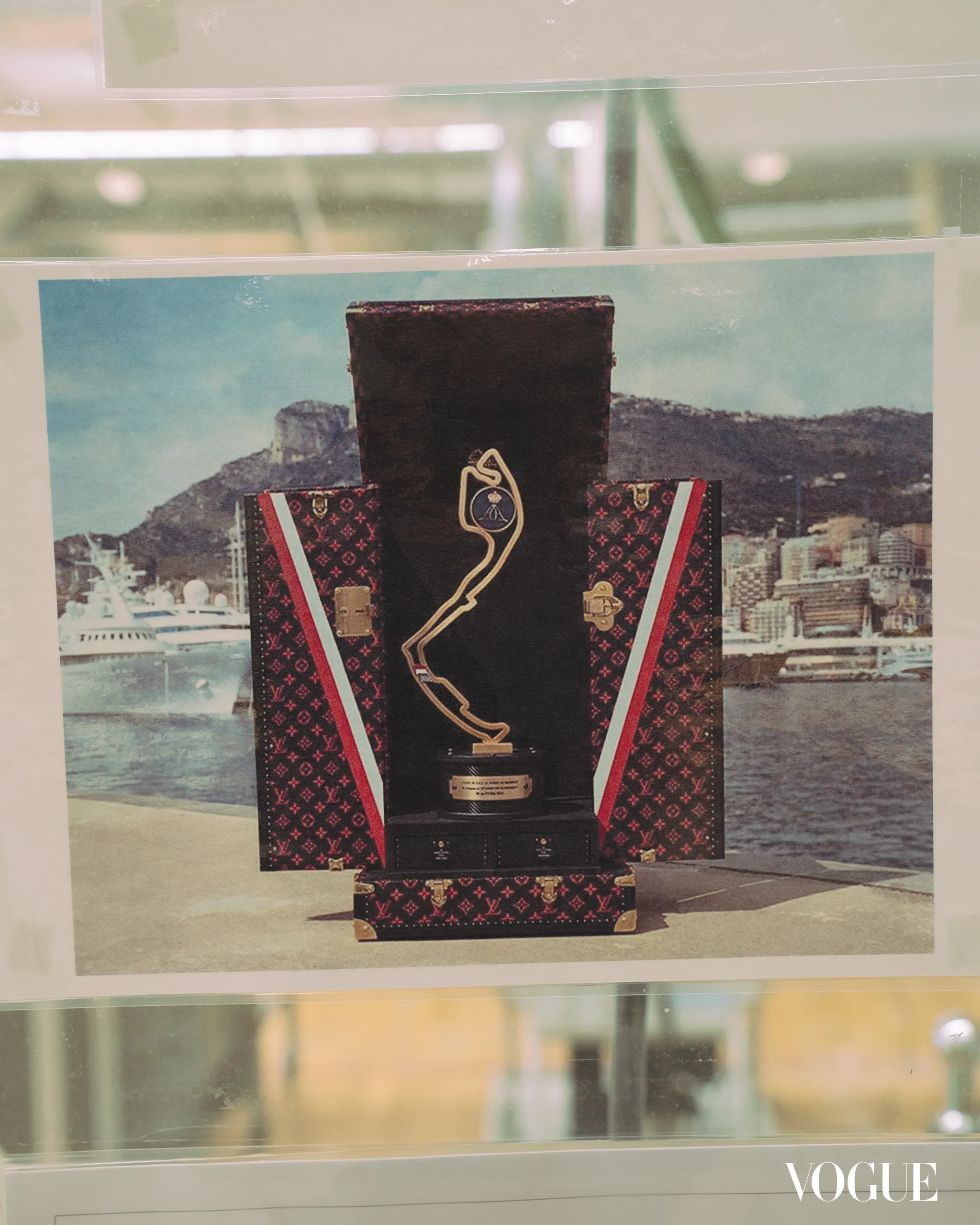
He often speaks about the Monogram not as something static, but as something living, evolving while remaining anchored to its origins. That tension between permanence and reinvention is one of the reasons it continues to resonate across generations. “For me, there are different generations of the Monogram,” he explains. “The first one was really linked to trunks and travel. Then it moved into bags and everyday life. Today, it can evolve through collaborations, colors, new materials, but you still recognize it immediately.”
That continuity is one of the Monogram’s defining strengths. It has evolved across decades without ever losing its identity. The earliest Monogram canvas appeared in woven jacquard, its motif revealed subtly through texture and light. It was later refined through stencil techniques that enhanced both durability and depth. In 1959, the introduction of a lighter, more flexible coated canvas marked a turning point, allowing the Monogram to move beyond rigid trunks into softer leather goods such as the Speedy, Keepall, and Noé, pieces that would come to define modern travel.
Pierre-Louis Vuitton has seen that evolution firsthand. He speaks enthusiastically about the Monogram’s ability to adapt to changing times without losing its essence, particularly through collaborations that brought it into new cultural conversations. “When Takashi Murakami worked on the Monogram, it was revolutionary,” he says. “He kept the Monogram, but he changed the colors, the energy, the feeling. It was still Louis Vuitton, but something completely new.” That moment opened the door for the Monogram to become not only a symbol of heritage, but also a platform for experimentation. Across decades, it has appeared in artist collaborations, limited editions, jewelryJewelryDecorative adornments worn on the body, from fine pieces in gold, diamonds, and pearls to fashion jewelry made of accessible materials. Jewelry completes an outfit and often holds sentimental orGo to Jewelry Glossary, ready-to-wear, and objects that extend far beyond luggage or leather goods. It has proven capable of shifting with the times while remaining unmistakably itself.
Despite these transformations, its connection to origin remains intact. “You can see the Monogram everywhere in the world,” Pierre-Louis Vuitton says. “But in Asnières, you understand where it comes from.” He sees that connection to Asnières as essential to understanding the Monogram’s emotional resonance.
As Louis Vuitton marks the Monogram’s 130th anniversary in 2026, that dialogue between past and present takes on renewed significance. The celebration begins with a tribute to some of the brand’s most iconic Monogram bags, the Speedy, Keepall, Noé, Alma, and Neverfull, each representing a distinct moment in the evolution of travel and modern life. Designed across decades, these pieces continue to resonate because they combine practicality with enduring design, and craftsmanship with adaptability.
Alongside these icons, three anniversary capsule collections explore the Monogram through different lenses of material, technique, and imagination. Monogram Origine returns to the spirit of the original canvas, reinterpreted through a linen-and-cotton blend that feels softer and more textured. Its familiar palette is expanded into cream, green, pink, and blue, creating a lighter, almost luminous expression of the motif across classic bags, accessoriesAccessoriesThe finishing pieces of an outfit, including bags, belts, scarves, hats, eyewear, and jewelry. Accessories can elevate a simple look or define it entirely, and fashion editors often treat themGo to Accessories Glossary, and trunk-inspired silhouettes.
The VVN collection shifts attention toward materiality, centering on natural vegetable-tanned leather, the same leather traditionally used for Louis Vuitton handles and trims. Over time, each piece develops a rich patina unique to its owner, transforming the object into something deeply personal and lived-in.
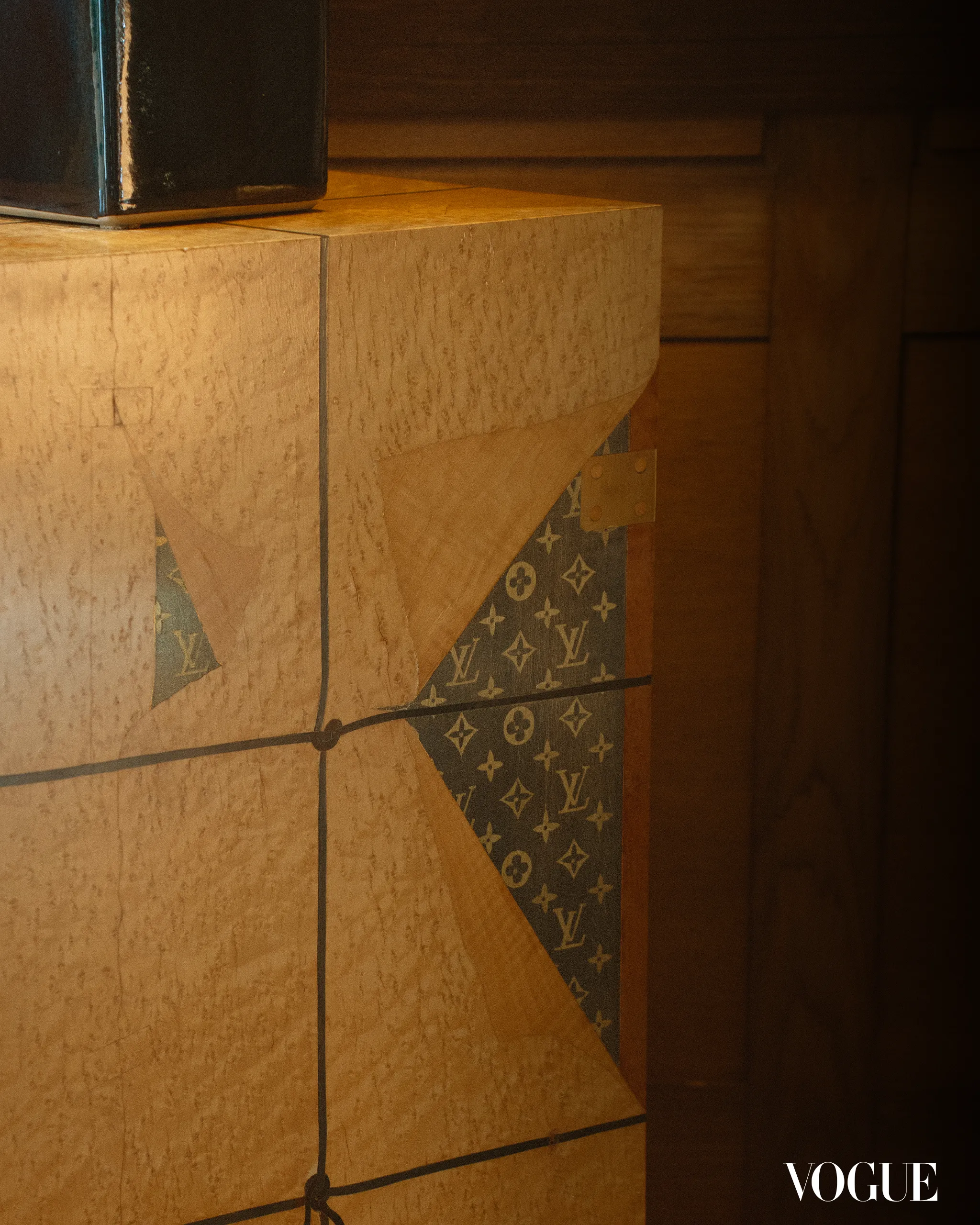
Meanwhile, the Time Trunk collection takes a more conceptual approach, using trompe-l’oeil techniques to recreate the textures, corners, and patina of antique trunks on contemporary forms. The result feels nostalgic and forward-looking at once, turning heritage into visual storytelling.
Taken together, these collections reflect the Monogram’s ability to operate across multiple registers, heritage and innovation, material and image, tradition and experimentation. They underscore the idea that the Monogram is not static, but continuously in motion. If it carries the memory of where Louis Vuitton began, it also contains the possibility of what comes next. More than a decorative motif, it remains the thread connecting every era of the brand, linking trunks to handbags, craftsmanship to culture, and past to future.
Its greatest strength has always been its ability to evolve without losing its essence. That is why, 130 years later, the Monogram still feels alive, capable of being adapted, reinterpreted, and reshaped while remaining unmistakably Louis Vuitton. In this sense, it is not only the foundation of the brand, but also the vehicle that will carry it forward for generations to come.
by BIANCA MONZON. Edited by DANYL GENECRIAN. Photographs by JOEL CAMACHO. Art direction by LARA CASTAÑEDA. Produced by BELLA MARISTELA. Project implemented by ESAB RAYMUNDO. Account Manager ANDREA RAMOS. Creative Services Manager IAN URMAZA.
Frequently Asked Questions
The Monogram was created in 1896 by Georges Vuitton as a tribute to his father, Louis Vuitton. It was designed both as a vision of the brand’s identity and as a practical response to the widespread imitation of their highly desirable trunks.
The design features a structured composition of interlaced “LV” initials, a diamond shape, and a circle containing a four-petaled flower. These elements were inspired by 19th-century Neo-Gothic ornamentation and Japanese family crests.
Asnières is the emotional and creative birthplace of the brand. It housed the Vuitton family residence and the original workshops, and it continues to operate today as a place where the brand’s traditional savoir-faire is preserved and passed down.
While rooted in trunk-making, the Monogram has adapted to changing times through innovations like flexible coated canvas (introduced in 1959) and artistic collaborations, such as those with Takashi Murakami, which allowed it to become a platform for modern experimentation.
The anniversary collections include Monogram Origine (reinterpreting the classic canvas in new colors), VVN (focusing on natural vegetable-tanned leather that develops a unique patina), and Time Trunk (using trompe-l’oeil techniques to mimic antique trunk textures).