
Jude Macasinag on Creating a “Jazz Fantasy” Robe de Style for Laufey’s May Cover Story


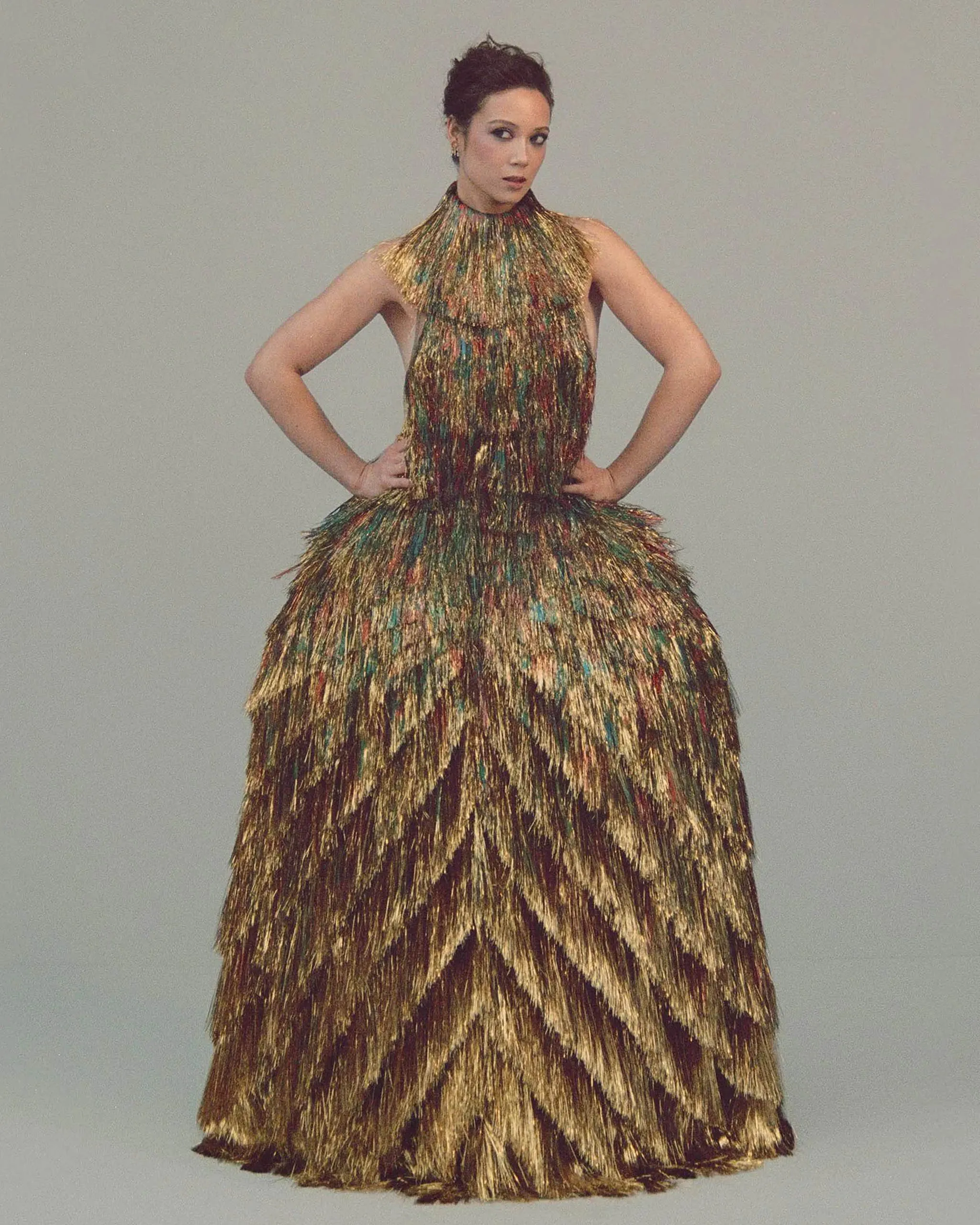
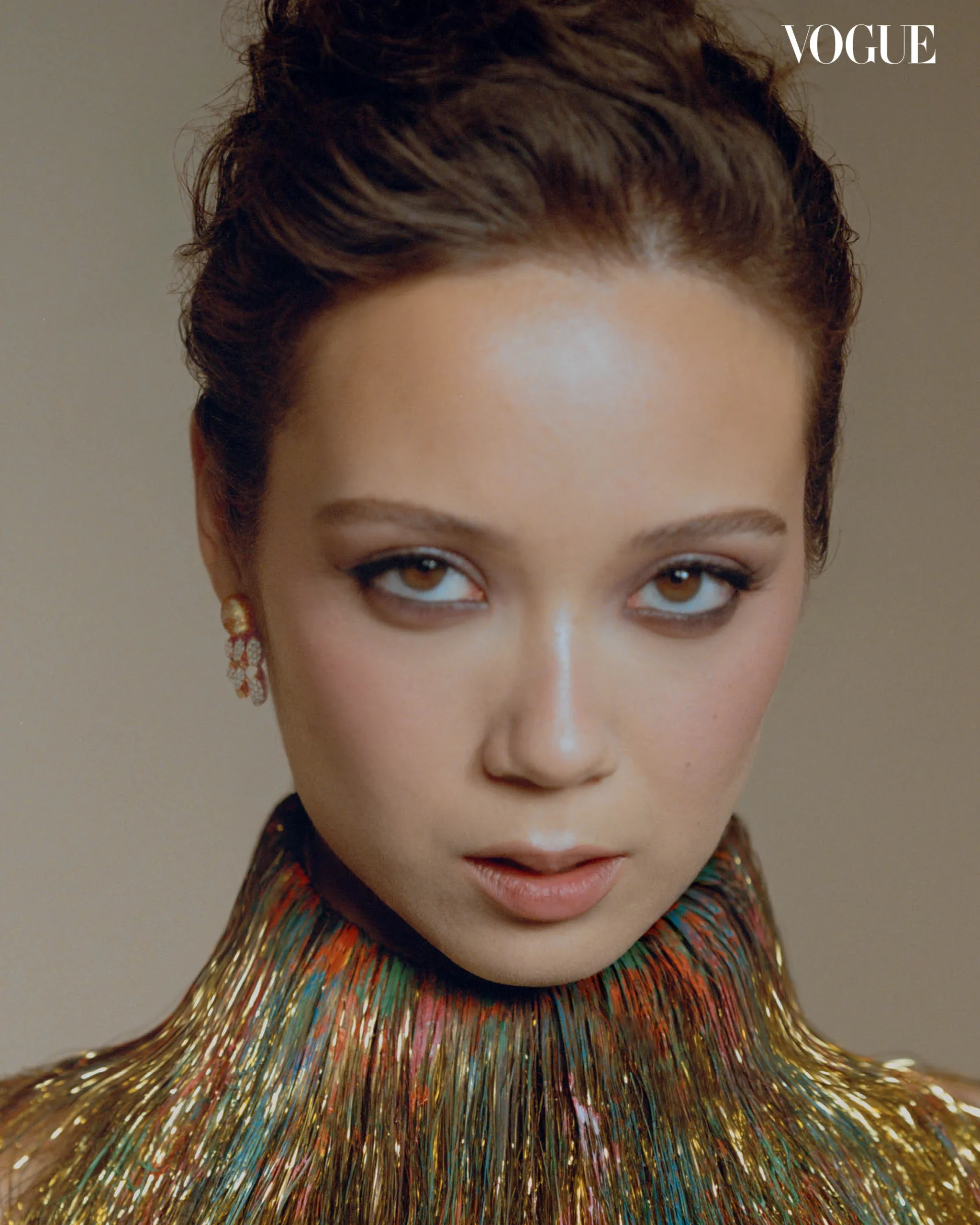
JUDE MACASINAG tinsel dress and JEWELMER Zen earrings. Photographed by Daniel Jack Lyons for the May 2026 Issue of Vogue Philippines
Inspired by the interwar years in Paris, Jude Macasinag reimagines the glamour and movement of the Jazz Age for a 21st-century woman.
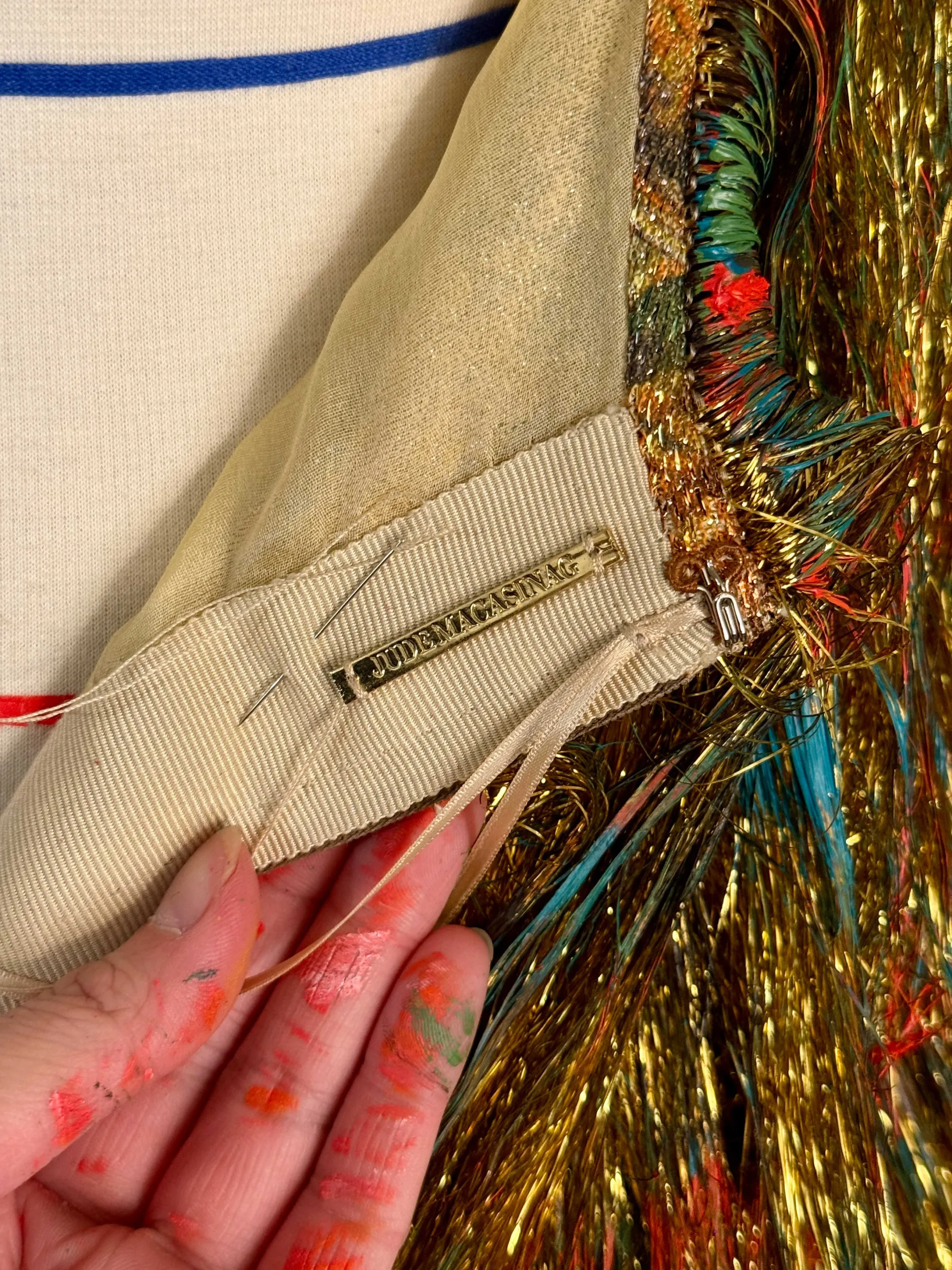
Developed from a brief that simply “stuck” with him, the one-of-a-kind creation Jude Macasinag designed for Laufey’s Vogue Philippines May 2026 cover story is a garment that merges his enthusiasm for fashion history with painterly abstraction. Crafted from lamé and résille, the gown’s texture echoes the vakul, the traditional woven grass headgear of the Ivatan people of Batanes, translating its fibrous weave into glimmering layers of antique gold.
“Back in January, I was tapped for an opportunity that simply came at the right time,” Macasinag shared on Instagram. “I was given a pretty vague and short brief, but the words ‘jazz fantasy’ stuck with me. The genre’s golden period felt aligned with my continued research on the interwar years in Paris, so I treated the project as an extension of that.”
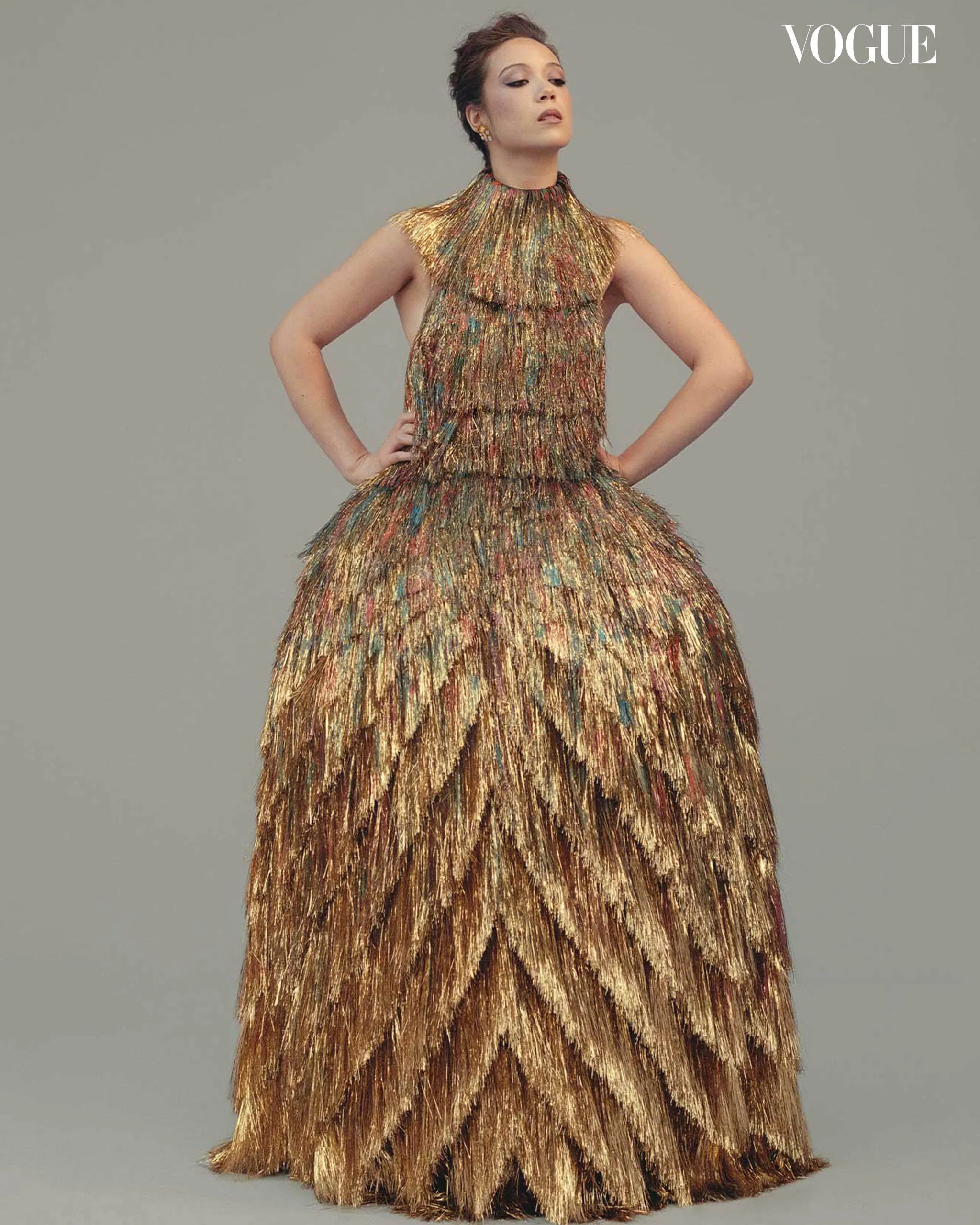
It wasn’t until later that he discovered Laufey would wear the dress. “I thought how resonant it was to dress an artist whose work also involves tinkering with the media and forms from the history of our own respective crafts.”
Rooted in the spirit of the early 20th century, the design represents an era of liberation in which women reclaimed their agency, trading restrictive corsetry and hobble skirts for greater personal autonomy in style. “Laufey’s dress is a reinterpretation of the robe de style, highly popularized by Jeanne Lanvin in the 1920s,” Macasinag explains. “The inspiration for the creation of the robe de style also came from historical dress, reinterpreting 18th-century fashion.” He speaks specifically about the ‘Robe à la Française’ favored by aristocratic women during the era of Marie Antoinette for occasions such as dinner parties, galas, and the opera.
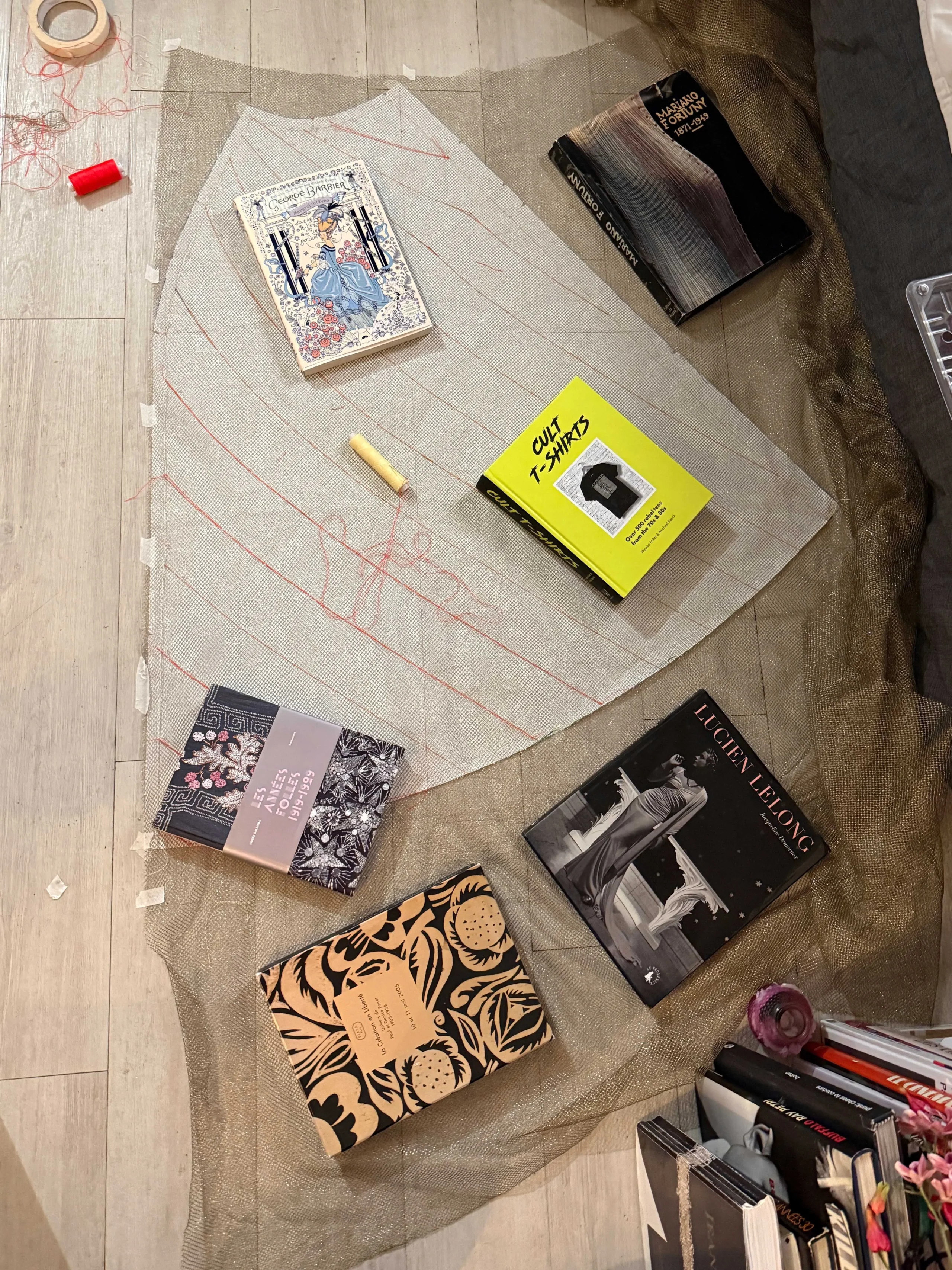
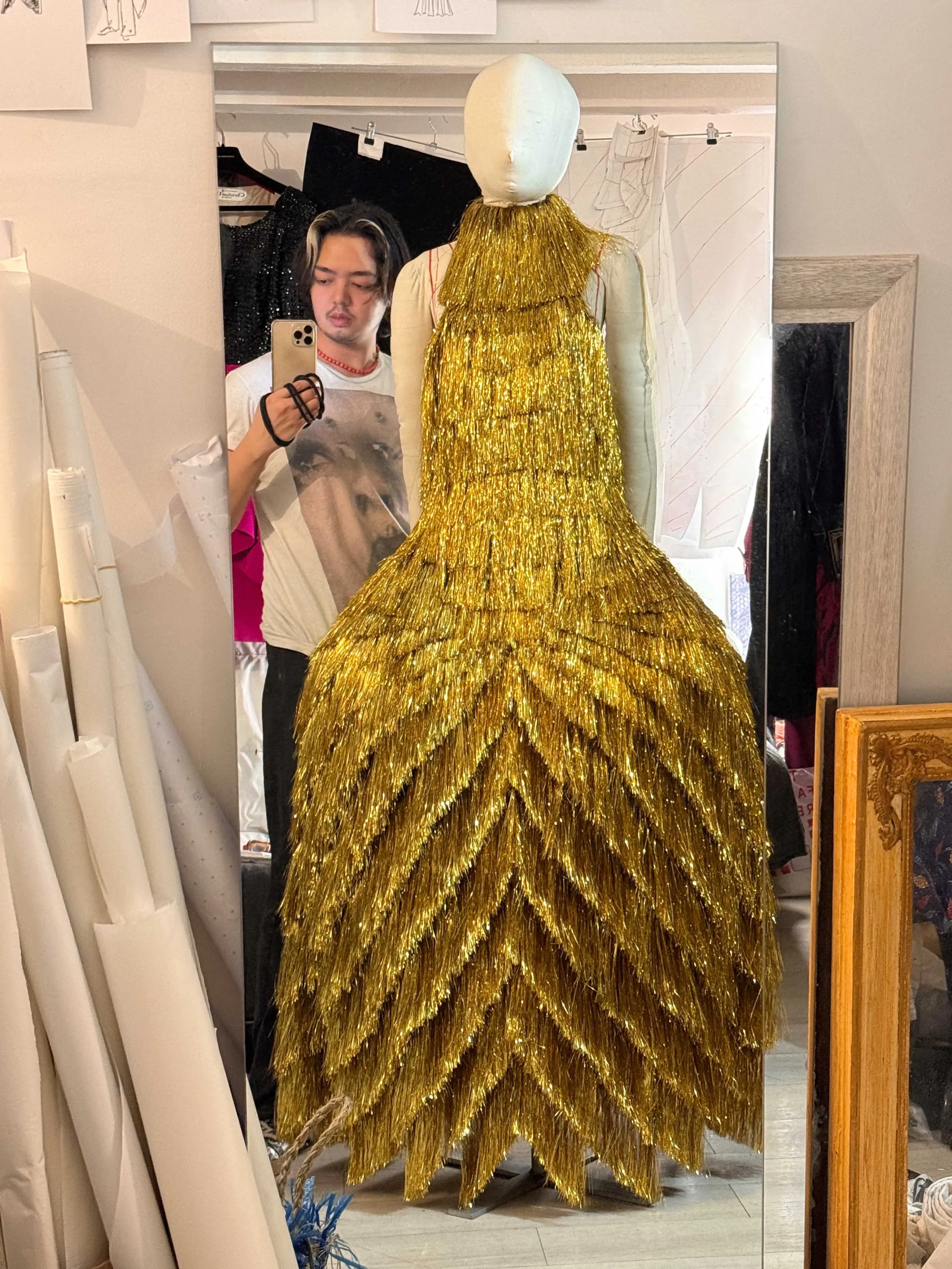
Rather than simply replicating a replica, Macasinag approached the references from a contemporary viewpoint. “The bodice, although it is cut much closer to the body and features technical paneling of metallic résille,” he explains. “The fringes hark back to the flapper, but are made of newer festive tinsel.”
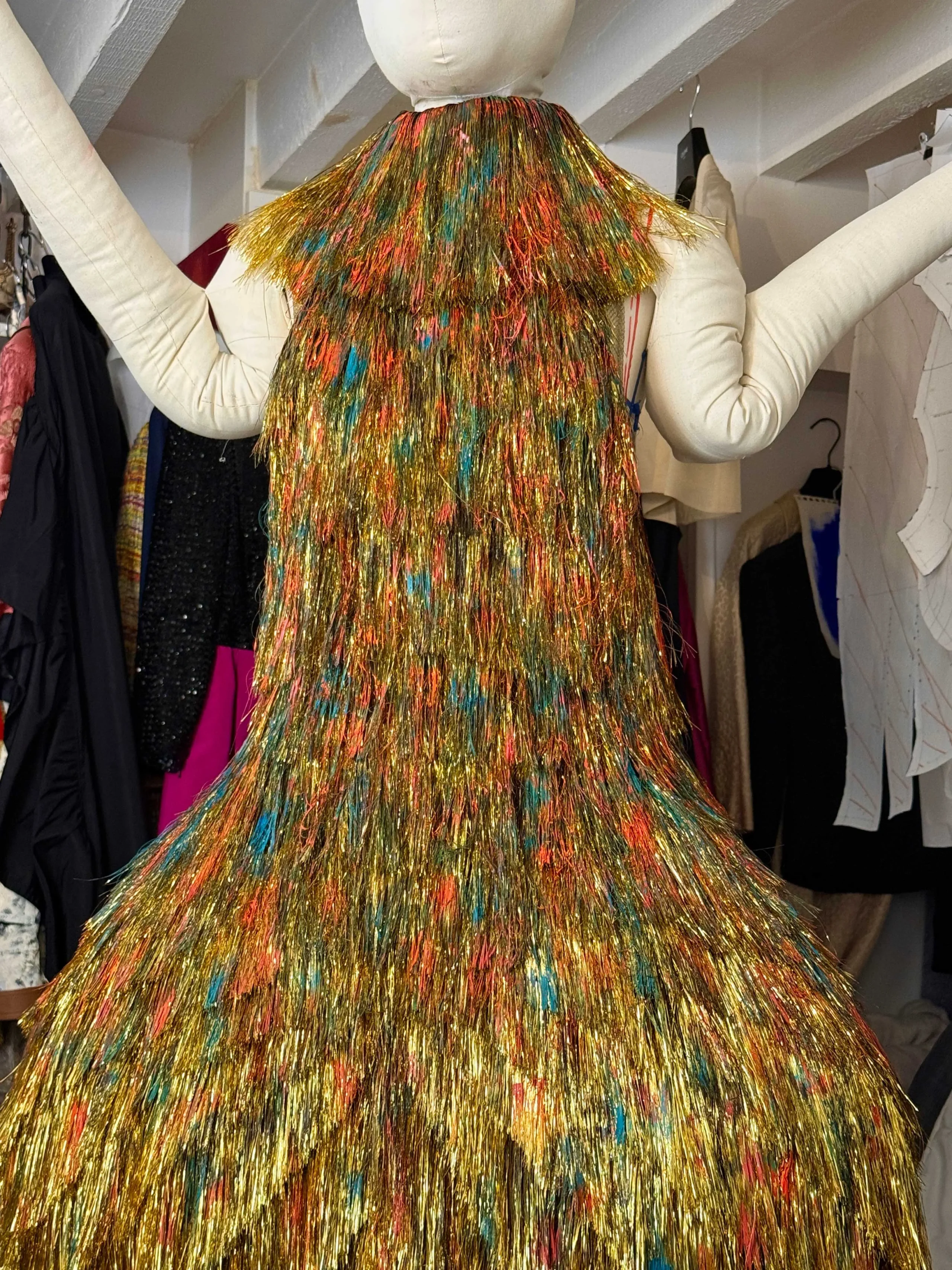
Made with a printed golden lamé base and an overdyed gold résille overskirt, the gown features nearly 30 meters of gold tinsel fringe selected to enhance movement and fluidity. “This keeps it in the spirit of flapper dresses during the Jazz Age, in which garments were designed with key consideration for the wearer’s movement.” This detail transforms the garment into a living extension of the dance floor, accentuating the body’s motion as if shimmering to the rhythm of the Charleston or the Lindy Hop.
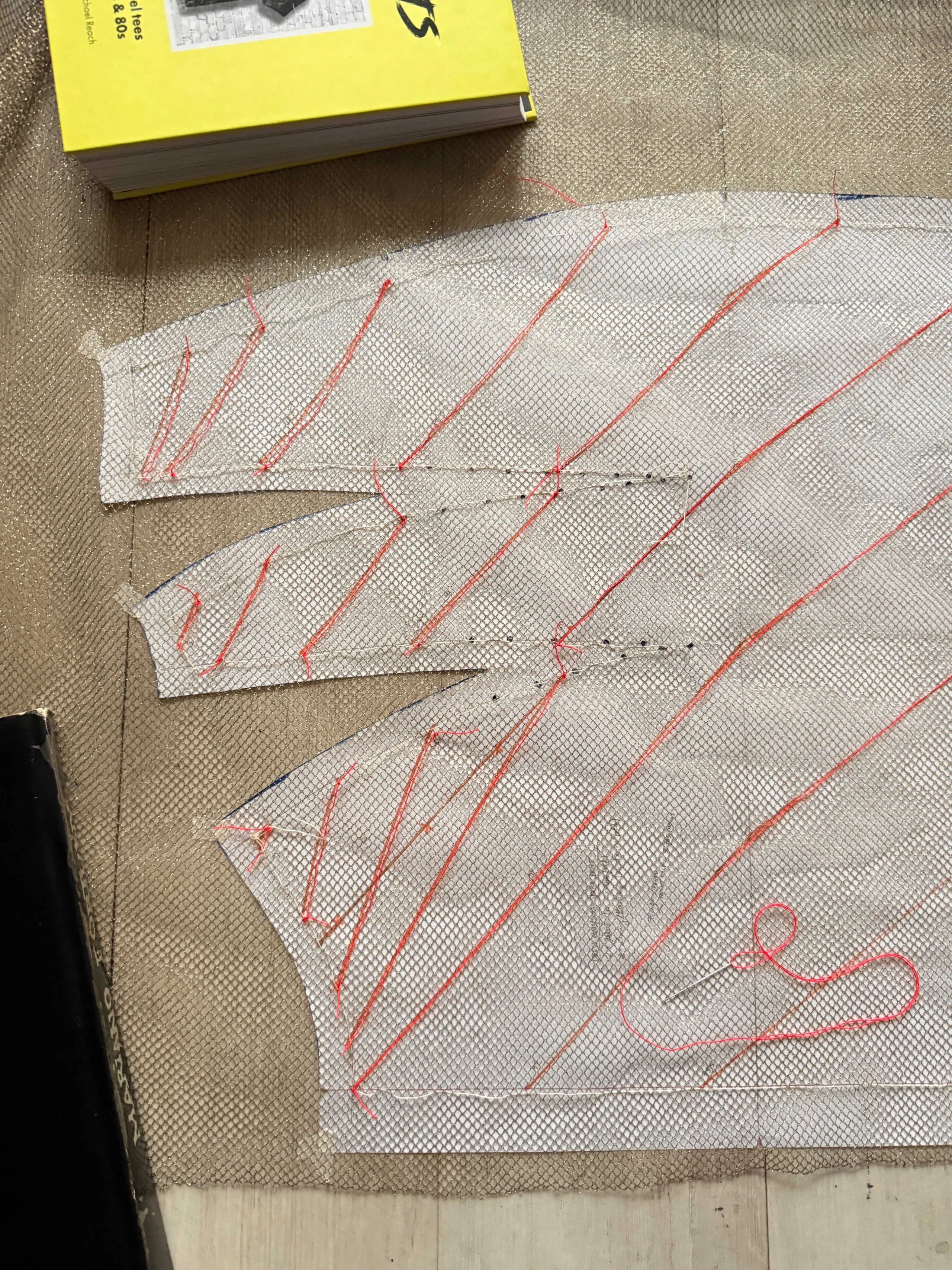
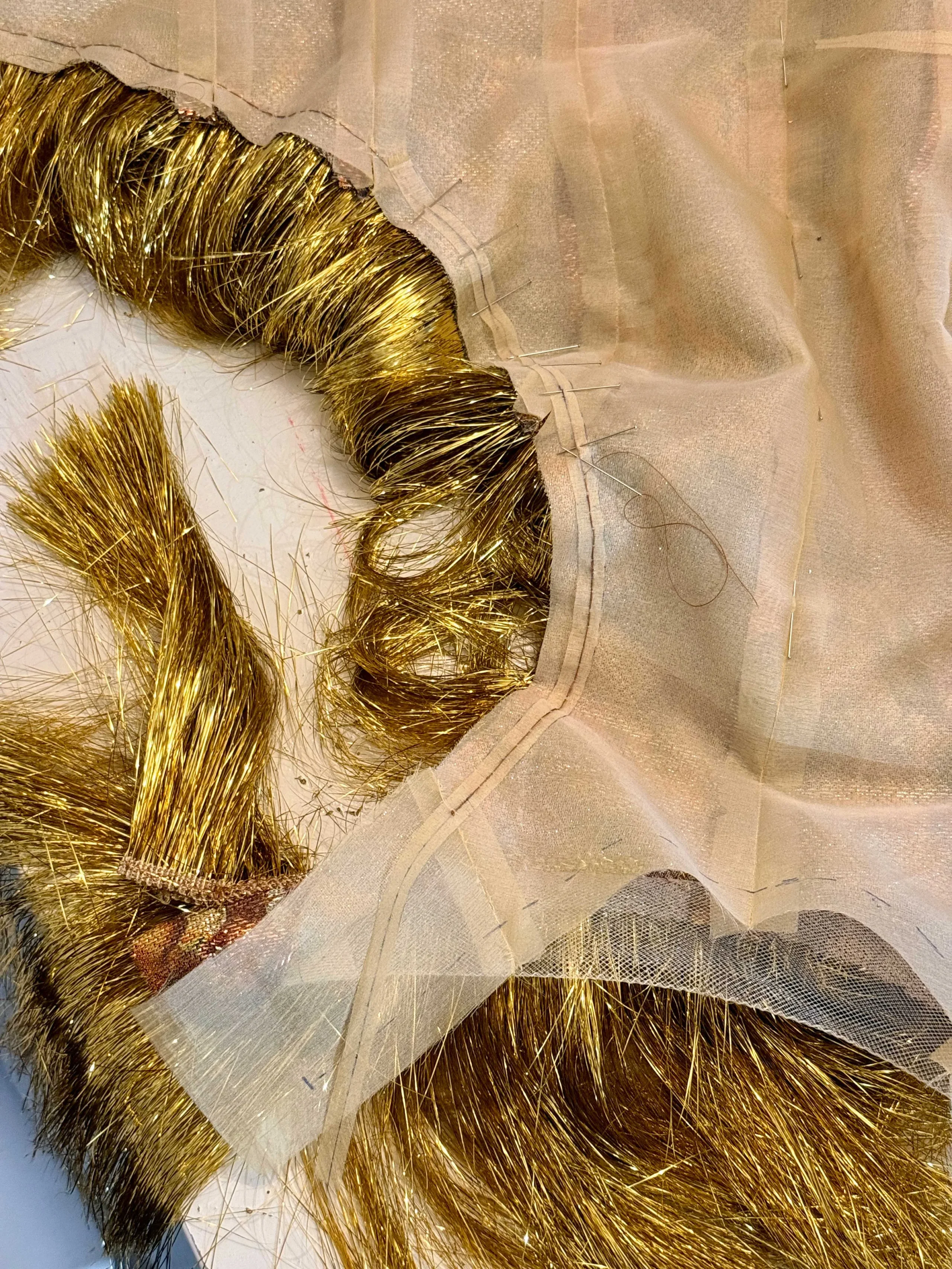
The garment’s surface treatment of feather dabs of red and blue paint developed naturally during its creation. “The overpainting on the garment began as a form of a patina treatment…it soon exploded into something more Fauvist,” Macasinag says. “This constant back-and-forth dialogue with history fascinates me, especially when it reveals the contrasts of time.”
Most of the garment was crafted from archived materials gathered from past collections and projects in his studio. “The gold mesh was kept in my stash since the second collection I made in 2018, still back from when I lived in the Philippines,” Macasinag says. Even the silk organza lining, tulle, and crinoline used for the understructure came from surplus fabrics sourced over the years, with only the tinsel fringe newly produced.
As Macasinag worked on the garment, he listened to her discography and discovered parallels between her music and his own philosophy of design. “Laufey’s presence in the music industry is important because her work is unique in the interesting way of bridging the sounds of pop, jazz, and classical,” he says. “I always find it interesting how genres such as jazz and classical, which can feel very ‘of its time,’ can always be remade into something contemporary, much like how fashion history is regurgitated and added onto within current trends.”
Above all, this collaboration is more than a mere aesthetic triumph of old and new. “Beyond her technical musical skill, Laufey is also a poster child for Asian excellence,” he says. “To have her succeed and be given recognition in an industry and at a time in society that’s very… white and patriarchal is radical.”
Frequently Asked Questions
The May 2026 cover story explores the intersection of music, identity, and creative expression. It captures Laufey as a “force of nature” in the modern jazz-pop scene, highlighting her role in creating a space for intimacy, vulnerability, and escapism for her audience of young listeners.
The cover features a custom “Jazz Fantasy” robe de style ballgown designed by Filipino designer Jude Macasinag. Inspired by the interwar years in Paris, the gown is crafted from lamé and résille, with textures that echo the traditional Ivatan vakul of Batanes.
The cover story was photographed by Daniel Jack Lyons and styled by Leith Clark, Laufey’s regular stylist. The shoot showcases Laufey in an eclectic wardrobe mix, including pieces from Jude Macasinag, Prada, and Gucci.
The issue, titled the “Art and Wellness” edition, centers on the theme of grounding in uncertain times. It features a diverse range of resilient women, including director Geena Rocero and actor Julia Saubier, alongside reflections on how the body serves as a witness and guide through periods of personal and collective change.
Laufey views her music as a form of comfort that allows her audience to escape their daily stresses. In her interview, she emphasizes that her performances are designed to be theatrical and inclusive experiences where her audience—many of whom are young people navigating significant life transitions—can feel empowered to be their authentic selves.