
How Communities in Sorsogon Are Reclaiming a Filipino Tradition of Care


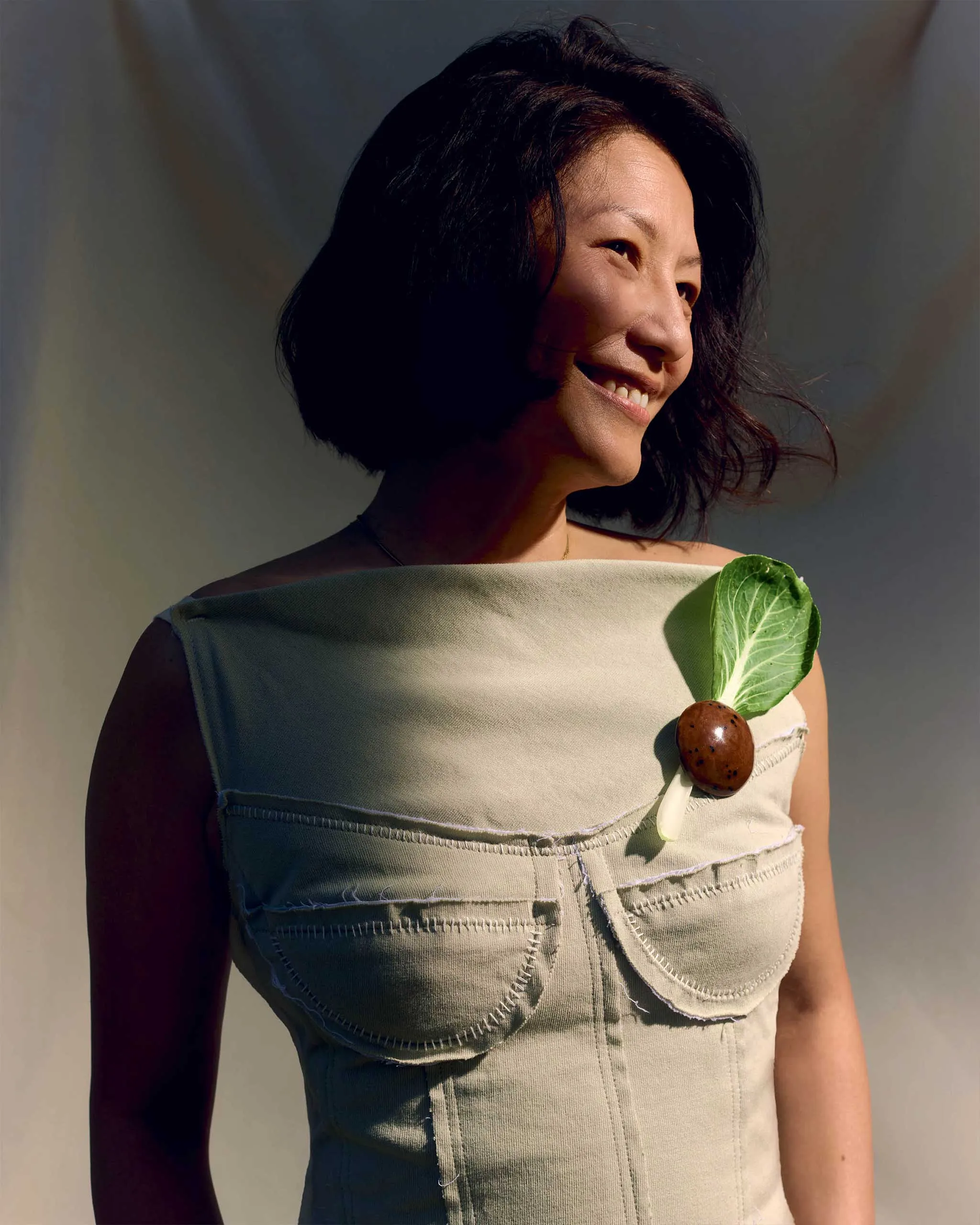
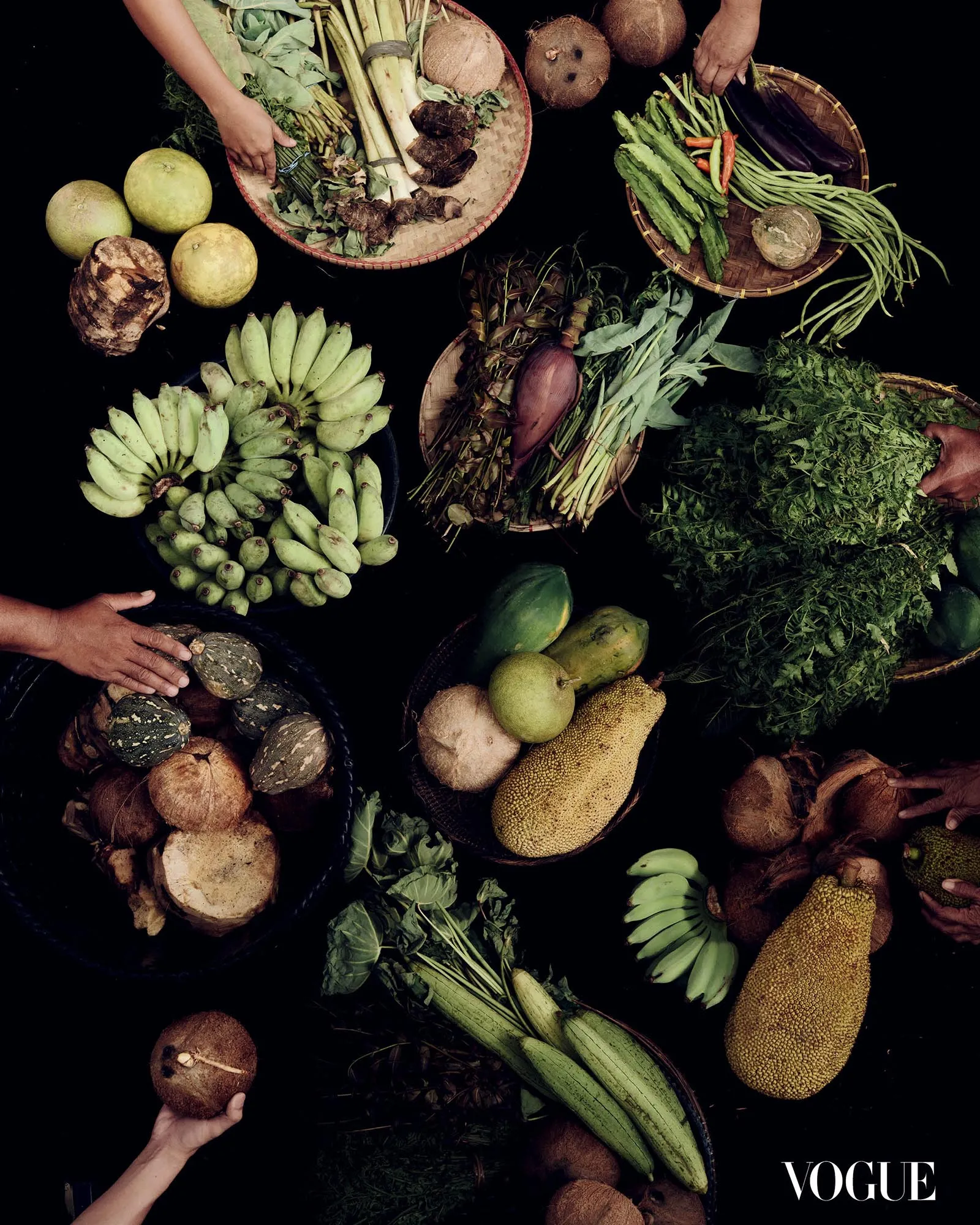
Currently in its 11th wave, ARK’s Feed Back program has now reached 123 communities all over the Philippines. Photographed by Artu Nepomuceno and Archie Geotina for the April 2026 Issue of Vogue Philippines
Through a weekly exchange of backyard harvests, communities in Sorsogon are reclaiming a tradition of care that once defined Filipino life.
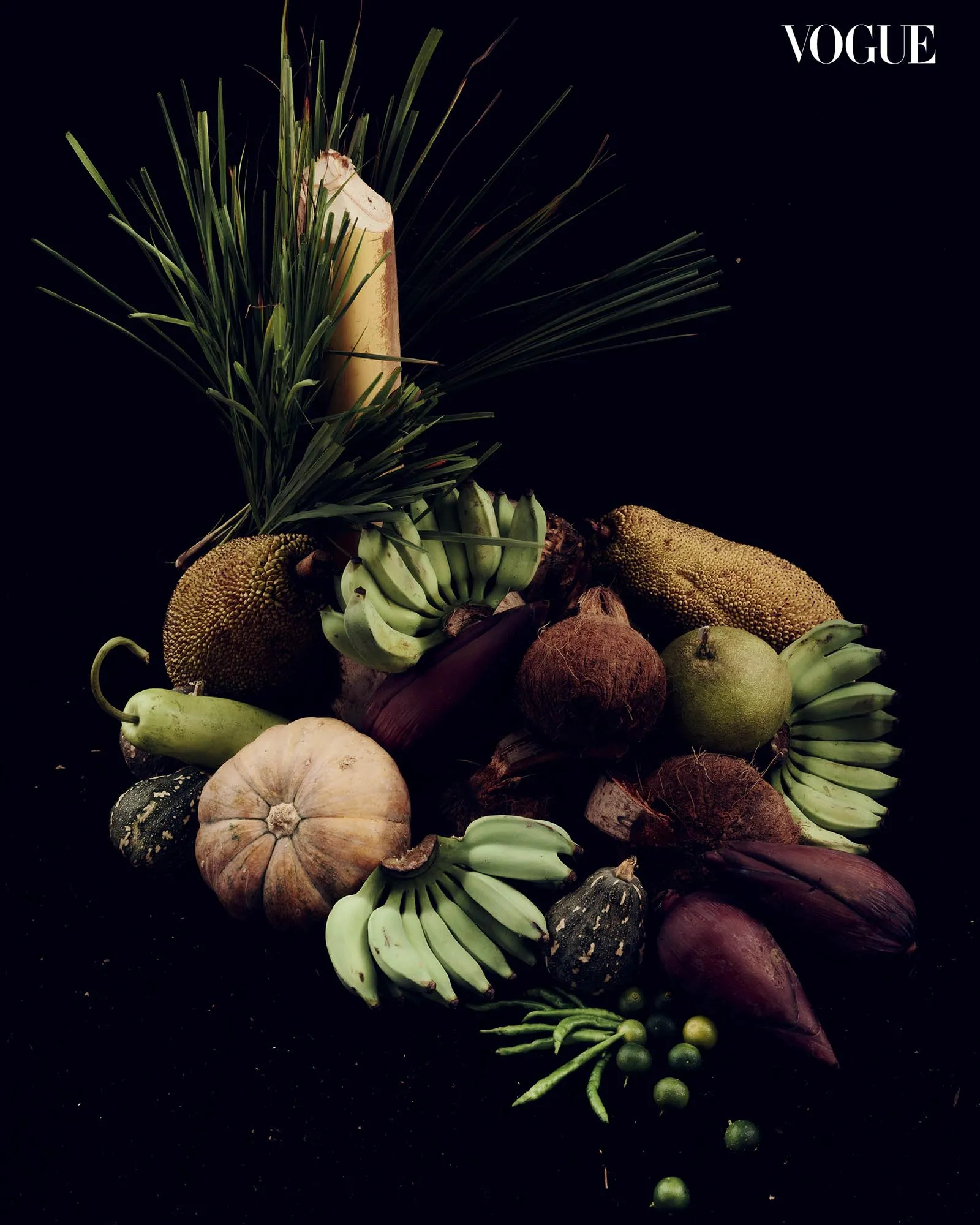
At 10 in the morning in Bulusan, Sorsogon, Barangay San Antonio’s covered courts start to turn a shade of green. Not from paint or décor, but from mounds of harvest. From bundles of malunggay, ampalaya, coconut, and kalabasa stacked in crates, to gabi and pechay still dusted with soil. By noon, the cement floor is no longer gray. It is a mosaic of not just green, but also vibrant hues of violet and yellow.
Women arrive balancing woven baskets on their heads, while men are seen carrying plastic tubs filled with produce slick from last night’s rain. Children also play inside the court, as volunteers help weigh vegetables before erupting into laughter when someone calls their name over the microphone. A game of “Bring Me” begins in one corner. In another, raffle prizes are being arranged beside a speaker playing budots remixes of popular songs.
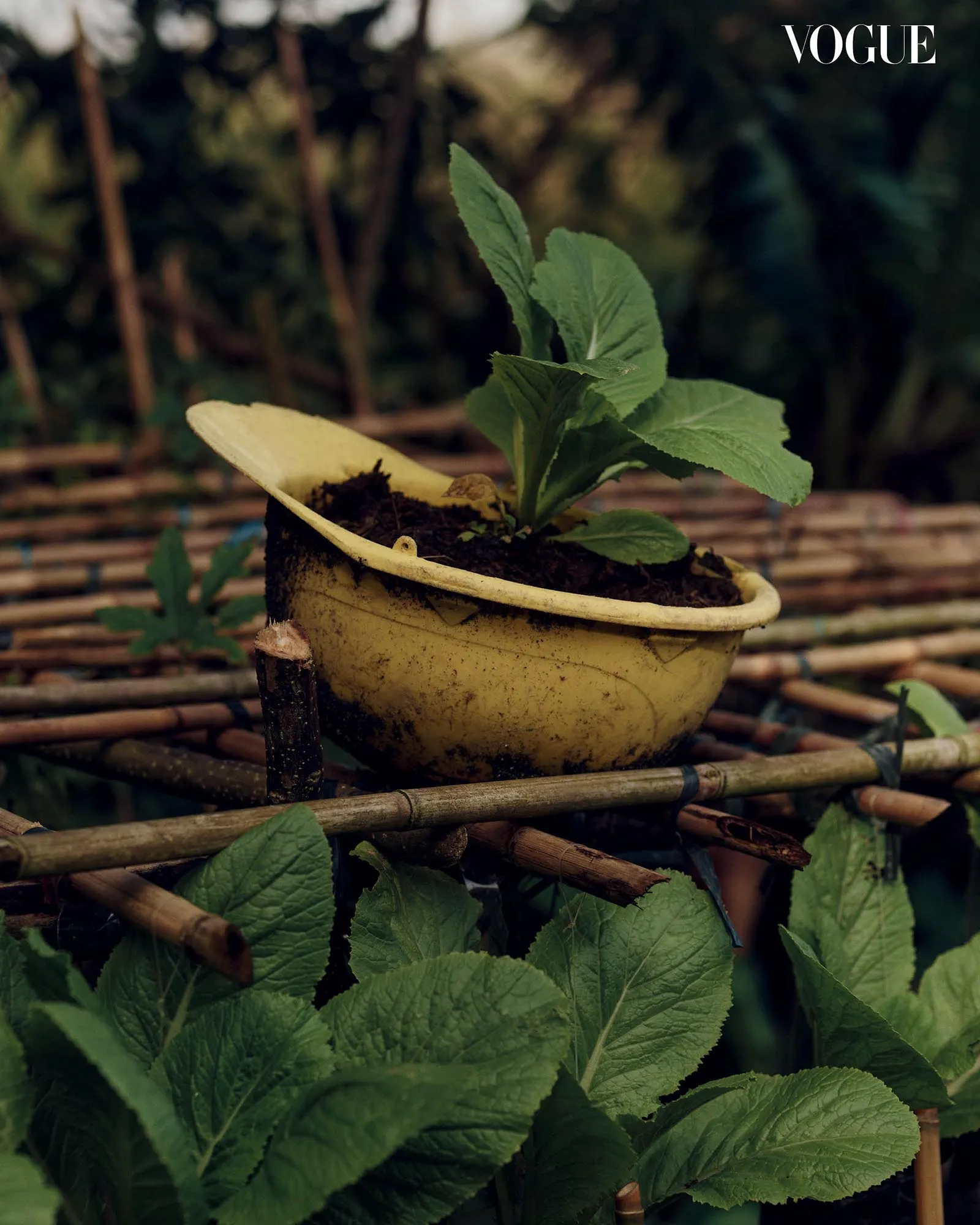
From an outsider’s perspective it would be hard to believe that this is a graduation ceremony. But there are no caps or gowns here. Instead, the atmosphere brims with the energy of a salo-salo or fiesta.
It took weeks of tending to backyard plots to lead to this moment; a 16-week vegetable exchange known as Feed Back, a leading food security solution by the social impact organization ARK. At each exchange, families bring at least three kinds of surplus produce from their gardens. They have them weighed, organized, divided, and shared equally. Here, everyone who contributes gets to join in a raffle and celebration. They later take home their share from the collected vegetables that have been grown by each family. Each resident leaves the venue taking home six kilos worth and over 20 varieties.
A day prior, the Vogue Philippines team had arrived in Bicol under a clear sky, Mount Mayon sharply etched against blue. By afternoon, rain arrived without warning. In Sorsogon, sun and rain trade places often and unpredictably. It is a province accustomed to volatility, facing three to five major typhoons a year, with seas that are abruptly closed to fishermen, and crop prices that fall with each storm.
Yet here they are. Dancing, lining up for bingo, and making bouquets out of vegetables. But what gathers here each week is not just food.
Joel Furio, a spearfisher, father, and a graduate of ARK’s Feed Back program will later offer the Bicolano word for it. “Ang tawag namin diyan, nagmamakulog [that’s what we call it here, care],” he says. “Mas naramdaman namin ang malasakit, ibig sabihin, may concern at paki alam sa isa’t isa [we feel compassion, meaning we show concern and care for each other].”
It’s an idea familiar to Filipinos. It lives in kapwa, the shared self that is defined as identity extending beyond the individual. Other interpretations, such as malasakit and bayanihan, also attempt to frame that instinct. Community, in other words, is muscle memory, yet that muscle has been strained over centuries.
Before colonization, food moved horizontally. Communities bartered fish for rice, root crops for salt, and produce was communal. But Spanish rule reorganized agriculture toward the empire, shifting the focus to monocrops for export. The Americans then industrialized that model, reinforcing export-focused production for their corporations. Over time, farmers were left dependent on single buyers who set the price. In the 1970s, the push toward chemical farming deepened that dependency, replacing soil diversity with imported inputs and debt.

ARK’s founder, Ayesha Vera-Yu, knows this intimately. She once structured deals on Wall Street before restructuring her family’s farm in Capiz. What she encountered there changed her perspective.
“It’s a systematic issue that was unsustainable,” she explains. “Monocropping, a legacy of our colonized past, and chemical farming has put families in deep debt with little income.” Many of the neighbors she grew up with left because farming had become “unsurvivable.” “Food security is a global issue because there are no more farmers, and the people who are still farming are already in their 60s, and none of their kids are there.” And the pattern extends beyond agriculture. Even fishing communities are feeling the shift. She notes that the pull toward more predictable work is growing stronger each year. “My entire village in Capiz is now in Singapore, taking care of someone else’s family,” Ayesha says.
Feed Back as a program emerged in 2020 during the pandemic, when acute hunger deepened across the Philippines. But the philosophy behind it reaches further back, to a memory Ayesha carries from stories about her grandfather. Neighbors would gather to help with the harvest, and afterward the yield would be shared among them. “In his mind, it was just the right thing to do,” she says. “If the community helped bring the harvest in, then the harvest belonged to the community.” Ayesha later encountered a similar idea while reading about pre-colonial food systems, including the work of Filipino food historian Doreen Gamboa Fernandez. Rice itself functioned as currency; measured in kilos and sacks rather than bills or coins. In many farming communities, that language still lingers today.
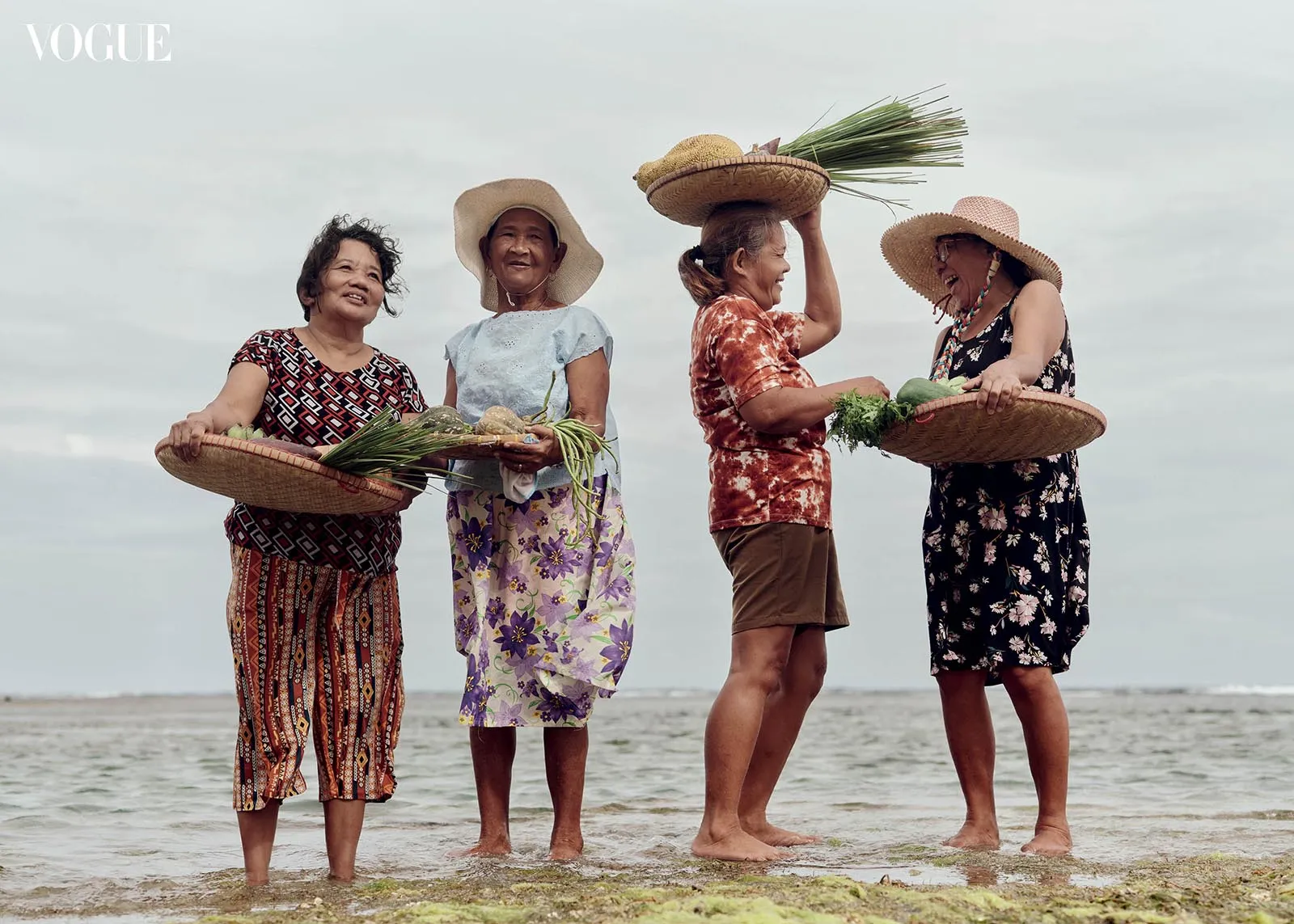
And the Feed Back model is a spiritual successor to that part of our history. Over 16 weeks, families first spend four to six weeks planting, followed by regular exchanges that motivate families to expand and maintain their harvests. At weekly exchanges, they bring what they have in excess and take home a wider variety in return. According to ARK, families also see their cash flows rise by an average of 25 percent through savings and sales.
“I think it’s easy for all the communities to adopt Feed Back because at the root of it, it’s sharing, it’s a collective barter,” Ayesha explains. For generations, Filipinos have shared harvests with one another. So when the program arrives in a new community, it doesn’t feel foreign. “Because I think we all have that sharing in our DNA. That’s what we’re supposed to be. We shared our abundance and our wealth with each other.”
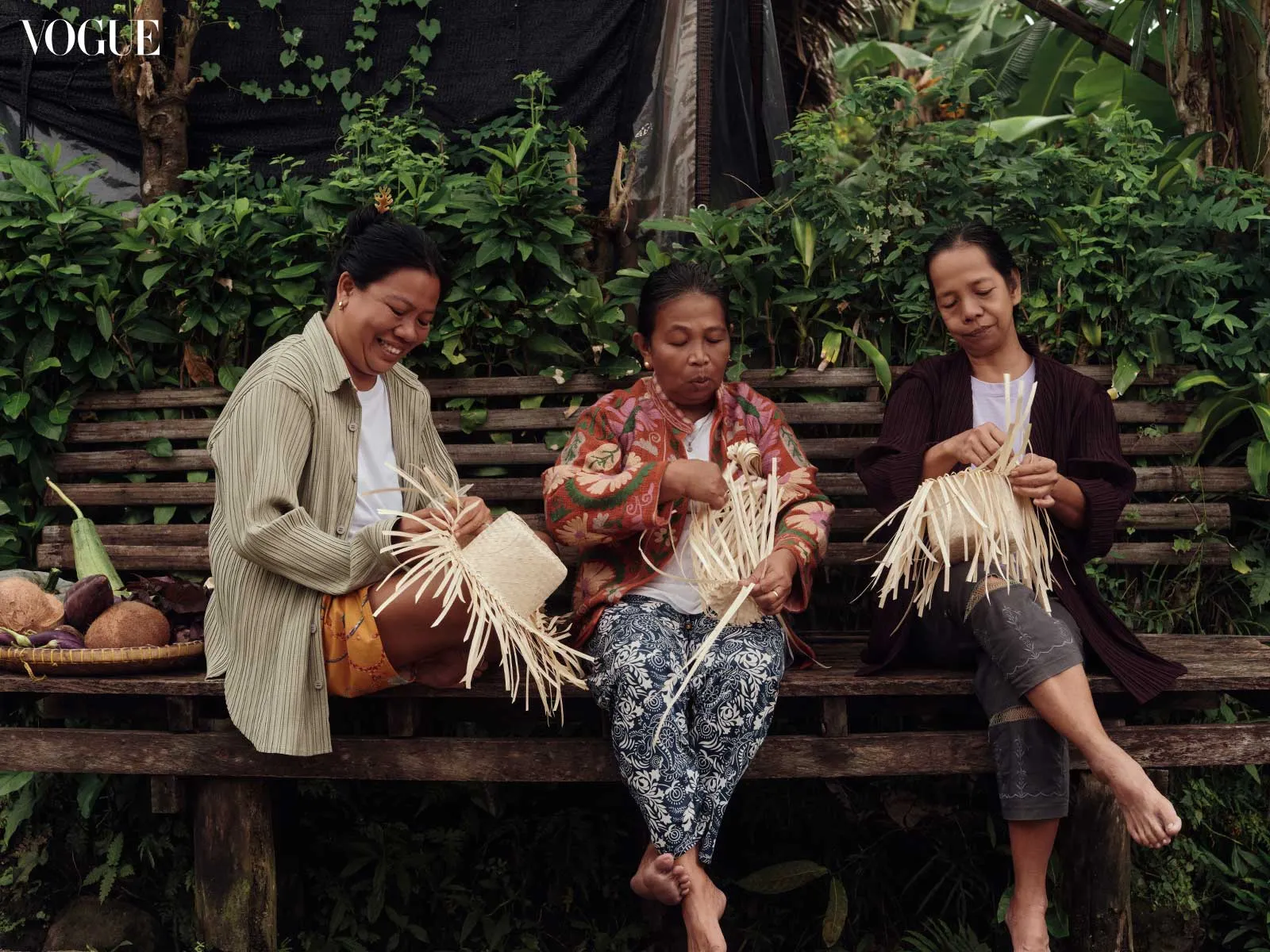
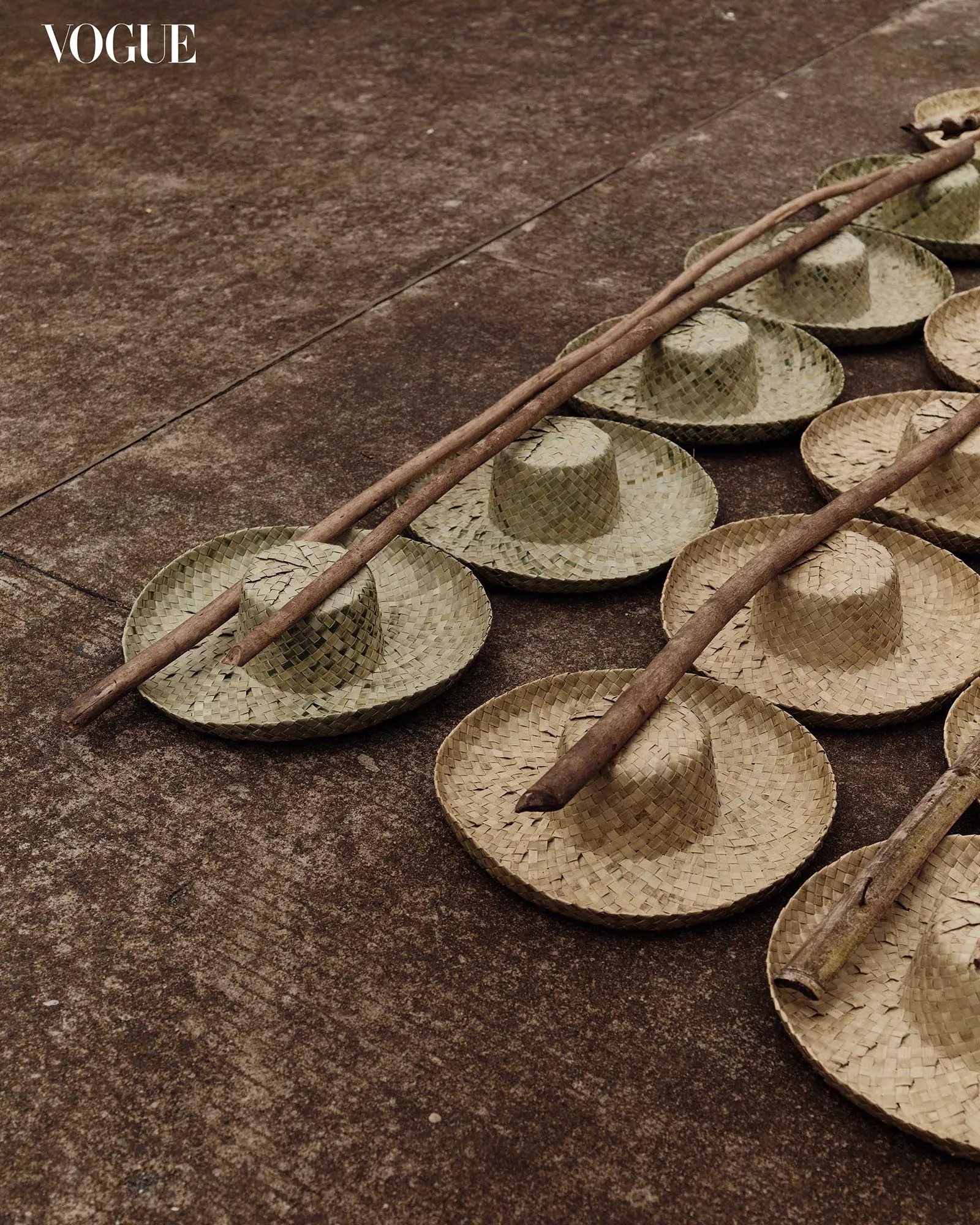
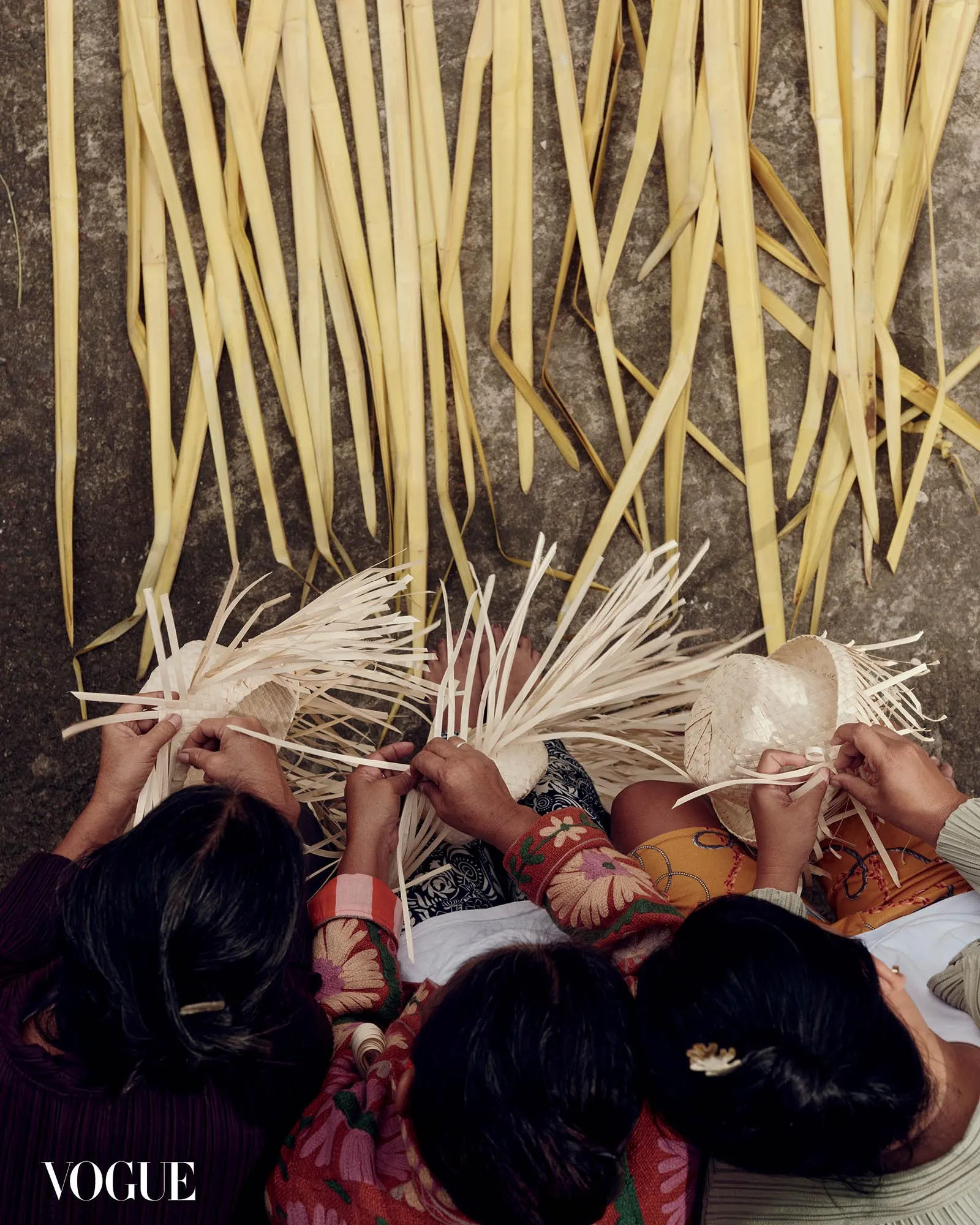
But a part of what makes ARK successful across communities in Bulusan, Santa Magdalena, and Prieto Diaz in Sorsogon is pride in perfect attendance. They arrive with full baskets, showing up even when storms threaten. During Typhoon Uwan, when rain battered the region and fishing boats stayed docked, Julie Frades, one of the many buri hat weavers of San Antonio, still came to the exchange. “Kahit binagyo, nagtanim pa rin kami. Kasi habang may buhay, may pag-asa, at hindi pwedeng tumigil [Even when the typhoon hit, we planted again. Because while there is life, there is hope, so we cannot stop],” she says. Her vegetables were smaller that week, but she brought them anyway.
In barangay San Rafael, Necie Freolo found herself giving part of their harvest away. “Kapag may humihingi ng gulay, binibigyan namin. Minsan nga kahit gusto nilang bilhin, hindi ko na pinagbabayad. Sabi ko, mas lalo akong pagbabasbasan ni Lord kapag nagbigay ako sa kapwa [When someone asks for vegetables, we give them away. Even if they want to pay, I won’t let them. When you give to your neighbors, God blesses you even more],” she says.
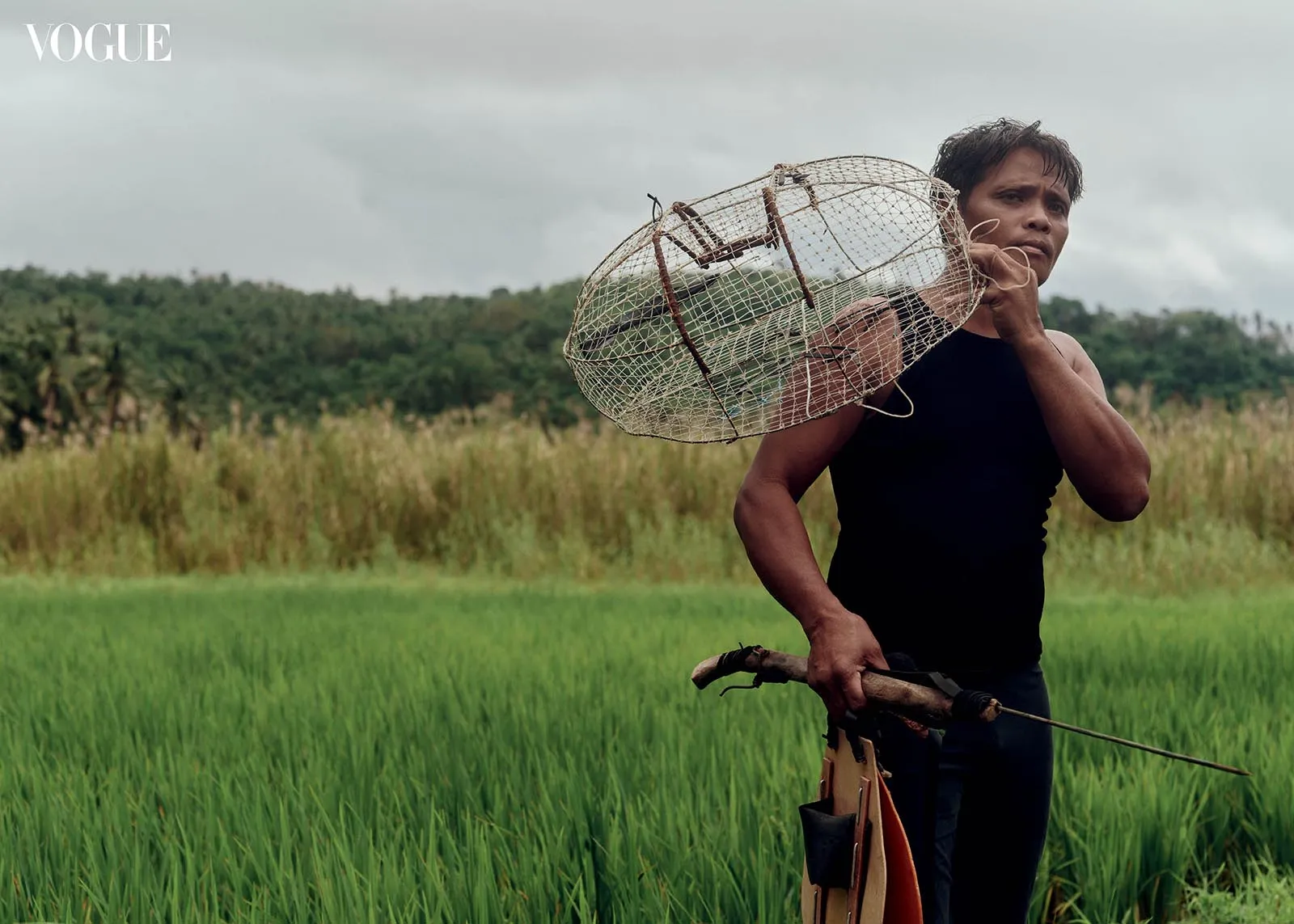
Her husband Marlon still fishes for a living, describing how the sea remains unpredictable. “Minsan, isang linggo walang huli [Sometimes, there’s no catch for a week],” he says. “Kapag may gulay ka sa likod-bahay, hindi ka gutom [But if you have vegetables in your backyard, you won’t go hungry].”
“Ang tawag namin diyan, nagmamakulog… Mas naramdaman namin ang malasakit, ibig sabihin, may concern at pakialam sa isa’t isa.”
Joel Furio
That security reshapes something inside a community. And those communities figure out creative ways to encourage participation in each exchange, where prizes are sometimes not only items but services: free haircuts, photocopying, even barangay clearances.
Feed Back calls for investment and fosters participation, not dependency, and Ayesha is firm about this. “You cannot help someone who does not want to help themselves. We only partner with communities who want to solve hunger, want income, and to stand on their own,” she says, “it’s only when barangays allocate funds for the program, and the village council unite and commit their time that we partner. Because when you venture, when you do anything new, the likelihood of failure is much higher than the likelihood of success. So in order for you and I, and anyone else to achieve our goals, we need to do it together and have a stake in the game. That’s why I don’t say help, and we only look to co-invest.” For ARK, that means communities willing to invest in their own independence.
That vision can feel distant in a region where leaving has long been the survival strategy. But by week 16, families from across 10 provinces report something simple. There is always something to eat. It sounds modest, but in areas battered by elements and market swings, that consistency is a game-changer. It’s survival.
“What the communities are achieving in just 16 weeks is amazing. Amazing in that they are food secure, have abundance and the return of community. This sense of community is very powerful because they no longer feel alone. It inspires every family to do new things, to solve for themselves and to find strength and solace in each other,” Ayesha explains.
On our last afternoon in Sorsogon, the rain pauses just long enough for the air to cool. The covered courts are empty. No raffle stubs. No bingo cards. Only the faint outline of where baskets once sat. Behind the houses, however, the gardens are busy.
Mayon stands visible again in the distance, as if nothing had changed. But something has. Across Bulusan, Prieto Diaz, and Santa Magdalena, vegetables grow in neat rows. Families continue to gather weekly, not because they are told to, but because they want to, and children learn the weight of harvest in their palms.
“For me, the biggest metric to scaling is how can ARK be irrelevant?” Ayesha speaks of the future. “How can our tools be shared without us being the bottleneck? I want us to work ourselves out of a job.”
Standing at the edge of the Pacific, a province known for absorbing typhoons has begun to absorb something else. If it continues, ARK may indeed become irrelevant here. Nagmamakulog, or care, has taken root. In Sorsogon, it is spreading steadily, insistently, like something that was always meant to grow.
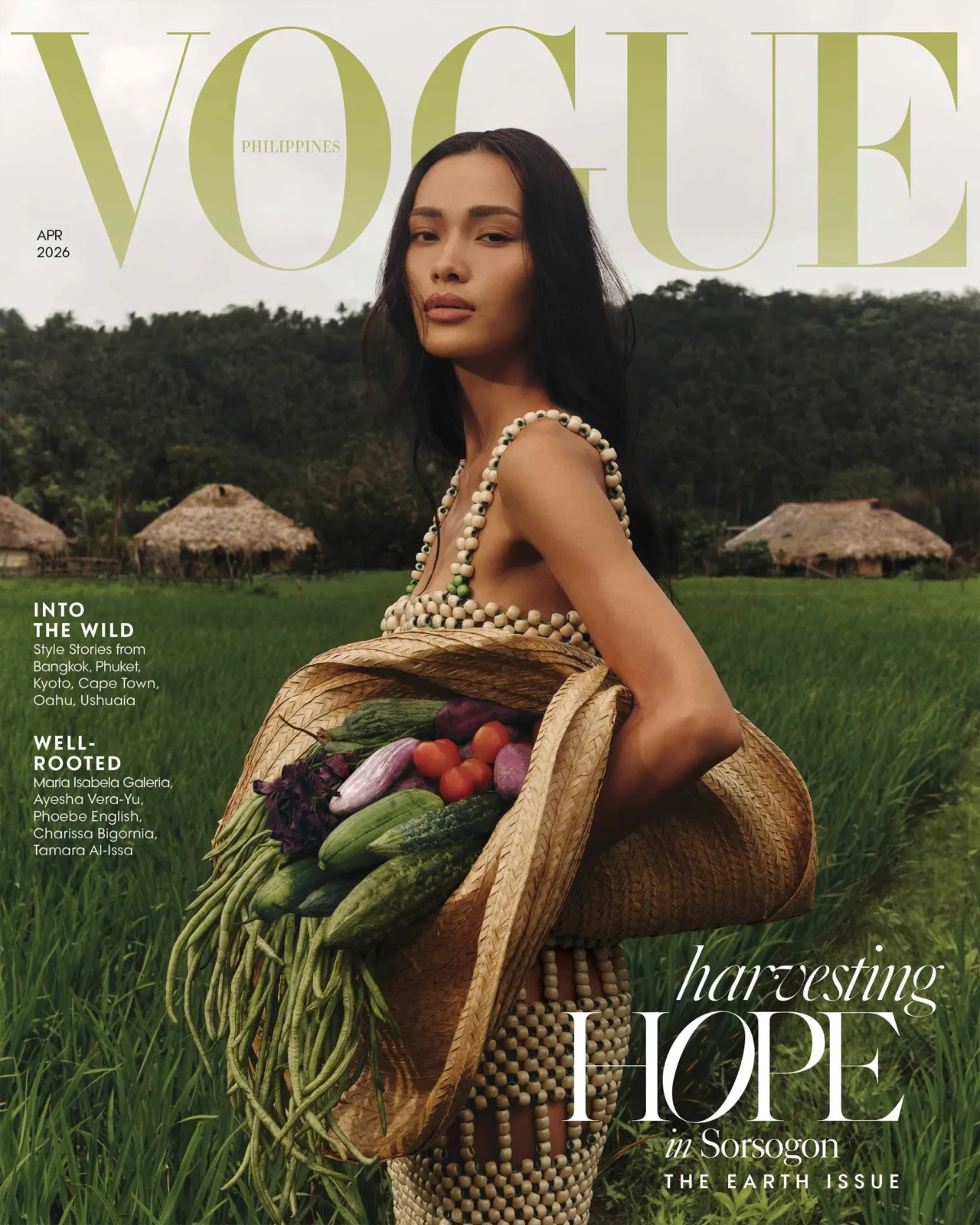
By GABRIEL YAP Photographs by ARTU NEPOMUCENO & ARCHIE GEOTINA. Deputy Editor PAM QUIÑONES. Beauty Editor JOYCE OREÑA. Art Director: Jann Pascua. Producer: Mavi Sulangi. Styling: Jia Torrato of Qurator Studio. Videographer: Lynyrd Matias. Photography Assistants: Choi Narciso and Sela Gonzales. ARK Team: Ayesha Vera-Yu, Kat Limchoc, Margarita Agoncillo, MK Amador, May Ann Bentolan.
Special thanks to Mayor Weng Rafallo-Romano, Renato Fuentes, Lany Astillero & Marissa Gaufo, Jannalyn Esureña, and Hazel Joy Fuentes of Bulusan, Mayor Mark Lozano, Leonor Forte Jr., Lara Fresado & Manny Fuentes, Shie Anne Gabanzo, Hon. Dovie Correa of Sta. Magdalena, and Milo Naval.
Frequently Asked Questions
Feed Back is a 16-week vegetable exchange program run by the social impact organization ARK across communities in Sorsogon. Families grow backyard produce, exchange surplus harvests weekly, and take home a wider variety in return, strengthening both food security and community ties.
ARK was founded by Ayesha Vera-Yu, who left a career structuring deals on Wall Street to restructure her family’s farm in Capiz. She launched Feed Back in 2020 during the pandemic, drawing on her grandfather’s memory of communal harvest-sharing.
Over 16 weeks, families first spend four to six weeks planting, then take part in regular exchanges where they bring at least three kinds of surplus produce. Contributions are weighed, divided, and shared equally, with each family taking home about six kilos across 20-plus varieties.
According to ARK, families in the Feed Back program see their cash flows rise by an average of 25 percent through savings and sales. Families across 10 provinces also report consistent access to food by the end of the 16-week cycle.
Feed Back operates in communities across Bulusan, Santa Magdalena, and Prieto Diaz in Sorsogon, where residents gather weekly for harvest exchanges that combine food distribution with celebration, games, and raffles.
- A Tale of Harvest Set in Sorsogon, Where Community Nurtures the Land
- How TOQA Founder Isabel Sicat Dressed 120 Cultural Actors for the Fourth Thailand Biennale
- Meet Charissa Bigornia, the Filipina Model Who Made It as a Vogue Open Casting Finalist
- How Rajo Laurel Set the Scene For His Couture Collection in Bangkok