
How Hypnotherapy and Sound Bath Connect You With Your Inner Child


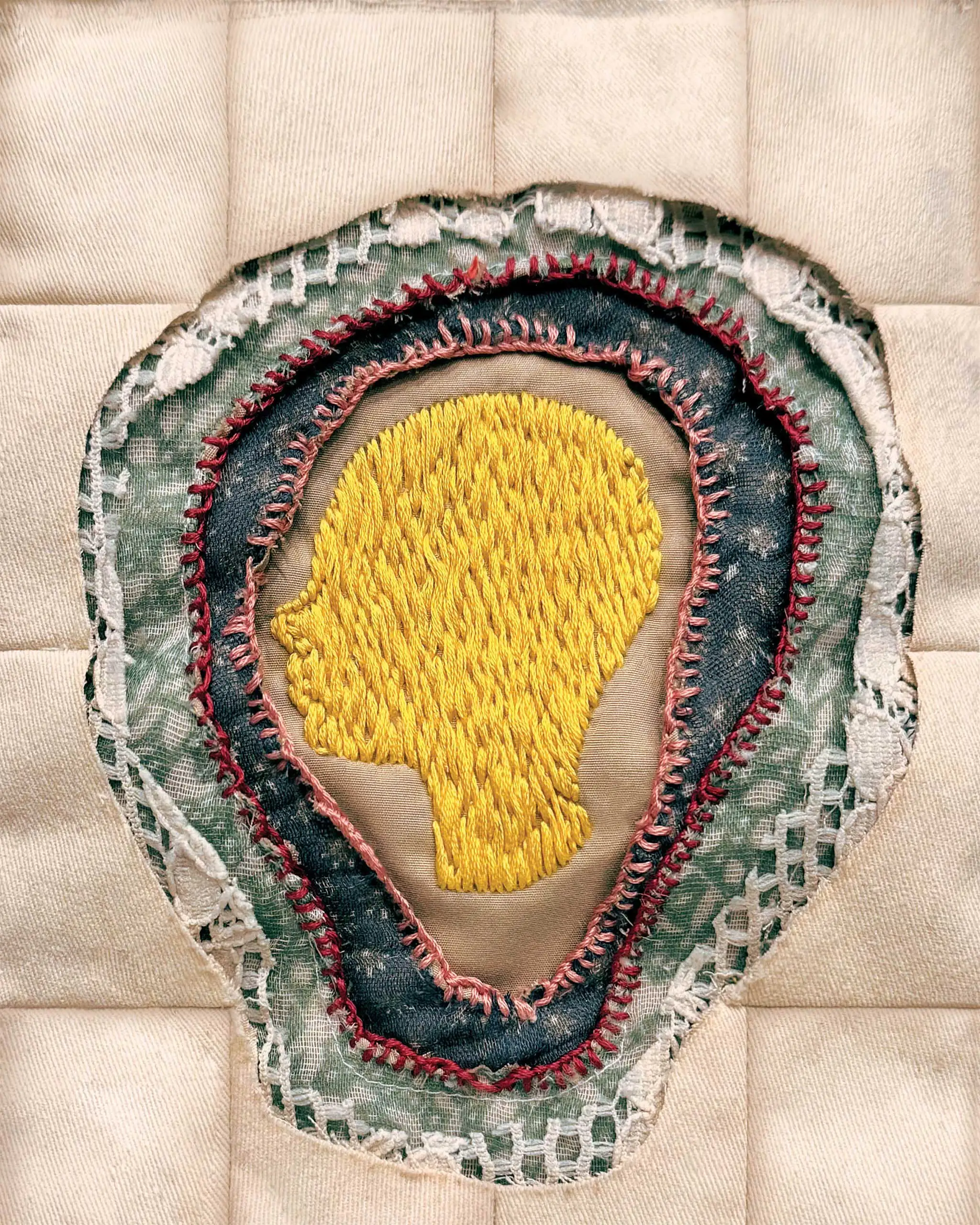
Artwork by Mavi Sulangi
The first step closer to your inner child is silence. In a guided hypnotherapy and sound bath session led by Libni Fortuna, tapping into childlike wonder begins with stillness.
Healing the inner child has become something of a buzzword. The concept has taken up more and more space online over the past few years, from therapy language distilled into Instagram captions to TikToks offering bite-sized explanations of why our adult habits trace back to childhood. I myself, like many twentysomethings, have been on my own personal journey back to my “inner child,” revisiting old hobbies and indulging in nostalgia. As I walked into Libni Fortuna’s space that day, I was aware of how much language I already had for the concept, but how little I truly understood what it meant to sit with it, uninterrupted.
I was met immediately with upbeat energy, loud laughter, and a big hug. It felt less like a wellness appointment and more like walking into a friend’s home for a sleepover. She asked how I was doing, then asked about my intention for the session. In truth, I didn’t have a specific goal beyond work, but in that moment, I found myself saying that I simply wanted to connect with myself.
The session would have three parts: first, hypnotherapy, where I would be guided to meet my child self; a sound bath; and, finally, a debrief. I would be lying down the whole time, opening awareness inward, and then brought back into conversation. In that explanation was an unspoken assurance that this was not about fantasy or vague wellness language, but about bringing present awareness to parts of myself that sometimes get left behind in daily life.
Having just moved to Manila from Davao, Libni is a life transformational coach, though she doesn’t settle on a title for herself the way most people do. “I don’t know what I call myself,” she told me with a gentle laugh. “I just love what I do.” Her journey, she tells me, wasn’t linear or glossy; it came from a place of a deep personal struggle with depression. She reached a point where she says she “simply could not feel anything anymore,” yet could not give up because she had responsibilities, including two children. That tension between needing answers and having no choice but to keep living became the impetus for her own healing path. She invested in mentors, studied abroad, learned modalities like breathwork and meditation, and eventually began guiding retreats and sessions that focused on inner alignment and emotional reckoning. Her work, she says, is evidence of a life lived in pursuit of a truth she once didn’t have.
I’d be lying if I said I wasn’t a little bit skeptical. Inner child healing has been talked about so much lately that it can start to blur into something aesthetic more than anything: soft lighting, curated calm, a version of wellness that looks good on a feed. But as I walked further into the room, the skepticism loosened its grip. The space was simple, almost domestic: a mat laid out neatly on the floor, low faux candles lining its edges, and a few sound bath instruments arranged at the far end where my head would rest. By the window, crystal singing bowls sat on a rug, their milky translucence catching the last light of the afternoon. The city stretched out beyond the glass: traffic, buildings, the quiet hum of Manila continuing on as usual, while inside, the room felt deliberately slowed down. An orange armchair sat in the corner, curtains drawn halfway, and on the wall, a small sign read “There Are No Rules.”
We started with breathing. And surprisingly, it was easier said than done. Coming from an hour long drive from traffic after a winding day of long to-do lists, I realized then that my heart was beating fast. I could feel the thump even in my thumbs and fingers. Reality versus inner awareness felt close to a tug of war: my logical mind wanted to analyze every instruction, while another part of me (quieter, less certain, maybe a little impatient) just wanted to feel at peace and settle into the guidance.
When you close your eyes and sit in silence, I realize, you pay much more attention to little things; far off to my right I could hear my phone buzzing, an insistent buzz I was trying so hard not to focus on, choosing instead to lean into Libni’s voice, slow and steady.
This is a safe space, she reminded me. With my eyes closed, she continued to guide my breathing, asking me to have a conversation with myself: How are you, really? “Many thoughts will arrive,” she says gently, her voice melting into the gentle music in the background. “Just let them come and go. Become an observer, as if they are clouds.”
Between the traffic outside and the momentum of a new year already in full swing, being asked to slow down felt both like a relief and a challenge. Stillness, I realized, isn’t something I ease into naturally. It requires intention. Lying there, eyes closed, I became aware of how rarely I pause long enough to notice what’s happening inside my own body. Even in rest, there was resistance: an instinct to stay alert, productive, braced for the next thing.
So she guided me instead to think of my childhood home, or any space that felt safe growing up, and to enter it as my adult self, watching my younger self inside. I thought of afternoons spent playing on the computer in my old house, running through the living room with my siblings while our dog Max chased after us. I imagined balancing on the green couches with my siblings, all of us younger then. On the television, a Barbie movie played, and in the kitchen, my lola was busy preparing merienda. Through the screen door, the warmth of summer drifted in.
I didn’t realize how immersed I was until I felt a tear roll down my cheek. The images made me feel happy, unexpectedly (and almost embarrassingly) so. As an adult, it’s easy to forget the feeling of pure freedom that comes with play, of being fully absorbed, with no agenda beyond laughter. So when Libni asked me to listen to what my inner child wanted me to know, the answer felt clear: to play. To laugh. To make fun.
“Hypnotherapy works with the subconscious mind,” she explains later. “That’s where your beliefs come from, where emotions are stored. We went straight to the part of the mind that’s playing the show, so to speak. When we tap into that, you allow yourself to identify your patterns and go to the root causes. And when you reach the root cause of experiences, behavior changes.”
We took a deep breath in, feeling the stomach expand, and exhaled through the mouth with a sigh. The sound bath began, and I felt enveloped almost immediately. I only noticed how tightly my hands had been folded on top of my stomach when they started to soften, nearly falling to my sides. Off to the side, I could still hear my phone buzzing, but it blended into the sound of the gongs and cymbals instead of pulling my attention away.
She later explained that each bowl carried a frequency corresponding to a chakra, meant to encourage alignment. Other instruments echoed sounds from nature.
Our bodies, she reminded me, are mostly water. “We are 70 percent water. Frequencies resonate with us. When you listen to certain sounds, if you’re not aware, it can either put you down or lift you up depending on resonance. This one realigns you,” she says. “When I play them, your body, your subconscious mind, will remember, and your chakras will align. The vibrations allow you to be calm on a cellular level. It reminds you that you can be at peace.”
“These instruments are very neutral,” she continues. “They don’t have stories, so there’s no judgment or emotion. It only reflects beauty, and it allows you to be immersed in neutrality.”
For Libni, both hypnotherapy and sound work are anchored in the same idea: that the body remembers what the mind often avoids. “We are all energy. Energy in motion is emotion. Your role is to express that. But a lot of people don’t feel safe enough to express themselves. That’s why the energy gets stuck in the body. If you don’t express it, the body will express it for you. That’s why it becomes dis-ease.”
This, she said, is where the inner child comes in. Not as a concept, but as a lived state: “When you’re a child, you have so much energy to express. You just experience life. That’s why I like bringing people back to their childlike self. There are no rules, just expression. When you allow yourself to experience life like a child, that’s how you live fully.”
By allowing yourself to be silent, you connect with yourself. And when you’re connected with the self, it’s easier to express. “Life is an emotional game. You do things to feel things,” Libni says. “If you know how to sit in silence and create that feeling on your own, you don’t need to outsource it.”
In my attempt to reconnect with my inner child, I realized I had been doing more: rediscovering old hobbies, buying things tied to nostalgia, rewatching shows I used to love, adding yet another set of activities to my to-do list. All of these are inherently good things. As they say, growing up often means falling back in love with what you loved as a child.
But in that moment, lying there in stillness, I realized that these efforts only skim the surface. I had skipped a vital step. Before play, before revisiting, before doing, there is silence. Connecting with the inner child begins in the quiet.

Frequently Asked Questions
Hypnotherapy is a therapeutic modality that accesses the subconscious mind to identify behavioral patterns, locate root causes of emotional distress, and facilitate sustainable behavioral changes.
A sound bath utilizes specific acoustic frequencies from instruments like crystal singing bowls and gongs to create cellular resonance, inducing deep relaxation and balancing bodily energy fields.
Inner child healing is a psychological process that revisits formative childhood experiences in order to address unresolved emotional trauma, unpack adult habits, and restore authentic self-expression.
Unexpressed emotions accumulate as trapped kinetic energy within body tissue, frequently manifesting as somatic discomfort or chronic physical ailments when psychological stressors are left completely unaddressed.
Silence provides an essential environmental buffer that deactivates the nervous system’s sensory overload, enabling individuals to develop internal awareness and directly access repressed subconscious memories.